Retro Television Review: Fantasy Island 6.6 “The Beautiful Skeptic/The Last Platoon”


Welcome to Retro Television Reviews, a feature where we review some of our favorite and least favorite shows of the past!  On Tuesdays, I will be reviewing the original Fantasy Island, which ran on ABC from 1977 to 1984.  Unfortunately, the show has been removed from most streaming sites.  Fortunately, I’ve got nearly every episode on my DVR.

This week, someone tries to expose Fantasy Island!

Episode 6.6 “The Beautiful Skeptic/The Last Platoon”

(Dir by Ricard Montalban, originally aired on November 27th, 1982)

Your eyes do not deceive you.  This episode was directed by Mr. Roarke himself, Ricardo Montalban!

The main fantasy deals with Jack Oberstar (Gary Frank), who wants to go back to World War II so that he can find proof that his brother, Ken (Steve Kanaly), was killed in action and did not, as the army claims, desert and become a black market smuggler.  After the customary warnings from Mr. Roarke, Jack finds himself serving alongside his brother in France.  Jack not only gets to bond with his brother but he also discovers that it was the evil Galloway (Don Stroud) who stole his brother’s identity and went on to become a criminal.  Ken did die heroically but, without his dog tags, he was misidentified.  No sooner does Jack learn all this then he finds himself back in the present.  Jack is happy to know the truth but he regrets not having returned with proof.

However, Mr. Roarke reveals that, while Jack was having his fantasy, a career criminal died while serving a life sentence in France.   By checking his fingerprints, the authorities discovered that the criminal was Galloway, who was long believed to have died in World War II.  Jack realizes that he can now argue that Galloway stole Ken’s identity!  He’s happy, even if he doesn’t have his definite proof.  Myself, I started thinking about how different the world must have been in the days before DNA testing.  Today, Jack presumably wouldn’t even have to go Fantasy Island to prove that the body buried in “Galloway’s” grave was actually his brother.

As for the other storyline, it features Connie Stevens as journalist Christine Connelly, who is determined to prove that Mr. Roarke is a fake.  She tells Roarke that she interviewed eleven former guests and all of them were happy with how their fantasies went.  Christine argues that there’s no such thing as “eleven satisfied customers,” which is a weird way to put it.

Christine brings along two people who have fantasies.  Jay (Jimmie “JJ” Walker) wants to win a weight-lifting competition, despite being Jimmie “JJ” Walker.  Luckily, Roarke has some magic chalk dust that allows Jay to do just that.  (You have to feel bad for everyone who actually wasted their time training for the competition.)  Frank (Herb Edelman ) wants to be reunited with his estranged wife, Connie (Ruta Lee).  This actually proves somewhat difficult, as Connie really doesn’t want to see Frank.  But it turns out that this is because Connie thinks that Frank is having an affair with Christine.  I’m not sure that Roarke reunited Connie and Frank is really greater proof than Jimmie Walker winning a strongman competition but the important thing is that Christine learns to be less of a cynic and to open her mind to the magic of Fantasy Island.

This was not a bad trip to the Island.  Much as Mr. Roarke did with the Island, Ricardo Montalban kept the episode moving quickly and efficiently.  It’s interesting that Fantasy Island started out as this place that was shrouded in mystery but, by the sixth season, it was apparently well-known enough to attract the attention of tabloid television.  In the end, Mr. Roarke proved his good intentions and protected the Island.  Good for him!


Late Night Retro Television Review: CHiPs 3.9 and 3.10 “Drive, Lady, Drive”


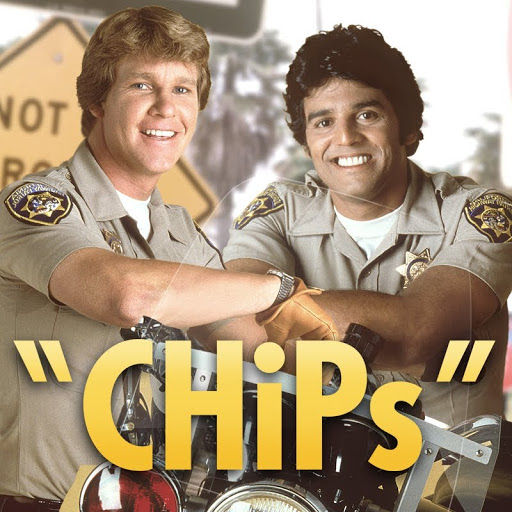
Welcome to Late Night Retro Television Reviews, a feature where we review some of our favorite and least favorite shows of the past!  On Mondays, I will be reviewing CHiPs, which ran on NBC from 1977 to 1983.  The entire show is currently streaming on Prime!

This week, it’s a special two-hour episode of CHiPs!

Episodes 3.9 and 3.10 “Drive, Lady, Drive”

(Dir by Don Weis, originally aired on November 10, 1979)

The police at nearby Palma Vista are on strike and the state of California has agreed to allow some members of the Highway Patrol to patrol the town until the strike is over.  Getraer assigns Baker, Ponch, Bear, and some new guy named Lenny (Leon Isaac Kennedy) to head over to the town,  Baker is named the OIC, which I eventually figured out stood for “Officer in Charge.”  Getraer knows better than to give the job to Ponch.

Ponch, by the way, is back!  After being absent for two episodes due to Erik Estrada actually injuring himself in a motorcycle crash, Ponch returns in this episode and he goes through the entire episode with this huge grin on his face as if he’s saying, “You know you missed me.”  Ponch’s return means that Baker is once again relegated to being the strong, silent partner who doesn’t really get to do anything.  In fact, Baker crashes his motorcycle early on in this episode, as if the show was trying to tell us, “See?  It could happen to anyone!”

The striking cops accuse Baker, Ponch, Bear, and Lenny of being scabs and strike breakers.  I’m not really a fan of public sector unions.  (When it comes to the police striking, my hero is Calvin Coolidge, who came to fame when he broke up a policeman’s strike in Massachusetts.)  Still, it felt strange to watch the show’s heroes cross that picket line.  That would definitely not happen on television today.

There’s a lot going on in Palma Vista.  There’s some rich kids who keep joyriding in a dune buggy and who think they can escape prosecution by crossing the city limits.  (Joke’s on them!  The Highway Patrol has jurisdiction everywhere!)  There’s some truck hijackers who are setting up a headquarters in town.  There’s an angry city councilman (Michael Conrad) who doesn’t feel his children should be held accountable for their actions.

That said, the majority of this two-hour episode centered on a stock car race and one of the racers, Candi Wright (Kelly Harmon).  Will Candi win the big race or will she lose to her friendly rival (and possible future romantic partner) Don Croyden (Jordan Clarke)?  Will Ponch be able to both date her and do his job?  And most importantly, will she be able to adopt a traumatized little girl (played by Tracey Gold) who Candi discovered outside of a burning house?  That’s a lot of storylines for someone who wasn’t even a regular cast member and a part of me wonders if maybe this episode was meant to be a secret pilot for a Candi Wright television series.  It would explain a lot.

This really was a basic episode of CHiPs, with the only real difference being that it was two-hours long for some reason.  A lot of what happened in the episode, especially the racing footage, felt like filler.  There was really no need for this to be a double-sized episode.  It also doesn’t help that, as opposed to the lovely Los Angeles scenery that we usually see, this episode took place in a rather ugly town.  There was some appropriately spectacular crashes but, in the end, this episode ran too long and felt a bit pointless.  Get the Highway Patrol back on the highways!

Retro Television Review: Miami Vice 3.18 “Lend Me An Ear”


Welcome to Retro Television Reviews, a feature where we review some of our favorite and least favorite shows of the past!  On Mondays, I will be reviewing Miami Vice, which ran on NBC from 1984 to 1989.  The entire show can be purchased on Prime!

This week, Crockett and Tubbs are both spectacularly bad at their jobs.

Episode 3.18 “Lend Me An Ear”

(Dir by James Quinn, originally aired on February 27th, 1987)

This week’s episode of Miami Vice centers around Steve Duddy (John Glover), an eccentric former cop-turned-surveillance expert.  When the Vice Squad has trouble bugging the home and phone lines of a mysterious Greek criminal named Alexander Dykstra (Yorgo Voyagis), Crockett and Tubbs approach Duddy for help.  Little do they know that Dubby is also on Dykstra’s payroll.  Duddy sells them the bugs that they plant in Dykstra’s home.  Then Dykstra calls Duddy and Duddy removes them.  Dykstra doesn’t know that Duddy works for the cops and the cops don’t know that Duddy works for Dykstra.

It sounds like a pretty good deal for Steve Duddy, no?  But when Duddy witnesses Dykstra commit a murder that was caused by Dykstra using one of Duddy’s voice analyzers to discover whether or not her girlfriend was lying about cheating on him, Duddy decides to try to take down Duddy.  First, he calls the homicide department and, using a device to disguise his voice, he reports that Dykstra just killed someone.  When that doesn’t work, he splices together some recordings to make it appear as if Dykstra is setting up a crime.  When that doesn’t work and Dykstra decides to take out Duddy, Duddy just kills Dykstra and his men.  Crockett and Tubbs arrest him, charging him with interfering with an investigation.  The charges are ultimately dropped but, when Duddy returns to his home, he finds a video message from Crockett.  “I’ll be watching you!” Crockett says.

This was a strange episode, if just because the main theme seemed to be that the members of the Vice Squad weren’t that smart.  Not only were they repeatedly fooled by Duddy but also Dykstra as well.  Really, anyone with as much experience as Crockett and Tubbs should have been able to figure out what Duddy was doing.  Duddy’s reaction when he heard the 9-11 call (“Sounds like someone’s altering their voice!” Duddy says) should have been a dead giveaway that Duddy knew more than he was telling.  And yet, somehow, Crockett and Tubbs didn’t figure out anything strange was happening until the episode was nearly over.

Dykstra, incidentally, was not a drug dealer.  He was a money launderer and he really didn’t make much of an effort to hide that fact.  I figure it out pretty quickly.  But, again, it took Crockett and Tubbs nearly the entire episode to figure out what Dykstra’s business actually was.  Crockett and Tubbs just had a really off-week with this episode.

On the plus, John Glover was memorably odd as Duddy.  Up until he discovers Dykstra is a murderer, Duddy is having the time of his life playing both sides against each other and it’s actually kind of entertaining to watch.  Apparently, this was Duddy’s only appearance on Miami Vice.  That’s a shame because his character definitely had potential.

Next week: Viggo Mortensen, Annette Bening, and Lou Diamond Phillips all stop by Miami!

Late Night Retro Television Review: Degrassi High 1.12 “Natural Attraction”


Welcome to Late Night Retro Television Reviews, a feature where we review some of our favorite and least favorite shows of the past!  On Sunday, I will be reviewing the Canadian series, Degrassi High, which aired on CBC and PBS from 1989 to 1991!  The series can be streamed on YouTube!

Welcome back to Degrassi Hiiiiiiiiiiiigh!

Episode 1.12 “Natural Attraction”

(Dir by Kit Hood, originally aired on January 23rd, 1990)

This week’s episode of Degrassi High centers around the Farrell twins.  I always have a bit of an issue with the Farrell twin episodes because I can never remember which one had the abortion and, beyond that, they’re really not that interesting as characters.  I know that one is more talkative than other and that the one who didn’t have an abortion ended up making out with Wheels at a party.  But again, personality-wise, they’re both kind of boring characters.

Anyway, this week, Erica is dating an 11th grader who reminds her of the boy who impregnated her over the summer.  (“Who does he remind me of?”  “Kyle, from the summer.”  “Oh yeah!”)  Heather is concerned that Erica is going to get pregnant again and they’re going to have to take another trip to the abortion clinic and once again run into that old woman with plastic fetus doll.  Erica doesn’t think her abortion was that big of a deal but it haunts Heather, who feels that she took part in a murder by accompanying Erica to the clinic.

And I will say this.  Particularly when compared to the way Degrassi: The Next Generation and Netflix Degrassi dealt with the issue of abortion, Degrassi High deserved a lot of credit for treating both sides fairly.  No one — whether they agree with Erica’s decision or not — is reduced to being a caricature on this show and that’s something that I personally appreciate.  That doesn’t necessarily make the Farrell twins any more interesting than they were before but even that feels like a good move on the show’s part.  Not everyone who has an abortion is interesting.  Sometimes, they’re kind of boring and have a habit of glaring at anyone who talks to their twin.

As for the rest of this episode, I’m going to guess that the show’s “stars” must have been on vacation because it’s pretty much dominated by students who usually don’t get storylines.  Dorothy (Annabella Waugh) encourages her friend Tessa Campanelli (Kirsten Bourne) to ask Scooter to the school dance.  This is the first episode to give Tessa storyline and, while it’s not much of a story, it is interesting for those of us who know the important role that Tessa is going to eventually play in the history of Degrassi.  As for Scooter, he doesn’t know how to slow dance so his friend Bart teaches him.

Meanwhile, Alison (Sara Holmes) and Amy (Jacy Hunter) get into a fight over the fact that Amy is going to the dance with Snake, despite the fact that Alison used to like Snake.  They end up getting into a big argument and throwing all of the clothes that they’ve borrowed from each other all over the girl’s restroom.  I could relate because, going to high school with my sister one grade above me, we certainly had our fights and arguments about …. well, exactly the same thing that Alison and Amy were fighting about.  But, at the same time, this is really the first episode in which Alison and Amy have been major characters.  I like that Degrassi High was an ensemble show but there were definitely times when the show would suddenly push a character into the spotlight without giving the audience any opportunities to get to know the character ahead of time.  For instance, I had totally forgotten that Alison liked Snake.  Doesn’t she knows that Snake is destined to marry Spike?

Next week, Joey discovers he has a learning disability!

Retro Television Review: Homicide: Life On The Street 3.3 “Extreme Unction”


Welcome to Retro Television Reviews, a feature where we review some of our favorite and least favorite shows of the past!  On Sundays, I will be reviewing Homicide: Life On The Street, which aired from 1993 to 1999, on NBC!  It  can be viewed on Peacock.

This week, the White Glove Killer is discovered.

Episode 3.3 “Extreme Unction”

(Dir by Keith Gordon, originally aired on October 28th, 1994)

For all the hours that Pembleton and the other detectives put in and for all the motives that were considered and the suspects were interviewed, the murderer of Katherine Goodrich and two other women is captured not through deductive brilliance but because she herself enters the police station.

When Pamela Wilgis (Lucinda Jenney) first enters the station, she claims to have just witnessed two men dumping the third victim.  Pembleton is dismissive of her until she mentions the white gloves, a detail that has not been released to the public.  While Pembleton talks to her, the other detectives check out Pamela’s apartment and discover 12 sets of white cotton gloves hanging in her bathroom.  Pamela is the murderer.

When Pembleton asks Pamela about the gloves, Pamela suddenly starts speaking in an Irish accent.  Later, she starts speaking like an angry and rebellious child.  Later still, she reverts to being a wide-eyed innocent who says she had no idea how she ended up in the interrogation room.  Pembleton is convinced that she’s faking her alternate personalities but, despite his best efforts, he can never get her to actually confess that she committed the murders.

From the start, Homicide has emphasizes the role of luck in solving murders.  The majority of the show’s murders are solved precisely because someone thought they could outsmart the police or because they made a very obvious error.  For all of Pembleton’s strengths in the Box, his interrogation technique works best when he’s dealing with someone who doesn’t understand how the system works.  Pamela, on the other hand, obviously understands what he’s trying to do.  She knows the system and she knows how to game it.  Pamela does eventually confess but not Pembleton.  Instead, she does an interview with the obnoxious reported played by Tony Todd, blaming her crimes on the abuse she suffered as a child and her dissociative disorder.  Pembleton’s pride is hurt but he also finds himself struggling with his faith.  How can Pamela, after killing three saintly women, now avoid paying for her crimes?  Even with the thrilling interrogation scene between Pembleton and Pamela and the excellent performances of Andre Braugher and Lucinda Jenney, it’s all feels a bit anticlimactic.  But it also feels appropriate for the world in which Homicide takes place.

This episode also wrapped up a few other plotlines.  Munch, Bayliss, and Lewis finally own their bar.  Good for them.  I’m not really a bar person or a drinker but I probably would have enjoyed visiting the Waterfront whenever Munch was working the bar.  Even more importantly, Felton returned to his mentally unstable wife.  And again, that’s a good thing if just because I was getting sick of listening to Felton whine about his marriage.  So was Kay.

This episode was effective enough.  The scenes between Andre Braugher and Lucinda Jenney alone made the episode memorable.  At the same time, as I watched, it occurred to me that, if this episode had aired during the first season, the White Glove Murders probably never would have been solved.  If Adena Watson had died during the third season, one can be sure Bayliss would have gotten a confession out Risley Tucker.

Next week, we find out why Detective Crosetti has yet to return from Atlantic City.

Late Night Retro Television Review: Check It Out! 3.7 “He’s No Heavy, He’s My Brother”


Welcome to Late Night Retro Television Reviews, a feature where we review some of our favorite and least favorite shows of the past!  On Saturdays, I will be reviewing the Canadian sitcom, Check it Out, which ran in syndication from 1985 to 1988.  The entire show is currently streaming on Tubi and Peacock!

Hey, Howard has an older brother!  I wonder how this will work out….

Episode 3.7 “He’s No Heavy, He’s My Brother”

(Dir by Alan Erlich, originally aired on  October 25th, 1987)

In this episode, we meet Howard’s brother, George (Gary Krawford).  George is an extremely wealthy money manager who lives in Switzerland.  At the start of the episode, he is fired because his employers want to hire a younger man who they can pay less.

Dejected, George returns to Canada.  He visits Howard at the store.  Because George doesn’t specify that he was fired, Howard assumes that George is dying.  Howard reveals that their father always liked George better.  George eventually reveals that he’s not dying and that, being worth five million dollars, he doesn’t need a job in Howard’s store.  Good for George.  I’m happy for him.

George buys Howard’s apartment building.  He then tells Howard that he’s a month behind on his rent.  Howard jokes about George evicting him.  George evicts Howard.  End of episode.

This was a weird episode.  I’m going to assume that the show’s producers were thinking of making George a regular character on the show and this episode was perhaps an attempt to reboot the entire series into a show that would focus 0n the rivalry between the Bannister brothers.  According to the imdb, though, this is the only episode in which George appeared.  Watching this episode, it occurred to me that the entire third season, so far, has featured epiosdes about characters who only appeared once or twice before vanishing.  The third season has been an improvement over the previous season but it’s still obvious that the show was still struggling to figure out what it actually wanted to be about.  This has not only led to a messy continuity but also a few unresolved cliffhangers.  Last episode, it appeared Jack Christian was going to get his own store.  In this episode, he’s still assistant manager at Howard’s store and no mention is made of last week’s events.

The strangest thing about this episode, though, is the show’s insistence that Howard is only in his forties when Don Adams was clearly in his sixties.  George is introduced as being Howard’s older brother but actor Gary Krawford was nearly 20 years younger than Adams and he looked it, too.

Strange, strange episode.  Considering George never again appeared after this episode, it’s probably best not to worry too much about it.  This episode might end with Howard getting evicted (and seriously, the man manages a store, shouldn’t he able to cover his rent?) but I have a feeling we’ll never hear about it again.

Either that or Howard will be forced to live in the store, which is what he pretty much does already.  The important thing is that it will all work out.

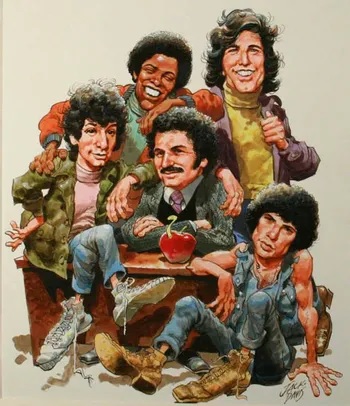
Retro Television Review: Welcome Back, Kotter 4.17 “Come Back, Little Arnold”


Welcome to Retro Television Reviews, a feature where we review some of our favorite and least favorite shows of the past!  On Saturdays, I will be reviewing Welcome Back Kotter, which ran on ABC  from 1975 to 1979.  The entire show can be purchased on Prime.

This week, Horshack’s not going to take it anymore.

Episode 4.17 “Come Back, Little Arnold”

(Dir by Norman Abbott, originally aired on February 24th, 1979)

Arnold Horshack’s a drunk!

Well, not quite.  He’s not an alcoholic.  He does buy a bottle of cheap whiskey from Carvelli because he has a date coming up with Mary (Irene Arranga) and he’s nervous about it.  To the shock of everyone, Horshack gets mean when he drinks.  He calls the other Sweathogs out for always making fun of him.  He tells his teachers to leave him alone.  He throws all the money from the school store out into the hallway.  He starts wearing a leather jacket.  Horshack is out of control!

It’s a good thing that Vinnie is around to serve as a mentor…. oh wait, Travolta became a movie star and Vinnie Barbarino is no longer on the show.

It’s a good thing that Gabe has a good relationship with Arnold Horshack and …. oh wait, Gabe Kaplan was angry with the show’s producers and only appeared in a handful of episodes this season.  And this is not one of those episodes!

Maybe Julie could …. Marcia Strassman isn’t in this episode either!

Mr. Woodman could …. oh, who are we kidding?  Woodman doesn’t care.

Instead, it falls to Jean Tremaine (Della Reese) to gather all the Sweathogs together and let them know that Horshack needs help.  Jean Who?  Well, apparently, Ms. Tremaine has been around for a while and she’s as much of a mentor to the Sweathogs as Gabe ever was!  Oddly, we’ve never heard about or seen Ms. Tremaine before.  In fact, I thought the whole idea of the Sweathogs was that they weren’t allowed to attend regular classes, like the one taught by Ms. Tremaine.

It’s easy to see what happened here.  With Gabe Kaplan determined to leave and Marcia Strassman also tiring of the show, the show’s producers were trying to figure out how to continue Welcome Back Kotter without any Kotters.  With this episode, we saw one possible way to keep the show going.  Della Reese would be the new teacher and hopefully, she would have eventually gotten some new students.  It was time to let the Sweathogs graduate.  As I watched this episode, I noticed that Ron Palillo, the actor who played Horshack, actually had gray in his hair.

Surprisingly enough, this was actually a pretty good episode.  After spending the past two seasons playing Horshack as just being a weirdo with a strange voice, Ron Palillo finally got another chance to play the angry, misadjusted Horshack who  we first met during the show’s first season.  Palillo really got into the scenes where Horshack told off the Sweathogs, dropping the funny voice and delivering his lines with authentic anger.  Watching the episode, it’s hard not to get the feeling that Palillo was acting out some of his own frustrations in this episode.  It can’t be easy to play Arnold Horshack day-after-day.

And you know what?  As clumsily as she was introduced, Della Reese did a good job as Ms. Temaine.  The idea of her as the new regular teacher was not a crazy one, though it was one that was probably suggested too late to save the show.

This was a good episode.  I’m as surprised as anyone.

Late Night Retro Television Review: Friday the 13th: The Series 3.3 “Demon Hunter”


Welcome to Late Night Retro Television Reviews, a feature where we review some of our favorite and least favorite shows of the past! On Fridays, I will be reviewing Friday the 13th: The Series, a show which ran in syndication from 1987 to 1990. The entire series can be found on YouTube!

This week, a bunch of new characters show up!  What the Hell!?

Episode 3.3 “Demon Hunter”

(Dir by Armand Mastroianni, originally aired on October 14th, 1989)

I have read that one of the biggest mistake that aspiring screenwriter make when they attempt to create a compelling spec script for their favorite show is that they’ll often introduce new characters.  Instead of focusing on the established stars of the show, they’ll have a new character show up and suddenly become the center of the story.  It’s a mistake because, no matter how good the script may be, it doesn’t work as an episode of the series that the writer is trying to get a job with.  Showrunners don’t want a writer who can write about new characters.  They want a writer who can work within the framework of what the show has already established.

This week’s episode of Friday the 13th feels very much like a failed spec script.

Make no mistake.  Jack and Micki are in it.  They spend the entire episode at Curious Goods, where they are originally seen putting a cursed dagger in the vault.  With Ryan having been transformed into a child in the previous episode, Micki makes Jack a partner in the shop.  Johnny Ventura (played by new series regular Steve Monarque) is also in this episode, though he’s called to the store a bit later than Micki and Jack.  I guess Johnny is now a part of the group, even if he doesn’t have a job at the shop.  For all the time the show spent establishing Johnny as being an edgy delinquent during the second season, this episode finds Johnny as a rather conventional leading man.  He listens to a baseball game and, at one point, he’s seen making a model ship.

That said, the majority of the episode is dominated by a bunch of new characters.  The Cassidys are a family of militia types who, having rescued Bonnie Cassidy (Allison Mang) from a bunch of cultists, are now on the run from a demon that is determined to kill them.  The Cassidys have some sort of demon tracker device that leads both them and the demon to Curious Goods, where Micki, Jack, and Johnny join in the effort to destroy the demon.  The Cassidys are so prominently featured in this episode and take up so much screentime that the episode almost feels like a backdoor pilot about them.  The Cassidys are even featured in black-and-white flashbacks that show us how they rescued Bonnie.

The problem, of course, is that we don’t know the Cassidys so its a bit jarring to see them take over the episode.  After what happened in the previous episode, I think most viewers would have a lot of questions about what happened after Jack, Micki, and Johnny returned from France.  For instance, what did they do with Ryan?  Did they drop Ryan off with his mother?  Did they leave him in France?  We don’t find out in this episode and it’s actually kind of insulting to anyone who has spent the previous two seasons getting wrapped up in Ryan and Micki’s adventures.  Instead of answering the questions that they had to know that viewers would be asking, the show’s writers expect us to care about the Cassidys.

Even without John D. LeMay, Robey and Chris Wiggins had a likable chemistry.  Micki and Jack were the strongest thing this series had gone for it as the start of season 3.  Why push them to the side for a family that we’ve never seen before and will probably never see again?  As far as guessing what the rest of Season 3 will be like is concerned, it’s not a good sign.

Hopefully, I’ll be proven wrong in the weeks to come.

Retro Television Review: St. Elsewhere 1.12 “Release”


Welcome to Retro Television Reviews, a feature where we review some of our favorite and least favorite shows of the past! On Fridays, I will be reviewing St. Elsewhere, a medical show which ran on NBC from 1982 to 1988.  The show can be found on Hulu and, for purchase, on Prime!

This week, things get dark.

Episode 1.12 “Release”

(Dir by Victor Lobl, originally aired on February 1st, 1983)

The gunshot victim (Tom Hulce) who was saved by Samuels last week has woken up but he has no idea who he is.  He is labeled John Doe #12, meaning there’s at least eleven other people at St. Eligius who are suffering from amnesia!  That’s a scary thought.  There’s a lot of things that I don’t want to suffer from and amnesia is high on the list.  I can’t imagine how frightening that would be, not having any idea who you are or where you belong.

Dr. Chandler tries to help John Doe #12 get his memory back but, in this episode at least, neither has any luck.  Even an attempt at hypnosis reveals that John can’t remember anything before being rolled into the ER.  At one point, an older couple step into the room to discover if John is their son, who has been missing for two years.  He’s not, which leaves the couple in tears.

As serious and as heart-breaking as this all is (and both Washington and Hulce give outstanding performances in this episode), there is one moment where Dr. Westphall makes a reference to a “Lt. Gerard,” who is searching for John’s parents.  It seems like a throw-away reference, unless you’re familiar with either the 1950s television show The Fugitive or the subsequent 1993 film adaptation.  Lt. Gerard was the name of the detective who was hunting for that show’s main character, Dr. Richard Kimble.  Ed Flanders delivers the line solemnly and it occurs at a serious moment.  There’s no winking at the audience.  Instead, it’s simply a reward for the pop culture-literate who might be watching the episode.

For the most part, this was a grim episode.  After losing a patient to cancer, Dr. Peter White was ordered to talk his family into signing a release for an autopsy.  The autopsy was largely to protect the hospital from getting sued.  The family didn’t want an autopsy.  Peter didn’t feel the autopsy was necessary.  But, having been bullied by his superiors, Peter proceeded to bully and manipulate the dead man’s son into signing the release.  In the end, it turned out that Peter was correct.  The man did die of cancer.  The autopsy was not necessary.  Upset over the whole process, Peter said that he felt like he had “raped” a mourning family.  The doctor who ordered Peter to get the release merely smiled and said he would see Peter at rounds the next day.

Meanwhile, Dr. Craig was shocked and angered when he discovered that his old friend (played by Andy Romano) had checked into the hospital for gender-affirming surgery.  This led to the episode final scene, in which Craig talked about not liking the way the world had changed since he was a young man.  The scene was well-acted by William Daniels, who was one of the best when it comes to giving a monologue of frustration.

And finally, Dr. Samuels and Dr. Paxson disagreed on how to treat a patient and this storyline would have been interesting if either Samuels or Paxson had been an interesting character.  But they’re not.  I don’t care about them.  I don’t care about their boring relationship.  And, knowing that neither is going to be around once this season ends, I really didn’t care that much about their storyline.  With all of the interesting stuff that happened in this episode, I groaned whenever I realized I was going to waste a few minutes watching Samuels and Paxson argue.

This episode left me feeling pretty depressed.  Between Peter bullying that family and John Doe searching for his identity, there wasn’t much hope to be found.  Still, I have faith that John Doe will find his identity and maybe Peter will even become a better doctor.  (He certainly can’t get much worse.)  If Lt. Gerard could find Richard Kimble, then anything’s possible!


Late Night Retro Television Review: Highway to Heaven 3.13 “Basinger’s New York”


Welcome to Late Night Retro Television Reviews, a feature where we review some of our favorite and least favorite shows of the past!  On Thursdays, I will be reviewing Highway to Heaven, which aired on NBC from 1984 to 1989.  The entire show is currently streaming on Tubi and several other services!

New York, New York, it’s a heckuva town….

Episode 3.13 “Basinger’s New York”

(Dir by Michael Landon, originally aired on December 17th, 1986)

It’s Christmas in New York and veteran news columnist Jed Basinger (Richard Mulligan) has no idea what to write about.  Basinger has been recording the lives of the people of New York City for decades and he’s finally reached the point where he fears that there may not be anything good left to write about.  In short, Jed Basinger is a cynic and we know what this show thinks of cynicism!

While Basinger walks down a cold city sidewalk, he suddenly discovers Jonathan and Mark walking beside him.  Basinger worries that they’re fans, looking to harass him or tell him a long story that they think he should write about.  Instead, Jonathan introduces himself as an angel and explains that he’s here to show Basinger all the good things happening in the city.

I have to admit that I always groan a little whenever an episode of this show starts with Jonathan admitting that he’s angel.  The episodes where Jonathan makes no effort to hide his identity are usually the weakest, if just because they tend to be a bit more preachy than the typical episode of Highway to Heaven.  (Despite its reputation, Highway to Heaven was usually more earnest than preachy.)  Once Jonathan says those three words — “I’m an angel,” — the viewer is immediately aware that this episode has a message and it’s not going to be a subtle one either.

Jonathan, Mark, and Basinger make their way through New York.  They meet a cab driver who just wants to be reunited with his son.  They meet the saintly homeless people who live on the streets and take care of each other in their own quirky way.  They meet a nice cop.  They meet not one but two women who are in labor and who end up at the same hospital.  One woman is poor and turned away because she doesn’t have insurance (which, technically, I think is illegal under federal law but whatever).  The other woman is the wife of a U.S. Senator who announces that she refuses to give birth in a hospital that turns away the poor.  Luckily, Basinger is there and threatens to write about it.  The scene in the hospital is typical of this episode.  It’s well-meaning but so heavy-handed that it’s nowhere near as effective as it should have been.  If I was in labor, would I take the time to demand that the hospital treat all of its patients fairly?  I’d like to think so but, realistically, my mind would probably be on other things.  Luckily, Basinger gets to write his column, despite showing up late at the newspaper.  It turns out that the presses went down while Basinger learned a lesson about New York and kindness.

I can’t really be too critical of this episode because its heart was in the right place.  That was this show’s biggest strength.  Michael Landon really did seem to believe he could make the world a better place, one episode at a time.  That said, this episode was a bit too heavy-handed for my tastes.  But again, how can I be too critical of a show about Christmas miracles?