Scenes I Love: South Park Makes Handjobs Fun Again


I was first introduced to the Shake Weight by my friend Shaista (who, by the way, is not only really funny and smart but like totally and completely gorgeous too).    At the time, I was telling her about how much I love the Broadview Security Commercial where A.J. attempts to break into a house while the homeowner goes, “A.J?  A.J?”  And while Shaista agreed with me that A.J. was indeed an enigmatic bad boy who played by his own set of rules, she still claimed that the Shake Weight commercial was far more memorable.

When I actually did see the Shake Weight commercial, I found myself staring dumbfounded at the screen.  Finally, I think I managed to say, “Uhmm, don’t they realize that they all look like they’re…”  Well, anyway — instead of me going into all the details, let’s just watch one of the commercials:

Well, yes…other than mentioning that my arms must have been in really great shape back in high school, what can I say about that?  Luckily, I don’t have to say anything about that because last week, South Park said it for me.  Here’s the actual “scene that I love,” the Shake Weight commercial from Creme Fraiche episode of South Park:

By the way,  just to keep things fair, I’d just like to point out that there’s a Shake Weight for Men too. 

Review: The Walking Dead (EP03) – “Tell It to the Frogs”


[Some Spoilers Within]

Ok, the second episode of The Walking Dead was seen by some as being too much like every past zombie films and stories that’s ever been told. It was too much about the typical zombie siege of a group of survivors inside a building with little to no way out of the predicament. Now add in the elements of infighting within the group not to mention a dangerous wild card of a character and some viewers were turned off by it. The fact that the episode was one of the goriest episodes of any show ever put on non-premium cable never got much press.

One character introduced in episode 2 which really polarized viewers was the one played by veteran genre actor Michael Rooker. The character was one Merle Dixon and he instantly appeared in the show as an uncouth, loud, abrasive redneck racist that for some the only thing missing was the song “Dixie” playing in the background. I must admit that the character of Merle Dixon was written and introduced rather awkwardly, but to say that the zombie apocalypse wouldn’t include such blatant racists individuals have way too an optimistic view of humanity.

It is how we start the third episode, titled “Tell It to the Frogs”, that has redeemed the character of Merle Dixon to some skeptics. I wouldn’t say redeemed as in they accepted the racist but that he might still have a part to play in this 6-episode first season of the show. In the second episode Merle was left behind by Rick and the group handcuffed on the roof of the very building which was now overrun by “walkers”. Fortunately for Merle, T-Dog (who had happened to drop the cuff keys down the drain in his attempt to free Merle) had chained and padlocked the door to the roof to keep Merle from becoming the next sun-burned meal for the walkers. Unfortunately for Merle the chain and padlock had some slack to it that the door could be opened with enough of a gap for a walker to stick its head through.

Merle opens the third episode talking to himself as he reminisces about punching some Army officer in the past. Right from the get-go we see Merle might have lost his mind somewhat. But as soon as his trip down racist memory lane ends he finally snaps back to reality and realizes he’s cuffed to the roof, no key to the cuffs and the zombies as working their damndest to push the chained roof door wide enough to get through. Before the scene moves to the intro credits me last see Merle trying to use his belt to pull the steel hacksaw to him while praying and condemning Jesus in equal amounts.

That was some fine acting from Michael Rooker and was one of the highlights of the episode. While it still doesn’t answer the question of how such a racist was even with the group in the building, it does confirm that Merle might not be all there mentally. The appearance of his brother Daryl halfway through the episode and showing the younger Dixon to be as racist but not as unhinged reminds me of the two characters from Of Mice and Men except these two are of the racist variety. George being the younger Dixon and the Lennie role taken on by Merle. It’ll be interesting how these two new characters to the series will unfold as the first season rushes towards its conclusion. The scene in the end with Daryl finding the aftermath of Merle’s attempts to escape his cuffs was another fine moment in an episode that was more about character interaction and drama than about violence and gore (thought there’s some of that in the episode).

While the episode begins and ends with the fate of Merle Dixon the bulk of the episode was the reunion of the Grimes family and how Rick’s miraculous arrival has changed the camp’s group dynamics with Shane Walsh (Jon Bernthal in a performance which turned his character of Shane from hated “black hat” of the show to one that was a complex character who may or may not still be a simple “black hat”) and his wife Lori.

The scene where Rick slowly makes himself seen by the camp was very touching and showed hints of the love triangle the show will be exploring between Rick, Lori and Shane. The fact that Shane’s the first to see Rick and his expression turns from curiosity about who this new survivor was to one of shocked disbelief that the man he had spoken of as being dead has come back to his life. A life he seemed to be remaking with Lori as his partner and him a surrogate father to Rick’s son Carl. The reaction by Lori to suddenly seeing her husband back in her life healthy and alive ran the spectrum of surprise, shock and guilt.

Even the complex reactions from Shane and Lori didn’t diminish the heartwarming reunion between father and son as Rick literally fell to his knees in tears to hug his son Carl. That scene definitely was a tearjerker for many and Lincoln’s performance was very believable. One could almost see the burden and tension drain away from Lincoln’s Rick. The goal he had set for himself since episode 1 was now complete and nothing else mattered at that moment.

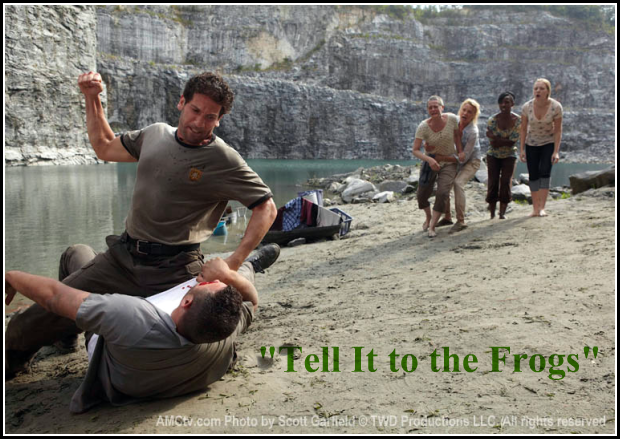
The show did have some moments which showed Darabont and the writers still feeling their way around Kirkman’s source material. One of it being the introduction of an abusive husband for one of the book’s regular faces in Carol. In the book the husband was only  mentioned as not having survived the trip to Atlanta but no mention of him ever being abusive. Like the introduction of Merle in the previous episode, the appearance of Ed as the caveman husband was done too haphazardly. Almost like someone out of stereotype casting call, Ed bullied his way around the women in the camp until Shane had to step in and put on an epic beating that added some depth to the character of Shane but also made one wonder if the addition of Ed was just as a way to give Shane an outlet for the anger and frustration he was feeling from the return of Rick and the subsequent frosty attitude by Lori towards him.

In the end, “Tell It to the Frogs” was a much stronger return for the show after a second episode that some thought was being too stereotypical of a zombie story. I enjoyed the second episode but understand why some reacted to negatively to it after such a powerful initial pilot episode. The crew of Darabont, Kirkman and the other writers definitely have a balance to do between dramatic storytelling and zombie mayhem as the show continues through this first season and into the next. While some of the characters, both new and old, do seem too one-dimensional and more like plot devices for the main characters the show is only in its third episode and to judge the whole thing on such a small sampling is not fair to the show and the people behind it. I think the show has hit a nice balance of drama and mayhem. Time will tell if the show will live or die by balancing the two or finally landing on one side or the other.

PS: Oh yeah, anyone who happens to be fans of Bambi and her mom will have a hard time watching this episode.

Review: The Pacific Mini-Series (HBO)


“I may have dropped into Normandy on D-Day, but I still had Liberty in Paris or London. You Gyrenes had jungle rot and malaria.”

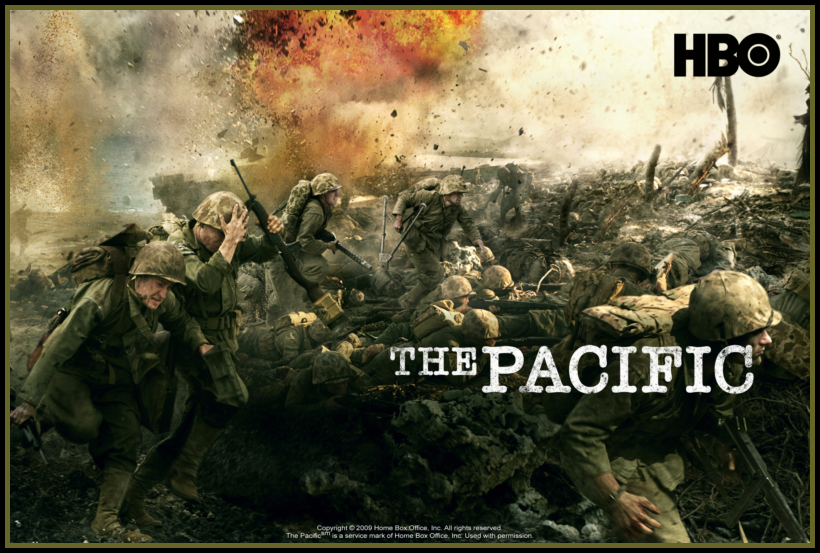
In 2001, HBO came out with a mini-series that detailed the experiences of the men of Easy Company, 506th Parachute Regiment of the 101st Airborne. This series was produced with loving care by Tom Hanks and Steven Spielberg. Two men who were instrumental in the success of an earlier World War 2 project called Saving Private Ryan. This series was called Band of Brothers and became one of the most critically-acclaimed mini-series of its time and has become part of the staple of military-themed shows and films that gets shown on Memorial and Veterans Day in the United States.

Even as this series was only a year old there was talk from some of its admirers about whether HBO and the team of Hanks and Spielberg would re-visit this era Tom Brokaw called “The Greatest Generation”. To re-visit and tell the stories of the men who fought on the other side of the European Theater in what was an even more hellish battlezone in the Pacific. It took almost 9 years, but the ending result is the mini-series called simply The Pacific.

The Pacific tells the story of three Marines of the 1st Marine Corps Division from their time before their unit ships out to the Pacific Theater of Operations and through some of the bloodiest and most savage battlefields of World War 2. There’s Gunnery Sgt. John Basilone (played by Jon Seda) who would show the sort of stoic heroism people nowadays would dismiss as a figment of Hollywood writers, but who actually did all the things only seen in action films. Bookending Basilone would be two newcomers to the art of war in PFC Robert Leckie (James Badge Dale of AMC’s recently cancelled series, Rubicon) and Cpl. Eugene “Sledgehammer” Sledge (Joseph Mazzelo from Jurassic Park). These two Marines are our guide through the unending hell that were the battles in Gen. MacArthur’s island-hopping campaign to beat back the Army and Naval forces of Imperial Japan.

It’s also these two men and their memoirs which detail their experiences during the war in the Pacific which make up the bulk of the narrative for the series. One would be Sledge’s With the Old Breed: At Peleliu and Okinawa which many consider as one of the best first-hand accounts of combat in the Pacific. The other one is Helmet for My Pillow by Leckie which was a more personal account of his time from Marine boot camp and experiencing a type of warfare in the Pacific which was new to a young man from the States. A type of warfare where the enemy didn’t surrender and would sacrifice his life in the service of one’s Emperor.

Basilone, Sledge and Leckie’s stories never come together but were told in concurrent fashion to show the audience the differing views of each. All three would go through the same meat-grinder that were the battles in immortalized places named Guadalcanal, Cape Gloucester, Peleliu, Iwo Jima and Okinawa.

We see Basilone’s heroism on Guadalcanal make him into a Stateside hero and taken away from those he fought beside to help push war bonds for the government. This change in environment for him doesn’t sit well with Basilone as we see the survivor’s guilt in him. Why does he get all the celebrity attentions when others like him were still fighting and dying the same battles he was just in months before. His story is the most poignant of the three as he finds happiness while training new Marines for the war only for his need to get back into the fight win out. The fact that all this happened for real makes his story even more memorable. Hollywood writers have tried to capture such moments and often-times fail. It was great to see Basilone’s story told for everyone to see that the world past, present and future has real-life heroes that Hollywood could never replicate but only imitate.

Jon Seda’s performance was in-line with what one thinks a gung-ho Marine should be but he brought a sense of realism to the role. He didn’t try to make Basilone more a hero than he already was. I like to compare his performance to that of Tom Hanks’ Capt. Miller in Saving Private Ryan and Damian Lewis’ Maj. Dick Winters in Band of Brothers. He was a man who did acts of bravery as seen by others on the battlefield and one which made him a celebrity to the civilians Stateside. But in the end he just saw it as him doing his job as he was trained and trying to keep his men alive. He didn’t see himself as a hero and while his Stateside role of war hero pushing war bonds did bring some perks he never fit in. Seda’s work in Part Eight where he meets his future wife was some of the best work in this series.

In Leckie’s story we see a man swept up in the great enlistment drive which happened right after the Japanese attack on Pearl Harbor. His story sees a cocky and smart young man wanting to do his part for the war effort yet not knowing the sort of sacrifices he’ll have to make or the horrors he will witness and inflict to survive day-to-day. We see Leckie quick to make friends in his unit during their training and then through their baptism of fire in the Battle of Tenaru before seeing the real horror of the war in the Pacific as his unit and the rest of the 1st Marine Division land of the island of Guadalcanal.

His time on Guadalcanal would soon erase any romanticized notion of honor and glory in battle Leckie may have had when he decided to enlist. As a writer in his civilian life prior to the war’s start he would continue to write his experiences in-between battles and skirmishes with the Japanese. Even when friends in his unit would die each and every day it seems Leckie seemed to want to keep that savagery at bay with his writing which would become a basis for his wartime memoirs. His story ends midway through the series and we won’t see him again until the final denouement as we see Leckie’s life as a civilian once again after the war. His final time in the warzone would be on the Battle of Peleliu (one of the bloodiest battles in USMC history and one that would be steeped in tragedy afterwards) where a severe concussive blast would render him unable to fight. It’s scenes on one of the hospital ships off the coast of Peleliu where Leckie’s own survivor’s guilt is temepered by the realization that any more time out in the battlefield would surely strip him of his humanity and turn him into the growing examples of battle-scarred and psychologically damaged Marines who have seen and done too many horrible things to ever return back to their civilian life intact.

The final episode shows Leckie (with James Badge Dale in a confident and cocky turn) the one who seem to adjust to the life back to civilian life with a modicum of ease. While he still carries the scars of battle in his psyche its that time in the Pacific which has also given Leckie the confidence to get his old job back at the local paper he used to work for and woo the pretty girl next door he had been shy and awkward with in the very first episode. While his performance wasn’t as good as Seda it was still a noteworthy one which brought the person of PFC Robert Leckie to the masses watching this series.

Lastly, we come to the third of the three whose story the series revolves around. The story of one Cpl. Eugene Sledge who, like Leckie, wanted to do his part for the war effort. While his young age at the start of the war prohibited him from enlisting without his parents’ consent he finally gets a chance a year later when he is of age and just in time for him to join the Corps, train and see his first taste of combat in the Pacific on the killing grounds of Peleliu then the hellish nightmare battlefields of Okinawa.

Sledge’s story is the most complex and runs the gamut of dark emotions a young man should never have to take. His young idealism in helping his country in its time of need will get some tempering even before he ships out to become a Marine. His father tells him of having to treat young men from an earlier era from another major war which had engulfed the world. His father spoke about how some of these young men who came back whole physically didn’t do so psychologically. He spoke about how the horrors of war seemed to have “ripped the souls” from these returning young men and how he didn’t want his son to go through the same thing. But as young, headstrong men who think they’re invincible are wont to do he enlists anyway.

The performance by Joseph Mazzello (hard to believe this young man is the same young boy who ran and escaped from CGI raptors and T-Rex on Spielberg’s Jurassic Park) tops all other performances in this cast full of noteworthy and great acting work. We don’t just see his Sledge go through each horrific scene after scene of battle and its aftermath with is emotional and psyche gradually sliding down into the abyss, but we could actually see Mazzello’s body, mannerisms and the look in his eyes make the same changes. I fully bought into his performance as the young idealistic young man from Mobile, Alabama slowly turned into the same uncaring, savage Marine one had to become to survive the war in the Pacific. He had seen enough bodies of Marines and enemy Japanese torn apart and strewn about everywhere one looked that one became inured to them.

One of the most powerful scenes in the series has Sledge confronted by the aftermath of what he and his mortar-team might have been responsible for. It was deep into the campaign to take the island of Okinawa and Sledge and his fellow Marines have been brought to the edge of insanity by all the fighting. A fight which has some of them questioning why the enemy just doesn’t surrender. An enemy willing to suicide charge into heavily armed Marines and also willing to herd Okinawan civilians into the line of fire. It’s this brutality by the enemy and mirrored by his fellow Marines which brings Sledge to a darker side of his nature which we as an audience don’t see a way out for him. But in the scene close to the very end of Part Nine brings Sledge back from the abyss and reminds him that there’s still humanity in him and the very Marines he has been with since the beginning. His reaction afterwards to a group of new Marines killing a young Japanese soldier for sport sickens him. We see Sledge realizing how just days and months before he was spouting the very same savage hate for the enemy as these newly arrived Marines looking for their first kill.

Of the three it’s Sledge who will carry the deepest scars of the Pacific for the rest of his life. We see the extreme difficulty he has in adjusting back to civilian life. Nightmares haunt his nights and flashbacks of the battlefields hound his steps in the daytime. His mental and emotional breakdown as he tries to go back to hunting with his father encapsulates this series at its most basic core. This series doesn’t have the camaraderie and brotherhood established between fellow soldiers that its predecessor had. While Band of Brothers also showed the horrors of war in Europe it was balanced by the hope that everyone in Easy Company had their brothers in arms to back them up when the bullets flew and shells exploded. This wasn’t the case in the Pacific.

Sure the were the same camaraderie and brotherhood, but the type of enemy fought in abject conditions which made downtime from battle almost as bad as the battle themselves didn’t bring hope. It only brought misery and a fatalistic view of the world Sledge and his fellow Marines existed right there and then. His breakdown in the final episode shows how those who fought in the Pacific definitely bore deeper scars and returned more damaged than their European brothers. Scars not just inflicted by the enemy but those they’ve inflicted on themselves by fighting savagery with their own form of savagery. It was a kill or be killed world and returning back from that brink didn’t happen to everyone and those who were able to return did so not whole.

I understand that some were disappointed by how The Pacific turned out. How it didn’t live up to the standards created by Band of Brothers. Some have said that there was no main focus to the narrative the way its predecessor strictly followed the men of Easy Company through the battles in Europe. They’ve pointed out how some episodes took too much time to get to the battle scenes. I think trying to compare The Pacific to Band of Brothers is foolish and a doesn’t give this follow-up mini-series the proper due it deserves.

The Pacific wasn’t trying to tell Band of Brother in the Pacific. While the two series do take place in the same world war the circumstances surrounding the storylines in both series diverge to take different paths. The first series almost seem like men fighting for a common cause and the good fight against tyranny. The Pacific is all about revenge. Revenge and payback for Pearl Harbor at first then as the series moves forward it becomes revenge and brutality for seeing their buddies die. This series showed nothing noble about the fighting in the Pacific. It was just a struggle to survive from one day to the next.

So, while this series may not be the second coming of Band of Brothers it does stand on its own merits and I think was the more powerful of the two. It didn’t flinch away or dismiss the darker side of the “good guys” and showed that war truly is hell and that those who fight and live through it were truly never the same. I say watch The Pacific and stop trying to compare it to Band of Brothers or any of the several shows dealing with the current wars. The Pacific should be watched as seen as the bookend to Band of Brothers. A darker journey to seeing the war of the “Greatest Generation” from the eyes of those who fought and died on the islands and jungles of the Pacific.


Scenes I Love: It’s Cthulhu!


Unlike the other “scenes I love,” (oddly, I never realized how silly that looks until I put it in quotation marks), this scene does not come from a movie.  It comes from perhaps the most important TV show ever — South Park.

Unfortunately, the best version of this scene to be found on YouTube has also had “embedding disabled by request.”  The 2nd best version can be embedded but also has this annoying banner that runs across the bottom of the screen, trying to get you to check out someone’s blog. 

That left me with two versions to choose from.  The third one is only 6 seconds long and only contains the very end of the scene.  The fourth one is the entire scene but it was apparently filmed by someone pointing his camera directly at his TV screen.

So, for what its worth, here’s 6 seconds of a scene I love, the historic first appearance of Cthulhu on South Park

 Cthulhu, by the way, isn’t quite as adorable as the sea otters from the future or the guinea pirates from Pandemic but he’s still cute in a Dark Lord sort of way.  Still, nothing could ever be more precious than those guinea pirates…

The New Absolute Worst Freakin’ Commercial Of All Freakin’ Time


The Jeep people can breathe a sigh of relief because their little Marxist propaganda film is no longer the worst freakin’ commercial of all freakin’ time.  No, the title has been stolen by another.

As you watch this commercial, just remember that it’s an advertisement for Citibank that was made after the federal government bailed out them out.  So, if you’re an American citizens, chances are that you paid for this commercial.

Okay, there’s so much about this commercial that is just soooo wrong.  

The guy narrating the commercial has a truly annoying serial killer-style voice.  Seriously, he sounds like Dexter should be dumping his corpse over the side of a boat. 

The woman playing the mother is a terrible actress as evidenced by her notably “enthusiastic” reaction to whatever it is that she eats at the local “deli.” 

There’s also this whole idea of Turkey — which has one of the WORST human rights records on the planet — serving as some sort of 21st century version of post-World War I Paris.  It’s nice of Citibank to let us know that actually, there’s little difference between Istanbul and Queens. 

Also, don’t you just hate the faux casual way that their son is all like, “So, I just decided to send them their old seats from the stadium…”  I mean, get over yourself. 

But ultimately, this commercial fails for one big and obvious reason and there’s a very important lesson here.  This commercial’s failure is ultimately all about casting. 

We’re specifically given two bits of information in this commercial.  First off, we’re told that the narrator’s father has moved to Turkey because he was “transferred” there by whatever soulless corporation it is that he works for.  And we’re also told that his father celebrated his “30-year anniversary” in Turkey.  

And I guess that would all be good and well except for the fact that his father appears to be about 130 years old in the commercial.  Seriously, his company should be paying him a pension as opposed to sending him off to live in one of the most oppressive countries ever.  His wife only appears to be 120 but that still means that she was probably in her 90s when she gave birth to her smug little mass murderer of a son.  He owes her a lot more than just some nasty, germ-filled seats from “the old stadium.”

You know what would have made this commercial a lot more effective and enjoyable?  If the seats from the old stadium had arrived with a few dozen bags of hash taped to the back of them.   And then we could have watched that 130 year-old man try to smuggle them back to the United States just to then get caught right before boarding the flight back home.

Call it Citibank Express.

A Quickie With Lisa Marie: Prom Night (Directed by Paul Lynch)


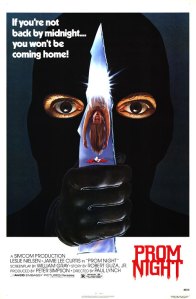
As I mentioned in another post, my sister Erin and I spent Tuesday night watching the Killer Party Marathon on Chiller.  One of the movies we saw was the original 1980 Prom Night, starring Jamie Lee Curtis and directed by Paul Lynch.  Prom Night, of course, was remade two years ago with cross-eyed dumbfug Brittany Snow as the star.  If, like me before Tuesday night, you’re only familiar with the tepid and bland remake than the original Prom Night is a surprise indeed.

The original Prom Night is an old school slasher film, one of the many that came out in the two years immediately after Halloween.  It even stars the star of Halloween, Jamie Lee Curtis.  Prom Night also stars a lot of Canadians because it was one of the many low-budget B-movies that was made in Canada in the early 80s.  Apparently, Canada was offering tax breaks to film companies willing to shoot up north.  Several web sites have said that the setting is obviously Canadian but I couldn’t really tell.  Of course, I’m from Texas.  Anything above Arkansas looks like Canada to me.

Plotwise, the film is pretty much your traditional old school slasher film.  There’s a terrible tragedy in the past, an innocent man is blamed for it, and ten years later, teenagers end up getting killed at some communal event.  In this case, the tragedy is the death of a young girl who is killed during a truly demonic game of tag.  The children responsible for her death lie about what happened and a disfigured drifter is convicted and imprisoned for her murder.  As for the communal event, in this case, it’s prom night.  The killer stalks the prom, which is what I suggested my classmates call our prom way back when.  They disagreed and that’s their loss.  The Killer Stalks The Prom would have been a story to remember.

Anyway, here’s a few random thoughts about the original Prom:

1) As with all old school slasher films, it’s interesting to see just how much of the early products of this all-American genre borrowed from the Italian giallo genre.   Everything from the elaborate, past tragedy to the black gloves worn by the killer to the attempts to keep audiences guessing who the killer actually is to even the supporting character of the burned out cop simply screams giallo.  The main thing that the Americans brought to the giallo format was the idea of having the murders revolve around a previously innocent gathering or holiday.

2) Especially when compared to recent “slasher” films, Prom Night is a relentlessly grim film.  Prom Night’s killer doesn’t waste any time with comic relief or one-liners.  He’s too busy savagely killing people.  And our victims aren’t the usual collection of bimbos and soulless jocks.  No, this is the type of movie where even the token virgin ends up getting her throat ripped out with a gigantic shard of glass.  There’s not a lot of deaths in Prom Night, just six.  But they all hurt.

3) I usually just think of Jamie Lee Curtis as the crazy woman selling Activia on Lifetime but this movie shows that she’s actually a pretty good actress.  Even working with a script that isn’t exactly full of brilliant dialogue or multi-faceted characters, Curtis is a sympathetic, likable, and most of all, believable heroine (which is all the more remarkable when you consider that she, like everyone else in this film, appears to be far-too old to still be worrying about the prom).  She even manages to make the film’s ending rather touching and even poignant.  And how many slasher films can you say that about?

4) Prom Night is as much about tacky — yet insanely catchy — disco music as it is about spilling blood.  Seriously, if I owned the soundtrack to this film, I would listen to it 24/7 for two years straight.  I’d force all of my friends to listen to it too and eventually we’d all go insane and just spend the rest of our lives wandering around going, “Prom night!  Everything is alright!”

5) One last thing — Prom Night showcases what has to be the most believable, cheap, and tasteless prom ever put on film.  The theme is Disco Madness and the students are all very chic in that way that even they know will be painfully dated in another two years.  Indeed, this is one of the rare films that understands that the perfect prom is nothing less than an unintentional camp spectacular.  For someone like me who, as the result of seeing too many episodes of Saved By The Bell: The New Class, grew up with an unrealistic expectation of what the senior prom would be, the original Prom Night remains a refreshing breath of fresh air even 30 years after it was made.

And always remember: “Prom Night!  Everything is all right…”

A Commercial For Crystal Meth


Hi.  I came across this old commercial for Crystal Meth on YouTube earlier this year and it has really stuck with me.  I have a fear that this is another one of those things that everyone else on the planet has already seen but oh well.  Better late than never.

It’s debatable just how effective this commercial is, to be honest.  Because while I don’t think anyone would say it’s necessarily a good thing to get hooked on meth, that little jingle is so freaking catchy.  I have to admit that I recently found myself singing it while I was cleaning the kitchen.  Also, and admitedly a lot of this has to do with me being OCD, it’s hard for me to really see the downside of having the cleanest house on the street.  So, no, the commercial did not sell me on meth.  But it did make me want to go clean the house.

Finally, I can’t end this post without including Sin33’s remix of the Meth Song.

The Worst Freakin’ Commercial Of All Time


So, about a month and a half ago, Arleigh and I had a little disagreement on which commercial deserved the title of Best Freakin’ Commercial Of All Time.  I argued for the cute little Kia commercials featuring the Sockmonkey and the Freaky Red Thing in Vegas.  Arleigh, however, claimed that the title actually belonged to a series of ads featuring a scary football player destroying stuff and selling deodorant.  Okay, that’s fine.  Friends can disagree.  In the end all that matters is that I love Sockmonkey and Sockmonkey loves me and we don’t care what you think.  So there.

However, all throughout that debate, neither one of us mentioned any possible contenders for the worst commercial of all time.  To be honest, there’s probably too many contenders to really pick just one.  However, I definitely have a least favorite and here it is…

Okay, maybe this isn’t the worst commercial of all time.  In fact, in many ways, it’s oddly effective.  However, if it’s not the worst, it’s certainly the most insulting. 

What are my specific objections to this commercial?   Thank you for asking.

1) I don’t care how effective the freaking 3-D was, the story still sucked!  Oh, wait a minute.  That’s my specific objection to Avatar.  Sorry, it’s been a long week.

Okay, let’s try this again.

1) First off, do I really need a car company to tell me what it means to be an American?  Ever since they got their asses bailed out in ’09, American car companies have been producing the most pompous, condescending commercials possible.  Whereas once we just saw footage of people driving too fast, car commercials today just feel like propaganda.  Now, car commercials are narrated somber men going, “You know what America needs?  America needs a comeback.”  No, America doesn’t need a comeback.  You guys just need to get your shit together.  This commercial continues the new tradition of condescending car commercials. 

2) “We have always been a nation of builders…”  Actually, we’ve also been a nation of poets, artists, freethinkers, farmers, atheists, politicians, libertines, and just about every other category under the sun.  I kinda thought that was the whole point.  I mean, is this a car commercial or is it an educational video? 

3) If you’re going to brag about how America is responsible for the Colt Revolver then at least have the balls to actually show a Colt Revolver while you’re doing it.  A bunch of horses races at the Kentucky Downs while a bunch of rich people sit in the stands and cheer has absolutely nothing to do with the Colt Revolver.  The Colt Revolver was not named after a horse, it was named after the man who invented it.  For the most part, horses were imported to America from Asia by way of Europe.  So, just because whoever made this commercial was scared to show a gun, they instead show an image that totally negates the commercial’s message.

4) What’s up with the weird little guy in that radiation suit?  I mean, does he not look like a villainous doctor from some horrific science fiction movie from the early 80s?  Do we really want someone like that working with radioactive material?

5) Yes, I understand the background music is taken from Johnny Cash song and who doesn’t love Johnny Cash?  But the music is still annoyingly repetitive, like the sort of thing that they play to dull your brian during a brainwashing session.

6) “As a people, we tend to do well…”  You know what, Mr. Smug Narrator Man?  As a person, I do well when I’m not building anything at all.  Don’t insult me with all that “as a people…” BS.

7) “The Things We Make, Make Us.”  Seriously, this is the type of empty, collectivist statement that would make George Orwell throw a fit.  Animal Farm much?

The Walking Dead – Official Series Trailer (AMC)


Well, it’s now official. AMC has finally released the very same trailer that people not fortunate enough to have attended San Diego Comic-Con last month. This trailer is under 5 minutes long and it’s the same one those who attended the Comic-Con panel for the show saw. Only shaky and grainy bootleg copies of the trailer has been seen outside of that panel. While some bootleg versions were quite good in quality they’re still not a substitute for the official release of the same trailer by AMC for everyone to watch.

This official trailer release was also AMC’s way of finally announcing the premiere date of the 90-minute pilot episode (directed by showrunner and producer Frank Darabont). The pilot will premiere worldwide on Halloween Night, October 31, 2010. While some thought the pilot will premiere early on AMC’s “Fearfest” campaign for October I think it’s appropriate that the series premieres on Halloween Night. I can definitely see many fans of the comic book series planning their Halloween parties to include group watch of the pilot episode the very same night.

Still two months away and this trailer definitely doesn’t make the wait any easier.

Source: The Walking Dead (AMC)

Undercover Boss: An Orwellian Sham


I’m not ashamed to admit it.  I love reality TV.  Survivor, Big Brother, Real World, The Amazing Race, Project Runway, the Bachelor(ette) – I could watch these shows forever.  To me, Paradise Hotel (remember that one?) was one of the most brilliant television events in history.  It’s traditional for culture snobs to hate reality television and to spend hours crying about how it represents the decline of civilization and blah blah blah. 

Well, strangely enough, this year has seen the premiere of a reality show that has made me start to say “Blah blah blah.”  What’s worse is that this show has become something of a populist hit, a show that has been embraced by the very people who should hate it.  That show is Undercover Boss.

In Undercover Boss, a CEO goes undercover as an entry level worker in his own company.  The experience is meant to humble him and bring him back down to Earth.  Of course, what’s not mentioned is that each show basically works as a 60-minute commercial for whatever company is being featured on each episode.  For that reason, we hear that the CEO of 7-11 knows that he needs to know how to improve his company’s image.  However, at no point do we say anyone informing the CEO that he might end up getting shot if he works the late shift.

One of the reasons why Undercover Boss has become so popular is that every episode pretty much follows the exact same format.  There’s never anything unexpected hiding in the shadows.  This means that viewers can not only turn off the majority of their brain and still follow what’s going on but that they also get to pat themselves on the back for being able to predict what’s going to happen before it actually does.  The show makes the audience feel smart by making them more stupid.  George Orwell would be proud.

Each episode plays out as follows:

First, we get an overview of whatever company we’ll be investigating tonight.  For the most part, these are companies that we’ve heard of but we rarely give much thought to.  They are also companies that are successful enough that it really doesn’t matter whether the CEO goes undercover or not.
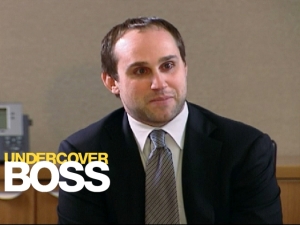
We then meet the CEO.  If the 1st season is any indication, a CEO is a boring white guy who was either given his job by his father or else graduated from an Ivy League college.  Apparently, this is one of those no-girls allowed type of jobs.  I guess we’re just too emotional to handle the responsibility.  We get to see our masculine CEO with his perfect family (which usually consists of a nameless wife and two or three kids just to make sure we know that our male CEO is a real man).  The manly CEO will often make a point of telling us that he loves motorcycles or skydiving or something else that he thinks will make him less inherently boring than he actually is.  The really pathetic CEOs are the ones who insist on being filmed while surfing.  “See, I am too a normal guy!  I own a surf board and wear a wet suit.”

However, the CEO tells us that he feels like he needs to go and get his hands dirty.  He has to know what’s going on in his company.

The CEO then holds a meeting with his “corporate board.”  His corporate board is usually a group of people who are somehow even more boring than the CEO.  For the most part, this corporate board is equally male, white, and bald.  Most of them could also seem to have that unfortunate thing where it’s impossible to tell where the chin ends and the neck begins.  Strangely, a lot of these guys respond to this condition by trying to grow a beard which basically just makes them look a 100 times worse.  Another thing I always notice about these corporate types is that they’re almost always wearing a suit but not a tie.  Instead, they just leave their collar unbuttoned and show off a small fraction of their sweat-stained undershirt.  I’m assuming they’re trying to say that they haven’t become corporate, that they’re still Jenny From The Block no matter how money they’re making.  However, they just look like they forgot to finish getting dressed in the morning.  Seriously, guys, fuck you.

For the sake of diversity, there are usually one or two women on the board.  For the most part, the women are white and their lipstick is bleeding into the wrinkles surrounding their mouth.  There’s usually a black guy on the board too.  Usually, he’s wearing a nametag that reads “Token.”

One odd thing about this show is that every CEO seems to have the same board of directors.  I don’t just mean that all the boards are made up of bald white guys.  I mean, that they seem to be made up by the exact same bald white guys.  Honestly, I’m one of those bohemian artist girls.  I don’t know much about Corporate America.  Maybe there’s a traveling board of directors that goes from company to company.  I’ll have to give the show the benefit of the doubt.

Anyway, the CEO says, “I’m going undercover.  I’m going to pretend to be a very verbose blue collar worker with an Ivy League education.  I’m going to lie to people to get them to tell me the truth.  I’ll be in the trenches, working.  Kinda sorta.”

What’s hilarious here is that, while he’s speaking, the camera will always find the one kissass board member who actually starts taking notes.  I always want to know what they are actually writing down.  Maybe something like: I am the Angel of Death.  My time is now while the boss is out…

Another member of the board will then say, “Do you think you can hack it?  I mean, those are silk boxers you’re wearing there.”

Everyone laughs nervously.  The CEO glares and then says, “That’s what I’m going to find out, you smug asshole.”

The CEO goes undercover.  This means that he either stops shaving or he does shave if he’s one of those insecure men who thinks a beard will somehow make him impressive.  He takes off his tie.  He puts on a baseball cap.  BAM, suddenly he’s just your average articulate, well-spoken 57 year-old laid off construction worker.  He tells us that if he’s going to undercover, he’s going to have to live like a poor person.  This apparently means getting a room at some otherwise deserted motel where he promptly proceeds to snort a line of cocaine off the nightstand.  Staring at the camera, he rubs his red nose and says, “Don’t film this, okay?  God, my life is such a fucking lie!”

(I’m still waiting for one of the undercover CEOs to get stabbed to death in the shower…)

The Undercover CEO explains that he’ll be using a fake name.  He also says that the camera crew will be explained away as a crew that’s making a TV show about entry level jobs.  Oddly enough, apparently this story actually works.  Nobody ever says, “Hey, articulate, educated, old white blue collar guy, why are there a bunch of TV cameras following you around?”  Me, I have to wonder why anybody would want to watch a TV show about entry level jobs when they could be watching one about clueless undercover CEOs fucking up in their own companies.

Speaking of which –
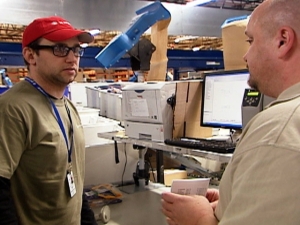
The first job that Undercover CEO takes almost always seems to involve a lot of physical activity and speed.  He shows up for the job looking all unshaven and laid off-like.  He meets his new supervisor.  Undercover CEO grins like an idiot and goes, “I’m here to work.”  The new supervisor says, “I give a fuck, kid.”  Again, nobody mentions the camera crew.

Anyway, the supervisor assigns Undercover CEO to do the most demanding, difficult, and demeaning job possible.  The Undercover CEO is assigned to work with either a jovial black man or a fat woman.  The Undercover CEO is really, really impressed by his new co-workers.  “Why they’re just the type of poor people I was hoping I’d meet!” he says. 

They get to work.  Undercover CEO does a terrible job.  He can’t keep up.  The Supervisor comes by and says, several times, “Jesus Christ, strangely soft-spoken blue collar worker, you sure do suck.”  Undercover CEO tells the camera, “This is hard work!”

I think part of the CEO’s problem here is that he simply won’t shut up and do his job.  Instead, he’s spending the whole time asking everyone around him questions like, “How long have you worked here?” and “Do you enjoy your job?” and “How do you work here and take care of your children?”  His coworkers – who need their jobs much more than Undercover CEO – answer every single one of his questions.  Does nobody find it weird that this stranger wants to know about everyone’s children?

Anyway, at the end of his first shift, Undercover CEO is told that he can’t cut it.  “We don’t need you back,” the supervisor says.  Dejected, Undercover CEO goes out, picks up a male prostitute, and goes back to his hotel where he allows his date for the night to tie him down to the bed and drip hot candle wax on his genitals.  (Okay, maybe that was just Michael Rubin, who was probably the most clueless asshole of the 1st season’s CEOs.)

The next day, a properly sore and chastised Undercover CEO goes to work in the “service” part of his company.  He’s either a short order cook or a cashier or something like that.  Again, he’s assigned someone to train him.  This time, the Undercover CEO does his job adequately despite the fact that he still won’t stop harassing his new co-workers with a bunch of inappropriate questions.  He asks, “Do you like working here?” and “What do you think this company could do better?”  Amazingly enough, people still answer him even though there’s a camera crew there filming them.  Does it never occur to these people that there’s something weird about some stranger with a camera crew wanting to know every intimate detail of their lives within minutes of first meeting them? 

Amazingly, Undercover CEOs always end up getting trained by the one person in the company who either needs an organ transplant or who has a child on dialysis.  Undercover CEO is moved to tears.  During his break, he tells the camera, “I wish all my employees were like her.”  Which I guess means that he’s wishing all of his employees were terminally ill and unable to pay for adequate medical coverage.
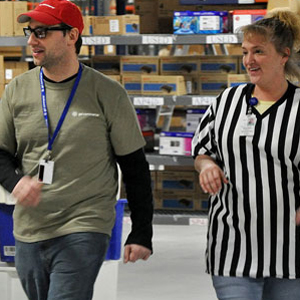
Undercover CEO returns to his motel.  He’s got a lot to think about now.  He sighs.  “Did you know,” he tells the camera, “that before I became a CEO, I was just another dirty little boy who liked to touch himself?  Somehow, I have to get back in touch with that little boy.  Hold me.”

Day 3, Undercover CEO is forced to deal with the dark underbelly of his corporation.  This was the day that the CEO of 7-11 discovered that one of his stores did not have working lights.  Shrimpy little Michael Rubin had to work with a rude woman in customer service on Day 3.  (“I nearly went off on her,” Michael informs us.  What-evuh, Michael.  Go fuck yourself.)  Most notoriously, the Hooters CEO met a manager who forced his waitresses to play “reindeer games.”  Amazingly, these people engage in their bad behavior even though there’s a camera crew about two feet away from their face.

Undercover CEO’s mad now.  “Yes,” Undercover CEO says, “my company may not be perfect but dammit, that’s just not the way we do things at Hooters! ” Undercover CEO sneaks outside.  He yanks out his cell phone.  He calls someone at the corporate office.  He says, “This is your CEO speaking.  We’ve got bad juju going down.”  The person at corporate probably says, “I’ll get right on that, sir,” in a tone of contempt and seething hatred.  Undercover CEO says, “Get on it, stat!”  He hangs up his phone.  He looks at the camera.  “That’s not the way we do things!” he repeats as saliva forms at the edge of his mouth. 

A few minutes later, a van pulls up in front of Hooters.  Undercover CEO watches as Jack Bauer gets out of the van and runs into Hooters.  For a few seconds, silence.  Then a barrage of gunfire erupts.  Bauer runs out of Hooters and jumps back in the van.  As the van speeds off, the offending Hooters blows up.  Undercover CEO looks at the camera and nods.  “Sometimes,” he says, “it’s about doing what’s right.”

Back at the motel, Undercover CEO grins as he tells the cameraman, “That’s not the first time I’ve had to do that.  What’s funny is that I’m not even the CEO of Hooters.”  Undercover CEO starts to giggle.  “I’ve been a baaaaad wittle boy, mommy,” he says.

Cut to commercial.

The next day, Undercover CEO has his final assignment.  Inevitably, there’s someone at this last job who knows who Undercover CEO actually is.  So Undercover CEO has to have a meeting where he goes, “Hey, I’m all undercover and stuff.  You blow my cover and I’ll have your family killed and fed to a bunch of pigs.”  Everyone agrees to keep Undercover CEO’s identity a secret.  The audience sighs a sigh of relief because the audience is made up of a bunch of total dumgfugs.

Anyway, during the final assignment, Undercover CEO ends up working with an inspiring member of a minority who reaffirms the Undercover CEOs faith in humanity.  Undercover CEO tells the camera, “That guy could be really valuable in this company, even though he’s black/Mexican/Indian/actually a woman.”  Undercover CEO does his final job well.  For some reason, everyone tells him every detail about their lives.  Undercover CEO is moved.

However, Undercover CEO isn’t moved enough to actually give them any of his money.  Instead, he just checks out of the Bates Motel and returns to his corporate office.

He has a meeting with his board of directors.

A member of the board goes, “I heard everyone hated you and you really suck.”

Undercover CEO says, “I’ve seen the light!  We’re going to change how we do things at this company!”

The kissass board member continues to take notes.

Undercover CEO either starts to shave again or else grows his beard back.  He puts on a suit.  He says, “Thank God, I’m rich again.  What are those fucking cameras still doing here?  Oh yeah, I’ve got to let everyone know that I spent a whole day lying to them.”

Everyone that Undercover CEO has worked with is invited to the corporate office.  They’re interviewed as they’re driven to the office.  They say, “I’m scared.  I hope I’m not getting fired.”  None of them seem to connect the current TV cameras to the last group of TV cameras that they saw. 

They meet the CEO.  The CEO says, “You remember me?  I actually run this company!”

“Bullshit!” the former co-worker replies.

“No, it’s true!”

“What-evuh, freak.  Go fuck yourself.”

Most of this is edited out in post-production but you know it happens.

Undercover CEO tells everyone what a great job they’re doing.  And he tells them that he’s going to reward them for being sick or not being able to take care of their children.  (Never mind everyone else in his company who is in a similar situation.) 

The co-worker smiles, probably hoping to hear that he’s getting a raise.

Undercover CEO says, “I was really touched by how your son is about to die if he doesn’t get a kidney transplant.  So, I made a $1,000 dollar contribution to the Stop Global Warming fund.”

“Oh,” the co-worker says, “I guess that’s good.  Considering that I had to do a lot of extra work to cover for your middle-aged ass…”

“Now, get the fuck out of my office and make sure you cut your overtime,” Undercover CEO says.

Finally, everyone who works for Undercover CEO gathers in a conference room where they watch clips of him fucking up.  They all laugh and go, “See, I told you the boss is an idiot!”

Undercover CEO then addresses his employees.  “See,” he says, “I am too a great guy.”

And life goes on.

That so many Americans have apparently been seduced by this obviously manufactured piece of mainstream propaganda is just sad.

The most common adjective that I hear to describe this show is “positive.”  Supposedly, it celebrates the workers of America.  It makes people feel better about their own largely pointless lives.  And to all that, I say “Bullshit.”  Yes, the CEO gets to be poor for a week but he does it secure in the knowledge that it’s only going to be for a week and that he’s not going to lose his job.  The CEO is less an undercover investigator and more of a pampered tourist who looks at poverty all around him, says, “How awful,” and then promptly gets on the next plane home.