Review: Fallout (Season 2, Episode 8 “The Strip”)


“Well…Welcome to the Wasteland.” — Maximus

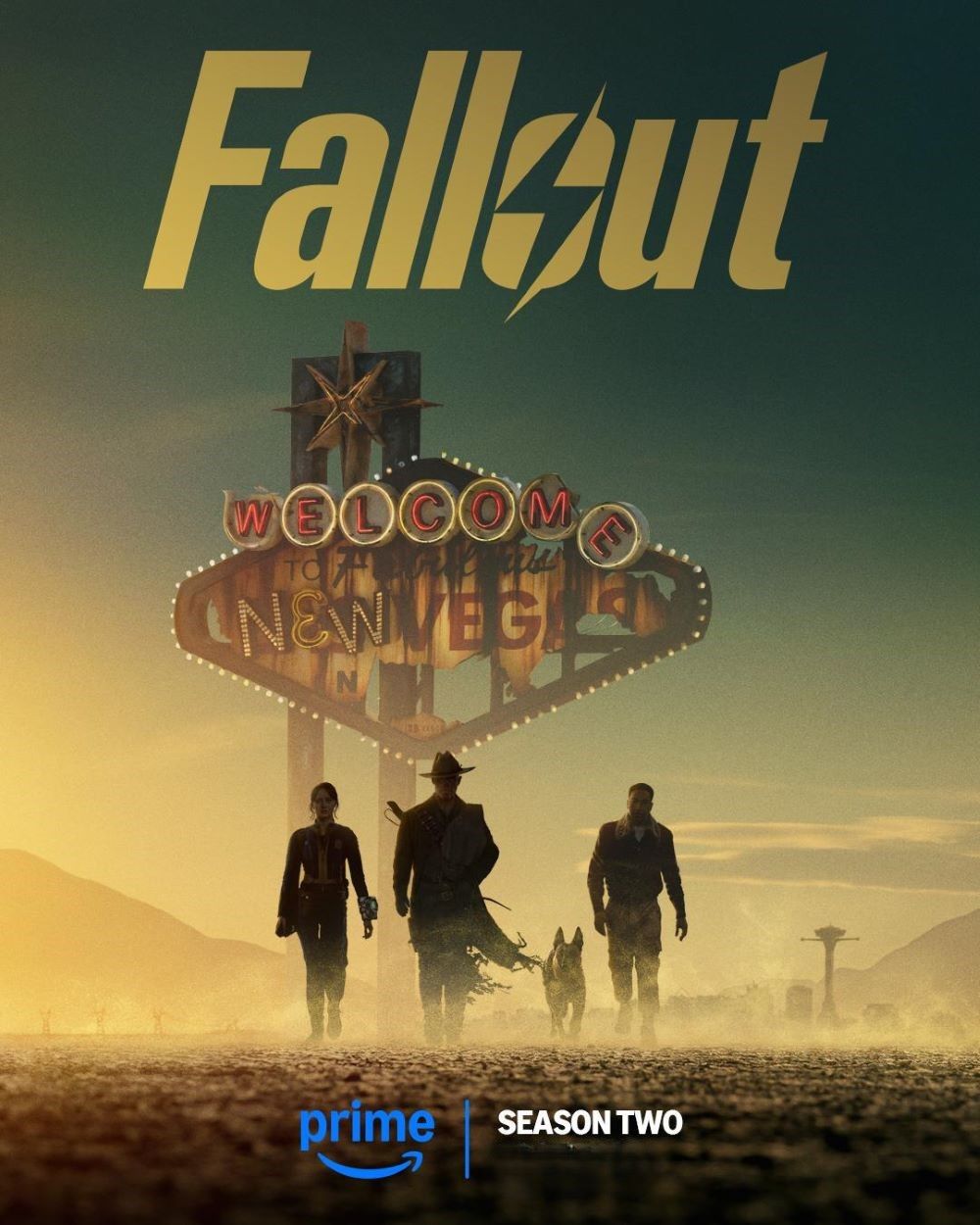
Diving headfirst into the season 2 finale of Fallout, episode 8 slammed into me like a radstorm tearing through the garish neon fog of New Vegas—a whirlwind of high-octane mayhem that cranks the overarching tension to eleven while scattering a bunch of tantalizing loose ends across the irradiated sands. Christened “The Strip,” this powerhouse installment rolled out in Prime Video’s carefully recalibrated evening premiere window, the sort of strategic time shift they pulled to maximize viewer frenzy and keep everyone glued from the opening credits. What starts as a scrappy tale of individual survival in the prior episodes morphs here into a sprawling canvas of factional blood feuds, deftly interweaving those delicious Easter eggs from the beloved games with audacious original flourishes that pay homage to the source material’s spirit without ever feeling shackled by it. For the uninitiated casual viewer dipping their toes into the post-apocalyptic pool, there’s just enough emotional resolution on the core trio’s personal odysseys to leave you with a satisfied glow, yet the longtime wasteland wanderers—those of us who’ve logged countless hours in the Mojave—can practically hear the massive plot engines revving up for an explosive season 3 detonation.

From the jump, the episode plunges us into the seedy shadows of Freeside, where Aaron Moten’s Maximus finds himself locked in a ferocious tussle with a rampaging pack of Deathclaws that have breached the barriers, mutating the opulent Strip into a primal pit of razor-sharp talons, spurting blood, and raw survival instinct. Walton Goggins absolutely commandeers the screen as the Ghoul in these sequences, his haunting pre-war flashbacks delivering visceral emotional haymakers as he finally corners Robert House, reimagined here as a razor-tongued artificial intelligence overlord yanked straight from the New Vegas playbook, complete with that signature blend of megalomania and dry wit. Goggins’ Ghoul doesn’t mince words or pull punches, grilling House relentlessly for intel on his vanished family, only for the AI to unload a cascade of devastating revelations: Cooper Howard, in a moment of misguided patriotism, unwittingly funneled critical cold fusion technology right into the Enclave’s greedy claws, igniting the chain reaction that birthed the Great War—turns out the President himself was neck-deep in their shadowy cabal. This bombshell doesn’t just land; it excavates and reframes every lingering enigma from season 1, transforming Coop’s well-meaning actions into the tragic catalyst that obliterated civilization, all underscored by a chilling flashback to his arrest at the hands of a HUAC-inspired congressional witch hunt that systematically dismantles his glittering Hollywood existence, blacklisting him into oblivion.

Shifting gears underground, Ella Purnell’s riveting portrayal in the vault sequences forms the pulsating emotional heartbeat of the entire hour, thrusting Lucy into a harrowing confrontation with her father Hank—now a zombified shell of his former self—trapped within one of House’s ingeniously rigged management vaults that double as psychological torture chambers. Kyle MacLachlan devours the role with gleeful malevolence, laying bare Hank’s insidious brain-chip initiative, where he’s hijacking Congresswoman Welch’s saccharine “gold standard” personality template to overwrite minds, churning out armies of compliant drones stripped of free will. The mercy killing of Welch’s grotesque severed head with a hefty crowbar stands out as a gruesomely poetic flourish, mirroring House’s own hard-knocked tales of endurance in the wastes, but the true masterstroke comes when Lucy seizes control, reversing the procedure to implant the chip into Hank himself—a merciless, ice-cold denouement to their shattered father-daughter dynamic that had been simmering all season. Emerging from the depths, she collapses into a profoundly earned, battle-scarred embrace with Maximus, who moments earlier had improvised a roulette-wheel fragment into a desperate shield during an unarmored casino melee against the Deathclaw horde, only for a thundering cavalry charge from the NCR to barrel in, smashing together divergent game endings in a symphony of chaotic convergence.

The Ghoul’s storyline weaves in its own brand of understated heartbreak, steering clear of mawkish sentimentality; the discovery of empty cryopods meant for his wife Barb and daughter Janey hits like a sledgehammer to the irradiated chest, yet a cryptic postcard from the Colorado badlands injects a slender thread of optimism, slyly foreshadowing a seismic geographical pivot toward the Rockies in the seasons to come. Notably absent is any grand, weepy reunion or reconciliation with Lucy—sure, the group hauls her out of the vault inferno, but they gloss over any substantive dialogue probing the Ghoul’s savage underbelly, marking a subtle but noticeable lapse in peeling back another layer of his evolving humanity. Across the factional divide, the Legion’s intrigue reaches a fevered crescendo as the cunning Legate anoints himself the new Caesar upon deciphering the ailing leader’s final missive—”it ends with me”—executing a textbook power consolidation by silencing potential rivals and forging the splintered hordes into a singular, unstoppable juggernaut aimed squarely at storming the Strip. Brotherhood of Steel devotees score a tantalizing post-credits morsel with blueprints for the colossal Liberty Prime, strongly implying that Michael Cristofer’s Elder Cleric Quintus is gearing up to deploy some serious mech-stomping firepower in future clashes.

Deeper in the vault network, Vault 32 erupts into pandemonium as Annabel O’Hagan’s Steph pries apart Betty’s fortified Enclave Pip-Boy cache, inadvertently triggering “Phase 2” with ominous undertones of Forced Evolutionary Virus (FEV) poised to warp the inhabitants into rampaging super mutants, a thread that masterfully callbacks to the season’s mid-point murmurs. Moisés Arias’ Norm threads the needle through a frenzied Radroach ambush that decimates Bud’s sycophantic crew, hauling Claudia to momentary safety, while Johnny Pemberton’s Thaddeus undergoes a nightmarish metamorphosis into a centaur-esque abomination—proliferating mouths, shedding limbs, and even picking off distant rescuers with opportunistic foot-triggered shots before his body fully succumbs to the mutation. Those fleeting super mutant sightings from episode 6 crystallize in a torrent of exposition, but for all its revelations, this segment mostly serves as intricate groundwork: cementing the Enclave as the puppet masters of apocalypse, with the scorched surface world reduced to their perpetual laboratory playground.

Where “The Strip” truly excels is in its pulse-pounding action choreography and the nuanced character evolution that anchors the spectacle. The Deathclaw showdown unfolds as a ballet of brutality—gory eviscerations and desperate dodges that highlight Moten’s Maximus shedding his power-armored persona for gritty, improvisational brawling prowess. The production design dazzles at every turn: heads bursting in crimson fountains, flesh shredded by incoming missiles, the Strip’s eternal neon splendor grinding mercilessly against the pervasive wasteland squalor for that quintessential Fallout aesthetic tension. Pacing remains a tightrope triumph, deftly juggling a constellation of interwoven plotlines without ever tipping into overload, while those interspersed flashbacks elegantly suture the halcyon pre-war era’s illusions of security to the grim post-apocalyptic reality. The soundscape elevates it further, layering ambient dread with precision—those eerie payphone rings slicing through the cacophony like personalized harbingers of doom.

That relentless propulsion toward future conflicts, however, exacts a toll on immediate gratification. Vault 31 lingers as overt season 3 appetizers rather than a sealed chapter, and the simmering Brotherhood internal schisms peter out without the anticipated fireworks. Hank’s reduction to a mind-wiped vagrant unceremoniously exiled to the wastes provides a poignant, if understated, capstone to his arc, but it lacks the thunderous finality one might expect for a villain of his stature after seasons of buildup. Lingering voids—like a more introspective Ghoul-Lucy exchange or a meatier exploration of House’s centuries-spanning machinations with the Enclave—cry out for expanded breathing room between the explosive set pieces. Ultimately, the episode embraces its serialized “act two finale” DNA, lavishing attention on narrative springboards and cliffhanger bait over comprehensive bow-tying, which suits the binge-watching ecosystem to perfection but might leave traditionalists yearning for a more self-contained punch.

Thematically, “The Strip” captures Fallout‘s savage satirical soul with unerring precision: the pre-war megacorporations like Vault-Tec and the Enclave emerge not as mere enablers of nuclear Armageddon, but as its deliberate architects, with the bombs themselves relegated to collateral damage. Hank’s casual invocation of the surface as his “grand experiment” reverberates with chilling authenticity, evoking the darkest chapters of Cold War psy-ops, loyalty purges, and human experimentation on a societal scale. The major factions stand poised on a razor’s edge—NCR forces rallying for resurgence, a revitalized Caesar’s Legion under iron-fisted renewal, House’s immortal digital tyranny—all converging toward an explosive proxy war in the uncharted expanses of Colorado, terra incognita even for the most seasoned game explorers. The ensemble cast remains a towering strength across the board: Purnell masterfully alloys Lucy’s wide-eyed vault idealism with burgeoning wasteland ferocity, Moten infuses Maximus’ redemption arc with hard-won authenticity, and Goggins perpetually threads the Ghoul’s needle between irreverent monster and profoundly wounded everyman.

All told, “The Strip” forges a riveting, hook-saturated exclamation point that propels Fallout season 2 far beyond the claustrophobic vault escapades and shattered Los Angeles vistas of its debut year, ascending into intricate games of wasteland realpolitik while honoring its RPG lineage and boldly scripting its own legacy. Veterans of the franchise revel in the New Vegas allusions without a whiff of exclusionary gatekeeping, ensuring broad accessibility. As the end credits fade, the anticipation builds unbearably: the Ghoul’s high-stakes pursuit into the peaks, the ripple effects of rampant FEV outbreaks, and the brutal scramble over those reality-warping chips that could redefine power in the wastes. Prime Video has cemented its grip on a genuine phenomenon; those irradiated Rockies are calling, and the fallout promises to be cataclysmic.

Fallout Season 2 Episodes
  1. Episode 1: “The Innovator”
  2. Episode 2: “The Golden Rule”
  3. Episode 3: “The Profligate”
  4. Episode 4: “The Demon in the Snow”
  5. Episode 5: “The Wrangler”
  6. Episode 6: “The Other Player”
  7. Episode 7: “The Handoff”

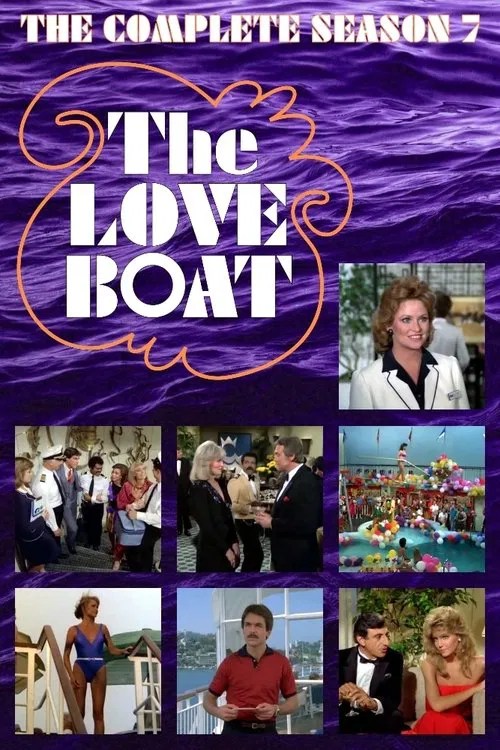
Retro Television Review: The Love Boat 7.6 “Friend of the Family/Affair on Demand/Just Another Pretty Face”


Welcome to Retro Television Reviews, a feature where we review some of our favorite and least favorite shows of the past!  On Wednesdays, I will be reviewing the original Love Boat, which aired on ABC from 1977 to 1986!  The series can be streamed on Paramount Plus!

This week, the cruise is not especially pleasant.

Episode 7.6 “Friend of the Family/Affair on Demand/Just Another Pretty Face”

(Dir by Ted Lange, originally aired on October 29th, 1983)

This week, Herbert (Gordon Jump) and Anita (Florence Henderson) are setting sail.  Herbert and Anita have been married for 25 years and Herbert has never cheated on Anita.  However, as he tells his old friend Isaac, he’s decided that it’s finally time for him to have his first affair.  He’s even decided to trick Anita into giving her approval.  Herbert is an insurance agent and he shows Anita an article that suggests that men who don’t cheat are more likely to succumb to a heart attack.  Anita is so concerned that she not only gives Herbert permission to cheat but she decides that maybe she should have an affair as well….

Needless to say, Anita knows exactly what Herbert was trying to do with the article and, once she’s played her practical joke, she is surprisingly forgiving.  I probably would not have been.  Then again, Herbert does promise to buy her a sable coat to make up for attempting to cheat on her.

Meanwhile, Jack (Robert Reed) is dating Leslie (Deborah Shelton), the much younger daughter of his best friend, Bill (Clint Walker).  Bill is not happy when he learns about this and orders Jack to stay away from his daughter.  Fortunately, Bill’s wife (Cathryn Damon) is able to show Bill the error of his ways.  Leslie gets to fulfil everyone’s fantasy of dating a tall, thin, neat, single 60 year-old with a mustache.

(Yes, Robert Reed and Florence Henderson do both appear in this episode but they only share one scene.  While getting breakfast out by the pool, they see each other and give each other a questioning look before shaking their heads.  Personally, I think this episode would have been a classic if it had featured Robert Reed as the husband trying to trick Florence Henderson into giving him permission to cheat.)

Finally, Deanna (Kim Lankford), the spoiled niece of one of the cruise line’s executives, boarded the boat and immediately developed a crush on Gopher.  I don’t blame her.  Gopher can be adorable when he wants to be.  But, as with the other two storylines, something just felt off here.  Gopher being such a passive character didn’t quite feel right for who the character has become by season 7.  This felt like a season 1 Gopher plot.

This episode didn’t do much for me, which is a surprise considering that it was directed by the usually dependable Ted Lange.  It was hard to sympathize with any of the passengers and the crew just seemed to be going through the motions.  Usually, I love The Love Boat but this episode didn’t work for me.

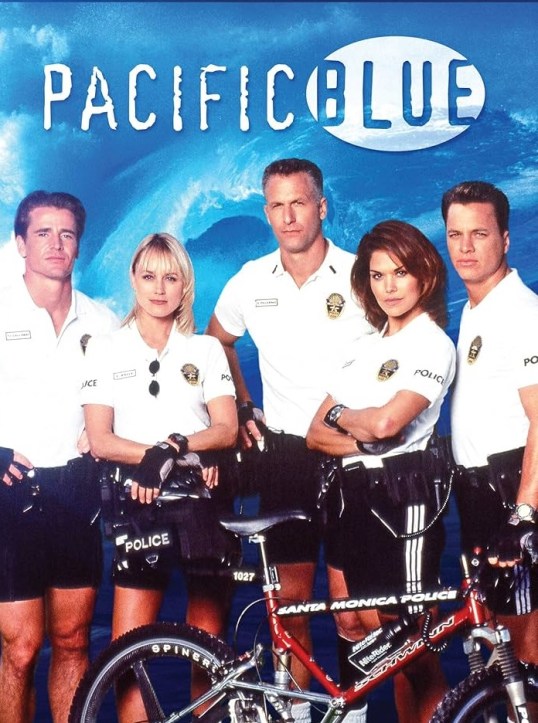
Late Night Retro Television Review: Pacific Blue 3.13 “Avenging Angel”


Welcome to Late Night Retro Television Reviews, a feature where we review some of our favorite and least favorite shows of the past! On Tuesdays, I will be reviewing Pacific Blue, a cop show that aired from 1996 to 2000 on the USA Network!  It’s currently streaming everywhere, though I’m watching it on Tubi.

This week, two vigilantes disturb the peace, Cory meets a special guest star, and everyone continues to look stupid on their little bicycles.

Episode 3.13 “Avenging Angel”

(Dir by Terence H. Winkless, originally aired on December 14th, 1997)

This episode was dumb.

Cory is haunted by nightmares involving her mother, who died when Cory was 10.  In her latest nightmare, she runs into her mother at a crime scene and her mom shoots her!  Chris thinks that’s an odd dream and she’s right.  Cory explains that her mom is just trying to get her attention.  Cory believes that her mom is her guardian angel.  Chris doesn’t know how to react to this because Cory is expressing an emotion that doesn’t involve being snarky or self-righteous.

When Cory is injured while chasing two Korean brothers (we’ll get to them in a minute), she has to go to rehab.  Luckily, Olympic track medalist Florence Griffith Joyner is a patient at the same rehab clinic.  Joyner takes Cory under her wing and encourages her to work hard and get her knee back into shape.  When Cory says she’s thinking of leaving the force, Joyner tells her not to.  “Thanks, FloJo,” Cory replies.

(Yes, Florence Griffith Joyner played herself.  As an actress, she was a good athlete.)

As for the two Korean brothers, they are vigilantes who are beating up criminals on the boardwalk and becoming celebrities in their own right.  Palermo views them as being a threat to the peace and he’s determined to catch them.  Meanwhile, the Mob is determined to kill them and a very annoying talent agent is determined to sign them.

Ugh, what a stupid episode.  Usually, I’m a sucker for episodes that deal with people coming to terms with the death of a parent.  That’s something to which I can relate.  I have no doubt that my mom is also looking over me.  But, as much as I wanted to fully embrace Cory’s story, I couldn’t get past the fact that she went to rehab and just happened to meet an Olympic athlete.  Maybe if Joyner has been a better actress, this storyline would have worked but, as it was, it just felt forced.  There was really no reason why Joyner should have been so wrapped up in whether or not Cory decided to remain with the force.

As for the stuff with the brothers, the entire plotline felt like filler.  The brothers couldn’t act.  The actors playing the gangsters who wanted to kill the brothers couldn’t act.  The talent agents who kept popping up and talking about how much they wanted to sign the brother, they also couldn’t act.

This episode was just painful and all the rehab in the world isn’t going to change that.

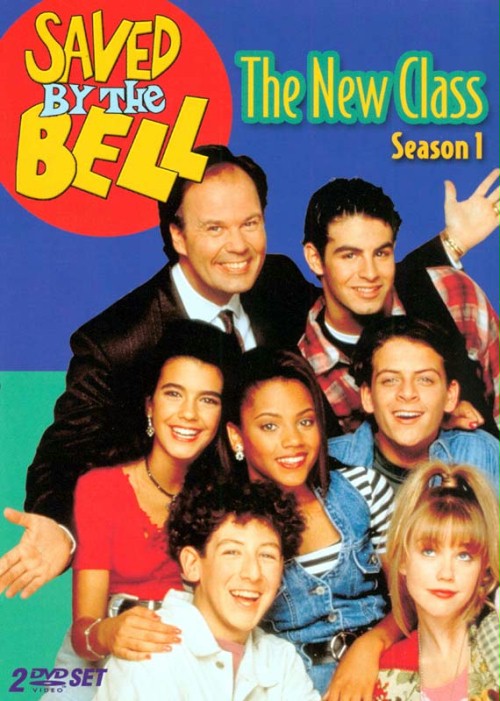
Retro Television Review: Saved By The Bell: The New Class 1.3 “A Kicking Weasel”


Welcome to Retro Television Reviews, a feature where we review some of our favorite and least favorite shows of the past!  On Tuesdays, I will be reviewing Saved By The Bell: The New Class, which ran on NBC from 1993 to 2o00.  The show is currently on Prime.

This week, Scott and Tommy D attempt to exploit Weasel’s happiness for their own monetary gain.  Ah, that’s classic Bayside!

Episode 1.3 “A Kicking Weasel”

(Dir by Don Barnhart, originally aired on September 25th, 1993)

It’s been ten years since Bayside had a good football team!

That’s what Scott tell us at the start of this episode.  Scott explains that the Bayside student body has no enthusiasm for football.  No one cares because the team always loses and, as such, even Mr. Belding is more concerned with the school’s ping pong team.

To which I say, “What?”

Seriously, every Saved By The Bell fan knows that A.C. Slater led the Bayside Tigers to victory after victory.  With the help of Ox and all the other players, Slater made Bayside into a football powerhouse.

This can only mean one of two things.  Saved By The Bell: The New Class is either taking place ten years after Saved By The Bell (possible but I doubt it due to the fact that Screech is coming back next season) or that the writers just didn’t care about continuity.  I’ll go with the latter.

Things are looking up for the football team, though.  It turns out that Weasel can actually kick the ball!  He goes from being the waterboy to the cornerstone of the team’s offense.  But Weasel can only kick well when he’s angry.  When he’s not angry, he’s too mellow.  When he become a football star, he’s happy.  He mellows out.

That’s bad news for Scott and Tommy D, who are looking to make a fortune by selling Weasel t-shirts!  Tommy D agreed to embezzle the seed money from the print shop fund.  (Hey, that’s a crime!)  In return, Scott fixed the varsity cheerleader tryouts so that Lindsay beat out both Megan and Vicki.  When Linsday finds out that the tryouts were fixed, she refuses to cheer.  That makes Weasel mad and he ends up winning the game with 11 field goals.  Lindsay, meanwhile. gets her revenge by telling Belding that Scott and Tommy D will be donating all of the t-shirt profits to the ping pong team.

This episode …. actually, I’m going to surprise myself by saying that it wasn’t that bad.  Yes, the plot was way too busy for its own good and Scott’s constant scheming feels like what it was, a bad imitation of Zack Morris.  But, in the role of Weasel, Isaac Lidsky actually gave a pretty good sympathetic performance.  (Weasel was never as annoying as Screech, largely due to Lidsky.)  Jonathan Angel delivered his dialogue with the right amount of dumb earnestness and it was nice to see the Bayside nerds end up winning for once.  All in all, this one really wasn’t bad.

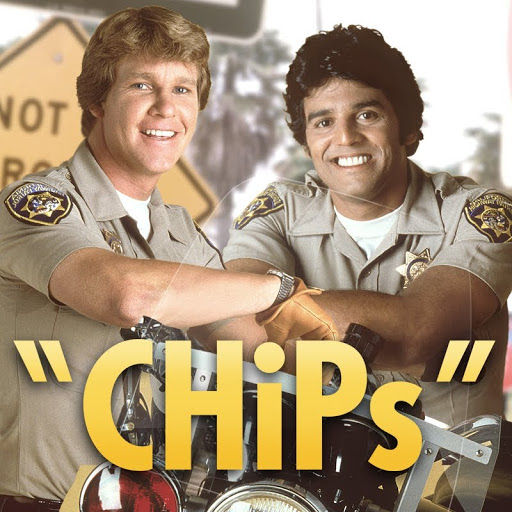
Late Night Retro Television Review: CHiPs 5.7 “Bomb Run”


Welcome to Late Night Retro Television Reviews, a feature where we review some of our favorite and least favorite shows of the past!  On Mondays, I will be reviewing CHiPs, which ran on NBC from 1977 to 1983.  The entire show is currently streaming on Prime!

Who will be Jon’s partner this week?  Read on to find out!

Episode 5.7 “Bomb Run”

(Dir by Phil Bondelli, originally aired on November 15th, 1981)

I was really hoping that this would be another episode with Caitlyn Jenner playing Steve but no, Ponch was back.  (Erik Estrada is the better actor of the two but Jenner’s performance is often so bizarre in its utter blandness that it becomes fascinating to watch.)  This episode opened with Baker observing as Ponch piloted a small airplane.  CHiPs was all about the California lifestyle and apparently, a big part of that lifestyle was being able to take off in a small private plane whenever you felt like it.  Ponch thinks that he’s ready for a solo flight but Baker tells him that he still needs to work on his landing skills.  Sorry, Ponch, you’re not a Kennedy.

The highway patrol is preparing for the big air show.  Officer Baricza (Brodie Greer) is surprised when he sees his ex-girlfriend, Terri (Kristin Griffith), hanging out around an airplane and preparing to take part in the show despite the fact that she has always been scared of flying.  What Baricza does not know is that Terri and her father (Ed King) have planned a big robbery to take place during the air show.  While Terri drops bombs from the airplane, the explosions will cover the sound of two safecrackers (played by Brion James and Taylor Lacher) blowing open a safe and stealing a bunch of bearer bonds.  However, things get complicated when the safecrackers illegally park their car (which leads to a helicopter towing it off, carrying it through the sky).  Things get even more complicated when Terri’s father has a heart attack when they’re in the air and Baker and Ponch have to perform a mid-air rescue.

So, how does Baricza react to his ex-girlfriend being a criminal?  We never find out.  Ponch roughly lands Terri’s plane and then show pretty much ends.  As a result, we don’t know what happens to Terri and her father.  We don’t know if the police succeeded in catching the safecrackers.  We don’t even know if Terri’s father merely passed out or if he actually died up there.  Instead, Getraer makes a joke about Ponch’s terrible landing skills and we get the familiar CHiPs freeze frame.

This episode featured a lot of airshow stock footage and it was pretty obvious that the plot was secondary to showing off all of the planes doing fancy maneuvers in the sky.  It felt a bit lazy on the part of the show’s producers but I also imagine that this episode was also fairly cheap to produce.  There’s more stock footage than plot.  As a result, the ending is a bit unsatisfying.  Is Baricza upset about Terri being a criminal?  Who knows?  He certainly does seem to be amused by Ponch’s landing though!


Retro Television Review: Miami Vice 5.13 “The Cell Within”


Welcome to Retro Television Reviews, a feature where we review some of our favorite and least favorite shows of the past!  On Mondays, I will be reviewing Miami Vice, which ran on NBC from 1984 to 1989.  The entire show can be purchased on Prime!

This week, Tubbs gets kidnapped and the entire episode is oddly dull.  Presumably because it’s the final season and no one was paying attention, the show took a risk and it did not pay off.

Episode 5.13 “The Cell Within”

(Dir by Michael B. Hoggan, originally aired on March 10th, 1989)

Former criminal Jake Manning (John P. Ryan) has apparently reformed himself.  As getting busted by Tubbs, Manning spent years in a tiny cell where he read Shakespeare and Dostoevsky.  Sponsored by renegade film director Robert Phelps (L.M. Kit Carson), Jake is now a free man and a published author.  Tubbs is convinced that Jake has changed his ways and when Jake invites him to a dinner party, Tubbs accepts.

(Crockett is on vacation, spending time with his son.  During his brief appearance on the episode, Crockett jokes about what a great book he and Tubbs could write if they were ever arrested.  Uhmm …. you were arrested, Crockett.  Remember when you were a drug lord?  The show appears to have forgotten but I haven’t.)

Anyway, it turns out that Jake has built a prison under his house where he keeps undesirables locked up and every few days, he electrocutes them.  He kidnaps Tubbs so that Tubbs can see and hear about Jake’s view of how justice should be meted out.  Jake likes to talk and talk and talk and talk.

Ugh, this episode.

I’m honestly surprised that I got through this episode because it was just so mind-numbingly dull.  The show attempted to do something different with its format and that’s fine.  But Jake was so long-winded and his cartoonish prisoners were such thinly drawn stereotypes that it didn’t take me long to lose interest.  I’ve never liked episodes of cop shows that center around hostage situations or kidnappings.  It’s hard to build much narrative momentum when no one can really move around.  It gets boring to watch and that was certainly the case here.  That John P. Ryan spent most of the episode wearing a flowing robe did not help matters.  It made him look like a Saruman cosplayer at a Lord of the Rings convention.  I probably would have laughed if it all hadn’t been so dull.

As always, it’s interesting to see Tubbs at the center of a story but even the normally smooth Philip Michael Thomas didn’t seem to know what to make of all these nonsense.  As I watched Tubbs rather easily fall victim to Jake’s trap, I wondered why Tubbs has suddenly become such a stupid character.  I mean, seriously, anyone should have been able to see through Manning’s invitation.  For Tubbs, this episode was the equivalent of that time Trudy got kidnapped by the alien who looked like James Brown.

All in all, this was not a good episode.  It’s the final season so it makes sense that you’re going to get a few clunkers.  Hopefully, next week will be better.

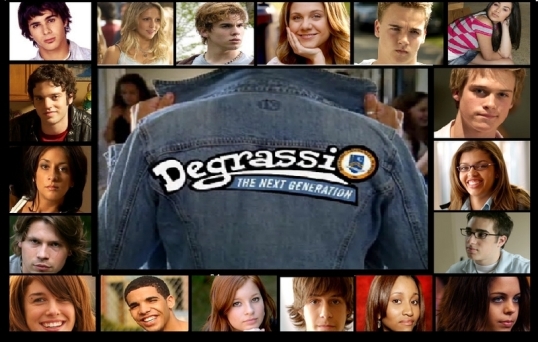
Late Night Retro Television Review: Degrassi: The Next Generation 2.4 “Karma Chameleon”


Welcome to Late Night Retro Television Reviews, a feature where we review some of our favorite and least favorite shows of the past!  On Sunday, I will be reviewing the Canadian series, Degrassi: The Next Generation, which aired from 2001 to 2015!  The series can be streamed on YouTube and Tubi.

This week, several important characters make their first appearances!

Episode 2.4 “Karma Chameleon”

(Dir by Stefan Sciani, originally aired on October 21st, 2002)

This week, Ellie makes her first appearance!

Though she doesn’t do much in this episode, Ellie Nash (Stacey Farber) would go on to become one of the most important characters on Degrassi: The Next Generation.  (And Farber herself would go on to have one of the more-successful post-Degrassi careers of the show’s regulars.)  When I first watched Degrassi, I related to Ellie, largely because we both had red hair, we both tended to wear black, and we both had a weakness for Craig Manning.  (There was another reason why I related to Ellie but I won’t go into that until we reach season 3.)  Now that I’ve gotten older, I can see that, in high school, I actually had more in common with the overly dramatic Ashley Kerwin than I did with Ellie but still, Ellie is one of Degrassi’s best characters.

In her first appearance, Ellie refuses to move to another computer, despite Paige ordering her to so that Paige can sit next to Hazel.  Later, she provides some sarcastic comfort to Ashley after Ashley’s latest poorly conceived plan blows up in her face.  “That went well,” Ellie says and yes, it’s a little bit snarky but that’s what made Ellie so cool.  As I said, Ellie doesn’t do much in this episode.  (Stacey Farber wouldn’t become a regular until the third season.)  But she definitely makes an impression.

As for Ashley, she spends this episode trying to get back into everyone’s good graces.  Following Terri’s suggestion, Ashley swallows her pride and apologizes to Paige, Jimmy, and Sean.  Everyone seems to be willing to forgive Ashley, except for Paige.  Paige continually warns everyone that Ashley is just being manipulative.  Jimmy, however, wants to restart his romantic relationship with Ashley.  But when Sean calls Ashley and asks her on a date, Ashley happily accepts.  Terri says that Ashley is going to hurt Jimmy if she goes out with Sean because Jimmy thinks that he and Ashley are about to get back together.

Ashley rolls her eyes, explains that she’s single, and then tells Terri that “Ter, one day when a guy likes you, you’ll understand how this works.”

AGCK!

I mean, actually, Ashley’s right.  She didn’t tell Jimmy that she wanted to get back together again.  (She did say that she missed having Jimmy around and I would say that Ashley should have been able to guess how Jimmy would interpret that, given their past relationship.)  And there’s no reason why she shouldn’t date Sean Cameron if she wants to.  And, for that matter, no one likes Terri.

(At least not yet.  Eventually, Terri’s first boyfriend will end putting her in a coma and then shooting up the school but that’s a while off….)

But Ashley definitely could have put things a bit more diplomatically.  One reason why I cringe so much watching this is because I can remember saying similar stuff when I was a teenage and not understanding why people got offended until many years later.  Ellie never would have said something like that.

Meanwhile, Toby has a girlfriend!  Kendra Mason (Katie Lai) loves anime even more than Toby!  The only problem is that …. KENDRA IS SPINNER’S ADOPTED SISTER!  At first, Toby is terrified to talk to Kendra because of Spinner.  But Toby finally finds the courage to stand up to Spinner and tell him that he’s going to talk to Kendra whether Spinner likes it or not.  Spinner says that he will disembowel Toby is Toby hurts his sister.  Toby says he’s prepared for that.  (Toby, never prepare for something like that.)  It’s nice that Toby has a girlfriend and can presumably stop whining about Emma liking Seasn.  It’s just too bad that Kendra’s going to vanish after this season and never be mentioned again, not even by her protective older brother.

Also, all the boys in school are in love with the new science teacher, Ms. Hatzilakos (Melissa DiMarco).  This was Hatzilakos’s first appearance.  It’s only one scene of Spinner and Jimmy drooling at their desks.  Of course, Ms. Hatzilakos is destined to eventually become principal of Degrassi and her son Peter will eventually enroll as a student, break a lot of hearts and law, and write the deathless song House Arrest.

Anyway, Jimmy gets mad at Ashley.  Sean gets mad at Ashley and calls off their date.  Paige tells Terri that she has to make a choice between four years of being popular or four years of being an outcast and Terri decides to be popular.  Ashley breaks down crying as her school picture is taken.  So ends another happy episode of Degrassi!

Oh, this episode.  It’s actually pretty good for an Ashley episode.  And the freeze frame of Ashley getting her school picture taken as a tear sloppily rolls down her face?  That’s image pretty much sums up Degrassi perfectly.

Next week, Spinner is a part of a science experiment and …. well, this would never happen on American television.


Retro Television Review: Homicide: Life On The Street 4.20 “The Wedding”


Welcome to Retro Television Reviews, a feature where we review some of our favorite and least favorite shows of the past!  On Sundays, I will be reviewing Homicide: Life On The Street, which aired from 1993 to 1999, on NBC!  It  can be viewed on Peacock.

This week …. someone’s getting married!

Episode 4.20 “The Wedding”

(Dir by Alan Taylor, originally aired on May 10th, 1996)

Kevin Lungo, a Baltimore radio host, is found dead.  The previous day, he announced on his program that he was not only in favor of abortion but he was in favor of requiring any pregnant woman with an IQ of less than 100 to have one.  Did that comment lead to him being gunned down in a parking lot?

(When this episode aired, 100 was considered to be an “average” IQ.  Now, the average IQ is considered to be 90.  That’s not a good thing.)

We never really find out.  The case is handled by Giardello and Kay and, while Kay has never heard of Lungo, it turns out that Giardello used to enjoy listening to him.  (Hopefully, Giardello disagreed with Lungo’s pro-eugenics stance.)  When the radio station offers a $5,000 reward for any tips, someone calls in and give the name of the “killer.”  When Giardello and Kay follow-up on the tip, the suspect pulls a gun and is shot dead by Giardello.

Giardello feels guilty about the shooting.  He tells that Kay that, when he was younger, he was able to shoot well-enough that he could simply wound a suspect, instead of killing him.  Making it even worse is that the dead man has an alibi.  The call was just a practical joke between friends.  “Why did you have to kill him!?” the dead man’s friend wails.

Back at the squad room, Lewis shocks everyone by announcing that he’s getting married to a woman that they’ve never heard of.  While he doesn’t invite any of his co-workers to the wedding, he does ask them to attend a reception at the Belvedere Hotel.  He tells Pembleton to order and pay for the flowers.  He asks Russert to arrange for the band and an open bar and asks if she would be willing to cover the cost.  (“Until my next paycheck,” Lewis assures her.)  Munch assumes that Lewis is lying.  Most of the squad room suspects that Lewis is lying.  But they give him the benefit of the doubt and show up for the reception.

Also going to the reception is Carrie, the very glamorous sister of Kay Howard.  Carrie is visiting from Florence and soon, both Kellerman and Bayliss are shamelessly flirting with her.  An actress named “Margaret May” is credited as playing Carrie.  Of course, Margaret May is actually Melissa Leo.

With the exception of Giardello and Kay (who are still working the Lungo murder), all of Lewis’s colleagues show up at the ballroom.  Even the crusty forensics examiner, Scheiner (Ralph Tabakin), shows up.  “Do you want to dance?” he asks Russert’s daughter.  “NO!” she replies.

But where’s Lewis?  Lewis is missing.  Was Munch right?  Pembleton, who is there with his very pregnant wife, is not amused.  As Brodie films him, Pembleton announces that he is going to kill Lewis and he will never get caught because of his experience as a homicide detective….

Fortunately, Lewis shows up before Pembleton gets his gun.  And accompanying Lewis is his new wife, Barbara Shivers (Karen Williams)!  The reception is a huge success.  The band plays.  Kellerman and Bayliss both try to hold onto Carrie’s attention.  Scheiner watches as Russert’s daughter proceeds to dance with everyone but him.  Finally, Giardello and Kay show up.  Kay warns Bayliss that Carrie is dangerous.  Bayliss asks why.  Kay says that Carrie likes to play game and she just does whatever feels good.  Bayliss looks intrigued….

Mary Pembleton’s water breaks on the dance floor as she goes into labor!  (In a nice twist, Mary Pembleton was played by Andre Braugher’s real-life wife, Ami Brabson.)  As the episode ends, even Giardello smiles.  For all the ugliness in the world, there is still hope.

I loved this episode!  Homicide’s greatest strength was its ensemble and here, everyone gets a chance to show off.  Yaphet Kotto reminds us of what an imposing actor he truly was, though my favorite Giardello moments continue to be the times when he allows himself to get amused by the absurdity of it all.  What really made this episode was for me was that, even with the wedding reception and Mary going into labor, the episode never allowed itself to be sentimental.  For most of the episode, everyone is skeptical about Lewis getting married and, having watched Meldrick Lewis for four season, I was skeptical too!  In the end, the episode earned its right to emotionally satisfying through smart storytelling and good acting.

Review: Fallout (Season 2, Episode 7 “The Handoff”)


“If you have to hurt people, God won’t judge you. Don’t think of them as human beings. Think of them as Americans.” — Joan Harper

Episode 7 of Fallout season 2, “The Handoff,” sneaks up on you like a radstorm on the horizon—one of those late-season gut checks that reshuffles priorities without much fanfare. It’s got ambition oozing from every irradiated pore, bouncing between mind-bending Vault-Tec tech, vault-bound soap opera blowouts, and pre-war nightmares that hit way too close to home. The sprawl can feel chaotic at times, with not every character getting their full due, but the thematic throughline—how far will you go to survive, and what does it cost your soul?—keeps it cohesive and compelling. Dark humor peppers the bleakness, moral lines blur like fallout haze, and by the end, you’re left wondering who’s really pulling the strings in this wasteland mess.

Kicking things off with a bang—or more like a suicide bomber’s blast—the episode dives straight into a harrowing pre-war flashback spotlighting a young Steph Harper and her mother Joan, played with steely desperation by Natasha Henstridge. They’re clawing their way out of the Uranium City internment camp, a grim U.S. holding pen for Canadian citizens rounded up in the Resource Wars’ fever pitch. Power-armored goons close in, hurling firepower and slurs amid the pandemonium, until Joan grabs her kid and hisses that unforgettable line: “Don’t think of them as human beings. Think of them as Americans.” Oof. It’s a dehumanizing gut-punch that sets the episode’s tone right away, illustrating how the pre-apocalypse world was already a powder keg of nationalism run amok, where “us vs. them” justified any atrocity. And talk about prescient or coincidental timing—this drops amid 2026’s real-world headlines of U.S.-Canada friction, from Trump’s tariff saber-rattling and Davos snubs to wild talk of military “hypotheticals” and economic arm-twisting between the North American neighbors. Whether the writers had a crystal ball or just nailed the evergreen vibe of border paranoia, it makes the fiction feel like a mirror held up to today’s geopolitics, amplifying the episode’s warnings about how quickly “allies” turn into existential threats.

That raw survival instinct bleeds seamlessly into Lucy’s arc, which powers the hour like a fusion core. Trapped in a gleaming Vault-Tec bunker, she’s stuck playing house with her dad Hank, who’s equal parts folksy mentor and corporate ghoul. The star of the show here is their memory-reprogramming gizmo—a hulking console that dials memories up, down, or into oblivion like tweaking a Pip-Boy radio. Hank gives her the tour on a goofy golf cart joyride through empty offices, explaining it with the enthusiasm of a salesman hawking timeshares: boost the happy bits, erase the trauma, rinse and repeat. It’s genius-level creepy, transforming what could be bland sci-fi into a satire of corporate wellness gone murderous. Vault-Tec didn’t invent evil; they just bureaucratized it, turning ethical nightmares into quarterly performance metrics. Lucy starts off hopeful, probing for the father she remembers from Vault 33, but those sterile hallways and his breezy justifications erode her faith layer by layer. The awkward father-daughter chats—half bonding session, half indoctrination—build real tension, showing her idealism cracking under the weight of his casual complicity.

Then comes the dinner scene, a masterclass in quiet devastation. Lucy clocks the NCR soldier she’d warmed to earlier, now a vacant-eyed tray jockey slinging slop with a lobotomized grin. Boom—personal loss made visceral. No swelling score or slow-mo needed; it’s the everyday horror of a friend erased that ignites her fire. She snaps, cuffing Hank to the kitchen drawer in a moment that’s equal parts petty revenge and profound symbolism. No more running from the truth, pops. Ella Purnell nails the transformation: Lucy’s not snapping into cynicism, she’s forging resolve from the ashes of naivety. Her wide-eyed wasteland optimism was always her superpower, but here it matures into a fierce moral compass that doesn’t bend for family ties or Vault-Tec spin. It’s the episode’s emotional core, proving Fallout shines brightest when it grounds big ideas in intimate betrayals.

Meanwhile, Vault 32 delivers the chaos quotient with Steph’s implosion, riffing off the flashback’s desperation in a claustrophobic, community-drama wrapper. Steph’s been teetering on insecure overlord vibes all season—fake-it-till-you-make-it overseer masking cracks with smiles and status games. But Woody’s shattered glasses fished from the garbage disposal? That’s the innocuous spark that lights the fuse. Chet, nursing his quiet rage, hits critical mass smack in the middle of their wedding. Steph bulldozing ahead with vows while the room simmers? Cringe gold. When Chet unloads publicly—secrets, lies, the works—it cascades into pandemonium: guests flip to an angry horde, baying for blood as they chase her into the Overseer’s lair. It’s Fallout‘s sweet spot—pulpy melodrama meets social horror, exposing vault life as a fragile illusion of civility. One bad call, one hidden body, and poof: the social contract shreds. Steph morphs from punchline to predator, cornered and feral, hinting she’s capable of worse. The handheld camerawork ramps the frenzy, trapping you in the mob’s ugly momentum, while the petty human stakes keep it relatable amid the apocalypse schlock.

Maximus pulls a solid B-plot shift, hunkered in an NCR gear depot where he finally claims power armor like it’s his birthright. Gone’s the jittery Brotherhood hopeful; enter a guy starting to fill out the role, clanking around with newfound purpose. Aaron Moten plays it understated—no hero pose, just incremental grit that nods to his growth without overshadowing the mains. It’s smart table-setting: the season’s been chipping at Brotherhood dogma, and Maximus suiting up feels like him inching toward their ideal, blind spots and all. Could use more introspection, sure, but it plants seeds for faction fireworks down the line.

Norm? Rough week. His subplot—eavesdropped identity slip, knockout punch, prisoner drag—teases intrigue but fizzles into logistics. It’s the script shuffling pieces, not diving into his vault-rat cunning or isolation. Fans of his sly outsider lens might gripe at the neglect, highlighting the episode’s tightrope walk over ensemble overload.

Technically, it’s a banger. Vault-Tec’s retro-futurist sheen—neon signs, buzzing fluorescents—clashes beautifully with the soul-crushing tech, like a twisted ad for the American Dream. The wedding revolt goes gritty and kinetic, sweat and shouts filling the frame. Purnell anchors the heart, Steph’s portrayer the hysteria, Henstridge the haunting cameo. Sound design pops too: distant echoes in the offices, the wedding’s rising clamor, that bomber’s muffled roar.

Balance is the bugaboo—too many irons mean rushed beats for Maximus and Norm. Yet it embodies Fallout‘s messy ethos: no tidy arcs, just grinding compromises under institutional thumbs. The Uranium City prelude warns of pre-war poison still pumping through the veins, Lucy’s defiance spotlights personal agency, Vault 32’s riot proves communities devour their own. “The Handoff” probes free will amid rigged games, from neural hacks to tribal loyalties, all laced with wasteland wit. Flawed? Marginally. Essential? Hell yes. The finale looms like an Enclave drop-ship—everything teeters, primed for Fallout‘s brand of irradiated reckoning.

Fallout Season 2 Episodes

  1. Episode 1: “The Innovator”
  2. Episode 2: “The Golden Rule”
  3. Episode 3: “The Profligate”
  4. Episode 4: “The Demon in the Snow”
  5. Episode 5: “The Wrangler”
  6. Episode 6: “The Other Player”

Brad’s Thoughts on Season 1 of LANDMAN, Starring Billy Bob Thornton!


Taylor Sheridan has become a fairly big part of my life over the last decade. It started when I saw HELL OR HIGH WATER in the movie theater back in 2016. It was one of my favorite movies of the year, and it was written by a guy named Taylor Sheridan. Well, the next year brought us WIND RIVER, which was both written and directed by Taylor Sheridan, and it was one of my favorite movies of 2017. Then came the series YELLOWSTONE, which was created by Taylor Sheridan and began airing in 2018. I didn’t watch the first couple of seasons, but I thought it looked good and even bought the first season on DVD when I saw it for sale at Wal Mart. When my wife Sierra came home from performing her nursely duties at the hospital and told me that everyone was saying that we needed to watch YELLOWSTONE, I informed her that I just so happened to own Season 1 on DVD. So, we popped it in the DVD player, and we were soon obsessed with the world of the Duttons. My wife took special joy in the characters of Beth (Kelly Reilly) and Rip (Cole Hauser), while John Dutton (Kevin Costner) and Rip kept my attention. I’ll admit that it scared me a little bit that Sierra enjoyed Beth so much, and I’m glad to report that, up to this point, she has not started trying to emulate her actions in real life!

When YELLOWSTONE ended its run at the end of 2024, the Paramount network was putting a major marketing push into their latest “Taylor Sheridan” series, that being LANDMAN, which had started its first season around the same time YELLOWSTONE was wrapping up its final season. I’m a huge fan of actor Billy Bob Thornton, so the fact that he was headlining a series set in Texas oil country automatically piqued my curiosity. Not ready to commit to 10 hours’ worth of LANDMAN episodes quite yet, we put the show on the backburner for a bit, knowing that we could jump in and watch it whenever we wanted to. Well, this past weekend, we got snowed in here in Central Arkansas, so I asked Sierra if she’d like to watch a few episodes of LANDMAN. Needless to say, over the course of the day we watched every episode of Season 1. I really enjoyed the first season and decided to share some of my thoughts with you.

First off, if I’m going to commit to watching 10 hours’ worth of anything, I need to really like at least some of the characters. I don’t just like Billy Bob Thornton’s portrayal of the “Landman” of the title, his Tommy Norris is now one of my favorite characters that he’s ever played. He’s the ultimate realist, because no matter what situation he finds himself in, whether he’s dealing with the head of a drug cartel, the head of his oil company, or his ex-wife, he tackles every situation by uniquely framing the specific issues in a matter of moments and then providing solutions that appeal to his audience’s most base instincts. Alternatively hilarious, serious, heartbreaking and genius, Thornton gives a masterful performance that I don’t think anyone else could have pulled off any more effectively. His ex-wife Angela (Ali Larter) is probably the toughest of all for him to deal with as his own sense of self-preservation seems to go out the window whenever she’s around. Ali Larter’s performance as Angela is loud, brash, attention-seeking, hypersexual, and every so often, just vulnerable enough that you can kind of like her. I think she’s great, and quite sexy, in the role. Michelle Randolph and Jacob Lofland get a lot of screen time in the first season as their children, Ainsley Norris and Cooper Norris. Michelle is cute and spunky, definitely her mother’s daughter, but she also loves her dad so much. I like her. Lofland, who, like Thornton, is from my state of Arkansas, has a meatier role, having to deal with tragedy from the very beginning and then serious family drama as the season plays out. It’s not a showy role, but he does a solid job. The other performance that I really enjoy throughout season 1 comes from Jon Hamm as the head of the oil company, Monty Miller. I kept referring to him as J.R. Ewing as I watched because he’s the big boss. He’s the person that Tommy Norris calls when he can’t solve their problems. Unlike J.R. Ewing, although Miller is a tough businessman, he’s also a committed family man who tries to be there for his wife Cami (Demi Moore) and their daughters when they need him. He is as hard-nosed as it gets in his business dealings, though, and it’s easy to see why he had emerged as the main guy over Tommy. I did want to shout out the actors Colm Feore, James Jordan and Mustafa Speaks as various employees of the oil company who provide different elements of humor and toughness to the proceedings over the course of the season. Finally, as far as the primary cast, while prominently credited throughout the first season, Demi Moore has relatively little to do until the very end of season 1. If you’re a big fan of hers, just know that going in. Her character seems primed to be a big part of season 2, though, so it will be interesting to see where that goes.

Second, like with any popular dramatic TV series, LANDMAN Season 1 contains some storylines that I really enjoy, while there are some that I don’t really care for. Where LANDMAN really works for me is when it features Billy Bob Thornton’s Tommy Norris as a fixer of some sort. It was in these storylines that we get to see his ability to use his intelligence, communication skills, and understanding of human nature to come up with solutions that are best for everyone. It might not always be easy, and he might have to take a beating every now and then, but Tommy knows how to get things done, and the show is at its best when it’s focused on him. We see this throughout season 1 as Norris deals with a variety of cartel henchmen, hotshot attorneys, and unhappy leaseholders in order to advance his company, M-Tex’s interests. There are also a few badass moments when it becomes clear that talking won’t get the job done, and even more direct methods will have to be used to get his point across. This usually happens when Tommy’s feeling the need to protect his children. If there is a weakness to the show, for me, it’s the fact that when Tommy Norris isn’t part of the proceedings, I don’t like it nearly as much. For example, while scenes involving Jacob Lofland’s character, Cooper, and the recently widowed young mother Ariana (Paulina Chavez), whose husband was an employee of the company, ramp up the melodrama, they also take up a lot of time, and I don’t find them very appealing. The same can be said when Ali Larter’s character, Angela, and her daughter Ainsley, decide they’re going to volunteer at a nursing home, and then proceed to hook the residents up with alcohol and even take them to a strip club. While I smiled at some of the proceedings, they weren’t realistic and didn’t really add anything to the story. I even found myself worrying about some of the residents, I mean, I’m sure some of their medication was NOT compatible with tequila! I’m guessing that these quibbles really just come down to a matter of personal preference, as I’m sure there are some who enjoy these moments more than I do. I will admit that these scenes are well-acted and performed even if they’re not advancing my favorite parts of the story.  

Overall, I really enjoyed season 1 of LANDMAN, and I’m looking forward to jumping into season 2 soon, which is now streaming. The last couple of episodes of season 1 introduced or elevated some very interesting characters who will have more prominent roles moving forward (played by Andy Garcia and Demi Moore), and peaking ahead, season 2 also appears to have some interesting additions to the cast (I’m looking at you Sam Elliott). I’m looking forward to the next 10 hours of fun!