Retro Television Review: Miami Vice 4.10 “Love At First Sight”


Welcome to Retro Television Reviews, a feature where we review some of our favorite and least favorite shows of the past!  On Mondays, I will be reviewing Miami Vice, which ran on NBC from 1984 to 1989.  The entire show can be purchased on Prime!

This week, as the drug epidemic rages out of control, Sonny searches for a serial killer.

Episode 4.10 “Love At First Sight”

(Dir by Don Johnson, originally aired on January 15th, 1988)

What the Hell, Miami Vice?

Seriously, remember when this show was about Crockett and Tubbs going after drug dealers while Phil Collins played in the background?  Season 4 feels like a completely different show.

This week’s episode finds Sonny going undercover (*massive eye roll as Sonny does his, “My name is Sonny Burnett” routine for the thousandth time*) and joining a video dating service.  The plan is for Sonny to bust prostitutes but instead, he finds himself as the latest client to be targeted by a serial killer.

Sonny goes on dates, never knowing if the woman he’s with is a killer.  One woman approaches him with something behind her back.  Is it a knife?  No, it’s a vibrator!  “I can see the headlines now — Undercover cop slugs woman after assault with a sex toy!” Sonny says while wearing a yellow sweater and having a nice grapefruit breakfast at his mansion.

Meanwhile, cocaine is flooding Miami, the crack epidemic is spiraling out of control, there are communist taking over Central America, Fidel Castro is still alive, there’s a lot of going on out there and apparently it’s being ignored so Sonny can be used as serial killer bait — hey Vice Squad, why don’t you let the homicide detective deal with the murders while you get back to what you’re supposed to be doing?

Caitlin, Sonny’s wife, worries.  Oh, how she worries.  Her best friend tells her that she’s knew what she was getting into when she married a cop.  If Sonny is trying to maintain his undercover identity, should Caitlin be telling people that she married a cop?  Shouldn’t she be like, “I’m married to drug dealer!  His name’s Burnett and he just looks like that guy who used to play college football?”  That Sheena Easton was not a professional actress is pretty obvious in this episode.  When she previously appeared, she was a singer playing a singer and that brought some authenticity to her performance.  Now, she’s having to pretend to be the worried wife of a cop and her acting limitations are much more easier to see.

The killer is eventually revealed to be a woman (played by David Bowie’s future wife, Iman) with multiple personalities.  When she feels threatened, she turns into her brother and uses a knife to castrate the men from the dating service.  Will Sonny survive?  Yes, he does.

Don Johnson directed this episode and usually, when a cast member directs an episode of their show, their character tends to take a background role so they can concentrate on directing.  Not our Don!  This episode is so much about Sonny that the rest of the Vice Squad is barely in it.

This episode really made me miss the subtlety of Brian Dennehy playing a televangelist or James Brown kidnapping people for aliens.  Get it together, Miami!

Late Night Retro Television Review: Degrassi High 2.9 “Extracurricular Activities”


Welcome to Late Night Retro Television Reviews, a feature where we review some of our favorite and least favorite shows of the past!  On Sunday, I will be reviewing the Canadian series, Degrassi High, which aired on CBC and PBS from 1989 to 1991!  The series can be streamed on YouTube and Tubi

This week, everyone’s either self-centered or foolish.

Episode 2.9 “Extracurricular Activities”

(Dir by John Bertram, originally aired on January 14th, 1991)

Caitlin or Lucy, it’s hard to say who is worse in this episode.

Caitlin is excited when her mother invites her to come home for a meeting with her father.  Caitlin, who has been imposing on friends ever since she discovered her father was cheating on her mother, is all excited because she thinks her parents are going to get divorced.  Instead, her parents announce that they’re staying together.  Caitlin gets angry, telling her friend Maya that she’ll just get an apartment and a job and she’ll never see her parents again.  Maya, who is in a wheelchair and actually knows a little more about hardship than Caitlin, reminds Caitlin that “they’re your parents,” which I think is Canadian for, “Good Lord, stop whining!”  Seriously, Maya — who actually has a lot that she could justifiably be upset about — never complains about anything while Caitlin — who is from a middle-class family and has a nice house and somehow only got a slap on the wrist after being arrested for trespassing and vandalizing — never shuts up about her difficult her life is.  We get it, Caitlin.  It sucks that everyone in the world isn’t as perfect and principled as you are.

(Does Caitlin ever ask anyone how they’re doing or does she just enter a room and automatically start talking about her life?  Based on the second season, the latter would appear to be true.)

Meanwhile, Lucy is dating Bronco, the student body president.  When Bronco tells Lucy that everyone’s favorite Degrassi band, the Savages, are going to be shooting a video at Degrassi, he swears Lucy to secrecy.  (Actually, Gourmet Scum was everyone’s favorite band on Degrassi High but I guess the Savages were cool too.)  So, of course, Lucy tells the creepy Farrell twins and then they make plans to break into the school on the weekend to watch the video shoot.  Joey and Snake also decide to break into the school for the video shoot.  Of course, they all get caught by Mr. Raditch and Bronco gets in a ton of trouble because Raditch assumes that Bronco let all of his friends into the school.

“Sorry,” Lucy says.

Gee, Lucy, that’ll really help!

You may have noticed this episode annoyed me.  Some of that is purely personal on my part.  With my mind slipping into summer and holiday mode, I’m missing both my mom and my dad so I wasn’t necessarily sympathetic to Caitlin’s demand that her parents split up or else never speak to her again.  As for Lucy and Bronco, Bronco should have known better than to tell Lucy.  And Lucy sure as Hell should have known better than to tell the Farrell twins.  Everyone was just too dumb this episode.

Next week, though, we have the first part of one of Degrassi High’s best-remembered episodes.  Fear not, we can put this episode behind us.

Retro Television Review: Homicide: Life On The Street 3.16 “Law & Disorder”


Welcome to Retro Television Reviews, a feature where we review some of our favorite and least favorite shows of the past!  On Sundays, I will be reviewing Homicide: Life On The Street, which aired from 1993 to 1999, on NBC!  It  can be viewed on Peacock.

This week, Munch gets away with murder.

Episode 3.16 “Law & Disorder”

(Dir by John McNaughton, originally aired on February 24th, 1995)

This week’s episode of Homicide gets off to a strange start, with a cameo from Chris Noth as Law & Order‘s Detective Mike Logan.  (Logan appeared early in the history of Law & Order, before North became known as the ill-fated Mr. Big on Sex And The City.)  Logan is transporting a prisoner to Baltimore and that prisoner is played by none other than John Waters!  Meeting Pembleton at the Amtrak station, Logan proceeds to bitch about Baltimore.  Pembleton bitches about New York.  Waters comments that Edgar Allan Poe hated New York.  When Pembleton says that Waters will be heading to prison but at least it will be a Baltimore prison, Waters says that’s why he didn’t fight extradition.  It’s a cute scene, though, as I watched it, I was struck by just how better of an actor Andre Braugher was than Chris Noth.  Noth delivered all of his line like a TV actor.  Braughter delivered his dialogue like a poet.

As for the rest of the show, we get several plotlines.  Bayliss is investigating the death of Gordon Pratt but, because Pratt shot Bolander, Felton, and Howard, none of his fellow detectives are that concerned about solving his murder.  Bayliss comes to suspect that it was a homicide detective who shot Pratt.  He asks Pembleton, Lewis, and Munch for their alibis and none of them really have a good one.  Myself, I think it’s pretty obvious that Much shot Pratt.  Munch’s hero-worship of Bolander, his anger after Pratt walked out of the station, all of it pretty much makes him the main suspect.  Lewis, who is still struggling to come to terms with Crosetti’s suicide, seems like he would be more likely to deal with his anger by drinking.  Even if he doesn’t want to admit it, Pembleton is too much of a wannabe Jesuit to do the eye for an eye thing.  Munch, though …. yeah, there’s no way Munch didn’t kill Gordon Pratt.  John Munch is a murderer.  (Okay, to be clear, the show leaves it ambiguous and never outright states that Munch was the killer but it’s still kind of obvious.)

And he gets away with it.  Bayliss tells Giardello that he’s followed-up every lead and that the Pratt case is just going to have remain open and go cold.  “Won’t help your clearance level,” Giardello shrugs.  It’s a decision that’s going to haunt Bayliss but the show suggests that Bayliss sees it as a sort of cosmic justice.  Before announcing that the case is going to go cold, Bayliss has a conversation with Pembleton and, of course, Bayliss brings up the Adena Watson case.  The Arabist got away with killing Adena Watson so Bayliss is going to let someone — Munch, let’s be honest — get away with killing Gordon Pratt.

Munch isn’t just a murder suspect in this episode.  He’s also a laughing-stock as a nude photo of him from his hippie days is the centerpiece of a photography exhibition that’s being put on by an ex-girlfriend (Valerie Perrine).  It was kind of strange, watching the episode go from Much being a suspected murderer to Munch being the comedic relief.  Still, I always enjoy it when the show remembers that Munch is basically a drug-addled survivor of the 60s.

Felton returns to the squad room, cleared for light duty.  He insists on going out to a crime scene with Giardello, leading to Felton stumbling around, making a fool of himself, and then throwing up afterwards.  Giardello informs Felton that he’s not a good detective in his current state but then again, Giardello adds, Felton has never been a good detective.  Ouch!  That’s harsh.  Of course, it’s also true.  As I’ve said before, I would not want sweaty, racist, borderline illiterate Beau Felton investigating the murder of anyone close to me.

Finally, Pembleton and Lewis investigated an apparently random shooting.  Pembleton thought the gunshot came from the projects.  Lewis insisted that the gunshot came from the white side of the neighborhood.  It turned out Lewis was right but Pembleton was unapologetic, saying he would investigate the case the exact same way if he had to do it all over again.  Watching this storyline, I found myself thinking about how black characters on television often feel interchangeable and they rarely have much of a personality beyond being a white person’s idea of what their black best friend might be like.  Homicide featured three prominent black characters — Lewis, Pembleton, and Giardello — and all three of them are portrayed as being unique individuals with their own different ways of viewing the world, the job, and each other.  Even today, when every television show is desperate to make sure everyone knows how “committed to diversity” they are, it’s rare to see a network show like Homicide, where black characters are portrayed as being individuals as opposed to just stereotypes.  This is something for which Homicide definitely deserves a bit more credit.

This was a good episode.  It appears the murder of Gordon Pratt will never be solved.  Of course, we all know Much did it.

Late Night Retro Television Review: Check It Out! 3.21 “Educating Leslie”


Welcome to Late Night Retro Television Reviews, a feature where we review some of our favorite and least favorite shows of the past!  On Saturdays, I will be reviewing the Canadian sitcom, Check it Out, which ran in syndication from 1985 to 1988.  The entire show is currently streaming on Tubi and Peacock!

This week, Leslie pursues a dream but there’s a demon in a bottle getting in the way…. (*cue the dramatic music*)

Episosde 3.21 “Educating Leslie”

(Dir by Alan Erlich, originally aired on February 7th, 1988)

Leslie has a chance to win an acting scholarship.  The only problem is that his acting coach, Darla Fontaine (Corrine Conley), is an alcoholic who believes her glory days are far behind her.  Leslie pours out her liquor, convinces her to give life another chance, and wins the scholarship after putting on a putty nose and delivering a monologue from Cyrano De Bergerac.

This episode is certainly not something that I would normally expect from Check It Out! but there it is.  Check It Out! has, over the course of three seasons, been a consistently silly show, one that featured Howard getting into impossibly dumb situations and the majority of the cast just going along with the weirdness of it all.  There was one episode, during the first season, where Edna thought she was pregnant and cried when she discovered she wasn’t.  Up until this episode, that was the only dramatic moment to be found in Check It Out!

It’s a bit odd that, for it’s second-to-last episode, Check It Out! would do an episode that goes so strongly against the usual style of the series but Check It Out! was never a particularly consistent show and the fact that Sean Roberge’s stockboy makes an appearance in this episode after a long absence suggests that this episode was probably meant to air earlier in the season than it did.  As well, Viker is prominently featured in this episode but no one mentions the fact that, just last week, his wife gave birth.

As for the episode itself, it was a bit overwritten and Corrine Conley overacted in the role of the alcoholic diva.  But, as usual when he was given a spotlight episode, Aaron Schwartz nailed it as Leslie and elevated every scene that was in.

This episode ends with Leslie winning his scholarship.  As next week’s episode is just a clip show, one could argue that, as a series, Check It Out! ended with Leslie finally achieving his dream.  That’s not a bad ending.

Next week …. the finale!

Brad reviews MY OLD MAN (1979) – starring Warren Oates and Kristy McNichol! 


In my continuing celebration of Warren Oates’ birthday, I decided to check out his 1979 TV movie MY OLD MAN, with Kristy McNichol. Based on a 1923 short story from Ernest Hemingway, Oates stars as Frank Butler, an alcoholic horse trainer and compulsive gambler, who goes to see his 16-year-old daughter, Jo (Kristy McNichol) after the death of her mother. In an effort to have some sort of relationship with Jo, Frank asks her to spend the summer with him, where he introduces her to his world of horse racing, as well as his old flame Marie (Eileen Brennan). Things get off to a rocky start, but with time the two start to develop a loving and meaningful relationship. Frank’s notorious bad luck even changes for the better for a while, and he’s able to buy Jo her own racehorse. Unfortunately, just as things are starting to go well, Frank suffers a life threatening injury in the horse stables, and Jo is faced with the possibility of having to take on life without her mother or her father… 

For a 1979 TV movie, I enjoyed MY OLD MAN. I like Warren Oates as the grizzled father who wants a relationship with his daughter but who also has no idea of how to go about it. He’s cranky and not happy to have someone else to answer to, but he also shows just enough vulnerability that we believe that he has a chance to be a caring dad. Kristy McNichol also does a good job as the 16 year old daughter who wants to get to know a dad that she’s only been told about thus far in her life, with most of those things not being very good. For this movie to work, their relationship has to work. I think both Oates and McNichol effectively express their characters’ desires to connect with each other simply because they’re father and daughter and that means something. As the father of a daughter myself, I know firsthand that our bond is truly special and one of the most important things in my life. And I’ll do anything to keep it that way. 

Aside from the central relationship between Frank and his daughter Jo, I also like the relationship between Frank and his old flame, the waitress Marie (Eileen Brennan). Brennan is very good in the role and effectively conveys her character’s strong love for Frank. Frank needs her and even tells his daughter at one point, “No matter what was going on with me, she never lost her respect for me, and she never stopped caring about me. To me, that shows a lot of class.” From my perspective, I know that all of us guys need someone like Marie in our lives. I’m extremely blessed to have my own “Marie,” even if she does go by a different name. I do want to mention one more relationship in the film that’s interesting, and that’s between Frank and his former jockey George, played by a young Michael Jeter. The two have a bad past that rears its head over the course of the film, and Jeter acquits himself quite well acting against the seasoned veteran. 

Overall, I enjoyed MY OLD MAN as it worked its way through its themes of family reconciliation and personal redemption. The last 20-30 minutes wasn’t quite as effective for me when the TV movie melodrama really kicked in. It still had some good moments, but it felt a little more forced once the focus shifted away from the relationships being developed by the central characters. With that said, I watched this movie in celebration of Warren Oates, and he’s just as great as I had hoped. He’s more than enough reason to watch the film even if it’s not perfect. 

Retro Television Review: The American Short Story Episode 5: Bernice Bobs Her Hair


Welcome to Retro Television Reviews, a feature where we review some of our favorite and least favorite shows of the past!  On Saturdays, I will be reviewing The American Short Story, which ran semi-regularly on PBS in 1974 to 1981.  The entire show can be purchased on Prime and found on YouTube and Tubi.

This week, we have an adaptation of the short story that brought F. Scott Fitzgerald his first great literary success.

Episode #5 “Bernice Bobs Her Hair”

(Dir by Joan Micklin Silver, originally aired in 1976)

In this adaptation of a short story by F. Scott Fitzgerald, Shelley Duvall plays Bernice.  Bernice is a socially awkward young woman from the country who, at the start of the glorious 1920s, spends the summer in the city with aunt (Polly Holliday) and her popular cousin, Marjorie (Veronica Cartwright).  Though initially annoyed with having to watch over her cousin, Marjorie eventually decides to teach Bernice how to be a “society girl.”  Marjorie teachers her how to flirt and, even more importantly, Marjorie spreads a rumor that Bernice is not only going to get her hair bobbed (which, at that time, was associated with being a flapper) but she’s going to let all the boys watch.  Bernice goes from being seen as someone who is boring to being someone who is daring and rebellious.  The rumor of her bobbing her hair gives Bernice a mystique, one that will only last as long as there’s a possibility of it happening.

Soon, all of the boys are interested in Bernice and Bernice becomes even more popular than Marjorie.  Marjorie, with her long braids and her cultivated manners, watches in jealousy and horror as the boy across the street, Warren (Bud Cort), suddenly goes from liking Marjorie to liking Bernice.  Marjorie is herself in love with Warren, though one gets the feeling that the love was more about the idea of Warren pining for her than any real desire to be with him.  Realizing that the key to Bernice’s popularity is due to her unfulfilled promise to get hair bobbed, Marjorie tricks Bernice into actually doing it.  Suddenly, Bernice is no longer as popular and her aunt is no longer comfortable with her being seen as a member of the family.  The party invitations dry up and Marjorie once again claims her place as the long-haired society queen.  Bernice prepares to return home but she has one more trick up her sleeve before she leaves.

I liked this one.  Joan Micklin Silver gets wonderful performances from her cast and shows that she, more than even Robert Altman, understood how to best utilize Shelley Duvall’s quirky screen presence.  While this adaptation is dominated by Duvall, I also really enjoyed Bud Cort’s earnest eccentricity as Warren.  (“I’m getting old.” — 19 year-old Warren.)  Finally, Veronica Cartwright gave an intelligent performance, one that kept Majorie from just becoming a one-dimensional villain.  A look at the mystique of popularity and the way that social standards are casually accepted and rarely questioned, Bernice Bobs Her Hair works as both a wonderful short story and a witty short film.

Late Night Retro Television Review: Friday the 13th: The Series 3.18 “Spirit of Television”


Welcome to Late Night Retro Television Reviews, a feature where we review some of our favorite and least favorite shows of the past! On Fridays, I will be reviewing Friday the 13th: The Series, a show which ran in syndication from 1987 to 1990. The entire series can be found on YouTube!

This week, people are dying and somehow television is to blame.

Episode 3.18 “Spirit of Television”

(Dir by Jorge Montesi, originally aired on April 30, 1990)

Ilsa (Marj Dusay) claims to be a medium.  She uses a television set to summon the spirits of the dead for her rich clients and then, later on, the spirits kill her customers and Ilsa, who has a degenerative disease, gets another ten days added to her life.  If she doesn’t continually kill, her skin starts to look like rubber and her fingernails fall off.  Agck!

This was largely a Jack episode.  Jack is the one who, with his years of experience as a magician, assumes that Ilsa is a fake.  He’s also the one who recruits an old friend named Robert Jandini (Paul Bettis) to go undercover and check Ilsa out.  And when Robert is inevitably killed as a result, Jack is the one who has to live with the guilt.  One thing that I’ve always appreciated about Friday the 13th is that it doesn’t shy away from showing what a lifetime of battling the supernatural would do to someone’s psyche.  At the end of this episode, Jack is about as depressed as I’ve ever seen him.  The great Chris Wiggins was always Friday the 13th’s not-so secret weapon and he gives another stand-out performance here.

In fact, this episode is so focused on Jack, Jandini, and Ilsa that Micki and Johnny largely feel like bystanders.  There’s nothing wrong with that, to be honest.  Micki and Johnny just don’t have the same sort of enjoyable chemistry that Micki and Ryan had.  Still, watching Johnny in the background, it’s hard not to consider that the third season’s writers never really figured out who the character was meant to be or what they really wanted to do with him.  I have sympathy for Steve Monarque because he doesn’t come across as being a bad actor.  Instead, he comes across as being an actor who was saddled with an extremely inconsistent character.

As for this episode, it was nice to finally get an episode that was just about a cursed antique and that didn’t feel the need to try to reinvent the show’s format.  That said, the television seems likes a really bulky object to curse.  How did Ilsa even figure the curse out?  What if the television had been purchased by someone who wasn’t terminally ill?  Can Ilsa watch regular programming on the television or is it always a portal to Hell?  These questions go unanswered.

Still, it’s an atmospheric episode and Chris Wiggins gives a strong performance.  For a season 3 episode, this wasn’t bad.  It’s also the the third-to-late episode of Friday the 13th.  Only two more left to go.

I’m going to miss this show.

Retro Television Review: St. Elsewhere 2.5 “A Wing and A Prayer”


Welcome to Retro Television Reviews, a feature where we review some of our favorite and least favorite shows of the past! On Fridays, I will be reviewing St. Elsewhere, a medical show which ran on NBC from 1982 to 1988.  The show can be found on Hulu and, for purchase, on Prime!
This week, St. Elsewhere observes a holiday.

Episode 2.5 “A Wing and a Prayer”

(Dir by Bruce Paltrow, originally aired on November 23rd, 1983)

It’s Thanksgiving in Boston!  While everyone else is watching the Patriots and celebrating with family, 15 residents are stuck at St. Eligius, working during the holiday.  To make it even worse for them, Dr. Craig puts himself on the schedule to teach them a lesson about what it means to be a doctor.  (It’s also subtly suggested that Craig is looking for an excuse to get out of visiting his in-laws.)  When Craig learns that Ehrlich is planning on make a “California-style” turkey, Craig insists on making a turkey of his own.

Meanwhile, Dr. Auschlander is reading a book on “dying with dignity.”  It’s a British book, one that makes the case for euthanasia.  (Anglicans are so pessimistic!)  Auschlander is convinced that this will be his last Thanksgiving.  He becomes obsessed with the case of Joe Dempsey (Cory Yothers), a little boy who might have Hepatitis or who could just as easily be suffering from Leukemia.  Neither option is great but Joe can recover from Hepatitis.  Death-obsessed Auschlander spends the entire episode convincing himself that Joe is going to die.  Fortunately, Auschlander is wrong.  When the test results come back, it turns out that Joe does have Hepatitis.  Auschlander’s hope is renewed.  He tosses away his assisted suicide book.  He tells his wife he’s looking forward to next Thanksgiving.  It’s kind of predictable but Norman Lloyd’s performance sells it.

Did I cry during this episode?  Yes, I did.  Last year, at this time, I was fighting with an insurance company to keep my dad from getting kicked out of his rehab center.  I knew, deep in my heart, that if he was sent home, he would die.  The insurance company wanted to kick him out on the 4th of July.  I successfully appealed their decision, just as I would appeal several more of their decisions.  I won countless battles and I felt pretty proud of myself but ultimately, I lost the war.  My Dad was eventually evicted from the rehab center and, as I feared would happen, he died a few weeks later.  Every holiday since August of last year has been my first without my Dad.  So, yeah, when I watched an episode of a hospital drama with Dr. Asuchlander obsessing on death while Dr. Morrison experienced his first holiday since the passing of his wife …. you better believe I cried.

Can I fairly judge this episode, all things considered?  Probably not.  Watching it, I could tell that this episode was shamelessly manipulative and there were a few moments that were a bit overwritten.  There wasn’t much subtlety to be found.  But, dammit, it got to me.  The emotions got to me.  It earned my tears and, to be honest, I felt a little better after I cried.  Joe Dempsey’s going to live.  Yay!

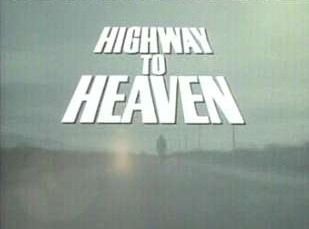
Late Night Retro Television Review: Highway to Heaven 4.3 “Fight For Your Life”


Welcome to Late Night Retro Television Reviews, a feature where we review some of our favorite and least favorite shows of the past!  On Thursdays, I will be reviewing Highway to Heaven, which aired on NBC from 1984 to 1989.  The entire show is currently streaming on Tubi and several other services!

This week, it’s a boxing episode.

Episode 4.3 “Fight For Your Life”

(Dir by Michael Landon, originally aired on September 30th, 1987)

I’m just going to say it.  This episode is pretty bad.

The plot is simple enough.  Jonathan and Mark are working as cornermen for boxer Morty “Sailor” Zadan (Michael Shaner).  Morty coulda been a contendah, but instead his brother Jerry (Robert Miranda) always arranges for Morty to throw his fights.  When Morty meets and trains a young fighter named Billy Ryan (Nick Garfield), he also starts an unlikely romance with Billy’s sister, Julia (Jennifer Parsons).  The mob demands that Morty to fight Billy.  They offer Billy money to throw the fight and Morty has to decide if he wants Billy to follow his example and become a bum.

As I said, it’s a simple plot but the execution is just terrible.  Even by the admittedly generous standards of Highway to Heaven, the story and the dialogue is often corny and the performances are pretty much uniformly bad.  At no point did I buy the romance between Morty and Julia.  For that matter, I really didn’t buy the idea that Julia would be so excited about her younger brother pursuing a career that would mean getting beaten up every few weeks.  By it’s nature, Highway to Heaven tends to be an old-fashioned show.  But this episode really did feel like one of those old Warner Bros. B-movies from the 30s.  Those movies, of course, hold up well as long as they star James Cagney, Humphrey Bogart, or George Raft.  Unfortunately, none of those folks show up in this episode.  Instead, we just got Micahel Shaner portraying a boxer who seems like he’d lose a game of tic tac toe against Lenny from Of Mice and Men.

Jonathan and Mark don’t do much in this episode.  They spend most of the story as just observers.  That said, this episode does end with Jonathan beating up a bunch of gangsters, smiling because they don’t have the same powers that he has.  Keeping in mind that most gangsters probably do deserve to get beaten up, it still didn’t feel like proper angel behavior.

Retro Television Review: Malibu CA 2.17 “The New York Girl”


Welcome to Retro Television Reviews, a feature where we review some of our favorite and least favorite shows of the past!  On Thursdays, I will be reviewing Malibu CA, which aired in Syndication in 1998 and 1999.  Almost the entire show is currently streaming on YouTube!

Yes, this is from the first season. I don’t care. I refuse to waste my time looking for a second season advertisement.

This week, it’s guest star time!

Episode 2.17 “The New York Girl”

(Dir by Gary Shimokawa, originally aired on February 26th, 2000)

There are only two likable characters on Malibu CA.

One of them is Murray, played by Brandon Brooks.  Usually, I hate overly eccentric sidekicks but Brooks played the role with such sincerity that he won me over.  The other is Traycee, played by Priscilla Inga Taylor.  Traycee is likable because she’s supposed to be an airhead but, because everyone around her is so terrible, it’s hard not to appreciate her kind and nonjudgmental attitude.

As for our other characters, Scott (Trevor Merszei) is not as bad as he was during the first season but he’s still basically a shallow frat boy.  Jason (Jason Hayes) is a sociopath and, deep into the second season, Hayes still had a bad habit of looking directly at the camera before delivering his lines.  Peter (Ed Blatchford) was likable but it’s hard to respect his decision to continually leave his restaurant in the hands of idiot sons.  Lifeguard Alex (Suzanne Davis) is boring.  Scott’s girlfriend, Lisa (Marquita Terry), is a judgmental killjoy who needs to change her name.  (If her name was Lisa Marie, I’d probably have to abandon this show.)

My point is that there’s really no one to root for on Malibu CA.  Murray and Traycee are mostly just supporting characters and all of the main characters suck.  Given that no one was going to watch this show for the main cast, it’s perhaps not a surprise that, in the 2nd season, Malibu, CA started bringing in guest stars from other Peter Engel shows.  Earlier, Hang Time’s Dick Butkus showed up as Uncle Charlie.  This week, City Guy’s Marissa Dyan shows up as Maggie, an old friend from New York.  Maggie used to be awkward and had braces and Jason pretended to be sick to get out of going to prom with her.

(Why was Jason going to prom in New York when, last season, he was a junior at Malibu High?)

When Maggie shows up in Malibu, Jason is shocked to discover that she now looks like Cassidy from City Guys.  Jason is eager to date her now because Jason is an extremely shallow person.  When Maggie finds out that Jason faked being sick to get out of prom, she gives him a chance to come clean.  “Were you really sick?” she asks.  Jason, being the worst person ever in the history of television, swears that he was.  He also asks her to bid on him in a bachelor auction that Lisa and Alex have put together for charity.

Ha ha, Jason, joke’s on you!  Maggie not only doesn’t bid on him but she allows Jason to be “won” by Kitty (Missy Dotty), who is slightly overweight.  The audience gasps, stunned at the idea of Jason having to spend time with someone who isn’t blonde.  And it bears repeating that Malibu CA is, without a doubt, the worst freaking thing I have ever watched for Retro Television Reviews.  Anyway, Jason apologizes to Maggie before she goes to New York.

Meanwhile, Peter and Scott had a stupid bet going over which one of them could raise the most money for charity at the bachelor auction.  Does no one find it weird that the auction is basically just Peter and his sons?  Peter’s a wimp and his sons probably aren’t going to survive the #MeToo era.  Are Lisa and Alex actually trying to raise money for charity or is this all a cruel joke?

I hate this show.