On this, the final day of our annual Horrorthon, we offer you a final Horror on TV entry.
In this episode of Highway to Heaven, angel Jonathan Smith (Michael Landon) tries to defeat the devil for the soul of his friend Mark (Victor French). This episode, a true Halloween episode, originally aired on October 30th, 1985, and it features guest turns from Anthony Zerbe and the great Michael Berryman.
The 18th season of Doctor Who started with the show getting a new producer, John Nathan-Turner. Depending on who you ask, Nathan-Turner was either the best or the worst thing that ever happened to Doctor Who. He pushed the series away from what he felt was the “silliness” of the previous season and, in doing so, he alienated both Tom Baker and Lalla Ward. (Ward was close friends with Douglas Adams, whom Nathan-Turner blamed for turning the show silly.) Nathan-Turner pushed for more serious stories and for better production values. He also hated K-9, which upset a lot of younger viewers. My personal feeling is that Nathan-Turner was not a good producer for Tom Baker’s Doctor but he was a great producer for Peter Davison’s interpretation of the character. As for the Colin Baker and Sylvester McCoy years, let’s keep things cheery and not go there.
By the end of the 18th season, Tom Baker, Lalla Ward, and John Leeson (the voice of K-9) had left the show. Completing my look back at Doctor Who, here are Tom Baker’s final serials.
The Leisure Hive (1980, directed by Lovett Bickford)
John Nathan-Turner hated K-9. If there was any doubt about that, consider that his first serial as the show’s producer opens with the Doctor and Romana on holiday Brighton. K-9, for some reason, rolls out to the ocean and explodes, taking him out of commission until the Doctor can rebuild him.
Personally, I would have been happy if this entire serial had just been Tom Baker and Lalla Ward on that beach in Brighton. Nathan-Turner may not have been a fan of the Doctor and Romana working together by Baker and Ward but viewers like me definitely disagreed. Alas, it is not to be. Romana wants a real holiday (Brighton, in a reminder of just how British Doctor Who really was, doesn’t count) so she and the Doctor and the remains of K-9 go to the leisure planet of Argolis. Unfortunately, Argolis is having financial problems and is at risk of being taken over by the Foamai. When the Doctor is framed for a strangulation murder that was committed with a scarf, he is forced to stand trial and become an experimental test subject.
It’s an okay start for Season 18, though Tom Baker, for the first time since taking over the role of the Doctor, was starting to look disinterested. John Nathan-Turner was eager to get away from the “silliness” of the previous season but, ironically, a story set on a leisure planet and featuring an intergalactic crime syndicate would have very much benefitted by Douglas Adams’s sense of humor.
Meglos (1980, directed by Terence Dudley)
The Doctor is asked to help broker a peace between two warring planets. Unfortunately, Meglos — a sentient cactus — traps the TARDIS in a time loop and then plots to thwart the peace.
When viewers think of this serial, they usually remember Meglos taking on the form of the Doctor and Tom Baker wearing makeup that made him look like a humanoid cactus. That’s because the plot is nothing special, though I do appreciate that we finally got to see what it’s like to be stuck in a time loop. Jacqueline Hill, who played Barbara when the serial first began, appears as Lexa, a high priestess of the planet Tigella.
Full Circle (1980, directed by Peter Grimwade)
Having been ordered to return Romana to Gallifrey, the Doctor instead materializes on a swampy plant that is located where Gallifrey should be. The TARDIS has slipped into E-Space, a small pocket universe. As for the planet that they’ve landed on, it’s inhabited by swamp monsters, a group a humans who live around a crashed starliner, and a mad scientist.
The idea of E-Space was an interesting one and Lalla Ward gives one of her strongest performances of the series, as Romana is briefly possessed in this episode. Unfortunately, this episode also introduced Adric (Matthew Waterhouse), an annoying child genius who became the Doctor’s newest companion. Adric was one of the least popular of John Nathan-Turner’s additions to Doctor Who. A few seasons later, Adric would be blown up while fighting the Cybermen and there would not be a dry eye in the house.
Tom Baker, unhappy with Nathan-Turner’s ideas and annoyed with Waterhouse decided to leave the role while filming this serial. Waterhouse reportedly cursed at Baker while filming one scene. They should have left the little punk behind just for doing that.
State of Decay (1980, directed by Peter Moffatt)
Still trapped in E-Space, The TARDIS materializes on a planet where the villagers live under the shadow of a dark tower. Ruled over by three cruel lords, Zargo, Camilla, and Aukon, the villagers are forced to regularly sacrifice their young to appease their rulers. The Doctor, Romana, K-9, and Adric investigate and discover that Zargo, Camilla, and Aukon are vampires! After being defeated by the Time Lords, the vampires retreated into E-Space, where they found a new planet to rule. Of course, that little tosser Adric wants to become a vampire. Why Romana and the Doctor didn’t leave Adric behind on the vampire planet, I’ll never understand.
Even the weaker seasons of Doctor Who usually featured at least one classic serial and, in the case of Season 18, it was State of Decay. For all of the justified criticisms of John Nathan-Turner time as producer, he did make an attempt to improve the show’s production design and it paid off with this atmospheric serial that paid homage to the great vampire films while also retaining its Doctor Who identity. Tom Baker seems to be rejuvenated by the clever script and he and Lalla Ward’s chemistry is allowed to shine. K-9 even gets to do something other than getting kicked around. State of Decay is a Doctor Who classic.
Warrior’s Gate (1981, directed by Paul Joyce and Graeme Haper)
Still trying to escape E-space, the TARDIS materializes on a similarly trapped spaceship that is run by Captain Rorvik (Clifford Rose). Learning that the ship is carrying an enslaved race known as the Tharils, the Doctor set them free. The Tharils help the Doctor reenter N-Space. However, Romana decides to stay behind to help the Tharils. The Doctor gives her K-9 and then leaves with Adric. The Doctor should have left Adric behind too.
This was Lalla Ward’s final episode and both she and Romana deserved a better send-off. Romana deciding to disobey the Time Lords, I can understand. Leaving the Doctor, even to help the Tharils, doesn’t seem like something Romana would have done. John Nathan-Turner finally got his wish, though. K-9 stayed with Romana. What are Romana and K-9 going to do in an alternative universe? They don’t even have a TARDIS.
The only highlight of this episode was Clifford Rose’s manic performance as Captain Rorvik. Otherwise, it was a forgettable send-off for two great companions.
The Keeper of Traken (1981, directed by John Black)
The Doctor and annoying Adric are summoned to the planet Traken, where the Master (Geoffrey Beevers) is attempting to capture a power source that will give him a new set of regenerations. (The Master doesn’t look as badly decayed here as he did during The Deadly Assassin.) With the help of the Keeper of Traken, Tremas (Anthony Ainley), and Tremas’s lovely daughter Nyssa (Sarah Sutton), the Doctor is able to stop the Master. However, as soon as the Doctor leaves, the Master emerges from a long clock and somehow merges with Tremas’s body, giving him a new set of regenerations.
Despite the presence of Adric, this is not a bad story. The Master makes his return and, in the final minutes of the serial, Anthony Ainley takes over the role. Ainley would play The Master for the rest of the original show’s run. While Ainley’s Master was always more cartoonishly evil than Roger Delgado’s, he still proved to be a worthy adversary for the Fourth, Fifth, Sixth, and Seventh Doctors.
Logopolis (1981, directed by Peter Grimwade)
This is it. This is final serial to feature Tom Baker as the Doctor. Things start with the Doctor materializing the Tardis around an actual police box in an effort to fix his chameleon circuit. The Master then materializes his TARDIS around the Doctor’s. It all fun and games until the universe starts to unravel and the Doctor sacrifices his life while literally holding space and time together. Along the way, the Doctor gets two new companions, Nyssa (who has been traveling with the Master under the impression that he’s her father) and Teagan (Janet Fielding), an outspoken Australian flight attendant who entered the TARDIS thinking that it was a police call box.
Whatever else you might want to say about season 18, it gave Tom Baker a fitting send-off. After seven years of saving civilizations and planets, the Fourth Doctor finally saved the entire universe. Perhaps knowing how traumatized viewers would be to see the Fourth Doctor die, this episode featured Peter Davison (familiar to viewers as Tristan Sebring from All Creatures Great And Small) as the Watcher, a mysterious figure who merged with the Doctor at the end of the serial and turned out to be his Fifth Incarnation.
I had hoped to discuss some of the Fifth Doctor’s adventures this October but time has caught up with me. (It’s a pity because Peter Davison more than made the role of the Doctor his own and several of his serials — Kinda, Snakedance, and Enlightenment to name just three — are worthy of being considered classics.) For me, as someone who to watch Tom Baker’s Doctor on PBS while growing up, this does seem like the right place to stop.
Welcome to Retro Television Reviews, a feature where we review some of our favorite and least favorite shows of the past! On Fridays, I will be reviewing St. Elsewhere, a medical show which ran on NBC from 1982 to 1988. The show can be found on Hulu and, for purchase, on Prime!
This week, season two comes to an end.
Episode 2.22 “Hello, Goodbye”
(Dir by Linda Day, originally aired on May 16th, 1984)
Due to St. Eligius being structurally unsound, the first floor is temporarily closed. The ER, which was the busiest part of the hospital, is no longer operative and Shirley Daniels is assigned to redirect any and all ambulances to Boston General. As Joan explains it, either the first or the third floor had to be closed so that a team of engineers could strengthen the building. The third floor is surgery, where all the money is made. And so, it’s the ER that closes. Joan, meanwhile, is designated as the scapegoat for all of the recent problems at St. Eligius. She loses her job with the mayor’s office.
Fresh from interviewing a nervous Dr. Elliott Axelrod (Stephen Furst) for a position as a resident, Dr. Auschlander collapses. Dr. Westphall fears that his old friend is going to die but finally, Auschlander wakes up and says that he’s not done fighting yet. Neither is St. Eligius.
Luther finds a stuffed Cheshire cat for a young heart patient. Dr. Craig finally starts to forgive his drug addict son, Stephen (Scott Paulin). And Dr. Morrison takes his son on a walking tour of Boston and meets a college student named Clancy (a young Helen Hunt). Even though Clancy label Morrison a “boomer,” she still spends the night with him. Morrison finally takes off his wedding ring and appears ready to try to move on with his life.
The second season ends on a melancholy note. Apparently, the show’s producers weren’t sure whether or not St. Elsewhere was going to be renewed for a third season and this episode was designed to work as both a season and a series finale. Very few of the regular characters appear and the episode is dominated by Westphall and Morrison, both of whom tend to be rather somber. In other words, this is a depressing episode but it’s not an episode without hope. Auschlander does wake up. Morrison does pursue a tentative relationship with Clancy. Even with the hospital temporarily shut down, life goes on. Unlike Wendy Armstrong, nobody gives up. It’s sad but at least there’s a chance that things could get better.
Both this episode and the second season overall were a roller coaster, deftly mixing drama and comedy and giving the show’s ensemble cast a chance to shine. Next week, we start season three!
Welcome to Late Night Retro Television Reviews, a feature where we review some of our favorite and least favorite shows of the past! On Thursdays, I will be reviewing Highway to Heaven, which aired on NBC from 1984 to 1989. The entire show is currently streaming on Tubi and several other services!
This week, Mark is a disappointed again.
Episode 4.20 “Aloha”
(Dir by Michael Landon, originally aired on March 2nd, 1988)
Jonathan gets Mark all excited by saying that their next assignment is a Hawaiian mission. Mark says, “We’re going to Hawaii!” He’s looking forward to it and who can blame him? After a countless number of assignments that found him working in crummy jobs and depressing neighborhoods, Mark thinks that he’s going to be most beautiful place on Earth.
Nope, sorry, Mark. You’re going to a rundown apartment complex called the Hawaiian Sands. The complex is managed by Aulani (Mokihana), a singer who found fame in Hawaii but not in Los Angeles. Instead, in L.A., she was hit by a truck and left in a wheelchair. Now, she spends her days bitter, constantly yelling at her handyman and former partner, Alvin (Danny Ing). Alvin loves Aulani and Aulani loves Alvin but she’s too angry and scared of opening up emotionally to admit it. When Alvin learns that he doesn’t have much longer to live, he plans to return to Hawaii. Aulani refuses to admit that she cares. Luckily, her new tenant Jonathan is there to set her straight.
As I’ve often said, the main strength of this show was its nonstop earnestness. Even at its most sentimental, it still worked because the show was just so dang sincere. That’s ultimately the case here. Danny Ing gives a very touching performance as Alvin. Your heart breaks for him. Mokihana overacts in the role Aulani, to the extent that she actually becomes pretty annoying. But, despite that, the show itself was so sincere and well-intentioned that it was impossible not be touched by the end of this episode.
Add to that, Hawaii — there’s no place more beautiful to visit. I wonder what Halloween is like in Hawaii. Maybe I’ll find out next year!
Is it just me or was there a stunning lack of Halloween specials this year? This is the first time in 12 years that Toy Story of Terrorwasn’t aired on television. And, of course, It’s The Great Pumpkin, Charlie Brownhas been an Apple TV exclusive for a while now.
It’s hard to explain why it bothers me so much. Maybe I just don’t like change. I know that all of the old Halloween specials that I enjoyed when I was younger can still be found streaming online. I can watch them anytime that I want. That’s not the point. When I was growing up, there was something really special about gathering in front of the television with my family to watch those specials, even though I had seen all of them before. They were an event. They were something to look forward to. The waiting and the knowing that everyone across the country would all be watching at the same time was part of what made them so special. Now that you can just watch them whenever you want, it doesn’t feel as special. There’s no anticipation. There’s no thrill of the moment when it finally starts. Worst of all, there’s no communal experience. I could watch It’s The Great Pumpkin Charlie Brown in November if I wanted to. I can watch A Charlie Brown Christmas Special in July.
I never thought I’d be sad over something like Toy Story of Terror not airing on television. (This year, we watched it on Disney+.) I am, though. The world has become a little less fun and we no longer have something that used to bring the people together as a community. I feel bad for a generation that’s never going to know the excitement of having to wait to see or get something instead of getting instant and empty gratification. I worry that people don’t care as much about holidays and traditions anymore. That’s a shame.
Remember when I was writing about classic Doctor Who for Halloween? Let’s get back to that with a look at the 17th season of the original series. This season is a controversial one. It featured some of the show’s worst serials but also one of its best. Today, it’s remembered for introducing Lalla Ward as the second Romana and for featuring Douglas Adams as the script editor.
One frequent complaint about this season is that, under Adams’s influence, the season featured more comedy than before and it sometimes felt more like a version of Hitchhiker’s than Doctor Who. There’s some truth to that but Adams’s influence also made Season 17 into a season unlike any other. Many of Adams’s ideas didn’t work but he did give us City of Death.
Destiny of the Daleks (1979, directed by Kim Grieve)
Destiny of the Daleks will always have a place in my heart because it opens with Romana regenerating into Lalla Ward. I will admit right now that, as a kid watching Doctor Who on PBS, I had a huge crush on Lalla Ward. So did Tom Baker. He ended up marrying Ward, though the marriage did not last for long. The relationship between Baker and Ward often seemed to reflected in the relationship between The Doctor and Ward’s Romana. Long before the Doctor Who reboot had people buzzing about the Doctor and Rose, fans of the original series knew that the Doctor and Romana were in love.
Destiny of the Daleks opens with Lalla Ward’s Romana cheerfully informing the Doctor that she’s decided to regenerate because she was bored and she’s decided to look like Princess Astra. The Doctor points out that Princess Astra is a real person and Romana can’t just take on her appearance. Romana then tries out several other appearances before The Doctor tells her to go with Astra. This goes against everything that the show had established about Time Lords and regeneration but at least we end up with Lalla Ward as Romana.
It’s too bad that the rest of the serial itself isn’t that interesting, even if it does feature the first appearance by the Daleks since Genesis of the Daleks. Davros returns as well, though he’s now more or less just another generic villain. The Daleks have a new enemy, a group of robots called the Movellans. The war between the Daleks and the Movellans are at a standstill because both are governed by logic. That goes against everything we know about the Daleks.
This was Terry Nation’s final script for Doctor Who. Reportedly, he was angered when Douglas Adams extensively rewrote the script. Nation moved to America and later created the original MacGyver.
City of Death (1979, directed by Michael Hayes)
City of Death is a Doctor Who classic. Romana and the Doctor visit modern-day Paris and the BBC found the money to allow the production to shoot on location. The Doctor and Romana walk around Paris, hand-in-hand. Count Scarlioni (Julian Glover) is actually an alien who wants to steal the Mona Lisa so that he can use it to fund his time travel experiments. Countess Sacrlioni (Catherine Schell) is a classic femme fatale. An American private investigator named Duggan (Tom Chabdon) wears a trench coat and solves problems by punching first and asking questions later. John Cleese and Eleanor Bron appears as museum patrons who think the TARDIS is a work of modern art. Douglas Adams later reworked bits of his script into Dirk Gentley’s Holistic Detective Agency.
Even people who cannot stand the rest of season 17 will agree that City of Death is one of the best of Tom Baker’s serials. City of Death balances humor and drama and it features an excellent villain in the form of Julian Glover. Tom Baker and Lalla Ward are at their best, the story is genuinely interesting, and — much like Jago and Lightfoot from The Talons of Weng-Chiang — Duggan deserved his own spin-off.
The Creature From The Pit (1979, directed by Christopher Barry)
This serial features the season’s first appearance by K-9, who is now voiced by David Brierley. Though this serial was third to be aired, it was the first to be filmed.
It’s not much of a serial. The TARDIS materializes on yet another feudal planet where Lady Adastra (Myra Frances) rules through fear. Lady Adastra’s critics are thrown in the pit, which is said to be home to a great monster. Instead, it’s home to a gentle blob that was sent to the planet as an ambassador. The Doctor helps the blob gets its freedom while Romana and K-9 are briefly detained by a group of bandits. Whatever potential the story had is short-circuited by the very unconvincing monster.
Nightmare of Eden (1979, directed by Alan Bromley and Graham Williams)
Two ships materialize in the same location and end up locked together. Then the TARDIS materializes and the Doctor offers to find a way to unlock the two ships. One of the ships is a luxury space liner and the passengers are soon being menaced by clawed monsters that look like stuntmen in rubber suits. The other ship is a trade ship that the Doctor comes to suspect is involved in a drug-running operation.
Once again, the monsters were not at all convincing but the Doctor investigating the interstellar drug traffic was at least something different. Much like City of Death, Nightmare of Eden, with its luxury spaceliner, had a few moments of satire that worked. Unlike City of Death, the supporting characters were not that interesting and Tom Baker himself just seemed to be going through the motions. Nightmare of Eden was better than a lot of Season 17 but it still ultimately comes across as being rather muddled.
The Horns of Nimon (1979 — 1980, directed by Kenny McBain)
The Horns of Nimon, is it terrible or is it great? Some defend it because of its allusions to Greek mythology, its deliberate humor, and the over-the-top performance of Graham Crowden as Soldeed, the leader of the Skonnan Empire. Others, like me, point out the turgid pacing, the bad creature effects, and the fact that the majority of the serial is just people walking around. Based on the myth of the minotaur, The Horns of Nimon looks and feels cheap. Crowden splits his pants at one point and I guess there was no time to stitch them back up. The whole thing is just too slapdash.
Shada (2018, directed by Pennant Roberts and Charles Norton)
For decades, Shada was the Holy Grail of Doctor Who. The final serial of the 17th century, Shada was in the process of filming when the BBC’s technicians went on strike. With 50% of the serial filmed, production was suspended and eventually canceled.
Afterwards, Shada developed a legendary reputation. It was often described as being a potential masterpiece, despite the fact that Season 17 was not one of Doctor Who‘s best. Footage of the Doctor and Romana visiting Cambridge was widely released and even used in The Five Doctors. The footage itself did look good but that was because it was mostly just Tom Baker and Lalla Ward relaxing and trading funny quips. There was very little of the actual plot to be found in those scenes.
Finally, in 2017, Shada aired. Animation was used for the unfilmed sequences and a white-haired Tom Baker even returned to shoot some new linking scenes. Shada was finally broadcast in the U.S. And, it wasn’t bad. It may not have been the masterpiece that so many assumed it would be but it was certainly an improvement on The Creature From The Pit, Nightmare on Eden, and the Horns of Nimon.
The Doctor and Romana travel to Cambridge to help out another timelord, Prof. Chronitis (Denis Carey). After Chronitis is apparently killed, The Doctor and Romana discover that space criminal Skagra (Christopher Neame) is seeking a Time Lord named Salyavin who is somewhere on the prison planet, Shada. Things get muddled once the Doctor actually travels to Shada but the Cambridge scenes are a definite highlight of the serial, a very British diversion for a very British show. Much as with City of Death, the best moments are the ones where Tom Baker and Lalla Ward just get to play off of each other without having to deal with any sort of intergalactic menace. Also, as with City of Death, Douglas Adams would borrows bits and pieces of Shada for Dirk Gentley’s Holistic Detective Agency.
Shada may not have been a masterpiece but it would have been a decent end for the seventeenth season.
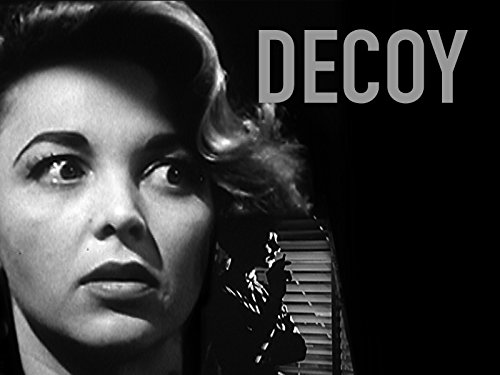
Welcome to Retro Television Reviews, a feature where we review some of our favorite and least favorite shows of the past! On Thursdays, I will be reviewing Decoy, which aired in Syndication in 1957 and 1958. The show can be viewed on Tubi!
This week, Casey makes the mistake of being nice.
Episode 1.10 “The Scapegoat”
(Dir by Teddy Sills, originally aired on December 16th, 1957)
Call this one “Casey Screws Up …. Again.”
Casey and Detective Hank Hopkins (John Connell) are escorting embezzler Dorothy Boyer (Lenka Peterson) to jail. As they wait at an airport, Casey cannot help but feel sorry for Dorothy. Everyone who sees Dorothy recoils from the sight of her handcuffs. (“She’s a crook!” one little girl yells.) Casey agrees to take off the handcuffs as long as Dorothy doesn’t try to run away. Of course, as soon as Casey is distracted, Dorothy runs.
Casey and Hank try to track down Dorothy. They discover that Dorothy was embezzling the money so that she could afford a special school for her son, who is repeatedly described as being “retarded” but whose noncommunicative behavior suggests that he would probably, today, be diagnosed as having some form of autism. Casey and Hank fear that Dorothy is going to murder her child, to spare him from being sent to a “public institution” while she’s serving time in prison.
They’re right. Dorothy is on the verge of throwing her son off a bridge when Casey, Hank, and the cops track her down. Casey says that she understand why Dorothy is scared. “You think your son will be sent to a public institution and people will be cruel to him!” Casey says. “What about me? I work for a public institution! Was I cruel to you?”
“Who’s going to give love to a backward child!?” Dorothy cries.
Casey then taunts, “Go ahead, throw him over!”
This causes Dorothy to realize that she loves her son too much to toss him over the bridge. The episode ends with Casey speaking directly to the camera. Dorothy will only have to serve six months in prison. As for Casey and Hank, they’re put on official probation for three months for letting Dorothy escape. “You live and you learn,” Casey says.
This episode was a real time capsule. Yes, it was weird to hear the term “retarded” tossed around so casually, though I found the term “backward child” to be far more offensive. But, let’s be realistic here. This show aired 1957 and it’s a bit silly to expect a 68 year-old television program to sound like it was written in 2025. To me, what was really upsetting was how everyone that Casey talked to seemed to feel it was perfectly understandable that the father of Dorothy’s child abandoned Dorothy because of their son. Everyone, except for Casey and Hank, acted as if Dorothy should be ashamed of her child. To make clear, the show did not endorse that attitude but still, the callousness of almost everyone in Dorothy’s life was hard to take. I was glad that Casey cared.
That said, I did cringe a bit at that “I work for a public institution” line. One nice person does not signify a change in culture.
“If you cause someone else to die, living becomes meaningless.” — Ms. Park
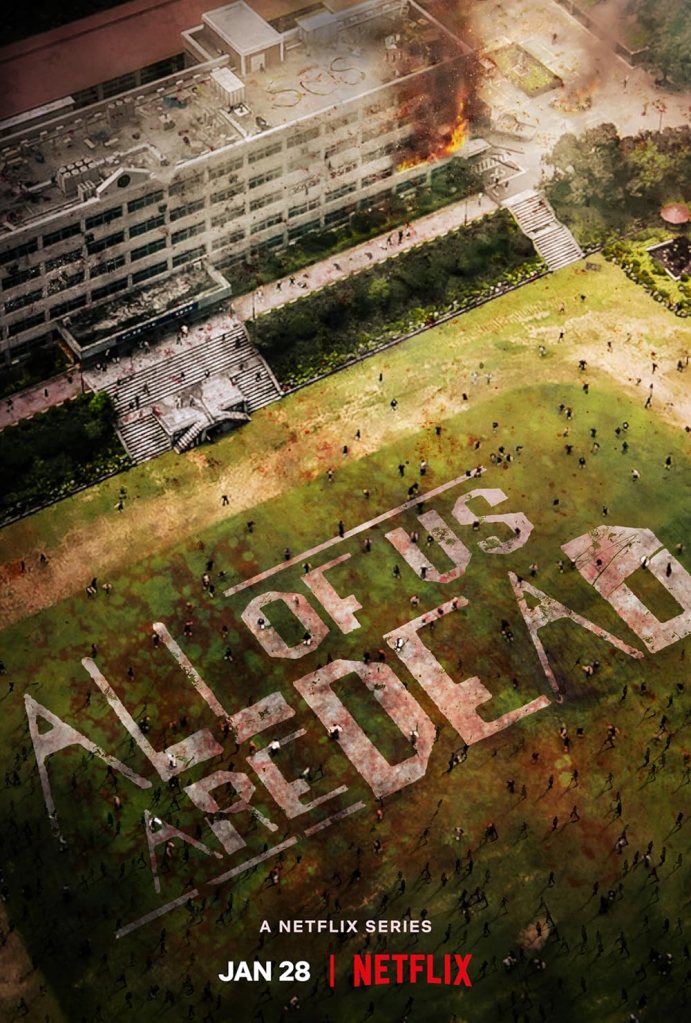
When All of Us Are Dead premiered on Netflix on January 28, 2022, it arrived at a time when both global audiences and Korean media were steeped in a fascination with dystopia, contagion, and social decay. The success of Kingdom had already proven that Korean horror could merge sociopolitical allegory with visceral entertainment on a grand scale. But where Kingdom dissected monarchy and corruption under the opulent, pandemic-stricken Joseon Dynasty, All of Us Are Dead reimagined apocalypse through the raw immediacy of youth—transforming a high school into a microcosm of social hierarchy, moral collapse, and the cyclical violence embedded in modern society.
Adapted from Joo Dong-geun’s webtoon Now at Our School, the series reflects the renaissance of cross-media storytelling in South Korea, where digital comics serve as fertile ground for cinematic reinvention. Directed by Lee Jae-kyoo and Kim Nam-su, the show unfolds in the fictional Hyosan High School, where a science experiment gone horribly wrong ignites a deadly viral outbreak. Within moments, everyday teenage conflicts—bullying, crushes, class pressures—explode into mortal struggles for survival. The series invites viewers to witness how quickly civility crumbles when adolescence, science, and contagion intersect in a closed system, turning a familiar academic setting into an arena of horror and ethical reckoning.
A meta-textual layer enriches the show’s narrative: the characters are well-versed in zombie lore, recognizing their nightmare as their very own Train to Busan. Early in the series, protagonist Cheong-san humorously compares their desperate situation to the iconic Korean zombie film. This is more than a passing joke; it marks how deeply the zombie genre is embedded in their cultural consciousness and survival instincts. The recognition shapes how they confront the outbreak, even as attempts to label the crisis as a “zombie” emergency fall on skeptical ears. This self-awareness grounds the horror in a world where fiction informs reality, and survival requires navigating both.
The virus at the center of All of Us Are Dead is born not from malice but desperation. Created by science teacher Lee Byeong-chan to empower his bullied son, the virus is designed to amplify human strength and aggression as a defense mechanism—an ironic inversion of evolution itself. The mutation, however, spirals beyond control, weaponizing rage and reducing its hosts to flesh-craving undead. This premise gives the show a poignant moral complexity rarely seen in typical zombie narratives. The outbreak stems from parental grief and failed empathy—a symbolic contagion that mirrors the emotional and systemic rot permeating South Korea’s hypercompetitive society. Underlying the visceral terror is a searing critique of institutional neglect. Authority figures—from school staff to government officials—succumb to confusion, bureaucracy, or cruelty rather than compassion. The lack of safe leadership parallels the inept response seen in Train to Busan and Kingdom, continuing Korean horror’s thematic obsession with authority’s inability to protect the vulnerable. Director Lee Jae-kyoo leans into this chaos with both precision and restraint, allowing moments of quiet dread between bursts of violent frenzy. Through repeated imagery of locked doors and shattered glass, he suggests that confinement—psychological, social, and literal—becomes the defining motif of youth under duress.
At its heart, All of Us Are Dead is a survival story—but one filtered through adolescent turmoil. When the infection begins, friendships fracture and loyalties are tested under fire. Students like Cheong-san (Yoon Chan-young), On-jo (Park Ji-hu), Nam-ra (Cho Yi-hyun), and Su-hyeok (Park Solomon) struggle not only to avoid death but to retain a moral compass amid the chaos. Their reactions to trauma—grief, bravery, ruthlessness—expose the spectrum of maturity within youthful fragility. The school, once a symbol of guidance and protection, turns into a decaying labyrinth of fear, with empty corridors echoing the screams of former classmates. This transformation gives director Lee a theatrical staging ground reminiscent of siege narratives. Terrifying, kinetic sequences unfold in chemistry labs, stairwells, and gymnasiums, blending handheld urgency with tight spatial cinematography. The camera’s proximity to characters captures the suffocating intensity of being trapped, while drone shots of burning Hyosan provide a grim reminder of the larger devastation beyond the school gates. The claustrophobic aesthetic evokes Western zombie forebears such as 28 Days Later and Romero’s Day of the Dead, yet the show remains distinctly Korean through its fusion of tragedy, melodrama, and relentless humanity.
One of the most gripping and socially resonant themes All of Us Are Dead explores is the prevalence and devastating impact of school bullying within South Korean youth culture. Bullying is not merely backdrop but a driving narrative force shaping character motivations and the outbreak’s consequences. From the outset, the series exposes the brutal hierarchies ingrained in the school system, where sociopathic bullies like Gwi-nam (Yoo In-soo) wield unchecked power over peers, enforcing cruel dominance through intimidation and violence. The victimization of marginalized students, particularly science teacher Lee Byeong-chan’s son, becomes a poignant catalyst for the viral outbreak, directly linking structural cruelty to catastrophic consequences. This thematic focus reflects real-world concerns in South Korea, where intense academic pressures and social conformity often exacerbate bullying, sometimes with tragic outcomes.
The show’s treatment of bullying extends beyond physical violence to reveal psychological torment—the constant surveillance, social exclusion, and layers of toxic peer dynamics that fracture young lives. Through nuanced portrayals of victims, perpetrators, and bystanders, All of Us Are Dead critiques a culture that often silences or minimizes abuse. The transformation of bullies into zombies metaphorically suggests how unchecked aggression can dehumanize both victim and aggressor, perpetuating cycles of violence even amid apocalypse. Meanwhile, characters like Nam-ra, who initially grapples with victimhood, embody the complex interplay of fear, rage, and resilience spawned by bullying. This emphasis elevates the series beyond typical survival horror into a social allegory about the corrosive effects of cruelty and the desperate fight for dignity under siege.
If Kingdom reinvented the zombie with its nocturnal, plague-era ferocity, All of Us Are Dead introduces a new hybrid—an evolved generation that expands the mythology. Here, the infection mutates unpredictably, producing “hambies” (half-zombies) who retain consciousness and emotion while gaining superhuman resilience. Nam-ra epitomizes this transformation, serving as both tragedy and embodiment of moral duality. Her condition becomes a metaphor for adolescence itself—the tension between savagery and empathy, human and monster, self and society. Through Nam-ra, the series explores ethical boundaries long absent from mainstream zombie fiction. She embodies the question: what happens when survival demands losing one’s humanity? Her struggle resonates deeply in a world where mutation and difference provoke fear and ostracism. The human horror in All of Us Are Dead is not confined to the undead but radiates from the living—bullies, opportunists, and indifferent adults—whose cruelty predates the infection.
Like many Korean horrors, the series is political without proclamation. Its metaphorical core lies in observing a generation abandoned by its guardians. The adults’ failures—scientific, ethical, and parental—manifest as the apocalypse the youth must endure. The students’ isolation becomes both physical and existential; they cannot rely on rescue, and government policies treat their town as expendable containment. These threads coalesce in unforgettable moments of moral reckoning: characters sacrificing themselves to slow infection, tender scenes where guilt replaces hope, and painful realizations that not everyone can be saved. Even amid terror, the direction maintains emotional intimacy, allowing tragedy to feel earned rather than manipulative. The viewer doesn’t merely observe a zombie outbreak but experiences the painful metamorphosis of innocence to experience, of dependency into resilience.
From its opening frames, All of Us Are Dead demonstrates Netflix’s investment in cinematic quality. The production design captures a country on the brink of collapse with chilling realism—street chaos blending with intimate campus horror. Special effects and prosthetics convey the infection’s grotesque physicality, particularly during close-ups that merge human anguish with abject body horror. The use of makeup and fast, jittering movement gives the zombies a distinctive aesthetic, somewhere between Train to Busan’s agile infected and Kingdom’s twisted contortionists. Sound design contributes profoundly to the immersion. Metallic echoes, frenzied breathing, and sudden silence heighten suspense, while the restrained soundtrack underscores existential dread rather than spectacle. At times, silence becomes the loudest sound in the series—especially in scenes where survivors await dawn or confront the moral cost of killing former friends.
Performances further anchor the chaos. Park Ji-hu delivers vulnerability and quiet strength as On-jo, grounding the narrative’s emotional line, while Yoon Chan-young incarnates youthful heroism tainted by despair. Cho Yi-hyun’s Nam-ra stands out as the most nuanced performance, oscillating between stoicism and suppressed rage, embodying both victim and evolution. Supporting roles—including antagonists like the sociopathic bully Gwi-nam (Yoo In-soo)—introduce shades of human corruption that rival any monster the virus creates.
All of Us Are Dead continues Korean horror’s tradition of transforming genre entertainment into mirrors of collective trauma. If Train to Busan externalized grief and social apathy, and Kingdom allegorized class rot under feudal hierarchy, this series dramatizes a generation’s alienation in the digital age. The powerless youth of Hyosan High become metaphors for a society that prizes excellence over empathy and survival over solidarity. The outbreak amplifies what was already toxic: bullying, surveillance culture, and suppressive academic competition—forms of quiet apocalypse preceding the literal one. Even the series’ title invokes universality, suggesting that in a morally diseased world, everyone is already spiritually infected. The zombies may be the physical manifestation of what festers within ordinary relationships—rage, resentment, and humiliation. In this respect, the show transcends its genre constraints, functioning as social realism cloaked in blood.
However, the series is not without its flaws. Its ambitious, 12-episode length sometimes reveals pacing issues. The narrative occasionally stagnates in repetitive cycles of fleeing classroom to classroom, with some fight scenes and survival strategies repeating to the point of fatigue. Unnecessary characters consume screen time without meaningful contribution to the plot, diluting the impact of the central story. Logical inconsistencies also emerge—characters often make poor decisions that strain credibility, such as not isolating infected individuals early, or failing to leverage unique abilities within the group efficiently. These moments can frustrate viewers seeking more plausible survival dynamics and amplify narrative frustration.
Emotionally charged episodes sometimes suffer from heavy-handed exposition and dialogue that replace subtle character development. At times, the series relies on melodramatic reactions that may feel exaggerated or clichéd, especially in high-tension situations where urgent action would be expected. The ending, while open to continuation, drew criticism for being anticlimactic and resolving major conflicts too simplistically, diminishing the epic buildup and emotional payoffs. Additionally, the English dubbing and translation have been noted to undermine the performances’ emotional resonance for international audiences.
Despite these weaknesses, the show capitalizes on what it does best: creating authentic emotional bonds within its youthful cast, delivering intense, well-crafted horror scenes, and reflecting pertinent social anxieties through genre storytelling. Its blend of visceral thrills, tragic humanity, and cultural critique makes All of Us Are Dead a compelling, if imperfect, addition to the Korean zombie canon.
The finale deepens the ambiguity of Nam-ra’s fate. After a final, painful showdown, she isolates herself, grappling with the monstrous hunger within while refusing to surrender her humanity. In a haunting scene, she bites her own arm and feeds only on dead infected to suppress her urges. When reunited with her friends months later, she appears transformed yet unsettling—no longer wholly human, nor fully monster. She speaks cryptically of finding others like herself, neither adult nor child, caught in an uneasy in-between. Declining her friends’ plea to return, she leaps from the rooftop into darkness, leaving open whether she will emerge as ally or threat. This ambiguous exit invites viewers to ponder the fragility of identity under mutation and the precarious balance between survival and self-destruction in a world forever altered by contagion.
In a broader sense, All of Us Are Dead demonstrates that the zombie mythos remains fertile ground for reinvention. By combining the fast-paced terror of modern infection horror with the introspection of Korean melodrama, the series redefines what it means for young people to inherit a broken world.
All of Us Are Dead is more than another entry in the zombie canon—it is a generational elegy wrapped in horror. Built upon the stylistic and thematic foundations laid by Train to Busan and Kingdom, it fuses elemental fear with social autopsy, exposing the fractures of authority, empathy, and adolescence under siege. Though uneven in pacing and burdened by moments of frustration, it succeeds where it matters most: revealing that monsters are not born from contagion but cultivated by neglect. Through its relentless tension, moral ambiguity, and emotional resonance, All of Us Are Dead cements itself as one of the defining horror works of Korea’s streaming era—a mirror for an age where fear spreads faster than any virus, and where survival demands confronting not the end of the world, but the end of innocence.
Welcome to Late Night Retro Television Reviews, a feature where we review some of our favorite and least favorite shows of the past! On Wednesdays, I will be reviewing 1st and Ten, which aired in syndication from 1984 to 1991. The entire series is streaming on Tubi.
Things are getting crazy at training camp!
Episode 2.3 “A Second Chance”
(Dir by Bruce Seth Green, originally aired on September 8th, 1986)
This week’s episode featured the unforgettable sight of O.J. Simpson tackling a knife-wielding Don Swayze and saving the life of Delta Burke.
Swayze was playing Clay Daniels, a tight end who was drafted by Coach Denardo, even though he apparently pulled a knife on a professor in college. After Clay threatened Johnny Valentine after he felt Valentine wasn’t throwing him the ball enough, Denardo explained that he drafted Clay because Clay can play football. Okay, Ernie, I guess that justifies having a knife-wielding maniac in the locker room….
After Denardo finally cut Clay from the team, Clay showed up at Diana’s house with a knife. Fortunately, Diana was able to call Denardo and T.D. Parker for help. Denardo showed up and promised he would give Clay a second chance. And then T.D. tackled Clay and grabbed that knife like a pro!
Meanwhile, Yinessa returned to training camp but he was not happy that his friend and roommate, wide receiver Jamie Waldren (Jeff Kaake), had a drug problem. This episode ended with Yinessa getting into a fight with someone who broke into their room in search of Waldren’s cocaine. An angry Yinessa flushed all of Waldren’s cocaine. Considering that this episode also featured Diana being named Chairperson of the League’s Anti-Drug Committee, I’m sure this won’t lead to any sort of awkwardness with the team.
Much like last week’s episode, this episode was so melodramatic and over-the-top that I couldn’t help but enjoy it. Drugs, training camp, and knives! Will the Bulls make it to the Championship Game a second year in a row? It’s not looking good but, considering that they have O.J. Simpson’s razor-sharp instincts at their disposal, I wouldn’t count them out yet!
Welcome to Retro Television Reviews, a feature where we review some of our favorite and least favorite shows of the past! On Wednesdays, I will be reviewing the original Love Boat, which aired on ABC from 1977 to 1986! The series can be streamed on Paramount Plus!
Love …. exciting and new!
Episode 6.24 “So Help Me Hannah/The Maid Cleans Up/C.P.R, I.O.U.”
(Dir by Kim Friedman, originally aired on March 12th, 1983)
This episode features Gopher bringing a CPR dummy on board. No one is that interested in learning how to perform CPR, at least not until one of the passengers, Dwaine Fenley (Steven Keats), has a heart attack. Fortunately, because of his CPR training, Gopher is able to save Dwaine’s life. Not only does this lead to Dwaine forging a stronger relationship with his father (Milton Berle) but it also leads to Gopher getting promoted to Head Purser.
(Erin doesn’t like to brag so I’ll brag for her and say that she is not only CPR-certified but she also saved someone’s life a few years ago. CRP is a good thing to learn!)
While Gopher is trying to get everyone to learn CPR, there are other things happening on the boat and, to be honest, they’re all kind of annoying. For instance, Hannah (Mary Martin) boards the boat and she’s immediately giving everyone advice and singing Cole Porter tunes. I kind of knew that this story was going to be annoying from the minute Hannah first boarded the ship and the camera zoomed in for a close-up, which was usually a sign that a guest star was going to spend the entire cruise overacting. That’s the case here, with Mary Martin delivering every line and playing every emotion as if she’s on Broadway as opposed to a television soundstage. Hannah meets an ex-boyfriend named Jarvis (Max Showalter) and they sing It’s De-Lovely while standing against the ship’s railing and, for me, it was De-Cringey. Maybe if I was of Mary Martin’s generation, it would have been less cringey. But I have to admit that I listen to most of those old songs and I think to myself, “De-lovely is not a word.” Hannah encourages Jarvis to allow his son (Timothy Patrick Murphy) to play piano instead of becoming a real estate agent.
Finally, a maid (Judy Landers) boards the boat because she knows that her employer (Caren Kaye) is cheating on her boyfriend (Ben Murphy). It’s actually a bit of a complex storyline, at least by the typical standards of The Love Boat. Personally, I like Judy Landers and Ben Murphy was appropriately rugged and handsome. Unfortunately, Landers and Murphy didn’t have much chemistry.
A mixed review for this episode, I’d say. I appreciated the CPR subplot because that was The Love Boat at its most well-intentioned. The whole thing with Mary Martin singing old songs was cringe city. And the maid subplot was just kind of boring. This was not a great cruise but it wasn’t a terrible one either. At least, after six seasons, Gopher finally got his promotion.




 Through the Shattered Lens