Some songs just perfectly capture the mood.
Some songs just perfectly capture the mood.
This is one of Billy Joel’s best-known songs. For people who grew up at the right time, it will always be remembered as the theme song from Bosom Buddies. (Unfortunately, due to licensing issues, the song does not appear on the show’s DVD release and it has recently been removed by syndicated airings. All ten of Bosom Buddies‘s fans were very disappointed.) In the background of this song, you can hear Chicago’s Peter Cetera and Donnie Dacus contributing backing vocals.
This video was directed by Steve Cohen, who directed several videos for Billy Joel in the late 70s and the early 80s.
Enjoy!
Here’s The Beat with their cover of Tears of a Clown!
Though the band may have been named after Chicago, the park referred to in this song is New York’s Central Park. Robert Lamm enjoyed spending the 4th of July in the park and he went on to write this song about it. It became one of Chicago’s biggest hits and it also became a song that was regularly featured in various Time Life musical compilations. Back in the day, anytime a Time Life infomercial came on TV, you knew that you were going to get this song’s chorus stuck in your head.
Enjoy!
Surf’s up!
I just felt the need for some surf music today. Maybe it’s because it’s hot and I’m far away from the beach. I’m not a swimmer but I do like surfers.
Enjoy and stay cool!
The lyrics to this Thomas Dolby song seem to be self-explanatory. When they were teenagers, the narrator met a girl named Europa, they fell in love while spending their days walking along the beach, and then Europa moved away. (Dolby sings that “the war” took her away, which sounds ominous but which makes sense when you consider that Dolby’s 1982 album, The Golden Age of Wireless, was based on the idea of him being a part of the first generation since World War II. “The war took her away” is probably meant to be a comment on how relationships that were once ended by a world war were now just being ended by a parent getting a new job in a new country or town.) Years later, Europa’s a star and Dolby tries to see her, just to be ushered away by one of her bodyguards. But, in Dolby’s heart, they’ll always be pirate twins on the beach.
The video has come to be considered a classic example of early 80s music videos, mixing the future and the past and allowing Dolby to capitalize on his nerdy but cool persona. The machines link the song to the future but the black-and-white images bring us to the past, capturing the feel of Dolby’s song.
Enjoy!
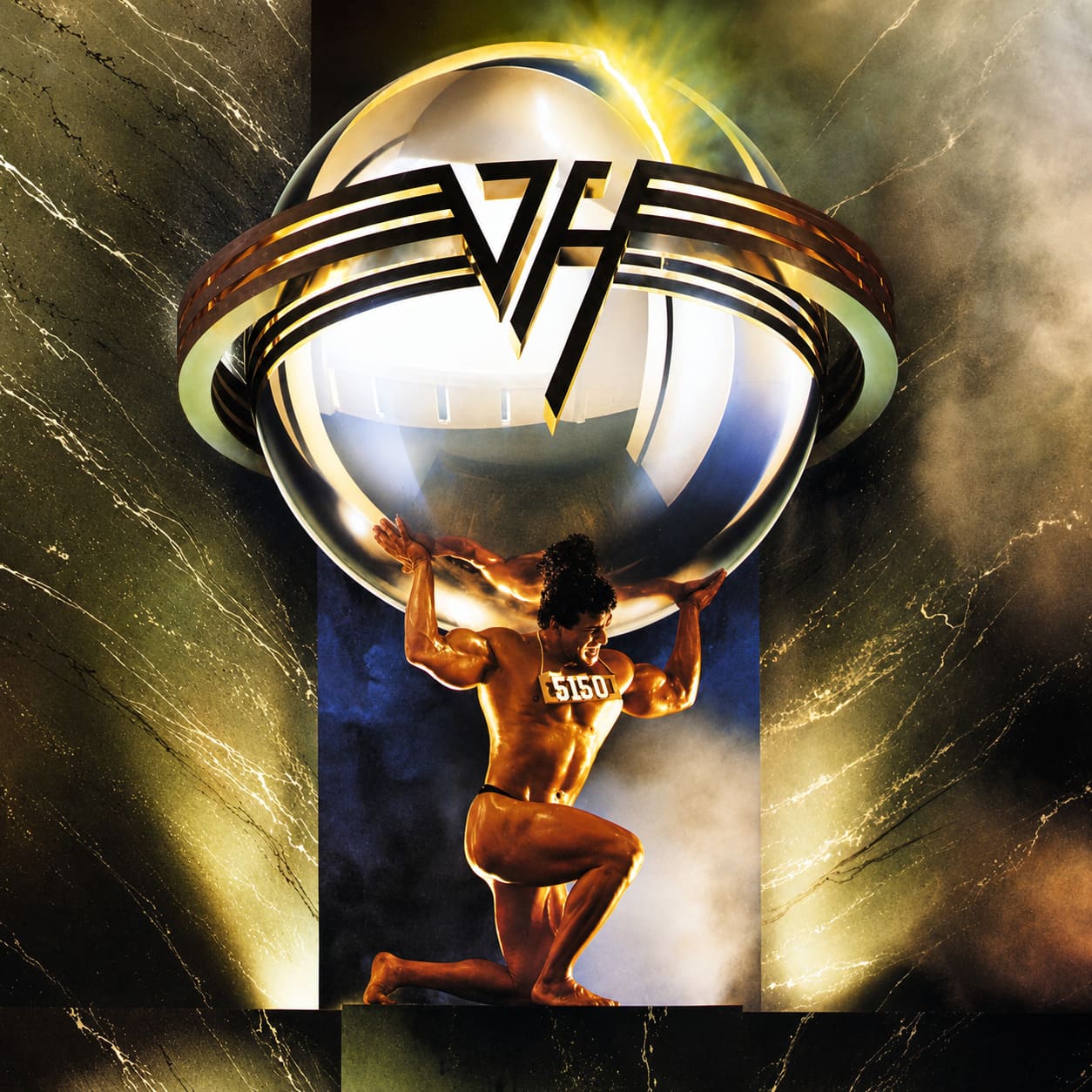
A funny thing about Dreams is that, if you grew up in the mid‑to‑late ’80s, you didn’t just hear this song — you absorbedit through a six‑story IMAX screen at an amusement park. Every elementary school kid in that era got marched into one of those giant dome theaters for the annual field trip “educational experience.” For me it was Great America in Santa Clara, where they’d blast Dreams over footage of jets, landscapes, and whatever else looked cool on a screen the size of a football field. So the song already had this mythic, larger‑than‑life vibe before you even knew who Van Halen was.
Listening to it now as an adult, you realize how much of that huge, soaring energy was entirely Eddie’s doing. The song has this triumphant, larger-than-life feel to it, and his guitar work is the whole engine driving it. He doesn’t just strum along in the background; he creates this massive, shimmering wall of sound with his chorused-out tones and subtle little hammer-on flourishes that just float over the synth and Sammy Hagar’s vocals. It’s one of those tracks where you’re basically waiting for him to just take the wheel because his playing is so infectious and loud, even when he’s holding back during the verses.
And man, when he finally does take over, it’s absolutely worth the wait. If you cue the track up, pay close attention right at the 2:53 mark—that is the exact moment Eddie’s guitar solo kicks in, and it is pure magic. It’s not just a standard solo; it feels like the guitar is literally taking flight, which makes total sense why they used it for those old IMAX aviation documentaries. He weaves in these wild, squealing harmonics, blistering legato runs, and that signature tapped vibrato that nobody else on earth could ever replicate. It’s melodic but incredibly aggressive, showing off exactly why he was considered a god among guitar players.
Ultimately, Dreams is a perfect showcase of Eddie’s ability to make his instrument sound like the true lead vocalist of the band. He blends pure technical shredding with genuine, uplifting emotion, turning what could have been a standard late-80s rock track into something completely cinematic. Whenever I hear those opening notes today, I’m instantly transported right back to sitting in that dark, giant IMAX theater with a bunch of rowdy kids, totally mesmerized by the sound of his fingers on the fretboard. It’s just one of those songs that proves his playing wasn’t just noisy—it was absolutely majestic.
Dreams
World turns black and white
Pictures in an empty room
Your love starts fallin’ down
Better change your tune
Yeah, you reach for the golden ring
Reach for the sky
Baby, just spread your wings
And get higher and higher
Straight up we’ll climb
We’ll get higher and higher
Leave it all behind
Run, run, run away
Like a train runnin’ off the track
Got the truth bein’ left behind
Fall between the cracks
Standin’ on broken dreams
Never losin’ sight, ah
Well, just spread your wings
We’ll get higher and higher
Straight up we’ll climb
We’ll get higher and higher
Leave it all behind
So baby, dry your eyes
Save all the tears you’ve cried
Oh, that’s what dreams are made of
‘Cause we belong
In a world that must be strong
Oh, that’s what dreams are made of
[guitar solo @2:53]
Yeah, we’ll get higher and higher
Straight up we’ll climb
Higher and higher
Leave it all behind
Oh, we’ll get higher and higher
Who knows what we’ll find?
So baby, dry your eyes
Save all the tears you’ve cried
Oh, that’s what dreams are made of
Oh baby, we belong
In a world that must be strong
Oh, that’s what dreams are made of
And in the end
On dreams we will depend
‘Cause that’s what love is made of
Great Guitar Solos Series
Apollo 9 is a part of what has been referred to as being Adam Ant’s “Rockers in Space” phase. Though the album on which it appeared was not one of Ant’s more commercially successful offerings, Apollo 9 was a hit in the UK.
This video was directed by Daniel Kleinman, a British commercial director who has also directed music videos for just about everyone. Kleinman has also designed the title sequence for every James Bond film since Goldeneye.
Enjoy!
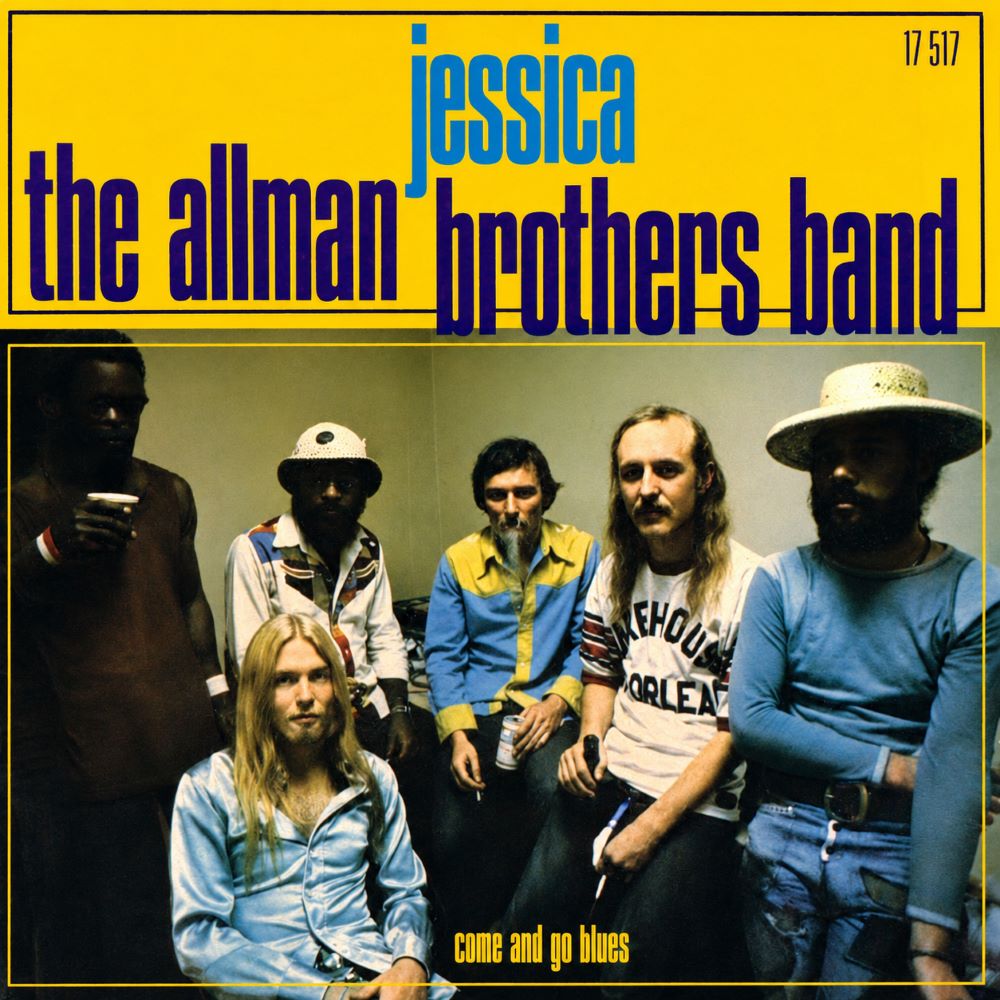
When you sit down with Jessica by The Allman Brothers Band, it’s hard not to feel an immediate sense of warmth and uplift. It’s pure joy set to music, a sonic road trip with the top down and a sunny sky above. The backstory is pretty great too—Dickey Betts wrote it for his little daughter, and you can practically hear her bouncing around the room in that playful, carefree melody. It’s an instrumental, which means the guitars have to do all the talking, and man, do they have a lot to say. The song is a masterclass in weaving intricate parts together, from the opening acoustic strums to the dual-guitar harmonies that just make you want to tap your foot.
The real magic kicks in about halfway through. The song’s structure is a journey, with themes and melodies weaving in and out. There’s a fantastic piano solo from Chuck Leavell that comes in a bit before the halfway mark, but the main event, the centerpiece guitar solo, is where Dickey Betts truly shines. His solo begins at 3:45, and it’s like he’s telling a story without words. It’s not about flashy, fast playing, but about crafting a melody that feels both conversational and powerful—just pure, expressive Southern rock.
What’s so interesting is the technique behind that sunny sound. Betts was paying tribute to the great Django Reinhardt with this tune, actually writing it to be played using only two fingers on the fretboard. That restriction somehow gave the melody its distinct, rolling quality. It’s built on a major scale with a slightly bluesy twist, giving it that upbeat yet soulful feel. He uses clean, melodic phrasing and these country-inspired double stops that just sing, making the guitar sound as natural as breathing. It’s a testament to his genius that he could create something so timeless with such a simple, almost limiting, approach.
It’s wild to think this cheerful song came out of a period of heavy loss for the band, after the deaths of Duane Allman and Berry Oakley. Instead of wallowing, they channeled that energy into this seven-and-a-half-minute celebration of life. The fact that it’s named after Betts’ daughter just adds to its personal, life-affirming feeling. For me, Jessica is the definitive proof that a guitar solo, when done right, can say more than a thousand lyrics ever could. Betts’ solo from 3:45 onward is a masterpiece of mood and melody, and it’s the reason this song has become one of the most iconic and beloved instrumentals in rock history.
Great Guitar Solos Series
With Night and Day, U2 not only provide their own spin on Cole Porter’s best-known song but they also introduced the sound that would define them throughout the 90s. This was the first song of U2’s post-Joshua Tree era.
The video was directed by the German director, Wim Wenders. U2 would subsequently provide songs for Wenders’s Until The End Of The World and Far Away So Close. Bono would also produce and provide the story for The Million Dollar Hotel, one of Wenders’s less regarded films.
Enjoy!

