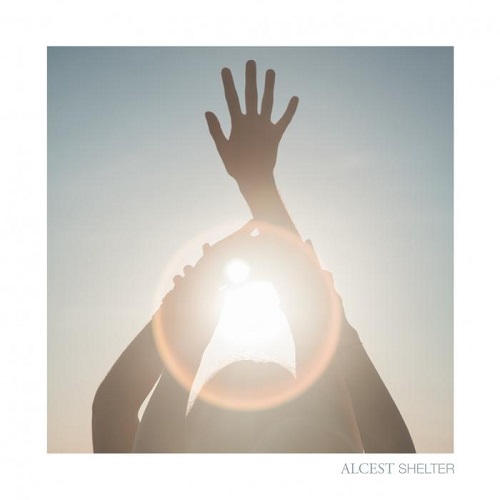
Review: Alcest – Shelter


I have a bad habit of failing to keep up with bands in the years after their big breakthrough albums. As a consequence, I tend to be caught off guard when I find an old band doing something drastically different from their old sound. That is not the case with Alcest. I have eagerly gobbled up everything Neige has thrown out there since Le Secret (2005), and I was well aware ahead of time that Shelter was not going to be a metal album. That did not phase me. Neige’s sound has evolved dramatically over the years, and as early as Souvenirs d’un autre monde (2007) you could not detect a residual shred of the style he presented on Tristesse Hivernale (2001). A dream pop/shoegaze/post-rock album was a reasonable thing to expect given the general direction his music had been going. I clicked play on Shelter fully convinced that I would enjoy it.

Alcest – Wings and Opale, from Shelter

If I was going to have doubts, they might have been about the level of external influence surrounding Neige’s music of late. Was it going to show? Would this not quite sound like Alcest? Neige claimed no knowledge of shoegaze music when he recorded Le Secret and Souvenirs d’un autre monde. I remember his publicized surprise when an early release of Souvenirs‘ title track got plastered with the genre label all over the internet. Since then, Neige has developed quite the fondness for those classic bands to which he was compared. Shelter even features a guest appearance by Neil Halstead of Slowdive. If Shelter was not going to be metal, there was certainly a chance we would hear a lot more of that influence in place of Neige’s self-derived affinity to the sound.

I don’t think that is an issue here at all. I can’t say I have heard much classic dream pop or shoegaze outside of Loveless, but if Neige had continued to boast total ignorance of the genres, I think I would have believed him. Shelter sounds deliciously like Alcest, whether the style is a departure or not. The album opens with the angelic, echoed vocal chant that by Les Voyages de l’Âme had become a staple Alcest sound. For the first minute and thirty seconds, there is nothing to distinguish Shelter from another Alcest black metal album. The instant familiarity is a pleasant relief for any fan that had major doubts. You might still wonder whether he could pull off a full 46 minute album of “soft” Neige without ever using metal to vary the dynamics, but that question dissolves into air a minute and a half in, as the first full track, “Opale”, kicks off. It’s so vibrant that your speculation seems a petty distraction in the face of the musical moment.

Alcest – Voix sereine, from Shelter

This feeling definitely persists through the third track, “La nuit marche avec moi”, and on it Neige’s trending toward post-rock, audible on “Opale”, becomes substantially more apparent. “Voix sereine”, 11 minutes into the album, is the first time things really calm down from a pretty jubilee to get your mind wandering again. It kicks off slow and simple, rather dull really, and I for one had a hard time remaining attentive for the first three minutes. Was this the sort of “down time” I ought to have feared could come with a complete abandonment of metal? Perhaps it is, but 3 minutes of bore could be easily forgiven from most musicians. At the three minute mark, the song transforms into something substantially more palpable, and my second thoughts are largely forgotten. Much to my delight, I do find out that Neige fibbed a bit about the album’s contents. We might not encounter any blast beats or gut-wrenching screams on this album, but he did not forget how to turn on the distortion altogether. As the song gets heavier and substantially more… substantive, the boredom of the build-up fails to hold. It becomes a really great song. On a re-listen, knowing that something fairly aggressive will come of it, the lull is easier to swallow.

Alcest – Délivrance, from Shelter

The next song, “L’éveil des muses”, finds a more interesting starting point, but another slow build-up gives me serious doubts for the first time. What holds post-rock in the moment is the knowledge that something earth-shattering will come of it all. Knowing that “Voix sereine” is likely as heavy as the album is going to get, and without the instant gratification of the opening dream pop tunes, I struggle to give the song 100% of my attention. Track six, “Shelter”, is a much needed return to something more upbeat. It opens with the sort of pitch shifting distortion made famous by My Bloody Valentine, and from start to finish it’s an enjoyable ride. “Away”, the track featuring Neil Halstead on vocals, is a beautiful composition that, I think, would have been a thousand times better with Neige singing. Halstead kind of kills it for me–not because of the quality of his singing but because it sounds totally out of place on an Alcest album.

And then we close with “Délivrance”. The longest track by far at 10 minutes, it carried the weight of my overall opinion of the album. Shelter had so far offered a lot of stellar moments, but at its calmest it dangled dangerously on the edge of boredom. “Délivrance” needed to be a pretty epic piece of post-rock. At 3 minutes, a really classic post-rock guitar kicks off to confirm my hopes–at least to a point. It’s where the song heads from here that really disappoints me. We’re building, and we’re building, and it’s definitely a fun ride, but then right when you expect the song to really cast its shell aside and go all-out…. did it just end? Not a ten minute song after all, “Délivrance” concludes with a three and a half minute toned down outro.

It’s not common for me to speak of a song being too short, but “Délivrance” feels so incomplete to me. I accepted the first 3 minutes because I assumed we were going somewhere. I loved the next 4 because we were going somewhere. But we never really got there. Neige is the guy who made post-black metal a reality in the first place. Granted the full-fledged, conscientious post-rock/black metal cross-overs came later, I guess I expected such a hero of modern metal to aim a bit higher when confronting a fairly traditional post-rock sound. I can try to enjoy “Délivrance” for what it does offer, but I can’t help but think that he failed to see how much further he could have taken it. It’s something that would have sounded appealing in the late 90s but seems incomplete to me today, when post-rock bands are a dime a dozen and competition is a bit more formidable. I can’t quite get over that enough to fully enjoy it.

In the end, I guess you might say Shelter disappoints me. Maybe that’s because I came into it with really high expectations, where a lot of fans might have set the bar low when they found out there would be no black metal element. The first three tracks boosted my expectations all the more by offering a really novel sound that grabbed me and held on. But that dream pop vibe did not last, and the more he got back to sounds you might expect from an Alcest album of old, the more they felt depleted of the old energy rather than infused with a new one. Where the post-rock kick would normally give way to a black metal rockout, here it just fizzes away. Tracks like “Opale” set a precedent for how I wanted the entire album to sound. I got half of that, and half something that just makes me hope he goes back to his roots on the next release.
Review: Saor – Aura


The history of Saor is a bit deceptive. If you’ve heard the name at all, you didn’t until last year, but the man behind it has been around for some time now. Before Scotland’s Andy Marshall chose this name for his solo project, he released Eternity as Askival in 2009. He was also a major factor in Where Distant Spirits Remain by Falloch in 2011. Neither of those albums stuck with me well enough for me to remember how they sound off the top of my head today, but I do have them. That tells me this is a musician with a good bit of experience, who managed to get his name out there well before he changed it to Saor. Aura is apparently his second release as Saor — he released Roots last year, and I’ll have to make a point to go check it out. If it sounds anything like Aura, it will be well worth the trouble.

Saor – Children of the Mist, from Aura

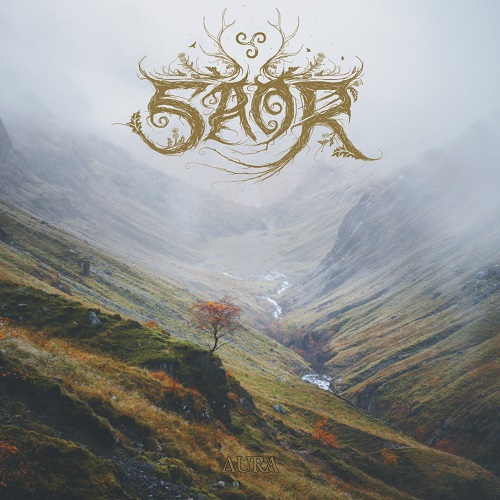
It does not take long for this five song, 57 minute album to convince you that it has something special going on. The opening track, “Children of the Mist”, erupts almost immediately into a graceful, distinctly Gaelic sweep of woodwind, layered atop well-mixed metal that lets the folk melody shine without much intrusion. The piano and string that follow seem to float in the air, painting a vivid landscape that seems to mirror the album’s cover art. The vibe is similar to Waylander of Northern Ireland, and it feels like it could drift on forever without losing any of its opening grandeur. Around 4:20, the metal briefly gives way to a beautiful cloud of strings and traditional drumming, soon to be met by blast beats that, much like on Kentucky by Panopticon, manage imbue the landscape with life rather than darkness. As the song continues on, you hear a wide variety of folk, pagan, and black metal techniques employed towards this same end of adding a feeling of life and spirit to the nature scenes that the traditional instrumentation invokes.

Saor – The Awakening, from Aura

This approach holds true throughout the grand bulk of the album. The melodies always arise from the folk instrumentation, with the metal serving a supplemental role of forcing you to feel directly engaged in the moment–a temporal witness to some eternal tranquility. It is a devout album, alive in reverence for the spirits of the land. From start to finish, it varies relatively little but never disappoints.

I suppose the terms “folk” and “pagan” can get thrown around rather haphazardly at times, without much of a clear distinction. One tends to conjure to mind lighter, “fun” bands like Korpiklaani and Alestorm, the other more serious bands such as Waylander and Drudkh. Sometimes this seriousness generates a sort of militarism or savagery, rendering bands like Arkona and Nokturnal Mortum far more intense than anything traditional black metal has produced on its own (and far too often, in Nokturnal Mortum’s case for instance, this gets vandalized by absurd notions of supremacy). But this does not always have to be the case. On Aura there is never a hint of desperation or brutality. The feeling is purely of peace and reverence boldly denying that the tradition it embraces has been in any way weakened by the modern world. “Folk” and “pagan” both denote music focused on ways of life that are no longer socially acceptable or possible in a modern, technologically advanced, monotheistic world. If folk suggests people, pagan suggests religion, and the religions of old were not based upon some highborn Greek notion of divinity. Their gods took hearth in wood and water and earth. Saor feels like pagan metal in that sort of sense to me. Its folk instrumentation paints the landscape, and the metal imbues it with supernatural life.

Aura is undeniably one of the most beautiful recordings of 2014. Don’t let it pass you by.

Review: Fukpig – This World is Weakening


When I saw a band described as “crust black metal”, my first thoughts went out to recent Darkthrone and Carpathian Forest’s Fuck You All!!!!. I was hoping for the latter of the two, but I found something far more unique to itself. With a healthy dose of thrash, grindcore, and a dozen other influences in the mix, Fukpig deliver a sound I can appreciate from a lot of different angles. Their discography is showing 18 releases in a span of 14 years, so I imagine a lot of people knew what to expect. I didn’t.

Fukpig – This World is Weakening, from This World is Weakening

If This World is Weakening has the look and feel of a grindcore album, it certainly does not share their typical length. At 36 minutes, there is no lack of content. The album actually feels rather lush, with a lot of experimentation and variation that does not succumb to the repetitive. The title track, for instance, opens with a bit of a doom/stoner drone before bursting into a really old-school black metal grind, harkening to the days when the style was not so distinct from thrash. The vocals are deliciously distorted in a way that reminds me a little of Converge, and I’m already loving it. But Fukpig aren’t content to leave it at a black/thrash throwback. 35 seconds on, a drum roll tosses you into a really desperate and compelling tremolo chorus that turns the song on its head. It wouldn’t feel terribly out of place in a screamo song, and it definitely tosses “This World is Weakening” into a category all of its own. Not too many 2 minute songs can feel this complete.

Fukpig – Fascist Moron, from This World is Weakening

The next track is night and day different. The crusty thrash gets layered over a synth chorus that you normally wouldn’t hear outside of Norway. It quickly goes from a nearly tongue-in-cheek dramatic delight to sick and crunchy in the chorus, and then we move on to a dirty breakdown that makes me want to rock my head into orbit, all to a comical grindcore squawk of “FASCIST MORON!” Nearly every song on this album is a world of its own, totally distinct from the rest. Fukpig manage this while rarely extending a track beyond the two minute mark. The unmistakable vocals and thrash beat might be the most consistent features, along with some faux-dramatic synth, but each track seems to put these to use in novel new ways. This World is Weakening taps just about every trend in extreme music and crams them into explosive shells of crusty, thrashy old school black metal. It can and inevitably will replace bands like Pig Destroyer in my really limited collection of tight brutality–a musical mood that strikes me only occasionally but always seems to lack sufficiently appealing sources. There is an underlining intelligence to This World is Weakening that keeps your mind running when you pause from the direct confrontation long enough to suck it in.

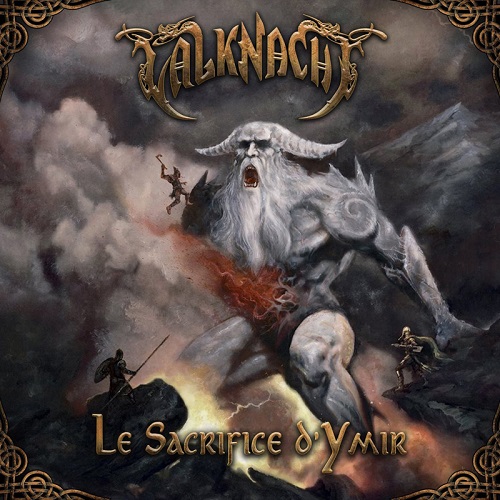
Review: Valknacht – Le Sacrifice d’Ymir


Valknacht is a five-piece paganish metal band from Quebec that have released three albums beginning in 2009–not to be confused with Walknut, the highly acclaimed side-project of Stringsskald from Темнозорь (Temnozor). I suppose I grabbed this album for an obvious reason: it presented a pagan tag from a relatively new act I had never heard of. With the folk and pagan metal scene now fifteen years in the making, a lot of the old stalwarts are simply running low on material. I am always hoping to stumble upon a new collaboration willing to pick up the slack and carry one of my favorite genres onward into a new era. Valknacht could be that band, but it’s going to take some work.

Valknacht – Bataille de Maldon, from Le Sacrifice d’Ymir

The album begins with a 3 minute intro track that I’ll not bother sampling here. You already know what it sounds like. Oars splash through the sea in time with viking voices oooing and OOOing and sometimes aaahhing. Break and repeat with some overbearing choral and brass synth, throw in a gong for good measure, and you will find yourself in the opening moments of “Bataille de Maldon”. Add a dash of synth woodwind, queue the crunch crunch crunch monotone guitar, and remind your drummer to make it metal in a few more measures. The black metal at 2:05 gives us a well-needed boost, and from there the song transitions to something that ought to be really, really cool. 2:40 made me think of Nokturnal Mortum’s “The New Era of Swords” from Weltanschauung, and for about one minute “Bataille de Maldon” is a song I really want to listen to. But the segment soon gives way to something fairly indistinguishable from what came before.

For the vast, vast majority of this 9:30 song, what you hear is an endless rain of double bass, rhythm guitar that only knows two patterns and three chords, a cheap synth whistle that’s totally unconvincing as the real deal, an admittedly interesting lead guitar, and total synth overkill plugging in every gap, sometimes doubled up with layers of “OOOOOOOOO”.

Yet, this could have all worked out really well. This band surely listened to a lot of Moonsorrow, and the string portion of the synth gets playfully close to Nokturnal Mortum at times. But the rest of the synth is just bad. It feels so fake. They use bold brass like they’re Equilibrium or Turisas, but the music isn’t nearly bombastic enough to merit it. The woodwinds have no depth, no air, no punctuation… Аркона (Arkona) is about the only band I can think of that pulls off fake woodwinds effectively (unless others are doing it so well I take them for studio musicians), and they must have much higher-end equipment than Valknacht at their disposal to do it with. It would have been nothing for one of the band members to pick up a whistle and record it proper. The vocals get really annoying really quickly for lack of dynamics or anything interesting to encase them. And the song goes on and on and on without ever adding much of anything. By 3:10 we’ve pretty much heard everything, and there’s next to nothing in the form of build-up or break until we hit a sudden transition at 8 minutes into an admittedly solid finale.

So, am I going to say anything good about this album? Surprisingly, yes. Quite a lot actually.

Valknacht – Le carmin des anges, from Le Sacrifice d’Ymir

The tragedy of Le Sacrifice d’Ymir is that just about anyone listening to this album will get the same impression that I did for its first 13 minutes. How many will keep listening? Few, I suspect, and it’s a shame because by the end this album is sounding pretty damn solid. “Le carmin des anges” is the closing track. It should have been the opening. Here is a song that cuts out all of the bullshit and condenses everything I did like about “Bataille de Maldon” into a much more manageable 5 minute package. The term “trying” drops back down my throat, and I hear some really badass Windir licks connected by groovy breaks and synth again reminiscent of Noktrunal Mortum. Thorleïf’s vocals do a total 360, and his previously dull deeper bellows sound epic when juxtaposed and then overlaid with higher-pitched rabid black metal screams.

The collective sound really works here, too. The Moonsorrow vibe they were going for in “Bataille de Maldon” flopped for a far-too-excessive attempt to be epic. That sort of music is meant to sound earthy, and the synth swarm just made it seem cheap and fake. On “Le carmin des anges”, a lot of the frivolous choral and brass sounds are gone, and what remains works far better with the Windir vibe they’re getting at.

Valknacht – Le sacrifice d’Ymir, from Le Sacrifice d’Ymir

You didn’t have to wait until the last track to find this though. The third, “Chants de guerre”, carries an infinitely more successful Moonsorrow vibe than the song before it. The woodwind’s fakeness is barely significant because the loop it plays is more of an unnatural Falkenbach chant than a harmony. Thorleïf’s full vocal range finally comes into play, and there is way more Windir-esque black metal–a sound they do right. Track 4, “Sur les ruines de Rome”, throws in some seemingly female screams and spoken lines that feel kind of reminiscent of Masha from Arkona, and could be a guest musician or further testament to Thorleïf’s range. (Liner notes for this album have been hard to come by.) As if Masha had been on their minds, track 5, “Le sacrifice d’Ymir”, feels pretty “slava!”, with some frantic whistle and guitar tapping. I had good cause to doubt another 10 minute track, but there is so much more going on here than in “Bataille de Maldon”. Thorleïf’s vocal dynamics alone are enough to make the overdrawn passages–and there are certainly a few–way less dull, the lead guitarist keeps up that Windir kick he’s proven pretty good at, that obnoxious rhythm guitar from the opener is all but missing, mixed down from a nuisance to its proper role and a background accessory.

“De murmures et de givre” starts nice but regrettably returns to a lot of the mistakes of “Bataille de Maldon”–a 7 minute track that could have probably made its point in three and a half. “Que le sang constelle mes mains” gives us our first and last taste of some accordion. Though its synthetic generation is painfully obvious, it does kick off with a melody pleasantly reminiscent of Finsterforst. Again though, the song drones on way too long with boring “I’m going to growl, you chugga-chug, and you hit a whole bunch of notes at once on your keyboard” moments.

So what’s the verdict? I think that this band either ran out of material and had to generate a few filler tracks, or else the minds behind it have some differences of opinion on how they ought to sound and they tried to accommodate everyone. Over all, fans of Windir will find plenty of moments to swoon over, and Moonsorrow die-hards will be modestly entertained. I got a Nokturnal Mortum vibe in some of the synth string utilization and rhythm guitar breakdowns, but not nearly enough to satisfy, and it has to take second stage to a lot of derivative crap. These guys have enormous potential, and they’re relatively young by band standards. I think the inclusion of “Bataille de Maldon” in its present state–at all let alone as the not-so-grand opener–is a little suspect. It would be nice to hear some session musicians for the folk instrumentation, or at least a better keyboard. And they really need to do something about song lengths relative to content. I will have long forgotten Le Sacrifice d’Ymir this time next year, but I won’t forget to check out their future releases. Turisas rose from a totally generic sound to release one of the best albums in folk metal. So did Finsterforst. Valknacht are certainly capable of becoming a band I could fall in love with.

Review: Blut Aus Nord – Memoria Vetusta III – Saturnian Poetry


I am definitely not a time-honored, faithful fan of Blut Aus Nord. They managed to evade my radar for over 15 years before the 777 trilogy brought them into the broader spotlight. Sect(s) impressed me from the start, but in a twisted, bewildering way that was not necessarily enjoyable. It was a car accident you slowed down to gawk at in spite of your better judgment. It was a disturbing feast of dementia. I did not hop on The Desanctification right away, naively expecting more of the same, and it was only with Cosmosophy that I finally caught on to just how intelligent and creative Blut Aus Nord could be.

I didn’t go back in time and pick up their classics, but I did eagerly await their next album with zero assumptions about where it might go. This seemed like a band that could do anything they set their mind to, and judging by Kristian Wåhlin’s cover art, it would be something fairly distinct from 777.

Blut Aus Nord – Paien, from Memoria Vetusta III – Saturnian Poetry

What I found was an album that kept a lot of basic elements intact, but, sure enough, sounded nothing like 777‘s cyberpunk journey through a hellspawn-ridden hive mind. Saturnian Poetry feels like much more traditional black metal on the surface, though you will be hard pressed to write it off as such. It takes about five seconds to realize that the blurred tremolo will not be content to loop into any stereotypical black metal monotony. The song jerks upward in a frantic fit, and by the 40 second mark we’re already on to a new rotation. Celestial keyboard “aaahhhs” and a barely sane pattern of motion rip your eyes wide open, and the clean, ethereal vocals at 1:20 tower above as an apathetic higher being uninterested in quelling the chaos beneath it. When the blast beats and constant motion do break, it is never long enough to calm the mood. It is an avant-garde, progressive approach to black metal that I can only compare to Krallice, only where they remain raw and brutal to a fault, Blut Aus Nord mellow out the drumming and keep the eye of a graceful keyboard looming ever above you.

You are being watched as you thrash about into empty space as hard as steel. We don’t know what that eye wants, but we sometimes catch a glimpse of its perspective, as at 5:10, as the beat slows to a plod and the sweeping guitar takes in a vast vision far beyond your natural senses.

Blut Aus Nord – Metaphor of the Moon, from Memoria Vetusta III – Saturnian Poetry

Blut Aus Nord is a band you can sense beyond the limitations of your ears. That was something that struck me from the first time I ever listened to Epitomes 1 and 2 on Sect(s). Where so many experimental black metal bands aim to invoke a feeling, Blut Aus Nord paint a sensory world. The motion of the guitar is so pronounced that you feel the notes cascading around you. Metaphor of the Moon opens amidst a tornado, everything spiraling downward in a rush of energy that encircles you. Wherever their songs might be headed, I tend to feel trapped within them in body–some twisted wonderland where keyboard and clean vocal spirits gaze upon me and invisible forces and amalgamations of lead guitar swoop all around, discernible only through some super-sense that informs me of their presence without ever forming a solid image.

But if I had to pick a fault in Saturnian Poetry, it would be the overly traditional percussion. Beats carried the day in the 777 trilogy. The band’s experimentation with unconventional drum tones added the final layer needed to complete the unique quasi-physical world of their music. On Saturnian Poetry, the lack of this element serves as an occasional reminder that I am, after all, only listening to a song. “Metaphor of the Moon” is the track that seems to extend beyond my attention span the most, at least to a point. I can latch on to it at just about any moment if I choose to, but it sometimes fails to hold me long without some effort on my part.

Blut Aus Nord – Clarissima Mundi Lumina, from Memoria Vetusta III – Saturnian Poetry

That being said, these guys are a clear cut above the vast majority of their competition in the black metal scene. It is hard to believe that France, once known for the raw and unadorned acts of Les Légions Noires, could give us three of the most significant post-black bands of our time, but Blut Aus Nord, Peste Noire, and Alcest surely stand as a triumvirate of progression and experimentation in 21st century metal. Saturn Poetry will never top the 777 trilogy in my books, and generic drumming is to blame first and foremost. Yet I’ll not soon forget a closing track like this–the listener sacrificing himself to madness, screaming towards that eye above, catching unintelligible glimpses that only make his violence more desperate. It never ends, never finds resolution, just continues to implode in perpetual waves of self-destruction. I don’t know that the song, or the album as a whole, has any clear passage. There is no apparent journey here or grand enlightenment at the end, though perhaps I ought to find the first two Memoria Vetusta albums before I pass judgment. Either way, Saturnian Poetry is another shattered window into that twisted, imaginative world that only these French masters can conjure. Whether I see in it precisely what the band intended or not, I definitely see something words cannot easily describe.

It’s also worth mentioning the Debemur MoRTi EP released earlier this year. It offers a unique cover of “Bastardiser” by Pitchshifter that I think you will all appreciate.

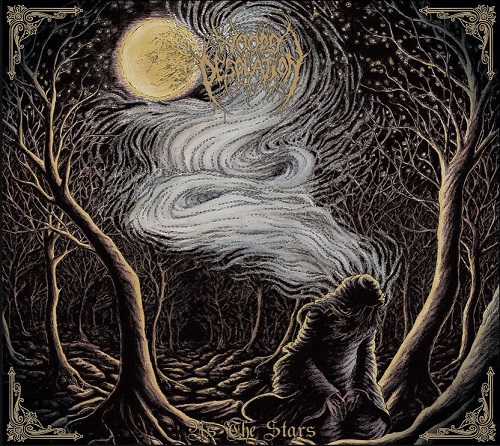
Review: Woods of Desolation – As the Stars


Has it really been two years since I’ve reviewed a new album? The fact came as a bit of surprise, but here it is late October and I’m staring at a massive horde of 2014 releases that I’ve barely cracked. I was a bit more diligent about keeping up with these when I actually took the time to write about them!

I hope to jump back into this business in force, but in case I fail, I’ll not put off the cream of the crop. My album collection is starting to get overrun by “Woods of” X artists; it seems to be the most popular black metal prefix after “Dark” these days. But one among them might be destined to distinguish itself with my #1 album of the year pick.

Woods of Desolation – Unfold, from As the Stars

I spent a great deal of my late teens and early 20s basking in the polarizing glories of post-rock and black metal. The likes of Explosions in the Sky, Sigur Rós, Emperor, and Nokturnal Mortum pumped the residual poison of rock and roll out of my blood and raised me to higher expectations of musical fulfillment. I listened to them not with a care for technical precision or physical skill, but in search of an experience I did not fully understand. Both genres approached this through similar means, but fell short as social stigmata demanded modesty or brutality carry the day. As I grew into an adult, the ice was broken. Neige’s Le Secret whispered its meaning into my ears just as I was old enough to embrace it. He’d broken the Berlin wall of music, and what awaited beyond was strange and beautiful.

Post-black metal, shoegaze metal, “transcendental”, call it what you will. Ten years ago, this album–what the woefully uninformed all-purpose reviewers will write off as a Deafheaven copycat–was not possible. It emerged as many musicians with the same thoughts and greater talent than myself caught glimpse of that beautiful beyond and embraced it. You can name a dozen artists that might have influenced the Australian solo project known as Woods of Desolation, but this brave new genre demands our presence in the here and now. It calls on us to bask in glorious tremolo sweeps triumphant over entwined barricades of light and darkness. “Proud to be living in the echo–the mist of all things combined,” Krallice once wrote, and though they designed to crush it, we retain the luxury to return. When I hear a song this triumphant, that line always comes to me, and the albums that accomplish it are still few and far between. I still love Explosions in the Sky and their ilk, but they offer a different sort of grandeur. Theirs is an experience of climbing to the peak. Songs like “Unfold” allow us to explore the pinnacle at length, from start to finish.

Woods of Desolation – Like Falling Leaves, from As the Stars

To start at the summit and know where you stand. That might be post-black metal in a nutshell. What we can do there… that is still an on-going exploration. Where Liturgy and Primordial roar like lions into the jaws of death, “Like Falling Leaves” is something of the opposite. It accepts the end awaiting it. In this track we don’t hear any of the overarching optimism of “Unfold”. Instead, we’re accepting that something dear is gone forever, and we are held fast in that moment of realizing the fact’s finality. The bulk of the album seems in keeping with these two vibes, sometimes heightened, sometimes subdued, sometimes entwined. “Withering Fields” and “And If All the Stars Faded Away” seem peculiarly triumphant and longing simultaneously, while “Ad Infinitum” is pretty enough for a new Alcest album. Nearly every track bears a sufficiently memorable hook to sound familiar by the second or third play through, and at a mere 35 minutes, it does not waste much time dragging out build-up in between.

I don’t know that As the Stars will retain my #1 spot through the end of the year, especially if I start to pump out album reviews in force again. It is nothing remotely on par with my picks for the last three years, and it suffers from muddy production that can’t always do the song writing justice, but I stand by it as my favorite so far. This is one I’ll keep near and dear to me long after the bulk of my 2014 collection has been forgotten.

10 Of Lisa Marie’s Favorite Songs of 2013


Continuing my series on the best of 2013, here are ten of my favorite songs from 2013. Now, I’m not necessarily saying that these were the best songs of 2013. Some of them aren’t. But these are ten songs that, in the future, will define 2013 for me personally. Again, these are my picks and my picks only. So, if you think my taste in music sucks (and, admittedly, quite a few people do), direct your scorn at me and not at anyone else who writes for the Shattered Lens.

I’ve occasionally been asked what my criteria for a good song us. Honestly, the main things I look for in a song is 1) can I dance to it, 2) can I write to it, and 3) can I get all into singing it while I’m stuck in traffic or in the shower?

Anyway, at the risk of revealing just how much of a dork I truly am, here are ten of my favorite songs of 2013.

10) A Low and Swelling Sound Gradually Swelling (composed by Shane Carruth)

This atmospheric instrumental piece comes from the soundtrack of the best film of 2013, Upstream Color.  This is great writing music.

9) Giorgio By Moroder (performed by Daft Punk and Giorgio Moroder)

From Random Access Memories.

8) Saturday (performed by Rebecca Black and Dave Days)

I make no apologies.  Much like Friday, this is a fun song to sing when you’re driving to and from work.  Plus, I think the video’s clever.

7) Brave (performed by Sara Bareilles)

I have to admit that I loved this song more before it started showing up in Nokia Lumia commercials.

6) Feel This Moment (performed by Pitbull, feat. Christina Aguilera)

5) Haunted (performed by ROB)

This is from the Maniac soundtrack.  Much like the Carruth song, this is great writing music.

4) Work Bitch (performed by Britney Spears)

Not a day goes by that I don’t find an excuse to say, “You gotta work, bitch.”

3) A Little Party Never Killed Nobody (All We Got) (performed by Fergie, feat. Q-Tip and Goon Rock)

From The Great Gatsby soundtrack.

2) Just Give Me A Reason (performed by Pink and Nate Ruess)

1) Lose Yourself to Dance (performed by Daft Punk and Pharrell Williams)

What else needs to be said?

Finally, here are two honorable mentions.  These are two songs that helped define 2013 for me but, for various reasons, could not be included in my top ten.

First off, Alison Gold’s Chinese Food is technically a terrible song but it’s so terrible that it becomes oddly fascinating.  Thanks to the presence of Patrice Wilson, the video is probably one of the most unintentionally creepy music videos ever made.

(I should admit that I happen to love Chinese food myself and therefore, this song is one that I’ve sung a lot over the past few years.)

The second honorable mention is a far better song than Chinese Food: Icona Pop’s I Love It.  I Love It was released in 2012 but it’s the song that I listened to nonstop last year..  So, even if it was released a year earlier, I Love It is still my favorite song of 2013.

Tomorrow, I will continue my look back at 2013 with 10 good things that I saw on television last year.

Other Entries In TSL’s Look Back At 2013:

  1. Lisa Marie’s 16 Worst Films of 2013
  2. Necromoonyeti’s Top 10 Metal Albums of 2013
  3. Things That Dork Geekus Dug In 2013
  4. Lisa Marie’s Best of 2o13 SyFy

Lisa Marie’s 10 Favorite Songs of 2012


Continuing my series on the best of 2012, here are ten of my favorite songs from 2012.  Now, I’m not necessarily saying that these were the best songs of 2012.  Some of them aren’t.  But these are ten songs that, in the future, will define 2012 for me personally.  Again, these are my picks and my picks only.  So, if you think my taste in music sucks (and, admittedly, quite a few people do), direct your scorn at me and not at anyone else who writes for the Shattered Lens.

By the way, I was recently asked what my criteria for a good song was.  Honestly, the main thing I look for in a song is 1) can I dance to it and 2) can I get all into singing it while I’m stuck in traffic or in the shower?

Anyway, at the risk of revealing just how much of a dork I truly am, here are ten of my favorite songs of 2012.

10 and 9) Make Bullying Kill Itself and Jacking It In San Diego (Trey Parker and Matt Stone)

These two songs were featured in the classic bullying episode of South Park.  They should be required listening for anyone who thinks that a YouTube video can change human nature.

8) Big Machine (Ryan Miller)

Perhaps not surprisingly, I discovered a lot of my favorite music of 2012 in the films of 2012.  This song was written for the Safety Not Guaranteed soundtrack.

7) Abraham’s Daughter (Arcade Fire)

This is from The Hunger Games soundtrack.

6) The Poison Tree (Moby, feat. Inyang Bassey)

Technically, this song — which is featured on Destroyed —  is from 2011 but it was released, as a single, in 2012.

5) Call Me Maybe (Carly Rae Jepsen)

This is just a fun song.

4) Stronger (Kelly Clarkson)

Kelly Clarkson is always going to have to deal with haters, because she won American Idol and voted for Ron Paul.  She’s one of my favorites, however.

3) Skyfall (Adele)

The minute I heard this song, I knew Skyfall was going to be great.

2) Blow Me (One Last Kiss) (P!nk)

It’s not really a year in music unless I have P!nk somewhere on the list.

1)Razor’s Out (Mike Shinoda featuring Chino Moreno)

This is from the soundtrack of The Raid: Redemption.  Quite simply put, this is a great soundtrack for writing.

Tomorrow, I’ll continue my look at 2012 with my list of 10 good things that I saw on television last year.