Song of the Day: The Return by Ennio Morricone


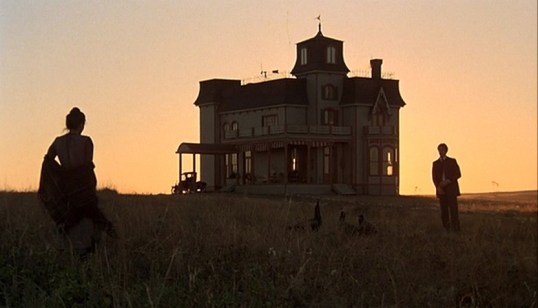
Today’s song of the day comes to us from the soundtrack of Terrence Malick’s 1978 film, Days of Heaven.  Composed by Ennio Morricone, this is The Return:

Previous Entries In Our Tribute To Morricone:

  1. Deborah’s Theme (Once Upon A Time In America)
  2. Violaznioe Violenza (Hitch-Hike)
  3. Come Un Madrigale (Four Flies on Grey Velvet)
  4. Il Grande Silenzio (The Great Silence)
  5. The Strength of the Righteous (The Untouchables)
  6. So Alone (What Have You Done To Solange?)
  7. The Main Theme From The Mission (The Mission)

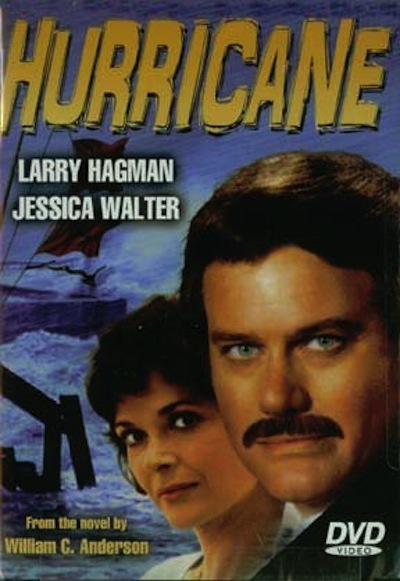
Hurricane (1974, directed by Jerry Jameson)


Hurricane Hilda is crashing down on the Gulf Coast and everyone in its path is about to get all wet.  While Will Geer and Michael Learned try to warn everyone about the approaching hurricane, coast guard pilot Martin Milner observes the storm from the air and tires to rescue everyone in its path.  Some people listen and some people don’t.  Milner’s own father, played by Barry Sullivan, ends up getting stranded in a cabin while Larry Hagman and Jessica Walter play a married couple on a boat who find themselves sailing straight into the storm.  On temporarily dry land, Frank Sutton (a.k.a. Gomer Pyle’s Sgt. Carter) plays a homeowner who refuses to evacuate because he’s convinced that he knows everything there is to know about hurricanes.  He and the neighbors have a drunken party while waiting for the storm.  When Patrick Duffy and his wife announce that they’re heading for safety, Sutton demands that they come in and have a beer with him.  When Hilda finally makes landfall, some survive and some don’t.

Hurricane is a by-the-numbers disaster movie.  It was made after The Poseidon Adventure and during the same year as The Towering Inferno and it hits all the usual disaster movie beats.  Survival is determined by karma, with Hilda going after anyone who was too big of a jerk during the first half of the movie.  It’s predictable stuff but it does feature footage from an actual hurricane so it’s at least not too dragged down by any of the bad special effects that always show up in made-for-TV disaster films.

This is one of those films where the cast was probably described as being all-star, even though most of them were just TV actors who needed a quick paycheck.  Seen today, the film feels like a MeTV reunion special.  Years before they played brothers in Dallas, both Larry Hagman and Patrick Duffy appeared in Hurricane, though neither of them shares any scenes.  Will Geer and Michael Learned were starring on The Waltons when they appeared in this movie and they’re in so few scenes that they probably shot their scenes over a weekend before returning to Walton’s Mountain.  The best performance is from Frank Sutton, who died of a heart attack just a few weeks after this movie aired.  He’s a convincing hothead, even if he doesn’t have Gomer around to yell at.

Hurricane may be bad but it’s still not as terrible as most made-for-TV disaster movies.  People who enjoy watching TV actors pretending to stare at a tidal wave of water about to crash down on them will find this film to be an adequate time waster.

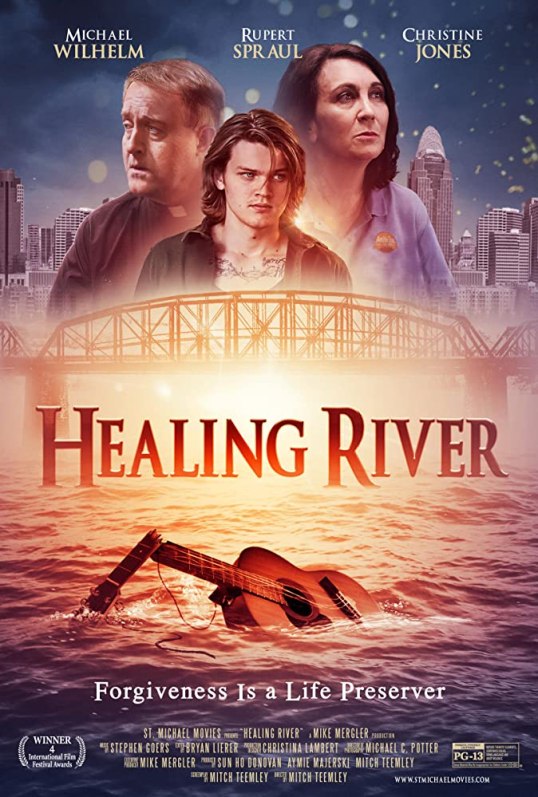
Film Review: Healing River (dir by Mitch Teemley)


Ingrid Ambelin (Christine Jones) owns a coffee shop in Cincinnati.  She has one son, a responsible young man named Michael (Spencer Lackey), and she also tends to think of herself as being a mother figure to everyone who works for her.  She’s the type of boss who keeps an extra set of clothes in the backroom, just in case one of her cashiers makes the mistake of coming to work in something that Ingrid considers to be too revealing.  (Actually, to be honest, that’s the sort of thing that would drive me crazy if I worked for Ingrid.)  Ingrid is old-fashioned but she means well.

Alec McCortland (Rupert Spraul) is a musician and a drug addict, someone who has never had anyone willing to look out for him.  Alec is the type who frequently goes to rehab but always relapses as soon as he gets out.  He’s angry but he’s also young.  In fact, he’s young enough that, when he accidentally drives his car straight into Michael, he’s tried as a juvenile.

At first, Ingrid is outraged that Alec will not be tried as an adult.  She forms a support group that meets in the basement of her church.  At first, Father Peter (Michael Wilhlem), who also happens to be Ingrid’s brother and Michael’s uncle, feels that the group will help her overcome her anger but instead, he watches as Ingrid and the group become obsessed with getting revenge.  In fact, when Ingrid catches Alec again breaking the law, she reports him and gets him thrown in jail.

And then, something unexpected happens.  At the urging of her brother, Ingrid finally visits Alec in prison and, as the two of them talk, Ingrid comes to realize that Alec is not the demon that she assumed he is and Alec finally starts to come to terms with his guilt over the death of Michael.  To the shock of her family and her employees, Ingrid comes to forgive Alec.  She works to try to reunite Alec with his father.  And when Alec is up for release, she volunteers to serve as his legal guardian….

I’m a big fan of the concept of forgiveness.  At the same time, I also know just how difficult it can be to truly forgive anyone, much less someone who has committed a heinous an act as Alec does in this film.  Therefore, I was curious to see how Healing River would handle the topic and I have to say that I was pleasantly surprised.  Healing River is a film that celebrates forgiveness and shows why forgiveness is necessary but, at the same time, it also doesn’t pretend as if forgiveness is easy.  For the most part, it takes an honest approach to the concept of forgiveness.  It’s portrayed as being important but it’s also not portrayed as being a magical elixir.  Even after Alec and Ingrid get to know each other and grow close, there’s still a lot of pain to be dealt with.

It helps that, as opposed to a lot of other inspirational films, Healing River has a little bit of an edge.  No one in the film, including Ingrid, is presented as being a saint.  The characters actually curse and I was glad they did because what mother wouldn’t curse while trying to explain how she feels about the death of her son?  Far too often, films like this seem to be set in a fantasy world that’s specifically designed not to challenge the target audience’s beliefs.  Healing River, however, takes place in the real world and, in the real world, people curse when they’re in pain.

There are a few scenes where the film’s low-budget does become a bit of a distraction.  An early scene featured a Hebrews-related pun that made me cringe.  (“Hebrews …. she brews.”)  There’s a narrative development in the third act that feels a bit clumsy.  It’s a flawed film, as most films are.  But it’s a sincere film and it’s a film that honestly explores both why forgiveness is important and why it’s also so difficult.

Song of the Day: The Main Theme From The Mission by Ennio Morricone


Today’s song of the day is the main theme from the 1986 best picture nominee, The Mission.  As with all of the songs of the day that I’ve featured this month, this was composed by the great Ennio Morricone.

Previous Entries In Our Tribute To Morricone:

  1. Deborah’s Theme (Once Upon A Time In America)
  2. Violaznioe Violenza (Hitch-Hike)
  3. Come Un Madrigale (Four Flies on Grey Velvet)
  4. Il Grande Silenzio (The Great Silence)
  5. The Strength of the Righteous (The Untouchables)
  6. So Alone (What Have You Done To Solange?)

Above Suspicion (1995, directed by Steven Schachter)


Dempsey Cain (Christopher Reeve) is a former test pilot turned homicide detective who ends up getting shot because of the incompetence of another cop, a patrolman named Nick Cain (Edward Kerr).  Nick also happens to be Dempsey’s younger brother.  While Dempsey’s in the hospital, Nick has an affair with Dempsey’s wife, Gail (Kim Cattrall).  When a now-paralyzed Dempsey returns home, he deals with his depression by drinking and contemplating suicide.  He tells Gail and Nick that he no longer wants to live but that his life insurance policy doesn’t cover suicide.  He comes up with a plan for his wife and brother to stage a break-in and murder him.  Because Gail and Nick are secretly lovers and want Dempsey out of the way, they agree.  However, it turns out that Dempsey isn’t as naive as they assumed and he still has a few tricks of his own.  It looks like the perfect murder but Detective Alan Reinhardt (Joe Mantegna) is determined to solve the case.

Produced for HBO, Above Suspicion is a clever and twisty film noir that, unfortunately, never escapes the shadow of Reeve’s real-life tragedy.  Just a week after the film first aired on HBO, Christopher Reeve was suffered the spinal chord injury that left him confined to a wheelchair for the rest of his life.  Knowing that Reeve would spend the final nine years of his life paralyzed from the neck down can make it difficult to watch Above Suspicion, which is unfortunate because this film features what might be Reeve’s best performance.

As an actor, Christopher Reeve was always typecast as Superman and he definitely missed out on some roles as a mistake.  Above Suspicion makes clever use of Reeve’s good guy image but casting him as someone who everyone thinks is a hero but who actually has a very dark side to his personality.  Everyone in the film thinks of Dempsey as being Superman but he instead reveals himself to be Lex Luthor.  It was definitely a chance of pace role for Reeve and he really seems to enjoy playing a scheming villain for once.  Watching the film today, it is obvious that he had enough talent that, if not for his injury, he probably would have eventually made an Alan Alda-style comeback that would have seen him settling into the role of being a much-in-demand character actor.

Interestingly, the clever script was written by William H. Macy, shortly before he found fame as Jerry Lundegaard in Fargo.  The film is a clever homage to films like Double Indemnity and The Postman Always Ring Twice and Christopher Reeve and Joe Mantegna are both fun to watch as they play their cat-and-mouse game.  Despite the real-life tragedy that it unintentionally invokes, Above Suspicion is a clever and twisty thriller featuring a cast of talented actors at their best.


Song of the Day: So Alone by Ennio Morricone


Today’s song of the day comes from the score of the haunting 1972 giallo film, What Have You Done to Solange?  From Ennio Morricone, it’s So Alone.

Previous Entries In Our Tribute To Morricone:

  1. Deborah’s Theme (Once Upon A Time In America)
  2. Violaznioe Violenza (Hitch-Hike)
  3. Come Un Madrigale (Four Flies on Grey Velvet)
  4. Il Grande Silenzio (The Great Silence)
  5. The Strength of the Righteous (The Untouchables)

Film Review: Dispatched (dir by Gary Lee Vincent)


Dispatched, which is currently on Prime, is a low-budget film about a cop named Carl Thomas (Jeff Moore) who has an anger problem and a bad reputation.  Even though he makes a lot of arrests and gets a lot of criminals off the streets, his chief (Dean Cain) keeps having to reprimand him for using excessive force.

Anyway, one night, Carl is convinced to go to a revival meeting with some of his fellow police officers.  Carl witnesses a faith healing and, overnight, becomes the world most committed and outspoken Christian.  Suddenly, he’s able to give up his anger and now, whenever he arrests anyone, he treats them with compassion.  He tells them to follow Christ and get their lives together.  He goes down to the jail and he passes out bibles.  And….

Well, actually, that’s pretty much the entire film.  There’s really not much conflict to be found in Dispatched.  Admittedly, Carl’s first wife does divorce him because she can’t handle his sudden zeal for religion but most of that happens off-screen.  After the divorce, we don’t hear anything else about his ex-wife or his children from his first marriage.  We’re also repeatedly told that Carl was violent before he witnessed that faith healing but again, we don’t seem much evidence of it.  We do see Carl overreacting during a traffic stop and he definitely doesn’t come across as being the type of cop that anyone would want to deal with but, at the same time, the film shies away from showing us anything that could make us really dislike Carl.  That’s a mistake on the filmmaker’s part.  For a film about any type of redemption to work, you have to actually have to see some sort of difference between who the main character was before being redeemed and who the main character is afterwards.

That said, I can’t be too hard on Dispatched because, in the end, it’s a low budget message film.  The underlying message itself — that anger can be just as much of an addiction as any drug and that anyone can be redeemed if they’re truly willing to do the work — is not a bad one.  However, I think this is the type of movie that will be best appreciated by people who already agree with its religious theme.  If you’re like me and you tend to be a bit skeptical, you’ll probably zone out once the faith healing begins.  If you’re a believer in revival meetings and faith healings, you might have less of a problem with it all.  This is a film that preaches to the choir.  I doubt it will win over any nonbelievers but the choir might enjoy it and you know what?  There’s nothing wrong that.  The choir deserves to be entertained.  The real Carl Thomas appears at the end of the film.  He comes across as being sincere person, which is always a nice thing.

Anyway, Dispatched really wasn’t for me but I’m not going to criticize it the way I would a studio film with a 200 million dollar budget.  It’s a well-intentioned film, one that was made for a very specific audience and while will probably be most appreciated by those who already share its worldview.

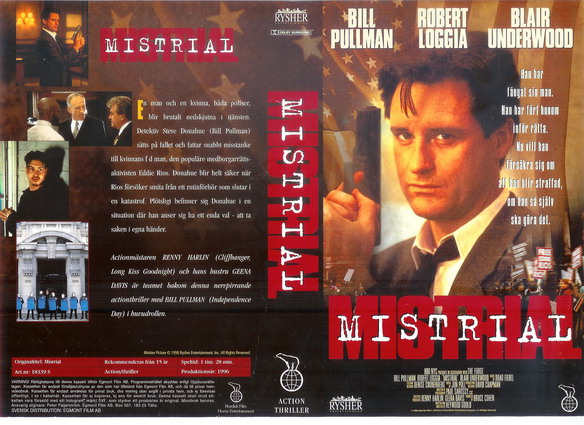
Mistrial (1996, directed by Heywood Gould)


When a NYPD cop and her partner are murdered, overworked and stressed-out Detective Steve Donohue (Bill Pullman) follows a trail of circumstantial evidence that leads him to the door of the cop’s ex-husband, a community activist named Eddie Rios (Jon Seda).  Donohue’s attempt to arrest Rios goes terribly wrong and results in a shootout that leaves Rios’s second wife and bother dead before the handcuffs are eventually slapped on his wrists.

Rios may be the one on trial but Donohue is now the one facing judgment.  With protesters lined up outside the courthouse and the city’s mayor (James Rebhorn) more interested in his own reelection than in the pursuit of justice, Donohue knows that the only way he’ll be vindicated is if Eddie Rios is convicted.  Unfortunately, that’s not what happens.  Rios’s sleazy attorney (played by Josef Sommer) gets most of the evidence tossed out of court on a technicality and it appears that Rios is going to walk free.  That’s when Donohue decides to take the court itself hostage, pulls out a gun, and demands that Rios immediately be put on trial for a second time, with the jury hearing all of the evidence that was originally thrown out of court.

Mistrial is an example of the good-cop-pushed-over-the-edge genre.  Up until a few years ago, this was a very popular genre.  Today, of course, it feels tone deaf and it’s a lot more difficult to sympathize with a cop, even a fictional one, complaining about being restricted by the constitution.  The main problem with Mistrial is that it’s established early on that Eddie Ramos is guilty so there’s no real tension as to whether Donohue is doing the right thing by demanding a second trial.  If there had been some ambiguity about whether or not Ramos was the murderer that Donohue claims he is, it would have made the film much more interesting and less predictable.  The other problem is that Bill Pullman is just too naturally earnest and clean-cut to be convincing as an overworked cop who has been pushed into doing something crazy.  Remembering back to the 90s, I think someone like Gary Sinise or William L. Petersen could have pulled off the role but Pullman’s just not right for it.

Robert Loggia has a few good moments as Pullman’s sympathetic captain.  This was the 2nd time that Pullman and Loggia co-starred together.  The first time was in Independence Day.  The 3rd time would be in Lost Highway, a film that’s as different from Mistrial as day is from night.

Song of the Day: The Strength of the Righteous by Ennio Morricone


Since I reviewed The Untouchables yesterday, it only seems fit that it’s main title theme should be today’s song of the day.  From Ennio Morricone, it’s The Strength of the Righteous!

Previous Entries In Our Tribute To Morricone:

  1. Deborah’s Theme (Once Upon A Time In America)
  2. Violaznioe Violenza (Hitch-Hike)
  3. Come Un Madrigale (Four Flies on Grey Velvet)
  4. Il Grande Silenzio (The Great Silence)

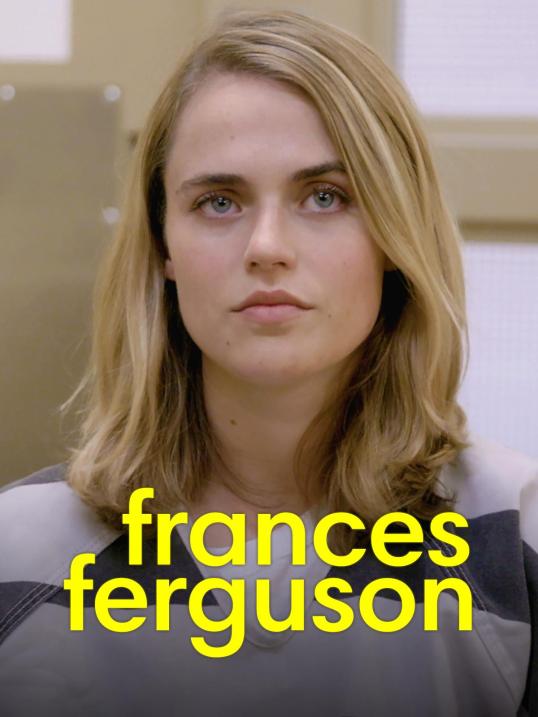
Film Review: Frances Ferguson (dir by Bob Byington)


Frances Ferguson takes place in a town in Nebraska.  As the film’s narrator (Nick Offerman) explains it, it’s a town where everyone knows everyone else.  It’s a town where your mechanic knows your bartender and no one can really keep anything a secret for too long.  For instance, it’s the type of town where there’s no way that a substitute teacher in her mid-20s is going to be able to get away with having an affair with a 16 year-old student.

The teacher in question is named Frances Ferguson (Kaley Wheeless).  Frances wanders through her days in an apathetic haze.  When she steps outside of her house, she sees her useless husband (Keith Poulson) masturbating in the car.  When she spends time with her mother (Jennifer Prediger), she is criticized for every little thing.  On the rare days when she gets called to teach, the students look down on her and Frances thinks about how little she knows about any of the subjects on which she’s giving instruction.  Frances goes through her day holding back her emotions.  She only screams on the inside and, when she does, only she and the viewing audience can hear.

Things start to look up when Frances teaches a biology class and notices a handsome but vacuous student named Jake (Jake French).  When she finds out that Jake has been given detention, Frances volunteers to supervise him.  When Frances flirts with him and the scene cuts way, the narrator asks us, “Was this a crime?”

(Yes, it was.)

Frances and Jake have a short-lived affair, though it doesn’t seem to be particularly passionate.  If anything, Jake seems to be even more blase about it than Frances.  Wearing her old cheerleader uniform, Frances meets Jake in a laundromat.  “I’d never date a cheerleader,” Jake tells her.  We, the viewers, notice that there are other people in the laundromat.  Does Frances want to get caught?

Get caught, she does.  “This is the last time we see Jake,” the narrators tells us as Jake fades away.  Frances, meanwhile, sits in court.  Her mother comes to the trial and tells her that her clothes make her look fat.  Frances is convicted and sent to prison.  Her mom brings her a chocolate cupcake for her birthday.  Frances announces that she’s allergic to chocolate before taking a big bite and then pretending to die.  “Get off that dirty floor!” her mother orders her.

You may getting the impression that Frances Ferguson is a strange film and I supposed it is.  It’s a comedy but it’s an extremely deadpan comedy, with most of the humor coming from Frances’s seeming apathy to ever single thing that happens to her.  It’s not that Frances doesn’t have feelings or emotions.  We hear her inner scream enough times to know that she’s not as apathetic as she seems.  It’s just that Frances is so consumed with small town ennui that she realizes it’s pointless to react one way or the other.  Life is what it is and it continues regardless of how annoying it may all be.  Whether she screams on the inside or on the outside, she’ll still have to wake up every morning in the same situation.  One day, Frances Ferguson was a teacher.  The next day, she was a prisoner.  And the day after that, she was on parole and a minor celebrity.  (“You’re that teacher!” is a phrase that she continually hears.)  What happens, happens.

Here’s the thing …. though it may not sound like it from my description of the plot, Frances Ferguson is an incredibly funny film.  A lot of that is due to Nick Offerman’s performance as the snarky narrator.  (The narrator has a tendency to wander off topic.)  A lot of that has to do with the performance of Kaley Wheeless, who perfectly communicates Frances’s suppressed irritation.  Over the course of the film, Frances has to deal with a lot of people who, if not for her one mistake, she would have otherwise never had to deal with.  Some of them get on her nerves and some of them — well, two of them — provide her with some comfort.  I loved David Krumholtz’s performance as a beleagured but optimistic group leader.  Martin Starr also gets a nice bit at the end, though it would be too much of spoiler to say anything else about his role.  I also enjoyed the performances of Jack Marshall and Yoko Lawing, as the two detectives who investigate the charges against Frances and who explain that, because of TV cop shows, they can no longer get away with playing good cop/bad cop.

Frances Ferguson is good film.  It’s also a short one, clocking in at just 74 minutes.  To be honest, it’s the perfect running time for the story that this film tells.  We follow Frances’s story for just as long as we need to.  Frances Ferguson is on Prime so check it out.