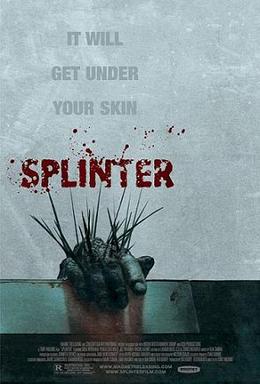
Horror Film Review: Splinter (dir by Toby Wilkins)


Seth (Paulo Costanzo) and Polly (Jill Wagner) thought they were going to enjoy a nice weekend camping in Oklahoma.  Unfortunately, as they drove out to the campsite, two unexpected things occurred.

First off, they got carjacked by Dennis (Shea Whigham) and his drug addict girlfriend, Lacey (Rachel Kerbs).  Dennis was a murderer who had just escaped from prison so, needless to say, he really needed a ride.

Secondly, after getting a flat tire, the foursome pulled their vehicle into a lonely gas station.  At first, it didn’t appear that there were any attendants at the station but that quickly proved to be incorrect.  There was an attendant at the station but, unfortunately, he had been infected by a weird space fungus that transformed him into a homicidal monster.  Soon, Dennis and his hostages are trapped as infected humans and animals laid siege to the station.

That’s the plot of the 2008 film, SplinterSplinter is a good example of a genre of horror film that’s known as the “dumbasses get trapped out in the middle of nowhere” genre.  I’ve actually driven through and occasionally even lived in Oklahoma and Arkansas and, if my memories are correct, there really aren’t as many deserted shacks and gas stations as you might think.  But, in the movies, there’s at least a dozen sitting off the side of every country road.  Inevitably, a character will make the mistake of going into that deserted building and suddenly it’s zombie apocalypse time!  Or, if the zombies are busy, aliens might land.  Or some hulking dude wearing a burlap sack and carrying an axe might show up.

It’s a popular genre, mostly because it exploits a very real fear.  Anytime you enter a previously unknown location, especially if you’re alone and it’s the middle of the night, you’re aware that anything could happen.  It’s probable that you’ll just run into someone working the night shift and he’ll make some awkward joke while you’re getting a coke out of the cooler.  But it’s also possible that you might walk in on a robbery or a murder or a zombie outbreak or an alien invasion or Kirk Cameron might be there, forcing everyone to watch Saving Christmas.  I mean, these things could happen!  And then, what can you do?  You’re stuck there, in an unfamiliar place.  The only thing you know is that something nearby is plotting to attack you.  That’s not something that we like to think about but the risk is always there.  (For the record, I don’t believe in zombies, aliens, or Kirk Cameron but still….)

Splinter does a pretty good job tapping into those very real fears.  Yes, the monsters and the deaths are memorably grotesque and there’s a lot of gore (for those of you who are into that) but the film is most effective when it concentrates on the claustrophobic atmosphere of that isolated gas station.  From the start, the film creates a feeling of unease and, once the main characters find themselves trapped in that gas station, there’s not a slow spot to be found.  Once a person or an animal is infected by the fungus, it becomes relentless in its efforts to destroy.  Finally, the film is dominated by the great Shea Whigham, who gives a ferocious but charismatic performance as Dennis.  Surely, I’m not the only viewer who watched this movie and thought Polly should dump Seth for the convict, am I?

Splinter is a good film for Halloween.  Clocking in at 82 minutes, it won’t leave you bored and it will definitely stick in your mind anytime you stop by a gas station late at night.
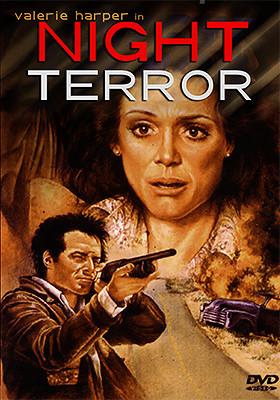
Horror On The Lens: Night Terror (dir by E.W. Swackhamer)


Today’s horror on the lens is a surprisingly violent and grim made-for-TV movie from 1977, Night Terror! 

In Night Terror, Valerie Harper plays a woman trying to drive to Denver, overnight.  Unfortunately, she catches the attention of The Killer (played by Richard Romanus), a mute psychopath who spends his time driving up and down the highway, killing random people.  This is a pretty well-done and suspenseful made-for-television movie, featuring good performances from both Harper and Romanus.  I wrote a more in-depth review of the film back in May so give it a read after you watch the movie.

(Or before you watch the movie.  I’m not going to tell you how to do things.)

Drive carefully!


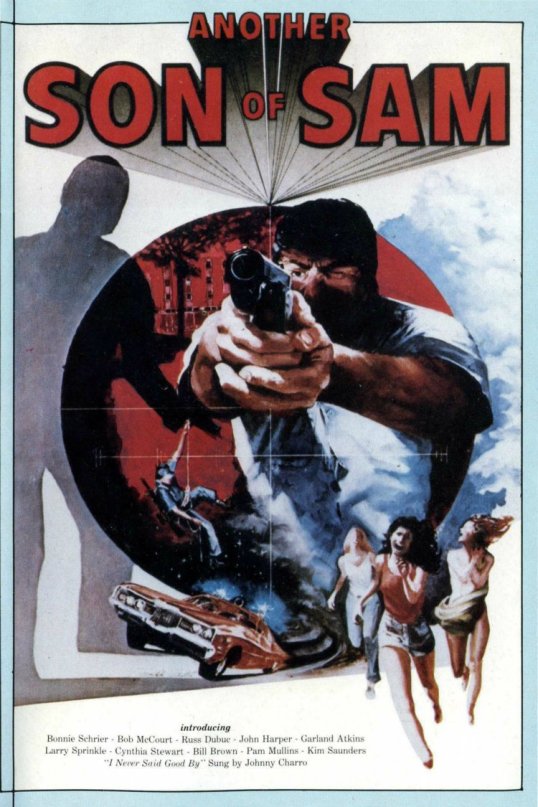
The TSL’s Grindhouse: Another Son of Sam (dir by Dave A. Adams)


Well, his friends call him Another Son of Sam

But his real name is Mister Earl….

Actually, his real name is Harvey.  Let’s make that clear right now.  Despite it’s title, Another Son of Sam has next to nothing to do with the Son of Sam.  Instead, this zero-budget, North Carolina-shot exploitation film is about a mental patient named Harvey who, having been traumatized by his mother, escapes from the hospital and goes on a rampage at a nearby college.  This film was first shot in 1975, under the name Hostages.  However, it couldn’t actually secure a release until 1977, when it was retitled Another Son of Sam.  

Another Son of Sam is difficult to summarize, not because it’s particularly complex but, instead, because close to nothing actually happens.  Even though it’s only 70 minutes long, there’s really only enough plot for about five minutes.  However, because I do like to maintain a certain minimum word count when it comes to my reviews, I guess I better find something to say about this film.

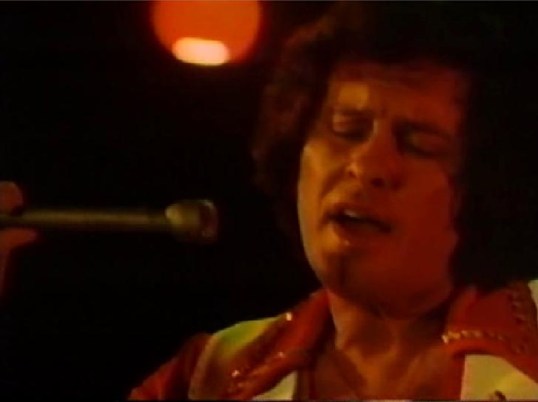
It opens with a lengthy sequence of police Lt. Setzer (Russ Dubuc) enjoying a weekend at the lake.  The lake is never really mentioned again but some of the shots of the boat skimming the water are so nicely done that you can’t help but think that the film should have dropped the whole escaped killer thing and instead just focused on Setzer’s weekend.  After leaving the lake, Lt. Setzer goes to a bar and enjoys a performance from singer Johnny Charro!  Charro, who was and is something of a local celebrity in Charlotte, North Carolina, is credited as playing himself.  He sings an endless song, one that is repeated several time throughout the film.  Whenever anyone turns on a radio, there’s Johnny Charro!

Meanwhile, crazy old Harvey kills an orderly, escapes from a mental hospital, and hides out on a college campus.  Luckily, Lt. Setzer just happens to be investigating an unrelated case at the college!  Once Setzer realizes that there’s a killer on campus, he calls out the SWAT team!  The SWAT team searches for Harvey but, because they all kind of suck at their job, Harvey kills a few of them.

And that’s pretty much the entire film.

Now, there’s a lot of negative things you can say about Another Son of Sam.  None of the characters are memorable.  The acting is risible.  The pace is so slow that 70 minutes feels more like 70 hours.  However, I would like to take a moment to focus on two things that work surprisingly well.

First off, director Dave Adams (who was apparently a stuntman making his directorial debut) purposefully avoids showing us Harvey’s face.  Instead, we see his hands when he’s committing a murder and his eyes when he’s watching a potential victim.  The many shots of Harvey’s eyes, glaring out from the darkness, are actually effectively creepy.  By not showing us his face, Adams allows Harvey to remain an unknowable force of evil.  This is not one of those films where the audience is meant to sympathize or identify with the killer and I appreciated that.

Secondly, the film does this weird thing where the scene will suddenly freeze but we’ll still hear the sounds of people talking or walking down a hallway or listening to Johnny Charro or whatever else they were doing before the scene froze.  Apparently, this is because Adam shot the film using short ends and, as a result, the camera would often run out of film in the middle of a scene.  However, even if it wasn’t deliberate on the part of the director, the freeze frames actually do improve the film.  Along with creating a properly surreal viewing experience, they also remind us of just how unpredictable life can be and how quickly it can end.  One minute, you’re taking a shower or you’re talking about your plans for Spring Break.  The next minute, you’re frozen in place as all of your plans come to a perhaps permanent halt.  The freeze frames may have been the result of incompetence but they still work.

And it’s good that something works in Another Son of Sam because this is an otherwise unfortunate film.  I say that as someone who actually has a weakness for grainy, low-budget, amateur movies.  I liked the lake, the freeze frames, the eyes, and Johnny Charro.  But once the film hit 30 minutes, my mind was wandering.

One interesting note: the film opens with a list of mass murders, starting with Jack the Ripper and ending with David Berkowitz.  It makes the point that most of the killers were never caught and, even if they were, their motivations were never understood.  One of the killers they mention as having never been caught is “Seattle Ted.”  This, of course, was a reference to Ted Bundy, who would be captured two years after the release of Another Son of Sam.

Ladies and gentleman …. JOHNNY CHARRO!

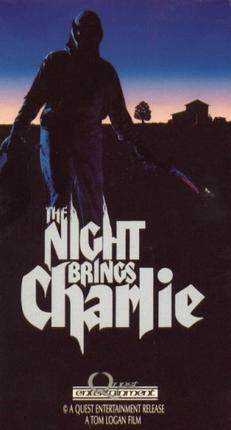
The Night Brings Charlie (1990, directed by Tom Logan)


The small town of Pakoe has 1,251 residents but that number is about to steadily decline because there is a killer on the loose. Wearing overalls, a burlap sack, and a pair of swimming goggles, the killer comes out at night and removes people’s heads from their bodies.

Sheriff Carl Carson (Kerry Knight) and Walt the coroner (Joe Fishback) suspect that the killer might be a disfigured handyman named Charlie (Chuck Whiting). Not only has Charlie been disturbed ever since he returned from Vietnam (where he served with Walt) but he also just happens to wear an outfit that looks exactly like the outfit that the killer wears. Charlie seems like the obvious suspect but, when he refuses to confess despite all of the evidence against, Sheriff Carson wonders if he’s really guilty.

The Night Brings Charlie has plenty of flaws. The acting is often amateurish and the pacing is slow, especially at the start of the film. For a film that only runs 77 minutes (and seven of those minutes are devoted to the opening and ending credits), there’s a lot of filler, most of it dealing with Walt’s daughters and their idiot friends. But, all of that aside, The Night Brings Charlie is not that bad. At its best, the film does capture the feeling of a small community under siege by a mysterious killer. (The influence of The Town That Dreaded Sunset is easy to spot, in both the look of the killer and the emphasis on on a town paralyzed by fear.) There’s a few moments of unexpected humor, my favorite being the killer taking the time to update the population number on the town’s welcome sign after committing his latest murder. Even better, the film has not just one surprise twist but two! Though the first twist was easy to guess, the second one was actually pretty clever and it did take me by surprise. Finally, while the first hour is slowly paced, the same can’t be said of the final 17 minutes, when the film comes alive. The Night Brings Charlie may start off on the wrong foot but it ends strong. Stick with The Night Brings Charlie and the film will pay off.

For a low budget, direct-to-video slasher that was made with an obviously amateur cast, The Night Brings Charlie isn’t bad at all. Unfortunately, it’s never been released on anything other than VHS but it can be found (with Spanish subtitles) on YouTube.

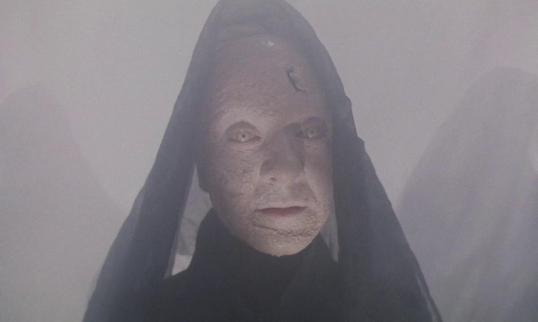
Horror Scenes That I Love: A Trip to the General Store from Troll 2


Since today is Claudio Fragasso’s birthday, my first instinct was to select the famous “OH MY GAAAAAAAWWWD!” scene from Troll 2 as today’s horror scene that I love. However, I then remembered that I’ve already shared that scene a few times on this site.

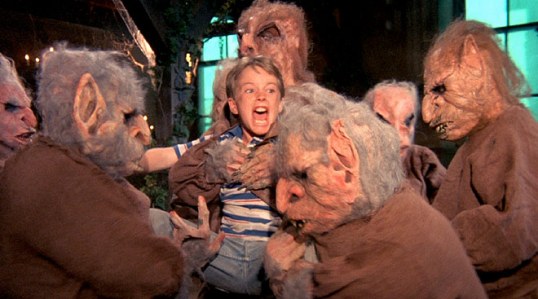
So, instead, here’s a different scene from Troll 2. In this scene, Drew visits the town of Niblog and stops by the general store, where he’s pressured into drinking the poisonous Niblog milk. The milk will eventually turn Drew into a plant so that he can then be eaten by the town’s goblins. The goblins are all vegetarians but apparently, it’s okay to eat meat that’s been transformed by evil magic. It’s kind of weird. Personally, I think the Goblins are kind of hypocritical. They remind me of this girl I went college with who we’ll call Bree. Bree was vegan and would never hesitate to tell you that she was better than you. And yet, she still wore leather shoes. So, screw her, screw her pathetic attempts to steal everyone’s boyfriend, and screw the goblins.

Anyway, there’s two ways of looking at this scene. On the one hand, it’s an oddly acted and oddly paced scene in a film that was full of odd performances and odd directorial choices. On the other hand, it’s so strange and off-center that it contributes to the film’s dream-like atmosphere. Since today is Fragasso’s birthday and I tend to always assume the most positive explanation to be the correct one, I’m going to go with the second possibility.

Enjoy this scene from 1990’s Troll 2:

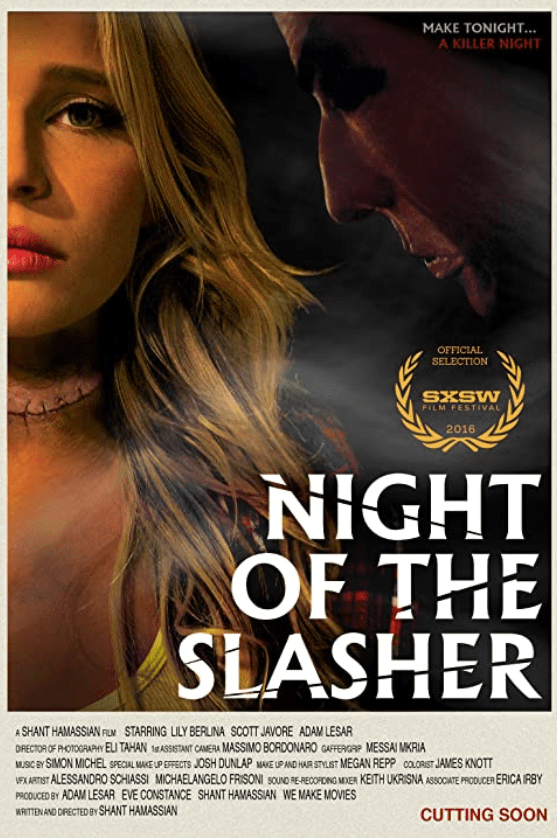
Night of the Slasher, Review by Case Wright


It’s so nice when a short gets it right!!! Also, I LOVE a good horror comedy! Night of the Slasher inverts all of the horror tropes. Jenelle is left home alone and she listens to 80s metal, engages in pre-marital sex, drinks and does drugs to attract the killer who slashed her the year before. This is so fun and so quick. Janelle lures a co-worker to her home named “The Bait” … really. It’s that awesome!

He brings some beers and she rapidly drinks all of them, giving the greatest dead pan line:

I have some friends in AA you could talk to. It’s funnier when you see it and you SHOULD!!!!

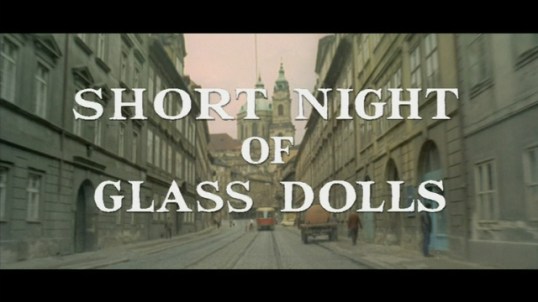
International Horror: Short Night of Glass Dolls (dir by Aldo Lado)


Short Night of Glass Dolls, an Italian thriller from 1971, opens with the discovery of a body in Prague.  American journalist Gregory Moore (Jean Sorel) is found lying in a plaza, his blank eyes staring up at the sky.  When he is examined by a doctor, we can hear a heartbeat pounding faintly on the soundtrack but Gregory is still declared dead.  At the hospital, he is taken down to morgue and left on a slab until a coroner can get around to opening him up….

The only problem is that, as the heartbeat indicated, Gregory Moore is not dead!  Instead, he’s paralyzed.  He can’t move or speak but he is alive and he can think.  As he waits to be dissected, Moore tries to figure out how he came to be in the situation.  He searches through his mind and we search with him.  He remembers his lover, Mira (Barbara Bach), who begged him to help her defect.  He remembers how she mysteriously vanished and how he worked with Jessica (Ingrid Thulin) and Jacques (Mario Adorf) to investigate her disappearance.  Moore’s mind is full of disturbing and surreal images but, as he remembers, it slowly starts to make sense.  And yet, even if Moore does eventually figure out what happened to Mira and how he came to be paralyzed, the coroner is still making his way over to Moore’s body….

Because it’s an Italian thriller from the 70s, Short Night of Glass Dolls is often mistakenly referred to as being a giallo.  Actually, it’s not.  Though the film does have the type of convoluted plot and the stylish imagery that is typically associated with the giallo genre, the film also lacks a black-gloved killer and really, it can’t be a giallo unless you have the unknown killer wearing black gloves.  Instead, Short Night of Glass Dolls is a deliberately paced paranoia thriller, one in which Moore uncovers not just a single crazed killer but instead a shadowy conspiracy.  It’s also an effective horror film, one that makes good use of Prague’s gothic atmosphere and which is full of haunting imagery.  Whether it’s the leering gargoyles that seem to be present on every building or the mysterious chandelier that continually shows up randomly in Moore’s mind, Short Night of Glass Dolls plays out like a cinematic dream.  Moore finds himself trapped, both physically and mentally.  His body is trapped in the morgue while his mind is trapped in the past.

Director Aldo Lado was always one of the more political of the Italian thriller directors and, not surprisingly, there’s a heavy political subtext to Short Night of Glass Dolls.  It’s probably not a coincidence that the journalist, who starts out as being cocky just to eventually discover that he doesn’t understand the world as much as he thinks he does, is an American.  It’s also not a coincidence that the film takes place in Prague, which was, at that time, a Communist-ruled city.  Prague is portrayed as being a city that is controlled by secret police and secret societies, where no one is allowed to fly free.  In the end, Short Night of Glass Dolls is full of secrets.

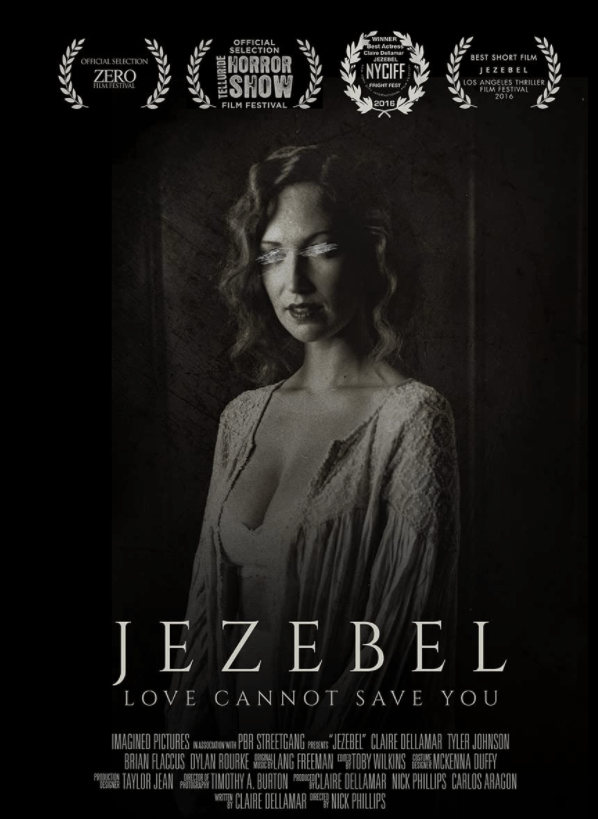
Jezebel, Review by Case Wright


The short is an amazingly challenging artform. Often, writers will abuse the short by turning it into a pitch for a longer film or worse they have no resolution at all. Sometimes it’s just plain boring. Jezebel was boring. I was checking the runtime 3 minutes into it. I think it’s a nine-minute runtime. I was bored for…. nine of them. Leave it to a pretentious writer to make sex boring. I didn’t know that was a thing, but here we are.

Jezebel is about a Victorian era stilted talking depressive vampire who REALLY like to philosophize between “Johns”/Snacks. She eats her customers, even a clingy one who she seemed to love after knowing him for only 2 minutes. I understand that a short needs to be compact, but it shouldn’t be terrible. Jezebel appears to have won a number of awards, which I’m assuming were given out of gratitude that it ended.

If you want to re-create the verbiage of your thirteen year old goth friend, this short is for you!

4 Shots From 4 Claudio Fragasso Films


4 (or more) Shots From 4 (or more) Films is just what it says it is, 4 (or more) shots from 4 (or more) of our favorite films. As opposed to the reviews and recaps that we usually post, 4 (or more) Shots From 4 (or more) Films lets the visuals do the talking.

This October, we’re using this feature to highlight some of our favorite actors and directors, all of whom have made invaluable contributions to the horror genre!  Today, we both pay tribute to and wish a happy birthday to the Italian director, Claudio Fragasso, with….

4 Shots From 4 Claudio Fragasso Films

Monster Dog (1984, dir by Claudio Fragasso, DP: José García Galisteo)

Zombi 4: After Death (1989, dir by Claudio Fragasso, DP: Luigi Ciccarese)

Beyond Darkness (1990, dir by Claudio Fragasso, DP: Larry J. Fraser)

Troll 2 (1990, dir by Claudio Fragasso, DP: Giancarlo Ferrando)

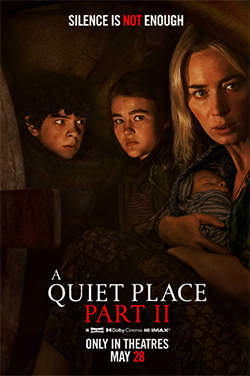
Horror Film Review: A Quiet Place Part II (dir by John Krasinski)


If you had told me, ten years ago, that John Krasinski was destined to go from starring in The Office to being an action star, I would have thought you were crazy.

“John Krasinsi’s going to grow a beard and base his acting career around playing soldiers and CIA analysts?  No way!  He will always be Jim Halpert,” I would have said, “He smirks at the camera and has an adorable relationship with Pam!”

Of course, I was wrong.  After The Office ended, John Krasinki went on to play Jack Ryan for Prime and to star in movies like 13 Hours.  And yet, as unexpected as that development may have been, what was even more unexpected was that Krasinski would also direct one of the best horror films of the past five years, 2018’s A Quiet Place.  Telling the story of a family trying to survive in a post-apocalyptic world in which the Earth has been invaded by aliens who hunt by sound, A Quiet Place was intense, atmospheric, frightening, and actually rather touching.  Though the plot itself may have been a bit familiar (because, seriously, how many movies have there been recently about insect-like aliens destroying civilization?) but Krasinski showed true skill as a director, getting heart-breaking performances out of a cast that included himself and his wife, Emily Blunt.

A Quiet Place was such a success that it was was inevitable that it would be followed by a sequel.  Though its original release was delayed by the pandemic, A Quiet Place Part II was finally released in May of this year and it became one of the first successful films of 2021.  John Krasinki even taped a special greeting for those who saw the film when it was first released, welcoming them back to the theaters.  That really is the most John Krasinski thing imaginable.

As for A Quiet Place Part II, it’s actually two films in one.  The first part of the film serves as a prequel, showing us the initial attack and following Lee (John Krasinski) and his family as they flee for safety while the aliens decimate their hometown.  It’s an exciting sequence, even if one gets the feeling that it was largely included so that Krasinski could make an appearance despite his character having been killed off during the first film.  After the flashback, A Quiet Place Part II picks up where the first film ended.  Lee is dead and his widow, Evelyn (Emily Blunt), does everything she can to protect her surviving children, Regan (Millicent Simmonds), Marcus (Noah Jupe), and her newborn baby.  Though Regan has figured out that the aliens are themselves vulnerable to sound (specifically, a high-pitched tone), that doesn’t make the aliens themselves any less dangerous.  After eventually meeting up with Emmett (Cillian Murphy), an embittered friend from the old days, Evelyn and her family search for other survivors.

A Quiet Place Part II is a simple but efficient thriller, one that recaptures all of the first film’s strengths without making the mistake of adding any new weaknesses.  Much like the first film, it’s dominated by suspenseful scenes of survivors trying to make their way through the wilderness without so much as stepping on a twig.  As anyone who has ever tried to sneak into their house after being out later than they were supposed to can tell you, walking without making a sound is not as easy as it seems.  One of the film’s most harrowing scenes features a character getting his foot caught in a bear trap and his family struggling to free him while also trying to keep him from screaming out in pain.  

Wisely, the film resists the temptation to tell us too much about the aliens.  All we really know about them is that they hunt by sound and they kill anything they pounce on.  And really, that’s all we need to know.  At a time when far too many film franchises end up drowning in their own overly complicated mythology, the Quiet Place films keep it simple.  The aliens hunt and they kill and they’re frightening specifically because there is no way to understand their motivations.  They’re pure chaos, a reminder that our lives are not ruled by rhyme and reason.  The aliens, like all existential threats, don’t care that the Earth is inhabited by families or people who have tried to create a safe life for themselves.  They exist only to destroy.

It can be argued that A Quiet Place Part II tells essentially the same story as A Quiet Place, with Cillian Murphy’s Emmett replacing Lee.  That’s a legitimate point but then again, it could also be argued that a part of the film’s strength is that it doesn’t attempt to complicate things.  The aliens are going to remain just as frightening the second time Evelyn and her family flees from them as the first time.  Clocking in at a brisk 97 minutes, there’s not a wasted moment or a trace of filler to be found in A Quiet Place Part II.  Featuring an excellent turn from the awesome Emily Blunt and good performances from Simmonds and Murphy, A Quiet Place Part II is a sequel that’s worthy of the film that came before it.