The TSL’s Grindhouse: Pumpkinhead (dir by Stan Winston)


Originally released in 1988, Pumpkinhead has always struck me as being one of those films that more people remember hearing someone else talk about it than have actually sat down and watched.  

I think that’s because it has such a great title.  Pumpkinhead!  That’s not a title that you’re going to forget and it conjures up all sorts of scary images.  If you hear someone mention that title, it stays in your head.  It’s an easy title to remember and it’s also an easy title to turn into a macabre joke.  If, on Halloween night, you and your friends hear a sound in the house, you can always say, “It must be Pumpkinhead!”  Everyone will laugh, regardless of whether they’ve seen the film or not.  It’s kind of like how everyone knows what the Great Pumpkin is, even if they’ve never actually watched the old cartoon.

As for the actual film, it’s a mix of monster horror and hick revenge flick.  It’s one of those movies where a bunch of dumb city kids do something stupid while driving through the country and, as a result, they end up having to deal with a curse and a monster. 

Ed Harley (Lance Henriksen) is a widower who owns a grocery store that is pretty much sitting out in the middle of nowhere.  Seriously, you look at his little store sitting off the side of a country road and you wonder how he makes enough money to feed his family.  Of course, the store’s location isn’t the only problem.  The other problem is that Ed seems to instinctively mistrust the few people who do stop off at the place.  Even if I lived near there, I probably wouldn’t want to shop at that store because I know Ed would glare at me and make me feel like I was doing something wrong.

However, a group of dumbass dirt bikers do stop off at the store.  And then they decide to drive their dirt bikers around the store while another member of the group takes pictures.  Unfortunately, the dirt bikers run over Ed’s son, little Billy.  The dirt bikers flee the scene, heading to their cabin.  Ed meanwhile goes to the local witch and asks her to summon …. PUMPKINHEAD!

After a lengthy ceremony, Pumpkinhead shows up.  Because Pumpkinhead was directed special effects maestro Stan Winston, he’s a very impressive creature.  He looks something like this:

You may notice that Pumpkinhead doesn’t actually have a pumpkin for a head but no matter!  It’s still a good name and when your monster looks like that, he can call himself whatever he wants.

Anyway, Pumpkinhead tracks down and starts to kill the people responsible for the death of Billy.  Unfortunately, it turns out that Ed experiences each murder along with Pumpkinhead and he quickly has a change of heart.  The witch tells him it’s too late.  Pumpkinhead will not stop until everyone’s dead and if Ed tries to interfere, Ed will die as well.

It’s a clever-enough idea, a filmed version of one of those old legends that you occasionally hear about in the country.  It’s a good thing that the monster is really, really scary because his victims are pretty much forgettable.  Some of them feel bad about killing Ed’s son and some of them don’t but it’s hard to keep straight which is which.  They’re just too bland.  As a result, their deaths don’t really generate any sort of emotion, good or bad.  They’re just there to be victims.  The only person your really care about is Ed but that’s mostly because he’s played by Lance Henriksen and Henriksen is one of those actors who can bring almost any character to life, regardless of how thinly-drawn that character may be.  Henriksen has a built-in authenticity.  Since he’s clearly not a product of the Hollywood publicity machine but is instead someone who obviously lived an interesting life before he ever auditioned for his first film, you believe in Henriksen’s performance even when the script betrays him.  You believe that he owns that store, even though the store seems to be in the worst location ever.  When he mourns Billy, you believe it.  When he tries to stop Pumpkinhead, you believe that as well.  What little humanity that there is to be found in the film is almost totally the result of Henriksen’s performance.

So, give it up for Lance Henriksen and give it up for the scariness of Pumpkinhead and also give it up for director Stan Winston, who came up with enough horrific visuals that it almost made up for his apparent lack of interest in the film’s human characters.  Give it up to for a little-known character actress named Florence Schauffer, who is properly creepy as the local witch.  Pumpkinhead is a good film to watch with your friends on Halloween, even if the title monster doesn’t really have a pumpkin for a head.

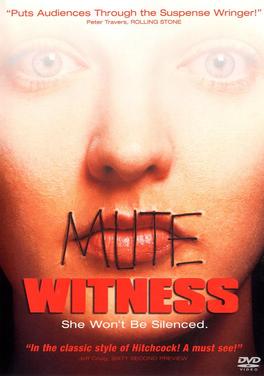
Mute Witness (1995, directed by Anthony Waller)


Billy (Marina Zudina) is an FX makeup artist who is working on a movie in Moscow.  The movie is a cheap slasher, directed by Andy (Evan Richards), who is dating Billy’s sister, Karen (Fay Ripley).  One night, after shooting on the slasher film has ended for the day, Billy stumbles upon another film crew shooting what she initially thinks is a porno.  Instead, it turns out to be a real-life slasher film as the film’s star is brutally murdered while Billy watches.  Though Billy manages to escape from the killers, the police refuse to take her claims seriously.  Working with a private detective named Larsen (Oleg Yankovsky), Billy tries to prove that she saw what she saw while also trying to avoid being killed the snuff film crew and the Russian mob.

Mute Witness is an intense, clever, and suspenseful thriller from the mid-90s.  It has never got as much attention as it deserves, despite an intriguing premise, a sympathetic protagonist, and an international setting.  The film was shot on location and Moscow proves to be the perfect setting for a chilling story about greed, corruption, and murder.  When Mute Witness was filmed, the collapse of Soviet communism was still a recent event and there were still a lot of questions about what type of country the new Russia was going to become.  The Russian mob was still a relatively new concept to many people.  In Mute Witness, post-Soviet Moscow is a dark and menacing place where no one is who they say they are.  It’s a city where people can easily disappear, money can buy immunity from scrutiny, and where the horrors of a slasher film can’t begin to compete with the horrors of reality.  Though the film was made when Boris Yeltsin was still in charge of Russia, it feels very much like a prediction of the Putin era.

Alec Guinness makes a cameo appearance in Mute Witness.  He only appears in one scene but he makes an undeniable impression.  His scene was filmed in Germany, months before the rest of the film was shot.  (Due to his busy schedule, it was the only time that Guinness was available.)  Guinness reportedly did the scene as a favor to director Anthony Waller and offered to do it for free.  Genuine class, indeed!

Though Mute Witness was overshadowed by the success of Scream, it was still enough of a critical and cult success that Waller was offered a studio picture.  Unfortunately, that film turned out to be An American Werewolf in Paris.  Waller has only directed two films since American Werewolf in Paris.  That’s a shame as Mute Witness was an auspicious debut and stands the test of the time as one of the better horror thriller to come out of the 90s.

Scenes that I Love: John Grant Meet Doc Tydon in Wake In Fright


102 years ago today, the great actor Donald Pleasence was born.

Pleasence is, of course, best-known for playing Dr. Loomis in Halloween. He’s so identified with that franchise that it’s always seemed appropriate that he celebrated his birthday in October. And usually, to celebrate his birthday, we would share a scene of Dr. Loomis yelling at or shooting Michael Myers.

This year, though, I’m going to do something a little different and share a scene from a different type of horror movie, 1971’s Wake in Fright. In this Australian film, Donald Pleasence plays Doc Tydon, an alcoholic doctor who lives in the Australian outback and who befriends John Grant (Gary Bond), a naïve school teacher who has become stranded in a town full of people who don’t have much respect for Grant’s intellectual pursuits. Actually, befriends is perhaps the wrong word. Tydon allows Grant to stay with him but it soon become apparent that Tydon, like almost everyone else in this movie, might have a less-than-friendly agenda of his own.

Wake In Fright features what may be Pleasence’s best performance. In the scene below, Tydon and Grant meet for the first time and Pleasence shows that he was capable of far more than just playing Blofeld and Dr. Loomis.

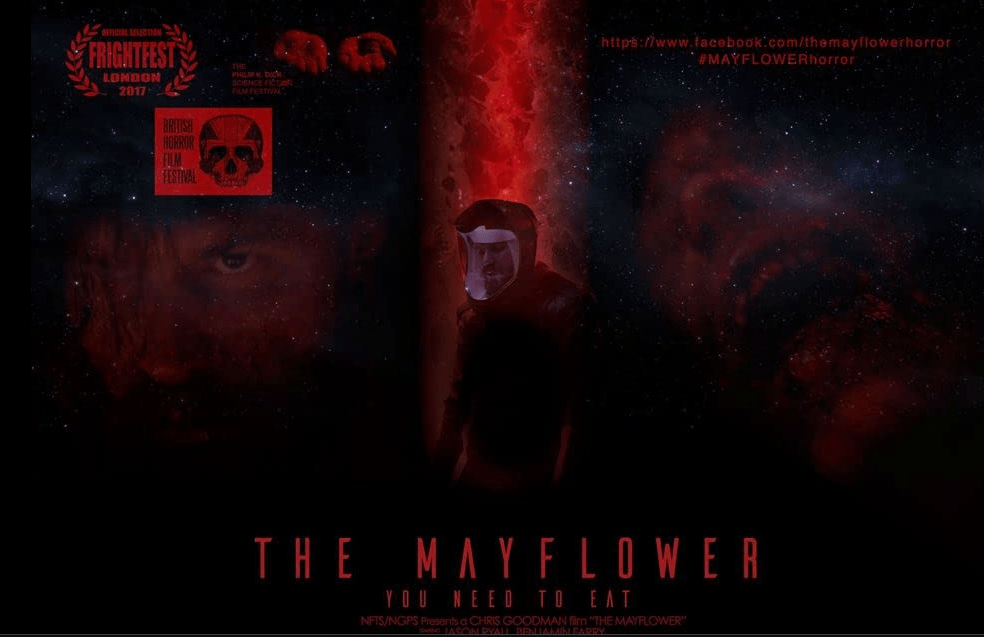
The Mayflower, Review By Case Wright


What if in Alien the xenomorph was really easy to kill? This is a question most filmmakers never cared to answer, but you would not be fancy then like Benjamin Farry! Nope, you would not be fancy, not….fancy…at…all! Benjamin Farry, unlike you, is super fancy because he answered that question- that’s just science! Like that song, She blinded ME… with Bacon Grease… or science or something like that. Bacon is scientifically delicious! I’m very hungry.

Speaking of being hungry, what if you were a space ship janitor and got infected by a parasite that made you hallucinate and go full-on cannibal and head toward earth? Well, you’d rapidly remember that you were a space janitor and blow up your space ship before humanity became a snack! That’s pretty much the entire short.

I don’t want to be too cruel about this short because it did have a beginning, middle, and end like you would have in an interesting story. I cannot write that this wasn’t filmed because it definitely was filmed…and I think they used props… From party city. I also cannot write that it wasn’t a short because it was really really easy for the protagonist to achieve his quest; therefore, it was a short or even a brief. I cannot write that “The Mayflower” didn’t win an award because that did happen….somehow. Maybe it was like everyone got a turn to win like an honorary degree?

If you’re bored and want to take that boredom to another level, this is the short for you! Think of it like watching Alien if it were on cheat mode and made for 30 bucks.

4 Shots From 4 Clive Barker Films


4 (or more) Shots From 4 (or more) Films is just what it says it is, 4 (or more) shots from 4 (or more) of our favorite films. As opposed to the reviews and recaps that we usually post, 4 (or more) Shots From 4 (or more) Films lets the visuals do the talking.

Today, we wish a happy and nice 69th birthday to writer and occasional director Clive Barker!  Barker’s stories have provided the basis for several films and Barker himself attempted to build a career of his own as a filmmaker.  Though he pretty much retired from directing after the box office failure of Lord of Illusions, he still has a better directorial track record than Stephen King.

Today, we honor the birthday of Clive Barker with….

4 Shots From 4 Clive Barker Films

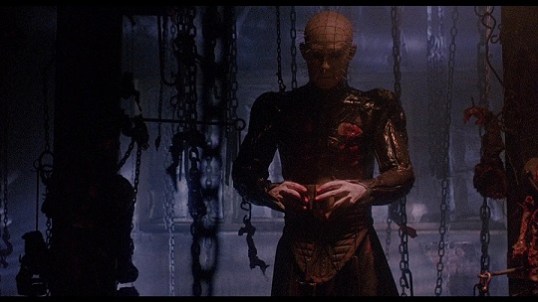
Hellraiser (1987, dir by Clive Barker, DP: Robin Vidgeon)

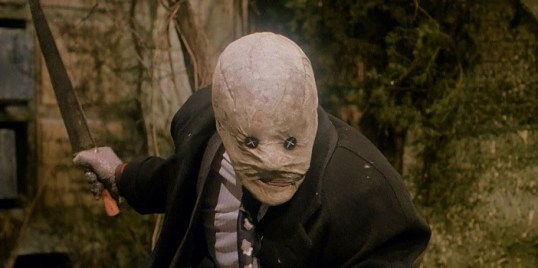
Nightbreed (1990, dir by Clive Barker, DP: Robin Vidgeon)

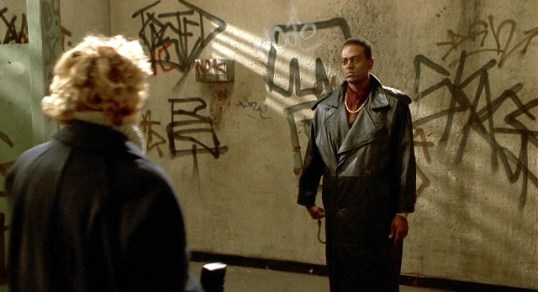
Candyman (1992, dir by Bernard Rose, DP: Anthony B. Richmond)

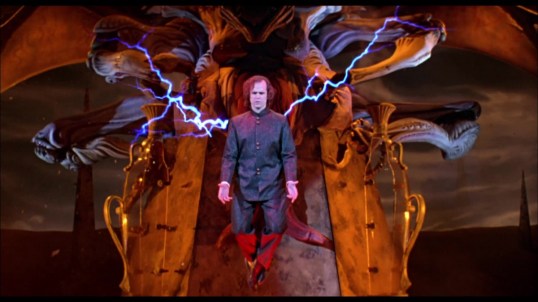
Lord of Illusions (1995, dir by Clive Barker, DP: Ronn Schmidt)

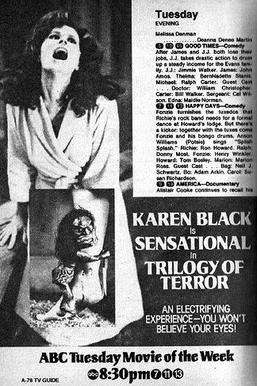
Horror on the Lens: Trilogy of Terror (dir by Dan Curtis)


For today’s horror on the Lens we have a made-for-TV movie that, like yesterday’s The Norliss Tapes, was produced and directed by Dan Curtis.

Trilogy of Terror, which aired in 1975, is an anthology film, featuring three segments that were each based on a short story from Richard Matheson.  What makes this particular film special is that each segment features Karen Black playing a radically different character from the previous segment.  The film really is a showcase for this underrated actress, though Black herself later said that the film ruined her career because it typecast her as a horror actress.

The third segment is the one that gets all the attention.  That’s the one with the killer doll.  I like all of the segments, though.  The first one is often considered to be the weakest but anyone who has ever been through a similar situation will appreciate it as tale of revenge.  The second segment has a playful vibe that I liked.  And yes, the third segment is genuinely frightening.

From 1975, here is Trilogy of Terror:

The TSL’s Grindhouse: Eat Locals (dir by Jason Flemyng)


Every fifty years, the top vampires in the UK gather in one location.  They discuss their upcoming plans.  They settle old scores.  They make peace or declare war.  Actually, I’m perhaps giving them a bit too much credit.  Judging from the 2017 film, Eat Locals, they spend most of their time being bitchy and plotting against each other.  Vampires are apparently not the easiest creatures to get along with.

Their latest meeting is taking place at a farmhouse out in the country.  In theory, the farmhouse should be isolated enough for the vampires to meet in peace but it doesn’t turn out that way.  First, Vanessa (Eva Myles) shows up with a human hitchhiker named Sebastian (Billy Cook).  Sebastian may think he’s going to get laid but it turns out that the vampires are more interested in eating a local.  Then, a bunch of British soldiers show up.  It turns out that they’re from the special vampire squad and they’re determined to take out all the top vampires all at once.  Their leader is also apparently interested in collecting vampire blood, which he can then sell to a cosmetics company.  Want to defy aging?  Vampire blood’s the answer!

I watched Eat Locals last Halloween.  My friends and I had previously watched (at my insistence) Vampire Circus and we decided to follow it up with another British vampire film, this one a more recent one.  (Vampire Circus was released in 1972.  Eat Locals, on the other hand, was released 45 years later, in 2017.)  As an unapologetic horror snob, I was a bit skeptical about Eat Locals and, when the film started, I may have groaned a little because it became obvious that this was going to be one of those films where people spent a lot of time sitting around in an unlit room.  But still, I gave it a chance.

And, ultimately, Eat Locals turned out to be better than I was expecting.  The film has its flaws but it was hard not to admire its determination to stay true to its concept, even at the risk of alienating its audience.  Eat Locals pretty much takes place in one location.  This means that, for all of the build-up, the first big battle between the soldiers and the vampires largely takes place off-screen.  That’s the sort of narrative decision that will undoubtedly turn off a lot of viewers but I actually liked the staginess of it all.  At a time when other directors would have cut away and wasted a lot of money on an action scene that wouldn’t have added much to the film’s narrative, director Jason Flemyng (who is better known as an actor) sticks with the vampires.

Unfortunately, the vampires aren’t always as interesting as the film seems to think that they are.  They’re all very arch and very British but most of them don’t have much personality beyond that.  A few of them, however, are memorable as a result of the efforts of the talented cast.  Charlie Cox, Freeman Agyeman, Vincent Regan all make a favorable impression with their fanged roles.  As for the soldiers, they’re all very British as well.  If you’ve ever watched any film about the UK Special Forces, you will immediately recognize every type of character and situation that Eat Locals satirizes.

Eat Locals is an uneven film and the narrative momentum lags during its final few minutes.  In many ways, it feels like a really clever short film that’s been expanded upon.  That said, there’s enough vampiric satire and uniquely British humor to make the film an entertaining watch.

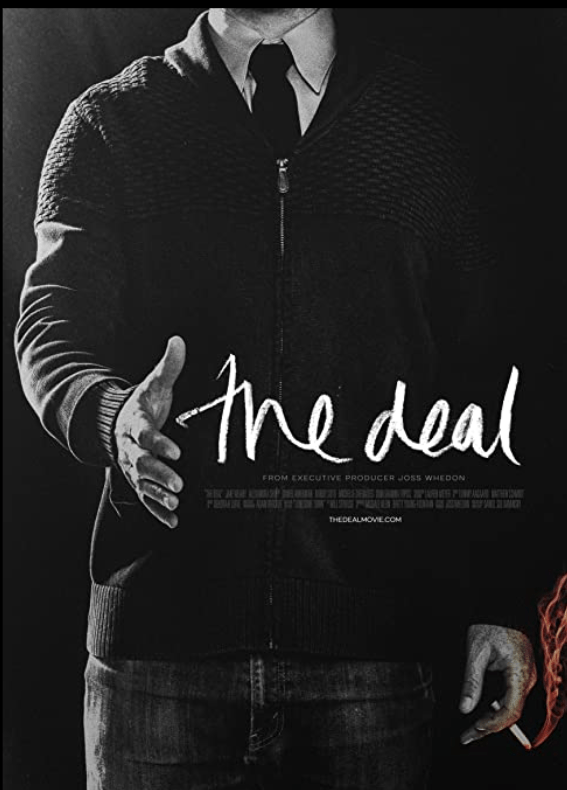
“The Deal” Review by Case Wright


“The Deal” works on two levels: Art and Reality. The story is about selling your soul. What the Adversary is really offering is a do-over with life on cheat mode. This story was directed by Daniel Kaminsky and written by Will Strouse, but Will only got credit on IMDB, not in the film credits. Why is it that only the director’s career took off and Will Strouse was erased? What did the Director do in Hollywood before this break? He’d never really directed or written anything, but now he’s the Executive Producer of The Nevers on HBO. How did he get such luck? For the better part of a decade, Daniel Kaminsky was the assistant to Joss Whedon. In fact, he was his assistant for all the Marvel movies and tv and this was while Joss was purportedly up to his worst behavior. Daniel Kaminsky did not intend for this, but the short rings like a confessional for his own Faustian deal. This short was the first payday for Daniel’s deal because Joss was the executive producer.

To be fair, I’ve argued before that many many many of our greatest artists were terrible human beings- EG Picasso. Both Joss and Picasso, were notorious misogynists, but brilliant. I loved Buffy and pretty much everything Joss did, except Dollhouse which was terrible. It could be that artists need more of a community of regular people to be better behaved? Perhaps Hollywood doesn’t provide the limits that some creatives need to keep from falling into the abyss. We could do a housing program where we re-settle artists to Peoria, Des Moines, and Pittsburgh; not to be mean, just to keep them a little more grounded.

Back to selling your soul, unlike Picasso, Joss took an apprentice who likely saw him at his worst and knew how to keep the secrets. Dramatization below:

Joss hires Daniel

The Deal shows a former Prom King and Queen, Bryce and Monica, who have fallen into a post-high school slump. They are going to a party being held by the former nerd James; he used to do magic, his sister Becca used to be obese, but both are now rich and thin. In fact, everyone at the party has obvious success despite their purported mediocrity, which we learn from the exposition nuggets. One exposition nugget was from Hector, who was Bryce’s high school friend and got Bryce’s scholarship when Bryce suffered a car accident.

The party continues and we learn that Monica really wanted to be an actress and then we lose track of her. Bryce can’t track her down either. He enters James’ room and she’s not there and Bryce starts to lose it and search everywhere for Monica. Finally, James’ reveals his black demon-eyes and we learn that everyone there made a deal. In fact, Monica was about to make a deal, using her body as a trade. This was a very Harvey Weinstein moment. Bryce accidentally kills Monica and James made her disappear from existence. No one remembers her. In the end, Bryce doesn’t either.

Monica’s disappearance also fits with what Weinstein and Whedon did to people who crossed them!

When you do something terrible, the greatest deal would be to have it erased from all time. But like any deal with the Devil, there’s collateral damage: Bryce’s injury so Hector could succeed or Monica because Bryce chose himself.

This story rings so real because it was just six months after this short was released that all of the Kingpins started to fall: Weinstein, Lauer, Rose, CK, and eventually Joss himself. Maybe some deals have fine print? This short is creepy, but not for the writing or directing.

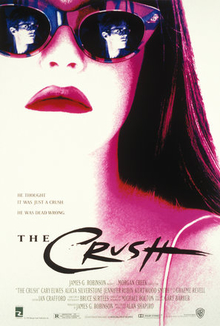
The Crush (1993, directed by Alan Shapiro)


Darien or Adrian?  Adrian or Darien?  Who does Alicia Silverstone play in The Crush?  It depends on which version you saw.

When the movie came out in theaters, she was named Darien because she was based on a real girl named Darien who writer/director Alan Shapiro claimed was obsessed with him.  When the real-life Darien saw the movie and saw that she was portrayed as a psycho stalker, she was understandably pissed off and she sued Shapiro.  As a result, when the film was re-edited for TV and later released on video, Darien suddenly became Adrian.

Whether Silverstone’s playing Adrian or Darien, the movie is still fairly lackluster.  This movie came out when Alicia was still known for playing the lead in several sexually-charged Aerosmith videos and it features her doing the whole Lolita thing, which was very popular in the 90s.  She becomes obsessed with her neighbor, Nick (Cary Elwes).  Nick tries to be nice but when it become obvious that he’s not going to risk going to jail even if the the girl next door does look like Alicia Silverstone, Adrian/Darien starts trying to make his life Hell.  She also tries to kill Nick’s girlfriend with a bunch of bees.  Nick’s girlfriend is played by Jennifer Rubin, who was one of the best of the straight-to-video actresses of the 90s.

(Unlike Alicia’s other pre-Clueless starring turn, The Babysitter, The Crush was not straight-to-video but probably would have been if not for those Aerosmith videos.  The Babysitter is also not very good but it’s an unsung classic when compared to The Crush.)

The Crush is one of those movies that got a huge push when it came out.  MTV was all over it and the commercials were edited to make it look like a steamy thriller starring the girl that every boy had a crush on in 1993.  I can’t remember if the movie got an R-rating or a PG-13 but I do know that my friends and I were bummed out when we were told we weren’t allowed to see it.  Later, we rented it on video and discovered, not for the first time, that we were misled.  The movie itself is really tame and Alicia’s miscast.  She actually seems too level-headed to be the type who would try to kill Jennifer Rubin.  Cary Elwes goes through the whole movie with a pained expression on his face, like he’s wondering how he went from The Princess Bride to this.  Kurtwood Smith plays Alicia’s father and he was always good as a bad parent.  It’s also always good to see Jennifer Rubin, even if her role here doesn’t allow her to show off the wicked playfulness that made her a late night Cinemax favorite.  She definitely should have been a bigger star.

The main lesson to learn from The Crush?  If you are going to portray an acquaintance as a murderous psycho, at least be smart enough to change the name.  It will save you a lot of money and trouble.

Horror Scene That I Love: Carolyn Returns In House of Dark Shadows


Since I paid tribute to Dan Curtis with our latest 4 Shots From 4 Films entry earlier today, it only seems appropriate that today’s horror scene that I love should come from one of his films as well!

In this scene from the 1970 film House of Dark Shadows, young David Collins explores around the old pool on the Collins estate and runs into his cousin, Carolyn. The only problem, of course, is that Carolyn died a few days ago so why is she now wandering around the estate? Could she be a …. VAMPIRE!?

There’s a lot of atmosphere in this scene. That dilapidated pool is frightening on its own. Add a vampire and …. AGCK! In the role of Carolyn, Nancy Barrett does a great job of portraying her new vampiric nature. Run, David, run!

Of course, back in the dining hall, no one believes him. A refusal to believe is a vampire’s best friend. (Personally, I don’t believe in vampires so I’ll probably be in trouble if I ever meet one.)

From House of Dark Shadows: