The TSL Grindhouse: Death Drug (dir by Oscar WIlliamas)


In 1978’s Death Drug, Philip Michael Thomas plays Jesse Thomas.

Jesse is a plumber with a dream.  He wants to be a songwriter, a musician, and most of all, a star.  His girlfriend and eventual wife, Carolyn (Vernee Watson-Johnson), stands by him as he sends his music off to record companies and waits for word.  When he’s finally given a recording contract, no one is happier for him than Carolyn.  Certainly, Jesse’s own father doesn’t seem to care much about his son’s success.  “I have no son,” he says, even after Jesse wins a Grammy.

(To be fair, they’ll give just about anyone a Grammy.)

Unfortunately, with success comes temptation.  While celebrating at a local club, Jesse is approached by a drug dealer (Frankie Crocker) who gives Jesse a cigarette that is laced with Whack.  Whack, as those of us who have seen Disco Godfather can tell you, is PCP.  Remember Disco Godfather‘s cry of “We’ve got to attack the whack?”  Well, Jesse allows himself to become a victim of whack attack.  It starts out simply enough, with a moving painting.  Then, before you know it, Jesse’s hairbrush is turning into a hungry alligator and Jesse starts to become convinced that everyone is plotting against him.  Even a trip to the grocery store goes wrong as Jesse spots spiders in the produce and zombies in the aisles!  Jesse freaks out.  He runs outside.  He…. well, no spoilers for me.  But let’s remember the words of Rudy Ray Moore in Disco Godfather.  Put your weight on it!  Yes, indeed.  Put your weight on it, Jesse.

This is one of those anti-drug films that was probably best enjoyed by people who viewed it while high.  It’s a rather short film, which means that Jesse goes from being a hard-working plumber-turned-musician to a ranting and raving maniac in record time.  Philip Michael Thomas throws himself into the role, especially the ranting and raving part.  I’ve been binging Miami Vice so seeing the usually collected and cool Thomas screaming in terror at things that aren’t there was an interesting experience.  Because the film was so short, there’s some filler that’s awkwardly tacked on, presumably to bring the movie up to feature length.  We get a news report about a man who went crazy from PCP-usage and had to be taken down by the cops.  We get a report about Jesse Thomas’s musical career that features a much-older looking Philip Michael Thomas performing a song that’s more from the 80s than the 70s.  (That was inserted into the film when it was re-released in 1985, at the height of Thomas’s Miami Vice success.)  There’s a lengthy news report at the end that, hilariously, has a moment where the reporter apologizes for “technical difficulties” that were probably included just to get the movie past the 70-minute mark.

As I mentioned, this film was re-released in 1985.  Philip Michael Thomas filmed a special introduction for the film, in which he played pool in his Hollywood mansion and told the viewer that, out of all the roles he had played (“cops, kings….”), none of them meant as much to him as his performance as Jesse Thomas.  Philip Michael Thomas is the epitome of 80s cool in that introduction and in a short scene that appears after the end credits.  Don’t worry, folks, the film is telling us.  Jesse Thomas may have fallen victim to the whack but Philip is still over here putting some weight on it.

In the end, it’s all fairly silly but it does make a nice companion piece to Don Johnson’s Heartbeat.  If you’re a success, you really owe it to yourself to have a vanity project.  It’s what the people want.
Musical Film Review: Heartbeat (dir by John Nicolella)


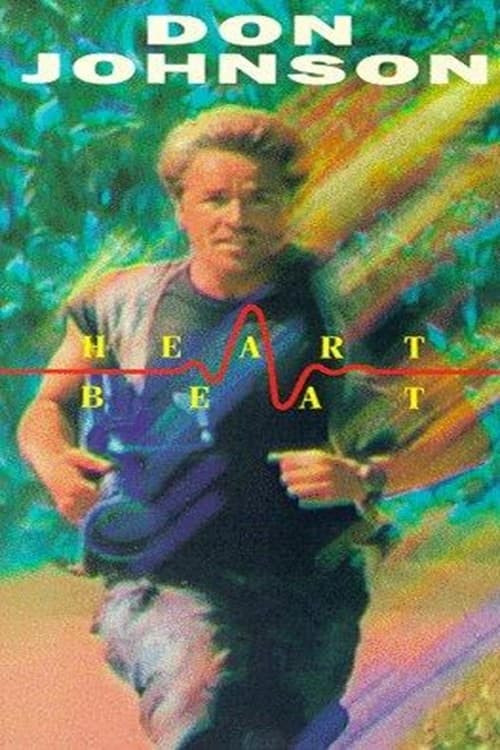
1987’s Heartbeat opens with Don Johnson in an unidentified Central American country.

Rebels are moving through the jungles.  Helicopters are flying over villages and firing off missiles.  In the middle of it all is Don Johnson, playing a character identified as being “The Documentary Filmmaker.”  Johnson carries a large movie camera with him, recording all of the violence and the carnage.  Is Johnson trying to expose the evils of the government?  Is he trying to expose the rebels?  Is he just an adrenaline junkie who can’t help but go to the most dangerous places in the world?  I have no idea and I’m not sure that the film does either.

A bomb explodes.  Johnson is thrown back.  Soon, Don Johnson is being carried into a dark room on a stretcher.  It appears that he might be dying but, even as his heartbeat is slowing down, his spirit is still hanging around and having flashbacks to the attack on the village, which we just saw less than a minute ago.  Eventually, Johnson’s spirit has other flashbacks.  He remembers talking to Paul Shaffer.  He remembers his strained marriage to an unnamed woman played by Lori Singer.  He remembers his youth as the son of a Las Vegas showgirl who is played by Sandahl Bergman.  (Bergman also played a showgirl in Bob Fosse’s All That Jazz and her scenes in this film often feel as if they’ve been directly lifted from Fosse’s classic film.)  David Carradine shows up as someone who might be Johnson’s father or who might just be some random guy rolling dice in the backroom of a strip club.  Johnson remembers his friendship with a graffiti artist (Giancarlo Esposito), who has a sister (Angela Alvarado) who was a prostitute.  The main message seems to be that the Documentary Filmmaker recorded the dangers of the world while also trying to remain emotionally detached, much like Robert Forster in Medium Cool.  Now that he’s dying, he’s left to wonder whether he made the right choice in refusing to get personally involved.

Oh, and did I mention that this film is basically a 65-minute music video?  Don Johnson sings through the entire movie, in a style that does its best to imitate the tough growl and soulful yearning of Southern rock and roll but which ultimately only serves to show that Johnson made the right decision in focusing on acting instead of singing?

After I came across this film on Lettrboxd and then watched it on YouTube, I did a bit of research (which is a fancy way of saying that I spent a minute reading a Wikipedia entry) and I discovered that, at the height of his Miami Vice success, Johnson released his debut country rock album, Heartbeat.  Heartbeat the film was something that Johnson made in order to promote Heartbeat the album.  Directed by frequent Miami Vice director John Nicollela, Heartbeat the film is so self-indulgent and determined to prove that Don Johnson is a soulful artist that it becomes oddly fascinating to watch.  Johnson’s Documentary Filmmaker is a bit of a cad but the film seems to argue that 1) it’s not really his fault because women find him to be irresistible, 2) it’s really his mom’s fault for getting a job, and 3) it ultimately doesn’t matter because the Filmmaker is a great artist whose work will live on even after he dies.  It’s a vanity film for a vanity album and it’s all so vain that it becomes hard to look away from.

In the end, both the music from the album and the promotional film leave one feeling that, in 1987, Don Johnson might have had an unreasonably high opinion of his musical abilities.  That said, as anyone who has seen Cold In July can tell you, Don Johnson eventually did become a very good actor.

Celebrate Victoria Smurfit’s birthday with a catfight!


If a person has co-starred in a movie with Charles Bronson or Chow Yun-fat, I’m a fan of theirs for life. Back in 2003, the lovely Victoria Smurfit played a villain in Chow’s BULLETPROOF MONK. To celebrate her birthday, I’m sharing this fight scene from the film, also featuring Jaime King. Enjoy!

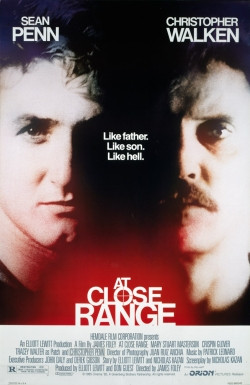
At Close Range (1986, directed by James Foley)


Brad Whitewood, Sr. (Christopher Walken) is known as Big Brad, a rural crime lord who rules the backwoods of Pennsylvania.  When his son, Little Brad (Sean Penn, trying too hard to be James Dean), comes to live with him, Big Brad goes out of his way to try to bring the teenager into his criminal lifestyle.  At first, Little Brad loves being a part of the family business but witnessing a murder and falling in love with Terry (Mary Stuart Masterson) caused Little Brad to start to move away from his father.  With the FBI closing in on the Whitewood family, Brad Sr. starts to eliminate everyone who he considers to be a threat, including the members of his own family.

Based on a true story, this neo-noir features a great cast, including Chris Penn, Millie Perkins, Kiefer Sutherland, Crispin Glover, David Strathairn, Tracey Walter, and Mary Stuart Masterson.  Unfortunately, the movie itself moves at a plodding pace.  There are some good and disturbing scenes, like the montage where Big Brad starts to eliminate the members of his gang.  The film does a good job of showing how seductive Big Brad’s criminal lifestyle can be to a bunch of kids who have basically been written-off by society.  But the story itself is so bleak that most people will end up tuning out long before Little Brad finally turns against his father.

Whatever other flaws it may have, At Close Range does feature one of Christopher Walken’s best performances.  Walken is chillingly evil as Big Brad.  He’s got enough charisma to be believable as someone who could bring a gang together but he’s also frightening as he starts killing anyone who he thinks might talk to the police or the FBI.  Big Brad is a remorseless killer and Walken plays him as being a classic sociopath, someone who cannot understand why the members of his gang and family would get upset when he starts killing some of them.  To Big Brad, that just goes with the territory.  It’s a part of doing business.  With his distinct way of speaking and his trademark tics, Walken is someone who has inspired many impersonators and it can be easy to forget that he’s also a damn good actor.  Films like At Close Range remind us of just how talented Walken actually is.

4 Shots From 4 Films: Special 1975 Edition


4 Or More Shots From 4 Or More Films is just what it says it is, 4 shots from 4 of our favorite films. As opposed to the reviews and recaps that we usually post, 4 Shots From 4 Films lets the visuals do the talking!

Today, we pay tribute to the year 1975.  It’s time for….

4 Shots From 4 1975 Films

One Flew Over The Cuckoo’s Nest (1975, dir by Milos Forman, DP: Haskell Wexler and Bill Butler)

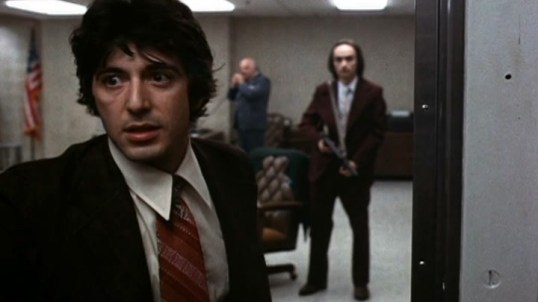
Dog Day Afternoon (1975, dir by Sidney Lumet, DP: Victor J. Kemper)

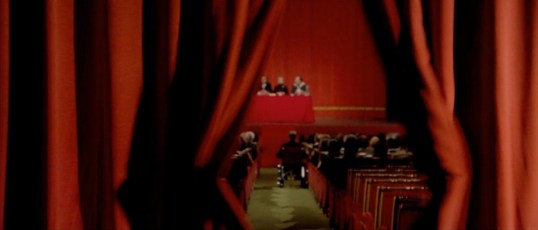
Deep Red (1975, dir by Dario Argento, DP: Luigi Kuveiller)

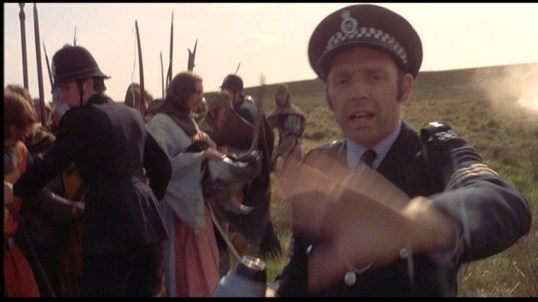
Monty Python and the Holy Grail (1975, dir. Terry Gilliam & Terry Jones, DP: Terry Bedford)

Monday Live Tweet Alert: Join Us for Silicon Towers!


As some of our regular readers undoubtedly know, I am involved in hosting a few weekly live tweets on twitter and occasion ally Mastodon.  I host #FridayNightFlix every Friday, I co-host #ScarySocial on Saturday, and I am one of the five hosts of Mastodon’s #MondayActionMovie!  Every week, we get together.  We watch a movie.  We snark our way through it.

Tonight, for #MondayActionMovie, the film will be Silicon Towers!

It should make for a night of fun viewing and I invite all of you to join in.  If you want to join the live tweets, just hop onto Mastodon, pull up Silicon Towers on YouTube, start the movie at 8 pm et, and use the #MondayActionMovie hashtag!

Enjoy!


Scenes I Love: Jaws


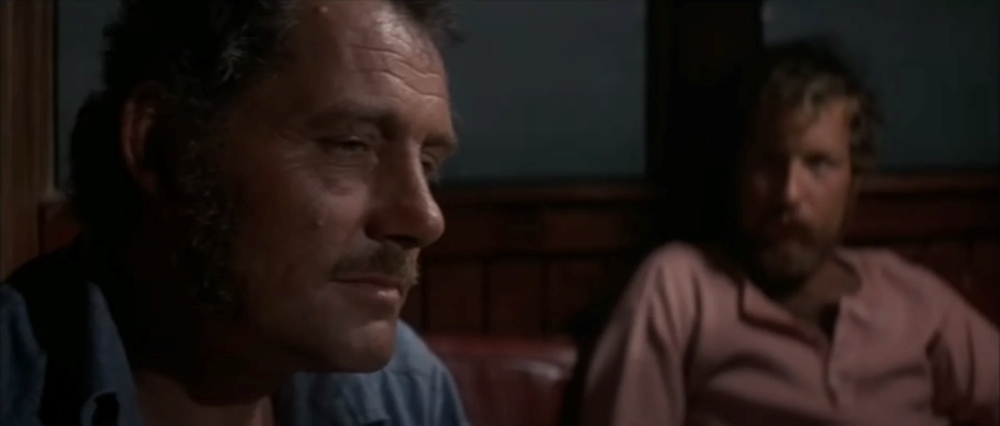
“You know the thing about a shark, he’s got…lifeless eyes, black eyes, like a doll’s eye. When he comes at ya, doesn’t seem to be livin’. Until he bites ya and those black eyes roll over white.” — Quint

People have blamed Spielberg and his breakout film, Jaws, as the cause of the blockbuster mentality that studios have had since this film came out. Studios and producers wanted to recreate the ultra-successful box-office numbers of Jaws. Despite the fact that this film was modestly budgeted, people nowadays who think they’re film experts point to it as the culprit. They’ve called it the film that begun the dumbing down of Hollywood when creativity was sacrificed for profit.

Why did I pick a scene from this film as a favorite? I picked this particular scene because it’s one reason why the film succeeded and made people come back again and again. It’s a scene that perfectly captures one reason why we love to see films in a communal setting. We want to share the same experience and emotions this scene brought up from the pit of each audience’s psyche.

Jaws didn’t ruin the creativity in filmmaking. I like to think that this one film was a filmmaker at his most creativie (shark wouldn’t work properly so Spielberg kept it off-screen which just added to the terror and tension in the film). This very scene goes down as one of the greatest film monologues. It sets up the danger the trio faces with some anecdotal evidence from the very person who survived the experience, but who might have become unhinged because of it. I love the look of frozen terror on the face of Richard Dryefuss’ character as he listens to Robert Shaw tell the story of the ill-fated journey of the U.S.S. Indianapolis.

This latest “Scenes I Love” is why I consider Spielberg one of the best filmmaker of his generation and probably beyond that.

A Blast From The Past: Testing Dirty (dir by Lynn Hamrick)


Our regularly scheduled review of Degrassi High will not be posted tonight so that we can bring you this special presentation.

My Retro Television Reviews will return on Monday but for now, check out this 1990 program called Testing Dirty!  In this short film, Christopher Daniel Barnes (best known for playing Greg Brady in The Brady Bunch Movie) is a high school athlete who tests positive for drugs despite not using them.  As he tries to clear his name, the adults in his community debate whether or not random drug tests are actually fighting or helping the problem.  That’s an important topic but, for the most part, this film is best-known for a cameo appearance by Adam Sandler as a drug dealer.

And now, without further ado …. it’s time for Testing Dirty!

Richard Chamberlain – Allen Quartermain, Toshiro Mifune & Charles Bronson!


When I was a kid, I loved the movie KING SOLOMON’S MINES (1985) with Richard Chamberlain and Sharon Stone, along with its follow up ALLAN QUARTERMAIN AND THE LOST CITY OF GOLD (1986). These movies don’t really hold up very well these days, but that does not change the fact that they still hold a special place in my heart. That was during my “Indiana Jones” phase and I wanted to watch any movie with adventurers in jungles. ROMANCING THE STONE (1984) is one of those types of movies that really does hold up; THE FURTHER ADVENTURES OF TENNESSEE BUCK (1988), not so much. While we were watching King Solomon’s Mines, I remember my parents telling us kids that Chamberlain was in a miniseries called THE THORNBIRDS, but I’ve never watched it. It intrigued me though. TV miniseries were a big thing in the 70’s and early 80’s and Chamberlain was a king of the TV miniseries age. I discovered that even further when I became obsessed with Toshiro Mifune. I discovered his great miniseries SHOGUN (1980) that also starred Chamberlain. 

As an obsessed Charles Bronson fan, I also discovered that they starred together in an episode of the TV series DR. KILDARE (pictured above). He also worked with Bronson in the film A THUNDER OF DRUMS (1961). Richard Chamberlain may not be one of my all time favorite actors, but he was a part of my life growing up and he worked with my favorite actor of all time a couple of different times. That feeling of nostalgia causes me to mourn his loss. It’s like a part of me is now gone. RIP, Richard Chamberlain. Thanks for sharing your talent with us.