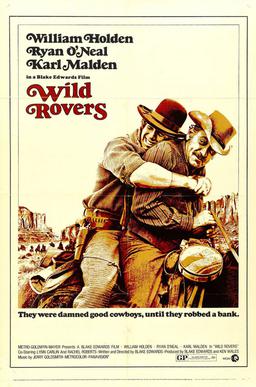
Wild Rovers (1971, directed by Blake Edwards)


In Montana, Walter Buckman (Karl Malden) runs his ranch with an iron hand, warning his neighbor, Hansen (Sam Gilman) not to even think of allowing his sheep to graze on his land.  Walter has two sons, hot-headed John (Tom Skerritt) and the laid back and good-natured Paul (Joe Don Baker).  When Walter learns that two of his ranch hands — aging Ross Bodine (William Holden) and young Frank Post (Ryan O’Neal) — have robbed a bank and are heading down to Mexico, he sends John and Paul to bring them back.  Walter is a big believer in the law and he’s not going to allow any of his people to get away with breaking it.

Ross is a veteran cowboy, who only robbed the bank after Walter withheld his pay to cover the damage of a saloon fight between Ross and Hansen’s men.  Frank is the wilder of the two.  He looks up to Ross and Ross is protective of Frank, even if he has a hard time admitting it.  Ross and Frank are heading down to Mexico so Ross can retire in peace.  Instead of going straight to Mexico, though, they make the mistake of stopping by a small town so Frank can play a little poker and visit the town’s brothel.

Wild Rovers was Blake Edwards’s attempt to make an epic, revisionist western and he includes plenty of shots of the sun setting over the mountains as well as several violent shoot-outs that are shot in Peckinpah-style slow motion.  Unfortunately, the story itself isn’t really strong enough to support Edwards’s ambitions and all of the shots of the countryside, while nice to look at, don’t really add up too much.  Wild Rovers was also a troubled production, with MGM slashing Edwards’s original three-hour film down to 106 minutes and advertising it with a poster featuring O’Neal hugging Edwards from behind, making the film look like a buddy comedy in the style of Butch Cassidy and the Sundance Kid (or an early version of Brokeback Mountain) as opposed to a violent and elegiac western.  (In 1986, a director’s cut was released, which ran for 136 minutes.)  If you only know Blake Edwards from his Pink Panther movies, the grim and tragedy-filled Wild Rovers will come as a surprise.

One thing that Wild Rovers does have going for it is a good cast.  William Holden and an energetic Ryan O’Neal are a solid team and Karl Malden, Tom Skerritt, Rachel Roberts, James Olson, and Moses Gunn all give good performances too.  This movie also provides Joe Don Baker with a sympathetic role and he’s very likable as the laid back Paul Buckman.  It’s not the type of role that Baker often got to play and it’s obvious that a lot of scenes between John and Paul were cut from the film but, in the truncated version, Joe Don Baker’s Paul Buckman becomes the moral center of the film’s story.

Wild Rovers was a disappointment at the box office, one of many that Edwards suffered in the 70s before he and Peter Sellers brought back Inspector Clouseau.
Guilty Pleasure No. 83: Meteor (dir by Ronald Neame)


1979’s Meteor is about a big rock that is tumbling through space.  Earth is directly in its path and, if it hits the planet, it could be an extinction-level event.  Unfortunately, little bits of the rock keep breaking off and crashing into Earth, destroying cities and fleeing extras.  Goodbye, Hong Kong.  Goodbye, Switzerland, which is destroyed via stock footage lifted from Avalanche.  Goodbye, New York, which blows up in such spectacular fashion that the scene was later re-used in The Day After.

It might seem like the planet is doomed.  The meteor is unstoppable.  Bruce Willis hasn’t become a star yet.  But fear not!  Some of the brightest faces of the 70s have been recruited to stop the meteor.  Natalie Wood, in one of her final films, plays a translator and gets covered in muddy river water.  Sean Connery wears a turtleneck and curses in that Scottish way of his.  Karl Malden wears a hat and tells people to calm down while he calls the President.  Brian Keith plays a Russian with all the grace and skill of a cat trying to rip open a bag of treats.  Martin Landau is the military official who doesn’t think that the scientist know what they’re talking about.  Henry Fonda is the president.  That’s a lot of balding men for one movie and it’s hard not to notice that both Malden and Keith often seem to be wearing a hat whenever they share a scene with Connery.  My personal theory is that the production, having spent all of their money on blowing up New York, couldn’t afford more than two toupees so everyone had to take turns wearing them.  (The few scenes where Malden is hatless while in Connery’s presence are often oddly filmed, with either Connery on Malden standing with their back to the camera, almost as if the scenes were actually done with a stand-in.)

We’re supposed to breathe a sigh of relief when we see that Henry Fonda is playing the President but I’ve seen Fail Safe and I remember him allowing the Russian to nuke New York City.  Interestingly enough, New York gets destroyed in this film too.  Why didn’t President Fonda care about New York City?  Of course, the scientists and the military folks are all located in a control center that’s located under the city.  Malden mentions that they’re right next to the Hudson River.  It doesn’t seem to occur to anyone that this is a bad idea but, then again, they also elected Henry Fonda president again.

My late friend and colleague Gary Loggins described Meteor as being a “crashing bore.”  I have to admit that this is one of the few times that I have ever disagreed with Gary.  Meteor is a tremendous amount of fun, as long as you’re watching it with a group of people and nobody takes it seriously.  (The first time I saw it was at one in the morning while I was in college.  Jeff and I watched it in the lounge of one of the dorms.  We may be the only two people to have romantic memories of Meteor.)  Meteor features a cast of champion scenery chewers.  Karl Malden, Sean Connery, Martin Landau, Brian Keith, none of them were exactly subtle actors and giving them an excuse to argue about how to deal with a meteor allows for a lot of very enjoyable overacting.  As well, the special effects are so cheap and obviously fake that it’s hard not to laugh out loud whenever the film cuts to that shot of the meteor rolling through space or the incredibly shiny American and Russian missiles slowly heading towards it.

Meteor’s a lot of fun, even if it is one of those movies where no one points out that our heroes inevitably seem to make every situation worse with their own stupidity.  It’s very much at the tail-end of the 70s disaster boom.  Watch it for the stars.  Watch it for the rock.  And watch it for the hairpieces.

Previous Guilty Pleasures

  1. Half-Baked
  2. Save The Last Dance
  3. Every Rose Has Its Thorns
  4. The Jeremy Kyle Show
  5. Invasion USA
  6. The Golden Child
  7. Final Destination 2
  8. Paparazzi
  9. The Principal
  10. The Substitute
  11. Terror In The Family
  12. Pandorum
  13. Lambada
  14. Fear
  15. Cocktail
  16. Keep Off The Grass
  17. Girls, Girls, Girls
  18. Class
  19. Tart
  20. King Kong vs. Godzilla
  21. Hawk the Slayer
  22. Battle Beyond the Stars
  23. Meridian
  24. Walk of Shame
  25. From Justin To Kelly
  26. Project Greenlight
  27. Sex Decoy: Love Stings
  28. Swimfan
  29. On the Line
  30. Wolfen
  31. Hail Caesar!
  32. It’s So Cold In The D
  33. In the Mix
  34. Healed By Grace
  35. Valley of the Dolls
  36. The Legend of Billie Jean
  37. Death Wish
  38. Shipping Wars
  39. Ghost Whisperer
  40. Parking Wars
  41. The Dead Are After Me
  42. Harper’s Island
  43. The Resurrection of Gavin Stone
  44. Paranormal State
  45. Utopia
  46. Bar Rescue
  47. The Powers of Matthew Star
  48. Spiker
  49. Heavenly Bodies
  50. Maid in Manhattan
  51. Rage and Honor
  52. Saved By The Bell 3. 21 “No Hope With Dope”
  53. Happy Gilmore
  54. Solarbabies
  55. The Dawn of Correction
  56. Once You Understand
  57. The Voyeurs 
  58. Robot Jox
  59. Teen Wolf
  60. The Running Man
  61. Double Dragon
  62. Backtrack
  63. Julie and Jack
  64. Karate Warrior
  65. Invaders From Mars
  66. Cloverfield
  67. Aerobicide 
  68. Blood Harvest
  69. Shocking Dark
  70. Face The Truth
  71. Submerged
  72. The Canyons
  73. Days of Thunder
  74. Van Helsing
  75. The Night Comes for Us
  76. Code of Silence
  77. Captain Ron
  78. Armageddon
  79. Kate’s Secret
  80. Point Break
  81. The Replacements
  82. The Shadow

Film Review: X-15 (dir by Richard Donner)


James Stewart, Charles Bronson, and Mary Tyler Moore!?  All in a film directed by Richard Donner!?

Well, kind of.

James Stewart does not actually appear onscreen in 1961’s X-15.  However, he does provide the narration, explaining to us the origins of the NASA’s X-15 project and why it’s important that America be the first to explore and conquer space.  He talks about the men who risked their lives to test the rocket and the women who supported them and who started every day with the knowledge that they might never see their husband again after he left for work.  There’s something undeniably comforting about hearing Stewart’s voice in this film.  It’s the voice of an idealized America.  It’s a little weary.  There’s definitely a bit of age in the voice.  It’s the voice of a man and a country that has had to survive a lot, especially over the past few years.  But it’s also an incurably optimistic voice.  You hear that voice and you know that everything is going to be okay.

Richard Donner’s directorial debut, X-15 is a docudrama that often plays out like a commercial for the X-15 and America’s young space program.  The film mixes actual footage of the X-15 with scenes of the pilots returning (and sometimes not returning) home.  The emphasis is on each man doing what needs to be done to make the program a success and each woman doing what she has to do to support her man.  Throughout the film, there are scenes where the wives and the girlfriends of the pilots hear sirens and explosions and silently hope that they won’t be the one getting the call.

Making her film debut, Mary Tyler Moore plays Pamela, the girlfriend of pilot Matt Powell (played, in rather dull fashion, by David McLean).  When Pamela first arrives at the base, the wives warn her about overreacting to every explosion.  Major Rinaldi (Brad Dexter) warns her to not even try to get pregnant because that would take Powell away from the program.  (When Rinaldi talks to Pamela, he comes across as more than just being a 50s-style sexist.  That would be expected, considering that the film was made in 1961.  Instead, Rinaldi actually comers across as being rather threatening.  It’s kind of disturbing, to be honest.)  Pamela comes to understand the importance of Matt’s work and Matt …. well, Matt’s kind of dull.

Actually, despite being played by wonderful character actors like James Gregory and Kenneth Tobey, just about every man in this film is kind of boring.  This is one of those films that celebrates the idea of cold, hard professionalism.  No one shows much emotion, even when one of the pilots is killed in an accident.  No one is blamed.  No one is shouted at.  It’s just something that happens and everyone understands the risks.  It’s actually an admirable attitude and one reason why I have a thing for pilots.  But the deliberate blandness of the pilots in X-15 makes it difficult to keep track of who’s who.  The only male actor who makes a real impression is Charles Bronson, playing Lt. Col. Brandon.  Bronson’s incredible screen presence makes up for the fact that his character doesn’t have much of a personality.

That said, it’s a bit of a disappointment that Jimmy Stewart is not onscreen and Mary Tyler Moore has to share her scenes not with Bronson but instead with the dull David McLean.  When the film was released in 1961, it was providing audiences with something that they hadn’t seen before and I imagine it was truly exciting to see a rocket fly, however briefly, into space.  However, modern audiences have seen Top Gun and Top Gun: Maverick.  I’ve seen The Right Stuff, which covers much of the same material as X-15.  As a result, when viewed today, X-15 is a bit dull and features little of the flair that would characterize Richard Donner’s later directorial efforts.  Today, the main reason to watch the film is for Stewart, Moore, and Bronson.  Not having them acting opposite each other feels like a huge missed opportunity.

Live Tweet Alert: Join #FridayNightFlix for Mitchell!


As some of our regular readers undoubtedly know, I am involved in a few weekly watch parties.  On Twitter, I host #FridayNightFlix every Friday and I co-host #ScarySocial on Saturday.  On Mastodon, I am one of the five hosts of #MondayActionMovie!  Every week, we get together.  We watch a movie.  We tweet our way through it.

Tonight, at 10 pm et, I will be hosting #FridayNightFlix!  The movie?  1975’s Mitchell, starring the great Joe Don Baker!

If you want to join us this Friday, just hop onto twitter, start the movie at 10 pm et, and use the #FridayNightFlix hashtag!  I’ll be there tweeting and I imagine some other members of the TSL Crew will be there as well.  It’s a friendly group and welcoming of newcomers so don’t be shy.

Mitchell is available on Prime and Tubi!

See you there!

Film Review: Broken Arrow (dir by Delmer Daves)


The 1950 film, Broken Arrow, takes place in the years following the Civil War.

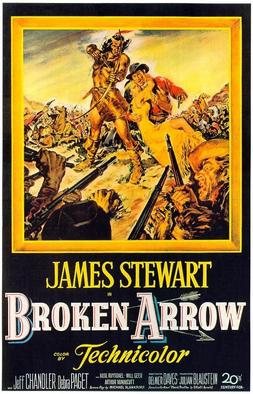
Having survived the war, frontier scout Tom Jeffords (James Stewart) just wants to get away from his fellow countrymen for a while.  During the Civil War, Jeffords saw the worst that humanity had to offer and the experience has left him cynical about the idea of bringing civilization to the American frontier.  Tom just wants to be left alone.  Still, when he comes across a 14 year-old Apache who has been shot in the back, Tom stops to help.  Though wounded, the Apache still tries to attack him.  He’s learned not to trust the white man.  Broken Arrow is a film that suggests that he has good reason not to.  Indeed, Broken Arrow was one of the first major Hollywood productions to attempt to treat the American Indians with sympathy and fairness.

Tom saves the Apache’s life and reunites him with his tribe.  When the Apaches attack and kill a group of nearby gold prospectors, they allow Tom to live but they warn him to stay out of their territory.  However, circumstances make it impossible for Tom to do that.  When Tom arrives in Tucson, the citizens are incredulous that he allowed the Apache child to live.  When Tom learns the Apache language and customs and marries an Apache woman named Sonseeahry (Debra Paget), it causes the other whites to distrust him even more.  However, it is Tom’s eventual friendship with the Apache chief Cochise (Jeff Chandler) that eventually lands Tom in the middle of the conflict between the Apaches who want to preserve their way of life and the white men who want their land.

Broken Arrow is a well-intentioned film, in the way that mildly liberal films from the 50s tended to be.  The U.S. government and its citizens are criticized for breaking their promises and their treaties to the Apache but the film’s ultimate message is one of compromise and understanding.  The bigoted whites may be the villains but then again, so is Geronimo (Jay Silverheels) for refusing to accept Cochise’s desire for peace.  Cochise is the film’s hero specifically because he calls for setting aside differences and living in peace with the white man, despite his own distrust of their leaders.  The majority of the extras were Apache, though Neither Jeff Chandler nor Debra Paget were of Native descent.  Both of them give good performances that largely avoid the stereotypes of the time.  Chandler received his only Oscar nomination, for Best Supporting Actor, for his performance in this film.

That said, the unnominated Jimmy Stewart dominates the film and that’s not really surprising.  (It should be noted that, while Stewart was not nominated for this film, he was nominated for his performance in Harvey, that same year.)  Stewart may have first found fame as the happy and go-lucky face of Middle America but his experiences in World War II left a definite mark on him.  He returned from the war a much more serious figure and every character that he played (even the lovable Elwood in Harvey) had more than a hint of melancholy to him.  Stewart plays Tom as being a troubled soul, someone who is still struggling to come to terms with the destruction and cruelty that he saw during the Civil War.  There’s an authenticity to Stewart’s performance, leaving little doubt that he understood exactly what Tom was going through.  Broken Arrow ends on a note of compromise and racial harmony but it’s a sad film because we know what waits in the future for Cochise and his people.  Tom Jeffords fights to bring peace to the frontier but it’s a peace that won’t last.  And, as played by Stewart, Tom seems to understand that better than anyone.

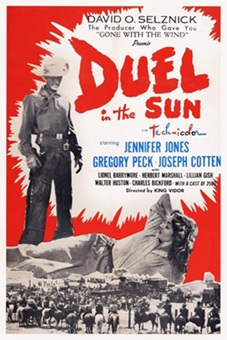
Duel In The Sun (1946, directed by King Vidor)


After her father is executed for killing her mother and her mother’s lover, “half-breed” Pearl Chavez (Jennifer Jones) is sent to live with her father’s second cousin, Laura Beth McCanles (Lillian Gish).  Laura is the wife of rancher, politician, and all-around racist Senator Jackson McCanles (Lionel Barrymore).  Worried that Pearl’s beauty and uninhibited manner will get her into trouble, Laura arranges for Pearl to meet with a minister known as The Sinkller (Walter Huston) who instructs Pearl on how to be a “good” girl.

Wanting to make Pearl bad and his, Lewton “Lewt” McCanles (Gregory Peck) becomes obsessed with Pearl and is soon forcing himself on her on a regular basis.  When the good McCanles brother, Jesse (Joseph Cotten), leaves the ranch despite being in love with Pearl, Pearl tries to find a good husband in the form of Sam Pierce (Charles Bickford).  Lewt responds by gunning Sam down and then goes on the run.  It all leads to an overwrought duel in the sun as the two doomed lovers take aim at each other.

Duel In The Sun is credited to veteran director King Vidor and there are a few shots of the western landscape that do feel typical of Vidor’s work.  However, Duel In The Sun’s true auteur was its producer, David O. Selznick.  Still looking to recapture his earlier success with Gone With The Wind and eager to make his future wife, Jennifer Jones, into an even bigger star than she was, Selznick obsessed over every detail of Duel In The Sun, pushing Vidor and a host of other directors (including Josef von Sternberg, William Dieterle, William Cameron Menzies, Otto Brower, and Sidney Franklin)  to make the film more steamy, more melodramatic, more violent, and more visually epic.  Reportedly, while Video was trying to shoot the film’s titular duel, he had to call cut several times when Selznick ran into the scene with a water bottle to spray more “sweat” onto Jones and Peck.  Today, the stiff Peck seems miscast as the black sheep of the family, the reserved Jones is even more miscast as a mestiza, and the plot is clearly too simplistic to carry the film’s epic ambitions.  A few impressive shots aside, Duel In The Sun is just boring,  In the 40s, though, the film’s relative openness about sex generated enough controversy to make Duel In The Sun into a box office hit.  It was one of the two top-grossing westerns of the 40s, beating out Red River, My Darling Clementine, Fort Apache, The Ox-Bow Incident, and several other films that were actually good.

Unlike Jones, Peck, and even usually reliable stalwart like Lionel Barrymore and Walter Huston, Joseph Cotten at least emerges from this film with his dignity intact.  Playing the good brother, Cotten gets to underplay while everyone else is overplaying and it turns out to be the right approach for him.  Surviving Duel In The Sun was no easy feat but Cotten pulled it off.

Scenes That I Love: Joseph Cotten In The Third Man


Imagine being Holly Martins.  You’re in Vienna, investigating the death of your best friend, getting chased by an angry mob and threatened by British intelligence, and suddenly you’re reminded that you, an author of dime-store novels, agreed to give a lecture on post-war literature.

That’s what happens in this scene that I love (featuring Joseph Cotten as Holly Martins) from The Third Man.

4 Shots From 4 Films: Special Joseph Cotten Edition


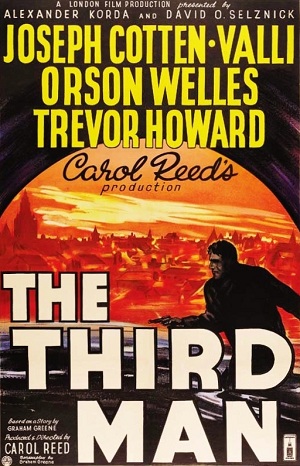
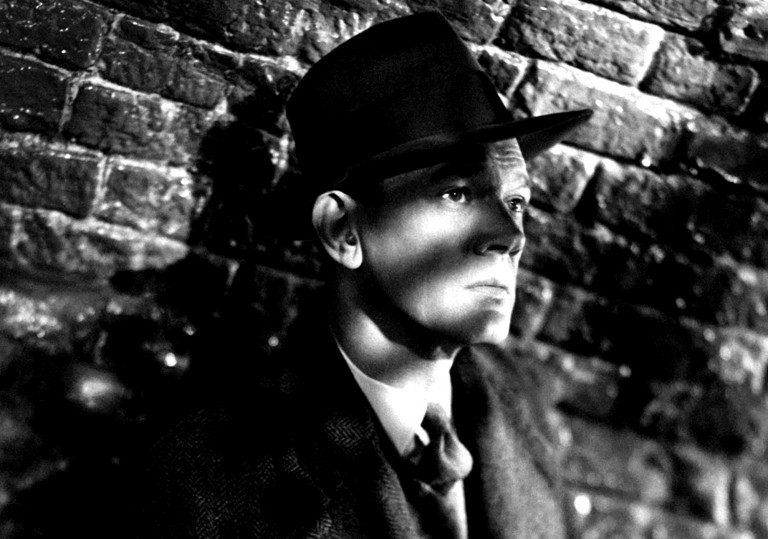
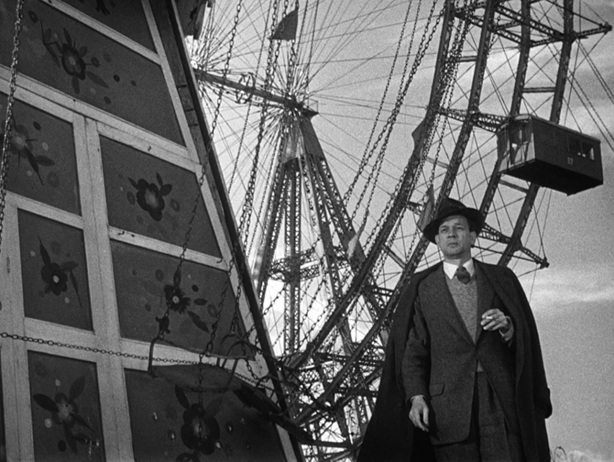
The Third Man (1949, directed by Carol Reed)

4 Shots From 4 Films is just what it says it is, 4 shots from 4 of our favorite films. As opposed to the reviews and recaps that we usually post, 4 Shots From 4 Films lets the visuals do the talking!

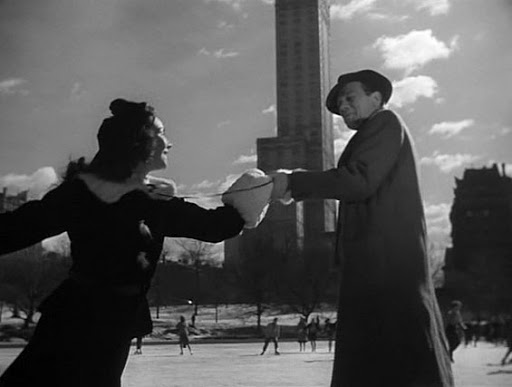
As you can probably guess from my pen name and my profile pic, Joseph Cotten is one of my favorite actors.  Cotten may be best known for his association with Orson Welles but he worked with several great directors over the years.  Along with playing Jedediah Leland in Welles’s Citizen Kane, he starred in Hitchcock’s Shadow of a Doubt and Carol Reed’s The Third Man.  Even while his film career was flourishing, Cotten continued to appear on the Broadway stage and, during the early days of television, he frequently appeared on anthology series, the majority of which were broadcast live.

In honor of Cotten’s birthday, here are four shots from four of his best films.

4 Shots From 4 Films

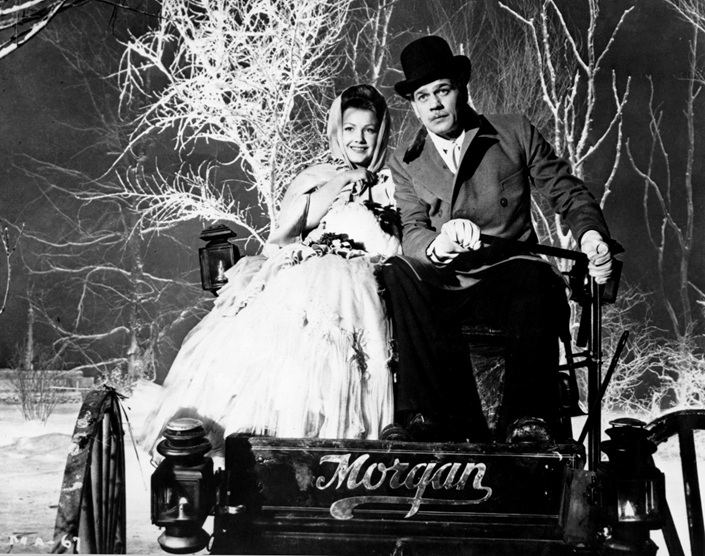
The Magnificent Ambersons (1942, directed by Orson Welles)

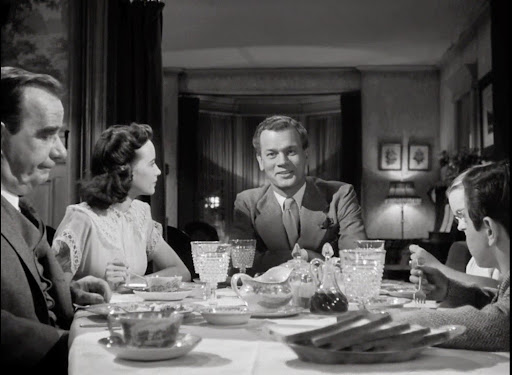
Shadow of a Doubt (1943, directed by Alfred Hitchcock)

Portrait of Jennie (1948, directed by William Dieterle)

The Third Man (1949, directed by Carol Reed)