The Shattered Lens wishes a happy birthday to Danny Trejo!
Today’s scene that I love comes from 2010’s Machete and it features Danny Trejo being a total badass! Check out that motorcycle!
The Shattered Lens wishes a happy birthday to Danny Trejo!
Today’s scene that I love comes from 2010’s Machete and it features Danny Trejo being a total badass! Check out that motorcycle!
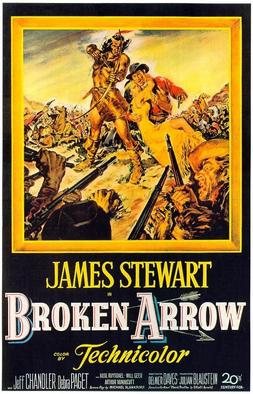
The 1950 film, Broken Arrow, takes place in the years following the Civil War.
Having survived the war, frontier scout Tom Jeffords (James Stewart) just wants to get away from his fellow countrymen for a while. During the Civil War, Jeffords saw the worst that humanity had to offer and the experience has left him cynical about the idea of bringing civilization to the American frontier. Tom just wants to be left alone. Still, when he comes across a 14 year-old Apache who has been shot in the back, Tom stops to help. Though wounded, the Apache still tries to attack him. He’s learned not to trust the white man. Broken Arrow is a film that suggests that he has good reason not to. Indeed, Broken Arrow was one of the first major Hollywood productions to attempt to treat the American Indians with sympathy and fairness.
Tom saves the Apache’s life and reunites him with his tribe. When the Apaches attack and kill a group of nearby gold prospectors, they allow Tom to live but they warn him to stay out of their territory. However, circumstances make it impossible for Tom to do that. When Tom arrives in Tucson, the citizens are incredulous that he allowed the Apache child to live. When Tom learns the Apache language and customs and marries an Apache woman named Sonseeahry (Debra Paget), it causes the other whites to distrust him even more. However, it is Tom’s eventual friendship with the Apache chief Cochise (Jeff Chandler) that eventually lands Tom in the middle of the conflict between the Apaches who want to preserve their way of life and the white men who want their land.
Broken Arrow is a well-intentioned film, in the way that mildly liberal films from the 50s tended to be. The U.S. government and its citizens are criticized for breaking their promises and their treaties to the Apache but the film’s ultimate message is one of compromise and understanding. The bigoted whites may be the villains but then again, so is Geronimo (Jay Silverheels) for refusing to accept Cochise’s desire for peace. Cochise is the film’s hero specifically because he calls for setting aside differences and living in peace with the white man, despite his own distrust of their leaders. The majority of the extras were Apache, though Neither Jeff Chandler nor Debra Paget were of Native descent. Both of them give good performances that largely avoid the stereotypes of the time. Chandler received his only Oscar nomination, for Best Supporting Actor, for his performance in this film.
That said, the unnominated Jimmy Stewart dominates the film and that’s not really surprising. (It should be noted that, while Stewart was not nominated for this film, he was nominated for his performance in Harvey, that same year.) Stewart may have first found fame as the happy and go-lucky face of Middle America but his experiences in World War II left a definite mark on him. He returned from the war a much more serious figure and every character that he played (even the lovable Elwood in Harvey) had more than a hint of melancholy to him. Stewart plays Tom as being a troubled soul, someone who is still struggling to come to terms with the destruction and cruelty that he saw during the Civil War. There’s an authenticity to Stewart’s performance, leaving little doubt that he understood exactly what Tom was going through. Broken Arrow ends on a note of compromise and racial harmony but it’s a sad film because we know what waits in the future for Cochise and his people. Tom Jeffords fights to bring peace to the frontier but it’s a peace that won’t last. And, as played by Stewart, Tom seems to understand that better than anyone.
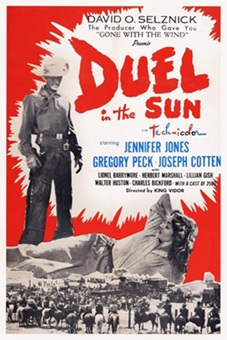 After her father is executed for killing her mother and her mother’s lover, “half-breed” Pearl Chavez (Jennifer Jones) is sent to live with her father’s second cousin, Laura Beth McCanles (Lillian Gish). Laura is the wife of rancher, politician, and all-around racist Senator Jackson McCanles (Lionel Barrymore). Worried that Pearl’s beauty and uninhibited manner will get her into trouble, Laura arranges for Pearl to meet with a minister known as The Sinkller (Walter Huston) who instructs Pearl on how to be a “good” girl.
Wanting to make Pearl bad and his, Lewton “Lewt” McCanles (Gregory Peck) becomes obsessed with Pearl and is soon forcing himself on her on a regular basis. When the good McCanles brother, Jesse (Joseph Cotten), leaves the ranch despite being in love with Pearl, Pearl tries to find a good husband in the form of Sam Pierce (Charles Bickford). Lewt responds by gunning Sam down and then goes on the run. It all leads to an overwrought duel in the sun as the two doomed lovers take aim at each other.
Duel In The Sun is credited to veteran director King Vidor and there are a few shots of the western landscape that do feel typical of Vidor’s work. However, Duel In The Sun’s true auteur was its producer, David O. Selznick. Still looking to recapture his earlier success with Gone With The Wind and eager to make his future wife, Jennifer Jones, into an even bigger star than she was, Selznick obsessed over every detail of Duel In The Sun, pushing Vidor and a host of other directors (including Josef von Sternberg, William Dieterle, William Cameron Menzies, Otto Brower, and Sidney Franklin) to make the film more steamy, more melodramatic, more violent, and more visually epic. Reportedly, while Video was trying to shoot the film’s titular duel, he had to call cut several times when Selznick ran into the scene with a water bottle to spray more “sweat” onto Jones and Peck. Today, the stiff Peck seems miscast as the black sheep of the family, the reserved Jones is even more miscast as a mestiza, and the plot is clearly too simplistic to carry the film’s epic ambitions. A few impressive shots aside, Duel In The Sun is just boring, In the 40s, though, the film’s relative openness about sex generated enough controversy to make Duel In The Sun into a box office hit. It was one of the two top-grossing westerns of the 40s, beating out Red River, My Darling Clementine, Fort Apache, The Ox-Bow Incident, and several other films that were actually good.
Unlike Jones, Peck, and even usually reliable stalwart like Lionel Barrymore and Walter Huston, Joseph Cotten at least emerges from this film with his dignity intact. Playing the good brother, Cotten gets to underplay while everyone else is overplaying and it turns out to be the right approach for him. Surviving Duel In The Sun was no easy feat but Cotten pulled it off.
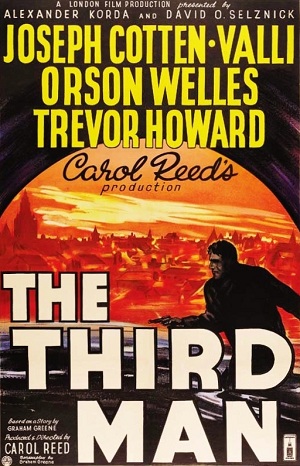
Imagine being Holly Martins. You’re in Vienna, investigating the death of your best friend, getting chased by an angry mob and threatened by British intelligence, and suddenly you’re reminded that you, an author of dime-store novels, agreed to give a lecture on post-war literature.
That’s what happens in this scene that I love (featuring Joseph Cotten as Holly Martins) from The Third Man.
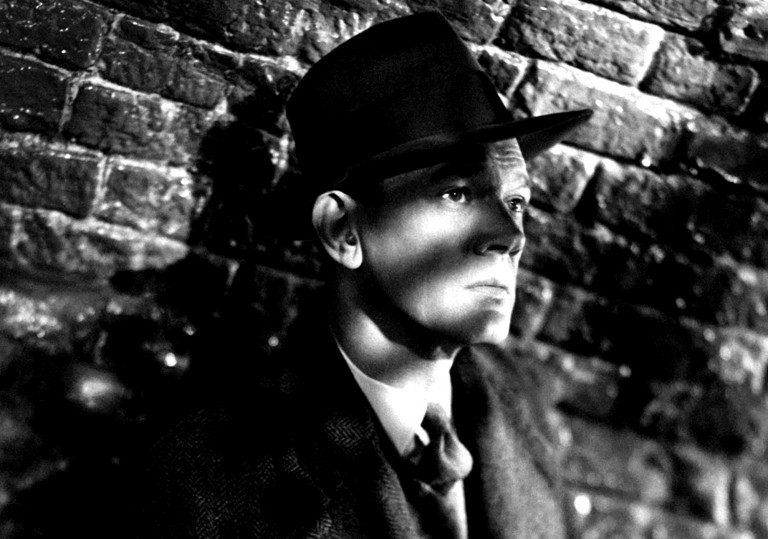
The Third Man (1949, directed by Carol Reed)
4 Shots From 4 Films is just what it says it is, 4 shots from 4 of our favorite films. As opposed to the reviews and recaps that we usually post, 4 Shots From 4 Films lets the visuals do the talking!
As you can probably guess from my pen name and my profile pic, Joseph Cotten is one of my favorite actors. Cotten may be best known for his association with Orson Welles but he worked with several great directors over the years. Along with playing Jedediah Leland in Welles’s Citizen Kane, he starred in Hitchcock’s Shadow of a Doubt and Carol Reed’s The Third Man. Even while his film career was flourishing, Cotten continued to appear on the Broadway stage and, during the early days of television, he frequently appeared on anthology series, the majority of which were broadcast live.
In honor of Cotten’s birthday, here are four shots from four of his best films.
4 Shots From 4 Films
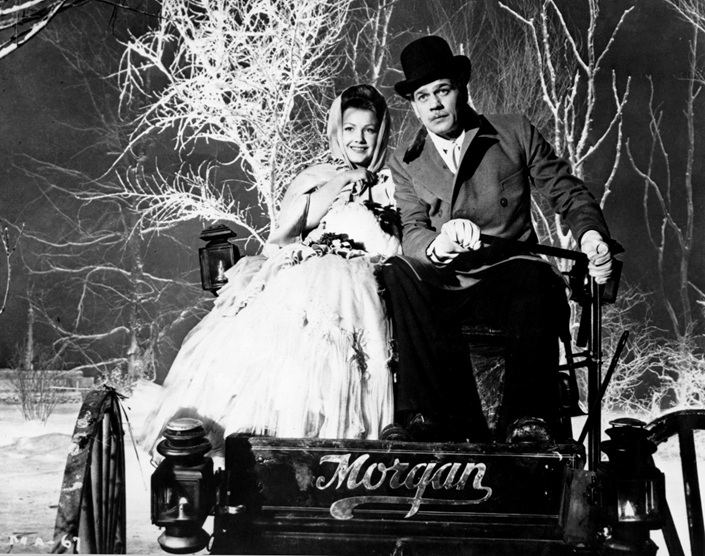
The Magnificent Ambersons (1942, directed by Orson Welles)
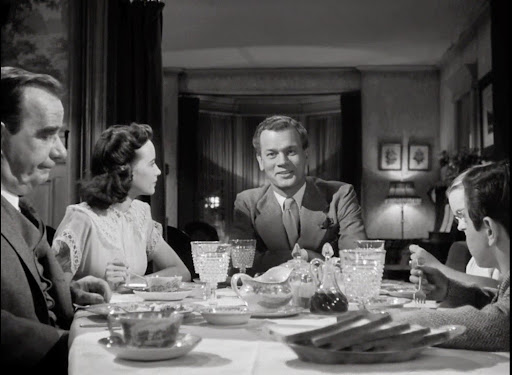
Shadow of a Doubt (1943, directed by Alfred Hitchcock)
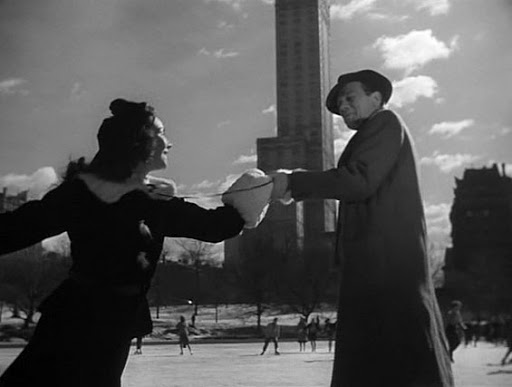
Portrait of Jennie (1948, directed by William Dieterle)
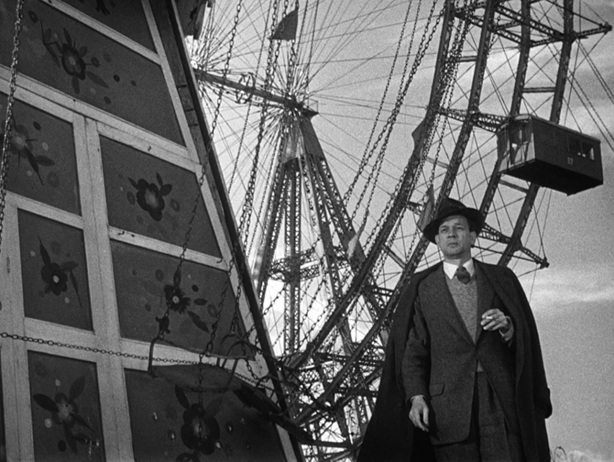
The Third Man (1949, directed by Carol Reed)
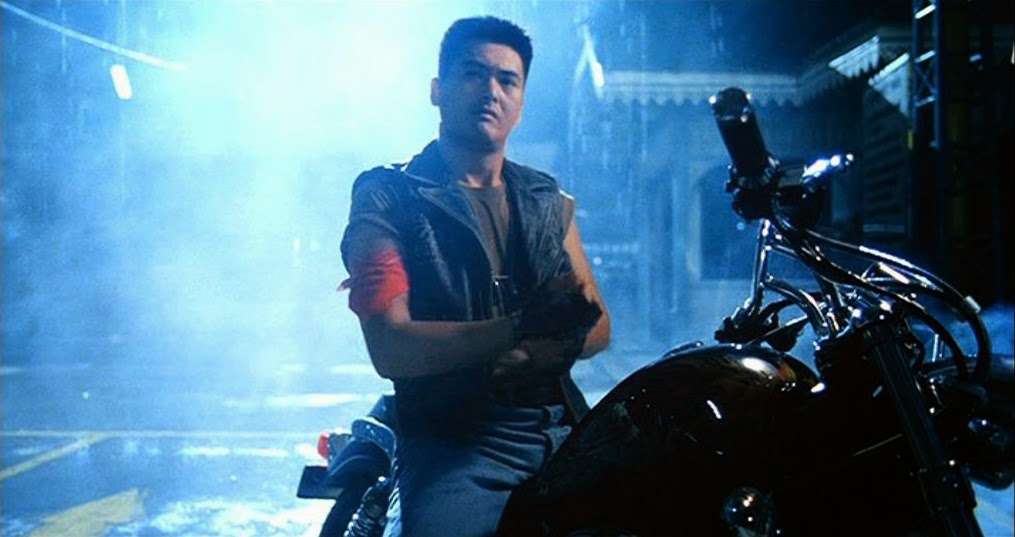
Chow Yun-Fat is most often mentioned in the same breath as director John Woo when discussing Hong Kong action films, and for good reason when you consider the classic films they made together. However, Chow also worked with director Ringo Lam on five different occasions during his Hong Kong heyday. They first worked together in CITY ON FIRE (1987), before moving on to PRISON ON FIRE (1987), WILD SEARCH (1989), and PRISON ON FIRE II (1991). They would work together for the last time in 1992’s FULL CONTACT, which is my personal favorite of their five films.
In FULL CONTACT, Chow plays Jeff, a bouncer at a bar in Thailand, where his girlfriend Mona (Ann Bridgewater) performs nightly interpretive dance / stripper routines. When Jeff’s best friend Sam (Anthony Wong) gets in trouble with a local loan shark, Jeff rides his big motorcycle over and collects Sam, kicks the collective asses of the loan shark and his goons, and even finds the time to slice and dice some wrists with his butterfly knife. The problem is solved for the night, but Jeff, Sam, and their buddy Chung (Chris Li) know that they’re going to have to come up with some cash to satisfy Hung sooner or later. So, Jeff sends Mona back to Hong Kong, while they team up with Sam’s flamboyantly gay, psychopathic cousin Judge (Simon Yam), and his crew made up of Deano (Frankie Chan) and Virgin (Bonnie Fu), to steal a shipment of arms. Unfortunately for Jeff, Judge has made a deal with loan shark Hung to use them for the arms heist, but then kill them once it’s over. After they pull off the job, Judge shoots Chung in the face and tries to kill Jeff, but instead the two men find themselves in an exciting car chase that ends when they both crash outside of an innocent family’s personal residence. They then engage in an epic fight, with a severely injured Jeff escaping into the home as the homeowner’s are brutally gunned down. Judge forces a freaked out, whining, whimpering Sam at gunpoint to go in the house and shoot his friend Jeff, which he does. After Sam walks out of the house, Judge and Deano blow the place all to hell with Jeff managing to get out of the house in just the nick of time with the family’s dog. Shot full of holes and missing a couple of fingers, Jeff must heal and plot his revenge on the friend who betrayed him and stole his girl, as well as the gay psycho who wanted to make love to him before trying his best to kill him!
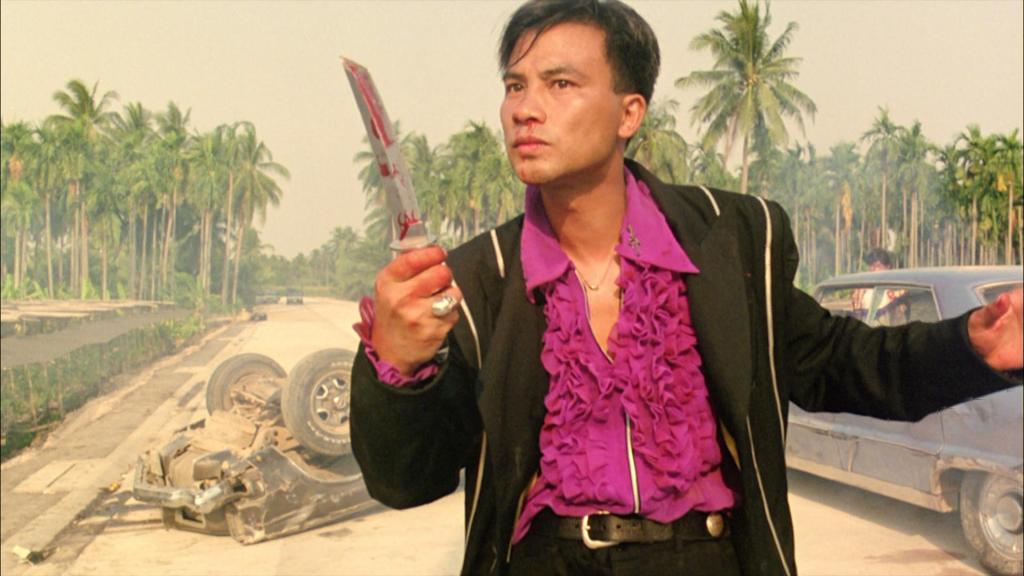
I love the movie FULL CONTACT, but it must be noted that it’s quite different from any of Chow Yun-Fat’s prior action films. First, his character Jeff is quite different than the flawed, but heroic characters he had been playing. In this film, he’s still a major badass as he’s riding his Kawasaki motorcycle and twirling his butterfly knife, but there’s not much that’s heroic about his character. Instead, he’ll do pretty much anything for money, and when he’s betrayed, his motivation is little more than cold, hard vengeance. I say “little more” because he does take care of a funny looking dog, and he does try to get some money to help the young girl that was horrifically scarred for life when her house blew up. These specific actions make him better than the psychos surrounding him. Second, Ringo Lam ramps up the violence to extreme levels. This is one of those films that love blades, and when the blades come out, hands are impaled, skin is sliced, and digits are sure to go flying! The film also likes its guns, and the bullets don’t just make a little red spot when they hit. Rather, there’s a good chance blood is going to graphically splatter everywhere. It’s somewhat nihilistic in its approach to violence. And finally, the characters themselves are so extreme that they don’t seem to exist in the real world, which is quite different from Ringo Lam’s usually more gritty work. Aside from Chow’s extreme badass, Yam is completely over the top as the gay psychopath Judge, Frankie Chan’s Deano is nothing more than a dumb brute, Bonnie Fu’s “Virgin” is a sex obsessed, psycho slut, and Anthony Wong’s Sam swings wildly from a whining wuss to a vicious, remorseless killer. Only Ann Bridgewater’s stripper / girlfriend seems to occupy a place on planet earth. I don’t say any of the above items as a criticism of the film. The things I like most about FULL CONTACT is the different type of action character for Chow, and the extreme action sequences. What this film lacks in style, it makes up for in sheer madness and ultra violence.
The cast and crew of FULL CONTACT is top notch. Chow Yun-Fat and Anthony Wong are both three-time winners of the prestigious Hong Kong Film Award for Best Actor, and Simon Yam has won one himself. Chow and Yam are the real standouts here. While he’s effective in his role, this is not the best example of Anthony Wong’s greatness. For that, I recommend the film BEAST COPS (1998). Director Ringo Lam made incredible films in Hong Kong prior to his death in 2018, winning the Hong Kong Film Award as Best Director for his prior collaboration with Chow Yun-Fat, CITY ON FIRE. It’s so good that Quentin Tarantino paid clear homage to it in RESERVOIR DOGS. Lam would also make several films with Jean Claude Van-Damme of varying quality, but I highly recommend his 1997 film FULL ALERT, with Hong Kong super actor Lau Ching-Wan. It’s incredible. The final person I want to mention is composer Teddy Robin Kwan. From the very opening shot, FULL CONTACT’s rocking soundtrack perfectly matches the action on the screen. There’s a revenge training sequence in the film that plays out to guitar riffs, beating drums, and vocals that get you completely pumped up for revenge. It’s not a surprise that Kwan is also a multiple Hong Kong Film Award winner for Best Original Film Score over the years.
Overall, I easily recommend FULL CONTACT knowing full well that it won’t appeal to everyone. The truth is that Hong Kong audiences of the time were not eager to see Chow Yun-Fat in this different type of role and the film is not one of his bigger hits. With that said, FULL CONTACT has a very solid cult following, with its big stars, great director and extreme action. Anyone interested in Hong Kong films of the 80’s and 90’s has to see this one.
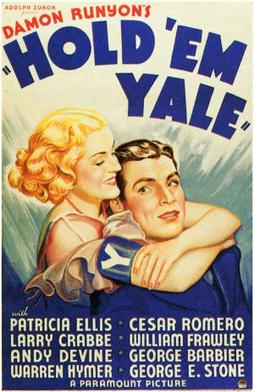 Georgie, the Chaser (Cesar Romero) is a con artist who works for a low-level gangster named Sunshine Joe (William Frawley). When Georgie reads about an heiress named Clarice van Cleve (Patricia Ellis) who impulsively falls in love with any man wearing a uniform, Georgie pretends to be a member of the Foreign Legion and tracks her down. Georgie thinks that Clarice’s father will pay him off, just as he’s paid off all of her other suitors. Instead, Clarice’s father disinherits her and Clarice ends up living at Georgie’s place, along with his other criminal associates (Andy Devine, Warren Hymer, and George E. Stone).
Georgie reacts by getting out of town, leaving Clarice behind with his good-natured gang. However, even the gang gets tired of Clarice insisting that they dress up for dinner and that they all get a good night’s sleep. After Sunshine Joe cheats them out of their money, the remaining criminals head to the Yale-Harvard football game, hoping to win some bets and to set Clarice up with the player that her father wants her to marry, studious benchwarmer Hector Wilmot (Buster Crabbe).
Just a little over an hour long, Hold ‘Em Yale is actually a pretty amusing movie. It was based on a short story by Damon Runyon and all of the characters are familiar Runyon types, streetwise but good-natured criminals who enjoy drinking and gambling and the film gets a lot of laughs out of their reactions to Clarice’s attempts to civilize them. Patricia Ellis is great as the ditzy Clarice and this film provides a chance to see Buster Crabbe playing a character who isn’t a natural-born athlete for once. It’s a minor film but worth watching for the cast and the snappy dialogue. Who would have guessed a good movie could be built around Ivy League football?
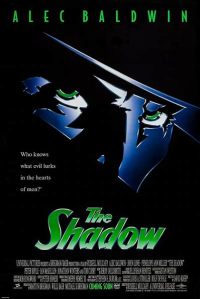
As Guilty Pleasures go, The Shadow is a movie that has absolutely everything you need for a fun, campy ride. An Al Leong cameo, alongside James Hong? Check. Heroes and Villains taking time out to discuss their wicked plans (and how they’ll be stopped) over a glass of fine American Bourbon? Check. Early 90s Era CGI? Mark it down. Duel Wielding Pistol shooting action? Got it. Tim Curry just being there? Sweet.
After the wild success of Tim Burton’s Batman in 1989, Hollywood was scrambling to squeeze what they could out of the Superhero Movie. The Punisher, with Dolph Lundgren, would come out the same year. We’d end up with The Rocketeer (one of my personal favorites), BarbWire, Dick Tracy,The Crow, The Mask, and The Phantom, among others leading into the mid-90s. Among these was 1994’s The Shadow, based off the 1930’s character from Walter B. Gibson. Pre-dating all of the before mentioned characters (including DC’s Batman by almost a decade), The Shadow started as a series of radio stories before moving on to other forms of media. The movie didn’t do very well on it’s original release. Much like the magic that clouds men’s minds, audiences were more enraptured with The Crow months before and The Lion King. Some may remember a Shadow movie was made, but it was eclipsed by more popular films at the time.
At the same time, there were major advances happening in audio technology, thanks to a tiny Universal film called Jurassic Park. Jurassic Park helped to usher in an update in sound quality known as The Digital Experience (which we now know as DTS for short). As theatres coverted to the new sound system, various films in the early to mid nineties would make use of it, such as The Crow, The Mask, Timecop and The Shadow. By the time my family picked up their first Laserdisc player, DTS quality sound was available at home. My dad had a series of speakers lined around the living room of our house so that regardless of where you sat, the sound would move around you. One of the best tests of it was with John Carpenter’s The Thing, where Blair is standing off against the crew. The gunfire from his pistol would richochet from the front to the rear speakers, making the kids duck down.
The Shadow also made of use of this in certain areas, particularly with the way voices carried in a room. The part with Shiwan Khan’s voice moving over the city at night was amazing to hear with the right sound system. Just about any scene where The Shadow spoke had this sweet spatial effect that I loved.
The Shadow is the tale of Ying Ko (Alec Baldwin, The Getaway), a.k.a. Lamont Cranston. Living high in the Opium Fields of Tibet, he is a man of darkness, having inflicted great evil over time. Kidnapped and brought to a Tulku (a wise man) who has decided it’s time for redemption, Cranston is taught to cloud men’s minds, bending people to his will and to hide every aspect of himself save for one thing, his Shadow. He then returns seven years later to that “most wretched lair of villainy we know as” New York City, for we all know that the weed of crime bears bitter fruit.
Cranston spends most of his nights at The Cobalt Club with his Uncle Wainwright (Jonathan Winters, It’s a Mad, Mad, Mad, Mad World), who also happens to be the Police Commissioner. It allows him to keep up appearances while making sure the police don’t put The Shadow in their spotlight. When he meets the beautiful Margot Lane (Penelope Ann Miller, The Relic), he’s not only smitten, but finds her ability to read minds a dangerous threat to him.
When a metal casket from Tibet arrives at the New York Museum of Natural History, it reveals Shiwan Khan (John Lone, The Last Emperor), the last descendant of Genghis Khan. Gifted with the same abilities as Cranston, Khan has plans for the city and the world. He would rather have Cranston join him than to kill him. This turns the story into a classic Bond-like cliche where the hero and villain spend the bulk of the movie explaining their plans.
Enjoying the successes of Death Becomes Her and Jurassic Park, writer David Koepp was on a roll. The Shadow doesn’t take itself too seriously. Koepp and director Russell Mulcahy (Highander) splash moments of light comedy at just about every turn, mostly through the witty banter between characters. Some are over the top, particularly with Tim Curry’s character, while others are more subtle, like with Ian McKellan (The Lord of the Rings). If you’re looking for a serious drama in your superhero film, this isn’t it. Additionally, there are one or two elements that make no sense whatever. Mongol warriors walking around in full armor that no one ever seems to notice and taking rides in taxicabs (unless we assume they’re masked by Khan’s magic).
Most of the movie was filmed on the Universal Studios New York backlot, which explains why some scenes look like they were borrowed from Walter Hill’s Streets of Fire (that also used it years before). The mystical Tibetan Phurba dagger that echoes the disposition of its owner was a variant of the one used in Eddie Murphy’s The Golden Child in the late 80s.
if the movie’s climax between The Shadow and Khan feels a bit abbreviated, it’s because of a last minute change in filming. The original plan for the ending involved a series of mirrors, but an earthquake earlier in the year caused damage to the props the production team planned to use. So, what we get is a quicker scene, still falling in line with Mulcahy’s penchant for glass shattering, but leaving the audience to partially wonder what we could have had if everything worked out.
Finally, the real gem in all this is Jerry Goldsmith’s score. Although out of print, you can still find most of the tracks on YouTube, and the songs keep the immersion flowing. While I don’t see the film getting any kind of remakes in the near future, it’s nice to know everything came together (as well as it could) for this entry. Then again, who knows?
Previous Guilty Pleasures
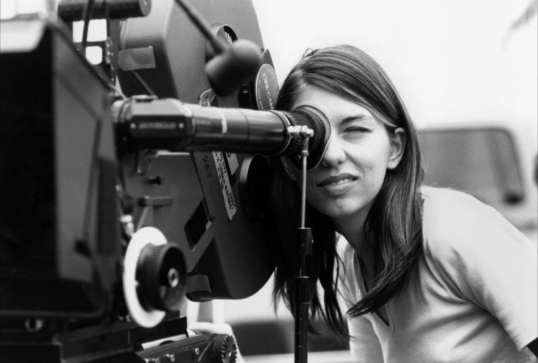
4 Shots From 4 Films is just what it says it is, 4 shots from 4 of our favorite films. As opposed to the reviews and recaps that we usually post, 4 Shots From 4 Films lets the visuals do the talking!
Today is the birthday of one of my favorite American directors, the one and only Sofia Coppola! In honor of this day, here are….
4 Shots From 4 Sofia Coppola Films
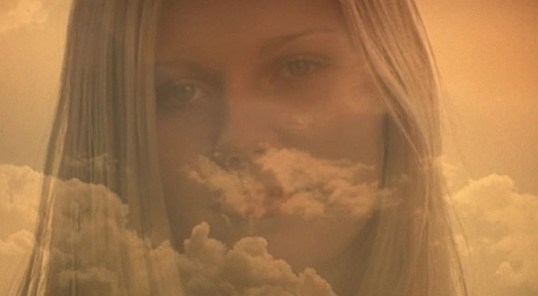
The Virgin Suicides (1999, dir by Sofia Coppola, DP: Edward Lachman)
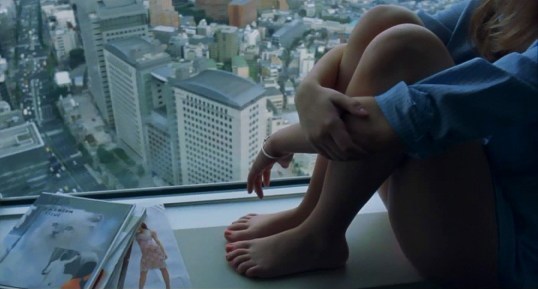
Lost In Translation (2003, dir by Sofia Coppola, DP: Lance Acord)
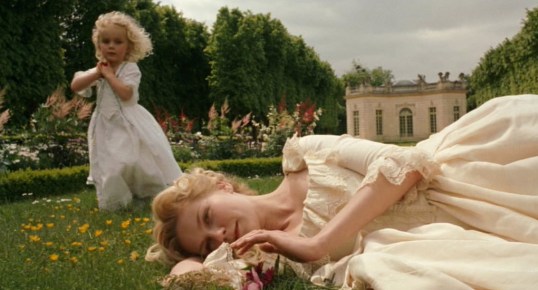
Marie Antoinette (2006, dir by Sofia Coppola, DP: Lance Acord)
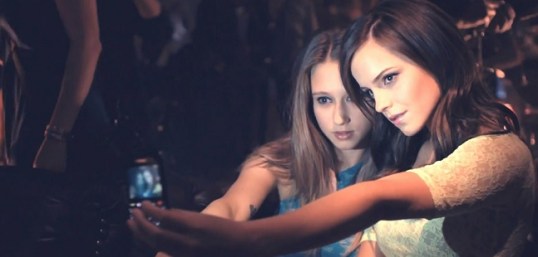
The Bling Ring (2013, dir by Sofia Coppola, DP: Harry Savides and Christopher Blauvelt)
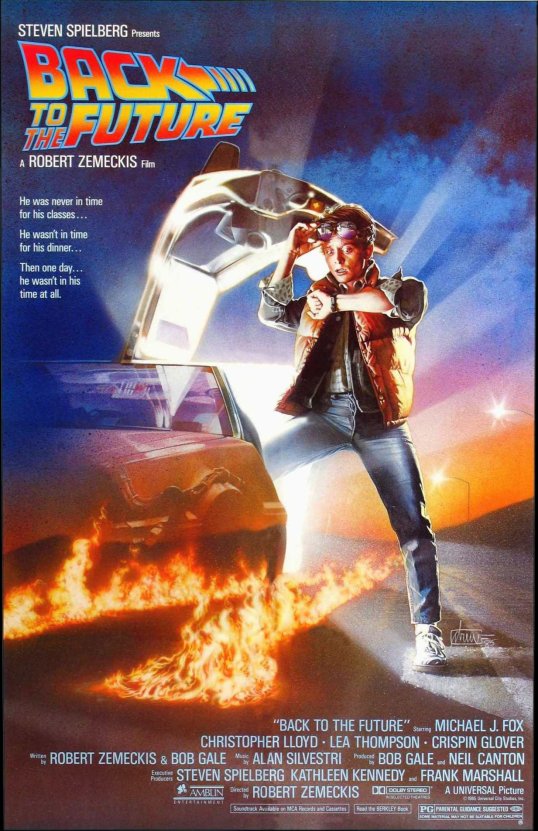
Today, the Shattered Lens wishes a very happy birthday to the great Robert Zemeckis. Today’s scene that I love comes from Zemeckis’s 1985 film, Back to the Future.
Did you know that rock and roll was invented by a time traveler? Well, let’s not overthink things. Let’s just enjoy the scene.
 Through the Shattered Lens