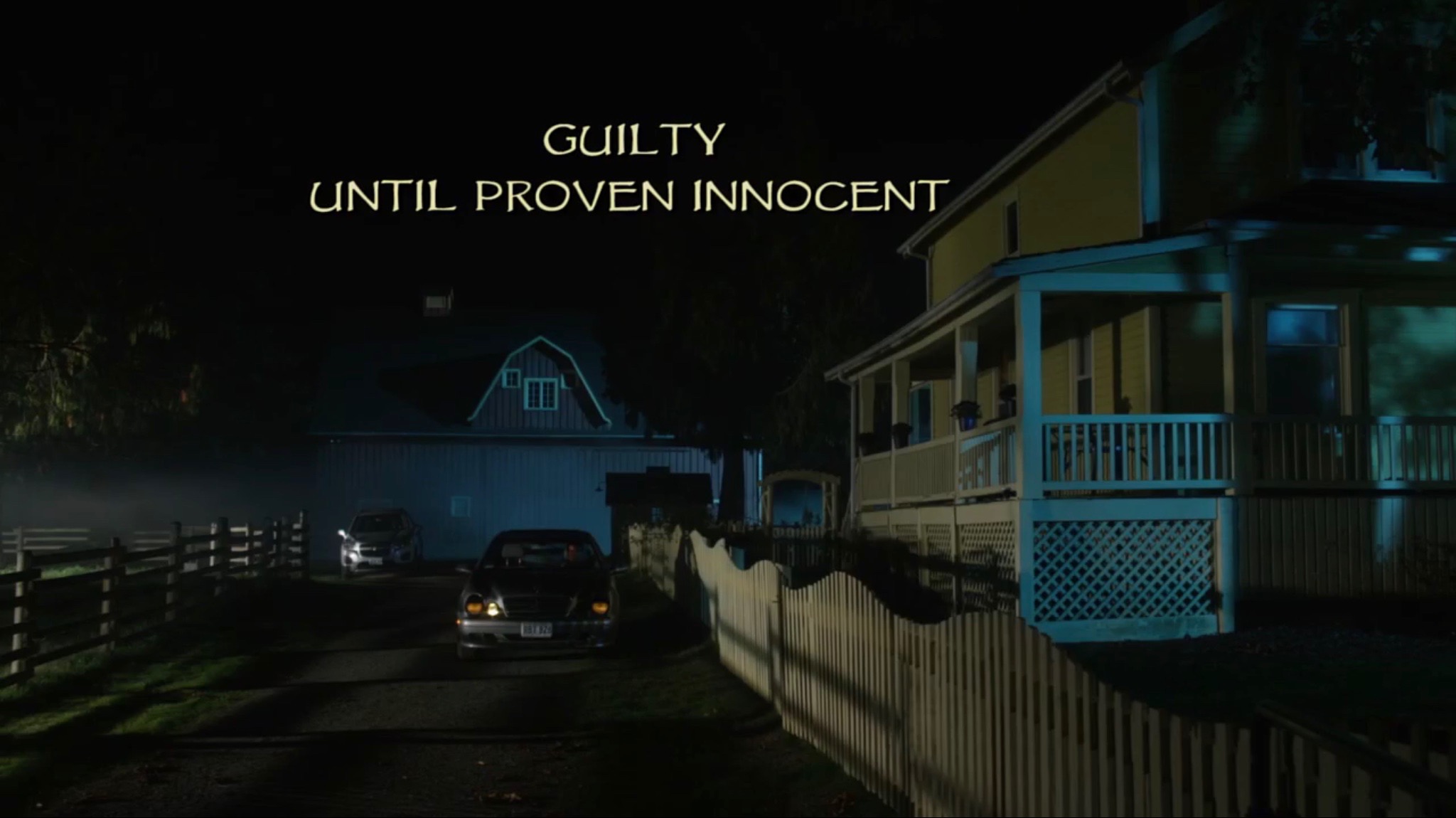
Hallmark Review: Garage Sale Mystery: Guilty Until Proven Innocent (2016, dir. Peter DeLuise)


IMG_0024

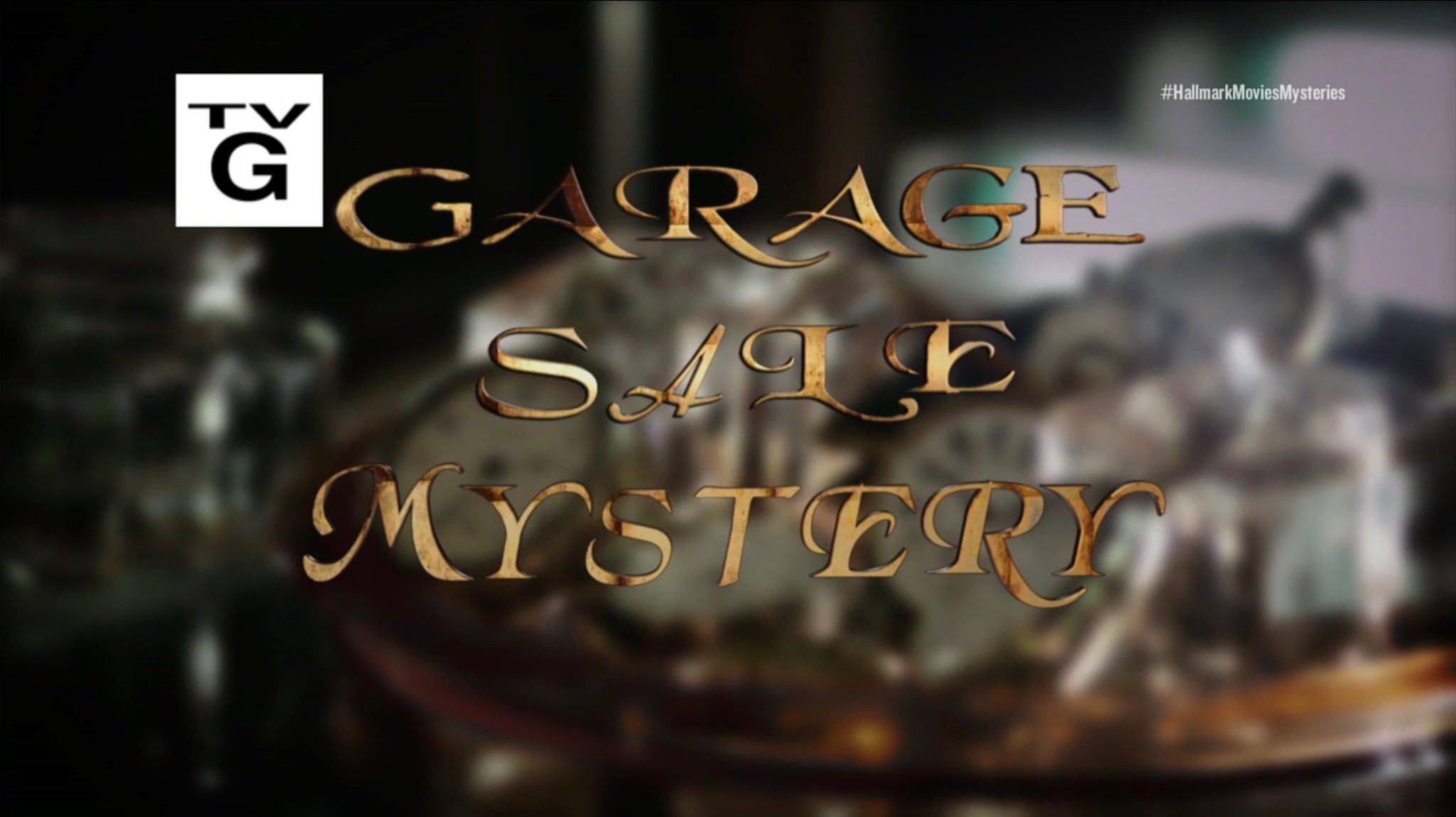
Okay, technically the movie doesn’t start by just showing that title card. We first get random shots of things with newspaper clippings in the background while Lori Loughlin looks at a key before we get this title card with a wacky “A” in “Sale”.
IMG_0018

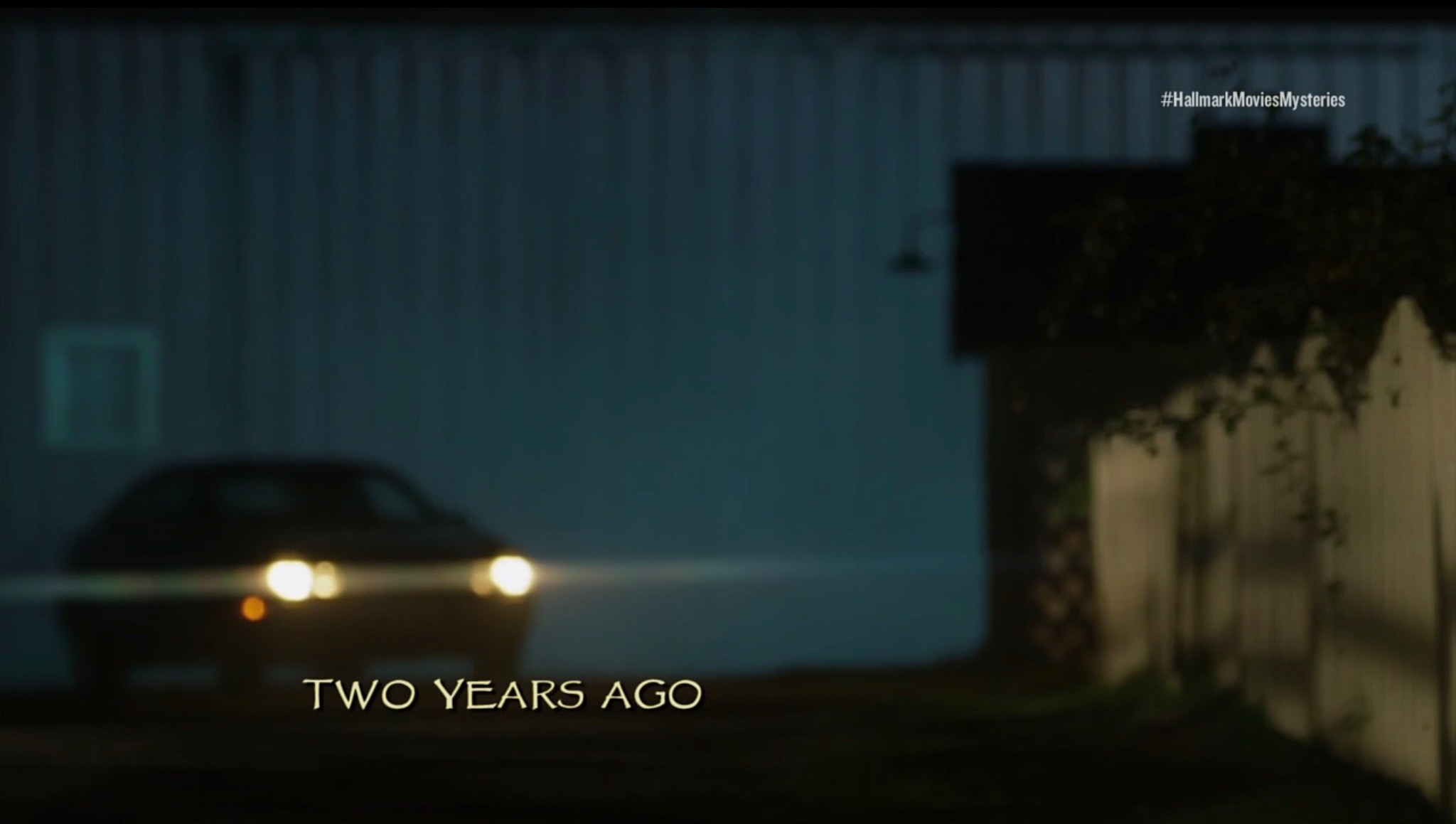
Now we see a car begin to pull up next to a house when it comes up and says “Two Years Ago”.
IMG_0020

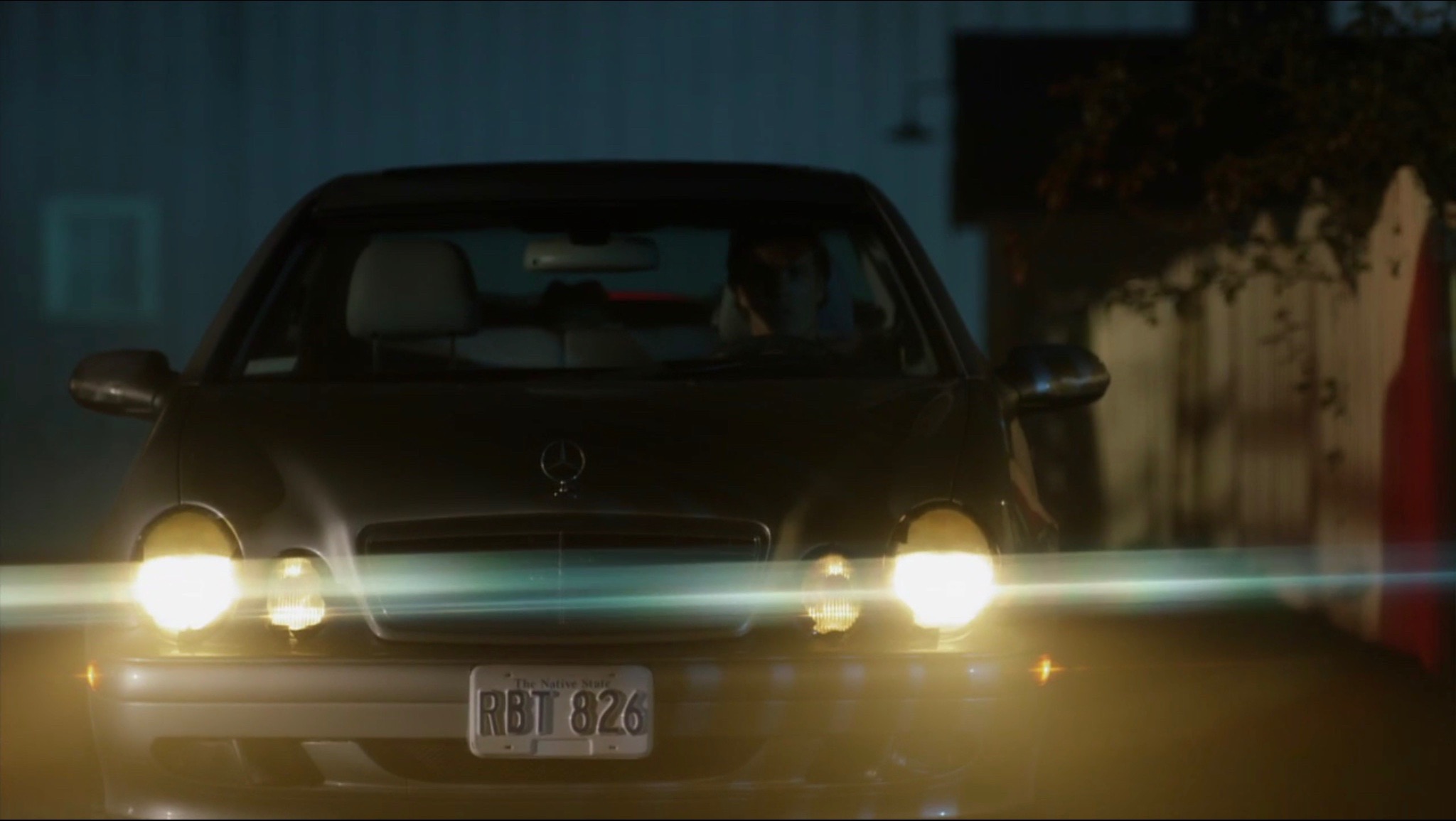
Hmmm….that seems a little unusual. I mean I expect a fake license plate that says “The Native State”…
IMG_0023

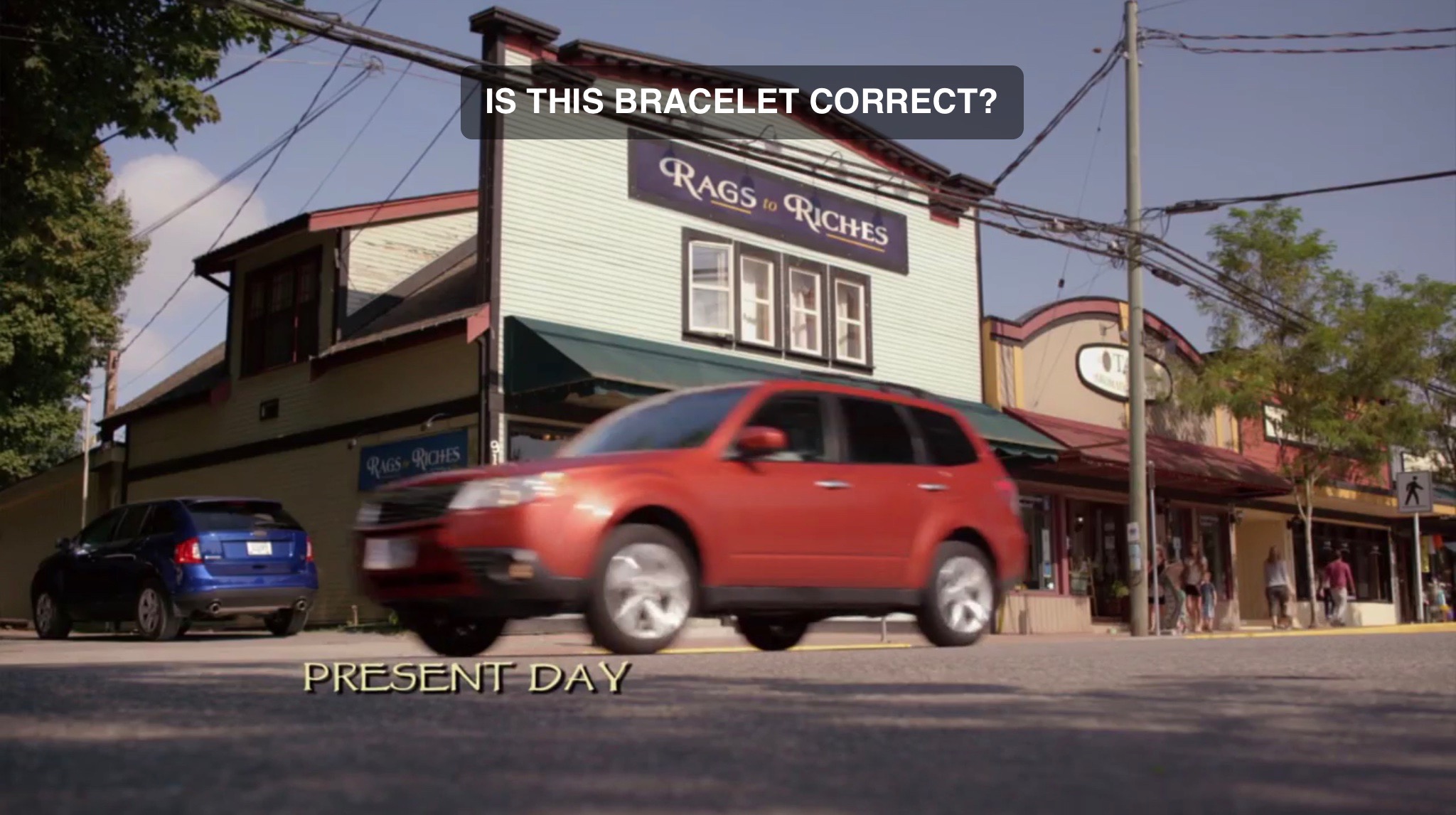
but don’t movies usually start, then after showing something they cut to the present and say “Two Years Later”? No matter, a guy snoops around, there’s a lady in bed who opens her eyes, baseball cards, and somebody gets shot. Then we cut to “Present Day”.
IMG_0054

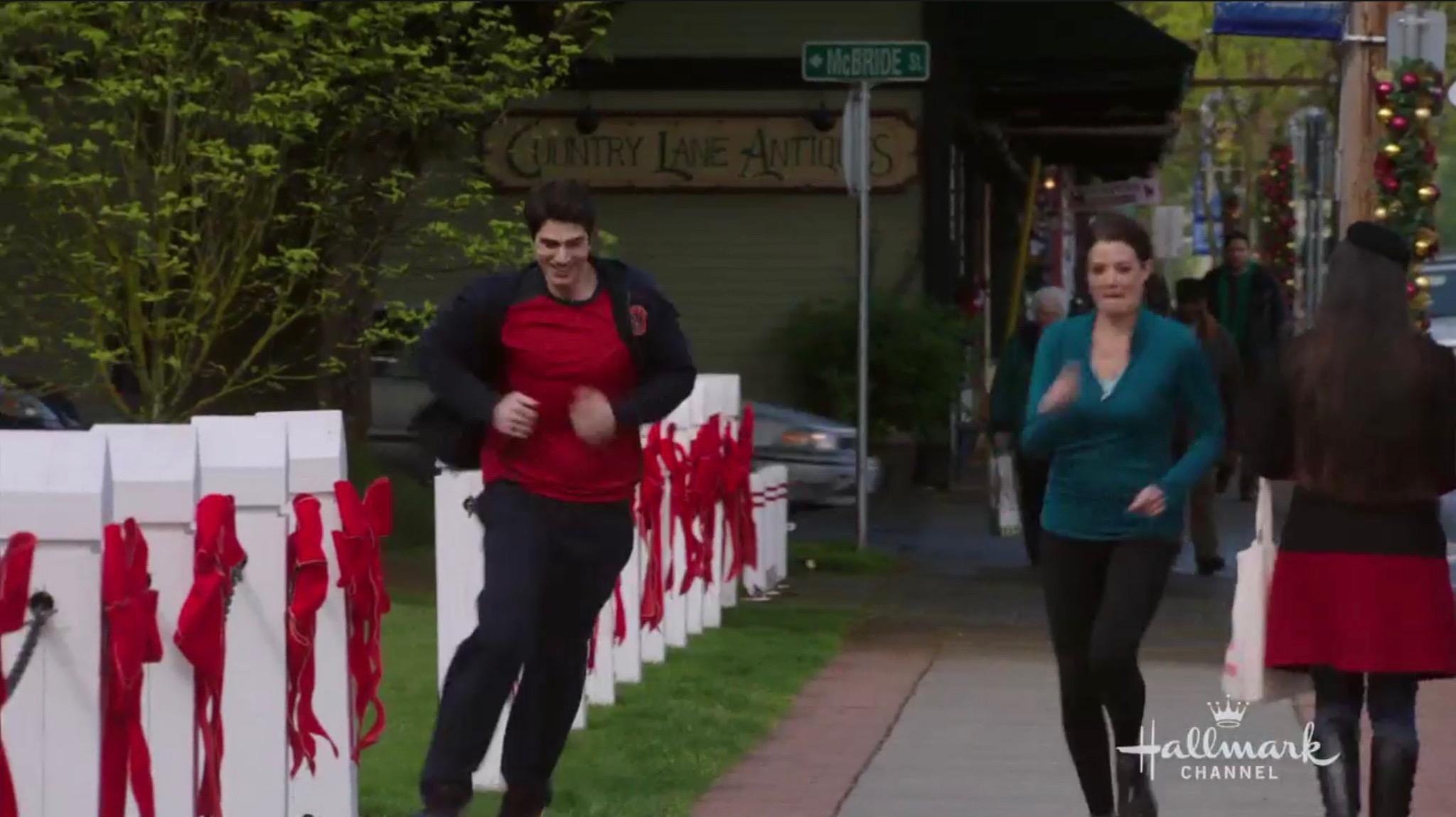
I love that Loughlin’s shop is a real world antique shop called Country Lane Antiques in Fort Langley, British Columbia. Oh, but it gets better. The name Country Lane Antiques may sound familiar if you watched The Nine Lives Of Christmas cause Superman and McKenna from All Things Valentine ran near it.
IMG_8268

The Nine Lives Of Christmas (2014, dir. Mark Jean)

Also, if you follow Glover Rd, which the shop is on, one block up, turn right, then go one block you will reach what used to be the Village Coffee & Tea shown in June In January.

IMG_5156

June in January (2014, dir. Mark Griffiths)

Back to the movie though. An old friend of Jennifer’s (Lori Loughlin) comes into the store to tell her some good news. She’s closing her shop and is willing to give Jennifer first dibs on her stuff. What does Jennifer think of this?

IMG_0084

Then Jennifer goes home to remind us that Lori Loughlin has been cast as a mother to K-12 children in four separate decades and is still believable in the role. Now we setup a Good Witch style subplot when Jennifer comes into her son’s room and makes sure we know he is good with computers.

IMG_0104

Don’t be so hard on yourself, Jennifer! Looks like it’s just a couple of screenshots the art department sent over to be looked at using IrfanView. The one is some modeling program and the other is some Java code written in a text editor. I have to wonder why they went with an image viewer that happens to use such a recognizable mascot/icon. IrfanView is the image viewer with the red roadkill cat as it’s icon. You don’t forget that once you’ve seen it. Also, where did this code come from? You can see the name Jeff and Jeffrey in there. Makes one wonder.

Anyways, after Jennifer and her husband speak in exposition dialog to tell us more about the lady closing her shop, we get to the next day at Jennifer’s shop. Just as her husband did, Jennifer’s employee Dani (Sarah Strange) warns her about just going over to this lady’s shop and buying everything. It’s cause of this.

IMG_0127

Look, all you need to know is that those random numbers in an Excel spreadsheet means the shop isn’t doing so well and that Dani hasn’t taken her salary for the last three months. Doesn’t matter because getting her friend’s stuff might help turn the business around. So Jennifer is off to her friend’s place called Past Perfect.

IMG_0141

It’s also known as Sadie Ann McMurray Antiques and is located in Mission, British Columbia. The only thing better than that they left the actual phone number of the place on the building is that they gave it the same name as the database that museums and historical societies use to catalog their collections. My city’s historical society uses it.
IMG_0144

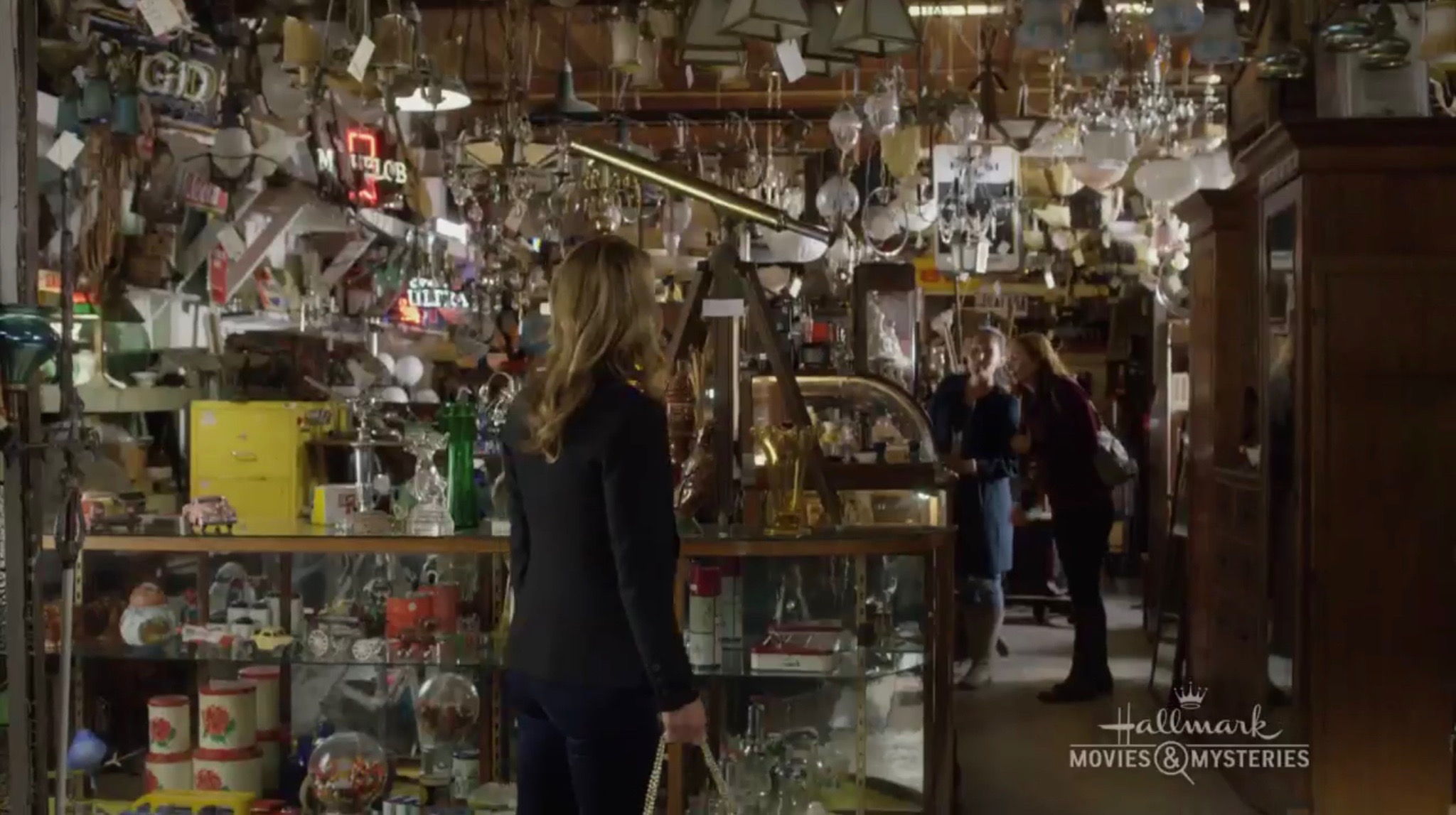
Inside, Jennifer is in Canadian Pickers heaven. Unfortunately, she can’t possibly buy everything in there because there really is a lot of stuff. The lady tells Jennifer that’s not a problem, they should go eat, and she will explain.

IMG_0161

They go to eat at the Mission Lighthouse Cafe, which is of course in Mission as well.

Before I explain the deal here, let me point out a humorous casting thing going on here. I am awful at remembering character’s names and even worse at going from IMDb glamour shots to the way they look in a movie so I don’t know which role Johannah Newmarch plays in this. However, I find it hilarious that she has been in three of the Garage Sale Mystery movies and happened to be in Lifetime’s The Unauthorized Full House Story.

Okay, the deal is this lady was once engaged and she thinks he ran off with another woman two years ago. She has hooked up with a new guy and has decided to move away. She remembered Jennifer and figured she’d just give her everything on consignment. Anything Jennifer happens to sell, she’s to send her 20%. Sounds like a good deal, but first we need to setup another Good Witch style subplot for Dani as they have done with Jennifer’s son Logan (Connor Stanhope).
IMG_0207

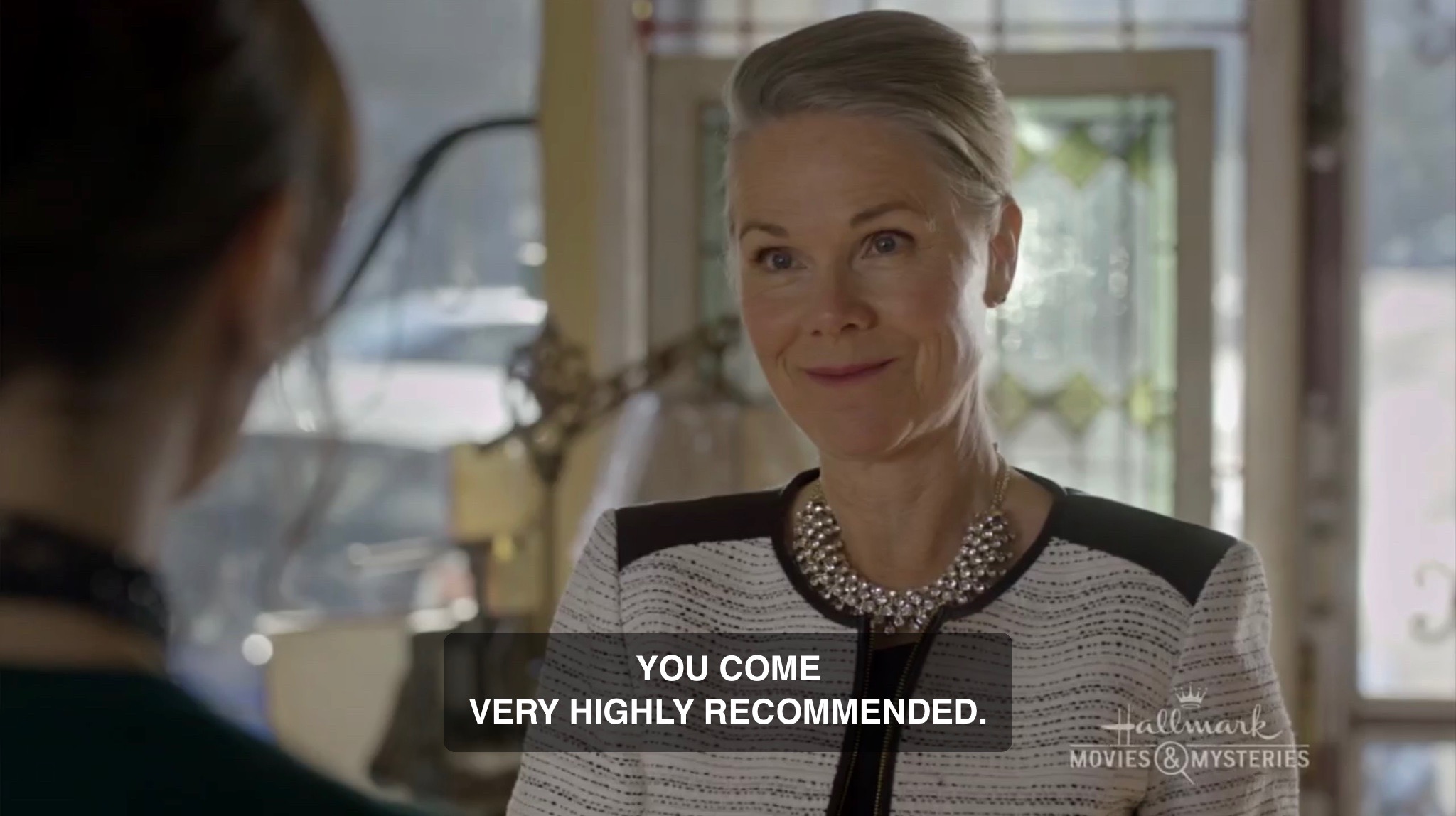
Actress Valerie McNicol, who obviously stole my first name before I picked it out last year, comes into the store. She’s dressed up like she should be saying racist and anti-Semitic comments at a country club. She’s there to try and lure Dani away from the store. Spoiler alert! Dani ultimately declines her offer. Of course she does! Actress Sarah Strange doesn’t need what this lady has to offer. I mean she is going to be in Kindergarten Cop 2 with Dolph Lundgren after all!

Meanwhile, Logan’s subplot is playing out. I really think screenwriter Walter Klenhard may be a little bit of a fan of WarGames (1983). Just maybe. The deal here is that Logan’s friends want to break into the school’s computer system to change their grades. They want Logan’s help since apparently he’s got skillz! Even his friend’s DDOS attacks don’t work and apparently all the backdoors are closed up. It’s even got 64-bit encryption. What this means is that typing “Joshua” (the backdoor password from WarGames) won’t get you in, some technical jargon, and that apparently his friends have a bot net that they used to attack the school’s computer system. Yeah, his friends just casually mention this. To bring it down to plain terms, it means they have a bunch of computers that they have hacked so that they can use them to attack a particular computer or computers on the Internet to prevent people from reaching it and/or causing things like firewalls to crash. Hence the name Distributed Denial Of Service attacks. The school would have been all over this by now. Guess that’s better than Crackle’s movie The Throwaways (2015) where the hacker character warns a guy going into a night club that Bulgarian hackers are known for anti-virtualization. Yeah, somehow knowing that these hackers are good at writing viruses and malware that operate differently when being looked at by security professionals in order to make their jobs more difficult is important information to know when confronting them in person.

Before we return to the main plot, let’s follow this subplot to its end cause it’s kind of awesome. So with all this buildup, how does he get in? He just keeps trying passwords till he hits the right one. No explanation given. They didn’t even have him do it the same way as Matthew Broderick in WarGames. I mean sure, they couldn’t have him tell his biology teacher that his wife came up with asexual reproduction to get sent to the principal’s office and look at where they write down the password, but still. They could have done something here instead of him just typing in passwords.

He gets in and I believe his friends actually had gotten in on their own before this because what he does is go in to change their grades from A’s back to C’s. That’s an element from WarGames where Broderick changed Ally Sheedy’s grade to an A. Except here it’s done to show that he’s a good kid. Take a look at his computer screen just before he gets into the school system.

IMG_1331

It actually says that the screenshot we are looking at is called “Logan’s hacking screen”. That’s just so great. Bravo, Hallmark! I don’t care if this was done on purpose or not. It’s a great easter egg in the movie.

So how do his friends respond to getting C’s? They want to tell the school they broke in and how they did it to become “cyber-security advisors”. That’s movie jargon for Pen Testers or Penetration Testers. They do what Robert Redford’s firm did in the movie Sneakers (1992) by having companies hire them to break into their systems, then tell them how to shore up their security to fix the holes. It’s what the infamous hacker Kevin Mitnick now does for a living. Of course he had to be saved by things like the “Free Kevin” movement to keep from being ridiculously punished by the federal government. These kids not only would get in trouble for breaking in, but would be charged with all the crimes of breaking in and setting up the bot net. I could give you Logan’s face after his friends say this, but I’m pretty sure “the stupidest person on the face of the Earth” clip from Ruthless People (1986) is still up and will do just fine.

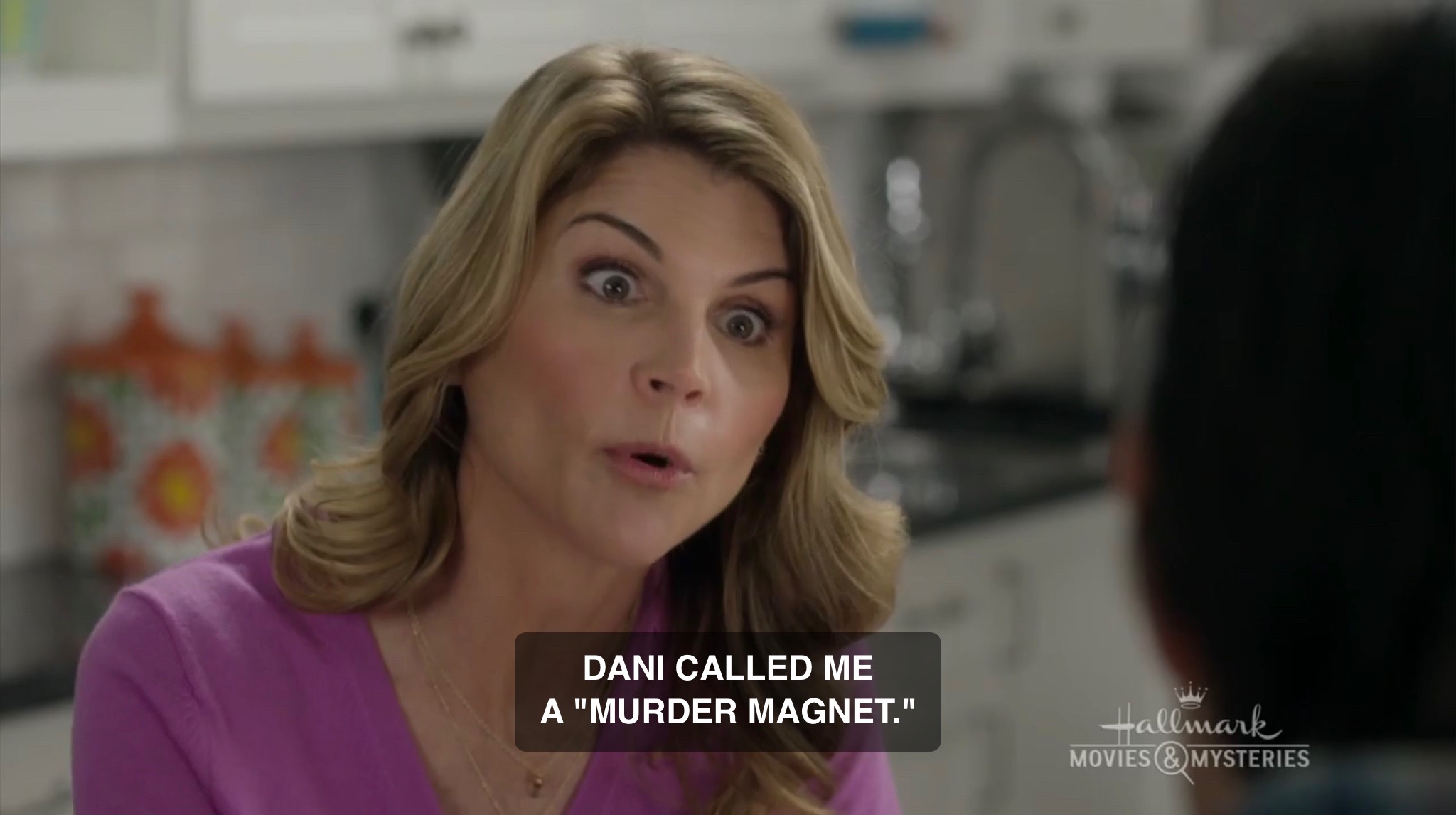
Getting back to Jennifer, she finds out that not only does her friend have all the stuff in the store, but a barn full of stuff as well. However, Loughlin is in a series of movies made by people who are probably big fans of Murder, She Wrote. As a result, she stumbles on an underground area that even this lady says she didn’t know existed and there’s a body down there. This movie, just like Murder, She Baked: A Peach Cobbler Mystery, has a part where someone gives Jennifer the “another body!” line. Here’s what Jennifer thinks of that!
IMG_0624

The rest plays out like the title suggests. The lady ends up getting arrested for the crime since the body turns out to be the guy she thought ran away with another woman 2 years prior. Jennifer works to figure out who really did it. The mystery is okay. It’s not too cryptic and basically tells you who did it pretty quickly. Jennifer is basically doing the Columbo thing of figuring out how this murder played out while having her strong suspicions of who it is. I’m not a mystery person, but my Dad is, and he seemed to enjoy it well enough. Of course I say this as a person who spent Super Bowl Sunday watching 7 murder mystery movies from the 1930s and 1940s. I’m weird.

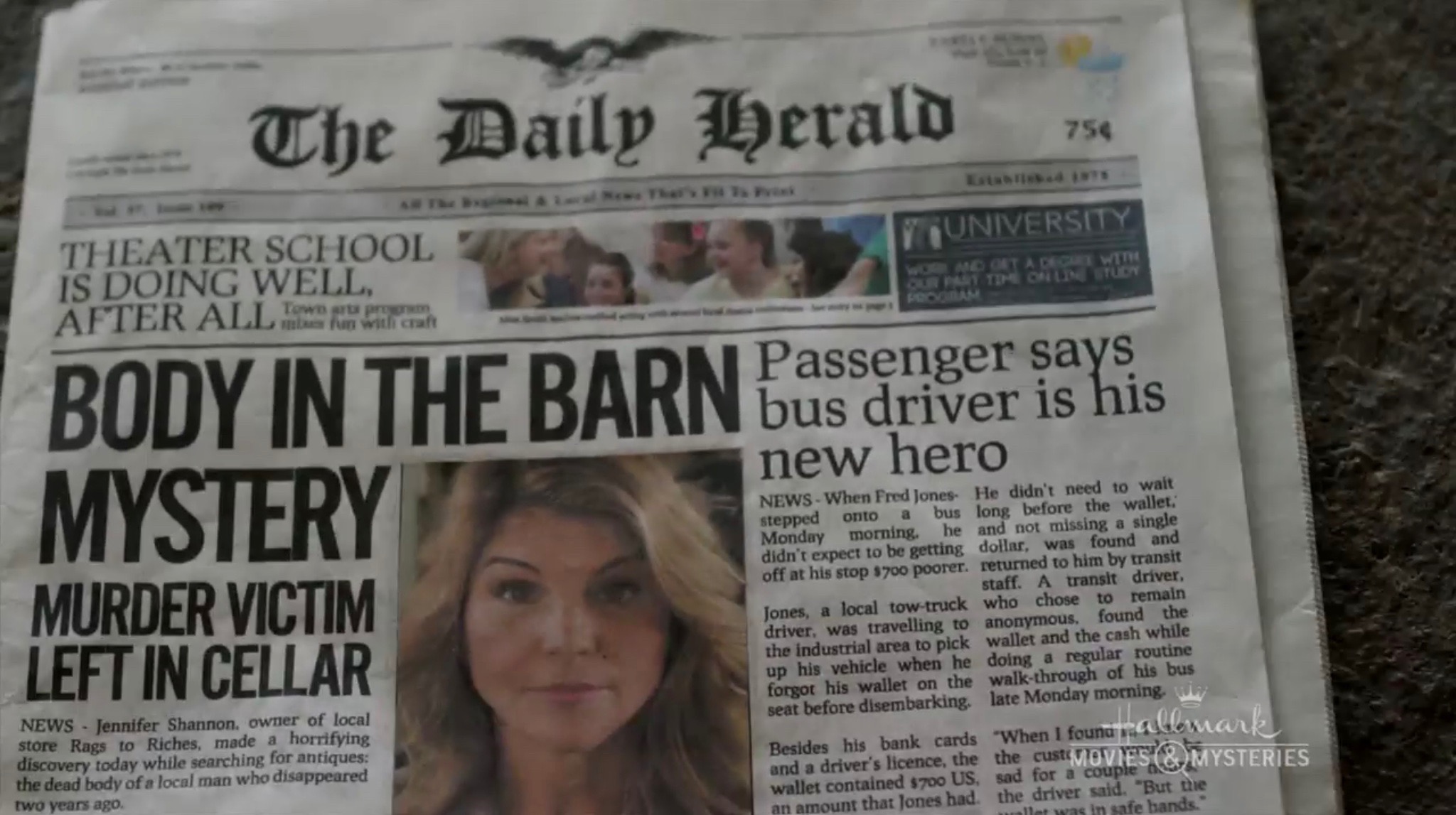
There are only a couple of more things to mention. There are a few more locations that are from Mission, British Columbia. There are also a couple more computer screens, but they had nothing I think is worth noting. What I did like is the newspaper.
IMG_0616

That story on the right is an actual story from the Calgary Herald with some of the names and facts changed. It’s actually a nice little story about a tow-truck driver who left a wallet with money he promised a friend to send to that friend’s mother in Ghana. The driver found it and turned it in. That’s why Fred Bediako considers bus driver Mustaf Gashi his hero. I wonder why they made the changes they did. I keep spotting Hallmark movies using actual articles from newspapers or official documents posted online. I wonder if they get permission, or need to, in order to use them like this.

All in all, I recommend this one. I just think they need to drop the subplots thing. That was stupid in the Good Witch movies and doesn’t need to be added here. If you want those characters to have a purpose in the story, then actually involve them in the mystery.

Just as with Meet My Mom, here’s Lori Loughlin judging me for taking too long to get to her movie.

IMG_0401

Lifetime Movie Review: Manson’s Lost Girls (dir by Leslie Libman)


MLG

I know way too much about the crimes of Charles Manson.

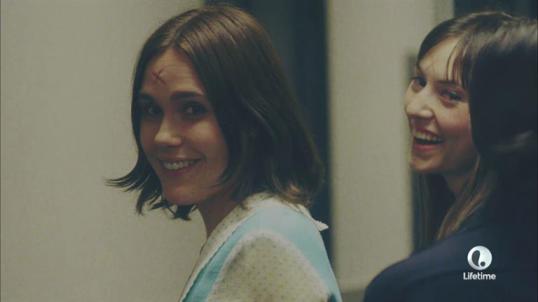
I realized that, earlier tonight, as I watched the latest Lifetime original film, Manson’s Lost Girls.  It was one of the better films that I’ve recently seen on Lifetime and it was certainly superior to NBC’s Aquarius, the TV show that tried to turn Manson into some sort of sexy anti-hero.  (Memo to NBC:  Walter White was a great anti-hero.  Charles Manson was just a grubby little serial killer.)  Manson’s Lost Girls was well-acted and it did a fairly good job of portraying the 60s without falling back on too many of the usual clichés (at no point was White Rabbit heard on the soundtrack), and it also did a pretty good job of portraying how certain lost people can be brainwashed by one cunning sociopath.

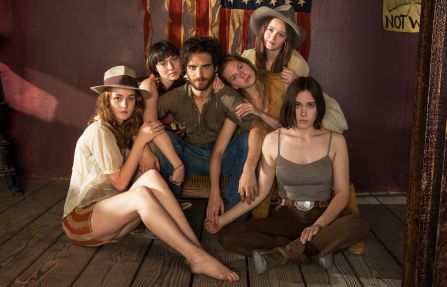
Yet, with all that in mind, I found myself watching the film and thinking, Where is Bruce Davis?  Where’s Clem Grogan?  What about Catherine Share, whose parents were both members of the resistance during the Nazi occupation of Germany just for their daughter to end up a brainwashed member of Manson’s Family?”  For whatever reason, the Family portrayed in Manson’s Lost Girls was considerably smaller than the real-life Family and seriously, how disturbing is that?  I mean, the 10-member cult in Mason’s Lost Girls was bad enough but, in real life, there were even more of them!  How disturbing is that!?  But, in retrospect, it’s even more disturbing that I knew enough about the Family to know that Bruce Davis, Clem Grogan, and Catherine Share were all missing from the film.

(Actually, I just looked at the credits on the imdb and I saw that Diana Irvine is credited as playing Catherine.  So, perhaps Catherine Share was included as a character and I just didn’t notice.)

When I was 16, I took a sociology class in high school.  One of the class assignments was to do a report on a subculture.  I did my report on vampires and the less said about that the better.  However, the hot and troubled guy who sat in front of me did his report on the Manson Family.  As a part of his report, he handed out a little booklet that had pictures of all the Family members in it.  I can remember looking through those pictures and thinking that Charles Manson looked scary and that Tex Watson was kind of hot, in a rebellious son of an evangelical preacher sort of way.  (Tex Watson spent a semester at North Texas State University.  Four decades later, I went to NTSU — or UNT as its now called.  Around the campus, you can find pictures of famous former students like Joe Don Baker, Peter Weller, Pat Boone, and Roy Orbison.  For obvious reasons, you will never find a picture of Charles “Tex” Watson.)  But, as I listened to the details of Manson’s crimes and his belief that the Beatles were sending him secret messages and that those messages justified murder, I found myself wondering how any of the fresh-faced people in those pictures could have possibly believed a word that Manson said.  It just seemed so weird and …. stupid.

(By the end of the presentation, Tex Watson no longer looked hot.)

And I have to admit that I was a bit intrigued by it all.  It wasn’t that I had any sympathy for those murderers.  But I found myself wondering how they could have done what they did.  I wondered how so many different people from different background could come together and all buy into the same stupid bullshit.  Though I didn’t realize it at the time, I was struggling to understand the very nature of evil.  To most people, it was easy enough to say that Manson and his followers were evil but I wanted to know how they had become evil.  I wanted to understand why and, though I may not have wanted to admit it, I wanted to make sure that I never woke up to discover that I had made the same mistake of surrendering my free will to a some nut just because he was able to look at me and tell that I had issues with my father.

By telling the story of Linda Kasabian (played quite well by MacKenzie Mauzy), Manson’s Lost Girls attempts to answer that question.  Linda was a young mother who, after her drug dealing husband deserted her, found herself living on the Spahn Movie Ranch with Manson and the Family.  Linda spent a month with Manson.  At first, she felt as if she had a found a new home and a new family but soon, things started to unravel.  In hopes of bringing about a race war (and also looking for vengeance over his own failure to become a rock star), Manson ordered his followers to commit murder.  Linda witnessed the tragic and brutal murder of actress Sharon Tate and her friends.  After the murders, Linda fled the Family and she would later serve as the prosecution’s star witness in Manson’s murder trial.

Manson’s Lost Girls is told almost totally from Linda’s point of view.  It’s through her that we are introduced to Manson and his Family.  The film doesn’t quite succeed in giving us a definitive answer as to how Manson could get people to kill for him but, then again, there may not be a definitive answer.  Fortunately, Manson’s Lost Girls does provide hints.  In her narration, Linda emphasizes that Manson kept everyone perpetually wasted.  But, even more importantly, the film highlights that, for these brainwashed future murderers, the Family truly was a family.  They were lost.  They were rejected by conventional society.  And when they met Manson, they were given a chance to belong.  The film suggests that need to belong and to be a part of something greater than what they had left all the members of the Family vulnerable to Charlie’s manipulations.

Manson was played by Jeff Ward, who did a pretty good job in the role.  Wisely, the film didn’t overplay Manson’s charisma or attempt to turn him into some sort of supervillain.  (In short, it didn’t make the same mistake as Aquarius.)  Instead, it portrayed him as what he probably was — a grubby hustler with a massive chip on his shoulder.  As played by Ward, Manson is less a messiah and more an extremely lucky con artist.  Manson’s Lost Girls deserves credit for portraying Manson without a hint of glamour.

The film suggests that Manson’s rampage was largely motivated by his bitterness over not being able to get a record contract.  As I watched, I found myself what would have happened if Manson had gotten that contract.  Would he now be remembered as one of those obscure musicians from the 60s and 70s whose later career was made up of performing at fairs and cheap clubs?  Or, if he had found success, would he have eventually ended up as a mentor on an early episode of American Idol?

Far more importantly, I found myself wondering what the future would have held for his most famous victim, Sharon Tate?  Sharon gave a such good performance in Valley of the Dolls, one that suggested she was capable of a lot more than she had been given credit for.  Would she have continued to grow and develop as an actress?  And what of her unborn son?  If not for Manson and his followers, Paul Polanski would now be 46 years old.

Manson’s Lost Girls does not linger on the murders.  They largely happen off-screen and, for that, I’m thankful.  But, at the same time, it never shies away from the real-life tragedy of Manson’s crimes.  And, even if the film did not have all the answers, it did remind us why the questions must be asked.  In the end, Manson’s Lost Girls reminds us of what evil can come from surrendering our independence and our free will.

It’s a film that reminds us that no matter how lost we may be, we must always be careful about those who claim to have found us.  Instead of waiting for others to find us, we must find ourselves.

MansonGirls_Group07172015_JZ_0020.psd_copy

TAMI Part 2: The Big T.N.T. Show (1966, directed by Larry Peerce)


In 1964, American International Pictures released the first concert film, The T.A.M.I. Show.  After the success of T.A.M.I, AIP followed up with a second concert film.  This one would be shot in front of a live audience at Los Angeles’s Moulin Rouge club on the night of November 29th, 1965.  The line-up included Ray Charles, Petula Clark, The Lovin’ Spoonful, Bo Diddley, Joan Baez, The Ronettes, Roger Miller, The Byrds, Donavon, and Ike and Tina Turner.  Phil Spector was recruited to produce the show and he brought with him a live orchestra.  Conducting the orchestra and serving as the night’s emcee was The Man From UNCLE‘s David McCallum.

Originally announced as The T.A.M.I. Show Part II, the title was briefly changed to This Could Be The Night (after a song written by Spector and Harry Nilsson and performed by The Modern Folk Quartet) until AIP finally went with The Big TNT Show, an appropriate title considering the explosive performances that were recorded that night.  The Big TNT Show also recorded the growing division between the rock and roll of the 50s and early 60s and the music of the emerging counter culture, with Ray Charles, Bo Diddley, and Ike Turner sharing the same stage as The Byrds and Donavon.

In one of the show’s best moments, Joan Baez sings You’ve Lost That Loving Feeling while Phil Spector accompanies her on piano.

Other highlights include the Byrds performing Turn, Turn, Turn,

Roger Miller performing his novelty hit King of the Road,

Petula Clark singing Downtown,

The Ronettes performing Be My Baby,

Donavon’s Universal Soldier,

and Ike and Tina Turner’s entire set.

At the end of the film, the viewers are told to “be sure to tune in for next year’s show!” but, one year later, both the world and music would be very different.  The Big TNT Show captures that one final moment before things changed forever.

No Safe Space: Drunk Stoned Brilliant Dead: The Story Of The National Lampoon (2015, directed by Douglas Tirola)


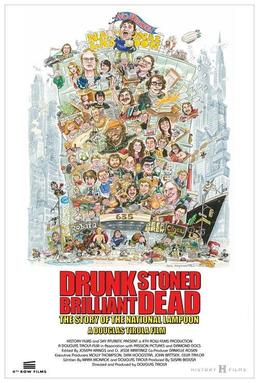
Drunk_Stoned_Brilliant_Dead_PosterThe documentary Drunk Stoned Brilliant Dead pays tribute to National Lampoon.  Founded in 1970, National Lampoon was published for 28 years and, at the height of its popularity, its sensibility redefined American comedy.  When it came to National Lampoon, nothing was sacred and nothing was off-limits.  The success of National Lampoon led to a stage show called Lemmings and The National Lampoon Radio Hour, which featured everyone from John Belushi and Bill Murray to Chevy Chase and Harold Ramis.  Michael O’Donoghue, famed for his impersonations of celebrities having needless inserted into their eyes, went from writing for the Lampoon to serving as Saturday Night Live‘s first head writer.  National Lampoon’s Animal House, Vacation, and Caddyshack are three of the most influential film comedies ever made.  Everyone from P.J. O’Rourke to John Hughes to The Simpsons‘ Al Jean got their start at National Lampoon.

As influential as it was, National Lampoon is a magazine that would not be able to exist today’s world.  Just looking at the cover of most issues of National Lampoon would reduce today’s special little snowflakes to the point of hysteria.  In Drunk Stoned Brilliant Dead, National Lampoon‘s publisher claims that the Lampoon ultimately ceased publication because the religious right threatened to boycott any company that advertised in the magazine.  Today, it would be the “safe space” crowd complaining that the magazine did not come with proper trigger warnings.  Lena Dunham would look at one issue and go into a rage spiral.  Salon would publish a hundred hand-wringing think pieces about how National Lampoon was the worst thing since Ted Cruz.  Colleges would ban it and religious groups would still burn it.  National Lampoon was a magazine that went out of its way to be offensive to both the left and the right but, as editor-in-chief Tony Hendra puts it, the job of satire is to make those in power feel uncomfortable.  By poking fun at everything and challenging its readers, National Lampoon exposed the absurdity behind both the country’s prejudices and some of its most sacred beliefs.

Kennedy VW Ad

Drunk Stoned Brilliant Dead follows the National Lampoon from its founding to its ignominious end.  Along with interviews with Lampoon alumni, it also features archival footage of both Lemmings and The Radio Show, providing glimpses of  Christopher Guest, Bill Murray, John Belushi, Gilda Radner, and Harold Ramis before they became famous.  There are also interviews with celebrity admirers of the Lampoon who talk about how the magazine inspired their own work.  It makes sense that Judd Apatow was interviewed and Kevin Bacon made his screen debut in Animal House but what was Billy Bob Thornton doing there?

Unfortunately, drunk, stoned, brilliant, and dead describes some of the most important and talented figures in the Lampoon‘s history.  The documentary especially focuses on Doug Kenney, the Lampoon’s co-founder.  Everyone interviewed agrees that Kenney was a comedic genius who was also often emotionally troubled and who would vanish for months on end.  After the initial critical failure of Caddyshack, Kenney disappeared in Hawaii.  His body was later discovered at the bottom of the cliff.  Did Kenney jump or did he slip or, as director John Landis suggests, was he murdered by a drug dealer?  Nobody seems to know but Kenney’s ghost haunts the documentary.  This collection of very funny people get very serious when it comes time to talk about Kenney’s death.  Even Chevy Chase briefly redeems himself after years of bad publicity when he gets choked up.

Drunk Stoned Brilliant Dead is tribute to both a magazine and a bygone era.  See it before it gets banned.

How_I_Killed_Lampoon_6_embed

Film Review: The Rise and Fall of Legs Diamond (1960, directed by Budd Boetticher)


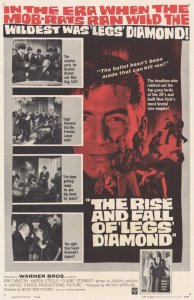
TheRiseFallofLegsDiamondIt’s the 1920s.  Prohibition is the law of the land and gangsters control the streets of New York City.  Jack Diamond (Ray Danton) and his tubercular brother, Eddie (Warren Oates), arrives in town.  Jack and Eddie are small-time jewel thieves but Jack has ambitions to be something more.  He works with his girlfriend, Alice (Karen Steele), as a dance instructor but he dreams of being the most powerful mobster in the world.  His first step is to get a job working as a bodyguard for New York crime lord (and fixer of the 1919 World Series), Arnold Rothstein (Robert Lowery).  Though Rothstein never trusts him, Jack works his way into his inner circle and even gets a nickname.  Because he is a dancer, he is renamed “Legs” Diamond.

From the minute that he starts working with Rothstein, Legs Diamond’s cocky personality and ruthless ambition make him enemies.  When he is shot three times, Legs shocks everyone by surviving and announces that he is invulnerable and cannot be killed.  After Rothstein is mysteriously gunned down, Diamond goes to war against Leo “Butcher” Bremer (Jesse White, better known as the original Maytag repairman) for control of the New York underworld.

The Rise and Fall of Legs Diamond was directed by the legendary Budd Boetticher, a bullfighter-turned-director who is best known for directing a series of low-budget westerns in the 1950s.  The violent and hard-boiled The Rise and Fall of Legs Diamond was Boetticher’s only gangster film and it’s a good one.  The Rise and Fall of Legs Diamond is tightly-written, fast-paced, and Lucien Ballard’s black-and-white cinematography ranks with the best of film noir.

The role of Legs Diamond was originally offered to future producer Robert Evans (of The Kid Stays In The Picture fame) but when Evans turned it down, the role was given to Ray Danton.  Though he is occasionally a little stiff, Danton still gives a good and tough performance as Diamond but it is still hard not to wonder what Evans would have been like in the role.  The rest of the cast is full of recognizable B-movie actors, all of whom do a good job.  Actress Dyan Cannon made her film debut in Legs Diamond, playing one of Diamond’s girlfriends.  Meanwhile, in only his third film role, Warren Oates is memorable and sympathetic as the sickly Eddie.  Though Oates does not get to do much in the film, his performance still shows why he went on to become one of the most popular and well-respected character actors of all time.

Though hardly historically accurate (in real life, Arnold Rothstein never knew Jack Diamond and Diamond received his nickname not because he was a dancer but because of the speed with which he ran away from the police), The Rise and Fall of Legs Diamond is an exciting and entertaining Depression-era gangster film.

LegsDiamond

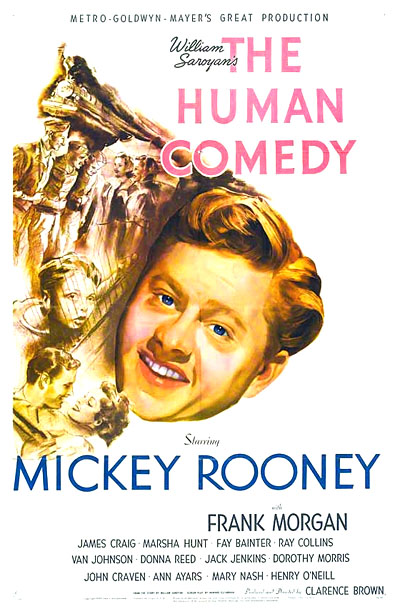
Lisa Reviews An Oscar Nominee: The Human Comedy (dir by Clarence Brown)


The-human-comedy-1943Thanks to TCM’s 31 Days of Oscar, I now have several movies on my DVR that I need to watch over the upcoming month.  Don’t get me wrong — I’m not complaining.  I’m always happy to have any reason to discover (or perhaps even rediscover) a movie.  And, being an Oscar junkie, I especially enjoy the opportunity to watch the movies that were nominated in the past and compare them to the movies that have been nominated more recently.

For instance, tonight, I watched The Human Comedy, a film from 1943.  Along with being a considerable box office success, The Human Comedy won on Oscar (for Best Story) and was nominated for four others: picture, director (Clarence Brown), actor (Mickey Rooney), and black-and-white cinematography.  The Human Comedy was quite a success in 1943 but I imagine that, if it were released today, it would probably be dismissed as being too sentimental.  Watching The Human Comedy today is something of a strange experience because it is a film without a hint of cynicism.  It deals with serious issues but it does so in such a positive and optimistic manner that, for those of us who are used to films like The Big Short and Spotlight, a bit of an attitude adjustment is necessary before watching.

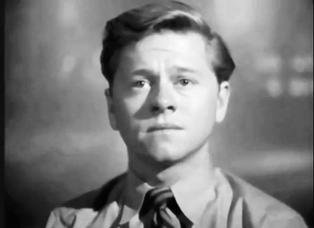
And yet that doesn’t mean that The Human Comedy is a bad film.  In fact, I quite enjoyed it.  The Human Comedy is a time capsule, a chance to look into the past.  It also features a great central performance, one that was quite rightfully nominated for an Oscar.  As I watched Mickey Rooney in this film, I started to feel guilty for some of the comments I made when I reviewed Mickey in The Manipulator last October.

2Mickey Rooney in The Human Comedy

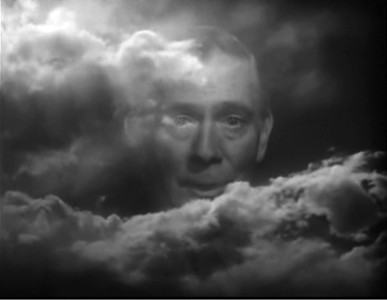
The Human Comedy opens with an overhead shot of the small town of Ithaca, California.  The face of Mr. McCauley (Ray Collins, who you’ll recognize immediately as Boss Jim Gettys from Citizen Kane) suddenly appears in the clouds.  Mr. McCauley explains that he’s dead and he’s been dead for quite some time.  But he loves Ithaca so much that his spirit still hangs around the town and keeps an eye on his family.  Somehow, the use of dead Mr. McCauley as the film’s narrator comes across as being both creepy and silly.

Matthew-clouds-400-387x300

But no sooner has Mr. McCauley stopped extolling the virtues of small town life than we see his youngest song, 7 year-old Ulysseus (Jack Jenkins), standing beside a railroad track and watching a train as it rumbles by.  Sitting on the cars are a combination of soldiers and hobos.  Ulysseus waves at some of the soldiers but none of them wave back.  Finally, one man waves back at Ulysseus and calls out, “Going home, I’m going home!”  It’s a beautifully shot scene, one that verges on the surreal.

That opening pretty much epitomizes the experience of watching The Human Comedy.  For every overly sentimental moment, there will be an effective one that will take you by surprise.  The end result may be uneven but it’s still undeniably effective.

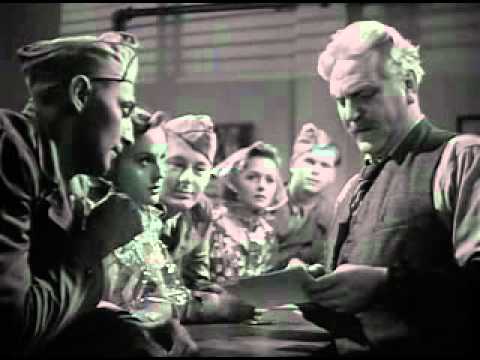
The majority of the film deals with Homer McCauley (Mickey Rooney).  Homer may still be in high school but, with his older brother, Marcus (Van Johnson), serving overseas and his father dead, Homer is also the man of the house.  Homer not only serves as a role model for Ulysseus but he’s also protector for his sister, Bess (Donna Reed).   (At one point in the film, she gets hit on by three soldiers on leave.  One of them is played by none other than Robert Mitchum.)  In order to bring in extra money for the household, Homer gets a job delivering telegrams.

hqdefault

In between scenes of Homer in Ithaca, we get oddly dream-like scenes of Marcus and his army buddies hanging out.  Marcus spends all of his time talking about how much he loves Ithaca and how he can’t wait for the war to be over so he can return home.  One of his fellow soldiers says, “I almost feel like Ithaca is my hometown, too.”  Marcus promises him that they’ll all visit Ithaca.  As soon as the war is over…

With World War II raging, Homer’s job largely consists of delivering death notices (and the occasional singing telegram, as well).  Telegraph operator Willie Grogan (Frank Morgan) deals with the burden of having to transcribe bad news by drinking.  Homer, meanwhile, tries to do his job with compassion and dignity but one day, he has to deliver a telegram to his own house…

The Human Comedy is an episodic film, full of vignettes of life in Ithaca and Homer growing up.  There’s quite a few subplots (along with a lot of speeches about how America is the best country in the world) but, for the most part, the film works best when it concentrates on Homer and Mickey Rooney’s surprisingly subdued lead performance.  By today’s standards, it may seem a bit predictable and overly sentimental but it’s also so achingly sincere that you can’t help but appreciate it.

The Human Comedy was nominated for best picture but it lost to a somewhat more cynical film about life during World War II, Casablanca.

Hallmark Review: All Things Valentine (2016, dir. Gary Harvey)


IMG_2814

Sorry I’ve been gone for a few days, but it’s been pretty horrible here. No worries though because I come bearing All Things Valentine. All Things Valentine is a film that on the surface appears to be just a reworked version of Love On The Air, but is actually pretty messed up. For those of you who don’t recall, Love On The Air was the movie where two idiots on the radio fall in love with each other over #NotAllMen and #YesAllWomen statements they make on the radio. Not my favorite, but at least it didn’t do what this film does.

The film opens up with that super generic title card that at least looks better than the ones for Unleashing Mr. Darcy and Dater’s Handbook. Then we are introduced to Avery Parker played by Sarah Rafferty. I guess that makes two Hallmark movies where the actresses are from the USA show Suits since Dater’s Handbook had Meghan Markle in it.

IMG_2835

Poor Avery was really happy as she was walking around in red, carrying a gift, and balloons, but then saw her boyfriend kissing another girl. Instead of confronting him or anything, she just goes home to pout. Then we get a shot of a dog she owns. Can’t say I’ve seen a dog with a nose like that.

IMG_2845

And yes Hallmark, I am excited about your upcoming cannibal Valentine’s Day movie. If somebody doesn’t get eaten then I am going to be very disappointed by your deceptive title. Now we find out that Avery works for The Portland Banner as a Dear Abby type called “The Coach”. Her column is called “Consult The Coach”. Here’s the letter that just came in:

IMG_2850

Now we meet the person who wrote the letter named McKenna played by Kimberly Sustad. Sadly, Superman from The Nine Lives Of Christmas isn’t here to save her.

IMG_2860

Here’s the response she receives from The Coach:

IMG_2861

So her letter said that she kept bringing up Valentine’s Day, but that it didn’t seem important to him. The Coach’s advice is that “his insensitivity suggests the kind of man he is. Not someone you should trust with your heart.” Based on the letters I don’t think there is trust in this relationship at all. Wouldn’t the right advice be to stop being cryptic and actually just tell him? Being cryptic then being sad because the other person didn’t figure it out is your problem, not there’s. She actually will do this later and the film will rub it in her face.

Now Avery goes to work and her boss suddenly springs on her this idea for a series of Valentine’s Day related columns. Avery tells her how she isn’t the right person for this, that she doesn’t like Valentine’s Day, etc. Didn’t think of this just a little while ago when she dispensed advice about Valentine’s Day to McKenna, but now this comes out. I know she couched it with “I’m not a big fan of Valentine’s Day”, but come on! How many of us have read Internet comments that started with I’m not racist or homophobic, but then launch into something blatantly racist or homophobic? Her boss tells her not to worry because it wouldn’t really be you writing the columns, but you’d be pretending to be someone who likes this holiday. Oh, that’s nice! Her boss is telling her to be a liar. Let’s go to dinner now!

IMG_2943

That’s right! McKenna is going to dump her boyfriend Brendan Bates played by Sam Page. I love this conversation because McKenna ceases to think for herself and basically quotes verbatim the turd The Coach sent her calling it advice. He reminds her that the very reason they are out at dinner right now is because he knows he won’t be able to be there on Valentine’s Day, but she doesn’t listen. He is just kicked to the curb.

So let’s see what we have so far. We have a woman who has the maturity of a 12 year-old. A boss who tells her to lie to people in an advice column. We have a woman who probably would think poison would be in her Valentine’s Day candies if an anonymous person online told her that. Wait, sorry, that was Ann Landers and Dear Abby that did that convincing people poison and razor blades might be in their child’s candy. The Coach would never give bad advice even though the scene that follows her giving said advice has her saying she shouldn’t write that stuff because she is biased. Then we have a guy who knew that he would have to work on Valentine’s Day so he made sure to take her out when he could. Fine, but watch what the movie does to this person whose relationship was ruined and what they do to the person who ruined it. That’s why this film is messed up.

Next we meet Brendan’s best friend and McKenna’s best friend who she works with at a bakery. They exist in this story to be a charming subplot on the surface, but really are there to just rub it into McKenna’s face even more. Yes, she will have a conversation with her blonde friend here to try and set us up for the ending. Still not going to work for Hallmark though. If this movie could have ended with none of the main characters together, then it could have worked, but it’s Hallmark so that can’t happen. Yeah, I think you can see what’s coming, can’t you?

Now we find out that Brendan is a vet. And wouldn’t you know it? Avery comes in with her dog that is now sick. Oh, but just before, Brendan fires off an angry letter to The Coach as Bench The Coach. Then the lovers meet, and they start dating.

IMG_3118

I’ve teased it enough. This movie is going to reward this woman for destroying this other’s woman’s life by giving her this guy and delivering an even better guy to her blonde friend leaving McKenna twisting in the wind. No joke. Oh, the writer J.B. White tries to put in a scene here and there so we are properly couched for this ending, but nope. This would be like if Chilly Scenes Of Winter (1979) stuck with it’s original ending and rewarded John Heard for all his stalking by having him end up with the girl. That’s what happens here.

I probably should stop now, but can you believe this situation is made even worse. Yeah, McKenna actually has a conversation with Brendan where she says that the Bench The Coach letters to The Coach have caused her to reconsider what she did. He not only brushes her off, but apparently has a date with The Coach on Valentine’s Day. The very day he said earlier he couldn’t do anything on.

IMG_3373

So in case we thought this might actually be a decent guy and were rooting for him, the movie gives us a reason to hate him. Yep!

The rest of the story plays out with Brendan and Avery getting closer and closer together while Brendan’s friend builds and builds up his courage to finally tell the blonde he is head over heels in love with her.

Near the end of the movie McKenna and Avery actually do have a conversation with each other about the whole situation. McKenna told Avery that Brendan was the guy who was sending her Coach persona those letters as Bench The Coach. They have a conversation that really tries to justify the ending by having McKenna reach out in a heart to heart with Avery.

IMG_3699

The movie so wants this to work, but it doesn’t. J.B. White has written some of the better Hallmark movies I’ve seen such as Lead With Your Heart. He obviously wanted to avoid the childish and contrived plots that usually riddle these Hallmark films and shoot for the stars with this one. The movie ends with blonde and Brendan’s friend getting together right in front of McKenna, Brendan and Avery getting together, and this being the last shot of McKenna that we get.

IMG_3765

Looks happy, doesn’t she? This simply wasn’t a plot that the Hallmark template could handle. The movie needed to end with only the blonde and Brendan’s friend getting together. The two worst people in the story end up happy together and the person who was lied to by both of those people is left alone with no one. Neither Avery nor Brendan learn lessons about hiding behind anonymity because doing so gets them together and heals Avery’s wounds associated with Valentine’s Day. This just wasn’t the right script for Hallmark. I actually kind of encourage you to watch it because White was certainly trying here for something adult and mature, but you’ll find that it doesn’t quite work because of the Hallmark romance movie framework that he just couldn’t break so strongly.

Here’s The Trailer for Miles Ahead!


With Miles Ahead, Don Cheadle both directs and stars as jazz legend Miles Davis.  Originally expected to be released at the end of last year, Miles Ahead is also a film that many of us were expecting to be a definite Oscar contender.  However, the film’s release was delayed, the Oscar nominations led to #OscarsSoWhite trending on twitter for the second year in a row, and Miles Ahead will finally be released in April of this year.

And here’s the trailer!  With a few notable exceptions — like Grand Budapest Hotel — it’s rare that anything too good is ever released in March or April.  But I remain cautiously optimistic, if just because of the pairing of Don Cheadle and Ewan McGregor.

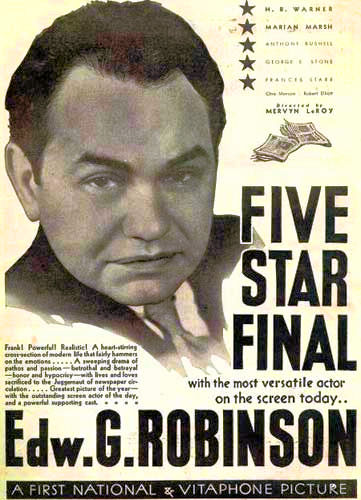
Lisa Reviews An Oscar Nominee: Five Star Final (dir by Mervyn LeRoy)


Five_Star_Final_1931_poster

In 1911, a pregnant secretary named Nancy Voorhees (Frances Starr) shot and killed her boss and lover.  It was quite a scandal at the time but, twenty years later, it has largely been forgotten.  Nancy has married a successful businessman named Michael Townsend (H.B. Warner) and is a respected member of society.  Her daughter, Jenny (Marian Marsh), has no idea about Nancy’s past and believes Michael to be her father.  Jenny is now engaged to marry the handsome and rich Phillip Weeks (Anthony Bushnell).

Everything seems to be perfect but you know what they say about perfection.

Bernard Hincliffe (Oscar Apfel) is the publisher of a struggling tabloid newspaper.  He is frustrated by city editor Joseph Randall (Edward G. Robinson) and Randall’s refusal to do whatever it takes to boost circulation.  “Why, he won’t even print pictures of women in their underwear!” one of Hincliffe’s assistants exclaims.  Finally, Hincliffe orders Randall to publish a series of articles that will take a retrospective look at both the scandal and what has happened to those involved in the years since.  At first, the cynical Randall refuses but eventually, he gives in.

He assigns two reporters to crack the story.  One of them, Kitty Carmody (Ona Munson) is first introduced showing off her legs and bragging about how there’s no way that she won’t be hired to work at the newspaper.  (By the way, if anyone ever remakes Five Star Final and needs someone to play Kitty, I am ready and available.)  The other is the incredibly creepy T. Vernon Isopod (Boris Karloff).  Isopod was a divinity student until he was arrested on a “morals charge.”  Now, he pretends to be a minister as a way to fool people into revealing their deepest secrets to him.  Kitty and Isopod dig into the life of Nancy and Michael.  The stories appear on the front page.  Suicide and melodrama follow and Randall is forced to finally take a stand.

Released in 1931, Five Star Final was nominated for best picture but lost to Grand Hotel.  Seen today, Five Star Final is undeniably stagey (it was based on a play) but it’s still a compulsively watchable melodrama, featuring good performances and a lot of memorably snappy 30s dialogue. Five Star Final is one of several films about journalism to have been nominated for best picture.  Most of these films — like All The Presidents Men, The Front Page, and this year’s front-runner, Spotlight — have featured journalists as heroic seekers of the truth.  Five Star Final, on the other hand, plays more like a pre-Code version of Network set at a newspaper.  It’s a deeply angry film and, when Randall finally tells off Hincliffe, it feels like the 30s equivalent of Peter Finch shouting that he’s mad as hell and not going to take it anymore.

Finally, the best part of the film, for me, was Boris Karloff as the sleazy Isopod.  Karloff made Five Star Final right before he played the creature in Frankenstein and it’s interesting to see him play a totally different type of monster here.  If I had to choose which character is scarier, I’m going with T. Vernon Isopod.