(For those following at home, Lisa is attempting to clean out her DVR by watching and reviewing 38 films by this Friday. Will she make it? Keep following the site to find out!)
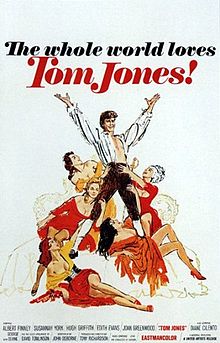
Oh, how I wanted to love Tom Jones!
No! Not that Tom Jones.
I’m talking about Tom Jones, the British film from 1963. Based on a novel by Henry Fielding, Tom Jones was a huge box office success and it was one of the few comedies to ever win the Oscar for best picture. Whenever you watch a documentary about the British invasion of the early 60s, chances are that you’ll see at least a clip or two from Tom Jones. The film (or perhaps I should say the film’s box office success) is a part of 60s pop history, right up there with The Beatles on The Ed Sullivan Show and Sean Connery shooting that guy in cold blood in Dr. No.
Up until last night, I had heard about Tom Jones but I had never seen it.
And I really wanted to love it.
The film takes place in 18th century England and it tells the story of young Tom Jones (Albert Finney). It starts with a lengthy sequence that plays out like a silent film, complete with title cards. Upright Squire Allworthy (George Devine) comes home and discovers that a baby has been left in his bed. He assumes that the child was born to two of his servants and declares that he will raise Tom Jones to be a good and worthy man.
Two decades later, Tom Jones has grown up and now he’s being played by Albert Finney (who, it must be said, was quite a handsome man when he was young). Because Tom is good-looking and kind-hearted, every woman in England lusts after him. But Tom is in love with innocent Sophie Western (Susannah York). However, Sophie is a member of the upper class and Tom is a “bastard,” at a time when that actually means something.
Indeed, Sophie’s aunt and uncle (played by Edith Evans and Hugh Griffith) demand that Sophie have nothing to do with Tom Jones. They decide that she will marry Blifil (David Warner, young but already typecast as a villain). Through clever lies and manipulations, Blifil convinces Squire Allworthy that Tom has turned bad and must therefore be exiled from his home. Does Blifil want to get rid of Tom just so he can marry Sophie or is it possible that there’s more to Blifil’s scheming?
Before we get the answer to that question, we spend a while following the exiled Tom as he wanders around England and attempts to prove himself worthy of Sophie. Along the way, Tom serves briefly in the army, gets into numerous fights, and has several affairs. One of those affairs is with Mrs. Walters (Joyce Redman), who he briefly thinks might be his mother. Eventually, Tom ends up as the lover to the decadent Lady Bellaston (Joan Greenwood). Through Blifil’s scheming, he also ends up framed for attempted murder and facing the gallows…
And, as melodramatic as that may all sound, Tom Jones is definitely a comedy. It doesn’t take itself seriously and there’s hardly a single scene that isn’t played for laughs. Director Tony Richardson goes out of his way to make sure that you never forget that you’re watching a movie. There are freeze frames. There’s plenty of characters around to supply sarcastic commentary. There’s even a few cases of fourth wall breaking.
As I watched Tom Jones, it was hard for me not to compare it to Stanley Kubrick’s Barry Lyndon. After all, both films take place during the same period of time and both deal with a young man making his way through European society. I would even argue that, in its way, Barry Lyndon is far more satirical than Tom Jones. The main difference between the two films is that Barry Lyndon is all about subtext whereas everything that happens in Tom Jones happens right on the surface.
As I said, I really wanted to like Tom Jones but, seen today, the entire film seems to be trying a little bit too hard. Tony Richardson’s direction is so manic that it gets a bit exhausting after a while. That said, I can understand why the film was such a success when it was first released. I’m sure in 1963 — after having to deal with decades of pompous costume dramas — viewers probably found Tom Jones to be a breath of fresh air. Not only was it a British film released at a time when all things British were in style but it was also a film that, by the standards of 1963, dealt frankly with sex. In short, Tom Jones is definitely a film of its time. If it doesn’t hold up as well today, that’s because it wasn’t made for 2016. It was made for 1963.
And obviously, if the judgment of the Academy is to be trusted, Tom Jones was the perfect film for 1963. That said, I would have given best picture to another British film, From Russia With Love.
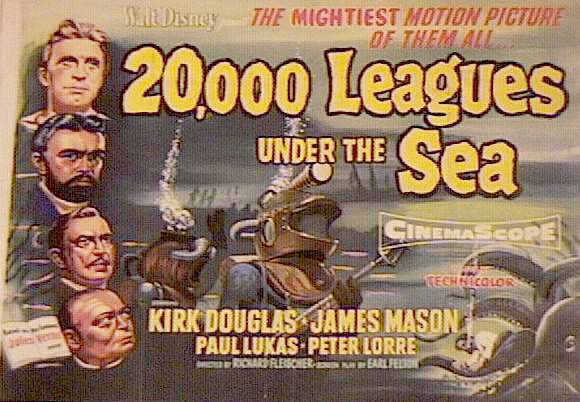
When TCM aired this movie last week, I just had to watch. It was one of my favorites as a kid, and I was curious to see how well it held up with the passage of time. To my delight, 20,000 LEAGUES UNDER THE SEA is even more enjoyable in adulthood, a joyous sci-fi adventure film thanks to the fine cast and the genius of Walt Disney.
Based on the Jules Verne novel, 20,000 LEAGUES UNDER THE SEA takes us back to 1868, where rumors of a sea monster attacking ships are running rampant. Eminent scientist Professor Aronnax and his protégé’ Counseil are invited to join a voyage to investigate the matter, along with the free-spirited harpoonist Ned Land. They encounter the beast and are shipwrecked, only to discover the monster is actually a fantastic, futuristic submarine, The Nautilus. The sub is commanded by Captain Nemo, who picks up Aronnax, Counseil, and…
(For those following at home, Lisa is attempting to clean out her DVR by watching and reviewing 38 films by this Friday. Will she make it? Keep following the site to find out!)
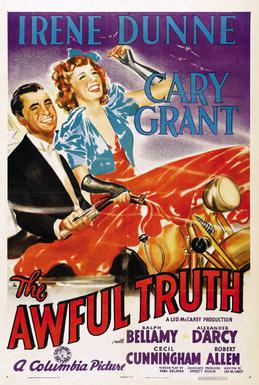
First released way back in 1937, The Awful Truth is one of the most delightful comedies that I’ve ever seen. In fact, if I could recommend one movie for you to make an effort to see, it would be The Awful Truth. This is definitely the best film to ever have the word “awful” in the title.
(Speaking of being the best, The Awful Truth is also the rare screwball comedy to receive a nomination for best picture. However, it lost to the far more serious The Life of Emile Zola.)
Jerry (Cary Grant) and Lucy Warner (Irene Dunne) are young, married, stylish, and rich. They seem to have it all but, as the result of Jerry’s lies and a misunderstanding concerning Lucy and her music teacher (Alexander D’Arcy), they end up getting a divorce. Fortunately, they still share a common bond. They both love their dog, Mr. Smith (played by Skippy, the same adorable and incredibly talented dog who played Asta in The Thin Man). Lucy wins custody of Mr. Smith and takes him with her when she moves in with her eccentric Aunt Patsy (Cecil Cunningham).
(It’s not a screwball comedy without an eccentric aunt.)
Jerry, however, has weekly visitation rights with Mr. Smith. It’s during once such visit that Jerry discovers that, with only two months to go before the final divorce decree, Lucy has become engaged to her next door neighbor, Dan (Ralph Bellamy). Dan is from Oklahoma and spends most of his time wistfully talking about tumbleweed, oil, and cattle. He also can’t wait to marry Lucy so that they can both move back to Oklahoma City. Dan is a nice guy but he’s no Cary Grant. (He’s also dominated by his judgmental mother.) Realizing that he still loves Lucy, Jerry wants to reconcile with her but complications and misunderstandings ensue.
(It’s not a screwball comedy without complications and misunderstandings.)
Eventually, in order to prove that he is over Lucy, Jerry starts to date a vacuous heiress, Barbara Vance (a hilariously shallow performance from Molly Lamont). Suddenly, Lucy finds herself in the same situation that Jerry was in with her and Dan. Now, it’s her turn to try to break up Barbara and Jerry…
Meanwhile, the day of the final divorce decree approaches…
There’s a lot of reasons to love The Awful Truth. There’s the snappy dialogue, the physical comedy (at one point, three different men are scurrying around Aunt Patsy’s apartment, two trying to hide from each other and one totally oblivious to everything going on around him), and Leo McCarey’s fast paced direction. There’s Mr. Smith, a dog so talented that even a confirmed cat person like me loved watching his performance. There’s the wonderful supporting turns of Ralph Bellamy and Molly Lamont.
But the main reason to see the film is because of the wonderful chemistry between Cary Grant and Irene Dunne. Grant is so smooth and effortless in his charm that it’s a lot of fun to watch him having to deal with the progressively strange world that he finds himself living in. The Awful Truth works best when Grant simply reacts to all the craziness around him. Grant could do more with one look than most actors could do with a Shakespearean monologue. Meanwhile, Irene Dunne … well, who wouldn’t want to get in a time machine, go back to 1937, and be Irene Dunne for a day? She’s lively, she’s beautiful, she’s witty, she’s classy, and she’s just neurotic enough to be relatable.
The Awful Truth is pure joy. If you haven’t seen it, you’re missing out. If you have seen it, watch it again.
(For those following at home, Lisa is attempting to clean out her DVR by watching and reviewing 38 films by this Friday. Will she make it? Keep following the site to find out!)
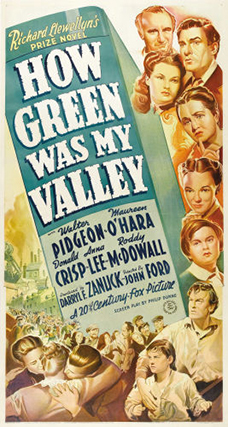
Before I really get into this review, I should admit that I watched How Green Was My Valley with a bias.
Before the movie started, I was expecting to be disappointed with it. I think that a lot of film lovers would have felt the same way. How Green Was My Valley won the 1941 Oscar for best picture. In doing so, it defeated three beloved films that have only grown in popularity and renown since they were first released: Citizen Kane, The Maltese Falcon, and The Little Foxes. (As well, just consider some of the 1941 films that weren’t even nominated for best picture: Ball of Fire, The Devil and Daniel Webster, Dr. Jekyll and Mr. Hyde, High Sierra, The Lady Eve, Never Give A Sucker An Even Break, The Sea Wolf, The Wolf Man, and Sullivan’s Travels.) Because it defeated so many great films and since we’re all used to the narrative that the Academy always screws up, there’s a tendency to assume How Green Was My Valley was really bad.
Well, after years of assumptions, I finally actually watched How Green Was My Valley? Was it bad? No, not really. Was it great? No, not all. If anything, it felt rather typical of the type of films that often win best picture. It was well-made, it was manipulative enough to be a crowd-pleaser while serious enough to appeal to highbrow critics, and, perhaps most importantly, it never really challenged the viewer. Unlike Citizen Kane and The Maltese Falcon, How Green Was My Valley is a film that doesn’t require that you give it too much thought and, as such, it really shouldn’t be surprising that it was named the best picture of the year.
How Green Was My Valley was directed by John Ford and, as you might expect from Ford, it deals with a changing way of life and features good performances and a few impressive shots of the countryside. Taking place in the late 1800s, How Green Was My Valley tells the episodic story of the Morgans, a large family of Welsh miners. The film is narrated by Huw (Roddy McDowall), a youngest member of the family. Though Huw’s eyes, we watch as his once idyllic and green village is transformed by the growing mining industry and blackened with soot, poverty, and death.
The film starts out as a fairly even mix of sentiment and drama. Huw has a crush on his brother’s fiancee. His sister, Angharad (Maureen O’Hara), has a flirtation with the new preacher, Mr. Gruffydd (Walter Pidgeon). Much emphasis is put on communal gatherings. There is a wildly joyful wedding celebration. We often see the villagers in church and hear them singing both hymns and folk songs. In their isolate village, they are are united against a changing world.
Or, at least, they think they are. As the mining industry grows, that united front and sense of community starts to vanish. A strike sets family members against each other, as each miner is forced to decide whether to side with management or with his fellow workers. Each year, the wages become lower. When management realizes that its cheaper to just continually hire new miners, several of the veteran workers are fired and end up leaving the village to seek a living elsewhere. As new people come to the village, even Mr. Gruffydd finds himself the subject of gossip.
As for Huw, he grows up. He goes to school, deals with a sadistic teacher, and learns how to defend himself against bullies. And eventually, like everyone in his family, he is sent down into the mines and soon, his once innocent face is covered in soot.
And, of course, there’s a big tragedy but you probably already guessed that. How Green Was My Valley is not a film that takes the viewer by surprise.
For the most part, it’s all pretty well done. The big cast all inhabit their roles perfectly and Roddy McDowall is extremely likable as Huw. Maureen O’Hara shows why she eventually became a star and even Walter Pidgeon gives a surprisingly fiery performance. How Green Way My Valley is a good film but it’s too conventional and predictable to be a great film, which is why its victory over Citizen Kane and The Maltese Falcon will always be remembered as a huge Oscar injustice.
But, taken on its own terms and divorced from the Oscar controversy, How Green Was My Valley may be a conventional but it’s not a bad film. It’s just no Citizen Kane.
Before I start talking about the movie I need to mention a couple of funny things.
First, I kind of like actress Marla Sokoloff. I first saw her on an episode of Melissa & Joey where she played a chiropractor that Joey Lawrence’s character goes to see. I enjoyed her performance. Her and Joey end up in a relationship together. It turns out she’s a virgin. As I recall, he can’t follow through with it. It was humorous to me given the title of this film.
Another coincidence that is similar to that one is another place I had seen Marla before watching this film. The previous film I saw her in was Scents and Sensibility (2011). In this movie Marla’s character will bring up that she enjoys more serious books rather than things like romance novels. There is even a scene where they mention Jane Austen who of course wrote Sense and Sensibility.
Weird that not only were both of those things done after Flower Girl, but that they were the only two other places I had seen her before, which also happen to somehow tie back to this film. Bizarre!
The second thing is something that only someone like myself who, for some reason, has now seen 164 Hallmark movies would notice. All but 5 of which have been since last July.
I think IMDb nailed it here. Let’s go through those recommendations:
Perfect On Paper is about a girl who is given a job editing romance novels. She is encouraged to date men who are perfect on paper. She eventually comes around to the guy who isn’t perfect on paper, but perfect for her. This movie has romance novels at the center of it, and Marla is encouraged to date a doctor because he is perfect on paper. Also, the actor playing the right guy in this movie is the wrong guy in Perfect On Paper. His last name in that was Cooper, which just so happens to be the last name of the right guy in this movie.
So You Said Yes is about a girl who runs a bridal shop that tries to cater more to the brides actual wants rather than just whatever is the standard wedding they are told they want by the owner. Marla will several times talk about how she does just that. She listens to her clients and uniquely tailors the flowers to be used at the wedding even when that includes something like matching flowers to biker tattoos.
Recipe For Love is about a girl who is given a chance to help ghostwrite a cookbook for a famous cook who is hiding behind a persona that isn’t the real him. Someone ghostwriting books is an important part of this film. That person is also using someone else to pretend that they are the person who is writing the books.
My Boyfriends’ Dogs is about a girl who goes through a series of boyfriends accumulating the dogs they buy together along the way. During all this she passes through a dog store where she keeps running into a guy that winds up being for her. Okay, the connection here is a little weak, but it was written by Gary Goldstein, and he has written both of the Flower Shop Mystery movies.
Bridal Wave is about a girl who is going to be married to a doctor, but at the last minute leaves him for another guy. They will break up when they both realize that they were getting married because it seemed like the next logical step. They both worked together all the time with him as the doctor and her as his assistant. In this movie, one of the two men Marla is dating is a doctor. She will also break it off with him because she thinks both of them were rushing into a possible marriage because they were both just looking for someone. Also, just as in Bridal Wave, they will never make the wrong guy out to be a jerk. He is just not the right guy for her.
In The Wish List, a girl starts the movie as a little girl who is very organized and drawing pictures of her prince charming. It then cuts to her in the present as an adult. She will proceed to make a big list of the things that must be in a guy for him to be perfect for her. She will end up choosing between a doctor and a barista. To try and decide between the two, she makes a list comparing the two of them. The doctor will go away to South America at one point in the movie. This movie also starts off with Marla as a little girl. She is in her grandma’s flower shop before cutting to the present where she now runs the place. Her grandma will even tell her to make a list comparing the two guys she meets. One of them is a doctor. Oh, and yes, the doctor is going to go to South America in this one too.
Like I said, I think IMDb nailed it this time with their recommendations.
I think I’ve nearly laid out the whole plot right there for you. I’ll try to be brief.
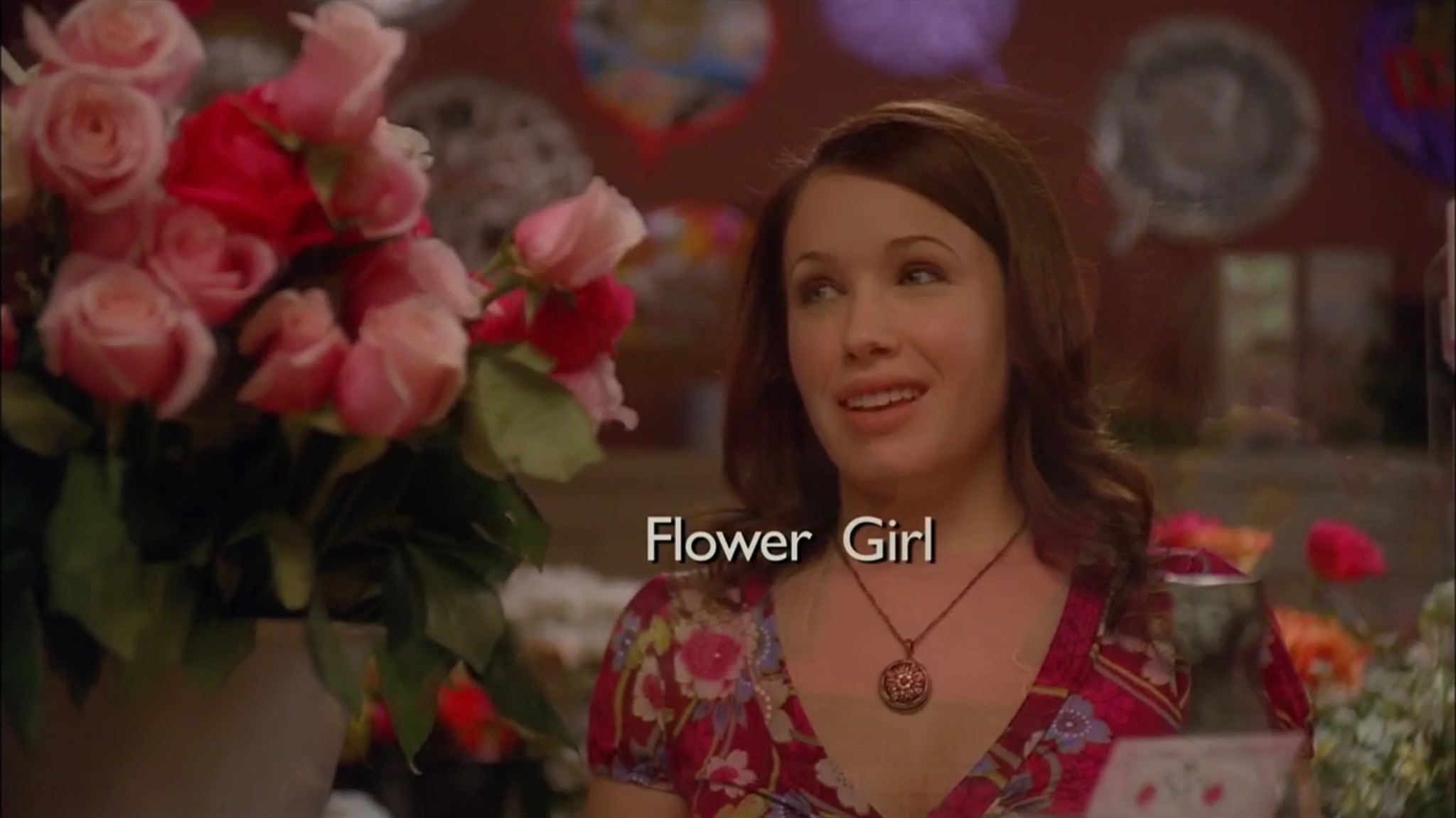
The film begins by showing us Laurel Haverford (Marla Sokoloff) as a little girl for what I think was about two seconds. It’s actually kind of cute. When the little girl is onscreen it only says “Flower”, but when it then cuts to Laurel it adds “Girl” to give us the full title. Marla does flowers for weddings.
We are quickly introduced to the two main ladies in Laurel’s life. One is her grandmother Rose (Marion Ross). The other is a friend named Brooke oddly enough played by Brook Kerr. I’m not reading that off of IMDb either. It says it in the credits that the character is Brooke with an ‘e’ and the actress is Brook without an ‘e’. I have no idea why. To add even further confusion to this, the captions say her name is Brook without an ‘e’.
The introductions are over a wedding as well as a run with Rose and Brooke. Grandma Rose wants her daughter to get hooked up. Brooke might as well be Sarah Fischer from The Wish List cause she has her list of things that must be present in a guy. Well, at least things that show he is up for commitment and jobs he can’t have. Sorry wedding photographers who moonlight as guitar playing bartenders, but Brooke says you won’t do. I actually did know a community college speech teacher who moonlit as a bartender. He was a wonderful teacher.
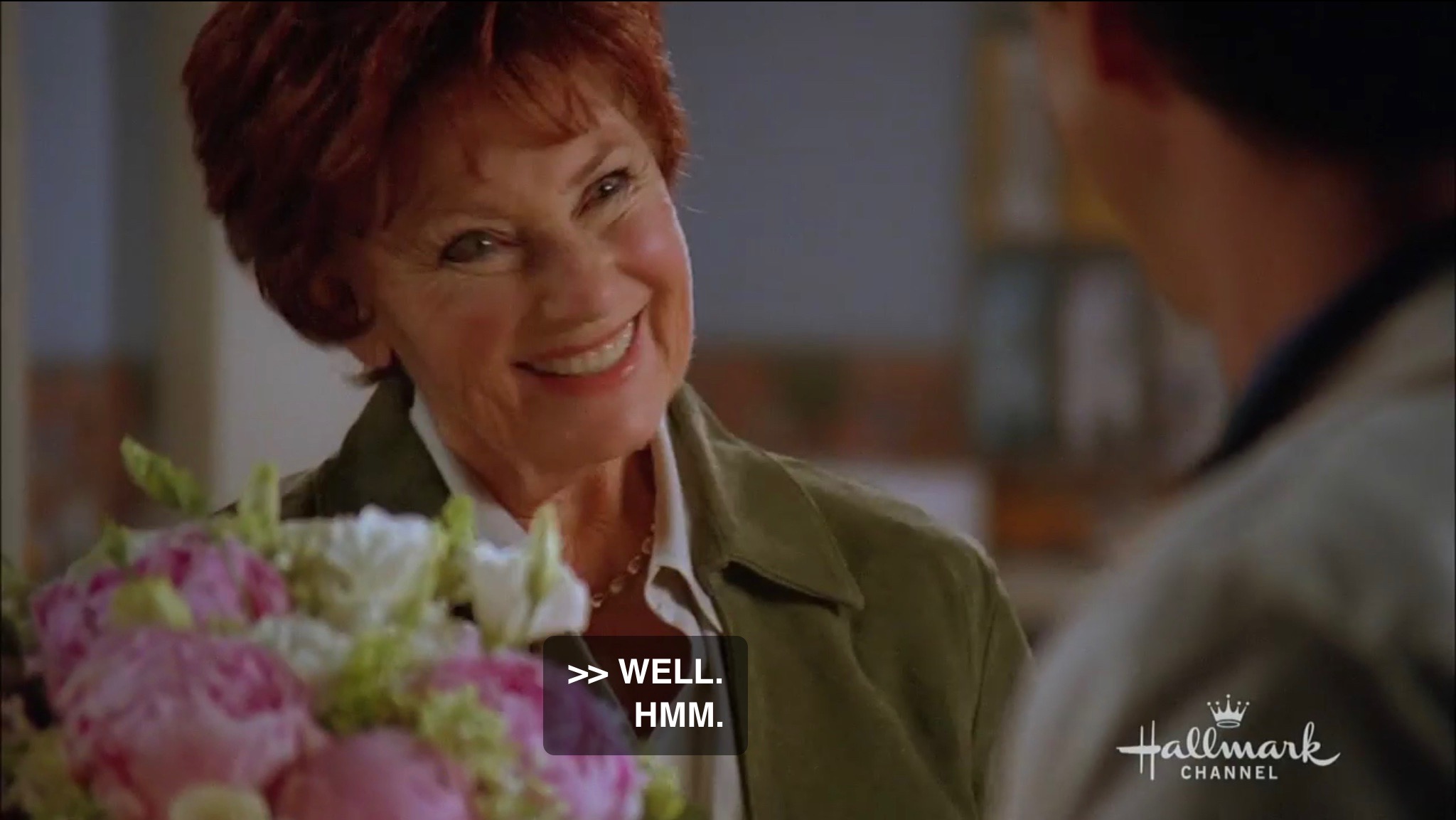
This movie wastes no time. Grandma runs right into Dr. Evan Cooper (Terry Maratos) as she is finishing up delivering some flowers. I love the looks on Marion Ross’ face here as she talks with the doctor. First it’s surprise that he knows the Latin name of the flowers. Then it’s kind introductions. That’s followed by a sly look and a question about his marital status. After she finds out he’s not married, she springs up with this face.
The next major plot point is when Laurel runs into Stephen Banks (Kieren Hutchison) at a wedding. He will be kind of a man of mystery throughout this film. She later runs into him at a table with a bunch of books on it. Stephen suggests a book by Victoria Darling (Bonnie Root).
I’m not even going to take a guess at what the guy on the cover is holding. I don’t think I want to know.
That’s it for setup. There is a small subplot with an older guy named Gavin played by Nicolas Coster. If you look at Nicolas Coster’s filmography, then you will find that he seems to have been in everything. He’s probably most notable for being on the soap opera Santa Barbara. However, you can also see him in Betsy’s Wedding (1990) that a cross country coach I had liked to Goldengirl (1979) that The Cinema Snob put an impassioned plea out to get it a proper release when he reviewed it to All The President’s Men (1976). In this movie, he might as well not be there.
The remainder of the film is a series of dates with Stephen and Evan. I kind of already gave away the surprise earlier about the romance novels, but trust me, it’s not much of a surprise. The movie really sends you clear messages about it. In the end, she decides to be with Stephen. The film ends with them being married, then getting into a pretty neat looking carriage.
So, do I recommend it? Honestly, I have to say no. It has things to like about it sure. I really do like Marla. They obviously didn’t have a big budget for the movie, but tailored the film to fit that budget. They didn’t try to fake things like in Bradford May’s film Cloudy with a Chance of Love. Still, for the life of me, I can’t recommend it to anyone off the street. If you happen to turn it on with nothing else to watch, then sure. I do recommend though if you like Marla Sokoloff.
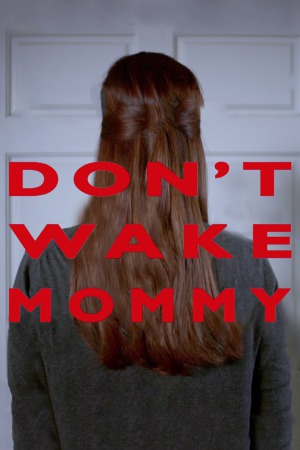
This morning, as I struggled to adjust to the tyranny of Daylight Saving Time, I watched yet another movie off of my DVR. As our regular readers know, I am currently in the process of cleaning out the DVR by trying to watch 38 films by Friday. Don’t Wake Mommy was film #17.
(Of course, what I didn’t realize, as I watched Don’t Wake Mommy this morning, was that the Lifetime Movie Network would be reshowing the film in just a few hours time.)
Don’t Wake Mommy premiered on Lifetime on January 3rd. It was the first Lifetime film of 2016 and somehow, that seems appropriate. When most people think of the stereotype of a Lifetime film, chances are that they’re thinking of something like Don’t Wake Mommy.
Ashley Bell, who was so good in the Last Exorcism films, plays Molly. Molly has a wonderful husband (Dean Geyer) and a great career (though don’t ask me to explain what she does, beyond the fact that she works in one of those generic Lifetime offices). However, ever since giving birth to her daughter, Molly has had to put her life on hold. Suffering from extreme postpartum depression, she joins an online support group and ends up meeting Beth (Sara Rue).
At first, Beth seems like she’s perfect. In fact, she’s too perfect. If you’re a veteran Lifetime viewer like I am, you’ll know that Beth is trouble from the first minute she offers to help Molly out. (The film also starts with a rather unnecessary prologue, in which Beth harasses another couple.) Beth is all smiles and good advice but soon, she is literally running Molly’s life.
While Molly’s husband is away, Beth moves into the house. She keeps Molly constantly medicated and insists on taking care of Ava herself. When Molly’s BFF stops by, Beth tells her that Molly no longer needs her around.
And then one day, Ava disappears…
Don’t Wake Mommy is a fairly predictable film. After the 1st 15 minutes or so, you will have figured out everything that is going to happen. That’s not necessarily a bad thing when it comes to Lifetime films. In many ways, their familiarity is a part of their appeal. But being familiar does not necessarily mean that a film should feel generic and, far too often, Don’t Wake Mommy feels generic.
That said, Sara Rue does a great job playing the unstable Beth and Ashley Bell proves that she’s a capable actress even when she isn’t playing someone possessed by the devil. Here’s hoping that both actresses get a lot more opportunities in the future to show off what they can do.
Continuing my effort to watch 38 films in 10 days (and, as of today, I only have 6 days left!), I spent part of last night watching the 1948 film Johnny Belinda.
Johnny Belinda takes place in Canada, on Cape Breton Island. The residents of the island are a hearty, no-nonsense group of people. They work hard, they don’t play hard because they never play, they farm, and they don’t have much use for outsiders. When a new doctor, Robert Richardson (Lew Ayres), arrives on the island, he has to work hard to earn their trust.
Dr. Richardson is fascinated by Belinda McDonald (Jane Wyman), a young woman who is deaf and mute. Belinda lives on a farm with her father (Charles Bickford) and her aunt (Agnes Moorehead). Everyone in the community assumes that Belinda is a simple-minded and, because her mother died giving birth to her, she is resented by her father. Only Dr. Richardson believes that Belinda is in any way intelligent and, over her father’s objections, he teaches Belinda sign language.
Dr. Richardson’s secretary, Stella (Jan Sterling), falls in love with him and grows angry when it becomes apparent that he’s more interested in taking care of Belinda than pursuing an adulterous romance with Stella. Meanwhile, Stella’s husband, a viscous alcoholic named Locky (Stephen McNally), gets drunk and rapes Belinda. 9 months later, when Belinda gives birth to a boy that she names Johnny, everyone assumes that Dr. Richardson is the father. Soon, both Richardson and the McDonald family are being shunned by the judgmental community.
Locky, meanwhile, is determined to keep anyone from finding out about his crime, to the extent that he’s willing to commit murder. Both Locky and Stella are determined to take Johnny away from Belinda and it all eventually leads to further tragedy and, somewhat inevitably, a dramatic murder trial.
Much like Random Harvest, Johnny Belinda is another film that I could imagine being remade for Lifetime. It’s a well-made melodrama that appeals to all of the emotions and features a cast of talented actors doing good work playing characters that are probably just a bit too familiar. In fact, there’s really not a single moment of Johnny Belinda that will take you by surprise but, despite that, the film still works. Jane Wyman does such a good job playing the silent Belinda that it makes the entire movie worth watching. (It’s interesting to contrast Wyman’s innocent, vulnerable, and sympathetic performance here with her far more severe work in The Yearling.) Reportedly, Wyman devoted so much time and effort to her performance that it was cited as a reason for her divorce from future President Ronald Reagan. For Johnny Belinda, Wyman lost the chance to be first lady but she did win an Oscar.
(And, for the record, Wyman voted for Reagan in 1980 and 1984, saying that it wasn’t often that you got to vote for your ex-husband.)
Johnny Belinda was nominated for best picture of the year and, with 10 nominations, it was the most nominated film of 1947. Though it won an Osar for Wyman, it lost best picture to Laurence Olivier’s Hamlet.
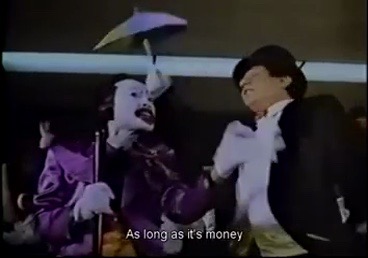
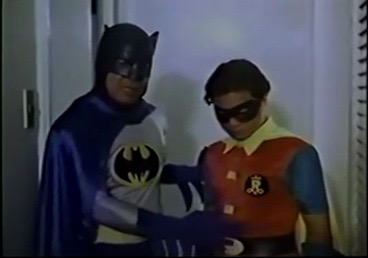
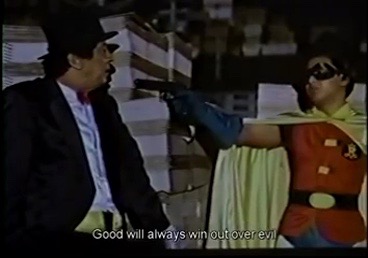
A Filipino Batman. Of course! There’s Turkish Supermen. There’s an Indonesian Lady Terminator. There’s Brazilian Star Wars. There’s a Mexican Batwoman. There’s a dancing Indian Superman and Spiderwoman. So why not a Filipino Batman? Actually, this is one of three that I know about. There is another one with the same title as this film from 1965, which I don’t have, and a movie called James Batman from 1966 that I do have. I’ll review that one later.
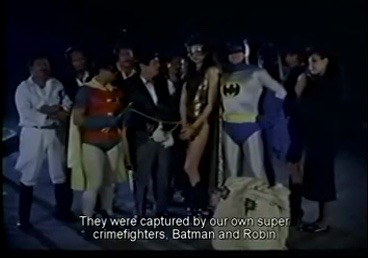
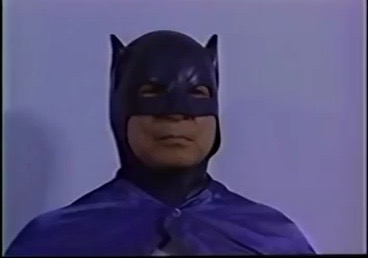
Let’s talk about this particular Filipino Batman. The title literally translates to Alias Batman and Robin, which is actually a very appropriate title. While the movie does have Batman, Robin, Joker, Penguin, Catwoman, and numerous other superheroes that show up at the end, they are all regular people who take up the roles rather than actually being the real characters.
The movie of course opens with the Batman TV Show theme song playing. However, it’s like almost all the lifted songs in this movie. It’s not the exact song. It’s not like if you watch the Taiwanese film King Of Snake (1984). In that film you will hear the main theme from The Terminator (1984) and music from Once Upon A Time In The West (1968) unaltered. In this movie, the songs will be tweaked or sampled, and have new lyrics. There is one exception, but we’ll get to that.
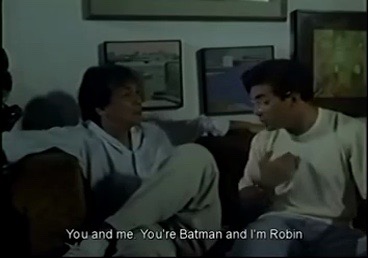
I’m gong to just cut through the very beginning of this movie cause the film sure does, and it doesn’t make a lot of sense. The movie opens up and we meet our future Batman (Joey de Leon) and Robin (Keempee de Leon).
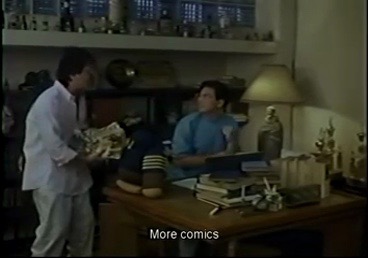
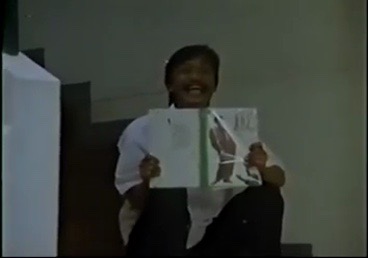
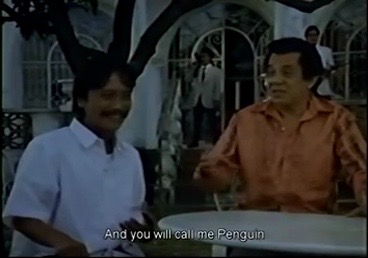
As far as I can tell they are supposed to be high school or college students. The only person they are really clear about is the guy who becomes the Penguin. Now we meet our future Joker (Rene Requiestas) reading about the character.
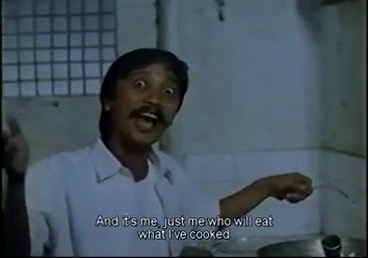
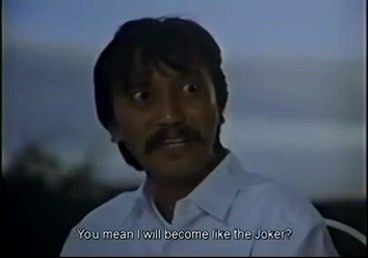
I’m going to say it here. He has a great maniacal laugh. It never feels like there’s a psycho or a really bad guy behind it like you see in The Dark Knight (2008) or Batman (1989). Nevertheless, it still is pretty great, and he does it a lot. He also does great crazy eyes.
There are some girls here, some rivalry, and some fighting. None of it really matters. Trust me. Even the film will tell you later how meaningless these opening scenes are to the movie. The next thing you know Joker’s uncle gets out of jail and this happens.
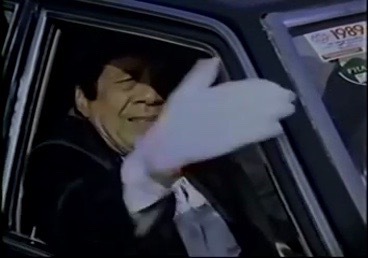
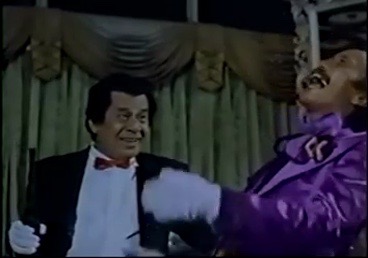
There you go! Now we have Joker and Penguin (Panchito). They immediately go to rob the Treasury Office, but first!
The director of this movie made other films like this such as Bobo Cop (1988), Goosebuster (1991), and his own line of Tarzan films. I seriously doubt that sticker having the year Tim Burton’s Batman came out is just a coincidence.
Anyways, they rob the treasury and gloat about it.
They also talk about hiring some goons.
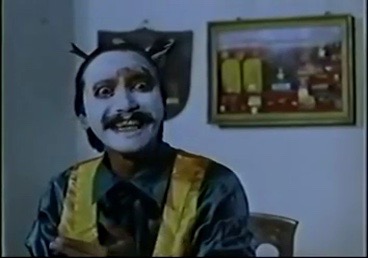
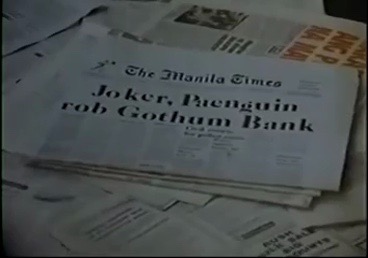
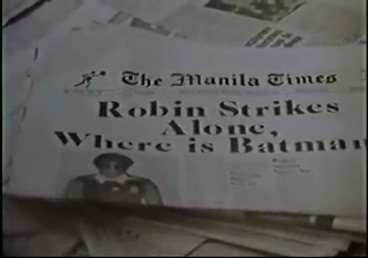
After our future Batman and Robin read about the robbery, we get Kabuki Joker.
Now the Joker and Penguin start hitting more places including apparently Gotham Bank.
I always suspected Gotham was really Manila. Now they’ve gone too far!!! The brothers decide to become Batman and Robin.
Well, to be fair. The brother who will be Batman actually wants to be Starzan. Starzan is this movie’s director’s Tarzan knockoff. Do I have to tell you? The actor who plays the brother is the actor who plays Starzan. However, future Robin tells him he can’t do that because it will turn “this movie into shit”.
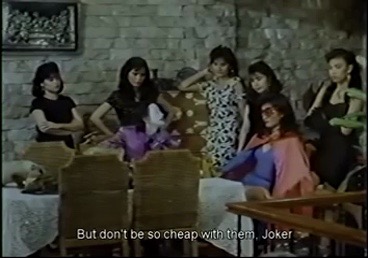
Meanwhile, we need Catwoman (Almira Muhlach). So here she is with her posse.
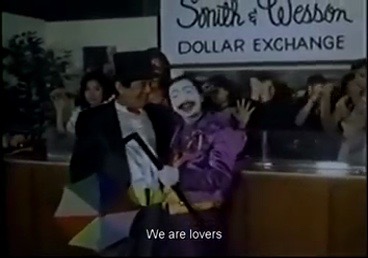
After quoting the title of Bobby McFerrin’s Don’t Worry Be Happy, they are off to rob the Smith & Wesson Dollar Exchange! Now we get our first musical number.
My original sentences here were going to be that I couldn’t figure out where the song is from, but a friend came through. The song they use is Bird Dog by The Everly Brothers.
While I may have had trouble with that song, I sure as hell knew what the next one was! After Joker and Penguin rob a jewelry store, we get a montage of Batman and Robin becoming Batman and Robin.
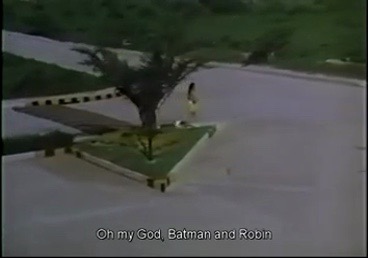
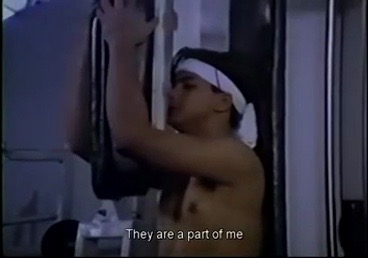
“Do you still remember from your comic book. The series of the Dynamic Duo. The Caped Crusader and the Wonder Boy. They fight all the goons. Holy smoke, Batman and Robin. Oh my God, Batman and Robin. Praise the Lord, Batman and Robin. Shoot now, shoot. Batman and Robin. Let’s do Bruce Wayne now and Dick Grayson now. They are a part of me.”
In other words: “Let’s go surfin’ now. Everybody’s learning how. Come on a safari with me.” It’s Surfin’ Safari by The Beach Boys with lyrics about Batman and Robin.
It is glorious!!! I love the next one too!
Now the Joker and Penguin pull up to rob a place and that riff sure sounded familiar to me. It’s because it’s a riff from Oh, Pretty Woman. The lyrics are totally different.
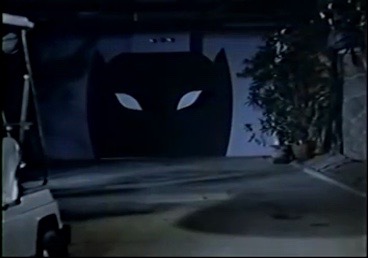
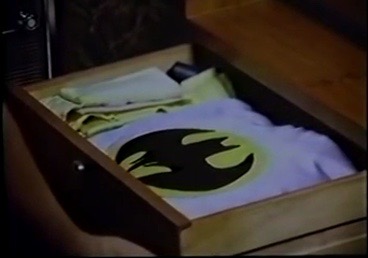
But we have more important things now. To the Batcave!
Now the Joker and Penguin are going to strike again, but this time Batman and Robin are on the case. Oh, there’s also a little in-joke here about two Filipino production companies called VIVA and Regal. It’s not important.
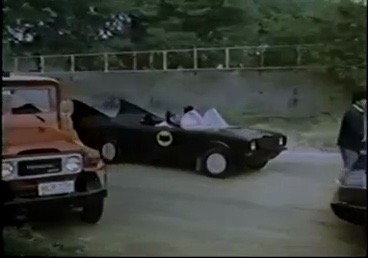
To the Batmobile!!!
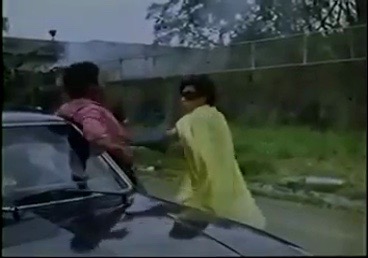
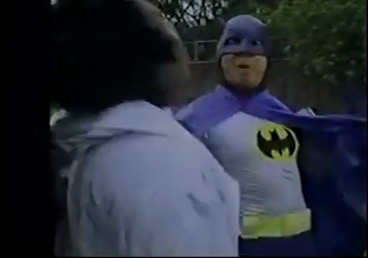
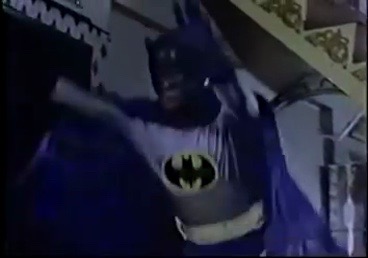
Action!
Oh, and some days you just can’t get rid of a coconut.
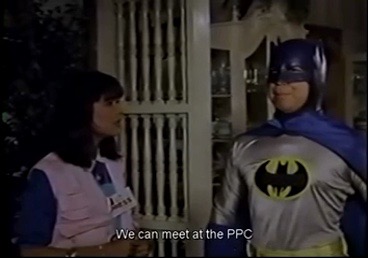
Now Batman goes where Batman always goes. No, not to the Bat Room. That’s later. He goes to the girl (Dawn Zulueta) he is interested in while dressed at Batman.
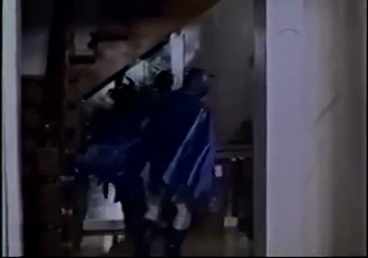
He asks her to meet him at the PPC. Apparently, PPC stands for Paco Park Cemetery. Why there? Your guess is as good as mine because before she can ask, he’s out the door.
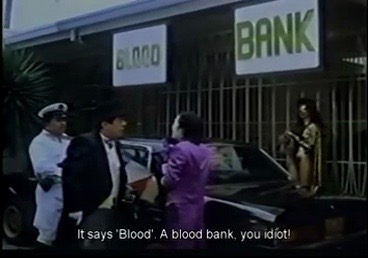
Now we get reminded that Joker and Penguin aren’t the brightest of people. Well, the Joker that is cause they try to rob a Blood Bank.
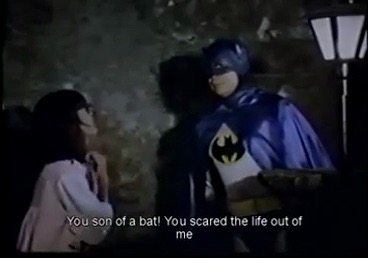
Meanwhile, at the cemetery, Batman is resorting to jump scares.
While I was dishappiest, to quote Pat Buttram in Texans Never Cry (1951), with the jump scares in the awful Ex Machina (2015), I like the line “You son of a bat!” he gets from her after jumping out at her.
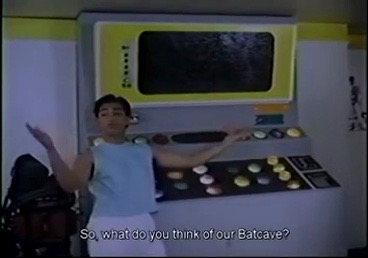
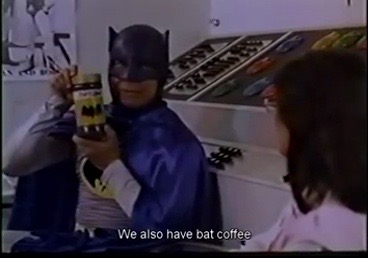
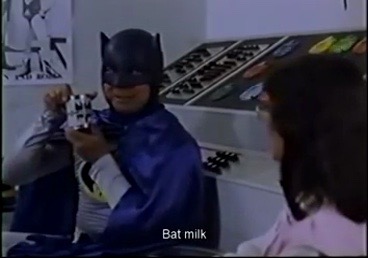
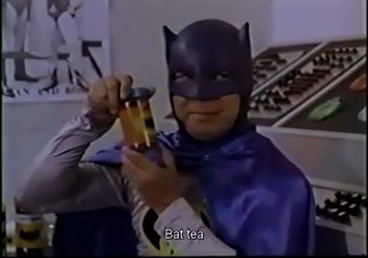
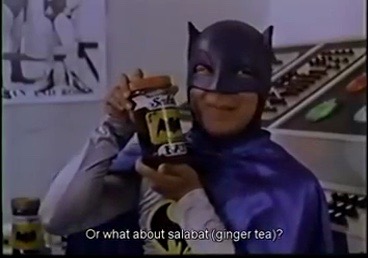
They go back to the Batcave now. She works for the Daily Planet…I mean the Daily Star. While he may be a son of a bat, he is a good host. He offers her something to drink.
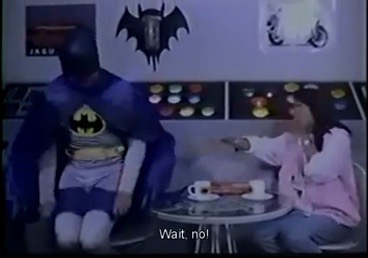
Look! Batcaves are expensive and he needs to recoup costs somehow. She goes with Bat Tea. She asks if he can “take that off?” So of course this happens.
She meant his mask. He then asks her to take it off. She’s offended. Of course Batman meant her glasses, and he compliments her.
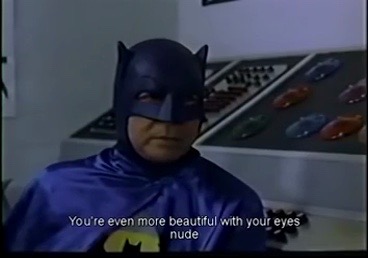
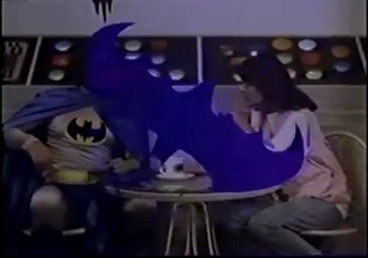
Given how this film is, I totally believe Batman told her she’s “even more beautiful with [her] eyes nude.” Now she asks the next logical question: “Can you tell me how Batman and Robin began?” Good question! I’d like to know that too. That’s when a Batarang flies across the screen…
because I’m pretty sure the film doesn’t understand how that happened either. Batman says they won’t stop till the super villains are stopped, and she asks to use the Bat Room. Scene!
Now we get a pointless part that amounts to Robin not being able to get his girl by telling her he’s Robin because it’s just as easy for anyone else to make a Robin uniform so this happens.
Well, it didn’t take them long because in the next scene Batman and Robin capture Penguin and Catwoman. Joker is still free.
Honestly, this is when the film begins to drag because it starts to try and take itself seriously. Batman and Robin try to get the girls they like. In fact, Robin shares a musical number with the girl (Vina Morales) he likes. This time around they didn’t bother to change anything. The song is Until Forever by Evan Rogers and D’Atra Hicks off the soundtrack to the movie Everybody’s All-American (1988).
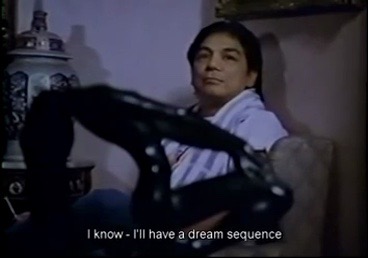
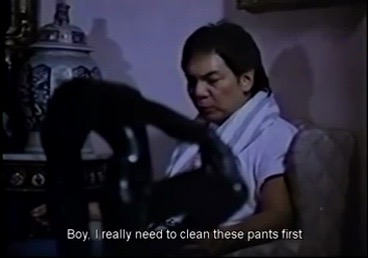
Now we go over to Batman, and this is one movie that’s kind enough to tell you when a dream sequence is going to begin.
Unfortunately, it’s one of those dreams as realizes after waking up.
There’s another really immature moment next where we see Batman’s package through his underwear. I’m not showing that.
Now for no real reason at all, Penguin breaks out of prison and flies away in a helicopter. Batman decides he doesn’t want to play the part anymore. This leaves Robin to go fight crime alone.
Like I said before, this is where the film started to lose me. It will pick up at the very end, but till then the fun starts to stop.
Now Robin tries to protect himself against Joker and Penguin…
but he is beaten and Batman’s girl is taken prisoner while Robin is sent to the hospital. Batman must once again don the suit.
Now Batman goes to rescue his girl, and apparently does the same diving jump as Superman did in Kilink in Istanbul.
Kilink in Istanbul (1967, dir. Yilmaz Atadeniz)
Everything goes fine. The Joker and Penguin are now in jail. However, after crazy eyes…
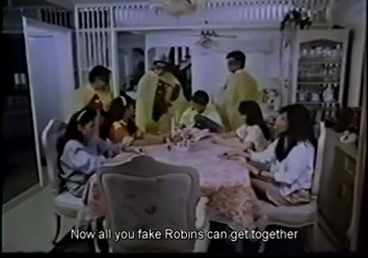
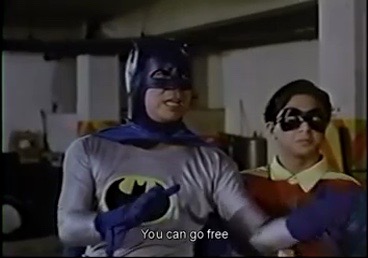
they dig out the toilet and escape through the hole. Now you’d think the film would stop already, but no. There’s still a little left. Joker and Penguin decide to dress up as Batman and Robin to commit crimes, and blame it on them. The real Batman and Robin catch up with them and tell them as long as they return what they stole with interest, then they can go free.
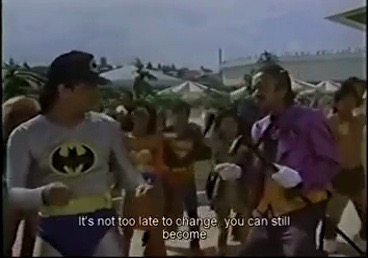
After a stupid conversation between Batman, Robin, Joker, and the Penguin, Batman, out of the suit, goes to take out his girl, but look!
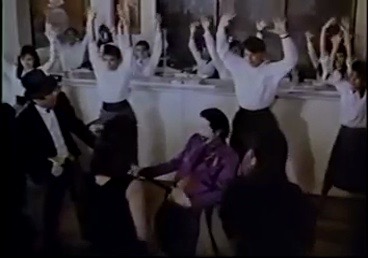
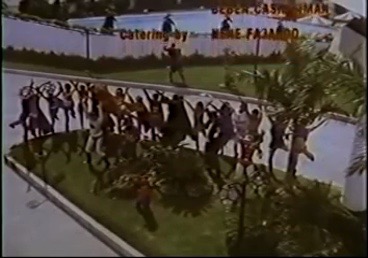
Now begins the final dance number and I think we all know this one. It’s Rock ‘n’ Roll Is Here To Stay by Danny & The Juniors, but of course we all remember it as performed by Sha-Na-Na in Grease (1978).
Everyone gets in on this number. Like mini-Spiderman here!
We know Batman and Superman are rivals, but for at least one dance they were able to put aside their differences.
If anyone knows who these two are, then tell me.
In the end, all that matters is that we’ll always be together!
My final thoughts on this movie are that I enjoyed it and would recommend it. The stuff near the end does take you out of the fun, and it really can’t pull of being serious, but that’s short-lived. It doesn’t ruin the movie. I know that some people cry foul whenever they see something like this and get outraged. I’m not one of them. The movie never felt like it was being mean spirited. It feels like a group of comedians with a love of 50’s and 60’s music got together and made a humorous Batman movie largely for fun. I always find it interesting to see such tightly controlled properties in new and interesting places. If that kind of thing bothers you, then don’t watch it. If it doesn’t, then check it out.
This morning, as a part of my continuing effort to watch 38 films by Friday and clean out the DVR, I watched Random Harvest, a romantic melodrama from 1942.
And when I say that Random Harvest is a melodrama, I’m not exaggerating. During the first hour of the film, I found myself thinking that if Random Harvest were made today, it would probably be a Lifetime movie. By the time the second hour started, I realized that it would actually probably be one of those heavily hyped miniseries that ends up being broadcast on A&E, Bravo, and Lifetime at the same time. This is one of those big, epic stories where, every few minutes, a new plot twist emerges.
When the film opens during the first World War, John Smith (Ronald Colman) is a patient at a British asylum. He knows that he was once a soldier. He knows that he was gassed during a battle. He knows that he’s recovering from extreme shell shock and it’s still a struggle for him to relate to other human beings. He knows that he will probably spend the rest of his life as a patient at the asylum. He also knows that his name is not John Smith. He’s not sure what his real name is because he suffers from amnesia.
One night, a message comes to the asylum. The war has ended! All of the doctor and orderlies go out to celebrate, leaving Smith unguarded. Smith simply walks out of the asylum and eventually makes his way to a nearby town. It’s there that he meets Paula (Greer Garson), a kind-hearted singer who invites Smith to join her traveling theatrical troupe.
Paula and Smith fall in love, end up getting married, and have a child together. Paula encourages Smith to become a writer and eventually, a publisher in Liverpool asks to meet with him. However, when Smith goes to Liverpool, he ends up getting hit by a car. When he regains consciousness, he suddenly knows that his name is Charles Rainier and that he’s rich! However, he no longer remembers that he was once named John Smith, that he’s married to Paula, or that he has a child.
The years pass. Charles returns to his old life of servants, money, and political ambition. His stepniece, Kitty (Susan Peters), falls in love with him but Charles, for his part, cannot stop wondering about what happened between getting gassed in World War I and getting hit by that car in Liverpool.
Meanwhile, Paula refuses to believe that Smith had abandoned her. Even after she has him legally declared dead, she continue to believe that he’s out there. And then one day, she sees a picture of Charles Rainier. She also learns that Rainier needs an executive secretary, which just happens to be what Paula does when she’s not singing…
Just from reading that plot, you probably think that Random Harvest is an incredibly silly film, that type that, if it were made today, would star Katharine Heigl and maybe a British guy who had a minor role on Game of Thrones. But, dammit, Random Harvest works! Filmmakers in the 30s and 40s knew how to make this type of melodrama totally compelling and believable. There’s not a hint of snarkiness or cynicism to be found in Random Harvest and, as a result, it feels almost churlish to criticize the plot for being implausible. Sincerity saves this film.
Random Harvest was nominated for Best Picture but it lost to another film starring Greer Garson, Mrs. Miniver.However, Garson gave a far better performance in Random Harvest than she did in Miniver. When you watch most of her film today, Greer Garson always comes across as talented but a little boring and obvious in her technique. (She was the Meryl Streep of her day.) In Random Harvest, Garson actually gets to sing and danger and laugh and behave like a human being. After seeing her in Blossoms In The Dust, Mrs. Miniver, and Sunrise at Campobello, watching her performance in Random Harvest is akin to an acting revelation.
Meanwhile, Ronald Colman also does a great work at both Smith and Charles (and they really are two separate characters). Admittedly, Colman does come across as being a little bit too old for the role (and the age difference between him and Susan Peters does add a certain odd subtext to the scenes between Charles and Kitty) but, otherwise, he’s totally and completely credible as the character. When he’s Smith, he speaks in a halting, uncertain tone and he walks like he’s still learning how to put one foot in front of the other. When he becomes Charles, he’s definitely more confident but he still moves like a man who feels as if it’s his duty to carry the weight of the world on his shoulders.
(I have to admit that I’ve always found it strange that Margaret Mitchell apparently wanted Ronald Colman to play Rhett Butler in Gone With The Wind. Watching his performance here, I still could not see Colman as Rhett but he would have made a great Ashley Wilkes.)
The beautiful Susan Peters was nominated for best supporting actress for her performance as Kitty. Random Harvest was her first major role and she gives such a great and likable performance that it makes it all the more tragic that her career was cut short. Just three years after appearing in Random Harvest, Susan was accidentally shot by her husband. Though she survived, she would never walk again. When she died, at the age of 31 in 1952, the official cause was pneumonia but it was also said that she had stopped eating and drinking and had literally lost the will to live. Whether you love Random Harvest or you think it’s just a silly melodrama, you should watch it just to see Susan Peters’s great performance and to consider what could have been.
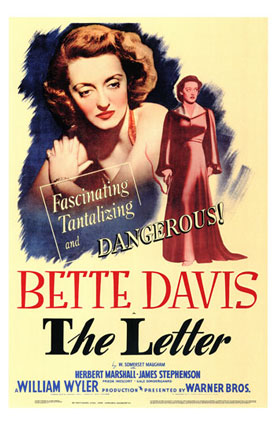
After watching Break-Up Nightmare, I watched one more film that was sitting on my DVR. That film was 1940’s The Letter. I had recorded it off of TCM and, up until last night, I had never seen it before. I’m happy to say that I’ve seen it now because it’s a great movie, featuring a fascinating mystery, feverish atmosphere, excellent supporting performances, and a ferociously brilliant performance from the great Bette Davis.
Filmed in a dream-like noir style by William Wyler, The Letter opens on a rubber plantation in Malaysia. It’s night and the camera pans over the native workers all trying to sleep through the hot night. Eventually, the camera reaches the big house, where the plantation’s wealthy and, of course, white manager lives. (The contrast between the wealthy Europeans interlopers and the natives who work for them is a reoccurring theme throughout The Letter.) A gunshot rings out. A man stumbles out of the house. Following after him is Leslie Crosbie (Bette Davis). She is carrying a gun and, as we watch, she shoots the man a few more times. She shoots him until she’s sure that he’s dead.
Leslie is the wife of Robert Crosbie (Herbert Marshall, who also played Davis’s husband in The Little Foxes) and the man that she just killed is Geoff Hammond, a respected member of Malaysia’s European community. When the police arrive, Leslie explains that Hammond “tried to make love to me” and that she was forced to kill him in self-defense. Leslie is arrested for the crime and will have to face trial but everyone knows that she will be acquitted. After all, Leslie and her husband are members are well-connected members of the upper, European class.
However, Leslie’s lawyer, Herbert Joyce (James Stephenson), has doubts about Leslie’s story. He points out that she sounds just a little too rehearsed. His suspicions are confirmed when his clerk, Ong Chi Seng (Sen Yung), tells him about the existence of a letter that Leslie wrote on the day that Hammond was killed. In the letter, Leslie orders Hammond to come see her and threatens to reveal the details of their relationship if he doesn’t. Ong explains that he only has a copy of the letter. The original is in the hands of Hammond’s widow (Gale Sondergaard) and she’s willing to sell the letter for a substantial price.
Not surprisingly The Letter is dominated by Bette Davis but, for me, the most memorable character is the outwardly obsequies but inwardly calculating Ong Chi Seng. Sen Yung plays him with such a polite manner and a gentle voice that it’s actually incredibly shocking when he reveals his true nature. And yet, even after he’s been exposed as a potential blackmailer, his manner never changes. Meanwhile, Gale Sondergaard only appears in a handful of scenes but she steals every one of them with her steely glare.
In order to get the letter away from Ong and Mrs. Hammond, Leslie and Joyce have to convince Robert to give them the money without allowing him to learn the letter’s content. But, what neither one of them realizes, is that Mrs. Hammond has plans that go beyond mere blackmail.
The Letter is an atmospheric melodrama that plays out almost like a fever dream and it also features one of Davis’s best performances. It was nominated for best picture but it lost to another atmospheric melodrama, Alfred Hitchcock’s Rebecca.