The TSL’s Horror Grindhouse: The Yesterday Machine (dir by Russ Marker)


The 1965 film The Yesterday Machine opens with dancing!

Well, okay, actually, it opens with two college students out in the middle of nowhere, listening to an old radio.  Howie Ellison (Jay Ramsey) is working on his car, trying to get the engine to work again.  Margie de Mar (Linda Jenkins) is working on her baton twirling, as one tends to due when stuck out in the middle of nowhere.

As soon as the film started and I got one look at the barren landscape, I knew that it had to have been filmed in my part of the world.  The whole thing just screamed Texas/Oklahoma border.  Then I saw Margie’s boots and then I heard Howie and Margie’s accents and I yelled, “OH MY GOD, THEY FILMED THIS IN TEXAS!”

And, indeed, they did.  The Yesterday Machine is a regional production, through and through.  Nearly everyone in the film has a strong accent and the North Texas landscape is notably flat.  (The film’s harsh black-and-white cinematography actually gives it something of a apocalyptic feel.)  After I watched this film, I did some research and I discovered that this film was shot in Dallas.  Director Russ Marker was a Texas filmmaker and actor.  He apparently directed two films over the course of his short career, this and The Demon From Devil’s Lake.  He also had an uncredited role as a bank guard in Bonnie and Clyde.

(There were actually quite a few low-budget filmmakers working in Texas in the 60s.  The best-known, of course, would probably be Larry Buchanan.  But, at the same time that Russ Marker was shooting this film, Hal Warren was filming Manos: The Hands of Fear.)

Anyway, Howie and Margie are supposed to be heading to a college football game but it turns out that Howie is totally useless when it comes to fixing cars.  So, instead, they leave the car and go looking for help.  After wandering around for a bit, they run into some soldiers who are dressed in Confederate army uniforms.

“Those are some crazy threads, Dad!” Howie says.

Having no respect for Howie’s beatnik ways, the soldiers shoot him and then kidnap Margie.

What’s going on, you may ask.  Well, fear not!  Lt. Partane (Tim Holt) is on the case!  And yes, classic film fans, you read that actor’s name correctly.  Tim Holt, star of both The Magnificent Ambersons and Treasure of the Sierra Madre, lends his gravitas to The Yesterday Machine!  According to the imdb, Holt grew disillusioned with Hollywood in the 50s and gave up the movies, retiring to his ranch in Oklahoma.  He only came out of retirement to play Lt. Partane in this film and Agent Clark in Herschell Gordon Lewis’s moonshiner epic, This Stuff’ll Kill You.  According to imdb, Holt only came out of retirement as a “favor for his friends.”  So, in other words, Tim Holt probably did this movie to be nice.

Helping out Lt. Partane is a reporter named Jim Crandall (James Britton) and Margie’s sister, a singer named Sandy (Ann Pelligrino).  Working together, they investigate why Confederate soldiers are wandering around North Texas and what they discover is that it’s because a fugitive Nazi scientist, Dr. Blake (Charles Young), has built a time machine!  He’s planning on using it to go to the past and help Hitler win World War II!

However, before he does that, he wants to make sure that everyone knows how time travel works.  This leads to a — I kid you not, dear readers — TEN MINUTE LECTURE IN FRONT OF A BLACKBOARD, during which Dr. Blake goes into meticulous detail about how he can travel in time!  It’s interesting because you can tell that the filmmakers actually did go to the trouble of researching all of the theories about how time works and how man might be able to travel into the past and it’s also obvious that they really wanted to show off what they had learned.

But, here’s the thing.  It’s totally unnecessary.  We’ve already seen the Confederate soldiers.  If we’re still watching the film by the time that Dr. Blake shows up then it’s safe to assume that we’ve suspended our disbelief enough to accept that time travel is possible.  There’s no need to convince us.  And, since Young wasn’t exactly the best actor in Texas, having him spend ten minutes madly lecturing the audience wasn’t exactly going to convince anyone that time travel was a plausible reality.  Instead, it just brings the entire film to a halt and kills the small amount of narrative momentum that it had going for it.

Anyway, once Dr. Blake finally shuts up, it’s time to stop his nefarious plans and hopefully make the world safe for college football games.

The Yesterday Machine is a really bad movie but I have to admit that I always kind of enjoy watching these regional oddities.  There’s something touching about everyone’s attempt to turn The Yesterday Machine into a “real” movie and, at its best, the film features the type of enthusiasm that you can only get from a low-budget amateur production.  If nothing else, this movie about time travel is a real time capsule.  Movies like this are about as close to real time machine as we’ll ever get.

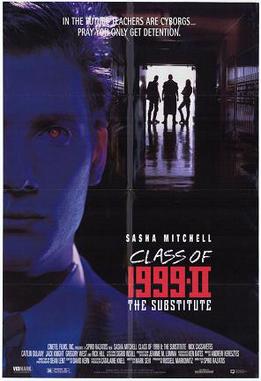
Robot Without A Cause: Class of 1999 II: The Substitute (1994, directed by Spiro Razatos)


There’s a new substitute teacher at a local high school in Oregon and he’s not going to put up with any disrespectful punks.  John Bolen (Sasha Mitchell) can educate minds and change lives but only when he’s not busy killing any student with a bad attitude and trying to protect his fellow teacher, Jenna McKenzie (Caitlin Dulany).  Jenna is scheduled to testify against the local gang leader so every punk at school is trying to intimidate her and her boyfriend, Emmett (Nick Cassavetes!).  It takes Jenna and Emmett a while to realize that John is killing all of their students but soon, a mysterious man named G.D. Ash (Rick Hill) shows up and insinuates that John might be connected to the robot teachers that, two years earlier, terrorized a high school in Seattle.
This sequel to The Class of 1999 is mostly more of the same, with the main difference being that the focus is not on the students being hunted but instead on the teachers being “protected.”  If the first Class of 1999 was about the dangers of a no tolerance discipline policy, the sequel is all for it and suggests that maybe the world really would be better off if teachers could just kill some of their more disruptive students.  The first film’s director, Mark L. Lester, did not return for the sequel and directing duties were given to stunt coordinator to Spiro Razatos who, not surprisingly, emphasized action and stunts over characterization.  Fortunately, Sasha Mitchell was a champion kickboxer so he’s believable in the action scenes and he’s such a stiff actor that you could believe that he might be an android.  There’s a good and unexpected twist towards the end of the movie but, ultimately, the victims are too interchangeable and the direction is too flat for this sequel to duplicate the demented pleasures of either Class of 1999 or Class of 1984.

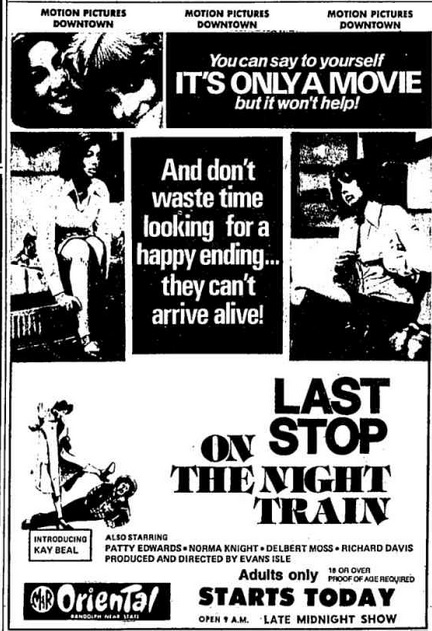
International Horror Film Review: Last Stop on the Night Train (dir by Aldo Lado)


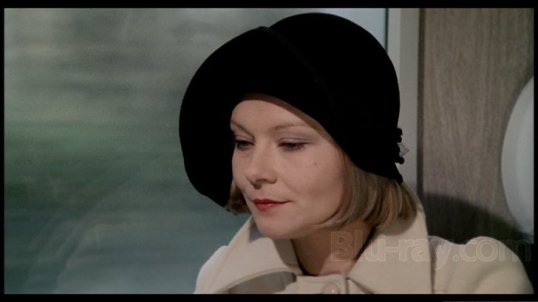
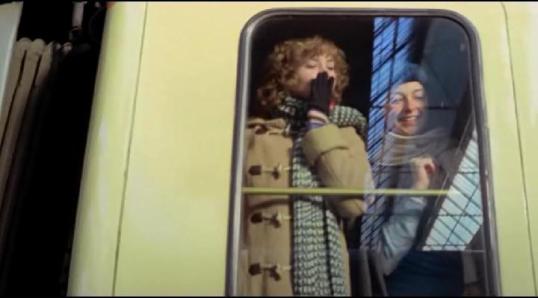
This Italian film from 1975 opens with two German teenagers — Lisa Stradl (Laura D’Angelo) and Margaret Hoffenbach (Irene Miracle) — happily looking forward to the future in general and spending Christmas with Lisa’s parents in specific.  (Of course, the Stradls live in Verona so Lisa and Margaret are going to have to take a train to visit them.)  Their happiness is reflected by the song that plays over the opening credits.  A Flower’s All You Need is perhaps the most obnoxiously happy song to ever show up in an Italian horror film.  Imagine my shock when I discovered that it was apparently co-written by Ennio Morricone.

Like many Italian exploitation films, Last Stop on the Night Train has been released under many different titles.  Here’s just a few: Night Train Murders, Xmas Massacre, Don’t Ride on Late Night Trains, Torture Train, New House on the Left and Second House on the Left.  As those last two titles indicate, this film was directly inspired by the financial success of Wes Craven’s Last House on the Left (which, for what it’s worth, was sold as being a remake of Ingmar Bergman’s The Virgin Spring).  According to an interview with director Aldo Lado, which was included with the film’s Code Red DVD release, the film’s producers approached him and told him that they wanted him to remake Last House On The Left.  Since Lado hadn’t seen Last House on the Left, the producers hastily filmed him on what happened in Craven’s film.  Based on what the producers told him, Lado proceeded to write the script for what would become Last Stop On The Night Train.

As a result, Last Stop on the Night Train follows the general plot of Last House on the Left but with some key differences.  Lado was a protegee of director Bernardo Bertolucci so, not surprisingly, he added a Marxist political subtext to the story, one that makes Last Stop On The Night Train a bit more interesting than the usual exploitation rip-off.  (Wes Craven, it should be said, always said that Last House On The Left was meant to be political, too.  Whether that’s true or not is open to debate.)  Like Craven’s film, Last Stop On The Night Train is about two innocent travelers who are abused and murdered by a group of thugs (played, in this case, by Flavio Bucci and Gianfranco de Grassi).  By an amazing coincidence, the murderers then find themselves staying at the home of one of the girl’s parents (Enrico Maria Salerno and Marina Berti).  When the parents discover the identity of their guests, they get revenge and prove themselves to be just as capable of violence and sadism as the murderers.

The main difference between Craven and Lado’s take on the story is that Lado adds a mysterious character who is identified as being only The Lady on the Train (played by Macha Meril, who also played the unlucky psychic in Argento’s Deep Red).  The Lady on the Train is apparently very privileged.  When we first see her, she is coolly and calmly talking to a group of other wealthy passengers.  The only hint that she’s anything other than an upper class passenger on a train comes when she reveals that she’s carrying a collection of BDSM-themed postcards with her.  Before meeting the Lady on the Train, the two criminals played by Bucci and de Grassi were portrayed as just being obnoxious and larcenous but not necessarily homicidal.  It’s the Lady on the Train who goads the two men into attacking and ultimately murdering Lisa and Margaret, largely for her own amusement.  (Disturbingly, the train’s other upper class passengers are portrayed as being aware of what’s happening but either not caring or being amused by the whole thing.  One passenger — who is later revealed to be an acquaintance of the Stradls — briefly joins in.)  Even at the end of the film, while the parents are savagely attacking the two men, the Lady on the Train watches with the confident certainty that her wealth and position will protect her from any form of retribution.

It’s a disturbing film and definitely not one for everyone.  Even if you appreciate the technical skill with which it was made, this is a film that you won’t necessarily want to rewatch.  (I rewatched it only so I could write this review.  For me, it certainly didn’t help that one of the victims was named Lisa.)  If Wes Craven’s film was ultimately about gore and the idea that violence only leads to more violence, Lado is less concerned with both of those and instead focuses on the idea that, when the privileged and the marginalized both commit the same crime, only the marginalized are punished.  Lado’s film is also far better acted (and, if we’re going to be honest, directed) than Craven’s film, which makes Last Stop On The Night Train the rare rip-off that’s better than its source material.

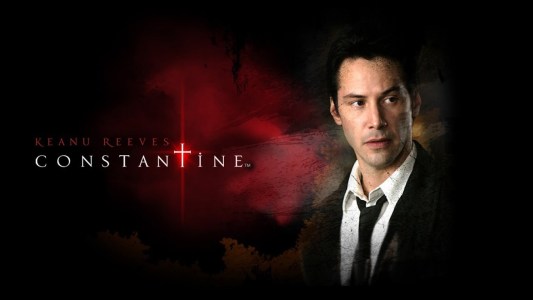
Constantine, Review by Case Wright


CONS.jpg

Can one act stain your soul for all eternity? It turns out that if you attempt suicide, you’re going to Hell.  Anywho, Constantine was a comic by Alan Moore (Watchmen) long before Keanu Reeves played the demon fighter.  Full disclosure, I have purchased, but not read the comic. It’s long and I’m not sure if I can get through it for this horrorthon, but I WILL TRY!

Constantine was born with a “gift” that he could see demons among us.  This drives him out of his mind; so, he commits suicide and is sent promptly to Hell. He’s tormented for what seems like an eternity, but in our time was just two minutes. He returns to Earth because paramedics revive him.  Because he attempted to kill himself, he’s condemned to Hell when he dies.  How do I know this?The “Half-Angel” Gabriel tells it to us in really clunky exposition.  It turns out that Heaven and Hell are basically in a Cold War and can’t directly fight on Earth.

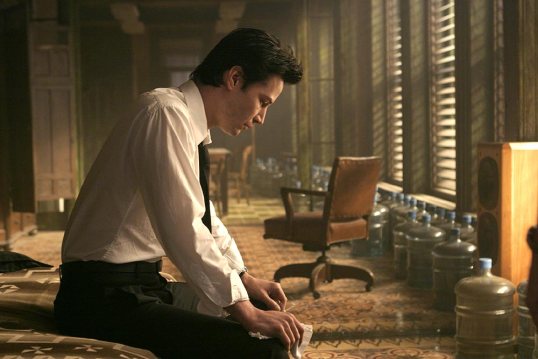
Constantine REALLY doesn’t want to go back to Hell.  His solution is to fight demons for a living to get into heaven. He does an exorcism here and there and fights evil, but this isn’t his ticket back to heaven- as I was told by MORE exposition.  Constantine is kind of a depressive and a little whiny at times.  I guess that’s why I kept getting annoyed by him.  Yeah, Yeah, your life sucks, but there’s no reason to do this all the time:

CON2.jpg

There’s a lot of these “I’m so broody Boohoo” moments in this film.

Like this one: broody 3.jpg

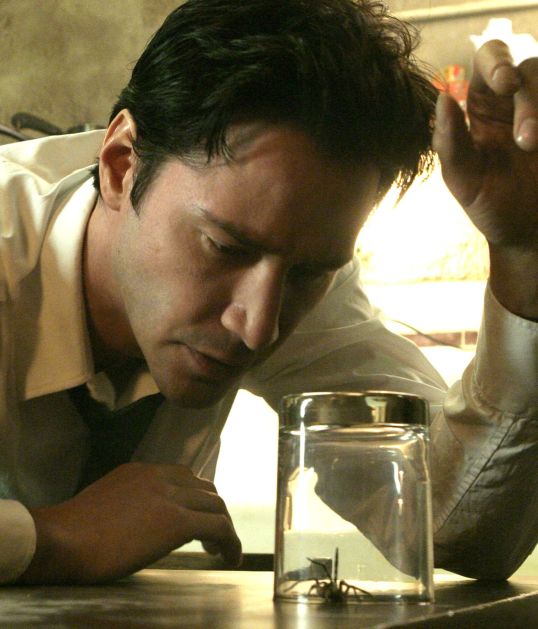
This one was a long trip to bummer time with a soupçon of anger:

broody 2.jpg

Between the complaining, Constantine uncovers a plot that Lucifer’s son Mammon is trying to break into earth and cause a lot of trouble.  Trouble….Trouble….that starts with M …. and ends with N, which stands for Mammon!

Constantine was entertaining, but it seems kinda all over the place at times.  The parts that had him hot on the trail of Mammon and his evil plans were fun, but all the side plots and side characters were a mixture of goofy and dull.  Overall, it was a good burgers and fries flick.  Not to say that the comics or the cartoon (yep, there’s a cartoon, I know because of Google) aren’t awesome, but if they are the same quality as the movie, they are beach reads or I’m stuck on public transportation reading.  There might be sequel.  Will I watch it? Yes, because despite my snark, I’m basically 14.


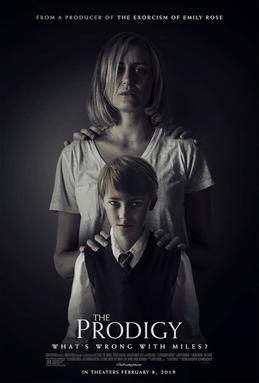
Horror Film Review: The Prodigy (dir by Nicholas McCarthy)


The Prodigy, which was released way back in February, is yet another creepy kid movie.

You know how these movies go.  There’s always some child who seems like a perfect little angel but is actually either psychotic or demon-possessed or maybe an alien.  Whatever it is, the important thing is that the child can get away with killing people because no one thinks that an eight year-old would do that something like that.  Inevitably, it’s the child’s mother who figure out what’s going on and it’s always up to her to try to stop her child’s reign of terror.  Sometimes, the mother is successful.  More often, she’s not and the movie ends with the little brat smiling at the camera or something.  Seriously, you know how it goes!

Because there’s been so many of them, it’s usually easy to predict what’s going to happen in these creepy kid movies.  At the same time, they’re effective because … well, let’s just be honest here.  Kids are creepy.  Even the ones that aren’t evil know that they can get away with stuff that no adult would be allowed to do.  Add to that, they’ve got those high-pitched voices that can give you a migraine if you get stuck on airplane anywhere near one of them.  Beyond that, these films also touch on every parent’s worst fear.  What if your child does grow up to be evil?  What if you mess up while you’re raising them and, as a result, other people suffer?  What if your child grows up to have bad hygiene or an obnoxious attitude?  I mean, I don’t have any children yet but these are the things that I imagine keep most parents up at night.

Anyway, in The Prodigy, the creepy kid is named Miles (Jackson Robert Scott).  Miles is super smart.  He started talking when he was just a toddler.  However, after Mile turns 8, he starts to behave strangely.  He pulls mean pranks on the babysitter.  He attacks other children.  He starts speaking Hungarian in his sleep and saying stuff like, “I’ll cut your eyes out and watch you die, whore.”  After Miles does something bad, he always claims that he has no memory of what he did.  Whenever Bad Miles takes control, Good Miles just seems to black out.  Needless to say, his parents — Sarah (Taylor Schilling) and John (Peter Mooney) — are concerned about what’s happening with their son.

Could it have something to do with the fact that, at the same time that Miles was being born, a Hungarian serial killer named Edward Scarka was getting gunned down by the cops?  Is it possible that Edward’s evil spirit is now inside of Miles and is trying to take control of him?  Sarah certainly comes to think so!  As for John — well, who cares?  John is mostly just there to get upset and pout.

The Prodigy does have some scary moments.  Director Nicholas McCarthy establishes an ominous atmosphere early on and the film remains remarkably bleak for the majority of its running time.  I mean, there are some really dark moments in The Prodigy.  But, at the same time, the whole crazy child plot is a bit too predictable and the film doesn’t really bring anything new to the terror tyke genre.  Add to that, this is yet another film in which a family pet is gruesomely murdered for no particular reason.  I guess we’re supposed to be shocked and say, “OH MY GOD, IF THEY’LL KILL THAT ADORABLE DOG, THEY’LL KILL ANYONE!” but the dog is so obviously doomed from the first moment that it appears that it just feels like lazy storytelling.

Outside of a few isolated moments, The Prodigy doesn’t really make much of an impression.  It’s an efficient horror film that’s never really memorable.

Horror On The Lens: The Haunting of Helen Walker (dir by Tom McLoughlin)


Stop me if this sounds familiar.

In Victorian-era England, a somewhat neurotic young woman is hired to serve as the governess for two children who live in a foreboding estate. Once the governess arrives, she discovers that the children — especially little Miles — can be a handful. She also discovers that there was a governess hired before her, a governess who died under mysterious circumstances. At night, the new governess hears strange noises and soon, she becomes convinced that she’s seen the ghosts of both her predecessor and the old governess’s lover, Peter Quint. Everyone else may think that the new governess has allowed the isolation of the estate to get to her but she’s convinced that the ghosts have possessed the children! She becomes determined to save the children, even at the risk of their own lives….

If that sounds familiar, then you’ve either read Henry James’ Turn of the Screw or you’ve seen one of the several movies that were based on his novella. The Haunting of Helen Walker, which was made-for-television and initially broadcast in 1995, reimagines James’s unnamed governess as Helen Walker, an American woman played by Valerie Bertinelli.

Now, The Haunting of Helen Walker does take some liberties with Henry James’s source material.  The novella was a masterpiece of ambiguity.  The Haunting of Helen Walker is …. less so.  Let’s just say this version doesn’t leave much doubt as to whether or not there’s actually ghosts in the mansion.  That said, it’s still an entertaining made-for-TV movie.

Check out my full review here and watch the film below.

Enjoy!

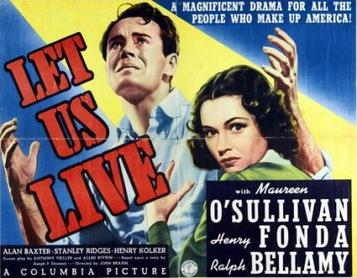
Cleaning Out The DVR: Let Us Live! (dir by John Brahm)


In the 1939 film, Let Us Live!, Henry Fonda plays Brick Tennant.  Brick is a poor but honest taxi driver who has always lived a law-abiding life and who is looking forward to marrying waitress named Mary Roberts (Maureen O’Sullivan).  However, when a taxi is used as a getaway car in a violent robbery that leaves a policeman dead, Brick finds that he’s a suspect.

At first, Brick isn’t too worried.  It turns out that every taxi driver in Boston is apparently being considered a suspect.  Brick is just 1 out of 120.  However, when the police bring Brick in to take part in a lineup, one of the witnesses insists that Brick and his friend, Joe Linden (Alan Baxter), were involved in the robbery.  Despite the fact that Brick and Mary were at a church, planning their wedding, during the robbery, Brick and Joe are arrested and put on trial for murder.  Despite Brick’s initial faith in the system, he and Joe are convicted and sentenced to die.

On death row, Brick faces the inhumane reality of American justice.  He watches as other prisoners slowly lose their mind as a result of neglect and abuse.  He watches as another prisoner drops dead in front of him, to the indifference of the guards.  Even when Mary tells him that she’s still looking for evidence that will exonerate him, Brick says that he no longer cares.  The state of Massachusetts is determined to kill him and he doesn’t believe that there’s any way stop them.  As Mary puts it, Brick is now dead inside.

Still, Mary continued to investigate.  Helping her is a police detective named Everett (Ralph Bellamy).  Everett comes to realize that two innocent men are sitting on Death Row but will he and Mary be able to find the real culprits before the state executes Brick and Joe?

While watching Let Us Live, I found it impossible not to compare the film to The Wrong Man, another film in which Henry Fonda played an innocent man being railroaded by the system.  Both The Wrong Man and Let Us Live were based on a true stories, though Let Us Live takes considerably more liberty with its source material than The Wong Man does.  Whereas The Wrong Man is a docudrama that’s full of moody atmosphere courtesy of director Alfred Hitchcock, Let Us Live is much more of a fast-paced, melodramatic B-move.

That said, Let Us Live! is still a definitely effective look at how an innocent man can be railroaded by a system that’s often more concerned with getting a quick conviction than actually searching for the truth.  Sadly, the issues that Let Us Live deals with are just as relevant today as they were in 1939.  The film’s power comes from Henry Fonda’s performance as Brick.  It’s truly heart-breaking to watch Brick go from being a cheerful optimist to a man who has been so broken down by American justice that he can’t even bring himself to celebrate the news that he might be released.  The film ends on a grim note, a reminder that some damage cannot be undone.

Let Us Live! is another good but obscure film that I discovered through TCM.  Keep an eye out for it!

The TSL’s Horror Grindhouse: Night School (dir by Ken Hughes)


Someone is decapitating women in Boston and police Lt. Judd Austin (Leonard Mann) is determined to discover where the killer’s head is at!

The victims seem to come from all walks of life.  A teacher’s aide loses her head while spinning around on a carousel. A worker at the local aquarium has her head tossed into a fish tank where it’s promptly nibbled at by a turtle.  (Interestingly enough, the sharks ignore it.)  Another head shows up in a kitchen and then another one in a toilet and then another one in a pond and …. well, you get the idea.  There’s a lot of heads rolling around.  The only thing that all of the victims have in common is Wendell College.  Some were merely killed near the college.  Others were enrolled in night classes.

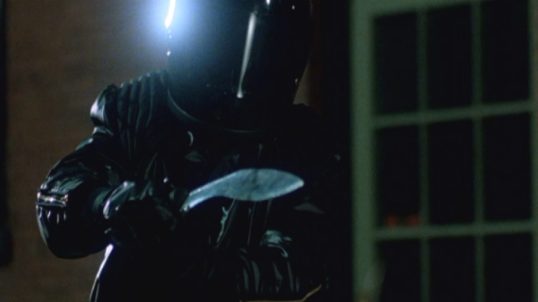
Because the murderer wears a motorcycle helmet and a full black leather bodysuit, we’re not sure who the killer is.  However, Lt. Austin promptly comes to the conclusion that the murderer is probably anthropology professor Vincent Millett (Drew Snyder), an unlikely lothario who is notorious for sleeping with his students and who has a collection of skulls in his apartment.  Austin’s attitude is that no normal person would teach anthropology and since it also stands to reason that no normal person would run around Boston chopping off people’s heads, Millett must be the murderer.  Millett doesn’t help himself by continually coming across as being a bit of an arrogant prick.

But is Millett the murderer?  There are other suspects!

For instance, there’s Millett’s teaching assistant (and lover) Eleanor Adjai (Rachel Ward), on whom Millett performs some sort of odd blood ritual while the two of them are taking a shower together, the better so that director Ken Hughes can toss in a playful homage to Psycho.

And then there’s Gary (Bill McCann), the obviously disturbed busboy at the local diner who tries to follow Eleanor home one night.

And let’s not forget the dean of students, Helene (Annette Miller), who is portrayed as being a predatory lesbian because this movie was made in 1981.

And then there’s….

Well, actually, that’s it.  One of the problems with Night School is there there really aren’t enough suspects.  For a film like this to really work, you need a lot more red herrings.  Savvy filmgoers already know that the most likely suspect isn’t going to be guilty because they never are.  Unfortunately, that wipes out 50% of Night School‘s suspects and only leaves two others, one of whom is soon murdered.  It all leads up to a surprise ending that’s not much of a surprise.

Night School is usually described as being a part of the slasher boom of the early 80s.  While it’s true that Night School probably would never have been made if not for the financial success of Halloween and Friday the 13th, the film itself, with its whodunit plot and it’s gloved and masked killer, is more an American giallo than a traditional slasher film.  That said, Night School never reaches the over-the-top, operatic heights of an Italian giallo.  Instead, it’s a rather subdued version of the genre, happy to efficiently do it’s job without getting too caught up in issues of guilt, sin, and absolution.  At the same time, some of the murders are cleverly staged and Rachel Ward brings some class to a film that could obviously use it.  Night School gets the job done, even if it’s ultimately not that memorable.

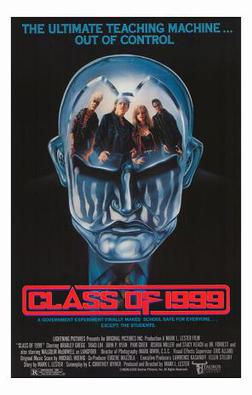
Robots With A Cause: Class of 1999 (1990, directed by Mark L. Lester)


The year is 1999 and John F. Kennedy High School sits in the middle of Seattle’s most dangerous neighborhood.  Teenage gangs have taken over all of the major American cities and just going to school means putting your life in danger.  However, Dr. Bob Forest (Stacy Keach!), the founder of MegaTech, has a solution.  He has taken former military androids and reprogrammed them to serve as educators.  JFK’s principal, Miles Langford (Malcolm McDowell!!), agrees to allow his school to be used a testing ground.  Soon, Miss Conners (Pam Grier!!!) is teaching chemistry.  Mr. Byles (Patrick Kilpatrick) is teaching gym.  Mr. Hardin (John P. Ryan) is teaching history.  When they’re not teaching, these robots are killing truant students and manipulating two rival street gangs into going to war.
Imagine mixing Rebel With A Cause with The Terminator and you get an idea of what Class of 1999 is like.  Two of the only good teenagers (played by Bradley Gregg and Traci Lind) figure out that the teachers are killing their classmates but they already know that they won’t be able to get anyone to listen to them because they’re just kids who go to school in a bad neighborhood.  Meanwhile, the teachers have been programmed to do whatever has to be done to keep the peace in the school.  Why suspend a disruptive student when you can just slam his head into a locker until he’s dead?  Director Mark L. Lester (who previously directed Class of 1984) is an old pro when it comes to movies like this and he’s helped by a better-than-average cast.  Any movie that features not only Stacy Keach and Malcolm McDowell but also Pam Grier is automatically going to be cooler than any movie that doesn’t.

When Class of 1999 was made, 1999 was considered to be the future and, in many ways, the movie did prove to be prophetic.  We may not have robot teachers (yet) but the idea of arming teachers and expecting them to double as cops has become a very popular one over the past few years.  Personally, I wouldn’t want to send my children to a school where the teachers all have to carry a gun while teaching but that may just be me.

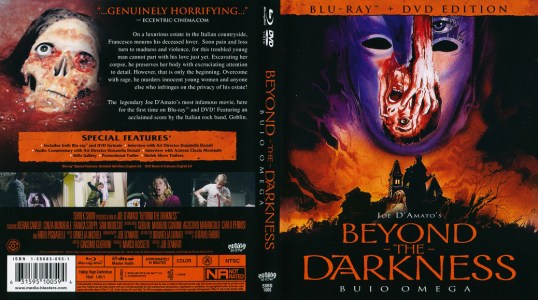
International Horror Film Review: Beyond the Darkness (dir by Aristide Massaccesi, a.k.a. Joe D’Amato)


An odd film, this one is.

Now, me, I absolutely love Beyond the Darkness.  However, this 1979 Italian film is definitely not for everyone and I’m always very careful about recommending it.  At it’s heart, it’s a story about a man named Frank Wyler (Kieran Canter) who is so in love with Anna Volkl (Cinzia Monreale, who Italian horror fans will immediately recognize from her iconic role as Emily in Lucio Fulci’s The Beyond) that he won’t even allow death to keep them apart.  At the same time, the film contains scenes of cannibalism, gore, and nudity (poor Cinzia Monreale had to spent the majority of the movie naked and pretending not to breathe) that were so graphic that the film was actually banned in several countries.  Did I mention that Frank’s a taxidermist?  If you’ve ever wanted to see a film about how messy taxidermy can be, I guess this would be the one to go with.

Frank is a young man who has inherited a villa in the country.  He lives there with Iris (Franca Stoppi), the servant who has literally raised him from his birth.  Frank is a handsome but strange man, one who spends most his time locked away in his garage and stuffing dead animals.  (Before anyone panics, there’s no animal cruelty to be witnessed in this film.  Though there is a bit of human cruelty….)  Frank is in love with Anna but Anna has recently been taken ill.  She’s in the hospital, where the doctor’s simply cannot figure out what’s wrong with her.  Could it have something to do with the voodoo curse that the jealous Irish has placed on her?

When Anna finally dies, Iris is convinced that she’ll have Frank to herself but Frank has other ideas.  After the funeral, Frank promptly digs Anna back up and then takes her body back to his garage.  Unfortunately, along the way, an obnoxious hitchhiker (played by Lucia D’Elia) decides that Frank’s going to give her a ride.  The hitchhiker ends up passing out in Frank’s van.

So, here Frank is.  All he wants to do is stuff his dead girlfriend.  But he’s got this obnoxious hitchhiker running around the garage and knocking over buckets of intestines!  Frank kills the hitchhiker and Iris, despite being disgusted by the fact that Frank has insisted on bringing Anna home, helps him dispose of the hitchhiker’s body.  The problem’s solved, except for the fact that Frank is now becoming obsessed with cannibalism….

Okay, it’s a weird film and it only gets weirder from there.  As I said, it’s definitely not a film for everyone and there’s certain scenes that would be incredibly offensive if not for the fact that the film is so well-directed and Canter, Monreale, and Stoppi are all so well-cast and give such sincere performances that you can’t help but get caught up in the film’s storyline.  Frank may be a spoiled, cannibalistic murderer and Anna might be dead but their love for each other is so sincere that you can’t help but feel for both of them.  Director Aristide Massaccesi (who was usually credited under the name Joe D’Amato) creates an ominous and gothic atmosphere while Goblin provides a pulsating and moody score that perfectly mirror Frank’s descent into madness  (Admittedly, Frank doesn’t have far to descend.)  Massaccesi often said that he only made the film to gross people out but an accidental success is a success nonetheless.