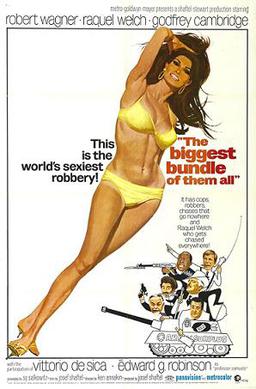
The Biggest Bundle Of Them All (1968, directed by Ken Annakin)


Harry Price (Robert Wagner) is a small-time tough guy with big plans.  He and his gang of accomplices fly over to Italy and plot to kidnap Cesare Celli (Vittorio De Sica), a retired mafia don who is reputed to be worth millions.  However, after snatching Celli from a wedding, Harry discovers that Celli is actually flat broke.  Trying to be helpful, Celli suggests that Harry call up the local gangsters and demand that they pay a ransom for Celli’s release.  When everyone refuses to pay, Celli comes up with another plan.  Celli takes over Harry’s gang and, with the help of Celli’s old friend, Prof. Samuels (Edward G. Robinson), plots to steal $5,000,000 worth of platinum ingots from a train.

Complicating matters is that Harry and his gang are not exactly master criminals.  Benny (Godfrey Cambridge) is a violinist who has moral objections to carrying a gun and who also refuses to cross a picket line, even in the course of a robbery.  (“I’m a union man!”)  Tozzi (Francesco Mule) is more interested in having a good dinner than pulling off the perfect heist.  Davey (Davy Kaye) is short, which is apparently a problem for some reason.  Finally, Harry’s girlfriend, Juliana (Raquel Welch), is more interested in dancing than in committing crimes.  Still, Celli is determined to use them to pull off the heist of the century and, even more importantly, to help prove that this old criminal has still got what it takes.

The Biggest Bundle of Them All was an attempt at a wacky heist film.  Unfortunately, at the time that the film was made, Robert Wagner and “wacky” didn’t belong anywhere near each other.  Wagner stiffly delivers lines like, “I’ve had it, baby.  Can you dig it?” and looks thoroughly out-of-place.  Godfrey Cambridge and Edward G. Robinson have a few funny scenes but both Kaye and Mule are wasted in one-note role while De Sica looks like he’s trying to figure out how he went from Bicycle Thieves to this.  Everyone in the movie just goes through the motions.  Even while they’re robbing the train, the cast seems to be indifferent.

It almost doesn’t matter, though, because this is a Raquel Welch film.  Welch doesn’t have much of a character to play but she looks amazing while doing it and that really is the appeal of any film that Welch made in the late 60s and early 70s.  Welch spends a good deal of the film in a bikini and is undeniably sexy, particularly in the scene where Wagner sends her to seduce De Sica.  She also gets to share a dance with Edward G. Robinson, which is such a goofy and fun scene that it’s almost worth the price of admission.  (Regardless of what fun they may have been having on-screen, Robert Wagner later wrote in his autobiography that, off-screen, Robinson grew so annoyed with Welch’s chronic lateness on the set that he yelled at her until she was in tears.)

Even Raquel Welch in a bikini can only carry a film so far and The Biggest Bundle of Them All is ultimately too disjointed to work.  Director Ken Annakin tries to recreate the same sort of frantic comedy that was at the heart of his previous film, Those Magnificent Men in Their Flying Machines, but the end result falls flatter than 5 million dollars worth of platinum ingots sliding out of an airplane.

Lisa Reviews An Oscar Winner: In the Heat of the Night (dir by Norman Jewison)


The 1967 film, In the Heat of the Night, tells the story of two very different men.

Chief Gillespie (Rod Steiger) is the police chief of the small town of Sparta, Mississippi.  In many ways, Gillespie appears to the epitome of the bigoted Southern cop.  He’s overweight.  He loses his temper easily.  He chews a lot of gum.  He knows everyone in town and automatically distrusts anyone who he hasn’t seen before, especially if that person happens to be a black man or from the north.

Virgil Tibbs (Sidney Poitier) is a black man from the north.  He’s a detective with the Philadelphia Police Department and he’s as cool and controlled as Gillespie is temperamental and uncouth.  Tibbs has no patience for the casual racism that is epitomized by lawmen like Chief Gillespie.  When Gillespie says that Virgil is a “fancy name” for a black and asks what people call Virgil in Philadelphia, Virgil declares, “They call me Mister Tibbs!,” with an authority that leaves no doubt that he expects Gillespie to do the same.

Together …. THEY SOLVE CRIMES!

For once, that old joke is correct.  When a Chicago industrialist named Phillip Colbert is discover murdered in Sparta, Chief Gillespie heads up the investigation and, assuming that the murderer must be an outsider, orders Deputy Wood (Warren Oates) to check out the train station for any suspicious characters.  When Wood arrives at the station, he discovers Virgil standing on the platform.  Virgil is simply waiting for his train so that he can get back home to Philadelphia.  However, Wood promptly arrests him.  Gilespie accuses him of murdering Colbert, just to discover that Virgil’s a police detective from Philadelphia.

Though neither wants to work with the other, that’s exactly what Gillespie and Virgil are forced to do as they investigate Colbert’s murder.  Colbert was planning on building a factory in Sparta and his wife (Lee Grant) makes it clear that, if Sparta wants the factory and the money that comes with it, Virgil must be kept on the case.  Over the course of the investigation, Gillespie and Virgil come to a weary understanding as both of them are forced to confront their own preconceived notions about both the murder and life in Sparta.  In the end, if it’s impossible for them to truly become friends, they do develop a weary respect for each other.  That is perhaps the best that one could have hoped for in 1967.

I have to admit that it took me a few viewings before I really appreciated In the Heat of the Night.  Though this film won the Oscar for Best Picture of 1967, it’s always suffered when compared to some of the films that it beat.  One can certainly see that the film was superior to Doctor Dolittle and Guess Who’s Coming to Dinner.  But was it a better film than The Graduate or Bonnie and Clyde?  Did Rod Steiger really deserve to win Best Actor over Dustin Hoffman and Warren Beatty?  (Amazingly, Poitier wasn’t even nominated.)

To be honest, I still feel that In The Heat of the Night was probably the 3rd best of the 5 films nominated that year, superior to the condescending Guess Who’s Coming To Dinner but nowhere near as groundbreaking as Bonnie and Clyde or The Graduate.  The first time I watched In the Heat of the Night, I thought Steiger blustered a bit too much and the film’s central mystery didn’t really hold together and, to a large extent, I still feel like that.

But, at the same time, there’s a lot to appreciate about In the Heat of the Night.  On subsequent viewings, I came to better appreciate the way that director Norman Jewison, editor Hal Ashby, and cinematographer Haskwell Wexler created and maintained an atmosphere that was so thick that you can literally feel the Mississippi humidity while watching the film.  I came to appreciate the supporting cast, especially Warren Oates, Lee Grant, Scott Wilson, Anthony James, and Larry Gates.  (Gates especially makes an impression in his one scene, playing an outwardly genteel racist who nearly cries when Tibbs reacts to his slap by slapping him back.)  I also came to appreciate the fact that, while the white cop/black cop partnership has subsequently become a bit of a cliche, it was new and even controversial concept in 1967.

And finally, I came to better appreciate Sidney Poitier’s performance as Virgil.  Poitier underplays Virgil, giving a performance of tightly controlled rage.  While Steiger yells his way through the film, Poitier emphasizes that Virgil is always thinking.  As in the same year’s Guess Who’s Coming To Dinner, Poitier plays a dignified character but, here, that dignity is Virgil’s way of defying the demands and expectations of men like Gillespie.  When Virgil does strike back, it’s a cathartic moment because we understand how many times he’s had to hold back.

In the Heat of the Night may not have been the best film of 1967 but it’s still one worth watching.

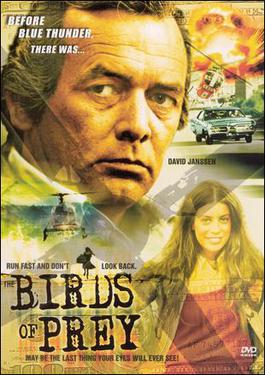
Birds of Prey (1973, directed by William A. Graham)


When three disgruntled Vietnam vets rob Zion’s Bank in downtown Salt Lake City and take a bank teller (Elayne Heilveil) hostage, they’re spotted by traffic reporter Harry Walker (David Janssen).  A World War II vet who is going through a mid-life crisis and who feels unappreciated by the country that he risked his life to defend, Harry chases after the robbers in his helicopter.  With Harry’s help, the police corner the robbers on the roof of a parking garage.

That’s when they discover that the robbers have a helicopter of their own!  After abandoning their car, the robbers and their hostage take off in their helicopter, heading into the Oquirrh Mountains.  Though he’s running low on fuel and has been ordered to back off by Police Captain Jim McAndrew (Ralph Meeker), Harry continues to pursue the other helicopter into the wilderness.

A made-for-TV movie from 1973, Birds of Prey is a chase movie, with the usual cars replaced by helicopters.  What makes this movie so exciting is that it was directed in the days before CGI so, when you watch the two helicopters dangerously pursuing each other over Salt Lake City and taking daredevil risk over the mountains of Utah, you’re watching the real thing.  David Janssen was a trained pilot who actually was flying the helicopter and doing his own stunts for the majority of the film.  When the two helicopters nearly collide, you’re aware that you’re seeing a real near-miss, one that could have gone tragically wrong if not for the talents of the men piloting those helicopters.

Despite all of the action in the air, the film does occasionally touch ground.  Harry and McAndrew talk about why some vets can move on and others can’t.  Harry briefly lands on the freeway and gets some help from a passing motorist.  Finally, Harry gets to know the kidnapped teller, who has never been outside of Salt Lake City and who shares Harry’s love of old movies.  David Janssen was the go-to guy for gruff and grizzled heroes in 1970s made-for-TV movies and he’s pretty good as Harry.  But the real stars of the film are the helicopters and the still-impressive aerial footage of them chasing each other above Utah.

Unfortunately, I have never seen a good print of Birds of Prey.  Even the version on Amazon Prime is grainy, scratchy, and sometimes washed-out.  (It also features a promo for a television station in Phoenix, suggesting that it was transferred straight from a VHS tape.)  I hope that, at some point in the near future, someone will restore this minor chase classic.

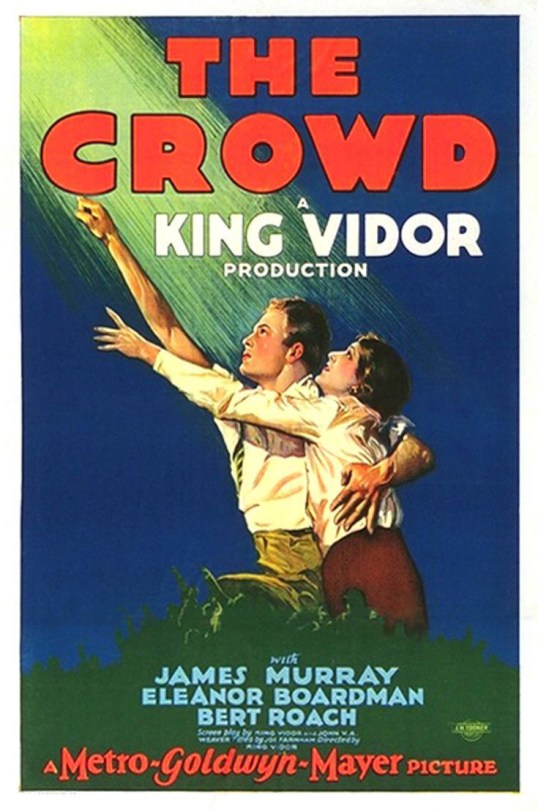
Lisa Reviews An Oscar Nominee: The Crowd (dir by King Vidor)


Way back when the Academy first started to hand out awards to honor the best films of the year, they actually gave out two awards for best picture.  One of the awards was called Oustanding Production and it’s assumed by most Oscar historians that it was meant to go to the most “entertaining” film of the year.  The other award was called Best Unique and Artistic Picture and it was meant to honor the type of films that might not make a huge amount of money at the box office but which did the most to move cinema forward as an art form.

As a result, when the very first Academy Awards were awarded at the Hollywood Roosevelt Hotel on May 16th, 1929, a popular war film named Wings was named Outstanding Production while F.W. Murnau’s Sunrise was named Best Unique and Artistic Picture.  Sunrise defeated two other nominees, a documentary called Chang and King Vidor’s The Crowd.

It’s long been rumored that, when the votes were first counted, The Crowd originally won Best Unique and Artist Picture but that Louis B. Mayer insisted that the award should go to Sunrise instead.  The head of MGM, Louis B. Mayer reportedly disliked The Crowd, even though it was distributed by his own studio.  Mayer felt that the film was too downbeat and he also resented that King Vidor had resisted Mayer’s demand that the film have a traditionally happy ending.  It’s also been suggested that, since the Academy was largely Mayer’s idea, he felt that, if an MGM film won the initial reward, it would lead to his enemies claiming that Mayer had too much influence over the organization.  That may or may not be true, no one can say for sure.  What we can say for sure, however, is that both The Crowd and Sunrise continue to be recognized as classics of the silent era.

The Crowd tells the story of John Sims (James Muray), who goes to New York when he’s 21, convinced that he’s destined to be someone important.  Sims gets a job at Atlas Insurance, where he’s one of many faceless office workers.  He meets and, after one date, marries Mary (Eleanor Broadman).  They live in a tiny apartment next to an elevated track.  Over the next five years, they raise a family.  They fight often.  Occasionally, they beak up but they always get back together.  Throughout it all, John struggles to prove himself as an individual, just to be continually reminded that he’s only a member of the faceless crowd.

It’s not a particularly happy film.  John starts the film as a member of the crowd and he’s still a member of the crowd when it ends.  If there is anything positive to be found in the film, it’s that John’s family loves him but, even taking that in to consideration, it’s obvious that he and Mary are going to spend their entire lives struggling and that the same fate probably awaits their children.  Knowing that the film was made on the verge of the start of the Great Depression makes John’s story all the more poignant.  If he thinks things are bad now, they’re about to get even worse.

Seen today, The Crowd is still a visually striking film.  Influenced by German expressionism (particularly the work of Sunrise‘s director, F.W. Murnau), Vidor presents New York as being a menacing and frequently surreal world of towering skyscrapers and unfriendly faces.  (Vidor even used the then-unheard of technique of using a hidden camera to capture actual documentary footage of star James Murray dealing with real New Yorkers.)  The Crowd is probably best remembered for the shot where the camera pans up the length of a skyscraper, finally entering the building and showing us the anonymous office workers within.  It’s a shot that perfectly captures the film’s theme of being lost and ignored in an impersonal world.  It’s also a shot that’s been duplicated in a countless number of films.  The Crowd may be 92 years old but its legacy lives on.

Sadly, things did not turn out well for James Murray, the former extra who Vidor cast in the lead role.  The success of The Crowd did not translate into success for Murray.  An alcoholic, Murray ended up living on Skid Row, where he once asked King Vidor for money and reacted with anger when Vidor offered him a role in a new film.  In 1936, Murray was found floating in the Hudson River.  He was 35 years old.

As for the Oscar for Best Unique and Artistic Motion Picture, it was only awarded once.  Starting with the second Oscar ceremony, the Academy merged the two best film awards into one.  Interestingly, the idea of giving out two Best Picture awards was briefly revived in 2018 but the response to the idea was so negative that it was quickly abandoned.

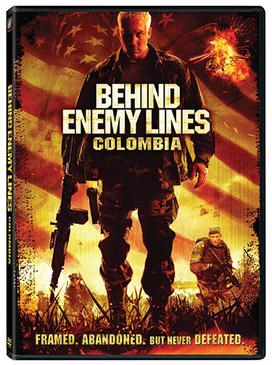
Behind Enemy Lines: Colombia (2009, directed by Tim Matheson)


After 40 years of war, the Colombian military and FARC, the cocaine-funded guerrilla insurgency, are finally meeting to discuss peace.  A group of Navy SEALS, led by Lt. Macklin (Joe Manganiello), have been sent into the Colombian jungle to secretly keep an eye on the peace talks and make sure that things don’t get out of hand.  However, as soon as they arrive, the conference is attacked by yet another group of terrorists.  Led by Alvaro Cardona (Yancy Arias), this third group kills the leaders of the Colombian military and FARC and attempts to frame the entire attack on the SEALS!  Now, Macklin and Carter Holt (WWE superstar Mr. Kennedy) are trapped behind enemy lines.  With the Colombian military, FARC, and Cardona after them and the CIA disavowing any knowledge of their existence, the two SEALS have to rescue a captured comrade and prove their innocence before all of South America plunges into war.

This film, which features Keith David recreating his commanding officer role from Behind Enemy Lines II: Axis of Evil, is a standard action movie.  Some of the action scenes are exciting but all too often, BEL: Colombia is done in by its own low budget.  This is especially obvious when the SEALS are parachuting into the jungle and the cheap green screen effects make the movie look like an old 80s tv show, with the SEALS clumsily superimposed over a picture of the sky.  Watching that scene, I wouldn’t have been surprised if the original Magnum P.I. or Simon and Simon suddenly appeared as a member of the team.  Even Jessica Fletcher wouldn’t have been out of place.

On the plus side, the acting actually isn’t bad and Cardona has a little more depth than the usual action movie villain. This is really not the type of film that you would expect to be directed by Otter from Animal House but Tim Matheson doesn’t do a bad job.  Again, the low budget hurts but he gets some decent performances and he shows that he can adequately handle an action scene.   BEL: Colombia isn’t terrible but it’s still not hard to feel that it would have been better if it had been made in 1988 by Chuck Norris and Menahem Golan.

Lisa Reviews An Oscar Nominee: Marriage Story (dir by Noah Baumbach)


The Oscar nominations were announced earlier today and, as happens every year, some of the nominations were met with acclaim while others left observers scratching their heads.  Right now, on twitter, there’s a fierce debate going on between those who think Joker deserved all of its nominations and those who believe that the Academy has once again deliberately snubbed women and people of color.

As for me, I’m just shaking my head at all the nominations for Marriage Story.  I get the feeling that, out of all of the recently unveiled best picture nominees, Marriage Story is the one that we will have forgotten about within the next year.  It’s an acclaimed film and I’m happy that Scarlett Johansson finally got a nominations (two nominations, as a matter of fact, as she was also nominated for Best Supporting Actress for Jojo Rabbit) but, in the end, Marriage Story feels rather hollow.

Marriage Story is about the end of a marriage.  Charlie Barber (Adam Driver) is a New York-based theatrical director.  Nicole Barber (Scarlett Johansson) is his wife.  Nicole is an actress who, before she married Charlie, was best known for appearing topless in a teen comedy.  Charlie is often credited with having resurrected her career.  On the surface, they’re the perfect New York couple.  However, when we first meet them, their marriage is coming to an end.  Charlie, we learn, cheated on Nicole with a production assistant.  Nicole wants to go to Los Angeles so that she can star in a television series and have a career that’s not dependent upon her husband.  Caught in the middle of all this is their son, Henry (Azhy Robertson).

At first, Charlie and Nicole agree to an amicable split, one with no lawyers and no accusations.  That doesn’t last.  Nicole hires the cheerfully ruthless Nora Fanshaw (Laura Dern).  Charlie, after moving out to Los Angeles, finds himself torn between hiring either the the kindly (but ineffectual) Bert Spitz (Alan Alda, in a role he was born to play) or the somewhat sinister (but definitely effective) Jay Marotta (Ray Liotta, also in a role that he was born to play).  While both Charlie and Nicole try (and often) fail to maintain a civil relationship for Henry’s sake, their attorneys go to war.

There’s a lot of good things to be said about Marriage Story.  Though I think that his truly award-worthy work for 2019 was not in this film but instead in The Report, Adam Driver does a good job with role of Charlie.  Scarlett Johansson, who has so often been unfairly overlooked at awards time, again proves herself to be one of the best actresses around.  Dern, Alda, and Liotta are well-cast as three very different (but very recognizable) attorneys.  Noah Baumbach’s script has several good lines.  The scene where Nicole’s sister is awkwardly recruited to serve Charlie with the divorce papers is both funny and cringey.  The much-acclaimed scene where Charlie and Nicole go from having a polite (if awkward) conversation to yelling at each other is definitely effective even if it’s power has been diluted by it’s subsequent reinvention as a twitter meme.

That said, Marriage Story ultimately left me feeling dissatisfied.  It’s pretty much an open secret that the film is based on Noah Baumbach’s divorce from Jennifer Jason Leigh and, watching the film, you can’t help but feel that you’re only getting one side of a very complex story.  My first warning sign came when Nicole left for Los Angeles and the film cut to her on the set for her new television series.  Marriage Story goes so overboard in portraying Nicole’s show as being vapid and silly that you can’t help but feel that we’re meant to look down on Nicole for abandoning Charlie’s avant-garde theater productions to star in it.  We’re meant to say, “She gave up Broadway so she could star in some second-rate Marvel show!?”  From the claim that no one took Nicole seriously until Charlie married her to it’s portrayal of her being easily manipulated by her attorney, there’s a pettiness to the film’s portrayal of Nicole.

As for Charlie, he’s presented as being flawed but, as the film progresses, it’s hard not to notice that almost all of his flaws can also serve as a humble brag.  He’s a little dorky,  He’s too intense.  He works too hard.  Sometimes, he has a hard time not being the director.  Almost all of Charlie’s flaws are the type of stuff that people mention in job interviews whenever they’re asked to name their biggest weakness.  “Well, I guess I am a bit of a perfectionist, sometimes….” It’s hard not to feel that, despite a few scenes where Nicole gets to open up, the film is really only interested in Charlie’s perspective.  By the end of the film, Marriage Story reduces Nicole to merely being an obstacle standing in the way of Charlie and his son and it’s hard not to feel that both the character and the actress who plays her deserves better than that.  The film goes from being Marriage Story to simply being Charlie’s Story.

While you’re watching the film, it’s easy to get swept up in Driver and Johansson’s performances.  It’s only afterwards, when you really think about it, that you come to realize that Marriage Story doesn’t really add up to much.  It’s a good acting exercise and I’m sure that it will be popular among community theater actors who have been asked to prepare a monologue for their next audition.  But the whole is ultimately far less than the sum of its parts.

Sony surprises with the Morbius Teaser trailer.


When it comes to all things Marvel, the name Morbius is vague to me. I remember Todd McFarlane’s final run for Spider-Man back in 1991 which had a 5 to 6 issue story arc on the character. Basically, Morbius (not to be confused with Moebius, the great Jean Giraud) is kind of a vampire, or as Blade would say, he’s something else. Personally, I think Sony’s scraping near the bottom of Marvel’s barrel, but maybe Sony’s on to something here.

If they have the same success with this as they had with Venom, they should be on good footing to create their own ongoing story arc with The Sinister Six. Anyone who’s ever read any of the Marvel Comics or played the last rendition of Sony’s Spider-Man for the PS4 knows of a set of Spidey’s villains that joined forces to take him down. The trailer below looks like it ties itself into Spider-Man: Homecoming with a cameo by Michael Keaton’s Adrian Toomes (a.k.a. The Vulture).

Morbius stars Jared Leto (Blade Runner 2049) as Michael Morbius, a biology genius afflicted with an illness. In his efforts to come up with a cure, he becomes a supervillain with powers and a thirst for blood. Morbius also stars Jared Harris (Chernobyl), Adria Arjona (Good Omens), Tyrese Gibson (Black and Blue), and Matt Smith (The Crown) 

Morbius premieres in cinemas this summer.


Here Are The Joker-Dominated Oscar Nominations!


The Oscar nominations were announced just an hour ago!  As usual, I’m annoyed but not surprised to see that some of my favorites were snubbed.  No Uncut Gems.  No Adam Sandler for Uncut Gems.  I mean, I knew it wasn’t going to happen but still, it should have.  I’m a bit more surprised that neither Jennifer Lopez nor Taron Egerton received nominations this year.  I’m relieved that Bombshell was not nominated for Best Picture because now I don’t actually have to give serious consideration to a Jay Roach film.  That’s a good thing.  My favorite actress, Scarlett Johansson, received two nominations.  That’s an even better thing.  At the age of 25, Saoirse Ronan has now been nominated for a total of four Oscars.  The last actress to do that was Jennifer Lawrence and, fortunately, Ronan has managed to do it without becoming annoying in the process.

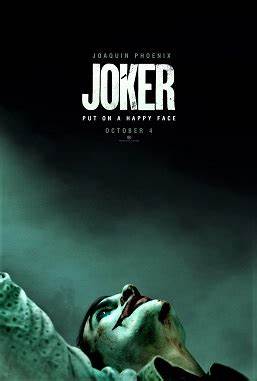
Joker dominated.  11 nominations.  I think we all knew that Joaquin would get nominated and that the film might get a best picture nod but seriously, I don’t think anyone was expecting it to be the most-nominated film of the year.

I’ll be posting my picks for the best of everything this week.  Unfortunately, with the Oscars on a rushed schedule this year, this will be the first time that the Academy announces their picks before me.  Oh well.  Life goes on.  Here are the Oscar nominations:

Best Picture:

“Ford v Ferrari”
“The Irishman”
“Jojo Rabbit”
“Joker”
“Little Women”
“Marriage Story”
“1917”
“Once Upon a Time in Hollywood”
“Parasite”

Lead Actor:

Antonio Banderas “Pain and Glory”
Leonardo DiCaprio “Once Upon a Time in Hollywood”
Adam Driver “Marriage Story”
Joaquin Phoenix “Joker”
Jonathan Pryce “The Two Popes”

Lead Actress:

Cynthia Erivo “Harriet”
Scarlett Johansson “Marriage Story”
Saoirse Ronan “Little Women”
Charlize Theron “Bombshell”
Renee Zellweger “Judy”

Supporting Actor:

Tom Hanks, “A Beautiful Day in the Neighborhood”
Anthony Hopkins, “The Two Popes”
Al Pacino, “The Irishman”
Joe Pesci, “The Irishman”
Brad Pitt, “Once Upon a Time in Hollywood”

Supporting Actress:

Kathy Bates, “Richard Jewell”
Laura Dern, “Marriage Story”
Scarlett Johansson, “Jojo Rabbit”
Florence Pugh, “Little Women”
Margot Robbie, “Bombshell”

Director:

Martin Scorsese, “The Irishman”
Todd Phillips, “Joker”
Sam Mendes, “1917”
Quentin Tarantino, “Once Upon a Time in Hollywood”
Bong Joon Ho, “Parasite”

Animated Feature:

“How to Train Your Dragon: The Hidden World” Dean DeBlois
“I Lost My Body” Jeremy Clapin
“Klaus” Sergio Pablos
“Missing Link” Chris Butler
“Toy Story 4”  Josh Cooley

Animated Short:

“Dcera,” Daria Kashcheeva
“Hair Love,” Matthew A. Cherry
“Kitbull,” Rosana Sullivan
“Memorable,” Bruno Collet
“Sister,” Siqi Song

Adapted Screenplay:

“The Irishman,” Steven Zaillian
“Jojo Rabbit,” Taika Waititi
“Joker,” Todd Phillips, Scott Silver
“Little Women,” Greta Gerwig
“The Two Popes,” Anthony McCarten

Original Screenplay:

“Knives Out,” Rian Johnson
“Marriage Story,” Noah Baumbach
“1917,” Sam Mendes and Krysty Wilson-Cairns
“Once Upon a Time in Hollywood,” Quentin Tarantino
“Parasite,” Bong Joon-ho, Jin Won Han

Cinematography:

“The Irishman,” Rodrigo Prieto
“Joker,” Lawrence Sher
“The Lighthouse,” Jarin Blaschke
“1917,” Roger Deakins
“Once Upon a Time in Hollywood,” Robert Richardson

Best Documentary Feature:

“American Factory,” Julia Rieichert, Steven Bognar
“The Cave,” Feras Fayyad
“The Edge of Democracy,” Petra Costa
“For Sama,” Waad Al-Kateab, Edward Watts
“Honeyland,” Tamara Kotevska, Ljubo Stefanov

Best Documentary Short Subject:

“In the Absence,” Yi Seung-Jun and Gary Byung-Seok Kam
“Learning to Skateboard in a Warzone,” Carol Dysinger
“Life Overtakes Me,” Kristine Samuelson and John Haptas
“St. Louis Superman,” Smriti Mundhra and Sami Khan
“Walk Run Cha-Cha,” Laura Nix

Best Live Action Short Film:

“Brotherhood,” Meryam Joobeur
“Nefta Football Club,” Yves Piat
“The Neighbors’ Window,” Marshall Curry
“Saria,” Bryan Buckley
“A Sister,” Delphine Girard

Best International Feature Film:

“Corpus Christi,” Jan Komasa
“Honeyland,” Tamara Kotevska, Ljubo Stefanov
“Les Miserables,” Ladj Ly
“Pain and Glory,” Pedro Almodovar
“Parasite,” Bong Joon Ho

Film Editing:

“Ford v Ferrari,” Michael McCusker, Andrew Buckland
“The Irishman,” Thelma Schoonmaker
“Jojo Rabbit,” Tom Eagles
“Joker,” Jeff Groth
“Parasite,” Jinmo Yang

Sound Editing:

“Ford v Ferrari,” Don Sylvester
“Joker,” Alan Robert Murray
“1917,” Oliver Tarney, Rachel Tate
“Once Upon a Time in Hollywood,” Wylie Stateman
“Star Wars: The Rise of SkyWalker,” Matthew Wood, David Acord

Sound Mixing:

“Ad Astra”
“Ford v Ferrari”
“Joker”
“1917”
“Once Upon a Time in Hollywood”

Production Design:

“The Irishman,” Bob Shaw and Regina Graves
“Jojo Rabbit,” Ra Vincent and Nora Sopkova
“1917,” Dennis Gassner and Lee Sandales
“Once Upon a Time in Hollywood,” Barbara Ling and Nancy Haigh
“Parasite,” Lee Ha-Jun and Cho Won Woo, Han Ga Ram, and Cho Hee

Original Score:

“Joker,” Hildur Guðnadóttir
“Little Women,” Alexandre Desplat
“Marriage Story,” Randy Newman
“1917,” Thomas Newman
“Star Wars: The Rise of Skywalker,” John Williams*“The King,” Nicholas Britell

Original Song:

“I Can’t Let You Throw Yourself Away,” “Toy Story 4”
“I’m Gonna Love Me Again,” “Rocketman”
“I’m Standing With You,” “Breakthrough”
“Into the Unknown,” “Frozen 2”
“Stand Up,” “Harriet”

Makeup and Hair:

“Bombshell”
“Joker”
“Judy”
“Maleficent: Mistress of Evil”
“1917”

Costume Design:

”The Irishman,” Sandy Powell, Christopher Peterson
“Jojo Rabbit,” Mayes C. Rubeo
“Joker,” Mark Bridges
“Little Women,” Jacqueline Durran
“Once Upon a Time in Hollywood,” Arianne Phillips

Visual Effects:

“Avengers Endgame”
“The Irishman”
“1917”
“The Lion King”
“Star Wars: The Rise of Skywalker”

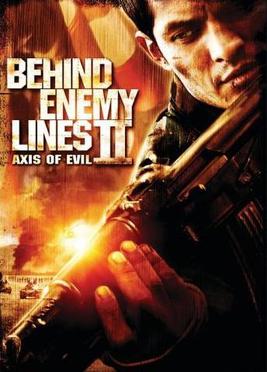
Behind Enemy Lines II: Axis of Evil (2006, directed by James Dodson)


After an intelligence satellite reveals that the North Koreans have built a nuclear missile that can hit anywhere in the world and that they’re currently pointing the missile right at the United States, the President (Peter Coyote) orders a team of Navy SEALs to parachute into North Korea and take out the missile site.  At the last minute, the mission is canceled but two SEALs have already jumped out of the airplane and two more follow because a SEAL leaves no man behind.

While the world sits on the brink of war, the stranded SEALs attempt to reach the missile site and knock it out of commission.  Unfortunately, two of the SEALs get killed by the North Koreans and the two survivors end up getting captured and are forced to undergo extreme torture.  With time running out, the president authorizes a military strike on the missile site, a move that could plunge the world into a nuclear war.  It’s now up to Lt. James (Nicholas Gonzalez) and Master Chief Callaghan (Matt Bushell) to escape from the North Koreans and complete their mission before the stealth bombers show up and do their thing.

Behind Enemy Lines II: Axis of Evil has nothing to do with the previous Behind Enemy Lines film, beyond featuring a Naval officer stranded in enemy territory.  Behind Enemy Lines II: Axis of Evil is one of those films that should be simple and easy to follow but it’s so frantically directed and edited that it’s actually difficult to understand what’s going on from scene to scene.  This isn’t a case where, as in Black Hawk Down, the film is deliberately confusing in order to show what it would be like to be under enemy fire.  Instead, Behind Enemy Lines II feels as if it was edited by someone who was getting paid per jump cut.  It becomes difficult to keep track of who is shooting at who and the overuse of the shaky handheld camera effect didn’t help.  Also, for some reason, there are some fantasy sequences that feel as if they belong in a different movie.

The scenes in Washington D.C., where the President and his advisers debate whether or not to plunge the world into war, are marginally better.  Peter Coyote has the right amount of moral authority to play the president and the great Glenn Morshower (you may remember him as Aaron of the Secret Service on 24) plays the admiral who suggests that maybe it would be a good idea not to hastily destroy the world.  Because this movie was made in 2006, the actress playing the Secretary of State is a dead ringer for Condoleezza Rice.

Behind Enemy Lines II is not a good movie but it made enough money to get a sequel, which I’ll review tomorrow.


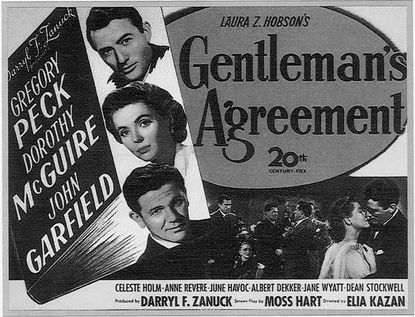
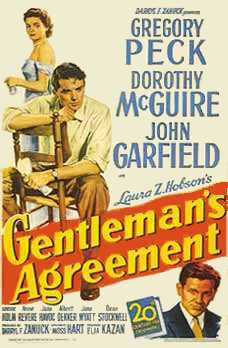
Lisa Reviews An Oscar Winner: Gentleman’s Agreement (dir by Elia Kazan)


Earlier today, as I was watching the 1947 film, Gentleman’s Agreement, I found myself thinking about a conversation that I had in 2006.

This was when I was in college.  I was having lunch with some friends from one of my classes.  As we were eating, the conversation turned to the war in Iraq.  That, in itself, was not surprising because, in 2006, it seemed like every conversation somehow turned to what was happening in the Middle East.

One of the people with whom I was having lunch was Olivia, self-styled intellectual who fancied herself as the most knowledgeable person on campus.  To be honest, I can’t think of anyone who liked her that much but she had a skill for subtly weaseling her way into almost every conversation.  She was one of those incredibly pretentious types who started every sentence with “Actually….” and who had embraced Marxism with the shallow vapidness of someone who had grown up in Highland Park and who would never have to struggle to pay a bill.

On that day, Olivia announced to us all that the only reason we were in Iraq was because we were doing the bidding of Israeli lobbyists and then she went on to talk about how 9-11 was an inside job.  She repeated the old lie about Jews calling in sick on 9-11 and claimed that five MOSSAD agents were arrested in New York for celebrating after the collapse of the Twin Towers.

After Olivia said this, there was the briefest silence as everyone else tried to figure out how to react.  Finally, someone tried to change the subject by making a joke about our professor.  Realizing the no one was going to openly disagree with Olivia and risk an argument, I said, “That’s not true.”

“What’s not true?” Olivia asked.

“About Jewish people calling in sick on 9-11 and celebrating after the Towers fell.  That’s not true.”

Olivia looked a little bit surprised that she was being openly challenged.  Finally, she said, in a surprisingly sincere tone of voice, “I’m sorry.  I didn’t realize you were Jewish.”

I’m not Jewish.  I’m Irish-Italian-Spanish and pretty much all of my immediate ancestors were Catholic.  But, as far as Olivia was concerned, I had to be Jewish because why else would I object to her repeating an anti-Semitic conspiracy theory?  When she apologized (and, make no mistake, there was not a hint of sarcasm in her tone when she said she was sorry), it wasn’t for being a bigot.  Instead, it was for being a bigot in front of the “wrong” person.  It didn’t occur to her that I was upset because what she said was bullshit.

Anyway, I wish I could say that I threw a drink in Olivia’s face or that I stood up on the table and delivered an impassioned speech but, once again, the other people at the table hastily changed the subject.  Anything to avoid a conflict, I suppose.  That was the last time I ever had a conversation with Olivia.  For the rest of the semester, I ignored her and I felt pretty proud of myself for shunning her.  It’s only been recently that I realized that Olivia also didn’t really make any effort to really talk to me after that conversation.  I shunned her because of her bigotry and I can only assume that she shunned me because of her misconception about my ancestry.

Gentleman’s Agreement is about a Gentile reporter named Phillip Green (Gregory Peck) who, while researching a story about anti-Semitism, poses as a Jew and discovers that the world is full of people like Olivia.  His own fiancee, a self-declared liberal named Kathy (Dorothy McGuire), reacts to Phil’s plan by asking him, “But you’re not really Jewish …. are you?”  By the simple act of telling everyone that his last name is actually “Greenberg,” Phil discovers that he suddenly can’t get a hotel reservation.  People stop returning his calls.  When he and Kathy have an engagement party in a wealthy community in Connecticut, many of Kathy’s friends stay away.  (Kathy, meanwhile, begs Phil to let her tell her family that she’s not actually engaged to a Jew.)  When Phil’s son, Tommy (Dean Stockwell), is harassed at school, Phil is shocked to hear Kathy tell Tommy that he shouldn’t listen to the bullies not because they’re a bunch of bigots but because “you’re not actually Jewish.”

Meanwhile, Phil’s friend, Dave Goldman (John Garfield), has returned from serving in World War II, just to discover that he can’t even rent a home for his family because many landlords refuse to rent to Jews.  When Phil learns that Katy owns a vacant cottage, he suggests that she rent it out to Dave.  Despite her sympathy for Dave, Kathy is shocked at the suggestion.  What will the neighbors think?

Gentleman’s Agreement was produced by Darryl F. Zanuck, who took on the project after he was refused membership in the Los Angeles Country Club because the membership committee assumed that Zanuck was Jewish.  It was considered to be quite a controversial film in 1947, as it not only dealt with American prejudice but it also called out two prominent elected anti-Semites — Sen. Theodore Bilbo and Rep. John E. Rankin — by name.  Zanuck often claimed that the other studio moguls asked him to abandon the project, saying that a film would only inspire more of what it was trying to condemn.  Still, Zanuck stuck with the project and it was not only a box office hit but it also won the Oscar for Best Picture.

Seen today, Gentleman’s Agreement has its flaws.  In the lead role, Gregory Peck is a bit of a stiff and Elia Kazan’s directs in an efficient but bland manner.  Because this film was made in 1947 and a happy ending was a must, Kathy is given a rather convenient opportunity at redemption.  The film’s most compelling performers — John Garfield, Celeste Holm, and June Havoc (playing Phil’s Jewish secretary, who had to change her last name before anyone would even consider hiring her) — are often underused.

And yet, with all that in mind, Gentleman’s Agreement is still a very effective film.  Gentleman’s Agreement understand that there’s more to prejudice than just the morons who go to rallies or the degenerates who shout slurs across the street.  Gentleman’s Agreement understands that, for prejudice to thrive, it also needs people like Kathy or Olivia, people who have that prejudice so ingrained in their system that they don’t even think twice about it and Dorothy McGuire does a very good job of playing a self-satisfied liberal who is blind to her own prejudice.  Gentleman’s Agreement understands that bigotry isn’t just about the openly hateful.  It’s also about the people who silently tolerate it and who refuse to stand up against it.  It’s about the people who respond to prejudice not with outrage but who instead attempt to change the subject.

In the UK, one of the two major political parties has basically surrendered itself to anti-Semitism.  Here in the US, Congress can’t even bring itself to condemn the frequently anti-Semitic comments of two of its members.  Elected leaders and pundits only offer up the weakest of condemnation when Jewish people are viciously attacked in the streets.  When a man attacked a group of Jews on Hanukkah, many excused the man’s attack by trying to say that he was just upset about  gentrification.  For many reasons, Gentleman’s Agreement is still relevant and important today.