Criminal Law (1988, directed by Matin Campbell)


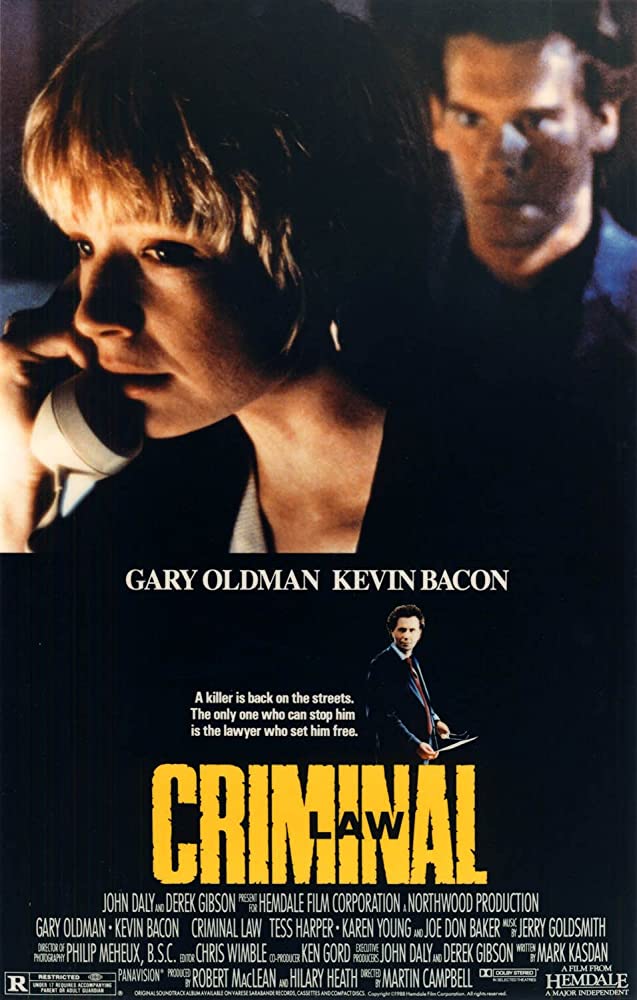
Gary Oldman is Ben Chase, a hotshot defense attorney who graduated from Harvard and now practices law in Boston.  That means that he gets to have a Boston accent and you know how much Gary Oldman loves playing a role with an accent.  Ben also has a pompadour because Gary Oldman always has something weird going on with his hair in almost every film he appears in.

Ben’s latest client is Martin Thiel (Kevin Bacon), a sociopathic rich kid who has been accused of murder.  Even though Ben thinks that Martin is probably guilty, he still gets Martin off the hook.  As soon as Martin get his acquittal, he starts murdering again.  Ben feels responsible so he decides that what he needs to do is trick Martin into implicating himself.  However, Martin knows what Ben is planning so, instead, he decides to frame Ben for the murders.  Somehow, it all links back to Martin’s feelings about abortion.  I guess Martin is against abortion or maybe he’s for it.  It was hard to keep track.  I watched the movie and I’m still not sure I followed everything that I saw.  It’s not that the plot is diabolically clever.  It’s just that it’s so incoherent that not a single plot point logically follows from another.

The film experiments with suggesting that there’s some sort of deeper connection between Martin and Ben.  Martin is obsessed with Ben and when Ben is in bed with his girlfriend, he briefly imagines that she’s turned into Martin and has a good old-fashioned freak out as a result.  It doesn’t make any sense.  First off, you have to believe that Ben can’t tell the difference between Kevin Bacon and his girlfriend.  Secondly, you have to then accept that Ben — a HARVARD GRADUATE — is so stupid that he would actually believe that his girlfriend had suddenly transformed into Kevin Bacon and must now be strangled.

Criminal Law is a film that you may be tempted to watch because of the pairing of Kevin Bacon and Gary Oldman but you’d be better off just watching JFK again.  They’re both great actors and and it’s always interesting to see them cast against type but neither one of them is particularly good in Criminal Law.  They’re let down by a script that doesn’t allow either one to create a consistent character.  Sometimes, Martin is a soulless attorney and other times, he’s a panicky social justice crusader.  Sometimes, Kevin Bacon is a clever sociopath and, other times, he’s just your typical mindless movie slasher.

On the plus side, Joe Don Baker is in this mess, playing a cop.  Joe Don Baker has played so many cops in so many bad movies that I wonder if he’s ever been tempted to try to arrest someone in real life.  In Criminal Law, he’s not given much to do but it doesn’t matter.  He’s Joe Don Baker!
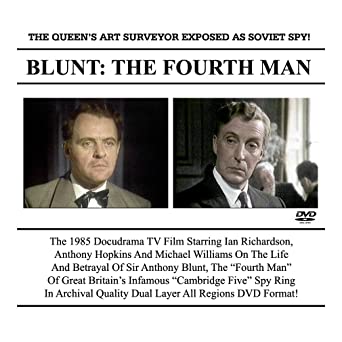
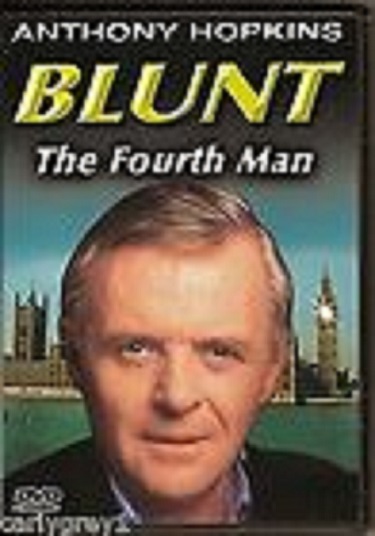
18 Days of Paranoia #9: Blunt, The Fourth Man (dir by John Glenister)


Based on a true story and taking place in 1951, the 1985 film, Blunt: The Fourth Man, tells the story of Anthony Blunt (played by Ian Richardson).

A graduate of Cambridge, Anthony Blunt appears to be a proud member of the British establishment.  He’s upper class with impeccable manners.  He’s the King’s art surveyor, which he says makes him literally a member of the Royal Family.  He belongs to all the right clubs and he expresses all of the right opinions and he has all of the right friends.

However, Anthony Blunt leads a secret life.  First off, he’s gay at a time when that was still illegal in the United Kingdom.  Unlike his flamboyant lover, Guy Burgess (Anthony Hopkins), Blunt is discreet and always keeping an eye out for the vice cops.  Blunt is also a socialist and has been one since his days at Cambridge.  However, he’s not just a socialist.  He’s also spying for the Russians.  It’s not that Anthony thinks much of Russia as much as it’s just that he thinks even less of the U.S. and the U.K.  He feels that the U.S. is pushing the world towards nuclear war.  When his driver says that the UK needs a Joe McCarthy of their own, Blunt can barely hide his distaste.

Even though it was Guy who originally recruited Anthony to spy for the Russians, Anthony now appears to be in charge of the so-called Cambridge Spy Ring.  He’s the one who regularly meets with the group’s Russian contact and he’s also the one who is put in charge of arranging for one of the spies to flee the UK.  The Russians don’t seem to have much faith in Guy Burgess, largely because Guy is an alcoholic and a drug addict.  (Upon returning to London from America, Guy declares that he’s no longer drinks whiskey and that he’s given up Benzedrine.  He then proceeds to get very drunk.)  In fact, the only person who seems to really care about Guy is Anthony but how much does Guy actually care about Anthony?

Almost everyone in Blunt, the Fourth Man is either a spy or a former spy.  And yet, we really don’t see anyone doing much spying.  Guy has a closet that’s full of undeveloped film, official files, and a picture of Lenin and that’s about it.  Throughout the film, Guy brags about how powerful he and his fellow spies are but we’re left to wonder whether Guy’s telling the truth or if he’s just drunk.  For his part, Anthony is more concerned with getting caught and losing his place in society.  He knows that one member of the group is on the verge of getting unmasked and has made arrangements for him to escape to Russia while visiting France.  The problem is that the plan involves Guy and Anthony is not sure if he can trust Guy to play his part.  If Guy’s willing to betray his country, why not his friends and lover?

For the most part, the entire film is Anthony and Guy having cryptic discussion with themselves and with others.  There’s a threatening subtext to almost every conversation in this film.  There’s also a pervasive atmosphere of regret.  Anthony, Guy, and their friends are no longer the idealists that they were back in Cambridge.  They’re now middle-aged men who know that they’ve devoted their lives to a lost cause.  Each deals with it in their own way.  Guy drinks.  Anthony insists that his spying has less to do with betraying a country and more with staying loyal to his friends.  What’s perhaps most interesting is that almost all of these upper class socialists are most worried about losing their place in society.

This is a very talky film.  Fortunately, it stars two great talkers, Ian Richardson and Anthony Hopkins.  The two of them play off each other very well and create two fascinating, if not necessarily likable, characters.  Admittedly, there are a few scenes where Hopkins comes dangerous close to going a bit overboard with Guy’s drunken ramblings but Ian Richardson’s performance is close to perfect.  Somehow, he makes Anthony both smug and vulnerable at the same time.

Obviously, this isn’t a film for everyone.  It requires a bit of patience.  But, for history nerds like me, it’s an interesting historical document, a recreation of one of biggest spy scandals of the previous century.

Other Entries In The 18 Days Of Paranoia:

  1. The Flight That Disappeared
  2. The Humanity Bureau
  3. The Private Files of J. Edgar Hoover
  4. The Falcon and the Snowman
  5. New World Order
  6. Scandal Sheet
  7. Cuban Rebel Girls
  8. The French Connection II


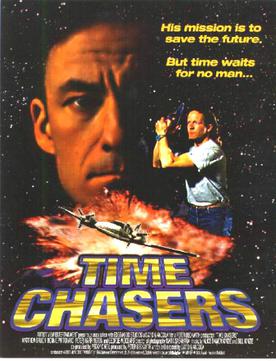
Time Chasers (1994, directed by David Giancola)


People, I know what you’ve heard but Time Chasers is not that bad.

I know that Time Chasers has got a reputation.  It was featured on one of the most brutal (and funniest) episodes of Mystery Science Theater 3000.  That, in fact, is probably how most people know about this film.  (Some members of the MST 3K crew subsequently revisited Time Chasers for Rifftrax.)  It’s true that MST 3K was known for taking apart bad films and it probably hasn’t helped the film’s reputation that it’s been reported that some members of the production were not amused about being mocked by Mike Nelson and the bots.

But that’s all in the past and I think that today, we can finally admit that Time Chasers is not that bad.

It’s certainly one of the few films to suggest that time travel can be achieved by an airplane, five oversized floppy disks, and a Commodore 64.  Nick Miller (Matthew Bruch) is a scientist and amateur airplane pilot who has discovered how to travel through time.  He hopes that we can use time travel so that we can figure out a way to “stop killing ourselves.”  Lisa (Bonnie Pritchard), the local journalist who went to high school with Nick, is impressed, especially when Nick takes her on a trip to the future (which does indeed look much like a mall food court).  Lisa is less impressed when Nick decides to sell the idea to J.K. Robertson (George Woodard).  J.K.’s a rich businessman and that automatically makes him evil.  Lisa understands this.  Nick does not.

J.K. promises that he won’t use time travel to develop weaponry but, when Lisa and Nick take another romantic trip to the future, they discover that the world is in ruins and it no longer looks like a food court.  Instead, people are shooting at each other.  J.K. lied!  Nick and Lisa go back to the present to confront J.K. but J.K.’s not willing to give up time travel that easily.  Soon, as a result of all the time travel, there are multiple Nicks and Lisas and J.K. Robertsons all over the place.  It all ends with a trip back to the American Revolution, where many of the colonists wear wrist watches and modern-style eyeglasses.

It is easy to poke fun at something like Time Chasers but I’m going to defend it.  The plot is actually more ambitious than you would expect from a low-budget sci-fi film and there are some clever touches that indicate that the director actually did give some serious thought to what would happen if you had multiple people jumping from one time to another.  (I like the fact that, when Nick meets his past self, Past Nick can’t understand why Present Nick won’t stop talking about Lisa.)  For all the ribbing that they took on MST 3K, both Matthew Bruch and Bonnie Pritchard are likable as Nick and Lisa.  Bruch may not look like a conventional hero and, in this film, he’s got a mullet that’s goofy as hell but there’s a lot of sincerity to his performance.

I love MST 3K.  When I first saw the Time Chasers episode, I laughed so much that it hurt and it’s still a favorite of mine.  (I cannot see an empty field without saying, “Hey, Children of the Corn.”  Lisa — our Lisa, not the film’s Lisa — is usually kind enough to reply, “Hey,” so my joke isn’t just left hanging in the air.)  But taken on its own, without Mike and the bots riffing on it, Time Chasers is not that bad.  It’s goofy take on time travel and, dammit, I like it.

18 Days of Paranoia #8: The French Connection II (dir by John Frankenheimer)


The 1975 film, The French Connection II, opens up three years after the downbeat conclusion of the first French Connection.

Having escaped from the police at the end of the first film, the wealthy and suave Alain Charnier (Fernando Rey) is still smuggling drugs and living his best life.  He goes to parties with wealthy people.  He has lunch dates with important businessman.  Even though the French police are keeping an eye on him, Charnier seems to be virtually untouchable and he knows it.  If Charnier seemed impossibly smug in the first French Connection, he’s even worse in the second one.

Charnier may be enjoying himself in Marseille but what he doesn’t know is that there’s an American tourist in town.  He’s a very loud American, one who insists on trying to speak to everyone in English and is shocked to discover that most of the French natives don’t have the slightest clue as to what he’s talking about.  He’s shocked when he goes into a bar and fails to impress two young French women.  He also doesn’t seem to understand that even French people who speak English are not going to appreciate being called a “frogs.”  He wanders around town in loud shirts and with a fedora sitting rakishly on his balding head.

Yep, it’s Popeye Doyle (Gene Hackman).  The anti-hero from the first French Connection is still on the case and he’s now come all the way to France to help track down Charnier.  The last time we saw Doyle, he had just accidentally killed a cop and was running through a dark warehouse, firing his gun.  In fact, the first film ended with the suggestion that Doyle was such a loose cannon that his career as a narcotics detective was probably over.  Instead, in the sequel, we learn that Popeye is still working in narcotics and he’s still just as much of a loose cannon as he ever was.  If you thought people in New York found Popeye to be obnoxious, just you wait to see how the French react to him!

What Popeye doesn’t know is that his superiors in New York have only sent him to Marsielle so that he can be a target.  They know that Popeye will never be able to blend in.  Charnier will spot him and, hopefully, Charnier will panic and make some sort of mistake that will finally allow the police to capture him.  French detective Henri (Bernard Fresson) goes along with the plan, despite his own moral objections.  Henri can’t stand Popeye but he doesn’t want to see him killed either.

It doesn’t take long for Charnier to notice Popeye.  After Popeye is captured by Charnier’s man, they inject him with heroin until soon, Popeye is an addict.  Before Popeye can finally get his shot at Charnier, he’s going to have to overcome his own drug addiction….

The French Connection II starts out well, with Gene Hackman wandering around Marsielle and acting like a stereotypical ugly American.  Director John Frankenheimer does a good job of keeping the action moving at a steady pace during the first half of the film and there’s a lot of great scenes involving Popeye being followed around town by not just the police but also Charnier’s men.  The first half of the film does a great job of establishing an atmosphere of paranoia, which is not surprising when you consider that Frankenheimer’s other credits included The Manchurian Candidate, Seven Days In May, and Seconds.

Unfortunately, once Popeye is captured and gets hooked on heroin, the action not only comes to a halt but the normally reliable Gene Hackman starts to act up a storm.  When Popeye, while going through withdrawal, starts talking about how he used to play baseball and how he once has a try-out with the New York Yankees, the scene seems to go on forever and Hackman’s performance becomes so histrionic that you basically just end up feeling like you’re watching someone auditioning his heart out for a spot in the Actor’s Studio.  Gene Hackman was one of the world’s great actors and Popeye Doyle was a great role but, in The French Connection II, we’re reminded that even a great actor occasionally needs to have his performance reined in.

Eventually, after Hackman’s had his big Oscar moment, the action kicks back in and the film kind of regains its momentum.  There’s a big action scene towards the end of the film.  (Ironically, it’s the type of big, good guys vs. bad guys shoot out that the first film deliberately avoided.)  The film ends with a literal bang that’s abrupt yet undeniably effective.

As far as sequels go, The French Connection II is good.  It’s not great and, not surprisingly, it doesn’t come anywhere close to matching the power of the first film.  But it still has enough effective scenes to make it worth watching.  You just might want to hit fast forward whenever Popeye starts talking about baseball…..

Other Entries In The 18 Days Of Paranoia:

  1. The Flight That Disappeared
  2. The Humanity Bureau
  3. The Private Files of J. Edgar Hoover
  4. The Falcon and the Snowman
  5. New World Order
  6. Scandal Sheet
  7. Cuban Rebel Girls

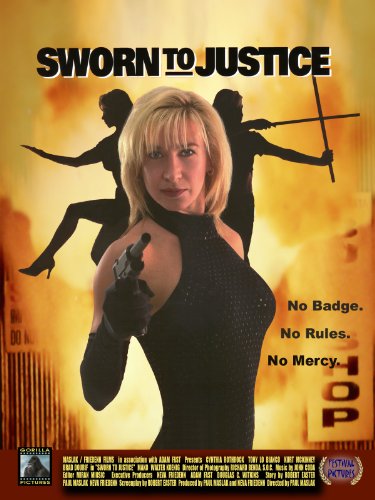
Cinemax Friday: Sworn to Justice (1997, directed by Paul Maslak)


Janna (Cynthia Rothrock) is a psychologist who is also a martial arts expert.  One night, she comes home to discover that her sister and her nephew have been murdered and that the killers are still in the house!  Though Janna manages to fight off the attackers, she also gets a nasty bump to the head.  Weeks later, after she’s gotten out of the hospital and she’s ready to get back to work, she discovers that she now has ESP!

All Janna has to do is touch someone or hold something in her hand and she has visions of the past and sometimes the present.  (She has those special ESP powers that do whatever needs to be done at the moment.)  When she finds her sister’s brooch, she flashes back to the night of the attack and sees the faces of the men who attacked her sister.  Using her newfound power, Janna sets out to get revenge.

But even as she tracks down the thugs who killed her sister, Janna still does not know the identity of the person who ordered the hit.  She just knows that he’s known as “The Man.”  Could he have something to do with the arrogant cop killer (Brad Dourif!) for whom Janna is serving as an expert defense witness?  Or could The Man by the publisher (Kurt McKinny) with whom Janna is having a steamy affair?  (This was a late night Cinemax film, after all.)  Or could it be the detective (Tony Lo Bianco) who is supposed to be investigating her sister’s death?

As far as Cynthia Rothrock martial arts films are concerned, Sworn to Justice is pretty good.  Rothrock was not only a force to be reckoned with in fight scenes but, as this film shows, she was a likable actress, too.  For the most part, she’s able to hold her own even when acting opposite seasoned scene stealers like Brad Dourif, Tony Lo Bianco, Mako, and even Walter Koenig, who plays Janna’s mentor with an outrageous German accent.  While the film’s fight scenes are just as good as you would expect from a Cynthia Rothrock fick, the ESP twist adds just the right amount of weirdness to keep Sworn to Justice from coming across as just another low-budget martial arts film.  The film doesn’t take itself too seriously.  Even while she’s getting revenge for their deaths, Janna never seems to be that broken up over the deaths of her sister and her nephew.  At worse, she’s seems to be annoyed by the inconvenience of it all.  It’s just something else that she has to find the time to deal with.

There are a few scenes that are so darkly lit that it’s almost impossible to see what’s happening but then there are other scenes, like the one where Janna shows off her favorite martial arts moves to her new boyfriend, that work surprisingly well.  This is a 90s production all the way, which means a saxophone-scored sex scenes and synthesizer-scored action scenes.  Sworn to Justice is a good Cynthia Rothrock film, even if most audiences will end up figuring out the identity of The Man long before she does.


18 Days of Paranoia #7: Cuban Rebel Girls (dir by Barry Mahon)


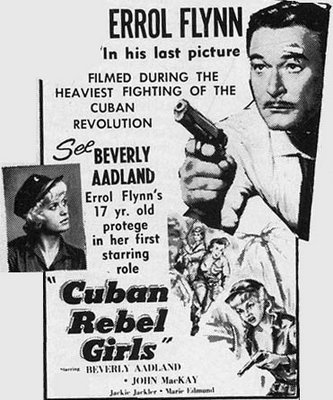
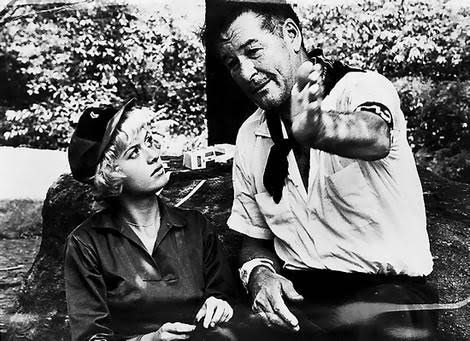
In the 1959 film, Cuban Rebel Girls, Errol Flynn (playing himself) flies down to Cuba.  The time is shortly before the Cuban Revolution.  (From a cinematic point of view, Flynn is in Havana at the same time as Hyman Roth and Michael and Fredo Corleone in The Godfather, Part II.)  Flynn has been hired by the Hearst newspaper syndicate to go down to Cuba and do a report on Fidel Castro.  Flynn narrates the film and tells us that he was very sympathetic to Castro and his cause….

OH MY GOD, ERROL FLYNN WAS A COMMUNIST!

Well, maybe not.  If you actually go back and read contemporary reports about the Cuban Revolution, you’ll see that a lot of Americans had a romanticized view of Fidel Castro and his revolutionaries.  Everyone seemed to agree that the president of Cuba, Batista, was a dictator and he needed to be forced out of power.  Castro, himself, didn’t fully and openly declare himself to be a hardline communist until after he had already taken over Cuba.  In Cuban Rebel Girls, someone mentions that Fidel was “always looking out for the little guy” and that’s the attitude that this film takes.  At the time the film was made, it can legitimately be said that Flynn had no way of knowing that Fidel Castro would eventually reveal himself to be despotic dictator.  (For more infuriating, to me, are the people who have continued to defend the Castros up until this day.)

Fidel Castro, himself, doesn’t actually appear until the very end of Cuban Rebel Girls and, even then, it’s just newsreel footage of him riding a tank through Havana.  (Che Guevara does not show up at all.  He may have been busy shopping for berets, I don’t know.)  That said, the film was actually shot in Cuba and it does feature footage of Errol Flynn meeting actual Cuban rebels.  This was also Errol Flynn’s last film and, for the most part, he looks terrible.  Though the film’s poster may feature a suave-looking Errol Flynn holding a gun, the film actually features a noticeably overweight and often out-of-breath Errol Flynn who really doesn’t do much other than sit around and listen to other people talk.

(That said, Flynn’s voice over narration does have the occasional moment of charm.  When he meets one of the rebel girls of the title and he kisses her hand, he jokes that he was relieved to see that he hadn’t totally lost “the Flynn touch.”  Flynn delivers the line with just enough self-depreciation that it’s charming rather than creepy.)

The majority of the film doesn’t actually involve Flynn.  Instead, it involves two girls from New York — Beverly (Beverly Aadland) and Jacqueline Dominguez (Jackie Jackler) — who want to help out the revolution.  Jacqueline is from Cuba, went to high school with Fidel, and her brother is currently a part of the revolution.  Beverly, meanwhile, is convinced that she’ll find the man that she loves in jungles of Cuba.  Beverly explains that she doesn’t know much about Castro or Batista.  That’s for others to worry about!  Jacqueline assures her that, even in high school, “the big jerk” was always looking out for people.

Anyway, Beverly and Jacqueline raise some money from their friends and then decide to smuggle it into Cuba so that the guerrillas can use it to buy weapons.  What follows is a lot of intrigue and sneaking around as Beverly and Jackie try to avoid Batista’s secret police and help out the guerrillas.  And, of course, when I say “a lot,” what I actually mean is “next to none.”  For two people who don’t really come across as being particularly smart, Jacqueline and Beverly certainly don’t have much trouble sneaking around Cuba.

(That said, there are enough references to Batista’s secret police to justify reviewing the film as a part of the 18 Days of Paranoia.  Take my word for it.  Or watch the movie on YouTube, where it’s available under the name Assault of the Rebel Girls.)

Anyway, this is a weird movie, along with also being a really cheap movie.  Beverly Aadland was apparently Errol Flynn’s protegee.  She also wasn’t a very good actress.  (Jackie Jackler does a little bit better in the acting department, though not by much.)  That said, as a film partially shot in Cuba during the days leading up to the revolution, this is an interesting historical document.  And, for some people, just the fact that it’s a pro-Castro film from Errol Flynn (!) will be enough to justify sitting through it.

(Seriously, a celebrity defending a communist?  That’s like a major news outlet or a bunch of basketball players going out of their way to defend the Chinese government.  It just doesn’t make sense….)

Other Entries In The 18 Days Of Paranoia:

  1. The Flight That Disappeared
  2. The Humanity Bureau
  3. The Private Files of J. Edgar Hoover
  4. The Falcon and the Snowman
  5. New World Order
  6. Scandal Sheet

What Lisa Watched Last Night #209: Revenge For Daddy (dir by Tom Shell)


Last night, I watched the latest Lifetime premiere, Revenge for Daddy!

Why Was I Watching It?

Well, first off, you may not have heard but the entire world is kind of shut down right now so basically, watching TV is about as wild as my Thursday night is going to get….

Then again, I would have watched it even if we weren’t on lockdown.  It’s a new Lifetime movie and you know that I love those!  I especially love Lifetime movies that have words like “Fatal,” “Wrong,” or “Revenge” in the title.  Those are usually the best.

What Was It About?

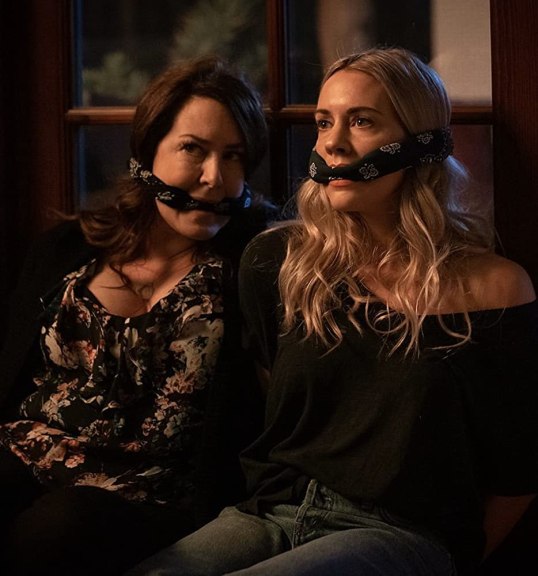
It’s been a tough year for Lisa (Sarah Butler).  Her father died under mysterious circumstances.  Her boyfriend, Bobby (Charlie Gorilla), got drunk and slept with one her co-workers, Bethany (Eva Hamilton), leaving Lisa suddenly single.  Her mother (Joely Fisher) keeps pressuring her to start dating again.  Finally, just to keep her mom happy, Lisa photoshops herself into a picture with a handsome man on a dating site.  All she wants to do is send it to her mom so her mom will get off her back.  Instead, it leads to the man in the picture, Michael (Clayton James), tracking her down.  Soon, Lisa and Michael are dating for real!

But can Michael be trusted?  It turns out that Michael has a somewhat shady past which includes at least one mysterious death.  Michael says he’s innocent but when one of Lisa’s co-workers shows up dead (and, even worse, when it appears that someone is trying to frame Lisa for the murder), Lisa starts to have her doubts….

What Worked?

This one was fun.  I mean, let’s be honest.  When it comes to most Lifetime melodramas, you’re not exactly looking for a realistic examination of all the world’s troubles.  You’re looking for twists and turns and melodrama, preferably taking place in a nice house where everyone is either handsome or pretty and everyone wears nice clothes.  Revenge For Daddy delivered all of that with the style.

The cast was uniformly good and the film actually did a pretty good job of keeping you guessing as to whether or not Michael was who he said he was.  The film even managed to work in a few moments of intentional humor in the middle of all the drama and the mystery.  All in all, this was one an enjoyable and entertaining Lifetime film.

I really liked the office where Lisa and her friends worked.  It was nicely designed and, even more importantly, it didn’t seem like anyone really had to do much work.  It seems like it would be a fun place from which to collect a paycheck.

What Didn’t Work?

It all worked!  To repeat, this was an enjoyable and entertaining Lifetime film.

“Oh my God!  Just like me!” Moments

The main character was named Lisa!  You don’t get much more like me than that.

Lessons Learned

There were definitely lessons learned but I can’t really share them without spoiling the film’s ending.  So, you’ll have to watch and learn for yourself!

Citizen Cohn (1992, directed by Frank Pierson)


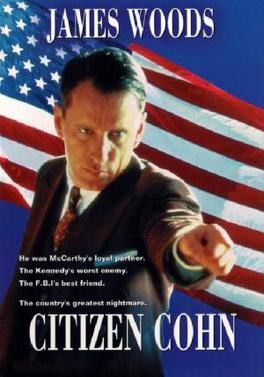
The year is 1986 and the powerful attorney Roy Cohn (James Woods) is dying.  The official story is that Cohn has liver cancer but the truth is that he’s dying of AIDS.  As he lies in his hospital bed, he thinks about his past and the events the led to him becoming one of the most feared and powerful men in America.  He is haunted by the ghosts of his many enemies, people like communist spy Ethel Rosenberg (Karen Ludwig) and his former colleague, Bobby Kennedy (David Marshall Grant).

Not surprisingly, a good deal of Cohn’s memories center around his association with Sen. Joseph McCarthy (Joe Don Baker), a charismatic alcoholic who, in the 50s, charged that he had a list with the names of communist spies deep within the government.  Cohn and Kennedy served as the counsels on McCarthy’s committees.  Cohn is with McCarthy from the beginning and he’s with him until the end of the senator’s career.  In fact, it’s Cohn’s own shadowy relationship with an army private that ultimately leads to McCarthy’s downfall.

Except for one aspect of the film, Citizen Cohn is one of the best films to ever be produced by HBO.  The film covers a lot of history in a little less than 2 hours and it does so in a way that is always interesting and easy to follow.  By including incidents from every phase of Cohn’s life, as opposed to just focusing on his time as McCarthy’, the film also shows how someone like Roy Cohn can become a behind-the-scenes power player despite the majority of the country having no idea who he is.  James Woods gives one of his best performances as the hyperactive and unapologetically corrupt Cohn while Joe Don Baker is perfect as the self-pitying Joseph McCarthy.

The problem with the film, and your mileage may vary on how big an issue this is, is that it almost presents Cohn’s final days — dying of AIDS in a lonely New York hospital room — as being some sort of deserved fate for everything that he did wrong in life.  For me, even in the case of someone like Roy Cohn, that’s a step too far and it comes very close to presenting AIDS as some sort of divine punishment (which, itself, comes dangerously close to mirroring the homophobic statements that were made — and still are being made — by anti-gay activists).  That may not have been the film’s intention but, with the flashback structure and all of his dead enemies materializing to taunt Cohn as he lies dying, it’s still a very valid interpretation.

Some of that is perhaps unavoidable.  Cohn, in both real life and the film, died largely unrepentant for anything he did during his life.  As the central character of a biopic, Cohn never has the type of big moment that you would hope for, where he would realize that it was wrong for him to destroy so many lives and show at least a hint of contrition for his past behaviors.  That Roy Cohn is even a compelling character is a testament to the talent of James Woods because it’s certainly not due to any sort of hidden goodness lurking underneath the surface of Cohn’s snarling personality.  The lack of apologies and regrets that made Cohn a powerhouse in real life also makes him an ultimately unsatisfying subject for a movie.

18 Days of Paranoia #6: Scandal Sheet (dir by David Lowell Rich)


“So be it,” journalist Helen Grant dramatically announces as she lifts up her camera and starts snapping pictures of a body in a casket, “I’m …. a ….. WHORE!”

That is just one of the many wonderfully, over-the-top moments that can be found in the 1985 film, Scandal Sheet.  Directed by David Lowell Rich, Scandal Sheet stars Burt Lancaster as Harold Fallen.  If this movie were being made today, Fallen would be in charge of a TMZ-style website.  Since this movie was made in the 80s, Fallen is the publisher and editor of a sleazy tabloid magazine.  He specializes in stories about aliens and ghosts.  When someone brings him in a story about the ghost of Grace Kelly haunting the beaches of Malibu, he announces, “Front page!”  When someone else tells him about a woman who wants to marry a man from outer space but who can’t find anyone to perform the ceremony, Fallen arranges to get the woman a lawyer.

When Fallen isn’t tracking down ghosts and arranging for interplanetary marriages, he’s trying to destroy celebrities.  When the film begins, he’s obsessed with taking down Ben Rowan (Robert Urich).  We’re told that Ben Rowan is one of the world’s top movie star.  (It’s important that we’re told this because there’s nothing about Urich’s bland performance that would lead us to suspect that to be the case.)  Ben’s career is in trouble because he’s got a drinking problem.  He just got out of rehab but no insurance company is willing to insure him.  His wife, Meg North (Lauren Hutton), is demanding that Ben be cast in her latest movie.  Everyone in Hollywood is like, “No way.”

It has the potential to be a big story and Fallen wants to be the first to break it.  But to do so, he’s going to need an inside source.  That’s where Helen Grant (Pamela Reed) comes in.  Helen was Meg’s college roommate and she’s still friends with both her and Ben.  Fallen decides to hire Helen to work for his magazine.  The only problem is that Helen is a serious journalist.  She writes stories about homeless children.  She has no desire to work for a tabloid.

“I’ll pay you more than you’re making right now,” Fallen tells her.

Helen’s not interested.

“I’ll pay you $80,000 a year.”

Helen’s interested.

Against her better judgment, Helen accepts Fallen’s offer.  At first, things seem okay.  She’s a bit annoyed with having to work with a sleazy photographer named Simon (Peter Jurasik, giving a wonderfully reptilian performance) but she’s got a nice house and her son is going to a good school and she gets to use the company credit card and she even gets a housekeeper out of the deal!

Then Fallen tells her that her next assignment is to write about Meg and Ben.  Helen refuses but she soon discovers that Howard Fallen is not an easy person to refuse.  Not when he’s got people watching your every move, along with paying your housekeeper to spy on you.  When her former boss (Max Wright) angrily tells her that no reputable magazine will ever work with her again, Helen is left with only two options: Become a whore or starve.

Scandal Sheet is a lot of fun.  Just the fact that the main bad guy is named Howard Fallen should tell you almost everything you need to know about this movie.  He’s Fallen — as in a fallen angel.  At the end of the movie, he even wears all black with a white tie, which we all know is the typical modern-day costume of demons pretending to be human.  (At one point, Fallen even says that he’s going to make someone an offer that they can’t refuse, giving us all a chance to see what The Godfather would have been like if Burt Lancaster had played Don Vito.)  Lancaster gives a charismatic performance and he’s so effortlessly manipulative that it’s hard not to enjoy watching him, even if he is destroying innocent people.  The rest of the cast is okay.  As I said earlier, Robert Urich was a bit too bland to be a convincing film star but Pamela Reed does a good job of capturing Helen’s struggle to decide whether to side with good or evil and Lauren Hutton tears into the scenery with just the type of ferocity that a film like this requires.  Late in the film, when she spits in Helen’s face, it’s the most dramatic spitting that you’ll probably ever see.

Scandal Sheet is an enjoyably over-the-top, anti-press melodrama.  Watch it with someone who you would be willing to sell out for $80,000 a year.

Other Entries In The 18 Days Of Paranoia:

  1. The Flight That Disappeared
  2. The Humanity Bureau
  3. The Private Files of J. Edgar Hoover
  4. The Falcon and the Snowman
  5. New World Order

Fever (1991, directed by Larry Elikann)


Ray (Armand Assante) is a formerly viscous ex-con who has just gotten out of prison and is now determined to go straight and live on the right side of the law.  After spending nearly a decade behind bars, all he wants to do is to reunite with his girlfriend, Lacy (Marcia Gay Harden), and make her his wife.  However, there’s a problem.  While Ray was locked up, Lacy moved on.  She’s now engaged to Elliott (Sam Neill), a liberal attorney who, unlike Ray, is a pacifist.  Even though Lacy is still attracted to Ray, she does not want to get back together with him.

Unfortunately, there’s a second problem.  Ray may have gone straight but his former criminal associates don’t believe him.  They want Ray to help them pull off a major crime and when Ray says that is no longer his thing, they react by kidnapping Lacy.  If Ray ever wants to see Lacy again, he’s now got to return to his life of crime.

There’s also a third problem.  Ray may be an experienced criminal but Elliott insists on tagging along with him while he’s following the kidnappers’s orders.  So now, Ray not only has to commit several crimes but he has to do it with an inexperienced partner who doesn’t even believe in firing guns!

Fever is one of those HBO films that used to show up all the time on cable in the 90s.  I watched it a few times back in the day, just because I was a teenage boy and the movie featured a good deal of nudity.  Even at that time, though, I thought it was a slow and frequently boring movie.  Rewatching it for this review, I was shocked to discover that it was even slower than I remembered.  It seems like it takes forever for Ray and Elliott to finally team up and for the movie to get going.  Though the plot description may make it sound like a buddy comedy, it’s actually a very tough and grim picture.  Armand Assante and Sam Neill are not actors known for their light touch and they both give very serious and gritty performances.  Unfortunately, the film’s pace never really matched the intensity of its stars and the film’s storyline isn’t strong enough to hold up under scrutiny.  Once you start to wonder if Ray would really let Elliott tag along with him, the movie itself falls apart.

Armand Assante is a good actor who rarely seems to appear in good films.  Fever is a good example of that.  Assante gives an excellent and complex performance (and both Sam Neill and Marcia Gay Harden are pretty good too) but Fever itself never really clicks.