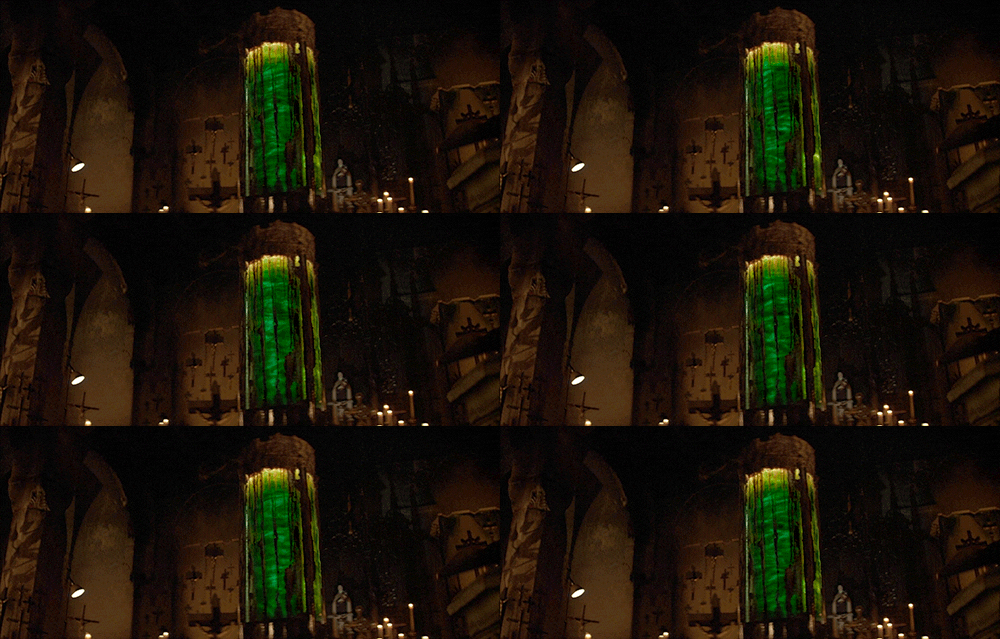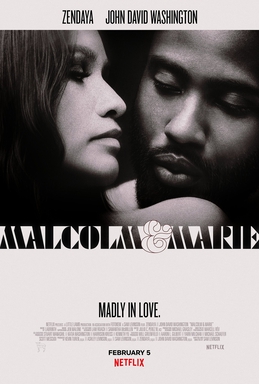
Well, it’s finally time! It’s time for me to announce my picks for the best films of 2020.
Before we begin, there is one thing I want to make clear. Unlike the Academy, I did not extend my eligibility window. Films like Nomadland, Minari, and The Father (amongst others) will undoubtedly be competing for the Oscar for Best Picture of 2020. However, as far as I’m concerned, those are all 2021 films. And I imagine that a few of them will probably appear on my best films of 2021 list. However, the list below are my picks for the best films of 2020. You’ll probably agree with some of my picks and disagree with some of the others. As always, I welcome any and all comments.
Also, be sure to check out my picks for 2010, 2011, 2012, 2013, 2014, 2015, 2016, 2017, 2018, and 2019! Wow, I’ve been doing this for a while!
And now, in descending order, my favorites of 2020!
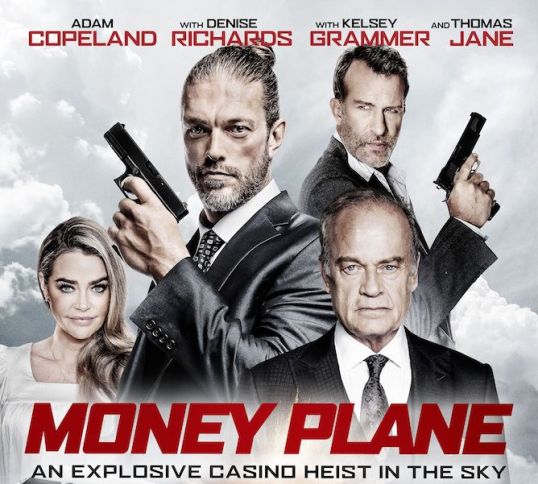
30. Money Plane (dir by Andrew Lawrence) — Okay, I can sense that you’re already rolling your eyes at my list by seriously, Money Plane is such a cheerfully absurd and self-aware little B-movie that there’s no way I couldn’t include it. Seriously, how can you not love a film that features Kelsey Grammer always a gangster known as the Rumble? Basically, as soon as I heard that priceless declaration of “We are going to rob the Money Plane!,” this movie had me under its spell.
29. Ma Rainey’s Black Bottom (dir by George C. Wolfe) — Though this adaptation of August Wilson’s play never quite escapes its theatrical roots, no one can deny the powerful performances of Viola Davis, Colman Domingo, Glynn Turman, and especially Chadwick Boseman. Boseman dominates the film from the minute that he makes his first appearance, playing an ambitious, troubled, and undeniably talented trumpeter. Viola Davis plays Ma Rainey with the self-awareness of someone who knows that the record producers need her more than she needs them. She has the power and she’s not going to let anyone get away with forgetting it.

28. The Invisible Man (dir by Leigh Wannell) — Before the Academy announced that they would be changing their rules to considers streaming movies, many critics speculated that one of the results of the pandemic would be The Invisible Man winning all of the Oscars. Though they may have been joking, it was not as outlandish an idea as they seemed to think. The Invisible Man is a horror film that proves that being a genre film does not mean that film can’t also be a good and thought-provoking work of art. The Invisible Man breathes new life into a somewhat hokey premise and Elisabeth Moss gives a great performance as a woman stalked by her abusive (and now invisble) ex. The Invisible Man features one of the best ending scenes of 2020.
27. The Hunt (dir by Craig Zobel) — Delayed due to a manufactured controversy and released to critical bafflement, The Hunt is a clever satire of our hyper-partisan and hyper-polarized society. The film’s final twist is a clever commentary on social media drama and Hillary Swank steals the show with an unexpected cameo.
26. One Night In Miami (dir by Regina King) — I went back and forth on this one. Based on a stage play, this film imagines what happened the night that Malcolm X, Jim Brown, Sam Cooke, and Muhammad Ali met in a Miami motel room. There are a few times that the film is undoubtedly a bit too stagey for its own good and, early on, some of the dialogue is a bit too on the nose. But the film has a cumulative power and, despite a few uneven moments, it’s ultimately an intriguing look at race, celebrity, and political activism in America. A good deal of the film’s power is due to the ensemble. While most of the awards chatter seems to be focused on Leslie Odom, Jr. as Sam Cooke, it’s Aldis Hodge’s Jim Brown who truly anchors the film.
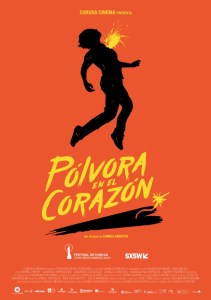
25. Gunpowder Heart (dir by Camila Urrutia) — This raw and angry film from Guatemala was one of the more powerful films to be featured at 2020’s virtual South By Southwest. In Guatemala City, Maria and her girlfriend Claudia are assaulted by three men. Maria wants revenge, no mater what. Claudia, the more cautious of the two, knows that Maria’s plans are going to end in tragedy and disaster but she also knows that there’s nothing she can do to stop her. Gunpowder Heart isn’t always easy to watch but it’s undeniably powerful.
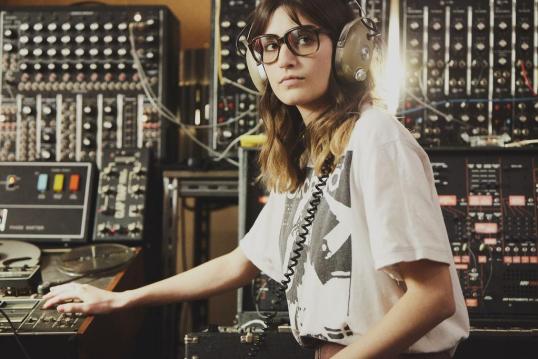
24. The Shock of the Future (dir by Marc Collin) — Taking place in 1978, this French film follows one day in the life of a composer named Ana (Alma Jodorowsky). It’s a typical day — Anna wakes up, a friend comes by with the latest albums, Anna tries to compose music, she goes to a party, and she hears the newest music. It’s a simple but effective celebration of both music and the thrill of having your entire creative life ahead of you. Alma Jodorowsky is brilliant in the role of Anna.
23. She Dies Tomorrow (dir by Amy Seimetz) — This a disturbing mood piece about a woman who is convinced that she is going to die in a day. Everyone who she meets also becomes convinced that they’re going to die within 24 hours. Some of them go out of their way to make sure that it happens while others just wait for death to come. Is it a mass delusion or is it something else? The atmospheric film may raise more questions than it answers but it will definitely stick with you.
22. Driveways (dir by Andrew Ahn) — Kathy (Hong Chau) and her young son, Cody (Lucas Jaye), move into the home that was owned by Kathy’s deceased sister. In his final film appearance, Brian Dennehy plays the gruff but caring neighbor who befriends both Cody and his mother. This is a low-key but emotionally resonant film, elevated by Dennehy’s heartfelt performance.
21. Figurant (dir by Jan Vejnar) — Clocking in at 14 minutes, this unsettling but powerful French/Czech co-production tells the story of a quiet man (Denis Levant) who follows a group of younger men into a warehouse and who soon finds himself in uniform and on a battlefield. Or is he? It’s not an easy question to answer but this intriguing short film will keep you watching, guessing, and thinking.
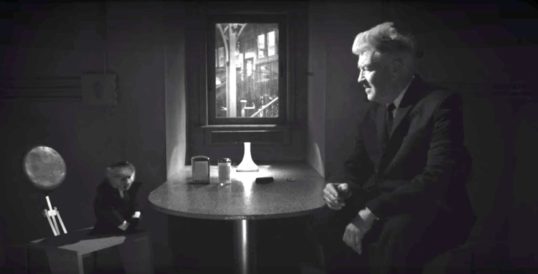
20. What Did Jack Do? (dir by David Lynch) — David Lynch interrogates a monkey in an expressionistic train station. The monkey talks about a chicken and sings a song about true love’s flame. “Are you now or have you ever been a member of the communist party?” Lynch asks. It’s a brilliant short film and really, it’s the sort of thing that only David Lynch, with his mix of earnestness and eccentricity, could have pulled off. Technically, this film was made a few years ago but it only got it’s official premiere in 2020, when Netflix released it on Lynch’s birthday.
19. Red, White, and Blue (dir by Steven McQueen) — Steve McQueen’s Small Axe was made up of five short films. Three of them appear on this list. There’s been a lot of debate about whether or not the Small Axe films should be considered individual features or if they should be considered a miniseries. Obviously, I see them as being individual features but, in the end, they’re brilliant and thought-provoking regardless of whether they’re television or film. Red, White, and Blue takes a nuanced look at institutional racism and features an excellent lead performance from John Boyega.
18. Mr. Jones (dir by Agnieszka Holland) — A film that deserved more attention than it received, Mr. Jones tells the story of Gareth Jones, the Welsh journalist who, in 1933, discovered the truth about the state-sponsored famine that was killing millions in the Ukraine. Despite his efforts, the press refused to report on what was really happening in the Ukraine and instead, an odious propagandist named Walter Duranty was awarded a Pulitzer prize for writing pro-Stalin stories that were later determined to be full of deliberate lies. An important and heartfelt film, Mr. Jones features a subtle but effective lead performance from James Norton and a memorable supporting turn from Peter Sarsgaard, who plays Walter Duranty as a smug snake.
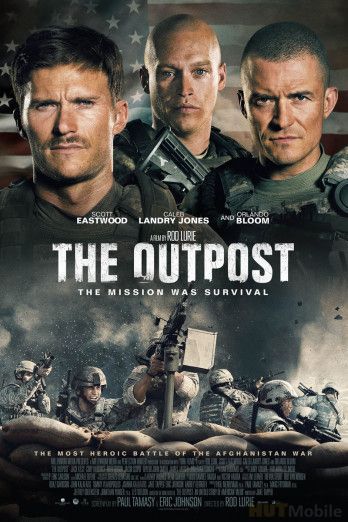
17. The Outpost (dir by Rod Lurie) — Based on a true story and directed by Rod Lurie, this film pays tribute to the men who have fought and died in America’s forgotten conflict, the War in Afghanistan. Well-acted and doggedly unsentimental, The Outpost will literally leave you breathless.
16. Emma (dir by Autumn de Wilde) — The latest adaptation of Jane Austen’s much-adapted novel, Emma has a playful spirit that is lacking in so many other literary adaptations. It also has a great performance from Anya Taylor-Joy, who makes the character of Emma Woodhouse her own.
15. Never Rarely Sometimes Always (dir by Eliza Hittman) — Two teenagers, Autumn (Sidney Flanigan) and her cousin Skylar (Talia Ryder), travel to New York City from Pennsylvania so that Autumn can get an abortion without having to get her parent’s consent. Though I’m occasionally a bit skeptic of cinema verite, Never Rarely Sometimes Always makes good use of the style. Far more than just being a film about abortion, it’s a character study of two people trying to survive in a harsh world. The scene where the previously withdrawn Autumn is prodded to open up about her past is one of the most powerful of the year.
14. Possessor (dir by Brandon Cronenberg) — Brandon Cronenberg’s disturbing sci-fi/horror hybrid is not an easy film to explain or to even describe. Questions of identity and betrayal are mixed with grotesque images of body horror and societal neglect. By the end of the film, you’ll find yourself reconsidering everything that you previously assumed about the movie. This one sticks with you, even though you may not want it to. (How’s that for a recommendation?)
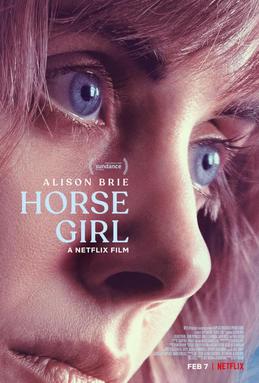
13. Horse Girl (dir by Jeff Baena) — This is a film that definitely deserved a bit more attention than it received. Alison Brie gives a brave and sympathetic performance as someone who believes that she’s a clone who has been abducted by aliens. Is she suffering from delusions brought on by a combination of loneliness and too much television? Or is she right? The film will leave you guessing. While Brie is at the center of almost every scene, Molly Shannon also gives a good performance as one of Brie’s only friends.
12. Sound of Metal (dir by Darius Marder) — Riz Ahmed plays an occasionally obnoxious drummer who goes deaf. Worried that Ahemd is going to relapse into drug use, his girlfriend and musical partner (Olivia Cooke) checks him into a rehab center for the deaf. With the help of a sympathetic but no-nonsense counselor (Paul Raci), Ahmed struggles to come to accept the loss of sound and music from his life. The three main performances elevate this film, making it one of the year’s best. In the film’s best moments, we hear the world through Ahmed’s ears and experience what he’s experiencing.
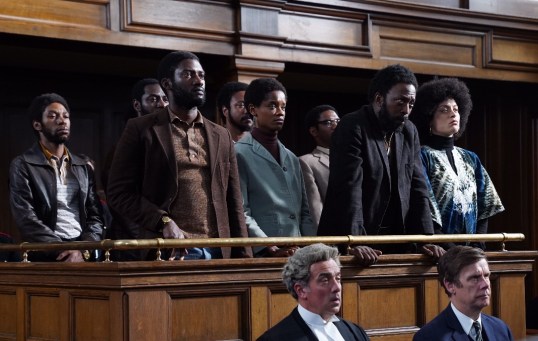
11. Mangrove (dir by Steve McQueen) — The first film in Steve McQueen’s Small Axe anthology tells the story of a true life court case. Politically charged from beginning to end and leaving no doubt as to what the true stakes were in the case, Mangrove is the film that Trial of The Chicago 7 should have been.
10. Soul (dir by Peter Docter) — The latest from PIXAR made me cry as only a great PIXAR film can. A music teacher named Joe (voices by Jamie Foxx) falls down a manhole shortly after winning his dream job in a jazz band. Unwilling to die before performing on stage, Joe finds himself in the Great Before, assigned to teach an unborn soul named 22 (voiced by Tina Fey) what it means to be human …. okay, you know what? This film has one of those plots that sounds silly if you try to explain it. What matters is that it’s a heartfelt film that celebrates every minute of life. Foxx and Fey both do wonderful voice work and the animation is as clever as always. Plus, there’s a cat!
9. The Vast of Night (dir by Andrew Patterson) — This low-budget film is a wonderfully atmospheric look at what may or may not be an alien invasion taking place in the 1950s. Featuring wonderfully naturalistic performances and an intelligent storyline, The Vast of Night is a triumph of the independent spirit. I can’t wait to see what Andrew Patterson does next.
8. Lovers Rock (dir by Steve McQueen) — The 2nd film is Steve MQueen’s Small Axe anthology, Lovers Rock centers on one exhilarating house party. Though the world outside of this party may be harsh and full of oppression and racism (a group of white teens shout racial slurs at one partygoer when she steps outside of the house), the world inside of the party is one of love, music, and celebration.
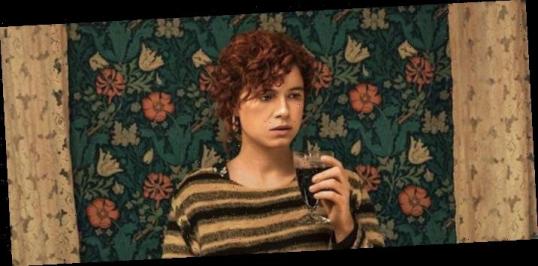
7. i’m thinking of ending things (dir by Charlie Kaufman) — A riddle wrapped in an enigma, i’m thinking of ending things features great performance from Jessie Buckley, Jesse Plemons, Toni Collette, and David Thewlis. What starts out as an awkward drive to visit Plemons’s parents grows increasingly more and more surreal until the audience is left to wonder what is real, what is fantasy, and whether the majority of the film’s characters even exist. This film plays out like a dream and stays with you long after it end.
6. Palm Springs (dir by Max Barbakow) — Perhaps the ultimate twist on Groundhog Day, Palm Springs is a thought-provoking comedic gem from Lonely Island Classic Pictures. Andy Samberg, J.K. Simmons, and Cristin Milioti find themselves living the same day over and over again. Each one reacts to their predicament in a different way. It’ll make you laugh and then it’ll make you cry. Revealing too much else about the plot would be a crime. It’s on Hulu so go watch it.
5. The Assistant (dir by Kitty Green) — This infuriating and ultimately tragic film follows one day in the life of Jane (Julia Garner), a production assistant at a film company. Though he’s never seen, Jane’s boss is clearly meant to be a fictionalized version of Harvey Weinstein. Should Jane save her career or try to warn the actress that her boss has clearly set his eyes upon as his next victim? The scene where the head of HR assures Jane that she needn’t worry about her boss’s behavior because “you’re not his type,” rings all too horribly true. The Assistant was obviously designed to be a rallying call for #MeToo but sadly, today, it feels more like an obituary.

Bad Education
4. Bad Education (dir by Cory Finley) — All year, I have been lamenting the fact that Bad Education was bought by HBO and not Netflix. If it had been released on Netflix, it would probably be an Oscar contender and Hugh Jackman would be in the hunt for his first Best Actor Oscar. Instead, it aired on HBO and it had to settle for limited Emmy recognition. It’s a shame because this film, which centers on embezzlement at one suburban school, was one of the best of 2020. At a time when we’re being told not to question authority, Bad Education encourages us to question everything. Along with being thought-provoking, it’s also occasionally laugh out loud funny. Jackman is brilliant in the lead role. Allison Janney is award-worthy as his partner-in-crime. Ray Romano takes another step in proving that he’s more than just a sitcom actor. All in all, this was a great movie.
3. First Cow (dir by Kelly Reichardt) — This melancholy tale follows two men who meet in Oregon in the 1820s and who become unlikely business partners. Unfortunately, being partners means stealing milk from Toby Jones’s cow and thievery was even less appreciated in the 1820s than it is today. Featuring outstanding lead performances from Jon Magaro and Orion Lee, First Cow is a rewarding work of historical fiction. Kelly Reichardt makes you feel as if you’ve woken up in the 1820s, even as she uses the past to comment upon the present. This probably isn’t a film for everyone. Reichardt’s style has always been more about observing than passing judgment. But for viewers willing to stick with it, this deliberately paced film is a rewarding experience.
Finally, when it comes to the best film of the year, I’ve been going back and forth between two films. In the end, I have to declare a tie. In alphabetical order by title, here are the two best films of 2020:
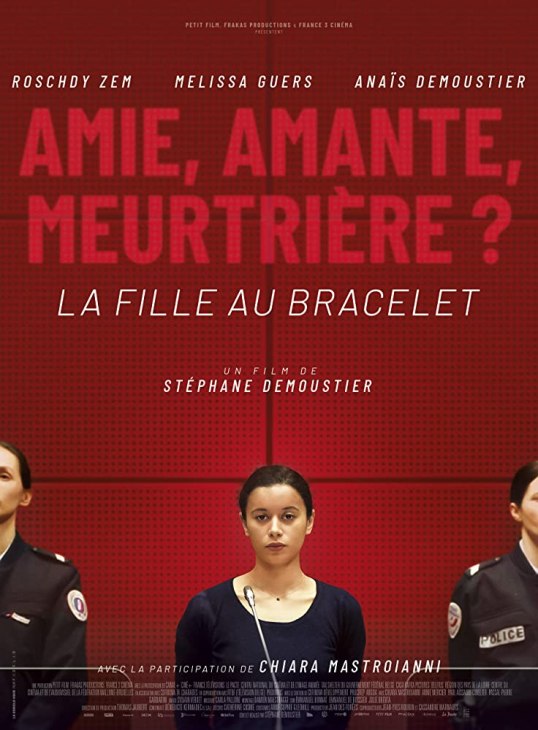
2. The Girl With A Bracelet (dir by Stéphane Demoustier) — This French film is about a teenage girl who is on trial for murdering her best friend. Whether or not she’s guilty is ultimately less important than why everyone has been so quick to accuse her in the first place. Featuring an outstanding ensemble and an intelligent script, The Girl With A Bracelet will leave you thinking about …. well, everything. It can currently be viewed on Prime.
1. Promising Young Woman (dir by Emerald Fennell) — When I first started watching this film, I worried that it might be too stylized to be effective. But it soon became apparent the director/screenwriter Emerald Fennell and star Carey Mulligan both knew exactly what they needed to do to tell this story. Mulligan plays a med school drop-out who is seeking her own unique style of revenge against not only the men who raped her best friend in college but also the people who Mulligan feels subsequently let her friend down. Bo Burnham plays the pediatrician who asks Mulligan out on a date and who appears to be the perfect nice guy, the adorably awkward boyfriend who you you would expect to find in a 90s rom com. Neither character turns out to be exactly who they initially appeared to be. Promising Young Woman mixes genres that normally don’t go together, smashing together drama and comedy, and it’s just audacious enough to be one of the best films of the year.

TSL Looks Back at 2020:
- 2020 In Review: The Best of Lifetime (Lisa Marie Bowman)
- 12 Good Things I Saw On Television in 2020 (Lisa Marie Bowman)
- Lisa Marie’s Top 8 Novels of 2020 (Lisa Marie Bowman)
- Lisa Marie’s Top 8 Non-Fiction Books of 2020 (Lisa Marie Bowman)
- Lisa Marie’s 20 Favorite Songs of 2020 (Lisa Marie Bowman)
- Lisa Marie’s 16 Worst Films of 2020 (Lisa Marie Bowman)
- My Top 20 Albums of 2020 (Necromoonyeti)
- 25 Best, Worst, and Gems That I Saw In 2020 (Valerie Troutman)
- Top 10 Vintage Collections (Ryan C)
- Top 10 Contemporary Collections (Ryan C)
- Top 10 Original Graphic Novels (Ryan C)
- Top 10 Ongoing Series (Ryan C.)
- Top 10 Special Mentions (Ryan C.)
- Top Ten Single Issues (Ryan C)