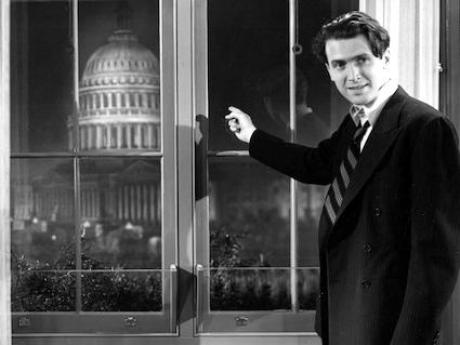
Relentless (1989, directed by William Lustig)


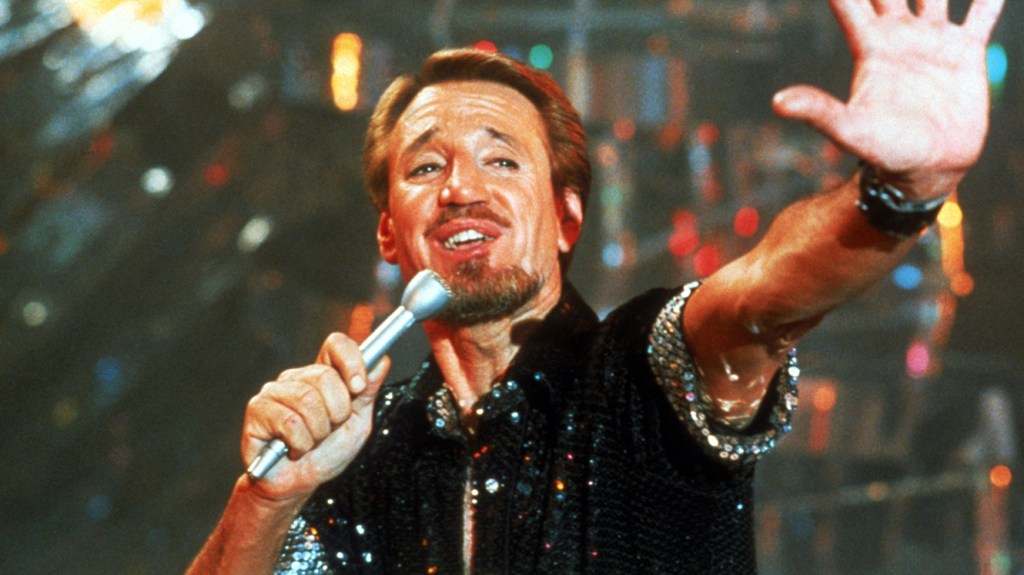
Buck Taylor (Judd Nelson) is the son of an LAPD cop who has never gotten over the bitterness he feels over being rejected by the force himself.  Determined to get revenge on a world that refuses to look beyond the dark circles under his eyes, Buck becomes a serial killer.  He picks his victims at random from the phone book.  Because his father was a cop and he studied to join the force, Buck knows all the tricks of the trade.

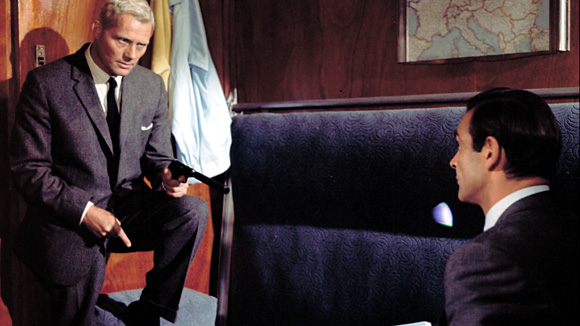
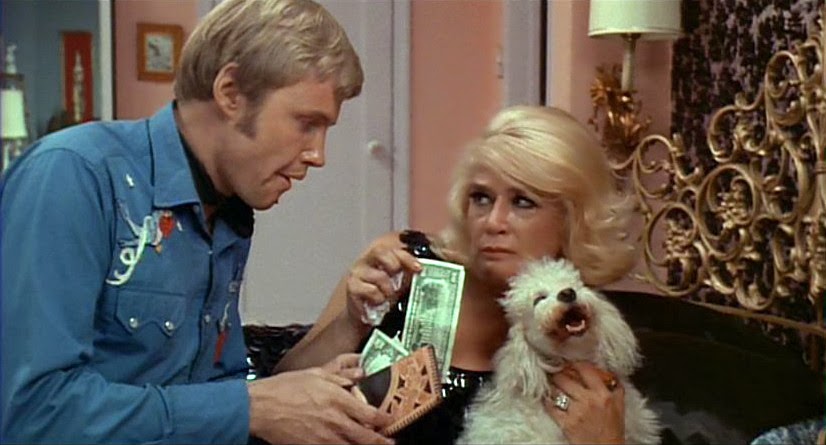
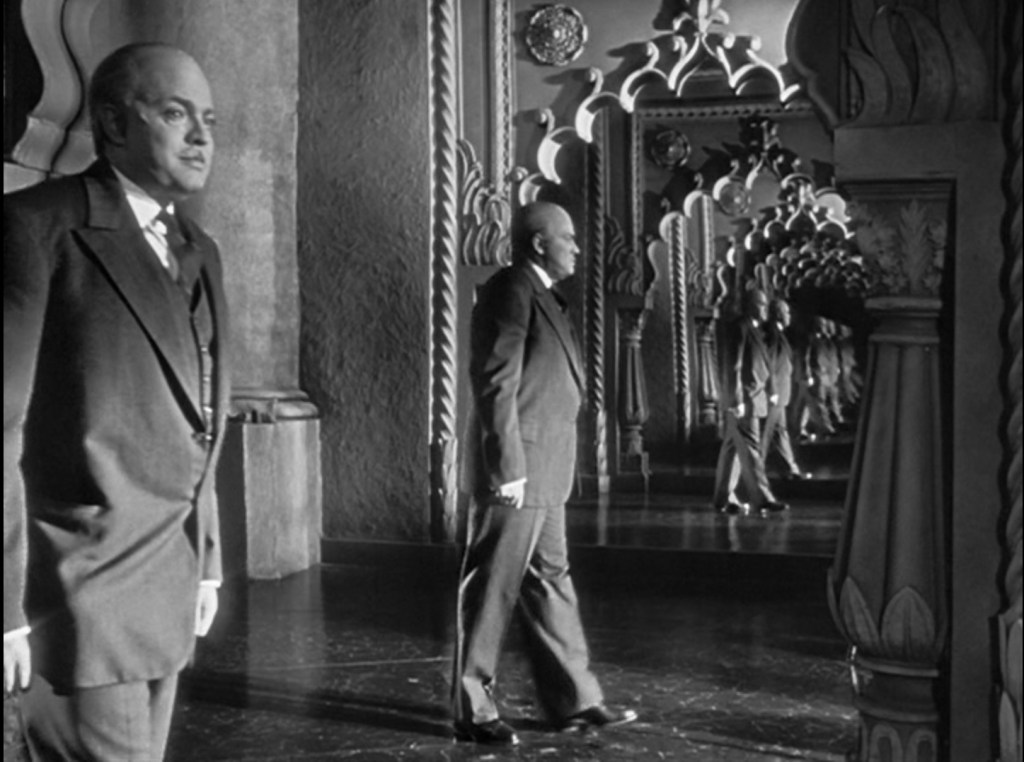
Pursuing Buck are two cops.  Bill Malloy (Robert Loggia) is a veteran detective who is supposed to be laid back though Robert Loggia was one of those actors who never seemed like he had been laid back a day in his life.  Malloy’s new partner is Sam Dietz (Leo Rossi).  Dietz has just transferred to Los Angeles from New York and he’s having a hard time adjusting.  Everyone is just too laid back.

When Buck starts to target the two cops who are investigating him, the case gets personal and relentless.

Relentless is a movie that I’ve been meaning to review for five years now.  In the past, I’ve always been deterred by the fact that reviewing Relentless would mean rewatching Relentless.  But, having just spent two weeks watching all of the Witchcraft films, I now feel like I can handle anything.  Relentless is a movie that I always remember as being better than it actually is.  The murders are creepy but Judd Nelson gives such a one-note performance as the killer that it’s impossible to believe that he could have gotten away with them.  As played by Nelson, Buck Taylor is such an obvious serial killer that I’m surprised that he wasn’t already in jail, having been accused of every single unsolved murder on the books.  There’s nothing compelling about this killer and films like this pretty much live and … ahem … die based on the quality of their villain.

Why do I always remember Relentless as being better than it is?  Most of the credit for that probably goes to Leo Rossi, an underappreciated character actor who gives such a good performance as Sam Dietz that he makes the entire movie better.  Rossi even got a brief franchise out of his performance in Relentless, as Dietz returned for three sequels.  Robert Loggia is also good as Malloy and it’s unfortunate that the movie doesn’t do as much with the character as it could have.

Rossi and Loggia aside, Relentless doesn’t live up to its potential.  But it was still popular enough to launch a direct-to-video franchise.  Tomorrow: Relentless 2.

International Horror Review: Kung Fu Beyond The Grave (dir by Chiu Lee)


I watched the 1982 film, Kung Fu From Beyond The Grave, on Prime earlier today.  It was an enjoyable film from Hong Kong.  It starred many of the same people who appeared in Kung Fu Zombie and both films had a similar attitude, mixing horror and family drama with martial arts and juvenile comedy and topping it all off with a random vampire.  As I said, it was fun to watch and I was certainly never bored.

That said, I would be lying if I said I actually understood everything that happened in the film.

That’s not really the fault of the filmmakers or, at least, I don’t think it is.  The version that I watched was badly dubbed into English and it was obvious that, during the film’s trip from Hong Kong to the grindhouse theaters of New York City, some pretty heavy editing was done.  That’s pretty much par for the course when it comes to the martial arts films of the 70s.  In fact, for many Americans, a good deal of the appeal of these films is the fact that the plots are often incoherent.  Who needs a detailed plot when you’ve got so many great fight scenes, right?

The film opens with a narrator explaining that, every couple of months, the Gates of Hell are opened and the dead can wander the Earth.  (The film — or at least the dubbed version of the film — seems to be pretty sure that everyone who dies ends up in Hell.)  Chun Sing (Billy Chong, star of Kung Fu Zombie) is visited by his dead father, who informs Chun that he was killed by an evil wizard (Chin-Lai Sung) who works for a local crime lord named Kam Tai Fu (Lieh Lo).  Chun now has to avenge his father’s death and what I liked about this film is that, much as with Kung Fu Zombie, it suggested that Chun is a bit annoyed to be bothered with it.  One gets the feeling that Chun was perfectly fine with not knowing who was responsible for his father’s death but, now that the annoying old man has wandered through the Gates of Hell, Chun is now obligated to do something about it.

Unfortunately, it’s not going to be easy to revenge because Kam’s wizard is not only an expert martial artist but he’s also capable of summoning super natural help.  In this case, that help comes in the form of a vampire.  What is Chun to do!?  Wait a minute — the Gates of Hell are still open!  Why not just get some friendly ghosts to help him take on Kam, the wizard, and the vampire!?

And that’s really pretty much the movie for you.  For 87 minutes, people yell at each other, people fight, vampires pop up, and occasionally a large group of pasty ghosts appear and swarm on their enemies.  There’s also a subplot about people getting their hearts ripped out of their bodies while visiting the local brothel which …. well, I know it had something to do with Kam’s wizard but I’m not really sure why it needed to be done.  Still, the scenes of heart theft add to the film’s already chaotic atmosphere.  They just seem to belong.

Which one is better, Kung Fu Zombie or Kung Fu From Beyond the Grave?  The fight scenes were actually better in Kung Fu From Beyond the Grave but Kung Fu Zombie had a far more clever sense of humor.  I personally would have to give the victory to Kung Fu Zombie.  That said, they’re both wonderfully berserk films and if you want to add a little martial arts to your Halloween horror, these two films make the perfect double feature!  And they’re both on Prime so ….. enjoy!

Horror Film Review: You Should Have Left (dir by David Koepp)


Oh, the high hopes I had for You Should Have Left.

Not only was this horror film reuniting one of my favorite actors with the man who directed him in one of his best performances but it also featured what appeared to be the perfect casting of Amanda Seyfried as Kevin Bacon’s daughter.  When I heard that the film featured Bacon trying to protect his family from an evil spirit, I was totally ready to watch a film that would feature ghosts trying to grab Amanda while Kevin yelled, “Leave me daughter alone!”

Of course, then I found out that Kevin Bacon and Amanda Seyfried were not playing father and daughter.  They were playing husband and wife.  And listen, I love Kevin Bacon.  I think he’s a great actor and he seems like a nice guy and I always appreciate the fact that he’s willing to make fun of himself and his up-and-down career.  But seriously, Kevin Bacon is 28 years older than Amanda Seyfried and hearing that they would not only be playing husband and wife but that they would also be playing the parents of a young girl …. well, I wasn’t expecting much.

To the film’s credit, it doesn’t attempt to ignore the age difference between Bacon and Seyfried.  This isn’t like one of those films where Michael Douglas is married to someone who just graduated from high school and everyone just shrugs it off as if there isn’t anything weird about it.  Instead, the age difference is a major plot point of the movie.  Kevin Bacon plays Theo, a retired, wealthy banker.  Amanda Seyfried plays Susanna, an actress.  From the start of the film, Theo obviously feels insecure about whether or not his much younger wife loves him.  When he has trouble gaining access to a film set where she’s acting, he gets a bit paranoid.  When he finds out that she was filming a love scene, he gets even more paranoid.  Throughout the film, Theo worries that Susanna is gong to leave him for a younger man.

Meanwhile, Susanna struggles with how to explain to their daughter why no one likes Theo.  It turns out that Susanna is Theo’s second wife.  Theo’s first wife drowned in a bathtub.  Theo was accused of murdering her but he was subsequently acquitted.  As Susanna explains what happened, it becomes a bit obvious that she has her own doubts about her husband and his innocence.

When they receive an invitation to stay at a house in Wales, both Theo and Susanna assume that the other one arranged it.  Actually, neither one of them arranged it!  Still, it’s a really nice house and it seems like the perfect place for them to repair their strained marriage and work on their trust issues …. except for the fact that there’s obviously somebody or something inside the house with them!

Now, really, You Should Have Left should have worked.  As I said before, I like Kevin Bacon and I think Amanda Seyfried is a far better actress than she’s actually given credit for being.  Add to that, You Should Have Left was directed by David Koepp, who previously directed Bacon in Stir of Echoes.  Remember how good that movie was?  And yet, while You Should Have Left has a few creepy moments, it ultimately falls flat.  What happened?

I think some of the problem is that, regardless of how much you may like the actors playing them, nether Theo nor Suzanna is a particularly compelling character.  Theo, in particular, keeps a meditation journal.  Stir of Echoes Kevin Bacon would have kicked the ass of You Should Have Left Kevin Bacon.  Seriously, the minute you break out the meditation journal, that’s the minute I stop taking you seriously as a protagonist.  The film also cheated a bit when it came to the issue of whether or not Theo murdered his wife.  Instead of saying yes or no, the film tried to keep things ambiguous and it just didn’t feel right.

In the end, the film just didn’t work.  The pacing was off.  The visual style was bland.  For all the build-up, there was nothing particularly interesting about the house’s secret.  For all the talent involved, the film just fell flat.

It happens.

Insomnia File #47: Downhill (dir by Nat Faxon and Jim Rash)


What’s an Insomnia File? You know how some times you just can’t get any sleep and, at about three in the morning, you’ll find yourself watching whatever you can find on cable or Netflix? This feature is all about those insomnia-inspired discoveries!

If you were having trouble getting to sleep at two in the morning last night, you could have turned over to HBO and watched Downhill, the remake of Force Majeure that was released in February.

Downhill tells the story of annoying family taking a ski vacation in Austria.  Billie Stanton (Julia Louis-Dreyfus) is a high-powered attorney who gets annoyed when things don’t go perfectly.  Pete Stanton (Will Ferrell) is …. well, he’s Will Ferrell playing a typical Will Ferrell role.  He’s a big. annoying dofus who spends all of his time on his phone and who is constantly telling the same long, boring, faux profound story about his dead father.  They have two annoying sons and it’s pretty obvious from the start that neither Billie nor Pete is particularly happy with how their marriage or their lives have turned out.  When Pete abandons his family during a minor avalanche, it leads to Billie realizing that Pete doesn’t really seem to be that much into his family or his marriage.  But, since that was obvious from the start, it’s not really that big of a revelation for the audience.

Downhill is a frustrating film to watch, especially if you’ve seen Force Majeure.  Downhill takes the basic storyline of Force Majeure and all of the issues that were raised by Force Majeure and then it explores them in the shallowest way possible.  A lot of the trouble comes down to the fact that Will Ferrell is a good comedian but he’s an inconsistent dramatic actor.  The film tries to work as a dramedy but Ferrell approaches each scene as if it were a sketch on Saturday Night Live.  As a result, Downhill is less like Force Majeure and more like an episode of The Office where D’Angelo Vickers takes everyone skiing.  Julia Louis-Dreyfus is a little bit more grounded in reality but there’s really not much to her role, beyond being annoyed.

I did like the performance of Zach Woods, playing a pretentious friend of the couple and bragging about how he went skiing on shrooms.  Woods has a talent for suggesting the oddness that often hides behind the most straight-laced of facades.  And the scenes with Miranda Otto as a decadent libertine would have been funny if they didn’t feel as if they belonged in a totally different move.  For the most part, though, Downhill fell flat.

Previous Insomnia Files:

  1. Story of Mankind
  2. Stag
  3. Love Is A Gun
  4. Nina Takes A Lover
  5. Black Ice
  6. Frogs For Snakes
  7. Fair Game
  8. From The Hip
  9. Born Killers
  10. Eye For An Eye
  11. Summer Catch
  12. Beyond the Law
  13. Spring Broke
  14. Promise
  15. George Wallace
  16. Kill The Messenger
  17. The Suburbans
  18. Only The Strong
  19. Great Expectations
  20. Casual Sex?
  21. Truth
  22. Insomina
  23. Death Do Us Part
  24. A Star is Born
  25. The Winning Season
  26. Rabbit Run
  27. Remember My Name
  28. The Arrangement
  29. Day of the Animals
  30. Still of The Night
  31. Arsenal
  32. Smooth Talk
  33. The Comedian
  34. The Minus Man
  35. Donnie Brasco
  36. Punchline
  37. Evita
  38. Six: The Mark Unleashed
  39. Disclosure
  40. The Spanish Prisoner
  41. Elektra
  42. Revenge
  43. Legend
  44. Cat Run
  45. The Pyramid
  46. Enter the Ninja

Horror on the Lens: The Lodger (dir by Alfred Hitchcock)


A serial killer known as “The Avenger” is murdering blonde women in London (which, once again, proves that its better to be a redhead).  And while nobody knows the identity of the Avenger, they do know that the enigmatic stranger  (Ivor Novello), who has just recently rented a room at boarding house, happens to fit his description.  They also know that the lodger’s landlord’s daughter happens to be a blonde…

Released in 1927, the silent The Lodger was Alfred Hitchcock’s third film but, according to the director, this was the first true “Hitchcock film.”  Certainly it shows that even at the start of his career, Hitchcock’s famous obsessions were already present — the stranger accused of a crime, the blonde victims, and the link between sex and violence.

Also of note, the credited assistant director — Alma Reville — would become Alma Hitchcock shortly before The Lodger was released.

The TSL’s Horror Grindhouse: Madhouse (dir by Jim Clark)


In this 1974 film, Vincent Price plays Paul Toombes, a talented actor who, despite his formal training and his distinguished background, is best-known for giving hammy performances in low-budget horror films.

Hmmm …. do you think Vincent Price possibly could have related to this character?  I mean, one thing that people often forget is that Vincent Price did not start his career in horror movies.  Price started his career as a romantic lead and then he eventually moved into character parts.  He was tested and apparently quite seriously considered for the role of Ashely Wilkes in Gone With The Wind.  Price was also considered for the role of Mr. Potter in It’s A Wonderful Life and rumor has it that he would have gotten the role of Addison DeWitt if George Sanders had turned down All About Eve.  Before he became an icon of horror, Price had roles in big-budget Oscar nominees like The Song of Bernadette and Wilson.  He even appeared in the classic film noir, Laura.

It wasn’t until the 50s that Price started to regularly appear in horror films and soon, that was what he was best known for.  Price’s naturally theatrical style made him a perfect fit for the genre and it won him a legion of adoring fans.  The same can be said of Paul Toombes.

Paul Toombes is best-known for playing the role of Dr. Death.  He appeared in five Dr. Death films, the majority of which were written by his friend, Herbert Flay (Peter Cushing).  Unfortunately, the murder of his fiancée put a temporary end to Toombes’s acting career.  Even though Toombes was acquitted of the crime, everyone seems to assume that he did it.  Apparently, having a nickname like Dr. Death doesn’t do much to convince people of your benevolence.

However, Toombes finally has a chance to rebuild his career!  The BBC wants to produce a Dr. Death TV series and they want Toombes to once again play his most famous role.  The only problem?  People involved with the production are getting murdered, one-by-one.  Is Dr. Death responsible or is he being set up?

Madhouse is kind of an early slasher film, though, with its gloved killer and its whodunit plot, it has more in common with an Italian giallo than an installment of Friday the 13th.  The deaths are bloody but not too bloody.  In fact, for a film that’s full of murder and betrayal, Madhouse is surprisingly good natured.  The main appeal of the film, of course, is to see Vincent Price and Peter Cushing acting opposite of each other.  Though they were both known for appearing in horror films, Price and Cushing were two very different actors and each brought his own individual approach to Madhouse.  Price is his usual flamboyant self while Cushing is considerably more reserved and the contrast of their styles actually creates an interesting dynamic between Toombes and Flay.

Madhouse is also full of footage from previous films that Vincent Price had made for AIP.  (Of course, these movies are presented as being Dr. Death films.)  Basil Rathbone and Boris Karloff both appear in archival footage, acting opposite Price.  It’s nice to see them, even if neither one of them was actually alive when Madhouse was filmed.  Paul Toombes actually gets a scene where he praises Bail Rathbone’s performance and one gets the feeling that the sentiments were being expresses as much by Price as by the character he was playing.

Madhouse is okay.  The plot’s not particularly challenging and the tone tends to go all over the place, as if the film can’t decide whether it wants to be a horror movie or a Hollywood satire.  However, the film works whenever Vincent Price is on-screen, which is often.  Price is just fun to watch, especially when he’s teamed up with an old pro like Peter Cushing.  For fans of Price and Cushing, Madhouse is an entertaining chance to watch two icons of horror go at it.


A Blast From The Past: The Sound of a Stone (dir by Herk Harvey)


In this short film from 1955, a high school teacher in Kansas is wrongly accused of being a communist.  Despite the fact that he’s a Methodist Sunday School teacher, he made the mistake of assigning a book that was included on a list of subversive literature and, as a result, the entire town is turning against him!  While this short film might not win any points for subtlety (or good acting), it is an effective look at paranoia and how rumors get started.  I especially liked the shot of the spinning phone.

So, why am I sharing this in October?  Because this film was directed by Herk Harvey.  In the 50s and 60s, Harvey directed a countless number of short films.  Some of them were educational.  Some of them were industrial.  Some of them, like this one, were specifically made to be shown to civic groups.  However, horror fans will always know Harvery as the director of one of the most important horror films ever made, Carnival of Souls!

I’ll be sharing Carnival of Souls later this week.  For now, enjoy The Sound of a Stone!


Horror On the Lens: Phantom From Space (dir by W. Lee Wilder)


Today’s horror film is one that we haven’t shown on the Lens before!  That’s right, it’s a premiere!  Yay!

First released in 1953, Phantom From Space is about an invisible alien who wears a diving helmet.  It’s a film that alternates between being extremely silly and occasionally effective, with the emphasis very much on “occasionally.”  Even though the alien causes some mayhem, it’s still definitely a more sympathetic character than some of the humans that it runs into.  This film is very much of the “humans screw everything up” genre of sci-fi films.  Phantom From Space was also directed by Billy Wilder’s brother!  I should, however, admit that there’s absolutely nothing about this film that will remind you of The Apartment, Double Indemnity, or the Lost Weekend.

(Well, I guess you could argue that they all are in black-and-white so there is that….)

Anyway, I watched this with my friends in the Late Night Movie Gang on Saturday and we enjoyed it.  Maybe you will too.  It’s a film that definitely rewards a certain attitude of snarkiness.  It’s only 72 minutes long so give it a try.

Enjoy!

The TSL’s Horror Grindhouse: Hack-O-Lantern (dir by Jag Mundhra)


Note that actor Hy Pyke’s name is misspelled on the cover of this Blu-ray.

Sometimes, you just see a film that simply cannot be reviewed in any conventional use of the term and that’s definitely the case with the 1988 slasher/Satanist/rock musical Hack-O-Lantern.

On Friday, I watched Hack-O-Lantern on Shudder.  It was broadcast as a part of Joe Bob Brigg’s Last Drive-In Halloween special.  I watched the film in a bizarre sort of daze, trying to figure out just what the Hell was actually going on.  It’s a film that apparently has a plot but good luck figuring out what exactly that plot is.  I do know that that the film is supposed to be taking place on Halloween night but, in the world of Hack-O-Lantern, Halloween is apparently a time when people get together and dance in a gym or something.  Seriously, it’s a weird movie.

As far as I can tell, the film is about Tommy (Gregory Scott Cummings), who I guess is like the local trouble maker or something.  He spends all of his time listening to heavy metal music and having these elaborate fantasies in which the members of a band rip off his head.  Or, at least, I assume they were meant to be fantasies.  Tommy’s brother, meanwhile, is a local cop and his mother is crazy and overprotective …. I think.  As I said, the film’s plot was not always easy to follow and it actually took me a while to figure out that the earnest and innocent-looking cop was also Tommy’s brother.  To be honest, I’m not really sure that words alone can express just how incoherent the plot of Hack-O-Lantern is.  I could tell you that the film appears to have been edited with a chainsaw but even that would not begin to capture just how difficult it is to understand why one scene follows another in this film.

Anyway, Tommy’s Grandpa (Hy Pyke) might seem like he’s a fun-loving old man but actually, he’s in charge of the local Satanic cult.  He wants to bring Tommy into the cult but apparently, Tommy might be ambivalent or Tommy might just not know that the cult exists.  It’s really hard to figure out what exactly is going on inside of Tommy’s head, beyond the fact that it involves a heavy metal band beheading him.  Grandpa’s plot to turn Tommy into a Satanist somehow leads to several murders at the Halloween dance.  The murderer wears a devil’s mask and kills people in a variety of bloody ways.  If you like cheap but effective gore effects, you’ll get something out of this film.  The scene with shovel is especially nasty.

It’s a bit of a strange Halloween dance, to be honest.  For one thing, there’s a stripper who shows up for no particular reason and who appears to be like 70 years old.  There’s also a stand-up comedian who pops up out of literally nowhere and does this long routine that has nothing to do with Satanism, Halloween, or people getting killed with shovels.  Why is the comedian there?  Why does the film spend so much time on him?  Where does he disappear to after he tells his bizarrely long joke?  These are the type of questions that you’re forced to ponder while trying to figure out what the Hell’s going on in Hack-O-Lantern.

The thing is that, as easy as it is to criticize a film like Hack-O-Lantern, there really is no other film like it.  Sure, there are other slasher films.  There are other films about Satanists.  There are even other films that feature a random stand-up comedian and a lot of gratuitous nudity.  But there are few films that mix all of those elements together quite as incoherently as Hack-O-Lantern.  As such, Hack-O-Lantern is an oddly fascinating film.  You watch the film and you wonder, “How the Hell did this happen?”  And for that reason, it’s worth tracking down and watching.

Do I recommend Hack-O-Lantern?

Hell yeah, I do.

Witchcraft 16: Hollywood Coven (2016, directed by David Palmieri)


The Witchcraft series comes to an end (?), with this the 16th installment in the bizarrely long-lived franchise.

This one is weird, though.  All of the actors from the previous three installments return.  (The final three films were, more or less, shot simultaneously.)  They’re still playing people named Will Spanner, Lucy Lutz, Rose, Sharon, Samuel, and Garner.  But they’re no longer witches and warlocks.  Instead, they are all actors and production associates who are working on the latest Crystal Force movie.  Crystal Force is a long running series of low budget, softcore films about a warlock.  So, basically, this is a film about the making of a Witchcraft movie but, in this universe, Witchcraft is known as Crystal Force.  Got it?  It turns out that the director of this latest Crystal Force film is a Satanist and he needs to complete one of those overly complicated rituals that are so popular in the Witchcraft films (and apparently the Crystal Force films as well).

Once you get beyond the film-within-a-film aspect, it’s a pretty standard Witchcraft plot but the plot really isn’t important.  Instead, Witchcraft 16 is more of a meta commentary on both the Witchcraft franchise and low budget movie making in general.  When the cast gets together, they talk about the indignities of low-budget horror filmmaking and the fact that no one’s career has been made by appearing in a Crystal Force movie.  (When they say that, you can’t help but wonder what has happened to all the other actors who have played Will Spanner over the years.  Hopefully, they didn’t suffer the same fate as some of the actors in Crystal Force.)  This film is really an elaborate in-joke for people who have a nostalgic attachment to the other films in the series.  Witchcraft 16 is not a film that’s meant to be taken seriously.  It’s also not terrible, which is maybe the best thing that you can say about a Witchcraft film.  It looks and sounds cheap but Berna Roberts does what she can with the role of Lutz and the meta joke works a lot better than I think anyone would expect it to.  It’s actually a clever way to to acknowledge that the Witchcraft movies are never going to be critically acclaimed but that they did have a good run and there are certain people who will have fond memories of checking them out from Blockbuster.

Will Spanner gets zapped out of existence during Witchcraft 16 so I guess the franchise has finally come to an end.  Of course, who knows?  There are still warlocks and witches out there so it could be that the world is going to need Will Spanner again someday.  He already came back from the dead once so who knows what the future might hold.