Guilty Pleasure No. 60: The Running Man (dir by Paul Michael Glaser)


“Killian, here’s your Subzero… now plain zero!”

Uhm, excuse me, Mr. Schwarzenegger, but a man just died.  He probably had a family who just watched you kill him on national television….

Oh well, it happens!  In the role of Ben Richards, Arnold Schwarzenegger kills quite a few people over the course of the 1987 film, The Running Man, but they were all bad.  In fact, when we first meet Ben Richards, he’s a cop who is trying to save lives.  His superiors want him to open fire on a bunch of protestors who simply want enough food to eat.  When Richards refuses to do it, he is framed for perpetrating “the Bakersfield Massacre” and is sent to prison.  When he is recaptured after escaping, he is given a chance to compete on America’s number one game show, The Running Man!  Hosted and produced by Damon Killian (Richard Dawson, oozing smarm in a performance that — in a fair world — would have received Oscar consideration), The Running Man is a show in which prisoners are given a chance to win prizes like a trial by jury or maybe even a pardon.  While the audience cheers and puts down bets, the prisoners are stalked by professional killers like Buzzsaw (Gus Rethwisch), Dynamo (Erland Van Lidth), Fireball (Jim Brown), and Sub-Zero (Professor Toru Tanaka).  Along with Killian, Captain Freedom (Jesse Ventura) provides commentary and analysis on how the game is going.  Ben soon finds himself joined by Amber (Maria Conchita Alonso), who proves herself to be just as tough as he is.

Seen today, The Running Man feels more than a bit prophetic.  Due to worldwide economic collapse, the poor are getting poorer while the rich are getting richer.  The American government has become both increasingly corporate and increasingly authoritarian.  The citizens are entertained and manipulated by “reality” programming.  On camera, Killian is a charismatic host who delivers his lines with faux sincerity and who loves to meet and give away prizes to the public.  (There’s something both undeniably creepy and also rather familiar about the way that Killian sniffs the hair, rubs the shoulders and holds the arms of the audience members to whom he’s speaking.  It’s all very calculated and one gets the feeling that Killian washes his hands as soon as the camera are off of him.)  Behind the scenes, he drinks, smokes, curses, and is full of contempt for everyone around him.  He may not be happy when Ben outsmarts and kills the show’s stalkers but he definitely cheers up when he hears how good the ratings are.  The film is set in 2017, which was 30 years in the future when The Running Man was first released.  Seen today, The Running Man’s 2017 feels a lot like our 2017….

That said, The Running Man is also a big, flamboyant, and undeniably entertaining film.  It’s also surprisingly funny, at times.  Living in a dystopia ahs turned everyone into a quip machine.  None of the bad guys die without Schwarzenegger making a joke about it.  (“Buzzsaw?  He had to split.”  Yes, he did.)  The show’s vapid studio audience, who go from cheering the prospect of witnessing a bloody death to crying when their favorite stalker is killed, is both disturbing and humorous.  (Also memorable is the faux somber dance number that is performed while the show memorializes all the dead stalkers.)  For all the costumed heroes and villains, the film is practically stolen by an older woman named Agnes who becomes Ben Richards’s favorite fan.  The gaming “quads” may be dark and dangerous and full of angry people but they’re also full of advertisements for Cadre Cola.  Dey Young of Rock and Roll High School and Strange Behavior fame has a cameo as Amy, who pays six dollars for a can of Cadre.  (That may seem like a lot for a can of anything but Cadre is the official cola of The Running Man!  Damon Killian endorses it!  And, of course, when The Running Man was produced, the studio was owned by Coca-Cola so the jokes about Cadre’s corporate dominance also serve as a “take that” towards the corporation who put up money for the film.  Either that or Cadre is stand-in for Pepsi.)

It’s easy to compare The Running Man to The Hunger Games films but The Running Man is infinitely more fun, if just because it doesn’t make the mistake of taking itself as seriously as The Hunger Games did.  (Add to that, The Running Man manages to wrap up its story in 90 minutes, whereas The Hunger Games needed four movies.)  Like The Hunger Game, The Running Man is based on a book, in this case a very loose adaptation of one of the pulpy novels that Stephen King wrote under the name of Richard Bachman.  While King said that he enjoyed the film, he also asked that his real name not be listed in the credits because the film had little in common with his book, which is fair enough.  The Running Man may have been inspired by a Stephen King novel but it’s an Arnold Schwarzenegger production through-and-through.

Previous Guilty Pleasures

  1. Half-Baked
  2. Save The Last Dance
  3. Every Rose Has Its Thorns
  4. The Jeremy Kyle Show
  5. Invasion USA
  6. The Golden Child
  7. Final Destination 2
  8. Paparazzi
  9. The Principal
  10. The Substitute
  11. Terror In The Family
  12. Pandorum
  13. Lambada
  14. Fear
  15. Cocktail
  16. Keep Off The Grass
  17. Girls, Girls, Girls
  18. Class
  19. Tart
  20. King Kong vs. Godzilla
  21. Hawk the Slayer
  22. Battle Beyond the Stars
  23. Meridian
  24. Walk of Shame
  25. From Justin To Kelly
  26. Project Greenlight
  27. Sex Decoy: Love Stings
  28. Swimfan
  29. On the Line
  30. Wolfen
  31. Hail Caesar!
  32. It’s So Cold In The D
  33. In the Mix
  34. Healed By Grace
  35. Valley of the Dolls
  36. The Legend of Billie Jean
  37. Death Wish
  38. Shipping Wars
  39. Ghost Whisperer
  40. Parking Wars
  41. The Dead Are After Me
  42. Harper’s Island
  43. The Resurrection of Gavin Stone
  44. Paranormal State
  45. Utopia
  46. Bar Rescue
  47. The Powers of Matthew Star
  48. Spiker
  49. Heavenly Bodies
  50. Maid in Manhattan
  51. Rage and Honor
  52. Saved By The Bell 3. 21 “No Hope With Dope”
  53. Happy Gilmore
  54. Solarbabies
  55. The Dawn of Correction
  56. Once You Understand
  57. The Voyeurs 
  58. Robot Jox
  59. Teen Wolf

January Positivity: Gold Through The Fire (dir by Edward T. McDougal)


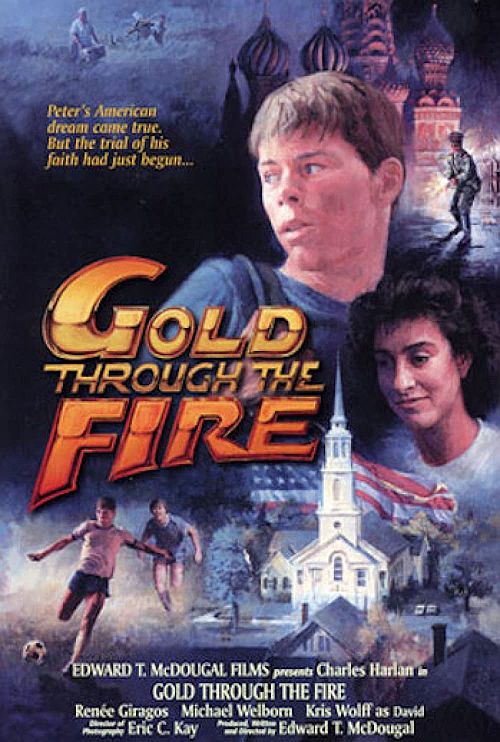
Let’s just take a look at the poster for 1987’s Gold Through The Fire.

Wow, exciting poster, right?  At the top of the poster, we’ve got the Kremlin and a sinister looking soldier firing a gun.  One thing about Russia is that it doesn’t matter when the film was made or who was in charge of the country at the time, the Russian government always makes for a good villain.

The film’s tag line reads, “Peter’s American dream came true but the trial of his faith had just begun.”  So, we now know that Peter (who we presume is the backpack wearing guy at the top of the poster) is probably going to escape Russia and come to America.  And, just to make sure that there aren’t any doubts, there’s an American flag prominently displayed on the poster.  There is also what appears to be a small town church and a few two-story houses.  Peter’s heading to the heartland and good for him.  Small town America comes under a lot of criticism but I’ve been to and lived in a few small towns and I usually had a pretty pleasant time.  Despite their reputation, small towns are often more hospitable to newcomers than big cities.

Hey, so far, so good!  The villains are Russian.  The setting is small town America.  Peter appears to be a totally decent teenager.  This poster features a lot of reasons to be optimistic.  Or, at least, it does until you look in the bottom left corner and you see that Peter appears to be playing soccer….

OH NO!  IS THIS A SOCCER MOVIE!?

Well, fear not.  Yes, the film does involve some soccer but, to be honest, the inclusion of soccer kind of makes sense.  When Peter enrolls in his new American high school, he struggles to fit in.  He can barely speak English.  He is confused by most American customs.  When someone asks him if he has any “records” from his previous school, he says that he enjoys music and this leads to the following comment from one of his classmates:

Poor Peter!  As we saw at the start of the film, Peter has not had an easy life.  He was born in Russia and when the communists discovered that his family was secretly Christian, Peter’s parents were shipped off to a reeducation camp and Peter was tossed into an orphanage.  He eventually escaped, running all the way to Finland and then on to the American embassy.  He defected and briefly became a celebrity.  After being placed with a new American family, Peter enrolled at the local high school and discovered that American teenagers can be cruel.

But, we were talking about soccer, right?

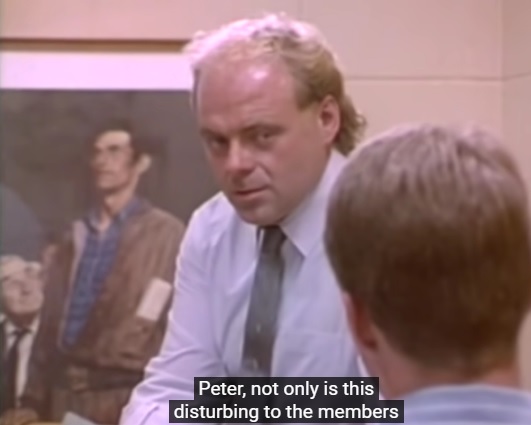
Eventually, the few friends that Peter has made encourage him to try out for the team.  Peter does start playing soccer and it turns out that he’s the best player in the school.  And again, it makes sense as he’s the only student in the school who was born in a country where soccer is more popular than American football.  (Of course, today, it seems strange that any high school would only have one student who wasn’t born in the U.S.)  Unfortunately, since Peter insists on carrying his Bible around with him everywhere that he goes and trying to lead a prayer group on school ground, the school’s principal is not sure that Peter can be allowed to continue playing.  The principal’s office is decorated with a print of Normal Rockwell’s Freedom of Speech, just in case you had any doubt that the school was being run by a Lefty version of Frasier Crane.

Not only does Peter have to deal with the school and its rules but the KGB is also after him.  And his foster brother has lost his faith!  Peter has a lot to deal with.  Fortunately, his new foster family has a station wagon that he can drive around town while he’s thinking.

The best part of Gold Through The Fire is the beginning of the film, when Peter is trying to escape from Russia.  That part of the film moves at a steady pace and, even more importantly, it captures the feel of living in a situation where you’re not allowed to think or speak for yourself.  It perfectly captures the drabness of dictatorship.  Unfortunately, once Peter gets to America, the action starts to drag, the actors are a bit less convincing in their roles, and the film gets bogged down in trying to convince us that America is just one step away from turning into Russia.  There are also few too many awkward pop cultural references, as if the filmmakers were desperate to convince us that they understood what high school students were into despite not being in high school themselves.  Today, the film works best as a time capsule.  Everything about it, from the cars to the clothes to the hair to dialogue, simply screams 80s.  Watching this film is like stepping into a time machine.

And hey, the soccer stuff isn’t actually that bad.  That said, it’s hard for me to watch anything featuring soccer without being reminded of this:

January Positivity: The Gathering (dir by Daniel Carrales)


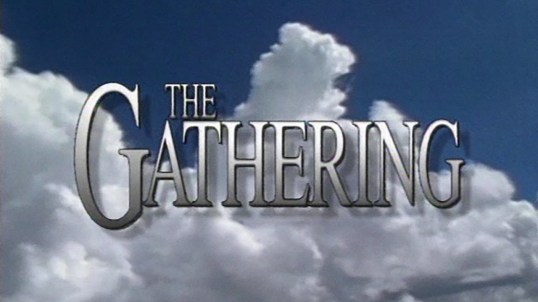
The 1998 film, The Gathering, is about people who keep having visions.

Michael Carey (Daniel Kruse), for instance, is a successful advertising executive who suddenly sees a portal forming high in the sky and people turning into globes of light as they are transported upward.

His wife is at the playground, talking to her best friend about what a drag her husband has become ever since he got on the whole religious kick when suddenly, she has a vision in which all of the children have vanished.

Michael’s mother-in-law gets the worst of it.  She’s a professor at the local college and she’s introduced explaining to a student that the only way to pass her class is to be an atheist.  (The student needs to call a lawyer, to be honest.)  Suddenly, the professor is having all sorts of visions, that majority of which involve her betraying people to a shadowy government organization.  She betrays her best friend and colleague.  She betrays her own daughter.  She betrays everyone.

While his wife and his mother-in-law shrug off the visions and claim that there must be a normal explanation for why they’re all visualizing a similar future, Michael turns into an evangelist and starts telling everyone about what he’s seeing.  He is especially upset when he discovers that one of his clients is going to be at the forefront of encouraging everyone to get a microchip inserted under their skin.  (We already know from the professor’s visions that people who don’t have the chip will be hunted down and killed in the streets.)  People start to feel a bit uncomfortable around Michael.  He loses his job and his family but still, when the portal appears in the sky, he’s among those who vanish.  His wife and his mother-in-law are not lucky, which sounds like the start of a really sexist joke.  (“Those seven years between the rapture and the second coming were the first peace and quiet I got during my entire marriage!”)

Clocking in at 57 minutes, The Gathering was produced and released at a time when the Left Behind books were climbing the best seller charts.  It pretty much follows the same formula as those books, with the emphasis less on being a Christian and more on imagining the misery that awaits everyone who isn’t.  In this film, if you’re not a believer, you’re going to be stuck in a world where all of the color has been desaturated and everyone has to wear really ugly, communist-style clothes.  It’s a world where the government monitors everyone’s actions and where questioning those in charge can lead to you being either executed or sent to reeducation camp.  When viewed today, the film feels more like a political tract than a religious one, with the smug but bland and process-obsessed villains serving as a perfect representation of what almost everyone hates about dealing with the bureaucratic state.

Not surprisingly, the film’s budget is low.  There are a few effective shots.  I liked the way that the clouds would “speed up” whenever anyone was starting to have a vision but then the extremely cheap-looking portal appeared in the sky and ruined the illusion.  The film is quickly paced and its portrayal of life under a dictatorship feels believable.  At the same time, a lot of the acting is amateurish and the film itself seems to be more about scaring people than making a case for its beliefs.  It really does seem like the intended audience for this film were people who just wanted to imagine their atheist neighbors having to dress like Trotsky.  But, hey, at least it’s less than an hour long.

January Positivity: Coach (dir by John Taylor)


Despite the fact that I’ve regularly been watching and reviewing Hang Time, I have to admit that I really don’t know much about basketball.  In fact, I’d have to say that every time that I watch a movie or a television show about basketball, I learn something new.

For instance, when I watched Space Jam 2, I discovered that basketball is the only thing holding the multiverse together.

When I watched Hoosiers, I discovered that basketball is also the only thing holding Indiana together.

From watching the basketball episode of Saved By The Bell, I discovered that Zack Morris was apparently the best basketball player in California, despite having never been seen playing or even talking about the game in the past.  I always thought you had to be extremely tall to play basketball but I guess I was wrong.

From watching Hang Time, I’ve discovered that you only need one good player to repeatedly win the state championship.

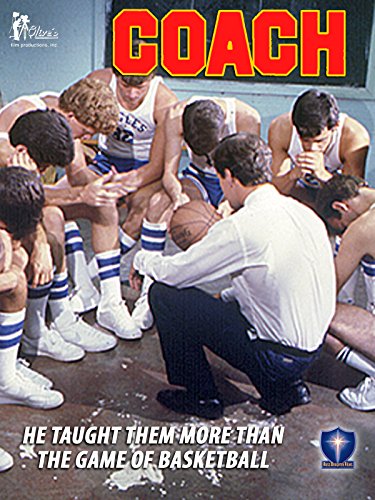
And from 1983’s Coach, I discovered that high school basketball coaches can quit whenever they want to.  Apparently, they can just voluntarily leave the court and refuse to coach the team and it’s not a violation of a contract or anything else that you might expect it to be.  Of course, the team in Coach is so bad that they’ve only won two games in three years!  The players are all seniors and they’re all about to graduate without knowing the thrill of winning the state championship.  Every coach that they’ve had has walked off the court.  Not even the principal of their school cares whether or not they win.  In fact, he seems to prefer that they keep losing, though it’s never explained why.

Their newest coach is Philip (played by Colin Earls) and he is determined to turn them into a good team.  It’s not just that he thinks it would be good for the players to actually win a game or two before becoming adults.  It’s also that the team represents the only Christian school in the league and he feels that they owe it to God to actually try to win a game or two.  It doesn’t help that the other teams are making fun of them for being from a Christian school.  What type of Christian school doesn’t have a good basketball team!?

Uhmmm …. maybe the type of school that puts more importance on academics than athletics?  I mean, that always seems like a possibility.

Anyway, he gets the team into shape by encouraging them to read the Bible and to play for the team instead of playing for their own personal glory.  The best member of the team feels guilty for putting his own personal glory above the team so Philip takes him to a lecture that’s delivered by a guy who is so tall and so awkward that I can only assume that he was a real-life basketball player.  Does the team start winning?  Well, it would be a pretty depressing move if they didn’t.

Coach is an extremely low-budget film and the majority cast appears to have been amateurs.  It’s only 78 minutes long and none of the players is really allowed to develop much of an individual personality.  One player is really good.  One player has a temper that he has to control.  That’s about all we learn about them.  The team gets some help from a nerdy guy who uses a big bulky computer to scout the other teams.  For me, the computer stuff was the highlight of this film, just because everyone in Coach is so amazed by the fact that a computer has a practical use.  This film was made in 1983 and it shows!

I also found it amusing that, during the game, the computer and the guy was always hidden away in what appeared to be a boiler room.  I guess this was to keep the other teams from figuring out that computers could be used to store and analyze information.  I felt kind of bad for the guy who operated the computer, though.  While the rest of the team was playing and getting all the credit, he was essentially locked away in a secret room.

Coach is undoubtedly sincere but, aside from all the excitement over the big bulky computer, it’s a bit forgettable.  In the end, the team will always remember their friends at Hang Time and I guess that’s the important thing.

Lost Heroes: The Untold Story of Canadian Super Heroes (2014, directed by Will Pascoe)


Lost Heroes is an engrossing look at the history of Canadian super heroes.

Starting in the 1930s, Lost Heroes details how Canada’s entry into World War II also led to the first Golden Age of Canadian comic book heroes.  After the passage of the War Exchange Cultivation Act of 1940, many American products, including the comic books that were just as popular with children in Canada as they were in America, could no longer be imported to Canada.  Looking to fill the hole, Canadian publishers put out their own comic books, all featuring uniquely Canadian heroes who fought the Nazis.  Because these books were published in black-and-white, they became known as the Canadian Whites.

The first half of the documentary is about the Canadian Whites and the companies that published them.  Maple Leaf was the home to a hero who dwelled under the sea and who was known as Iron Man.  Cosmo Grant was a Batman-style scientist while Brok Windsor traveled in a canoe.  Anglo-American published the adventures of Commander Steel and Freelance, two international adventurers who aided in the Canadian war effort.  Educational Projects introduced readers to Canada Jack, an ordinary Canadian who fought crime but also taught valuable life lessons.  Most popular of all was Bell Features, which was home to Nelvana of the North (who drew her powers from the Northern Lights), Crash Carson, and Johnny Canuck.  Johnny Canuck’s super power was “being Canadian.”

The stuff about the Canadian Whites is genuinely interesting.  Jack Tremblay, one of the artists of the Golden Age, is interviewed and talks about the experience of being a 16 year-old comic book artist.  (Because of the war effort, many of the Golden Age comic books were written and illustrated by teenagers who weren’t old enough to enlist.)  Along with re-introducing some forgotten World War II super heroes, the documentary also looks at how those super heroes represented Canadian culture and how they helped readers take pride in being Canadian.

The end of World War II also brought about the end of the Golden Age of Canadian comics.  With the war over, the War Exchange Cultivation Act also came to an end and, once again, American comics could be sold in Canada.  The black-and-white Canadian comic books could not compete with the color comic books coming from the States and most of the Canadian publishers closed up shop.  The rest of the documentary deals with the periodic attempts to revive the Canadian comic book industry throughout the years.  Though Captain Canuck it found some brief success in the 70s, it ultimately could not compete with the Marvel and D.C. titles coming across the border.

Much of the second half of the documentary deals with Wolverine and Alpha Flight, both of which were created for Marvel by John Byrne.  Along with being one of the world’s most recognizable and popular super heroes, Wolverine is also Canadian and several people interviewed in the film take pride in pointing out all of the things about Wolverine that identify him as being from Canada, everything from his love of beer to his flannel shirts.  Alpha Flight is less warmly received, with many criticizing it for being more about how Americans view Canada than Canada itself.

Lost Heroes is an interesting and informative documentary.  It examines both the history of Canadian comics and also what those comic book heroes said about Canada’s national identity and its efforts to distinguish itself from its neighbor down south.  The documentary ends with the suggestion that the Canadian super heroes will rise again.  I hope they do.

January Positivity: Consider It All Joy (dir by William Mings)


The 1986 short film, Consider It All Joy, features one of my favorite scene transitions.

Newly married Claire (Bonnie Hawley) and David (Gary Costello) kiss while sitting in front of the fireplace.  One jump cut later and Claire is smiling and pregnant and David has a look on his face that says, “My boys can swim!”  That’s about as close as any faith-based film will ever get to acknowledging that two people, even two married people, have not only had sex but that they actually enjoyed having sex and that they probably had sex more than once.  Of course, it helps that Hawley and Costello had a lot of chemistry and they just seemed like they belonged together as a couple.  They’re totally believable as one of those married couples who rarely fight and yet don’t annoy their friends with their happiness.

The other thing that Consider It All Joy has is a lot of wood paneling.  I wouldn’t say that every room in this film has wood paneling but enough of them do that, as I watched, I found myself saying, “That’s a lot of wood paneling.”  But that makes sense.  This is a low-budget, indie film that was shot in the 80s.  It was designed for a very specific audience and there’s nothing particularly slick or overly stylized about it.  Watching the film, the viewer gets the feeling that the majority of it was filmed in someone’s house, as opposed to on a set.  The actors probably wore their own clothes.  In many ways, the film itself feels like a time capsule.  Until time machines are invented, watching a film like this might be the closest that one could get to witnessing the 80s firsthand.

As for the film itself, it tells the story of Claire dealing with the sudden death of David.  The majority of the film is told in flashback so we watch all of the scenes of them meeting, courting, marrying, and starting a family with a sense of dread.  As happy as they are, we know that it’s not going to last.  When David is laid off from his job, he refuses to get upset and instead tells his boss that he knows everything will work out because he has faith and that God will provide.  Everyone at the office is apparently really impressed with David’s good attitude.  Of course, they’re not impressed enough to keep him around and to continue to pay his salary.  Personally, I think they’re getting off easy but then again, everything that I know about downsizing and corporate America comes from the second season of The Office.

David does eventually find a new job and it turns out to be a far better one than he previously had!  However, no sooner has David left for work than the police show up at the door and tell Claire that he’s been killed in an auto accident.  At first, Claire is angry but then she remembers David’s faith and she decides to consider it all joy.  The film ends with her witnessing to one of David’s friends, with the suggestion being that Claire might not be single for long!

As I’ve said before, I have a weakness for low-budget indie films, especially ones that pretty much epitomize the era in which it was made.  This is pretty earnest film and I doubt that it will change the minds of anyone who doesn’t already agree with its message but Bonnie Hawley and Gary Costello are a believable couple and the film couldn’t be more 80s if it tried.

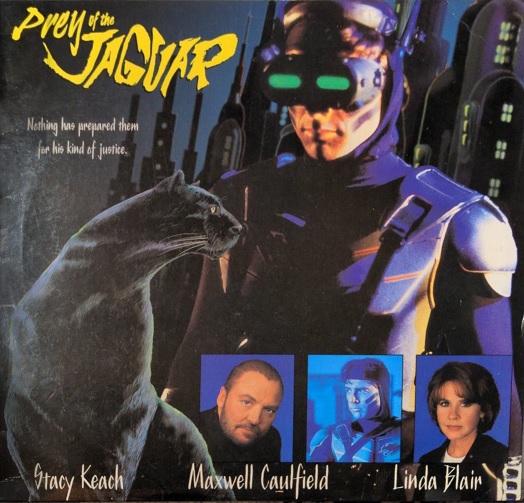
Prey of the Jaguar (1996, directed by David DeCoteau)


Derek Leigh (Maxwell Caulfield) is a former Special Ops agent whose son and wife are killed by a drug lord (Trevor Goddard) than Leigh helped to put behind bars.  Inspired by his dead son’s love of super heroes, Leigh puts on a purple rubber suit and learns karate from Master Yee (John Fujioka) while The Toymaker (Paul Bartel) supplies him with an arsenal of weapons.  Calling himself the Jaguar, Leigh goes after the men who killed his family.

Caulfield wears an obviously fake mustache for the first half of the film so that he can shave it off when he becomes The Jaguar.  The camera never stops spinning around.  Most of the fights look fake and the exterior of Derek’s house changes from shot-to-shot.  Stacy Keach plays a high-ranking government official but doesn’t bother to get a haircut or hide his pony tail.  Linda Blair plays a cop and sounds like she sucked helium before filming her lines.  I’m not sure what she was doing in the movie.  She may not have been sure either.  Prey of the Jaguar is a reminder of just how cheap and cruddy most super hero films were before Marvel took over Hollywood.  Of course, Derek doesn’t really have any super powers, beyond getting proficient at martial arts in record time.  He is just wearing the outfit to honor the spirit of his dead son.  That actually makes more sense than most of the Marvel origin stories.  The movie itself was too cheap to work and the actors were so disinterested that they seemed to actively be trying to make sure that there would never be a Prey of the Jaguar 2.

The most interesting thing about the film are the opening credits, which reveal that this film was executive producer by the Wolf of Wall Street himself, Jordan Belfort.

Catching Up With The Films of 2022: Emily The Criminal (dir by John Patton Ford)


An hour or so into Emily the Criminal, there’s a scene in which Emily (Aubrey Plaza) goes to what she thinks is a job interview with a prestigious ad agency.  For the second time in the film, Emily is forced to tell a potential employer that she has a felony conviction.  In this case, it doesn’t seem to matter.  Alice (Gina Gershon), the head of the agency, explains that she is looking for an intern to work in the design department.

Emily asks if Alice is asking her to take an unpaid internship.

Alice replies that everyone starts as an intern and that, if they do a great job, they might get a paid position in five to six months.

Emily asks how Alice can expect anyone to work regular hours without getting paid.

Alice replies that Emily will paid in experience.  “When I began in this industry,” Alice says, “I have no intention of just being a secretary….”

“But secretaries get paid!” Emily snaps.

Alice replies with an obviously well-rehearsed anecdote about how, when she started, there were no women in the executive office.  When Emily cuts her off again, Alice drops the Pelosiesque facade and accuses Emily of being spoiled.  When Emily tells her off before storming out of the office, you’ll want to cheer.  It doesn’t matter how you may feel about some of Emily’s earlier life decisions or Emily as a person.  When Emily calls out Alice for expecting people to work for free, you will totally be on Emily’s side.

You’ll also understand why Emily would chose to be, as the title makes clear, a criminal.

When we first meet Emily, she is a part of the gig economy, delivering food for a catering company.  There was a time when she dreamed of becoming a professional artist and living in South America.  Now, she’s just trying to figure out how to pay the huge amount of student loan debt that she owes, despite the fact that she never graduated from college.  When she learns of an opportunity to make $200 in one hour, she takes it.  As Youcef (Theo Rossi) explains it, all she has to do is use a fake credit card to buy a flat-screen TV so that Youcef and his associates can then sell it.  (In a nice bit of irony, it later turns out that Youcef is basically an unpaid intern for his cousin.)  After her first job is a success, Youcef starts to trust Emily with making bigger and riskier purchases.  Soon, Emily is making her own fake credit cards and running her own scams.  She’s still an independent contractor but now she’s making a lot more money.

Emily the Criminal takes a matter-of-fact approach to Emily’s activities.  There’s none of the condemnation that one might expect as the result of having seen other movies and, regardless of how dangerous things get for her, there’s never a moment where Emily herself reconsiders whether or not she wants to be a criminal.  The film doesn’t necessarily celebrate criminality but it does ask why Emily should care about the rules of society that obviously doesn’t care about her.  If Emily remains law-abiding, she’ll be stuck in a demeaning job and she’ll never pay off her debts, which means that she’ll just become a criminal by default.  (And, let’s be honest, we all know that all the talk about canceling student debt is just something that gets trotted out during an election year.  We’ll hear it again in 2024 and again, nothing will happen.)  As a criminal, the only risk is that Emily could be arrested or attacked by another criminal but, as the film makes clear from the start, Emily already has a criminal record so what’s one more charge?  As for being attacked, Emily continually proves herself to be tougher and far more ruthless than the other criminals around her.  Alice might brag about how she’s found success in an industry dominated by men but Emily actually does it.

Emily the Criminal is a relentlessly-paced journey through the shadows of the gig economy, a world where the only law is that everyone is looking out for themselves.  Aubrey Plaza gives a career best performance as Emily, playing her as someone who not only turns out to have a natural talent for being a criminal but who occasionally shocks herself with how ruthless she can be.  Emily may be a criminal but its hard to judge her.  It’s just a job.

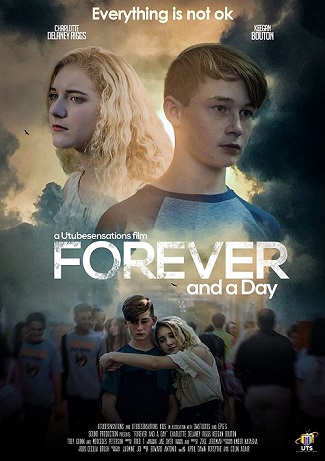
January Positivity: Forever and a Day (dir by Zeke Jeremiah)


In a small Texas town, life seems to be going as it always does.

High school freshman Daniel (Keegan Bouton) spends most of his time hanging out with his best friend, Haley (Charlotte Delaney Riggs).  They walk around town together.  They explore the woods together.  They talk about their first year in high school and which teachers they like and which they dislike.  When they see one of their classmates getting picked on by a group of bullies, Haley wants to do something to stop it while Daniel argues that there’s nothing they can do.

Besides, they have an even more pressing concern.  Haley’s mother (Mercedes Peterson) has begun to flirt with Daniel’s father (Trey Guinn)!  In a well-written and well-acted scene, they sit in a car and watch as Haley’s mom talks to Daniel’s dad and both of them discuss the things that their parents do while flirting, just to watch in silent horror as their parents proceed to do every one of those things.  Though they may be best friends, they’re still a little bit creeped out by the idea of their parents dating.  Daniel, especially, still thinks that his father and mother might someday get back together.

From the start, the viewer is aware that something tragic is going to happen.  The town is too perfect and Haley and Daniel’s friendship is too heartfelt for there not to be a tragedy waiting around the corner.  And, from the minute we see poor Colby (Holdan Mallouf) getting pushed around by Travis (Blaze Freeman) and his gang, we can pretty much guess what that tragedy will involve.  It’s just a question of who, amongst the character that we’ve met, will be unlucky enough to be in the hallway when Colby finally snaps.

It may sounds melodramatic but, unfortunately, it’s also an honest portrayal of the fears that everyone has when it now comes to high school.  School shooting are a tragedy that few of us can get our heads around, which is one reason why people are often more interested in using them to score political points than to actually discuss the events that led up to each shooting and the culture that produced them.  This film does a good job of examining the aftermath of the shooting and the struggle of people to understand both how it could have happened and how it could have been prevented.  This film emphasizes love and faith as a way to both deal with tragedy and to combat the anger and depression that leads to it happening.  No one was willing to stand up for Colby and the only person who shows any real concern for him was led away by her best friend.

(I do have to say that I cringe a little bit whenever school shooters are portrayed as just being stereotypical nerds who snapped because the bullies wouldn’t leave them alone.  That describes a few school shooter but it certainly doesn’t describe shooters like Nikolas Cruz, Adam Lanza, or the two Columbine shooters.  Portraying any kid who is picked on as being a ticking time bomb just further stigmatizes the socially awkward.)

Forever and a Day is a low-budget film and it’s hardly flawless.  (I could have done without the narrator.)  But, at the same time, it deals with a difficult subject with emotional honesty and the cast does a good job inhabiting their characters.  In the end, it’s a film that asks all of us to treat each other with kindness and there’s nothing wrong with that.

McBain (1991, directed by James Glickenhaus)


In the year 1973, Bobby McBain (Christopher Walken) was an American POW, fighting for his life in a North Vietnamese prison camp that was run by a general so evil that he wore a necklace of human ears.  Luckily, on the last day of the war, McBain was rescued by Roberto Santos (Chick Vennerra).  When Bobby asked how he could ever repay Santos, Santos gave him half of a hundred dollar bill and told him that someday, Santos would give him the other half.  McBain swears that he will be ready when the day comes to get the other half.  I guess he’s like Caine in Kung Fu, waiting for the chance to snatch the pebble from his master’s hand.

15 years later, McBain is a welder in New York.  One day, while sitting in a bar, he watches as Santos is executed on live television after a failed attempt to overthrow the dictator of Colombia.  Shortly afterwards, McBain is approached by Santos’s sister (Maria Conchita Alonzo), who asks McBain to help her finish Santos’s revolution.  McBain tells her a long story about attending Woodstock and then reunites with his Vietnam War buddies, Frank (Michael Ironside!), Eastland (Steve James), Dr. Dalton (Jay Patterson), and Gil (Thomas G. Waites).  After killing a bunch of drug dealers, stealing their money, and harassing Luis Guzman, the gang heads for Colombia.

I wonder how many people have watched this movie over the years with the expectation that it would be a live action version of the famous Rainier Wolfcastle film that was featured in several episodes of The Simpsons.  Unfortunately, this movie has nothing to do with the Simpsons version of McBain.  (Sorry, no “Bye, book.”)  Instead, it’s just another strange and overlong action film from director James Glickenhaus.  The film mixes scene of total carnage with dialogue that often seems to be going off on a totally unrelated tangent, like McBain’s musings about what Woodstock ultimately stood for.  Walken doesn’t seem to be acting as much as he’s parodying his own eccentric image.  Walken takes all of his usual quirks and trademark vocal tics and turns them up to 11 for this movie.

Even though the movie is twenty minutes too long, it still feels like scenes are missing.  Alonzo leaves Colombia on a mule and then is suddenly in New York.  (The mule is nowhere to be seen.)  We don’t actually see Walken recruiting the majority of his team.  Instead, they just show up in his house.  Once the action moves to Colombia, it turns out that overthrowing the government is much simpler than it looks.  While the rebels lay down their lives while attacking the palace, McBain and his crew pretty much stroll through the movie without receiving even a scratch.  Maybe welders should be put in charge of all of America’s foreign policy adventures.  It couldn’t hurt.

With its hole-filled plot and confusingly edited combat scenes, McBain isn’t great but 80s action enthusiasts should enjoy seeing Michael Ironside and Steve James doing their thing.  Others will want to see it just for Christopher Walken’s characteristically odd performance.  He may not be Rainier Wolfcastle but, for this movie, Christopher Walken is McBain.