Film Review: Wire Room (dir by Matt Eskandari)


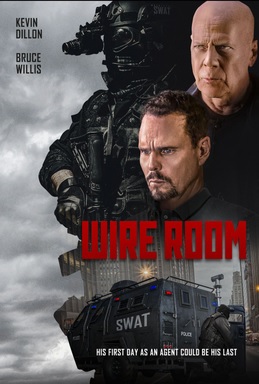
Wire Room tells the story of Justin Rosa (Kevin Dillon).

Once upon a time, Justin was a member of the Secret Service.  But, for reasons that are never really made clear, Justin was eventually demoted and found himself working for Homeland Security.  After 18 years, Justin has finally achieved his dream.  He’s been assigned to a wire room, a high-tech command center where HSI agents conduct surveillance on high-profile criminals.  On his first day, Justin shows up late.  He gets yelled at by his superior, Shane Mueller (Bruce Willis).  Justin explains that he couldn’t find anywhere to park.  Shane is not impressed.  Of course, Shane takes a taxi to and from work because Shane is a total alcoholic who likes to spend his free time at the local strip club.

After meeting Shane and Nour Holborow (Shelby Cobb), Justin is left in the wire room alone.  His sole job is to keep an eye on a British arms dealer, Eddie Flynn (Oliver Trevena, who chews the scenery with relish).  Shane is obsessed with taking down not only Eddie but also all of the corrupt cops that are on Eddie’s payroll.  Eddie has no idea that his entire mansion is wired and that Homeland Security is watching him while he wanders around the house in his leopard-print robe.  Eddie also doesn’t know that a bunch of assassins are coming to his house to try to kill him.

Realizing that Eddie is about to be killed, Justin tries to call Shane but Shane is too busy getting drunk to answer his phone.  When Nour calls about an unrelated manner, Justin asks her for advice.  She tells him to call Shane.  He already tried that!  Realizing that Homeland Security is full of drunks and incompetents, Justin decides to call Eddie himself.  Soon, Justin and Eddie enter into an uneasy partnership.  Justin tries to keep Eddie alive while Eddie tries to figure out how Justin knows what’s happening at his house.  To me, it would seem like it shouldn’t be difficult for Eddie to figure out that Homeland Security has wired his house but no one in this movie is particularly smart.

Wire Room was one of the last movies that Bruce Willis made before announcing his retirement from acting.  Willis doesn’t get much screen time and his dialogue consists mostly of profane insults.  That said, it is nice to see Willis playing a good guy again and there’s even a few hints of the old Willis charisma to be found in his performance.  If nothing else, he seems to enjoy the scenes in which Shane gives Justin a hard time.  As for Justin, he really is a truly stupid character who makes so many obvious mistakes that it’s hard not to worry about the fact that he’s been entrusted with keeping the homeland safe.  Fortunately, Kevin Dillon is an actor who can make stupidity likable.  (There’s a reason why Johnny Drama was the only character on Entourage that anyone really cared about.)

Like the majority of Willis’s recent films, Wire Room is a low-budget action film.  The special effects aren’t particularly special and the action scenes are fairly rudimentary.  A huge problem with the film is that the viewer is never quite sure how close or how far anyone is from the titular location.  For instance, we’re continually told that people are heading towards the wire room but it seems like it takes them forever to actually show up.  At one point, we see a group of bad guys heading up to the wire room but, somehow, Justin and Shane still have time to scrounge up some weapons and have a fairly detailed conversation before any of them actually arrive.  For all of the shooting and the yelling, Wire Room also never convinces us that there’s much at stake as far as the story is concerned.  Shane, for instance, doesn’t seem to be particularly upset when Justin tells him about what is happening at Eddie’s house, despite the fact that Eddie’s death would destroy Shane’s investigation into police corruption.  If Shane, the man in charge of the investigation, doesn’t care about what happens then why should we?

That said, there is some perhaps unintentional enjoyment to be found in Wire Room.  Kevin Dillon plays Justin as being so dense and so slow-witted that the film almost becomes a parody of the recent spate of movies and television shows that have been released about hyper competent government agents.  There are laughs to be found and Bruce Willis gets to be the good guy again.  Wire Room is not a particularly memorable movie but it is a decent time waster.
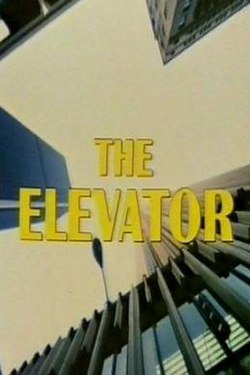
Retro Television Reviews: The Elevator (dir by Jerry Jameson)


Welcome to Retro Television Reviews, a feature where we review some of our favorite and least favorite shows of the past!  On Sundays, I will be reviewing the made-for-television movies that used to be a primetime mainstay.  Today’s film is 1974’s The Elevator!  It  can be viewed on YouTube!

Marvin Ellis (Roddy McDowall) hates his job.  He’s been assigned to be the manager of a new high-rise office building.  Parts of the building are still under construction but that hasn’t stopped the company that owns it from selling out office space.  When Mrs. Kenyon (Myrna Loy) comes by and asks to look at the top floor penthouse, Ellis agrees.  In public, Ellis is always friendly and always courteous.  It’s only under the most stressful of circumstances that Ellis reveals that he feels as if the building has been built of out lies and cheap material.

Ellis and Kenyon soon find themselves in a stressful situation when they are trapped in an elevator.  Of course, they’re not alone in the elevator.  There’s also Dr. Reynolds (Craig Stevens), his wife (Teresa Wright), and his mistress (Arlene Golonka).  And then there’s Robert Peters (Barry Livingston), a teenager who has inherited a fortune.  And finally, there’s Eddie Holcomb (James Farentino).  Eddie has a suitcase full of money that he’s stolen from an office in the building.  He’s also got a loaded gun.  And, perhaps worst of all, he has an intense fear of tight places.  The longer that he’s trapped in the elevator, the worse his claustrophobia becomes.

Because the building isn’t really finished yet, the elevator’s alarm button doesn’t really work.  Other than the passengers trapped inside, the only people who know about the stalled elevator are Eddie’s partners-in-crime.  Irene (Carol Lynley) is Eddie’s girlfriend and she just wants to get the situation resolved with as little violence as possible.  Pete (Don Stroud) is Eddie’s sociopathic friend.  Pete is not only determined to rescue Eddie and retrieve the suitcase.  He’s also determined to take care of any potential witnesses by killing everyone on the elevator.

The Elevator is a disaster film, along the lines of Airport and The Towering Inferno.  Due to the hubris of a faceless corporation, a group of people find themselves trapped in a potentially catastrophic situation.  Some of them react with bravery.  Some of them react with cowardice.  All of them get a chance to reveal a bit of who they are on the inside.  Some might say that being trapped in an elevator is not quite as bad being trapped in a fiery skyscraper or being a passenger on a airplane that’s being held hostage by a mad bomber.  Technically, they’re right but I am also going to admit right now that I absolutely hate elevators and I try to avoid them whenever I can.  I always say that this is because running up and down several flights of stairs is a good way to keep my legs looking good and certainly that’s part of it.  But an even bigger reason is that I dread the thought of being stuck in a confined space with a bunch of strangers.  If I was on an elevator that was stuck between floors, I would probably lose my mind.  I have a hard enough time just standing in line for longer than 3 minutes.  As directed by Jerry Jameson, The Elevator does as good job of capturing the feeling of being trapped in a small space.  It’s not a film to watch if you have claustrophobia.

As for the cast, Myrna Loy is a delight as the eccentric Mrs. Kenyon.  And seriously, how can you dislike any film that gives Roddy McDowall a monologue about how much he hates skyscrapers?  It’s an entertaining, if undemanding, film.  After watching The Elevator, I’ll keep taking the stairs.

Film Review: The Hatchet Wielding Hitchhiker (dir by Colette Camden)


How dumb can people be?

That is the question that’s posed by the new Netflix documentary, The Hatchet-Wielding Hitchhiker, and the answer would appear to be that they can be extremely dumb.  The documentary takes a look at the story of Caleb “Kai” McGillvary, who went from being an internet sensation to an accused murderer over the course of three months in 2013.  Even more so, though, it’s about the people who enabled him, through a combination of their own stupidity and greed.

Kai first found fame when he was credited with stopping a hate crime.  A man named Jett McBride smashed his car into a black pedestrian and, while the pedestrian was trapped between the car and a parked truck, McBride attacked the people who attempted to help.  Kai, who was a hitchhiker who McBride had apparently picked up just a few hours before, jumped out of the car and proceeded to hit McBride three times with a hatchet.  A local news reporter interviewed Kai afterwards and was immediately taken with Kai’s spaced-out style.

At the time, it’s perhaps understandable that people were so happy that Kai had prevented McBride from killing several people that they didn’t stop to ask themselves why Kai had a hatchet with him in the first place.  Still, it does seem like it would have been a good thing to consider before the reporter uploaded his interview with Kai to YouTube.  And when Kai became a viral sensation (though I have to admit that I had never even heard of him until I saw this documentary so perhaps viral is in the eye of the beholder), maybe a few people should have said, “Before we try to make him a star, maybe we should consider that the only thing we know about him is that he’s been traveling around the country with a freaking hatchet in his backpack.”

Instead, the reporter tracked down Kai for a second interview.  Kai played guitar and expounded on his philosophy of life.  (Jack Kerouac would have kicked Kai out of a moving car but other people were impressed.)  Jimmy Kimmel had him on his show as a guest, though the interview was cut short by the fact that Kai was obviously unstable.  Despite the fact that Kai was an unpredictable alcoholic with a violent streak, there was talk of giving Kai his own reality show.  One of the documentary’s cringiest moments comes when someone says that it was felt Kai could be an unhoused Kardashian and that he could star in a show about how happy people were to be living on the streets.  None of those plans really came to fruition but Kai still remained popular enough that someone was always willing to buy him a drink or let him crash at their place for the night.  When a prominent New Jersey attorney was found beaten to death in his home, police were surprised to discover that the last man the attorney had been seen with was Kai, the Hatchet-Wielding Hitchhiker.

This documentary is about the odd nature of fame in the internet age.  It’s been said that, due to social media, everyone has at least 15 devoted fans and that’s probably true.  That said, this documentary is even more about stupidity.  Kai is not interviewed but the people who made him famous are spoken with and, with one or two exceptions, every single one of them comes across as being either extremely stupid, extremely callous, or both.  Everyone was so eager to discover (and profit off of) the newest sensation that none of them stopped to consider that Kai was an obviously unstable alcoholic who was hitchhiking across the country with a hatchet.  Indeed, he would later brag that Jett McBride went crazy specifically because Kai gave him a joint laced with LSD.  (For the record, when Jett McBride was arrested and taken to prison, he tested positive only for marijuana.  So, Kai probably was lying about that but who would brag, even falsely, about inspiring someone to commit a hate crime?)  Everyone was so eager to make Kai a star that no one stopped to wonder if they should.

Anyway, it’s an interesting documentary.  The main lesson is don’t trust anyone who just happens to have a hatchet on them, regardless of whether or not they’re a funny stoner who can play the guitar.  It’s a good lesson to learn.

Retro Television Reviews: The Last Child (dir by John Llewellyn Moxey)


Welcome to Retro Television Reviews, a feature where we review some of our favorite and least favorite shows of the past!  On Sundays, I will be reviewing the made-for-television movies that used to be a primetime mainstay.  Today’s film is 1971’s The Last Child!  It  can be viewed on YouTube!

Welcome to the “near future.”

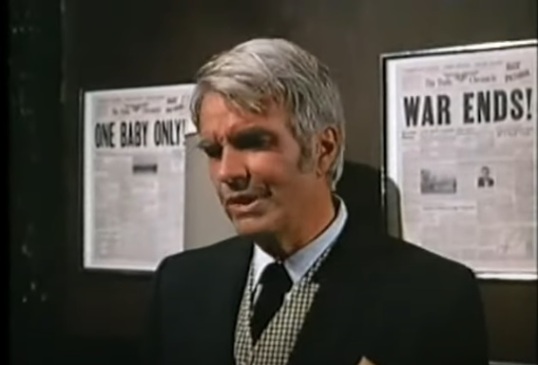
Panicked by hysterical claims about overpopulation and environmental catastrophe, Americans have sacrificed the majority of their civil liberties.  Smiling policeman stand on every corner and in every public hallway.  Of course, once their authority is challenged, those smiles quickly disappear.  Crude posters have been put up everywhere, demanding that everyone watch their consumption of natural resources.  The social engineers and the eugenicists are in charge.  Anyone over the age of 65 is ineligible for medical care and encouraged to consider euthanasia.  Couples are allowed to have only one child and the government requires that anyone who gets pregnant a second time have an abortion.  Anyone who questions the policy is told that they have no choice but to follow the law.  It’s their civic duty.  The media, meanwhile, runs headlines declaring that the one child policy has led to world peace.
Alan and Karen Miller (played by Michael Cole and Janet Margolin) have already had their one child.  That their child died shortly after birth doesn’t matter in the eyes of Barstow (Ed Asner), the Himmleresque head of the Population Control Police.  Every couple is allowed one child and that’s it.  When Karen gets pregnant a second time, she is determined to have the baby.  She and Alan know that their only hope is to cross the border into Canada.  Helping them is a retired U.S. Senator (Van Heflin, in his final performance) who is opposed to the government’s policies.  Caught in the middle of Karen’s brother, Howard (Harry Guardino).  Howard works for the Population Control Police and he knows just how far Barstow is willing to go to keep Karen from having her baby.

The Last Child opens with a title card informing us that the film takes place in the “not-too-distant future.”  Along with all of the propaganda posters, that’s the only real sign that this film is meant to be taking place in the future.  There’s no “futuristic” technology.  Everyone dresses in the latest 1971 fashions.  Everyone drives the latest 1971 automobiles.  Though the decision may have been motivated by the film’s low-budget, the lack of the typical sci-fi trappings serves the film well.  The Last Child does not take place in a sleekly designed future and it doesn’t takes place in an apocalyptic wasteland.  Instead, it takes place in a world that is just as shabby as you would expect a world controlled and decorated by a government bureaucracy to be.  It’s a gray dystopia, populated by people who have given up their individuality.  It’s a world that’s visually boring by design and that makes it all the more disturbing.

The Last Child is an effective and well-acted film.  It probably feels more plausible today than it did when it aired back in 1971.  In many ways, with its portrait of unfeeling government officials and bland authoritarianism, it’s the perfect film for the age of COVID.  Indeed, the government’s policy of refusing to provide life-saving care for people over the age of 65 is reminiscent of what many pundits advocated for at the height of the COVID pandemic.  As for the film’s one child policy, that too is a concept that has become recently popular with many American academics.  Among many members of the so-called “elites,” there’s a definite need to try to control people and that very real need is what makes The Last Child so disturbingly plausible.  In The Last Child, sanctuary is found in Canada.  Today, of course, Canada is at the forefront of the euthanasia trend.  Of course, in 1971, the Prime Minister of Canada was Pierre Trudeau and not Justin.

Pierre Trudeau’s personal motto was “Reason before passion” and that’s certainly the philosophy that fuels the dystopian society at the center of The Last Child.  It’s a film that holds up today as both a thriller and a prophecy,

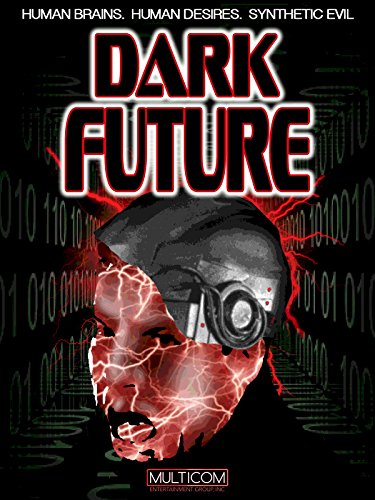
Dark Future (1994, directed by Greydon Clark)


This future is really dark.

A mysterious plague wiped out most of humanity and a group of fascist cyborgs took over.  (They actually prefer to be called Synthetics but everyone knows that they’re actually cyborgs.)  The remaining humans were exiled to an abandoned train station that was renamed the Forbidden Zone.  In the Forbidden Zone, the human survive as bartenders and sex slaves for their cyborg overlords.  If you want to enter or leave the Forbidden Zone, you have to put your hand on one of those balls of lightning that people used to buy at Spencer’s Gifts.

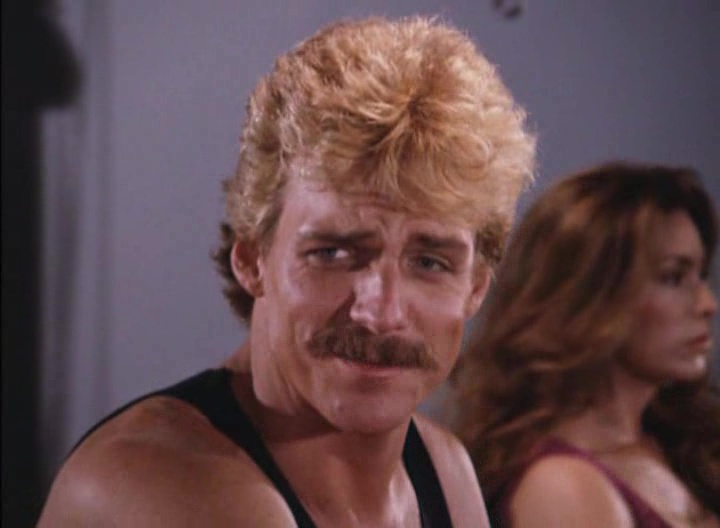
The humans have been told that they are all sterile, which is one reason why they are willing to accept living in such a dark future.  When a baby is born in the Forbidden Zone, it blows up the sterility myth.  Kendall (Darby Hinton, who co-wrote the script and who is best remembered for starring in Andy Sidaris’s Malibu Express) is a bartender who tries to protect the baby while rallying the other humans to rise up against the cyborgs Synthetics.  The Synthetics want that baby for their own incoherent reasons.  War breaks out between man and the half-machines.

Even by the normal standards of director Greydon Clark, this is low budget nonsense.  The action’s slow, the story is incoherent, the acting is bad, you get the idea.  There are a lot of scenes of people standing around fires that have been lit in barrels.  There’s so many barrels on fire that the Forbidden Zone should have burned down years ago.  Also, why is it called the Forbidden Zone when anyone can enter it whenever they want to?  The humans aren’t allowed to leave the train station/night club/brothel so it seems like the rest of the world should be called the Forbidden Zone.  The future is dark and not easily understood.  So is this movie.

Humanity’s only hope, Kendall

Retro Television Reviews: Quarantined (dir by Leo Penn)


Welcome to Retro Television Reviews, a feature where we review some of our favorite and least favorite shows of the past! On Sundays, I will be reviewing the made-for-television movies that used to be a primetime mainstay. Today’s film is 1970’s Quarantined! It can be viewed on YouTube!

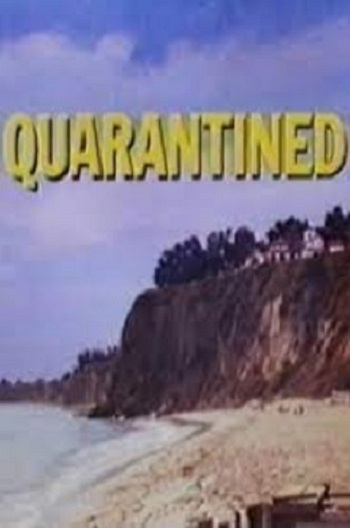
The John C. Bedford Clinic sits atop a cliff overlooking the ocean.  Though it may be a small hospital, it’s also widely respected.  The clinic was started by John Bedford (John Dehner) and the majority of its employees are related to him.  His three sons — Larry (Gary Collins), Bud (Gordon Pinset), and Tom (Dan Ferrone) — are all doctors and they all work at the clinic.  Bud’s wife, Margaret (Susan Howard), is a psychologist and she also works at the clinic, encouraging the older patients not to give up hope in their twilight years.  John Bedford is a stern taskmaster and his youngest son, Tom, resents always having his father and his older brothers staring over his shoulder.  John and Larry explain that they are simply treating Tom the way that they would treat any new doctor.  Tom isn’t so sure.

When the Bedfords aren’t hanging out in the tasteful ranch house that sits next to the clinic, they’re checking on their patients.  As Quarantined opens, they’ve got quite a few to deal with.  The most famous is Ginny Pepper (Sharon Farrell), a film star who has come to the clinic because she’s been suffering from back pain.  Larry quickly diagnoses her as suffering from kidney failure and announces that she’s going to need to get an immediate transplant.  Ginny is not happy to hear that and spends most of her time trying to make both Larry and Nurse Nelson (Virginia Gregg) miserable.  Of course, it eventually turns out that Ginny’s not so bad.

Meanwhile, Margaret attempts to cheer up a dying old man named Mr. Berryman (Sam Jaffe) and an eccentric man named Wilbur Mott (Wally Cox) hangs out in the hospital hallway.  Martha (Terry Moore) and Lloyd Atkinson (Madison Arnold) are at the hospital to visit their son, Jimmy (Mitch Vogel).  Unfortunately, while in Jimmy’s hospital room, Lloyd suddenly collapses and subsequently dies.  John takes one look at Lloyd and announces that Lloyd might have Cholera and, as a result, no one can leave or enter the hospital until the test results come back.

In other words, the John C. Bedford Clinic is …. QUARANTINED!

If you’re thinking this sounds a little bit dull …. well, you’re not wrong.  Quarantined has a 73-minute running time and a large cast but it really does just feel like an episode of a not particularly interesting medical drama.  It wouldn’t surprise me to discover that this movie was actually meant to serve as a pilot for a show that would have followed day-to-day life at the clinic.  Each member of the Bedford family is given a hint of characterization, just enough to suggest what type of situations they would get involved in on a weekly basis.  Larry was the straight shooter who was dedicated to saving lives.  Bud was the well-meaning middle child while Margaret was the one who encouraged the men to talk about their feelings.  Tom was the idealistic but impulsive youngest child.  John was the wise patriarch.  They’re all kind of boring.

The same can be said of Quarantined as a movie.  As directed by Leo “Father of Sean” Penn, the movie promises a lot of drama but it never really delivers and there’s something rather annoying about how casually John announces that no one is allowed to leave the clinic.  He even calls the police and has them set up road blocks around the clinic.  On the one hand, John is doing the right thing.  No one wants a cholera epidemic.  On the other hand, everyone’s so quick to accept that idea of John being a benign dictator that …. well, one can only imagine what a pain in the ass the Bedfords would have been during the COVID era.

As far as I know, there was never a TV show about the Bedford family and their clinic on a cliff.  Personally, I’m okay with that.  

Catching Up With The Films of 2022: She Said (dir by Maria Schrader)


To put it lightly, I had mixed feelings about She Said.

On the one hand, the downfall of Harvey Weinstein is an important story and it’s one that should never be forgotten.  It wasn’t that long ago that Weinstein was one of the most powerful people in Hollywood.  Many of the people who now regularly talk about how much they hated him had no problem working for him, taking his money, and thanking him whenever they won an award.  She Said focuses on the work of the two New York Times reporters, Jodi Kantor (Zoe Kazan) and Megan Twohey (Carey Mulligan), who wrote the initial article that detailed the allegations against Weinstein.  (Ronan Farrow’s New Yorker piece was published shortly afterwards.)  The film is not only about the article but it’s also about women working together and supporting each other.  Kazan and Mulligan both do a good job of portraying Jodi and Megan, bringing some nuance to a script that is full of dialogue that is occasionally a bit too on-the-nose.

On the other hand, it’s hard not to feel that She Said lets a lot of people off the hook.  While Jodi does originally pitch her story as dealing with systemic sexism, there’s actually very little examination of how the system enabled a monster like Harvey Weinstein.  Mention is made of Weinstein having powerful friends but few of those friends are called out by name and there’s very little discussion about how Weinstein used his money to become a player in Washington as well as Hollywood.  It leads to some odd narrative choices.  For instance, both Jodi and Megan are shocked to discover that Harvey is being represented by prominent feminist attorney Lisa Bloom, the daughter of Gloria Allred.  Jodi later talks about an off-screen conversation that she had with Bloom, in which Bloom tried to use a number of personal, political, and professional appeals to convince Jodi to drop the story.  It sounds like an interesting conversation but why don’t we get to see it?  Would it have cast Bloom in too negative of a light?  The film’s approach leaves it open to such accusations.  Indeed, it’s hard not to be reminded of the way that Rose McGowan was shunned when she (correctly) pointed out that a lot of the people celebrating Weinstein’s downfall were the same people who spent years ignoring what was an open secret in Hollywood.  The film tells us that Harvey Weinstein is a monster but we already know that.  What the film does not tell us is how he came to power and why he was protected for decades.

Thematically, She Said attempts to be a celebration of journalism, in the style of recent films like The Post, Truth, and Spotlight.  Like those films, it shares the same flat visual style.  There’s nothing particularly cinematic about it which is unfortunate as, with everyone already knowing how the story ends, She Said could have used some stylistic flair.  To a certain extent, I can understand the logic.  The emphasis is supposed to be on the reporters doing the hard work of getting the story and all of the recent films about journalism take a straight-ahead, by-the-numbers approach.  The problem with using this approach for She Said is that it leads to a lot of static, poorly framed shots of people talking on the phone, sitting at their desks, and staring at computer screens.  It may be a realistic depiction of modern journalism but it’s not particularly compelling to watch.  If anything, the film’s depiction of clean offices, supportive co-workers, and fair-minded editors makes the film feel like a testimonial about how The New York Times is the best workplace in America.  As opposed to the reporters in Spotlight, one never feels that Jodi and Megan are in danger of losing their jobs.  Unlike The Post or Shattered Glass, there’s no conversations about how the media establishment is often guilty of initially enabling the same behavior that it later condemns.  The New York Times never feels alive in the way that The New Republic did in Shattered Glass.  There’s not even a moment that’s as ludicrously over-the-top as the scene in Truth where Cate Blanchett argues that she shouldn’t be criticized for producing an obviously false story because it could have, in theory, been true.  Instead, She Said is very respectable and very dignified and a little too safe.  There’s not much going on beneath the surface. 

The film drops a lot of famous names.  Ashley Judd plays herself while Gwyneth Paltrow provides her voice for a scene in which she calls Jodi and says that Harvey has shown up at her house.  (Again, this is a scene that would probably have been more effective if we had seen it happen as opposed to just hearing about it.)  Lena Dunham is given a shout-out as someone who (off-screen) called and offered to help.  Someone casually mentions that Martin Scorsese hates Harvey Weinstein.  And yet, the film’s most powerful moments come when Jodi and Megan talk to the women who weren’t famous but who were still traumatized and victimized by Harvey Weinstein.  Samantha Morton and Jennifer Ehle play two former Miramax employees, both of whom eventually tell their stories to Jodi and Megan.  Morton and Ehle both give heart-felt performances and, during their scenes, She Said finds its reason for existing.  The performances of Samantha Morton and Jennifer Ehle both capture the real-life damage caused by men like Harvey Weinstein and the systems that enable them.

In the end, She Said is a film that I wanted to like more than I did.  It tells a compelling story in the least compelling way possible and, unlike Kitty Green’s The Assistant, it lets far too many people off the hook.


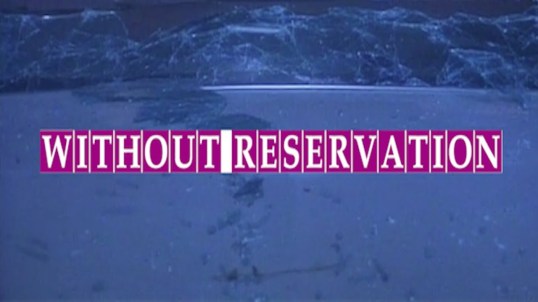
January Positivity: Without Reservation (dir by Fred Carpenter)


The 1989 film, Without Reservation, opens with a scene that should strike horror in the hearts of many viewers.

A high school basketball teams attempts to rap.  Each member of the team takes a verse, introducing themselves and struggling to come up with an appropriate rhyme to go along with their name.  I suppose that, as far as rapping goes, they’re about as skilled as you would expect any group of white, upper middle class suburban teenagers to be.  This scene goes on forever and, oddly enough, it doesn’t really have much to do with anything else that happens in the film.  One gets the feeling that it was only added to pad out the film’s 24-minute runtime.  Perhaps it was added to let the viewers know that the filmmakers weren’t stodgy old men whose knowledge of music ended with Sinatra.  No, the filmmakers were people who understood that sometimes teenagers enjoyed rap music.  They were down with the youth.

(Actually, as much as I’m making fun of the scene, it may be one of the more realistic pats of Without Reservation.  I went to an upper middle class high school in the suburbs.  The majority of my classmates were dorky white kids who thought they could rap.  Most of them were pretty bad but they were still better than the members of this film’s basketball team)

Anyway, once the rapping’s done, it’s time for six teenagers to climb into a car, drive too fast, and up getting hit by a truck.  Four of the teens suddenly find themselves apparently floating in space in the remains of their car.  They’re all dead and now, they’re waiting to find out where they’re going to go.  Do they have a reservation in Heaven or not?  Fortunately, there’s a man wearing a tuxedo (with a red bow-tie) who is working the heavenly registration desk.  He has a big, bulky, old school computer.  He asks for names and when he get them, he checks to see if they have a reservation.  He ends up telling the majority of people to step to the left, which is a polite way of saying, “Welcome to eternal damnation.”

Needless to say no one in the car has a reservation.  They all wish they could get one but it’s too late because they’re dead now.  We watch as they’re told to step to the left.  One of them ends up getting dragged over to a freight elevator and descends to the underworld.  It’s actually an oddly effective image.  If nothing else, the film does do a good job of creating an atmosphere of impending doom.  And yet, it’s hard not to feel that, like so many similar films, the main goal here is to frighten people into compliance as opposed to making a case for one belief system or another.  The emphasis is on punishment and pain and the film almost seems to encourage viewers to look down on those who don’t have reservations.  Yes, the film seems to be saying, he may be able to rap but he’s still not in the system.  Aren’t you glad that you’re not as dumb of Bill?

Anyway, Without Reservation is crudely effective, even if the ultimate message appears to be that the afterlife is a tacky resort with an out-dated computer system.

A Blast From The Past: What Made Sammy Speed?


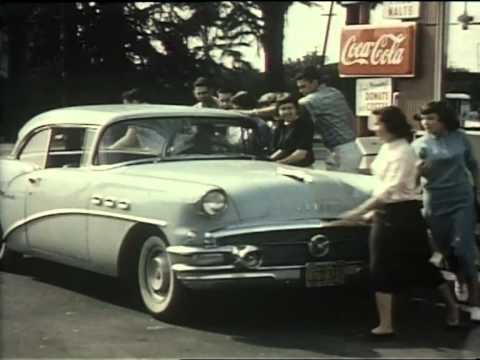
From 1959, here’s a short film that asks the question, “What made Sammy speed?”

(I’m going to guess that the title is meant to pay homage to the novel, What Makes Sammy Run?)

Sammy Robertson (played, in flashbacks, by David Felshaw) was a popular high school student until he was killed when his car collided with a truck.  A local detective tries to figure out what caused the accident to happen.  To be honest, I’m not really sure why there’s any question as to why it happened.  Sammy was speeding.  He ran a stop sign.  The truck crashed into his car.  It’s tragic and there’s definitely a lesson to be learned about paying attention to the road but it’s not particularly complicated.  It really doesn’t seem like the sort of thing that would require a massive criminal investigation.  It’s not like Sammy was smuggling drugs or drinking or driving or anything like that.  At most, the cops might want to ask themselves why the stop sign was at such a strange angle.

Still, since there’s apparently no other crimes being committed in this town, the detective spends a few days talking to Sammy’s relatives and his friends and trying to figure out why Sammy felt it was okay to speed.  (The driver of the truck, meanwhile, is totally let off the hook.  How fast was he going because it looks like he really messed up Sammy’s car.)  The detective learns that Sammy’s father wasn’t a particularly good driver.  He learns that Sammy’s little brother looked up to Sammy whenever he would drive fast.  He learned that Sammy’s friends were impressed by his car and his total lack of concern when it came to safety.  (That said, most of them still refused to ride with him.  They knew better than to risk their chances to attend the next sock hop.)  He learns that, shortly before the accident, Sammy’s boss couldn’t give him a raise and that Sammy failed in his attempts to join the school’s baseball team.  Broke and not destined for athletic glory, Sammy needed to feel like a man so he ignored the speed limit and the stop sign.  He had issues with authority, the detective tells us.

Yes, the detective tells us a lot.  That’s because this is a Sid Davis production and no Sid Davis production was complete without a judgmental narrator.  In this case, the narrator decides that everyone was to blame for Sammy driving too fast so I guess the message here is to let a bad player on the team and always give your employees a raise whether you can afford it or not.  If you don’t, the worst possible thing that could happen will happen.  That was another frequent Sid Davis lesson.  The worst always happens, no matter what.  That said, my main takeaway from this film was that Sammy was just naturally self-destructive.  It really doesn’t sound like anyone could have saved Sammy.  Sammy’s enemy was not the coach, his boss, his father, the cops, or even his little brother.  Sammy’s greatest enemy was himself.

Anyway, here’s a blast from the past from 1959.  Watch it the next time you’re tempted to drive too fast.

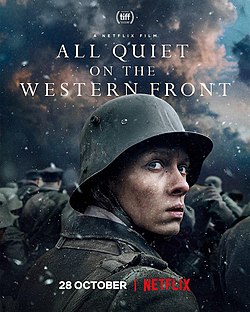
International Film Review: All Quiet On The Western Front (dir by Edward Berger)


From the first scene of Germany’s All Quiet On The Western Front, it’s made clear that there is no glamour or romance to war.

The year is 1917 and the Great War (or World War I as future historians will call it) has been underway for three years.  On the Western Front, soldiers hide in trenches and wait for the inevitable order to try to advance to the next set of trenches.  Most of the soldiers are cut down by machine gun fire and explosions as soon as they go over the top.  Many more are killed as they try to run across the killing field.    We are introduced to one soldier who has been ordered to charge.  Within a few minutes, he is dead and his uniform has been taken, washed, and sewn up so that it can be given to whoever will be the next to enlist.  The whole process plays out with a disturbing efficiency.  That several men have just died in a attack that seems to lack any strategic purpose does not matter.  What matters is that the uniform be ready to be worn by whoever follows.

The uniform is next handed to Paul (Felix Kammerer), a 17 year-old who not only enlists in the Imperial Germany Army but who plays a key role in convincing his friends to enlist as well.  Paul has been moved by the patriotic speeches that he heard from his teachers.  He expects war to be an adventure.  Upon their arrival on the Western Front, Paul and his friends are surrounded by death.  With their uniforms on and their gas masks over their faces, they are nearly unrecognizable as individuals.  Instead, they look like what they are, cogs in the war machine.  Paul spends his first night in the trenches while bombs explode all around him.  His friend, Ludwig (Adrian Grunewald), cries that he wants to return home.  By the next morning, Ludwig is one of the many who is now dead.  Only Kat (Albrecht Schuch) is willing to look after Paul and his friends.  Kat is considered to be a weathered veteran because he has managed to survive for nearly a year on the Western Front.

All Quiet On The Western Front is based on the classic anti-war novel by Erich Maria Remarque.  (A previous adaptation won the Oscar for Best Picture in 1930 and is generally considered to be the first truly “good” Best Picture winner.)  Th film takes some liberties with the book’s plot while still remaining faithful to Remarque’s theme of the futility of war.  One change is that, along with following Paul’s day-to-day life on the Western Front, the film also details the efforts of diplomat Mattias Erzberger (Daniel Bruhl) to negotiate Germany’s surrender.  It’s a fairly big departure from Remarque’s narrative but one that definitely stays true to the spirit of the book.  Despite the fact that Germany knows that it has been defeated and that it will have to surrender, Paul and his friends are still expected to fight and sacrifice their lives for a victory that is no longer attainable.  Indeed, the closer that Erzberger comes to signing a cease fire, the more determined General Friedrichs (Devid Striesow) becomes to launch one final, great offensive before the war ends.  The soldier have no idea what is going on during Erzberger’s negotiations and Erzberger has no idea that Paul has lost the majority of his friends and has been forced to do things that will forever haunt him.  They may not know about each other but Paul’s fate depends on Erzberger’s decisions and the legacy of Erzberger and all the other diplomats and commanders is to be found in what happens to soldiers like Paul.

All Quiet On The Western Front is a brutally effective anti-war film.  Director Edward Berger puts the viewer right in the middle of combat and it is absolutely terrifying.  Paul goes from being an enthusiastic patriot to a hollow-eyed cynic, one who knows that he is considered expendable by both the enemy and his commanders.  The viewer, like Paul, quickly realizes that there is no way to win this war, other than to somehow survive long enough to return home.  But even the soldiers who do survive understand that they won’t have much of a home to return to.  (In a particularly shocking scene, one solder stabs himself in the neck with a fork rather than return home crippled.)  While the the commanders negotiate in luxury, the soldiers live in mud and die almost randomly.  The commanders may talk about strategy but the soldier know that survival comes down to luck.

It’s a harrowing film but it’s also exactly what an anti-war film should be.  There’s a chance that this film could be the second adaptation of All Quiet On The Western Front to receive a nomination for Best Picture and it would certainly be deserved.