Billy the Kid (Bob Steele) escapes from a Mexican prison (where he was being held on a trumped-up charge) and ends up in Corral City, Texas with his old friend, Fuzzy Jones (Al St. John). This version of Billy the Kid may be an outlaw but he’s a really nice outlaw. He holds up two men who had previously held up a express wagon but he turns over the loot after he and Fuzzy are appointed the new law in Corral City. The bad outlaws don’t want Billy the Kid or anyone else as their new sheriff so they bring in a notorious gunslinger (Carleton Young) to help them keep the town under their control but it turns out that Billy and the gunslinger have a past that no one knew about.
Bob Steele played Billy the Kid in a series of films, until Buster Crabbe took over the role in 1942. Steele was a convincing cowboy and a convincing gunman but he wasn’t a convincing kid. Of course, this version of Billy the Kid didn’t have much in common with the real Billy the Kid. The movie version of Billy the Kid got into a lot of trouble but it was usually due to a misunderstanding.
Billy the Kid In Texas is definitely a Poverty Row western. It looks cheap and it was cheap but it did feature a good fight scene between Bob Steele and Charles King and the relationship between Billy the Kid and Carleton Young’s gunslinger also added some extra dimension to the otherwise predictable story. This film is okay for western fans who aren’t sticklers for historical accuracy.
“Is there anything better than punching somebody in the face who’s got it coming?” — Braxton
The Accountant 2 plunges back into the offbeat world of Christian Wolff, Ben Affleck’s autistic accounting savant who wields a calculator and a combat prowess with equal deadliness. Directed by Gavin O’Connor, the sequel reunites Christian with his wayward brother Braxton (Jon Bernthal) as they unravel a conspiracy triggered by the murder of FinCEN director Raymond King (J.K. Simmons), pulling in agent Marybeth Medina (Cynthia Addai-Robinson) for a tense alliance. It cranks up the action and brotherly banter from the 2016 original, delivering bursts of gritty fun, but bogs down in bloated plotting and uneven tone that dilute its punchy premise.
The story explodes open with King’s brutal assassination, his dying message—”find the accountant”—dragging Christian out of his trailer-bound solitude. Medina taps Wolff’s uncanny financial insight to sift through King’s jumbled clues, tracing a trail from a pizza parlor’s money-laundering scheme to a vicious human trafficking ring straddling the Juarez border. A sleek assassin named Anaïs (Daniella Pineda) haunts the edges, her fragmented memories linking to Christian’s murky history, while Braxton joins for brawn and levity, transforming the probe into a chaotic sibling odyssey. The narrative sprawls across factories, motels, and hacker dens, blending forensic number-crunching with explosive confrontations, though it piles on subplots—like selfie-stalking tech whizzes and cartel infighting—that strain coherence without sharp resolutions.
Affleck deepens Christian’s portrayal, blending rigid logic with flashes of wry humor that feel more lived-in than the first film’s stiffness. He shines in quirky beats, like speed-dating disasters fueled by probabilistic algorithms or spotting fiscal fraud in pizza dough sales, then enforcing confessions with a vicious finger-twist. Yet the character teeters into trope territory, his neurodivergence often serving as shorthand for unstoppable violence rather than a nuanced lens on isolation. Bernthal dominates as Braxton, his raw charisma and emotional cracks—vulnerable confessions evolving into rowdy bar dances teaching Christian social flow—infuse the film with infectious warmth. Their rooftop schemes and escort-aided stakeouts pulse with buddy-movie spark, a major merit that carries weaker stretches.
Action remains the film’s powerhouse, surpassing the original in raw ferocity if not elegance. The pizza factory brawl erupts from interrogation into a whirlwind of pipes, knives, and improvised carnage, while garage pursuits and a border compound siege unleash R-rated savagery—precise headshots, joint-snapping grapples, even a sniper duel echoing thriller classics. O’Connor’s practical stuntwork and sweaty cinematography ground the chaos effectively, with a throbbing score that heightens tension without flash. These sequences thrill, but the climax devolves into a generic bullet storm, missing the original warehouse fight’s balletic intimacy, and the 132-minute runtime drags amid repetitive cop-agenta standoffs.
Medina’s arc offers steady grit, as Addai-Robinson charts her shift from protocol-bound skeptic to off-book partner, her rapport with Christian adding subtle friction to the bromance. Simmons maximizes his opener, fending off thugs in a dive bar before a fatal shot, nailing a tone of immediate peril. Pineda’s Anaïs cuts a striking figure—poised killer grappling with resurfaced trauma—but her threat fizzles, undermined by sparse buildup and a rushed tie-in to the brothers’ past. Lesser foes like the greasy pizza kingpin or border thug Tomas propel the plot competently yet forgettably, while Christian’s handler Justine (Annie Oosterom) doles out remote wisdom that’s underutilized.
At its core, The Accountant 2 wrestles with family bonds and hidden pains, pitting Christian’s analytical shell against Braxton’s impulsive soul in redemption-tinged flashbacks. Lighter quirks—honky-tonk flirtations, cat cameos, goofy T-shirts—humanize without diluting the edge, crafting a playful hyperviolence that charms in detours like smart-home hacks gone absurd. These merits shine brightest in hangout vibes, where meandering chats and line dances breathe life into the formula. Failures creep in through diluted quirks: the accounting genius takes a backseat to rote crime-thriller beats, cartel clichés overwhelm the fresh oddity, and pacing lurches from taut kills to listless exposition.
Technical craft holds firm, with O’Connor’s no-frills visuals capturing industrial grime and motel seediness, favoring tangible impacts over CGI gloss. The R-rating justifies itself via unflinching gore and profanity, satisfying gorehounds, though humor occasionally jars—like trailer quips amid slaughter—disrupting tonal balance. Compared to the debut’s sleeper surprise, this entry coasts on familiarity, expanding the Wolff mythos with teases of future clashes but lacking the tight ingenuity that sparked cult love.
The Accountant 2 succeeds as a rowdy sequel when leaning on its stars’ chemistry, visceral fights, and odd-couple heart, making it a blast for action cravings. It falters, however, in overreaching scope, diluting Christian’s uniqueness amid familiar shadows and slack momentum. Solid for fans seeking sibling sparks and calculated brutality, it lands as entertaining excess rather than essential evolution—catch it for the highs, forgive the math that doesn’t quite balance.
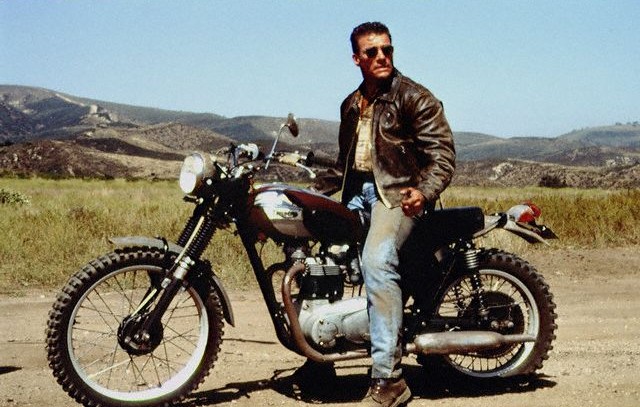
In NOWHERE TO RUN, Jean-Claude Van Damme plays Sam Gillen, a recently escaped convict who finds himself hiding on the outer edges of a rural farm owned by widowed mother Clydie Anderson (Rosanna Arquette) and her two children, Mookie and Bree (Kieran Culkin and Tiffany Taubman). Through a variety of circumstances, Sam learns that a ruthless developer, Franklin Hale (Joss Ackland), and his enforcer Mr. Dunston (Ted Levine), are trying to force all of the farmers to sell their land, using violence if necessary. When bad guys show up one night and threaten Clydie and her kids, Sam emerges from the woods and kicks their asses. Soon Sam finds himself fighting off more of Hale’s goons, romancing the beautiful widow and becoming more emotionally connected to the kids. With his past closing in, Sam decides to do whatever it takes to protect Clydie and her kids, even if that costs him his freedom.
The late 80’s and early 90’s saw the emergence of two new action stars… Steven Seagal and Jean-Claude Van Damme. As a constant patron of our local video stores, I was there at the beginning of their careers and rented each of their new movies as they became available. Van Damme would establish himself in hit films like BLOODSPORT (1988), KICKBOXER (1989), DEATH WARRANT (1990) and UNIVERSAL SOLDIER (1992). As a big fan, I found myself in a movie theater in January of 1993 to watch his latest film, NOWHERE TO RUN.
With a plot that resembles an old western… a man corrupted by wealth tries to force a widow off her land until a kind-hearted drifter steps in… NOWHERE TO RUN isn’t trying to reinvent the action genre, but it does give Van Damme a different kind of role. His Sam Gillen isn’t a wisecracking action hero or an unstoppable martial artist. Rather, he’s a flawed man with a particular set of skills who’s looking for redemption. I think Van Damme plays that soulful weariness better than most would give him credit for. Rosanna Arquette brings a credible presence to this genre film that helps sell the relationship between her and Van Damme, and the presence of her kids, also amps up the stakes and gives the story a genuine sense of vulnerability. When Sam decides to fight back, it’s not to protect himself, but to protect people worth standing up for. That motivation helps make the film more engaging than you might normally expect from an early 90’s action film.
Speaking of action, NOWHERE TO RUN doesn’t feature a ton of action, but what it does have is effective. The early sequence where Van Damme’s character initially steps in to help the terrorized family is especially strong. There are several additional fight sequences and a prolonged motorcycle chase to provide some entertainment, but don’t expect wall-to-wall action or you could be disappointed. Joss Ackland (LETHAL WEAPON 2) and Ted Levine (THE SILENCE OF THE LAMBS) are suitably nasty villains so we definitely want to see them get their comeuppances, and the film effectively obliges. I also like the fact that NOWHERE TO RUN is set out on a rural farm. This setting enhances its “western” feel, and I certainly appreciate that unique element for an action film of this era.
At the end of the day, I enjoyed NOWHERE TO RUN when I watched it in the movie theater back in 1993, and I enjoyed it again today. It’s certainly not flashy and action packed like HARD TARGET or TIMECOP, but it is a solid, and surprisingly emotional Van Damme film. I recommend it.
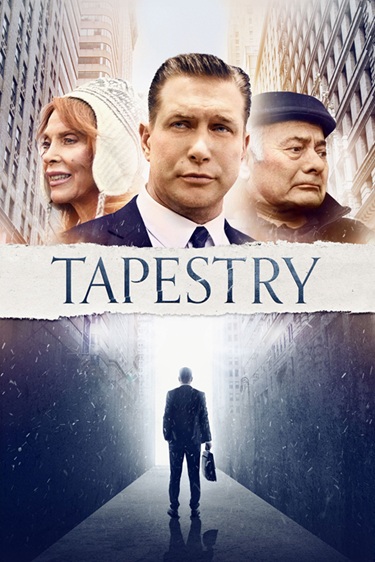
Seriously, I have lost track of the number of times that I’ve tried to watch 2019’s Tapestry, just to give up on it as I realized that it was next to impossible to actually follow the film’s story. Earlier today, I tried to watch it again and I finally made it all the way to the end.
It’s the story of a family. Ryan (Stephen Baldwin) is an executive who loses his job but doesn’t tell his wife about it. She doesn’t find out until his former place of employment calls the house. “He’s at work,” she says. “Oh, he got another job already?” is the response. Awkward! What’s even more awkward is that Ryan is eventually hired back at his company but now he’s just a lowly salesman, with a boss who is several years younger than him.
Throughout this, we hear narration from his mother (Tina Louise) and the first part of the film is so haphazardly edited that I have to admit that I was frequently confused as to whether or not his mother was dead or alive. Having now watched the entire film, I now know that his mother was alive but dying for the majority of the film, though her narration was still coming from beyond the grave. Ryan’s father was played by Burt Young and I’ll say right now that I am a Burt Young fan. I’ve seen the Rocky movies. Burt Young’s performance as the always-drunk Paulie was always spot on, even if Paulie himself wasn’t always the most likable character. That said, I also spent the first part of the movie confused as to whether or not the father was meant to be alive or not. The film is so weirdly edited that it’s hard to keep track of who anyone is or where they are at any particular moment.
As Ryan, Stephen Baldwin mopes through the film, which I guess is understandable considering that his parents may or may not have been dead. I mean, if it was confusing to me as a viewer, I can only imagine what it was like for him as a child. It’s hard to really get a handle on who Ryan is supposed to be as a person or how we’re supposed to feel about him. In many ways, he seems as depressed when his life is going well as he is when his life is falling apart. Baldwin seems to be disconnected from the film, which is a polite way to say that he doesn’t really seem to be making much of an effort.
And that’s a shame because Stephen Baldwin is actually not a bad actor. Back in the day, when he was actually invested in a role and making an effort, he was a consistently good actor, even if he did have a tendency to appear in terrible movies. Like Alec, he could do both comedy and drama but he didn’t have Alec’s tendency to overact. With this film, Stephen just glumly goes through the motions. It’s a bit boring to watch.
That said, I will say that, now that I’ve actually seen it, the end of the film is effective. Maybe it’s because I’ve lost both my parents but I did find the film’s final thought — that Ryan’s mother was heading to a better place even as she kept an eye on her family — to be a comforting one.
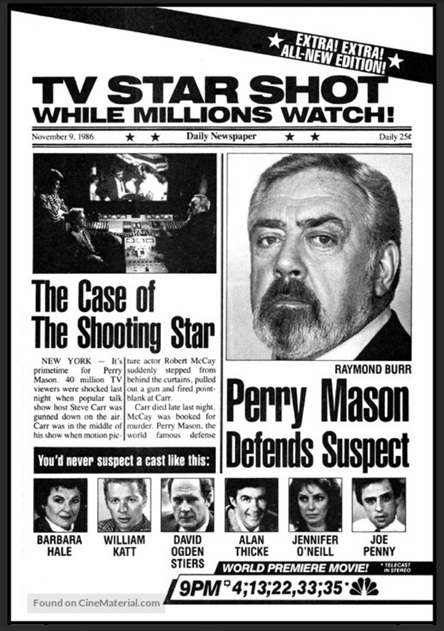
Actor Robert McCay (Joe Penny) decides that it would be hilarious to shoot talk show host Steve Carr (Alan Thicke) on live television. McCay thinks that the gun is loaded with blanks but, before he goes on the show, someone slips a live round into the gun. McCay kills Steve Carr and there are a million witnesses who see him do it. Time to call in Perry Mason (Raymond Burr)!
The third Perry Mason movie isn’t as good as the first two. Shooting someone on television as a joke and then leaving the studio immediately afterwards is a really stupid thing to do. As my sister pointed out while we were watching, even if Robert McCay wasn’t guilty of premeditated murder, he was probably guilty of negligent homicide for not bothering to double check whether or not there was a live round in the gun. McCay goes right back to shooting his movie, even while he’s on trial for murder. As for the trial, it was ridiculous. How many people can confess under cross examination in one trial? “Mistrial!” my sister yelled whenever Perry pulled one of his stunts and I agreed.
Paul (William Katt) teams up with a photojournalist (Wendy Crewson) and his investigation somehow leads to him playing a priest in a cheap vampire movie. For once, Perry didn’t give Paul a hard time about anything. Maybe he realized Paul’s scenes were the best part of The Case of the Shooting Star.
Mad bomber Rollo Dillon (Fred Ward) has been hired by terrorists to bomb a major American institution. Captain Ed Hocken (George Kennedy) and Detective Nordberg (O.J. Simpson) know that there’s only one man who can handle this job and his name is Frank Drebin (Leslie Nielsen). Frank, however, has retired from Police Squad and promised his wife, Jane (Priscilla Presley), that he is through with police work.
At heart, Frank remains a cop. He even dreams of shoot-outs. When he tries to do police work without Jane noticing, it backfires on him. Even though Frank lies and claims that he’s just having an affair, Jane leaves him. Frank, with nothing better to do, goes into prison undercover to gain Rollo’s confidence. After Rollo and Frank escape, Frank discovers that Rollo and his girlfriend (Anna Nicole Smith) is planning on bombing the Academy Awards!
The Naked Gun 33 1/3 is the weakest of the original Police Squad films, which is to say that it’s still pretty funny, even if some of the jokes no longer feel as fresh as they did in the previous films. It opens with a brilliant send-up of the shoot-out from The Untouchables and it ends with a perfect parody of the Academy Awards. (Pia Zadora singing This Could Be The Start Of Something Big is funny because it’s exactly the sort of thing that used to happen at the Oscars.) It’s in the middle section that the film drags, though there are still things that made me laugh, like a flashback to Frank, Ed, and Nordberg in the 70s. David Zucker did not return to direct this installment and his absence is definitely felt.
Leslie Nielsen is as funny as ever and he’s well-matched with George Kennedy and Priscila Presley. (OJ Simpson’s presence is as awkward as ever.) Fred Ward plays his villainous role straight, a smart move. But then you’ve got Anna Nicole Smith, who was such a terrible actress that her presence in the film doesn’t even work as a joke. Whenever Smith shows up, the film grinds to a halt. It’s the worst type of stunt casting.
This was Leslie Nielsen final performance as Frank Drebin. Even in a lesser film, he was still a comedic treasure.
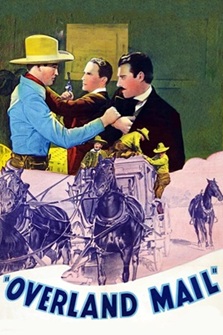
Jack Mason (Jack Randall) has the most important job on the frontier. He delivers the mail. After he’s chased by the members of the local Indian tribe, he learns that an uprising is imminent because a young brave has been murdered and the tribe blames the citizens of a nearby town. Of course, the murder was actually committed by a gang of counterfeiters led by saloon owner Pollini (Tristram Coffin). Pollini is not only a counterfeiter but he also lies to sweet Mary Martin (Jean Joyce), telling her that he’s hiring her to be a waitress when he’s actually looking for a dance hall girl. Jack has to bring Pollini to justice before a full scale war breaks out.
This is not a bad B-western. It’s short and quick but the story is slightly better than the average Monogram oater and Jack Randall and co-star Dennis Moore are both believable as cowboys and gunslingers. Fans of the genre will be happy to see Glenn Strange as the sheriff and Iron Eyes Cody as the chief of the tribe. I’ve always liked westerns where the heroes were just trying to keep the peace so that they could deliver the mail. We take mail for granted nowadays but in the 1800s, delivering mail was almost as dangerous as delivering money. If you’re not into westerns, Overland Mail won’t change your mind but, if you’re already a fan of the genre, Overland Mail makes for an entertaining 50 minutes.
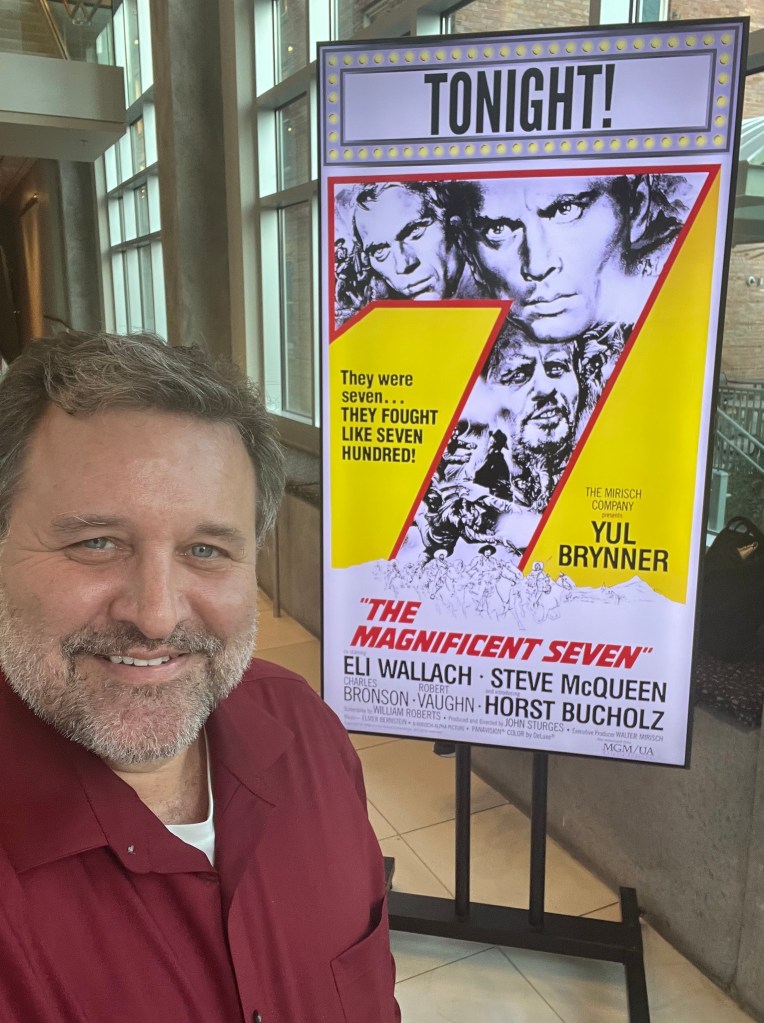
Way back in 1960, Director John Sturges took Akira Kurosawa’s timeless classic SEVEN SAMURAI (1954) and translated its themes of honor and sacrifice into the American western THE MAGNIFICENT SEVEN. A classic on its own, the film stars such cinematic legends as Yul Brynner, Steve McQueen, James Coburn, Eli Wallach, and Charles Bronson. The storyline of a small group of men protecting a village from bandits proved to be an irresistible subject once again, especially the way it was handled here. Its theme music by Elmer Bernstein is one of the most instantly recognizable pieces of music in western cinema. It’s not easy translating a masterpiece without suffering quite negatively in comparison, and I’ve always admired how Sturges and his team of writers were able to create a film that both honored the source material while successfully transferring its content to a different part of the world.
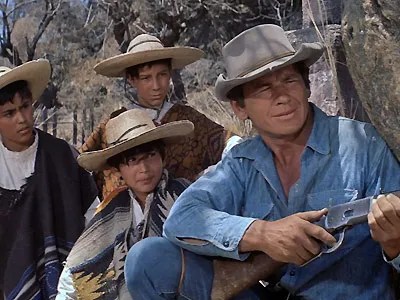
The lead performances of Yul Brynner and Steve McQueen anchor the film, and the screenplay masterfully takes the time to introduce us to each of the seven men and their myriad of reasons for taking on this mission. We care about the men because we get to know them. After Brynner and McQueen, we learn James Coburn is the most badass, Robert Vaughn is the most cowardly, Brad Dexter is the most money hungry, and Horst Buchholz is the most naive. Unsurprisingly, my favorite of the characters is Bernardo O’Reilly, played by Charles Bronson. In my opinion, the character of O’Reilly represents the heart of the story. His character is as tough as it gets and great with a gun, but it’s the way he cares for the actual people, especially the children of the village, that really stands out. It’s in these small moments and exchanges between Bronson and the kids, where the film seems to transcend the genre and become something even more reflective and meaningful. So when Bronson pays the ultimate price, it’s not for some grand purpose or ideal, it’s specifically for those kids, and the moment becomes powerful. For my money, Bronson gives one of the more moving turns in classic western cinema that remains under appreciated to this day.
In 2025, THE MAGNIFICENT SEVEN celebrated its 65th anniversary, with many theaters around the country screening the film again. I was lucky enough to catch one of those screenings at a theater in downtown Little Rock. It was a wonderful night at the movies. Today, on what would have been his 116th Birthday, I celebrate Director John Sturges and this great film that has meant so much to me!
“You can’t keep digging if you’re still holding onto the shovel of the past.” — Clay
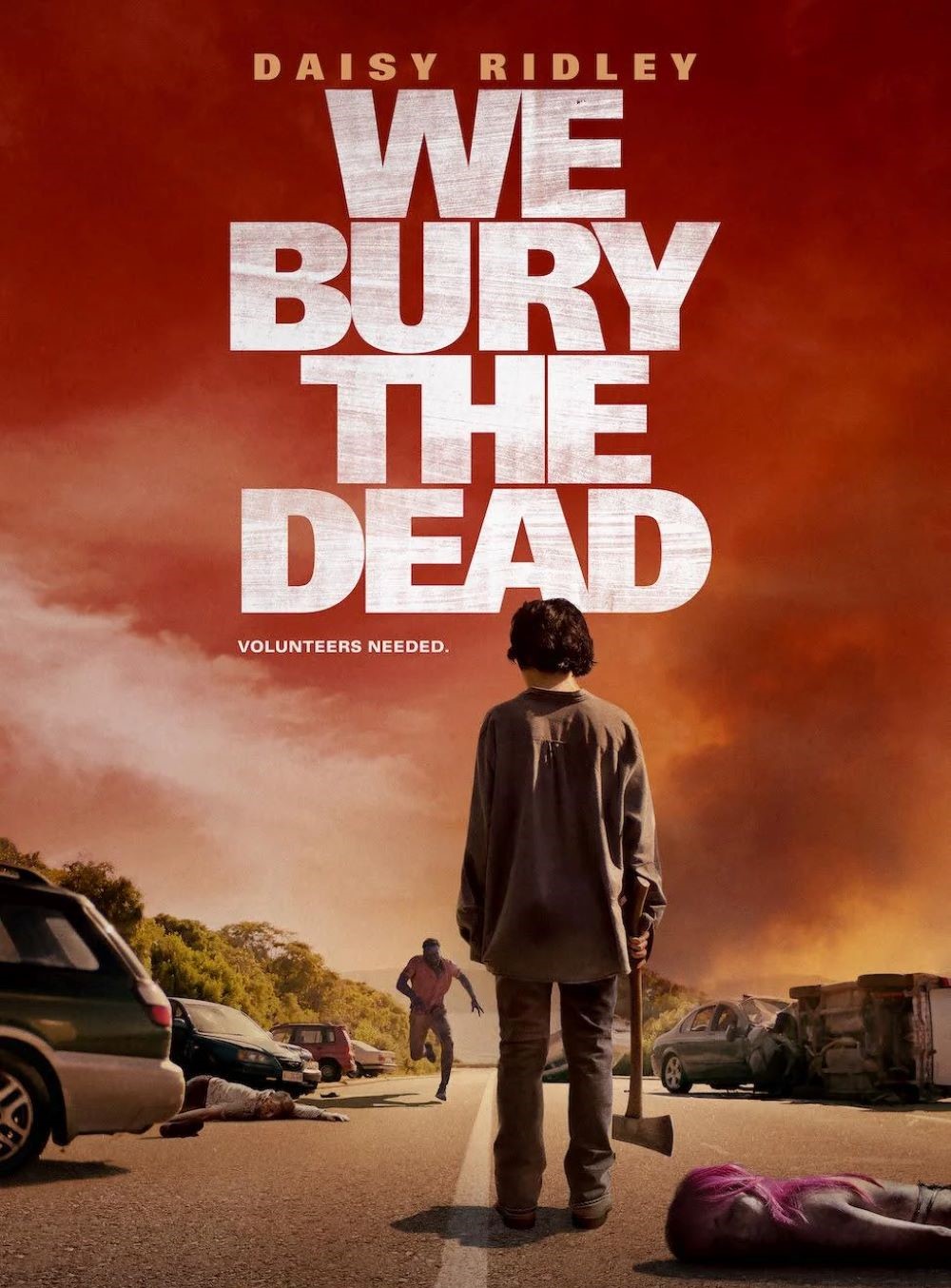
We Bury the Dead knows exactly what genre it’s working in and makes no qualms about it, blending zombie tropes with a refreshingly modest scale that keeps the focus tight on one woman’s personal quest amid catastrophe. Directed and written by Zak Hilditch in his first effort since These Final Hours, the film unfolds in Tasmania after the U.S. President accidentally detonates an experimental explosive device, killing 500,000 people—some from the blast, others from a pulse that shuts down their brains. Daisy Ridley stars as Ava, who joins a body retrieval unit searching for her missing husband, only to face complications when the corpses begin showing eerie signs of life.
The setup draws from familiar zombie beats but refreshes them through its grounded, intimate lens. Rather than globe-trotting stakes or worldwide pandemonium, the story stays glued to Ava’s hip as she combs the ruins, making her emotional journey the true center of gravity. Gradual flashbacks peek into Ava and her husband’s rocky relationship before the event, adding layers to her drive without overwhelming the present-tense dread. Encounters with traumatized military forces emerge as secondary antagonists, heightening tension through human flaws rather than just the undead threat.
Daisy Ridley’s reserved yet gripping performance anchors everything, deftly avoiding caricature by pulling back just enough to hint at deeper turmoil bubbling beneath Ava’s surface. She brings a quiet physicality to the role—slumped shoulders during endless retrievals, micro-expressions like a jaw tightening over a child’s toy or hands trembling before steadying—that fills the sparse dialogue scenes with unspoken pain. Ridley knows when to unleash raw emotion, as in survival scraps with reanimating bodies or a claustrophobic clash with soldier Riley (Mark Coles Smith), where her eyes convey fear, rage, and clarity in equal measure. Her restraint evolves into resolve by the end, distilling Ava’s arc into a wordless shift from numb hope to tentative agency, her face a map of acceptance and lingering sorrow.
Even amid the somber tone, Hilditch infuses energy to keep things lively: a bright pop-rock track over chilling explosion fallout imagery, retrieval crew members partying hard off-duty, or Brenton Thwaites’ Clay (a reasonably charming co-lead) masking horror with dark comedy. These beats prevent the film from dragging into pure depression, balancing Ava’s grief with flickers of messy humanity. Clay’s warmth breaks up her isolation through shared exhaustion and hesitant bonds, while his humor underscores the absurdity of survival.
The zombies themselves spark a love-hate dynamic, refusing the z-word like Shaun of the Dead but delivering undead with a standout twist: teeth grinding to shards, visually grotesque but sonically haunting in a way that crawls under the skin. They start subtle, twitching amid body bags, before ramping to aggressive charges in the final act—though their motivations stay murky, adding unease. This sound design stands as one of the film’s boldest, most horrific choices, turning every onscreen appearance into an auditory assault that lingers longer than the visuals. Violence stays blunt and quick, feeling like grim necessities in a broken world rather than showy spectacles.
Craft-wise, the modest production shines. Cinematography captures Tasmania’s vast emptiness and suffocating interiors, with dust motes and shadowed hallways amplifying emotional compression. Design sells the halted lives—scattered toys, frozen family photos—without CGI excess, grounding the pulse-induced apocalypse in tangible loss. The 95-minute runtime clocks in tight, its observational repetition mirroring grief’s grind while building to disruptive spikes of undead or human peril.
Pacing favors atmosphere over escalation, risking sluggishness in routine retrievals but fitting the theme of numbing loss punctuated by shocks. The finale embraces ambiguity, prioritizing Ava’s internal shift over tidy resolutions to the outbreak or weapon’s fallout, leaving bigger questions underdeveloped to stay personal.
Ridley’s work elevates the familiar tropes, her internalized subtlety proving ideal for this scaled-down zombie tale that prioritizes haunting sound, emotional depth, and quiet resilience over bombast. We Bury the Dead may lean on genre staples, but its fresh restraint and sonic chills make it a compelling, if divisive, mood-driven entry—perfect for those craving horror that’s more about enduring the aftermath than outrunning the horde.
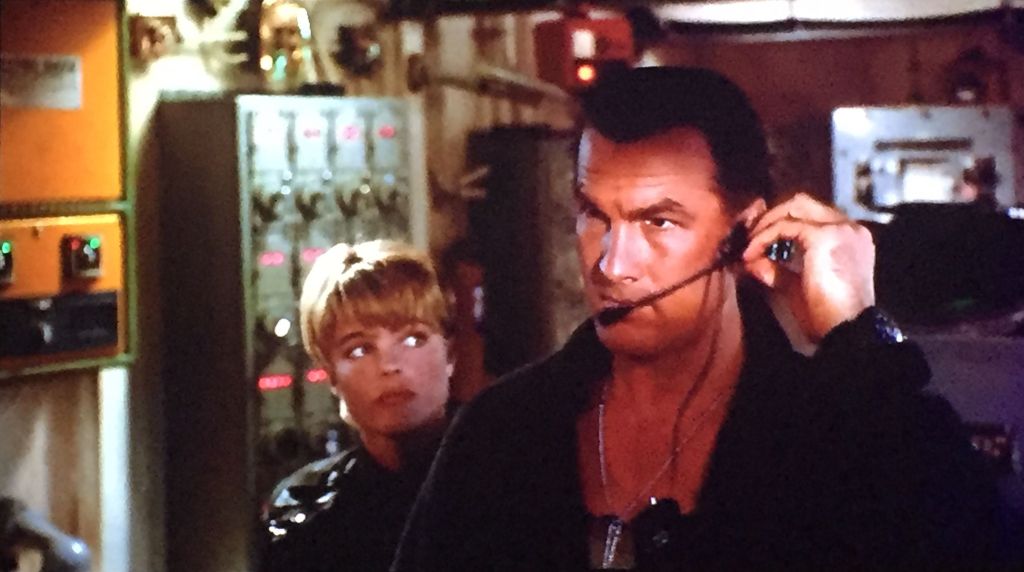
I’ve always liked UNDER SIEGE. After his sudden emergence with a series of brutal action films in the late 80’s and early 90’s, like ABOVE THE LAW and OUT FOR JUSTICE, Steven Seagal entered the world of high concept action filmmaking when he starred in this “Die Hard on a Battleship.” Seagal would not be the underdog cop taking on drug dealers, coked up mafia hitmen, or crooked cops here. Rather, he emerges as a full blown movie star in a big budget studio action film. Directed by Andrew Davis, whose credits include Chuck Norris’ best movie CODE OF SILENCE (1985), Seagal’s debut ABOVE THE LAW (1988) and the next year’s global smash THE FUGITIVE (1993), this is the movie where everything came together for Seagal. I watched UNDER SIEGE at the movie theater myself in 1992 and had a great time with it. I didn’t realize at the time that this would be his career peak, with a global box office of over $156 million. No other film would really even come close.
Casey Ryback (Seagal) is a “cook” aboard the USS Missouri, a battleship that is scheduled to be decommissioned. He’s also a former badass Navy SEAL who was demoted after punching out his commanding officer when a mission in Panama had gone wrong. When a group of mercenaries led by ex–CIA operative William Strannix (Tommy Lee Jones) seize control of the ship under the guise of a birthday celebration, they overlook Ryback. In classic John McClane style, Ryback goes on to become a fly in their ointment, a monkey in their wrench, and a big-time pain in their asses! Moving through the narrow corridors of the ship, and with the assistance of Playboy Playmate Jordan Tate (Erika Eleniak), Ryback begins taking out mercenaries one by one. But will he be able to stop Strannix and his partner Krill (Gary Busey) from stealing the ship’s nuclear Tomahawks and preserve the safety and security of the world? I’ll give you one guess!
First and foremost, UNDER SIEGE is a damn good action movie. It definitely helps that a director as talented as Andrew Davis is calling the shots. His film delivers on the entertainment front, with lots of well staged shootouts, violent scenes of close quarter, hand-to-hand combat, and a cake emergence sequence that still makes my head spin! I think the battleship makes for a great “movie” setting for this type of action. With its concoction of narrow hallways, engine rooms, and mess halls, there’s all kinds of interesting places for fighting and killing. Back in 2007, I was lucky enough to take a tour of the USS Alabama battleship, the primary filming location for UNDER SIEGE, which only enhances my appreciation for the work done here. On the heels of his confident and charismatic performance in the prior year’s OUT FOR JUSTICE, this is Steven Seagal at his most watchable. He’s in peak physical condition, so he can believably kick all the ass that’s necessary for this kind of film, and he’s also likable in his role as the underestimated “cook.” He will never be mistaken for Bruce Willis, but Seagal is good here.
Great action movies will usually have great villains, and UNDER SIEGE is especially blessed in this area. Tommy Lee Jones goes way over-the-top, chewing on scenery like he’s at a Golden Corral buffet, turning Strannix into the type of irrational lunatic that I love in my early 90’s action movies. And looking back now, Gary Busey seems to do what he does best. His traitorous Commander Krill comes off as goofy, disgusting, and unstable. In other words, he’s perfect. Even though Seagal does smile more in this film, Jones and Busey do bring an energy to the movie that balances out Seagal’s more stoic character, providing the type of spark not often found in the star’s movies.
At the end of the day, I rank UNDER SIEGE as my second favorite Steven Seagal film, slightly below my preference for the more down and dirty OUT FOR JUSTICE. What it lacks in grit is more than made up with entertainment value, strong performances, and action on a scale that the star’s future films would never rise to again. If I were put in a position where I could only recommend one Steven Seagal film to a person who’d never seen one of his movies before, I’d probably go with this one. It’s an excellent, mainstream 90’s action movie.
 Billy the Kid (Bob Steele) escapes from a Mexican prison (where he was being held on a trumped-up charge) and ends up in Corral City, Texas with his old friend, Fuzzy Jones (Al St. John). This version of Billy the Kid may be an outlaw but he’s a really nice outlaw. He holds up two men who had previously held up a express wagon but he turns over the loot after he and Fuzzy are appointed the new law in Corral City. The bad outlaws don’t want Billy the Kid or anyone else as their new sheriff so they bring in a notorious gunslinger (Carleton Young) to help them keep the town under their control but it turns out that Billy and the gunslinger have a past that no one knew about.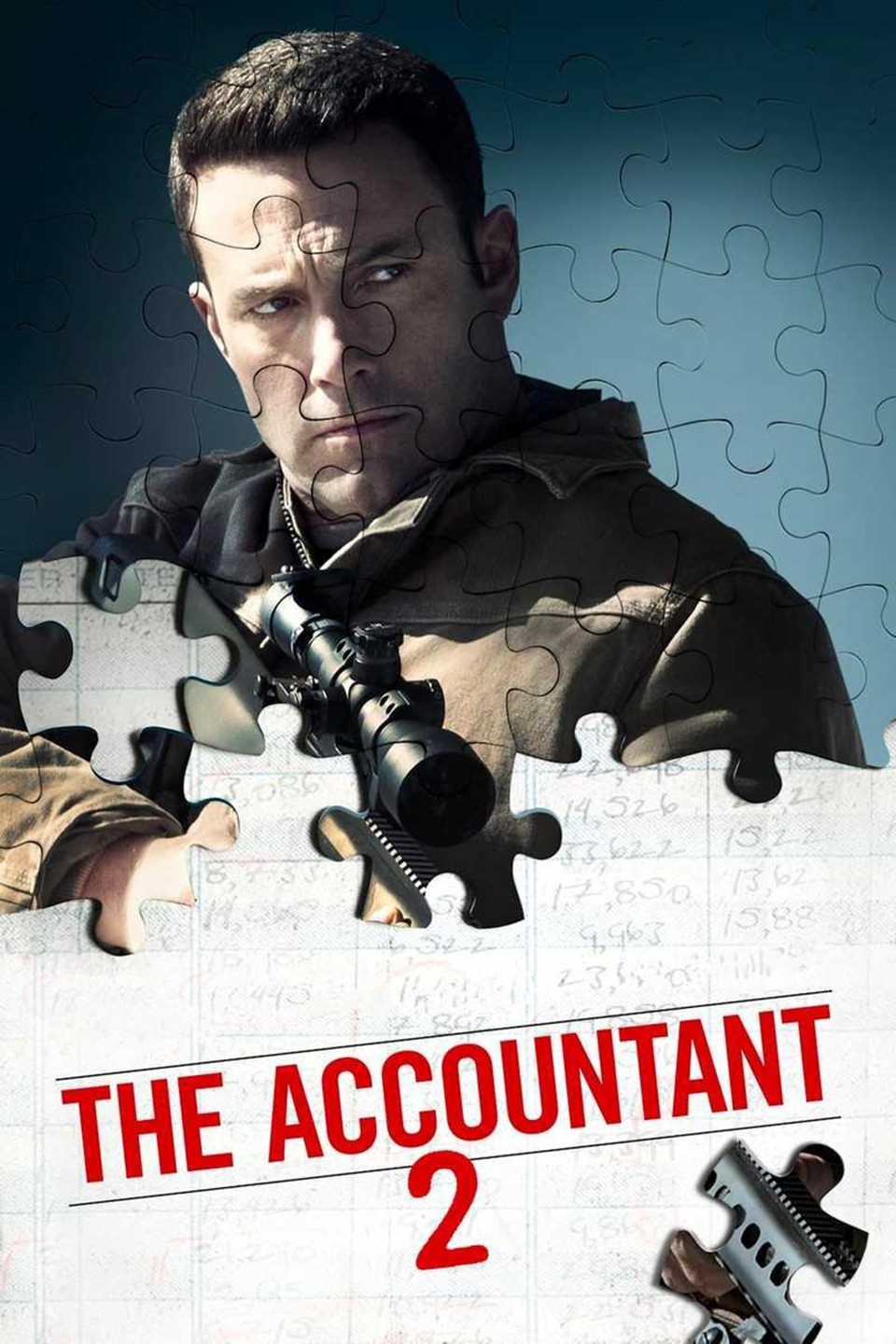

 Through the Shattered Lens