5 Heroes From Marvel’s Golden Age Who Deserve Their Own Movie


Timely-Comics-Marvel-Bucky-Captain-America-Red-Skull-Sub-Mariner

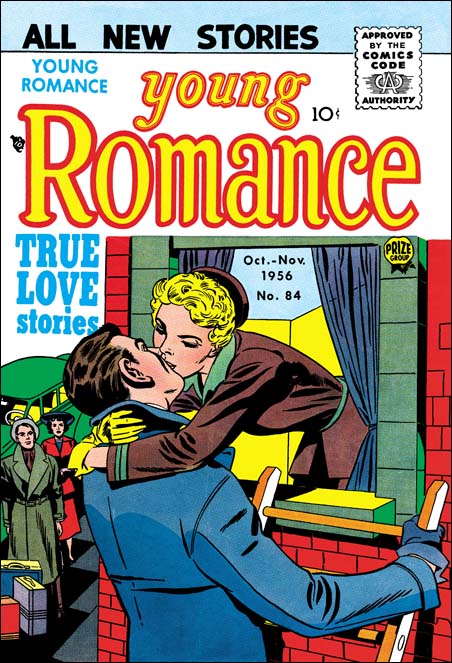
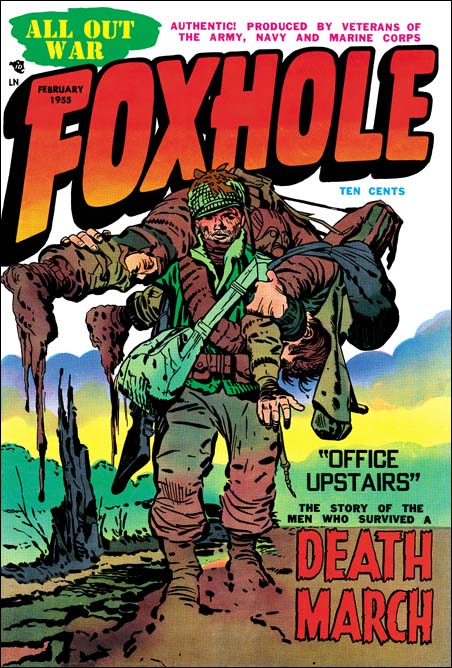
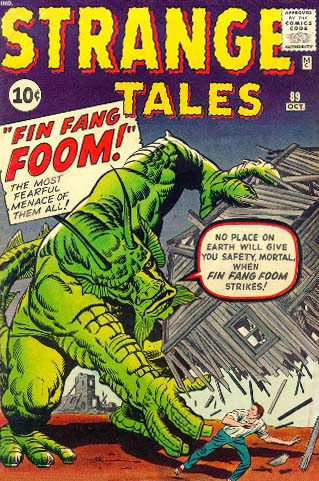
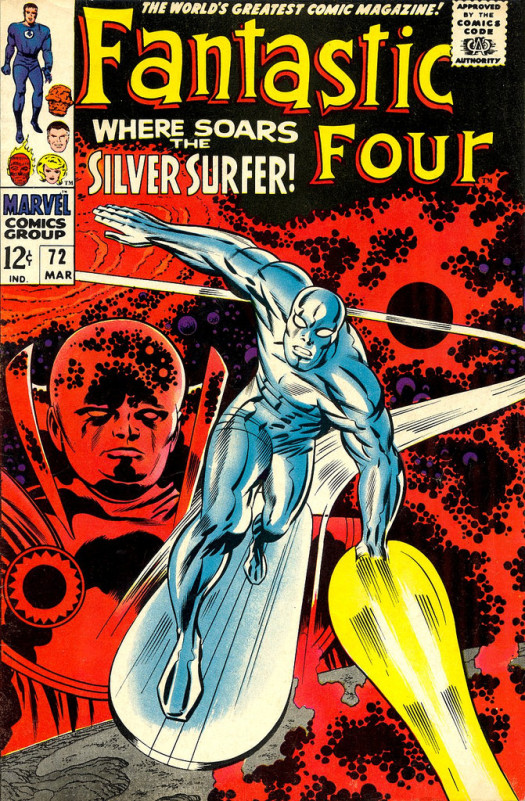
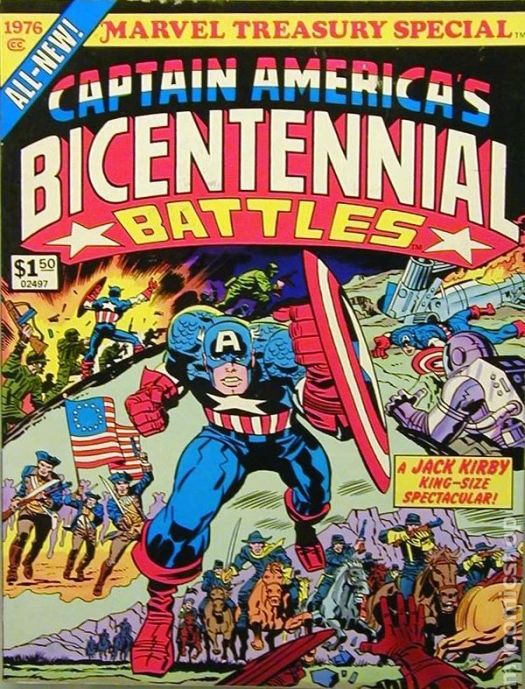
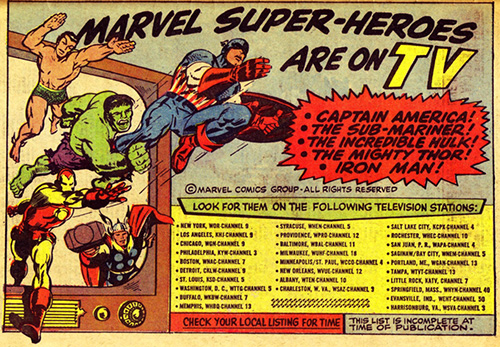
Captain America is the best remembered and most prominent hero from the Golden Age of Marvel Comics (or, as the company was known back then, Timely Comics).  One reason why Captain America: The First Avenger was so successful was because it exploited the nostalgia that audiences had for that golden age, a time when the world was united against the greatest evil known to man and there was no doubt who was fighting for good and who was fighting for evil.

However, Captain America was not the only Marvel super hero fighting gangsters and Nazis during the 1940s.  If Marvel Studios ever decides to take another trip back to World War II, these five Golden Age heroes would be worthy additions to the MCU.

The Blonde Phantom

The Blonde PhantomCreated by Stan Lee and artist Syd Shores and first introduced in 1946, The Blonde Phantom was a part of Marvel’s post-war attempt to appeal to young female readers.

Originally from Hoboken, New Jersey, Louise Grant was the secretary to private detective Mark Mason.  Bored with her job and in love with Mark, Louise would regularly grab a .45 caliber pistol, don the sultry disguise of the Blonde Phantom, and help her boss solve his cases.  While Mark barely noticed his loyal secretary, he fell in love with the Blonde Phantom.

It would be tricky to reimagine the Blonde Phantom from a modern perspective but I think it could be done.  Instead of emphasizing Louise’s unrequited crush on the sexist Mark, a modern Blonde Phantom film would focus on how becoming the Blonde Phantom allows Louise to discover her own inner strength.  As Agent Carter proved, there is an audience for a strong female character in a period setting.

Claire Voyant

Claire_Voyant_(Earth-616)Introduced in 1940 and created by George Kapitan and Harry Sahle, Claire Voyant (who was also known as The Black Widow, long before the first appearance of Natasha Ramanoff) is considered to be the first costumed female super hero and also one of the darkest.

A medium, Claire is possessed by Satan and used to put a curse on the Wagler Family.  After most of the family is killed in a car accident, the sole remaining Wagler shoots and kills Claire.  Claire immediately goes to Hell, where Satan himself gives her the power to kill by simply touching her victim’s forehead.  Satan then sends Claire back among the living, on a mission to kill evil doers so that Satan can claim their souls before they have a chance to repent and ask for forgiveness.

Along with her dark origin story and her flirtatious relationship with Satan, Claire Voyant was distinguished by both her lack of remorse when it came to killing and for having the sharpest eyebrows of almost any character from the Golden Age.  As the star of her own MCU film, she would provide an interesting contrast to the wholesomeness of Captain America.

The Destroyer

The DestroyerA journalist-turned-spy, Keen Marlow was captured behind-the-lines in Nazi Germany.  Held in a prison-of-war camp, Marlow met Prof. Eric Schmitt, an anti-Nazi German scientist who had created a serum that was similar to the one that was used to transform frail Steve Rogers into Captain America.  After taking the serum, Marlow donned a mask and a dark costume and used his new powers to battle the Nazis from within Germany.

The Destroyer was a popular character during the Golden Age, though he was never as prominent as Captain America, The Human Torch, or the Submariner.  The Destroyer became far more interesting when his origin was retconned in the 1970s and it was revealed the Keen Marlow was an alias used by British aristocrat Brian Falsworth.  Before the start of World War II, Falsworth had been a prominent supporter of appeasement.  By becoming The Destroyer, Falsworth both defended his country and sought redemption.  When Falsworth eventually took on yet another costumed identity (Union Jack), his friend Roger Aubrey took over the role of the Destroyer.

The Destroyer was one of the first super hero characters to be created by Stan Lee.  Not only is his origin similar to Captain America’s (Cap was introduced in March of 1941 and the Destroyer made his debut nine months later) but it is also a forerunner to Iron Man’s.

Namor the Submariner

SubmarinerNamorCreated by artist and writer Bill Everett, Namor was the son of human boat captain Leonard McKenzie and Fen, the daughter of the emperor of the undersea kingdom of Atlantis.  As a hybrid, Namor had the ability to live under water but, with his human appearance, he could also go above the surface and safely mix with human society as well.  While the arrogant and hot-tempered Namor had little use for humanity (with the exception of New York City policewoman Betty Dean), he did side with the Allies in the war against the Nazis.

Despite being a prominent member of the Marvel Universe for over 70 years, Namor has yet to even appear in a movie.  Not only was he one of the most popular of the Marvel Golden Age heroes but his battle with the original Human Torch has regularly been cited as being the birth of the Marvel Universe.  Unlike many Golden Age characters, Namor remains active today, sometimes fighting for humanity and sometimes trying to destroy it.

There have been efforts to make a movie about Namor but, so far, none of them have been successful.  Marvel Studios president Kevin Feige has said that there are many deals and contracts that need to be sorted out before it can be definitely determined who owns the rights to the character.  It will probably be a while before the Submariner swims to a theater near you.

The Phantom Reporter

The Phantom ReporterThe Phantom Reporter is actually Dick Jones, a former all-American fullback who was also a college boxing, wrestling, and fencing champion.  As a reporter, Dick always tried to protect those who could not defend themselves.  When he couldn’t help them as a journalist, he would put on a mask, a suit, and a cape and he would battle evildoers.

The Phantom Reporter only appeared in one Golden Age comic book, 1941’s Daring Mystery Comic Books #3.  65 years later, he was brought back as one of the lead characters in The Twelve, a limited series about a group of World War II super heroes who, after spending decades in suspended animation, are revived in the 21st Century.  Returning to his career as both a costumed hero and a journalist, The Phantom Reporter also develops an unlikely relationship with Claire Voyant.

The perfect Phantom Reporter movie would be a cross between the screwball comedy of The Front Page and the heroics of Captain America.  It would be a reminder that not all heroes have super powers.  Some of them just have the desire to do the right thing.

Fantastic Four: 2015


This idea was inspired by Astro City and its real time aging component.  The premise is what if Marvel Heroes aged in real time.  The focus is on the third generation of the Fantastic Four, the teenage descendants of various heroes.

MEET THE TEAM:

Reed Richard‘s successor is Bianca Von Doom.  She is the daughter of Valeria Richards and Bentley-23 (son/clone of the Wizard).  She inherited her mother’s fondness of the Latvarian Monarch and legally changed her last name to Von Doom.  Bianca is a brilliant inventor like her parents and her grandparents.  Her hubris unfortunately led to the disfigurement of her twin brother, Bentley.  Her most notable Invention is R.E.I.D (Remote Exploration Intelligence Droid).  It is a swarm of microscopic H.E.R.B.I.E’s composed of Unstable Molecules that functions as a utility fog.  It can transform any device Bianca needs.

Visual reference for R.E.I.D swarm component (H.E.R.B.I.E by by Jamal Igle)

Wizard_Last_Man_Standing_Herbie_vs._H.E.R.B.I.E.

Ben Grimm‘s successor is Bentley Richards.  He is the twin brother of Bianca Von Doom.  He inherited his father’s and uncle’s love for adventure/daredevil attitude.  Bentley is frequently the test subject for his sister’s experiments.  His natural body was consumed during the testing of an Exploratory Thing Suit.  Fortunately, his parents, with assistance from Alyssa Moy, restored a semblance of his natural form through the integration of a life model decoy.  On the surface, his current form is a life model decoy replica of his original body.  Internally, it is a next generation Thing Suit with the offensive capabilities of Mindless One and quantum-enhancements of Cosmic Man’s molecular structure. Its structure is enhanced by cosmic earth, water, and wind.  The force beam is augmented by cosmic fire.

Visual Reference for Bentley’s mechanical nature (Livewires by Adam Warren)

livewires1

Sue Richard‘s successor is Walter Bruce Hayes.  He is the son of Molly Hayes and Skaar.  He is the baby of the group, he is idealistic just like his mother was at his age.  His mother’s mutant gene and his father’s hybrid irradiated genes resulted in his Gamma-enhanced personal telekinetic field.  Walter manipulates it into simulating superhuman strength, accelerated speed, invulnerability, and instantaneous healing.  His field strength is linked to his emotional state like others of Banner ancestry.  Like his mother, his eyes glow and his body is surrounded by an aura when his powers are activated.

Visual Reference for Walter’s powers (Molly Hayes by Jo Chen)

RUNAWAYS_15_Jo_Chen

Johnny Storm‘s successor is Henrietta Pym.  She is the granddaughter of Peter Parker and Henry Pym.  Her posthuman biology led to a severe birth defect that led to her heart being replaced with a synthezoid prosthesis.  She has a normal childhood until she hit puberty.  Some time after her thirteenth birthday, the heart triggered her dormant posthuman genes.  Henrietta transformed her into an ionic being similar to Wonder Man.  This ionic form grants her evolved extrasensory perceptiom that enables her to control bugs and use their senses to extend her perception.  She also gained superhuman strength, enhanced agility, hyper flexibility, bioelectric sting generation, wall crawling, and density manipulation.

Visual reference for Henrietta’s powers (Astra Furst by Alex Ross)

Astro_City_Astra_Spc1_sm

George Romero Winds Things Down — And Up — In “Empire Of The Dead : Act Three” #3


p_15_0 copy

Yeah, I know — this review is late. But hey, so was the book. So let’s explain both, shall we?

The third issue of George Romero’s Empire Of The Dead Act Three didn’t exactly meet its monthly deadline, but there’s good reason for that — artist Andrea Mutti now has a (much-deserved) high profile gig as the regular penciller and inker on Brain Wood’s new long-form historical series for Dark Horse, Rebels, so obviously something in the schedule has to get shunted to the back burner. I would expect, therefore, that the final two issues of Empire will likewise hit shops a week or two after their initial solicitation dates, so we might as well get used to it. Likewise, he’s brought in fellow Italian Roberto Poggi to help out with the inking chores on this series (meaning that, when we include cover painter Francesco Mattina — who does another bang-up job on this issue — we’ve got an all-Italian art team in place now), but fear not : their brush styles are very similar indeed and even on a third or fourth glance through the book it’s pretty hard to tell who inked which particular pages or panels. I believe the world we’re looking for here is seamelss. As for why I’m late with this review, the reasons are far more prosaic : my LCS got shorted on the book and didn’t get in more copies until this past Wednesday. So there ya go.

The biggest news as it relates to this series, though, happened well “off-page” between the last issue and this one — Empire Of The Dead has, perhaps to no one’s surprise, been optioned for television. Sure, sales haven’t been great on this title on the whole, but any zombie project with Romero’s name attached to it is bound to attract Hollywood interest on some level, and while it sounds like it may be a year or two before this finally hits our TV screens, the various press releases related to it definitely give off the confident vibe that it is coming and that this won’t be one of those projects that  languishes in development or pre-production hell forever. Or until the rights expire, take your pick. The undead in all their various forms are a hot property right now, and all indications are that the producers want to get the ball rolling with this one as fast as humanly possible. Time will tell, of course, as it always does, but my money is on this turning up on some cable network or other sometime in, say, the tail end of 2016. If I were a betting man, I’d even be willing to place a modest wager on it.

p_15_2 copy

So, hey, that’s all fine and good, but what about what’s happening in the actual comic?

I’m glad you asked, because the shit really is hitting the fan hot and heavy now. Election day has arrived in post-zombie-apocalypse New York, and even though the Federal Reserve back is being robbed, an aerial bombardment is plastering the city, and various members of our rogues gallery, most notably Dixie Peach, can see the writing on the wall and have decided to beat a hasty retreat, Mayor Chandrake’s still got this thing in the bag. Chilly Dobbs was always a pretty worthless wind-up-toy of an opponent, and his backers leave him high and dry before the ballots are even counted. Good thing there’s a bar close by for him to drown his sorrows at.

Chadrake’s victory proves to be short-lived, though, as the entire edifice that is his power structure is crumbling fast. Detective Perez has the workings of the “relocation camp” for kids figured out, and he’s out to bring the whole place down — with Paul Barnum, Dr. Penny Jones, and semi-intelligent zombie Xavier coming to much the same decision, although arrived at of their own accord, more or less simultaneously. Might now be a good time for Chandrake to head for the exit himself? If so, what will be left? And who will be in charge of whatever remains?

p_15_6 copy
These are the burning questions that will be with us as this series finally wraps up, and for those who have been waiting for that always-just-around-the-corner “big payoff,” this is the issue where we start to get it in earnest. Events are moving along at breakneck speed now, and a suitably epic finale appears to be in the works. Those of us who have stuck with this comic are definitely buckled in good and tight for the duration, methinks.

p_15_9 copy

The art, as you can see from these sample pages, looks darn good, Romero’s dialogue is starting to feel a bit less clunky, and the various plot points, disparate as they all were not so terribly long ago, are converging in near-relentless fashion. The zombie-vampire war with humans caught in the middle is upon us, and I don’t know about you, but that sure sounds like my idea of a good time!

Alex Wilder (from the Runaways) remix


Who is Alex Wilder?

tumblr_nlaug1y8fu1tsohk1o8_540

Don’t want to spoil Runaways for anyone, so I will only say that he is the only normal human member of the team. He lacks superpowers/magical artifacts/advanced technology, but makes up for it in intelligence.

My take on Alex:

Screenshot_2015-06-19-00-39-20-1

This Alex hails from the Maestro’s Battle World domain.  He is the only survivor of the Pride, a band of freedom fighters handpicked by the Gibborims (an ancient race of mystical giants).  He was recruited by the Victor Von Doom Institute of Gifted Youth.  His analytical mind earned him the favor of the headmaster and ultimately led to his banishment to SHIELD.

The Abstract:

tumblr_nlaug1y8fu1tsohk1o5_400

The Abstract is a Gibborim tome that contains the essence of the Pride.  It enables its user to do the following:

  1. Temporal Manipulation: alters user’s personal time frame to give the illusion of super speed and reject sustained damage.
  2. Summoning: calls forth minions in the form of: Mancha Raptors (electricity-discharging cybernetic dinosaurs derived from Ultron technology & genetic samples from the Far East domain) & Stein-Droid (an advanced hacking robot based on the Leapfrog).
  3. Light Manipulation: generates hard light shields and intense lasers.
  4. Casting: wields a variety of stored eldritch algorithms.
  5. Glamour: creates elaborate illusions that temporarily subverts reality.

Visual Reference (velociraptor):

Velociraptor_dinoguy2

Art Acknowledgements:

Doom Institute by Sanford Greene, Runaways cover by Jo Chen & Alex Wilder panel by Adrian Alphona

Naruto: An unexpected gem for Scifi fans


I don’t know about you but I would never expect to see body modification, body horror, or genetic experimentation in a ninja themed manga.  It’s all in Masahi Kishimoto’s Naruto.

Disclaimer: THE CONTENT BELOW IS FILLED WITH SPOILERS! PROCEED AT YOUR OWN PERIL!

Madara Uchiha implanted his rival, Hashirama Senju’s DNA into his body and gained his botanical manipulation ninjutsu.  A strange growth that resembled Hashirama appeared on his chest as a result.

Studio Pierrot sketches for Madara Uchiha

Obito, descendant of the legendary Uchiha clan, was grievously injured in combat and would have perished without Madara’s intervention.  Madara replaced damaged limbs with White Zetsu parts (a White Zetsu is essentially an artificial plant being derived from Hashirama Senju and possessing botanical manipulation and shape shifting abilities).  Obito could sprout thorns and grow trees from his Zetsu parts.

Studio Pierrot sketches for Obito

Studio Pierrot for Obito 3

Studio Pierrot for Obito 2

Nagato, a descendant of the Uzumaki clan and recipient of Madara’s Rinnegans (a Rinnegan is an ocular mutation possessed by the creator of ninjutsu, the Sage of the Six Path). He was able to manifest black rods on his back which enabled him to animate cadavers, replicate the Rinnegan within them, and utilize the Sage ninjutsu through them.  He is able to “operate” 6 proxies remotely, see through their eyes, and coordinate attacks.

Nagato:

Studio Pierrot sketches for Nagato 9

Studio Pierrot sketches for Nagato 1

Studio Pierrot sketches for Nagato 2

Nagato’s Proxies:

Studio Pierrot sketches for Nagato 3

Studio Pierrot sketches for Nagato 4

Studio Pierrot sketches for Nagato 5

Studio Pierrot sketches for Nagato 6

Studio Pierrot sketches for Nagato 7

Studio Pierrot sketches for Nagato 8

Kabuto, the medical ninja and faithful apprentice of Orochimaru, build upon the genetic research of his master & experimented on himself. He integrated his master’s true form (Orochimaru’s true form is serpentine and composed of a mass of white snakes as a result of his experimentation) into himself and the genetic material of Orochimaru’s elite minions.  Kabuto’s skin became scaly and white, his eyes became serpentine and he gained a body similar to a naga (with a chimera tail). When he entered Sage Mode, he regained humanoid legs, grew horns, and the “chimera tail” moved to his belly button.  His “tail” could replicate the forms of the genetic donors & manifest their unique abilities.

Default Mode:

Studio Pierrot sketches for Kabuto 3

Sage Mode:

Studio Pierrot sketches for Kabuto 1

Studio Pierrot sketches for Kabuto 2

Shin Uchiha is a former test subject and experiment of Orochimaru. His unique body accepted all transplanted organs and genetic material.  He was cloned in order to discover the secret of his unique physiology.  He possesses a transplanted Sharingan eye in his right eye socket (a Sharingan is an ocular mutation unique to the Uchiha clan and consumes a massive amount of energy when transplanted in and used by non-Uchiha).  He has numerous Sharingans all over his body.  He can teleport with his fully evolved eye and control objects he marked telekinetically. He can see through a proxy Sharingan creature and utilize the teleportation ability.

Shin's_father

Shin's_Father_(Arm_of_Sharingan)

Shin's_Mangeky _Sharingan

Spy Creature:

Spying_device

Art Acknowledgements:

Original Art by Masashi Kishimoto and the animation cells are by Studio Pierrot

Good News! You Don’t Need To “Starve” For A Great Read Anymore!


4621059-01

Don’t look now, but Brian Wood is on a roll.

The once-hot wunderkind comics writer, who was felled last year by allegations of sexual harassment at comics conventions, apparently did some sort of public mea culpa/’fessing up, and is now deemed to be perfectly employable again.

For my part — to the extent that it even matters — I guess I’m still a little bit uncomfortable about the whole thing, but let’s be honest : Wood is certainly not the first industry pro to attempt to play the “casting couch” card with eager young female talent, nor (sadly) will he be the last. And there have been a lot worse offenders than him over the years. But he was the first to get called out publicly on social media for laying on the “I can really help you get a break in the industry, let’s got up to my room and talk about it” line, and he deserved it. I give him credit for not ducking the issue once it came to light, and better still for not “victim-shaming” the target of his unwanted and unwelcome advances — and the fact that feminist colorist Jordie Bellaire is still willing to work with him on Rebels despite having a more-than-full-plate of assignments should probably tell us all that Wood does, in fact, “get it,” and is appropriately regretful for his sleazy, boorish behavior — but I have to confess,  the whole thing has seriously dampened my enthusiasm for a guy who was doing not just good, but often excellent work, and wasn’t at all afraid to pepper his narratives with spot-on leftist and progressive themes.

In short, I genuinely thought Wood was one of the good guys. Now, I’m not so sure.

starve-7

What I am sure of, though, is that he’s come out of his self-imposed exile and is producing some of the strongest work of his career. The aforementioned Rebels that he’s doing over at Dark Horse with artist Andrea Mutti is a supremely engaging Revolutionary War period piece that looks to be his next Northlanders-style historical epic, while assuming the role of his next DMZ-esque series about class politics in a dystopian future we have the just-released Starve from Image Comics, which sees him teaming up with artist extraordinaire Danijel Zezelj and superstar colorist Dave Stewart (who, in a classy move, has been credited along with the writer and artist as a third co-creator on the book and owns a one-third copyright on the material). Wood has come out with rhetorical guns blazing on both titles, and seems bound and determined to win back his fans’ loyalty by producing top-quality product. So far, I gotta say,  the results are very impressive indeed.

starve-8

Just how impressive? How about this — the debut issue of Starve actually has me interested in a story about a goddamn celebrity chef, an “occupation” for which I harbor not just zero respect, but a healthy amount of outright contempt (along with the entire sick, bloated, excessive, nauseating edifice of “foodie culture” in general — half the world is starving to death and we have the nerve to critique food based on its “presentation” and “flavor profile”? Give me a fucking break). What’s next, I ask you? A genuinely human and moving story about a member of the Bush family?

In any case, our main protagonist here is one Gavin Cruikshank (the coolest name for a new character in comics in quite some time), a sort of Anthony Bourdain-if-he-still-shot-smack who hosted, a lifetime ago, a semi-popular cable TV cook-off show called — you guessed it — “Starve,” but chucked the Hollywood glitz and glamour a few years back to go on an extended booze-and-drugs-fueled bender in Hong Kong. Sounds like a plan, right? There’s just one problem — he’ still contractually obligated to do eight more episodes of his show, and the network has called in its marker by cancelling his credit cards and sending a private plane over to bring him back Stateside ASAP.

Ah, well — no good thing lasts forever, I suppose. Oh, and did I mention that while Cruikshank was off on his heroically-extended “lost weekend” that the world economy collapsed, the rich bastards at the top took open control of all aspects of society, his show was transformed into a competitive “cook something good for the 1% or die” monstrosity that’s now hosted by his former chief rival and is the biggest thing on TV, and that his vindictive ex-wife, with whom he has a teenage daughter that he hasn’t seen in years, bulldozed her way to the top of the network that airs it and will therefore be his new boss? Yup, a lot of shit can go down when you’re not paying attention.

starve_2_10

Not that Cruikshank is necessarily the easiest hero to root for himself, mind you : the ex has good reason for hating him given that he was well into his 40s — and 17 years into their marriage — before he finally came out of the closet (ignore the scene where he appears to be flirting with a female flight attendant, I guess), but I still suspect his heart is generally in the right place when, after returning to his show and being commanded to cook “the common meat” (dog, in case you were wondering) in a way that his rich paymasters will find appetizing, he determines, with steely resolve, to use the next eight episodes to get his show back, get his money back, get his daughter back, and bring the network crashing down. No doubt about it, friends — flaws and all, I like this cat. Even if he is a chef.

Plus, how cool is is that we’re getting as our central protagonist a gay guy in his mid-5os with substance abuse problems? Seen anyone like that in any Marvel or DC books lately? I didn’t think so.

Nor will you anytime soon, of course, which is why independent comics aren’t just “important,” but vital. And while lots of creators are being offered all the freedom they want with publishers like Image, how many of them are really giving us something that falls all that far outside of standard super-hero adventure fare? Starve isn’t just out to nudge you out of your comfort zone, but to obliterate it altogether — how cool is that?

No doubt this is a sophisticated story,  and it’s a damn good thing that it’s presented in such a visually sophisticated manner. Zezelj employs highly inventive panel layouts, cinematic angles, and expertly-deployed shadowing to give his work almost an “updated Krigstein” feel (I say almost because, let’s face it, no one will ever be as flat-out awesome as Bernard Krigstein), and it’s no exaggeration in the least to say that this is the most artistically accomplished book on the racks right now with the possible exception of Alan Moore and Jacen Burrows’ Providence (even though Zezelj and Burrows’ art styles couldn’t be more different). This is just great art, it’s also smart art, and there are a number of panels here that are more than suitable for gallery framing.

Which brings us, finally, to Dave Stewart, whose amazing colors bring it all home. “Smart art” needs smart coloring, too, after all, and Stewart doesn’t miss a beat, knowing precisely which dominant hues to bring to the foreground at any given time while letting a limited-but-varying selection of secondary tones play out against each other in the background.  I’d fork over a 33% ownership stake to get this guy onboard, too, that’s how good his work is.

Are you sold on getting this yet? Because you really should be. About a year ago at this time, Vertigo was saying that their nine-issue series series The Names, by Peter Milligan and Leandro Fernandez, was going to be “the comic where the 1% finally get what’s coming to them” — and while it didn’t exactly deliver on that promise, Wood, Zezelj, and Stewart seem more than ready to do just that,  plus interest. I’ve had the distinct pleasure of reading this first issue three times already, and there’s no doubt that I’m — sorry — very hungry for more.


Cable Remix Part 2: Chibi Inferno Nate


The previous post inspired me to refine the idea and give it more thought.  Recalled the original Inferno storyline and the motivation of the major players.

Inferno Cable Revisited:

Darkchilde & N’astirh are warring with Goblin Queen for control of the Battle World’s the Inferno region.  So it would be high possibility that Chibi Nate would be a target of Darkchilde & N’astirh’s forces.  Illyana used the corrupted & transformed Nightcrawler to breach Madelyn’s defenses & kidnap Nate.

While captive, Illyana tried to corrupt him and created bloodstones from his soul.  This process triggered a strange reaction with his TO infection, his dark soul persona, Stryfe, was born.  Stryfe has goblin-like features similar to Darkchilde & exhibits symptoms of the transmode virus.  N’astirh took him on as an apprentice and shared part of Belasco’s grimoire.  With his processor-like mind, he instantly mastered the eldritch algorithms.

His parents managed to rescue him from Darkchilde’s clutches.  His mother placed him under the tutelage of Doctor Strange where he mastered his Stryfe form.

Nate is able to switch between his human & Stryfe forms.  His Stryfe form possesses enhanced strength, speed, rapid regeneration & limited metamorphic capabilities.  He instinctively wields offensive, defensive, & curative eldritch algorithms.  This form can injury or kill supernatural entities.

Visual Reference of Stryfe:

2

By Javier Garron

tumblr_n93brr4XCi1rom810o1_540

By Tom Raney

Stryfe would have a body similar to Darkchilde & have a furry torso like Brute.

Nate Summers Remix Idea


Nate Summers aka Cable aka the Askani’son:

Don’t know about you, but it seems like the House of Ideas has reached its creative limit with the Cable character.  He first appeared as a gun totting grumpy old cyborg soldier from the future.  Then subsequent writers made him the time lost son of Scott Summers & Madelyn Pryor and chosen one of the Askani religion.  He would flip between being a non-sense soldier and Jedi-like Askani chosen one.  Another major attribute of Cable was the techno-organic virus (a nasty infection that turns flesh into living machinery).  He has been cured and reinfected over the years as well.

cable by chris samneecable by Ed McGuiness

Nate Grey aka X-Man:

The idea was slightly remixed with the Age of Apocalypse event where fanboys were introduced to Nate Grey (an alternate reality teenage version of Cable).  Nate didn’t have the T-O virus but his telepathic + telekinetic which he inherited from his mom (Jean Grey) would eventually kill him.  He was literally dead by 21 and he would take half of the planet with him.  This threat was ended when Warren Ellis wrote him for the Counter X imprint.  Mr. Ellis transformed him into a mutant shaman with fantastic powers.  Nate ultimately sacrificed himself to save mankind from extinction.  Years later in true comic fashion, he returned during the Dark Reign event and was eventually depowered before fading in obscurity.

Nate Grey by Jorge Molinanate grey by simon bianchi

Inferno Nate & my idea:

Thankfully, Dennis Hopeless and Javier Garron added a fresh coat of paint to the Cable idea with “Inferno Nate” who appeared in the Secret Wars tie-in.  This Cable is about 8 years, appears to suffer from the T-O infection, has the love for guns, and raised by his dear old mum, the Goblin Queen (Madelyn Pryor).  Yes, I know he’s basically just a chibi Cable.  The Goblin Queen element (in my humble opinion) opens the door for Nate being a mage or possible curing the T-O virus through mystical means.

If Inferno Nate survives Secret Wars, I hope that he takes a page from Odin’s book and sacrifices an eye to gain some Goblin powers.  As the result of this sacrifice, his formerly cybernetic scars would take a more monstrous/goblin appearance.  In addition to this disfigurement, the T-O virus would be restricted to his left eye, granting it enhanced sensory abilities.  As a nod to his father, he would fire telekinetic/mystical blasts from that eye.  I also see Inferno Nate becoming a pupil of Doctor Strange like Magik.

inferno nate

Art Acknowledgements:

First Cable by Chris Samnee, Second Cable by Ed McGuiness, First X-Man by Jorge Molina, Second X-Man by Simon Bianchi, and Inferno Page by Javier Garron.

“Secret Wars” Is Staggeringly Stupid — Say That Five Times In A Row Really Fast


SCWARSCOV2015001_DC11

As my review of DC’s Convergence a few weeks back clearly gave away, I’m not much of a fan of these company-wide “blockbuster” crossover events in comics. I mean, seriously, what’s to like? The main titles are invariably a bunch of useless fight sequences strung together under the flimsiest of pretexts; the tie-in books either have almost nothing to do with said main title or else tie into it too much; the cover prices for everything are jacked up by a buck or two; and in the end, the status quo that we promised would be “forever changed” either isn’t at all, or ends up being pretty much like the old within the space of a few months.

In short, they’re a hustle any way you look at it.

People are wise to this by now, of course, which is why both Marvel and DC have promised that their latest cash-grabs really will shake things up in a fundamental way, and in Marvel’s case they’ve even pretty much given away how the just-released-today Secret Wars is going to end : the so-called 616 and Ultimate Universes will be no more, consolidated down into one, single, “new” universe (except they’re not calling it the “New Universe” because they’ve had bad luck with that name already).

So — the only reason to read Secret Wars (which, by the way, has nothing to do with the original cross-over series of that name and frankly doesn’t even make any logical sense because events in this series are hardly “secret” in the least) is to see exactly how they go about the business of universal consolidation. If that grabs your fancy, then by all means, shell out $4.99 for this over-sized first issue, and $3.99 for each subsequent issue, and knock yourself out. If you think you might have better things to do with your time and money, though, heed my warning and simply stay away.

SCWARS2015001_DC17

For the discerning sucker with more money than sense, Marvel has offered up no fewer than 11 different covers for this extravaganza (I’ve included Alex Ross’ main painted cover, and the coolest of the bunch, John Tyler Christopher’s “toy variant,” with this review), and rest assured, once you open the book up, the feeling of “this is some big, momentous shit” will be shoved down your throat from the word “go.” I have no real problem with the intro page that Marvel puts in most of their monthly books, and a “title page” here and there doesn’t bother me, but Secret Wars #1 contains no fewer than seven more or less wasted pages — an “intro” page, a double-page title spread, a “cast of characters” page, an “in memoriam” page marking the passing of the 616 and Ultimate Universes at the end, and two all-black splash pages designed to signify said mutual ending right before the “in memoriam” page. I mentioned before that this was an “over-sized” first issue, and now you know why : when you subtract all that nonsense, plus the cover art reproduction page, plus the full-page “next issue” blurb, plus the six-page “free” preview of Uncanny Inhumans #0, essentially what you’ve got left is a standard-sized comic book. That you just paid a buck extra for.

I could forgive all of that, though, if the standard-sized-comic-hiding-inside-a-bigger-one was actually any good. Unfortunately, Secret Wars #1 isn’t.

SCWARS2015001_int3-1 (1)


Which isn’t meant as a knock of any sort on artist Esad Ribic — his work here may not rise to the level of prior efforts like Thor & Loki : Blood Brothers, but, as you can see, it’s still pretty good. Ive Svorcina employs a solid and effective color palette, as well, so all in all, you’ve gotta say that the book looks pretty good — unfortunately, the story is pure, unmitigated crap.

Apparently this “arc” actually got started some time ago in  Secret Wars writer Jonathan Hickman’s various Avengers books, so if you haven’t read those, you’re going to be lost from the outset here, with no quarter given by either Marvel editorial or the creators to help bring you up to speed. I know Hickman loves his so-called “design pages” — especially in his Image books — but in all the wasted space in this issue, they couldn’t be bothered to include so much as a single “our story thus far —” paragraph? Please.

Bad form, to be sure, but it’s bad form in service, as you’d expect, to the almighty dollar — you see, Marvel have just released a trade paperback collection of all that Secret Wars prelude shit that they want you to spend $29.99 on.

The bulk of the “action” here is just a bunch of big-city disaster sequences and some half-baked plan launched by the 616 Reed Richards and Black Panther to save the “scientific elite” while the grunts from both their universe and the Ultimate one literally fight to the death during something less-than-ominously titled an “incursion” (which apparently involves both universes trying to co-exist on the same — I dunno, dimensional plane or something) to decide which version of reality will win out and which will be completely fucking remorselessly slaughtered. Damn, I knew Reed and T’Challa were 1%ers, but this is some seriously cold-blooded shit even for that crowd.

Let’s just fast-forward to the end, shall we?  The Richards/Panther plan doesn’t work, Cyclops unleashes the “Phoenix Force” at the same time the scheme falls short, and then — total darkness. But we know it’s not over because we know there are seven issues left to go, plus a boatload of tie-in books like Secret Wars : BattleworldSecret Wars Journal, and, just to drive home the point that Marvel has no original ideas left whatsoever, re-makes of Infinity GauntletCivil War, and Old Man Logan that are all gonna dove-tail in with this mess, as well. Thanks for the five bucks, see you back at the comic shop next week for even more!

Secret-Wars-1-2015-Spoilers-Preview-2-600x911

On a purely economic level, of course, this all makes a mercenary kind of sense — most of these titles will sell, and the main Secret Wars book will sell a ton. But creatively, none of this can be justified in the least. The “reality vs. reality” premise is virtually indistinguishable from DC’s already-running (and equally lousy) Convergence, Hickman’s script is a dour, humorless, senseless cluster-fuck, and nobody makes anything happen at all in this first issue — everything just happens to them. Plus, we get to  find out that, when push comes to shove, most of these characters are assholes more concerned with saving their own kind (our social, economic, and super-powered “betters”) than actually, ya know, protecting us like they always claim they’re out to do. As a comic book, then, Secret Wars #1 is a complete failure of imagination, common sense, and even basic human decency. As a makeshift blueprint for would-be totalitarian elitists who want to make certain that all of us “pawns” are sacrificed to protect the “queens and kings,” though, who knows? Maybe it’ll come in handy when the shit hits the fan.