To inaugurate the start of the corporations Hottie of the Day program I am proud to present to you the first in what will be aline of the hottest hot hotties to be found in this and any planet.
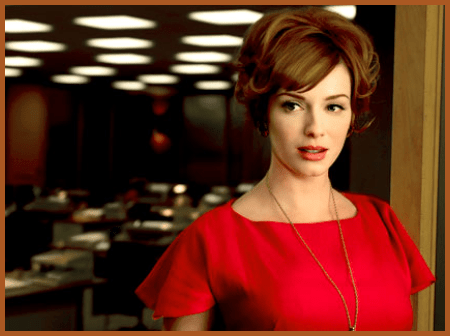
CHRISTINA HENDRICKS
She can be seen in the hit cable drama, Mad Men, shown on the AMC network. Her work in the role of Joan Holloway for the show has garnered her accolades and has created quite the fan following. She is a rare gem in Hollywood in that she is both tall, beautiful and naturally curvy. While her gorgeous red locks have been mentioned as being quite an asset of hers she is actually a natural blonde but has been dyeing her hair a golden-red since she was a child. Golden-red or blonde, it really doesn’t matter as it doesn’t diminish the fiery hotness that is Christina Hendricks. If there ever was still a search for a live-action Jessica Rabbit then that search needs to end for she is it. For that men, and some women, are thanking whatever creator they pray to for making her the way she is.
Well, it is just days away until the release of one of the most-anticipated games of 2010. The game I am talking about is BioWare’s Mass Effect 2. It is the sequel to the very popular and critically-acclaimed action-shooter/rpg hybrid Mass Effect which came out in late 2007. The launch trailer marks the start of the massive marketing and ad campaign to promote the game. This one includes interspersed within the trailer blurbs of review scores and positive quotes from game reviewing magazines and websites dedicated to games. All throughout the trailer we have Shephard’s erstwhile ally (and possibly, enemy) The illusive Man of the shadowy, pro-human group Cerberus narrating a brief take on what players will encounter in this sequel.
I will say that the trailer is even better than the last one released by BioWare. The other one details the dangers of recruiting the new sets of characters to help the player in their quest, but this one shows how much more epic this particular fight and game really is. Mass Effect was already quite the massive and epic sci-fi space opera when it came out and this sequel seem intent on out-doing that predecessor in every respect from the look of the trailer. It helps that its all classed up by the voice of The West Wing’s President Bartlett also known as Martin Sheen. The trailer even hints at the opening events of the sequel which has been talked about many times at other places. I won’t go into detail about it but lets just say that Shephard and the original Normandy don’t have a nice first-encounter with the sequel’s main antagonists, The Collector.
So, January 26, 2010 should be retitled Mass Effect 2 Day. For some players, it will be just like a holiday as every work must be put down and stop in order for the playing of said game to commence.
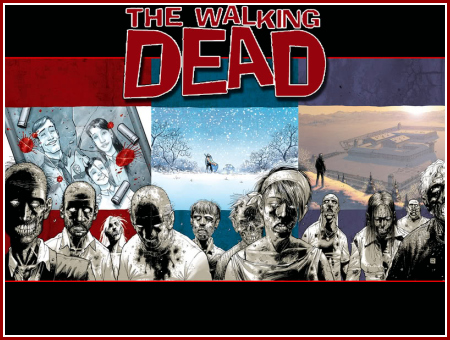
Just in from Variety is the news that cable channel AMC has greenlit the pilot for the Frank Darabont and Gale Anne Hurd produced adaptation of Robert Kirkman’s critically-acclaimed and popular zombie comic book series, The Walking Dead. The news in early 2009 that Darabont, Hurd and Kirkman have come to an agreement to pitch the series adaptation to AMC (home of Mad Men and Breaking Bad) was one of the big news for comic book fans and the industry.
The Walking Dead is about a band of survivors in a world which has undergone and succumbed to a zombie apocalypse. Police Officer Rick Grimes leads this band of people in search of a safe haven from the uncounted zombies which now roam the devastated American landscape. Author Robert Kirkman has written just under 70 issues of this on-going series, so far. Cast for the series have changed on a regular basis to illustrate the extreme danger of this new post-apocalyptic landscape. The danger doesn’t just come from the roaming undead but from other survivors as well as rules of civilization and society have crumbled away to be replaced by rules of survival.
The series is known for some exceptional writing with heavy emphasis on character dynamics and interactions. While the series does have zombies in it the highlight of every issue for fans and critics alike is Kirkman’s ability to posit moral situations on the survivors which sometimes doesn’t get the kind of answer we’re used to in our protagonists. I think this is what has drawn Frank Darabont and Gale Anne Hurd to the property. Kirkman has taken the societal commentaries inherent in all the great zombie films and stories and has created a series around it. As one guest commentator for one of the trade paperbacks have said about The Walking Dead, “The series picks up after the end credits have started in a George Romero zombie movie.”
With the pilot now greenlit by AMC the inevitable casting call rumors will start to ramp up. Fans of the series are some of the most loyal and have been talking of dream casting the series for years. I’m sure those dream castings will get brought back out into the light with fans arguing if actors chosen for the role are the right ones or not. The one thing this news doesn’t say is how much will AMC allow in terms of violence shown. The Walking Dead is not a superhero series with over-the-top violence. It’s violence is similar to Romero’s zombie films in that they’re brutal and extremely gory. While I can understand that some of the more extreme scenes in the film could be shortened and inferred, I do hope that AMC will allow for most of the brutality in the series to remain intact since they help in creating the tone for the series.
Now, all that’s left is the waiting game and wonderings of when the pilot will air on AMC.
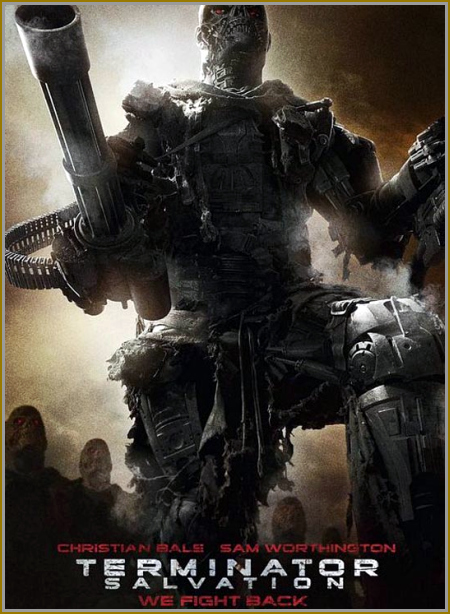
It has been 25 years since a certain James Cameron introduced the film-going public to the post-apocalyptic world of Judgement Day. While he’s never really fully shown the war-torn future ruled by the machines in the the two films he directed in the Terminator franchise he does show glimpses of it. It’s these glimpses of desperate humans fighting to survive against Skynet and its machine hunter-killing robots which have always intrigued and made its fans salivate at the thought of seeing it realized. Terminator 3: Rise of the Machines in 2003 tried to show how it all truly began, but again it just hinted at the future battlefield and not the full-blown war. It is now 2009 and the most unlikely filmmaker has finally shown what the future of Judgement Day looks like. McG’s Terminator Salvation succeeds and fails in equal amounts yet has laid the groundwork for the future of the franchise as a war series instead of of its past as installments of what really is one huge chase film.
There are many things which work in Terminator Salvation and one of them happen to be its director McG. A director who is much-maligned for his too campy Charlie’s Angels set of films would’ve been the last name to look to for a restart to the stalled franchise. His direction of this fourth entry in the series was actually very well-done. There’s none of the cartoony and way over-the-top action set-pieces of his Charlie’s Angels past. Instead he moves the film along in a brisk and energetic pace with very little downtime for much introspection. It is this pacing which makes this a good and, at times, an above-average action-film but also serves to make any of the scenes questioning what it is to be human (once again) and machine seem tacked on. The first three films in the series have delved into this theme and question too many times for a fourth attempt make it seem any more relevant than the previous times.
McG went out to make a war entry to the series and to an extent that’s what he did. While there are chases to be had it doesn’t necessarily mean its all about John Connor once again (though the film does make it a point of targeting him again in its own fashion). Terminator Salvation has finally shown what the world looks like after the events of the third film and what had been hinted and teased at in the first two. The world is a desolate place with ruins of landmarks to give the audience a reference point. We see Los Angeles a tumbling and crumbling wreck which looked eerily like something out of the recent Fallout 3 scifi-rpg game. Even San Francisco makes a post-apocalyptic appearance as a major Skynet headquarters. McG achieves this post-apocalyptic look by bleaching out the film’s color palette to the point that browns and greys dominate. He actually achieves to add grittiness to this film which his past films had never shown him having the ability to do. While this film won’t sway people to admiring his skill as a filmmaker it does show some growth. Then again he does have a hold of a film series which is nothing but B-movies elevated through bigger budgets and access to the latest in film FX. If I have any gripe to point out about the action in the film it’s that there’s not enough of it to truly convey a “War Against the Machine” scenario. We get these tantalizing hints, but not something on par of what a fuure war should look.
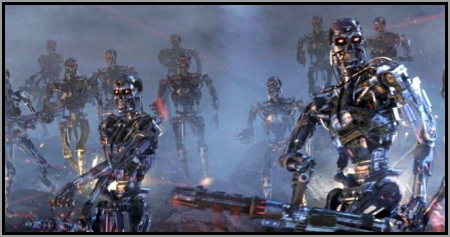
The budget could be seen on the screen as the film uses a combination of CGI and practical effects to pull off a much more complex robotic army for Skynet. It’s the robots and machines which keeps bringing the audience back each and every time the series releases a new entry. We don’t just have the Human Resistance fighting the typical T-800 or even the more advanced T-1000 or T-X. We get the earlier versions of these human hunting and killing machines. From a brutish and zombie-like T-600 we see in the LA-scenes to newer and bigger specialized Skynet soldiers like the anime-inspired mech Harvester which towers several stories high and literally harvests humans it finds to take back to SKynet’s R&D bases. When the original Terminator does make an appearance it’s both a welcome and a surprise as McG’s technical wizards find a way to bring back the original exactly the way it’s supposed to look. I’m sure the Governator of California would want to have that physique and youth back.
As an action-film Terminator Salvation works well enough when the action appears on the screen. Now as a film that tries to delve into the philosophical trappings of the series it doesn’t so much as fail and sink the film, but almost does which would’ve been a shame. While not the worst in the series in terms of storytelling it does come across as very scattershot in what story it wants to tell. The film actually has three ideas which could’ve been used to make it’s own film. Is the film a story of John Connor and his rise to his prophesized leadership of the Resistance (he’s a leader of a branch of fighters, but not yet of the whole group in this film)? Or is this film about the search and attempt to make sure the person who will be Connor’s father stays alive to allow what transpired in the past to happen (time-travel can be a tricky and confusing thing to comprehend)? Or is Terminator Salvation the story of the new character Marcus Wright and his quest to find out just who, or what he is exactly? It’s all three of those and all three weren’t explored enough to make one care too much for the story being told. There’s great ideas in all three but trying to combine them into one coherent storyline mostly falls flat and uninsipiring for a film trying to be the war movie in the series. For what are war movies mostly but attempts to show inspiration in the face of desperation. There’s very little of that in this film. If the writers had been given a chance to further streamline the story into one major arc then this film would have benefitted greatly in the long run.
With acting very tightly tied-in with the story being told it’s only logical that the performances by the cast rarely go beyond acceptable. Christian Bale’s John Connor is always dour and brooding. He’s almost becoming a typecast for any role that requires for him to be the down man in any party. He does this ably, but he doesn’t bring anything to the role which hasn’t already been explored in past entries. His performance does show hints of mental instability as the weight of being the savior and prophet of the human race may be starting to get to him. The other two pivotal roles in the film have more meat to play around with. Anton Yelchin as the teenage Resistance fighter destined to become John Connor’s father in the past shines in the scenes he’s in as he elevates a bland script with some youthful energy and hints of the adult Kyle Reese fans of the series know so well. Then we arrive on the newest character in the series: Marcus Wright.
Little-known Australian actor Sam Worthington was recommended by James Cameron for the role of Marcus Wright. Like Anton Yelchin’s performance, Worthington’s work in the role of Wright saves the film from mediocrity. While it is not a start-turning performance by any means Worthington does make it difficult not to pay attention to him throughout the film. The man has presence and every scene he is in shows why Cameron himself has faith in being the latest to carry the Terminator torch. The rest of the cast is quite a throwaway in that we never really get to know any of them and invest anything in their well-being.
Terminator Salvation is a very frustrating film in that there’s so much great ideas to mine. The series has always tried to explore such themes as fate, predetermination and human free will. While the third film in the series was quite lacking in memorable action sequences this fourth entry makes a mess of trying to explore these themes. Again, it seems as if the film’s script was rushed into production with very little doctoring and as the production continued forward no one bothered to point out just how average and bland the storyline does sound despite being the most overly complex of the series.
One thing I am sure of is that the one person people thought would be the weakest link in this film instead happens to be its strongest. McG and some inspired acting from two newcomers keep the film from becoming a total failure. Terminator Salvation is an able and, for most of it’s running time, a very good action film with brisk pacing and energy in its action sequences. Enough of these elements keeps the film’s fractured and scattershot of a storyline from sinking the film into total failure. As a summer tentpole action film it delivers on some of what it promises, but it could’ve been more and better. Some would settle on calling this entry in the franchise a failure, but I am always an optimist and a fan of action thus I’ll land on calling this film a successful failure.
As the music above plays I must speak of why such a tribute song is necessary…read on.
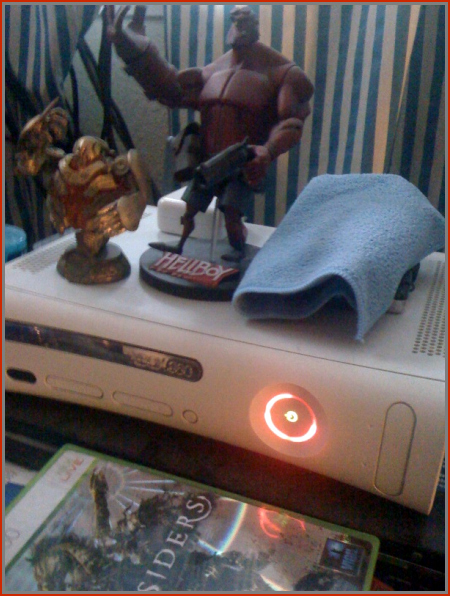
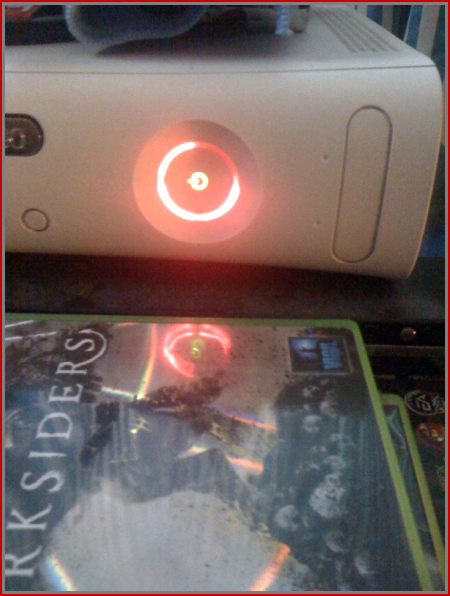
It finally happened. While I wasn’t surprised that it did happen what did surprise me was how long Butters held out. I got Butters on midnight of November 22, 2005. Never has Butters failed me in the 4 years, 1 month and 27 days it was in my care. But this afternoon he finally succumbed to old age.
While it has happened to friends of mine who had something similar and I know the symptoms which tells me Butters was gone for good it still wasn’t a good feeling. All I can do now is just make sure that all the fun memories Buuters and I have are not lost. I sure will try my damndest to keep them.
Even though the grieving process has just begun and some of it includes a bit of denial, I now have to look forward to finding a replacement for Butters. I’m thinking an upgrade is way overdue. I’m not sure if I should also name it Butters or will the memory be too fresh still and a new name needed. Whether it’s Butters, Butterstotch or Bubbba and many others, I will make sure that I’m not without for too long.
There will be new memories to add to the ones I had with Butters. Memories which, if I am prescient, will hopefully be made starting January 26, 2010. Memories that I will make sure will continue a particular one from Butters. I will be very vexed if that doesn’t happen. For that particular past memory was well-earned with many hours spent in the making.
So, once again I must play “Taps” and pay homage to Butters which lived a long, fruitful life but I still thought was taken too soon and without much warning.
To Butters! May the Valkryies welcome you to the halls of Valhalla where the brave live forever!
Being single once again and slowly getting back on the dating scene (wasn’t easy at 26 and it sure as hell hasn’t gotten easier at 36) I started looking at my music collection and realized that I subconsciously always had a specific set of songs as a playlist to help close the deal, so to speak. While I’m sure my own charm and skills have a lot to do with it I do think this playlist helps things along.
So, here’s the top ten songs which helps seal the deal. Some has to be clicked to be seen…If someone does try using this list and fails then don’t blame game…blame the player. 😉
10. Closer – Nine Inch Nail
9. Ready or Not – After 7
8. Brown Sugar – D’Angelo
7. Wicked Game – Chris Isaak
6. Between the Sheets – The Isley Brothers
5. Anytime, Anyplace – Janet Jackson
4. My, My, My – Johnny Gil
3. Sexual Healing – Marvin Gaye
2. Let’s Get It On – Marvin Gaye
1. Secret Garden (Sweet Seduction Suite) – Quincy Jones
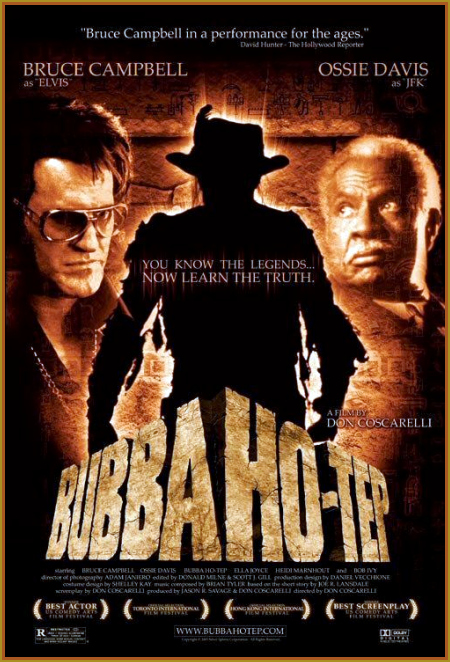
Bubba Ho-Tep was one of those film projects which just screamed out “can’t lose” the moment it the people who were going to be attached to it were announced. I mean for people who grew up watching horror movies and other such fun things during the 80’s would know of the name Don Coscarelli. His Phantasm franchise scared and creeped out a large number of young kids and teenagers as they grew up during the 1980’s. Author Joe R. Landale is not as well-known for the unread but he also brings big smiles to people who also like their stories to be full of quirky humor, dry sarcastic wit in addition to pulp-style horror and thrills. But the major coup this film had which made all genre fans suddenly smile and grin like fools has to be hearing that genre-veteran and B-movie extraordinaire Bruce Campbell taking on the role of an aging Elvis Presley.
The movie was released in very limited screens in the summer of 2002. In fact, the movie really only got shown during the summer genre film festivals which dealt with genre movies like horror, sci-fi and other so-called low-brow genre projects which the more elitist film goers tend to shun. Luckily I wasn’t too elitist enough to be able to find Bubba Ho-Tep playing in the San Francisco Film Festival. To say that what I saw was pure cheesy fun would do the film a disservice. While it’s true that the film had it’s moment of horror, I mean it is a movie about a soul-sucking Egyptian Mummy let-loose in a Texas retirement home. What I was surprised to see as I watched through Bubba Ho-Tep was just how much more than a cheesy B-movie horror flick it turned out to be.
The film pretty much brings up the scenario of how it would be if the real Elvis Presley was still alive, in his 70’s and wasting away in a Texas retirement home. That the Elvis Presley who passed away sitting on a toilet at Graceland was actually an impostor who switched places with the real Elvis after the genuine article decided all the fame, groupies and excessiveness of being The King was just too much and wanted a break from it all. So, the real Elvis lost his chance to switch back with his double and thus ended up forgotten in a Texas retirement home where the employees and caregiver treat him like a child and don’t believe him when he tells them he is the real deal. To make matters worse he now has to deal with a cowboy hat and boots wearing Egyptian mummy whose sole source of nourishment are the souls of the old retirees who inhabit the retirement home. The way the mummy sucks the souls from its victims become a running joke within the film. Let’s just say it doesn’t try sucking the souls out through the old folks’ mouth or nose.
Bruce Campbell has always been a mainstay of the B-movie scene. His popularity as being “The Man” who has inhabited such iconic cult characters such as Ashley “Ash” Williams of Evil Dead fame has made him a well-known actor to genre fans everywhere. Campbell could’ve easily hammed it up in the role of the aging Elvis Presley in Bubba Ho-Tep. No one would’ve faulted him for such an over-the-top performance, but instead of going that route he instead plays the role with such an understated and subtle style which made the character more human and sympathetic. Campbell’s nuanced performance also turned a horror-comedy into something more sentimental and sad. Bubba Ho-Tep had turned into a horror-comedy which had a unique and sympathetic look at how the elderly have been treated and seen more as nuisances and less than human. It doesn’t help that their cries for help once the mummy targets them for feeding fall on deaf ears as those hired to help them consider their pleas as the senile ramblings of someone whose mental facilities have long left them.
Campbell’s performance as “The King” was supported quite well by the great, late Ossie Davis whose role as an elderly black man who thinks he’s John F. Kennedy brings new meaning to the film cliche: buddy movie. Davis’ character truly believes that he was and is President Kennedy who was turned black through some conspiracy by Lyndon B. Johnson to save his life. At first, we the audience are in on the joke but due to Davis’ wonderful performance we begin to believe that he may be right. If cowboy-attired Egyptian mummies and an aging Elvis look real why not him. The interplay between Campbell and Davis makes for some great acting and comedy. Without these two men the film would’ve been relegated to the direct-to-video level of filmmaking. Instead what we get is a wonderfully crafted film which despite its pedigree still became one of the better films of 2002.
Don Coscarelli does a fine job of balancing the scenes of comedy and horror with poignancy without ending up with a film that’s too maudlin for its own good. It’s a good sign that one of the 80’s master genre directors has found a nice project to show that he hasn’t lost the edge and skill when it comes to making genre movies. He has also shown with Bubba Ho-Tep that one can have a horror-comedy without drowning it in gore (which this movie had a surprisingly little of) and juvenile slapstick. Even joke sequences involving aging Elvis’ penis with it’s unidentifiable growth made for genuine laughs instead of laugh for laughs sake. The same goes for the double entendre from JFK involving his Ding Dong snack. I think with anyone else at the helm of this picture the movie would’ve fallen either too much into gorehound territory on one side or inane slapstick comedy on the other end.
In the end, Bubba Ho-Tep was one of those rare little genre gems which transcends its genre pedigree and beginnings without meaning to. Like I said with the convergence of Coscarelli, Lansdale, and Campbell making the project happen this was one little movie that was bound to not fail. I highly recommend this movie to anyone who hasn’t seen it. Despite it’s silly sounding title the movie is more than just the sum of its cover.
“Sometimes clients think they want the real you, but at the end of the day, they say they don’t. They want what you want to be.” — Chelsea
In between his larger projects (the Che biopic) and studio work (Ocean’s 11 through 13), Steven Soderbergh has kept busy with low-budget, experimental films like Bubble and Full Frontal. His latest entry in this HD-shot, minimalist phase is The Girlfriend Experience. When it was first announced in 2008, much of the buzz centered on Soderbergh’s decision to cast real-life porn star Sasha Grey in the lead role. From that point through its festival run, discussion of the film fixated heavily on that choice. Yet The Girlfriend Experience is ultimately a more intriguing work than its casting gimmick suggests, attempting to draw parallels between the high-end sex industry and the power structures of modern capitalism.
First off, Sasha Grey is not the film’s weak link, despite expectations tied to her background. While her performance can be uneven, there are several moments where she displays clear presence and control. What some have interpreted as a flat or vacuous screen persona actually aligns closely with the character. Chelsea is a $10,000-a-night escort whose clientele consists of wealthy, powerful men—people accustomed to buying whatever and whoever they want. What they purchase from Chelsea is the illusion of intimacy: the “girlfriend experience.”
One of the earliest scenes illustrates this perfectly, as Chelsea spends time with a client in what initially appears to be a normal relationship between a successful man and a poised, younger partner. That illusion, however, defines the entire film. Chelsea is not simply selling sex; she is selling the performance of a perfect relationship. On the surface, everything appears polished and authentic, but beneath it lies something transactional and deeply artificial.
Grey captures this duality effectively. Where some may see a performer out of her depth, her detachment instead feels intentional—part of the character’s constructed identity. It becomes difficult to distinguish where Grey ends and Chelsea begins. Whether this translates into a long-term mainstream acting career is uncertain, but with the right material and direction, she shows potential beyond the limitations of typecasting.
Despite its subject matter, The Girlfriend Experience is less about sex than it is about the commodification of fantasy. Even Chelsea’s boyfriend, Chris (played by Chris Santos), participates in this economy of illusion as a personal trainer selling physical transformation and confidence. The film avoids sentimentality, and when it briefly leans in that direction, it feels out of step with its otherwise clinical tone. Its strength lies in exposing how fragile these constructed realities are once stripped away.
Chelsea herself embodies this contradiction. She is savvy and business-minded, clearly aware of how to leverage her work into future opportunities, yet she clings to a lingering naivete. As competition emerges and her client base becomes less secure, her vulnerability surfaces. Despite operating within a world of calculated transactions, she remains susceptible to the same power dynamics that define her clients’ world.
Shot quickly during the financial collapse of 2008–2009, the film subtly mirrors that instability. Soderbergh draws a parallel between Chelsea’s profession and the broader economic system—both built on selling aspirational illusions. Just as consumers were sold the dream of prosperity they couldn’t afford, Chelsea sells emotional intimacy that isn’t real. In both cases, the illusion eventually collapses, revealing a harsher truth underneath.
Soderbergh’s direction may be challenging for some viewers. The film unfolds in a non-linear, fragmented style typical of his more experimental work. Those familiar with his filmography will likely adjust, but audiences expecting something closer to his mainstream efforts may find it disorienting. Still, his continued experimentation with HD cinematography is notable. The image is strikingly crisp—sometimes to the point of artificiality—which reinforces the film’s thematic focus on surface versus reality. Beneath that clean exterior lies something far more complicated and unpolished.
Of Soderbergh’s work in this digital format, The Girlfriend Experience stands as his strongest effort so far. It is far from perfect—at times it feels visually and emotionally restrained for a filmmaker of his caliber—but it carries an unmistakable French New Wave influence, particularly reminiscent of Jean-Luc Godard. The film is unlikely to earn major accolades, and it may ultimately be remembered as a curious crossover moment for Sasha Grey. Still, its very existence speaks to a willingness—on both the director’s and the actor’s part—to take risks outside conventional boundaries.
In an industry often driven by safety and predictability, that alone makes The Girlfriend Experience worth noting. Whether or not it succeeds by traditional standards is almost beside the point; the film exists, invites interpretation, and leaves its audience to decide its value on their own terms.
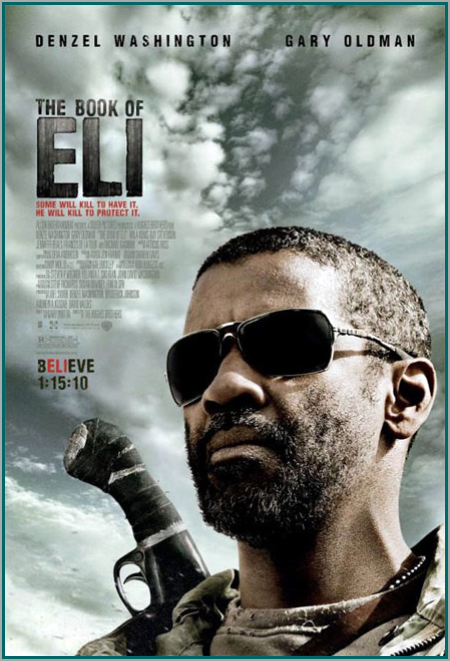
In 2001 the Hughes Brothers released their film adaptation of the celebrated and very dense graphic novel From Hell. A graphic novel meticulously researched and every detail reconstructed to tell the tale of Jack the Ripper and his killing spree in the London slum of Whitechapel during the turn of the 19th-century into the 20th. It was a film fans of the graphic novel have been waiting for years since it was initially announced. When it was finally released in 2001 the reception and reaction from both critics and audiences were a resounding thumbs down. The Hughes Brothers first major film outside of their comfort zone of the urban setting was seen as a colossal failure and for almost a decade they seemed to have put themselves into a self-imposed exile from Hollywood. It’s now 2010 and with a cas consisting of Denzel Washington and Gary Oldman on opposite sides it looks like the Hughes Brothers have returned from their exile with a very good post-apocalyptic Western called The Book of Eli.
I call The Book of Eli a post-apocalyptic Western because it’s what the film reminded me most of. The setting may be all ashen gray with the world and the environment decades into what the cast can only describe as “the flash” which ended everything. But with all that the film still felt like a throwback to the Westerns of Sergio Leone with equal parts Akira Kurosawa samurai epics. Taking cue from the screenplay by Gary Whitta, the Hughes Brothers set up the rules of the film from the very first frames. We see a world still raining ash even thirty years since a war (hinted as being caused and fought between the major religions of the world). It is a world where cats have become not just the source of food but also oil for chapped lips. If one bought into the world being presented in the very first ten minutes of the film then the rest the remaining hour and forty minutes would be easy going.
The very first twenty minutes of the film was pretty much free of dialogue as we see the No-Name walker (played by Denzel Washington) survive a day on the road inside an abandoned homestead with only an ancient iPod and the titular book to keep him company. When we finally hear his character speak it is in hushed tones, almost a whisper as if his time of wandering the blasted landscape in solitude has made speaking out loud something almost forgotten. In fact, throughout most of the film Denzel’s character rarely speaks and when he does it doesn’t bode well for those trying to keep him from the path he had been set on for the past thirty years since after “the flash.” It’s during these “encounters” when his character must protect himself that the Hughes Brothers show their unique style in how to film an action scene.
The action scenes owe much of their smooth, precise and deadly ballet to the work of stunt coordinator Jeff Imada and his team of stunt men and women. There’s none of the fast cut and edits to make an action scene seem more chaotic than it really is. Each brutal fight sequence from the hand-to-hand combat to the shootouts are shot with a wide lens to give the audience a clear view of every move, decision and attack made through the fight. When the camera does move from combatant to combatant it flows from one to another without missing a beat. I will also say that the violence in these fights are quite sudden and brutal. Limbs and heads are cut off with ease that it takes several beats before the audience even realizes what has happened. While the film does have it’s share of action sequences the Hughes Brothers actually seem to hold themselves back from putting in more to keep the fast-pace moving. Instead they use these sudden burst of violence to break whatever monotony may set in during scenes of dialogue.
It is during these downtime from the action that the meat of the story shows itself. The book being protected by Washington’s character may seem to look like a MacGuffin from the onset as he tries to stay on path to deliver it somewhere West. It’s during his brief stop in an unnamed town that we find out just exactly what the book really is. It is also in this part of the film where the audience meets the opposite of Washington’s character in the Carnegie, the town’s dictatorial mayor played by Gary Oldman channeling his inner Stansfield from his time more than a decade ago on the film Leon: The Professional. There really is no one better right now when it comes to playing a villain with some sophistication to go with an equal amount of sociopathic tendencies. Oldman’s Carnegie gets most of the lines in the film and it’s from his lines of dialogue that we learn not just why but also the motivations for his need to have the book in Washington’s possession.
This section of the film where some explaining of the motivations from both leads bring up some interesting ideas about the nature of faith and religion and how both ideas which seem to share a common ground could also be so different from each other. While the ideas of faith and religion gets screen time there’s not much heavy-handed preaching to alienate the audience. Whitta’s script (with some extensive doctoring from a few individuals) gives the audience enough explanation without forcefeeding them. The film leaves it up to the individual viewer to make up their minds about what had been brought up. I do think that the script and the how the two leads in the film were drawn up left little gray area to be explored. We clearly see Washington’s character as the good guy trying to preserve civilization and society as the Good Book teaches while Oldman’s Carnegie wants to use the power of said Book to cement his power and hold over his town and beyond. There definitely could have been room for some more work on the script to actually complicate the two characters’ motivations where both could be seen as correct in what they want done. Instead there’s no delineation as to who is good and who is bad. It is only through Oldman’s performance that the character of Carnegie escapes becoming a one-note villain.
The rest of the cast perform ably enough but still just left to become plot device characters to help move the story forward. It was good to see Jennifer Beals in another major motion picture. The same goes to Ray Stevenson of HBO’s Rome. While their roles were quite small compared to the two leads they still did quite well with what they had to work with. I was surprised to see Tom Waits make an appearance as the town’s Mr. Fixit man and it was a delight to see. Even the small roles played by Michael Gambon and Frances de la Tour didn’t disappoint. Many in the audience, including myself, reacted quite positively to their slightly demented, but funny elder couple. Their time on-screen was brief but they sure made great use of the time they were given.
The one misstep that almost broke the film for me was the miscasting of Mila Kunis in the role of Solara. While I can understand why she looked quite clean in a town and world where everyone’s hygiene was really not a priority she just looked too clean. It seemed like she just stepped out of a Beverly Hills, 90201 remake by way of The Road Warrior. While her performance was good it still paled when compared to the rest of the principals she interacted with. When we finally see what happens to her in the end of the film there’s no reaction of rousing claps, but instead I could hear snickers and more than a few laughs.
While the story was quite good, albeit with some flaws, the film really stands out with its art direction and the work of DP Don Burgess. With the latter, The Book of Eli was given a very washed out looked of browns and greys. There was barely much any color outside of those two that the film, at times, took on a black & white quality in its visual tone. Burgess and the Hughes Brothers’ decision to use the Red HD-camera allowed the team to create a world that’s been turned on its head. This decision also allowed the filmmakers to combine live-action with the matte paintings to show the blasted landscape in the background. But not everything about the look of the film was perfect and/or well-done. At times some of the scenes clearly looked like they were filmed in front of a green-screen. Maybe it was a deliberate choice but one that, at times, became too distracting.
In the end, while not a perfect film, the Hughes Brothers’ The Book of Eli was a very good take on the current spate of post-apocalyptic films. While Hillcoat’s The Road was a depressing and agonizingly morbid take on the same subject, the Hughes Brothers were able to convey the same sentiments with their film but giving enough of a glimmer of hope. The ending doesn’t mean that society is saved by any means, but it does show that the chance for rebuilding is there if given the chance. So, whatever director hell the brothers have been relegated to for most of the last decade this film surely has brought them back from exile. While all was still not forgiven for their work on From Hell they’ve at least gotten back into the good graces of the film-going public and, hopefully, they’ve got more work to come.
It looks like for the 5th time in the history of the Terminator franchise there will be a new owner. Lions Gate was an early bidder for the franchise’ rights which has been put up for sale by it’s current owner, Halcyon Group. Now that Lions Gate’s initial bid of $15million has set the starting price big -name studios like Sony and Warner in addition to mid-level ones such as Summit and Legendary have made their interest known that they may join in the bidding.
Whoever ends up with the rights to the franchise have much work to do in righting the ship. While Terminator Salvation made money even after factoring in it’s $200million budget it wasn’t the huge blockbuster Halcyon Group was hoping for thus the sale of the rights. Fans of the franchise have been fine with the series ending after the second film, but then a third was made and even that one most fans were on-board since it introduced the opening salvo of “Judgement Day” which have always been seen only in clips or as backstory exposition. Terminator Salvation was suppose to sate that interest, but instead might have sunk the franchise for good.
While future films in the franchise will always hold an interest for me I do think that the series (plus the rights to it) really should just go back to the man who began it all: James Cameron. He has made no effort to have his legal representatives even make an offer for the rights even though he could definitely afford to buy it back. I’m sure any studio would help him get it back if it meant a partnership in getting an iconic sci-fi franchise back to prominence. Cameron wouldn’t even have to be directing the film to get fans back on-board. As producer he would bring in the sort of dedication to get things right he always brings to all his projects.
The only problem is that Cameron seem to have moved on from the series and couldn’t care less what people do with it. Early naivete about how Hollywood worked in his early years in the business seem to have soured him on the franchise. Here’s to hoping that whoever does end up with the rights, at the very least, approaches Cameron about ideas and how they can get the franchise back on track.