Lisa Marie Bowman had chosen her favorite scene from Dario Argento’s Suspiria as her latest “Scenes I Love” post and it’s quite the scene. I will match her choice with a horror scene which remains one of my favorite scenes in film history. It is also a scene from one of the best scifi-horror films ever made and, I would dare to even say, one of the best films ever created. The scene I speak of comes from Ridley Scott’s classic and iconic film Alien.
Anyone who has ever watched this classic scifi-horror will always gravitate towards talking about one particular scene. The scene is the first time the crew of the space tug Nostromo gets together to a meal as a group after the crisis which saw one of their own crew members attacked by an alien creature. This scene started off quite normal. Professionals enjoying food and good company. It’s through Ridley Scott’s direction and the exceptional performances of all involved which elevates the scene to one of the greatest. Through the scene’s depiction of normalcy we start to get a sense that something may not be right even before Kane begins to cough and have convulsions. For me it was a prolonged shot of crew member Ash during the banter around the table. His expression is all subdued smile then for just a split second we see him glance at Kane eating and being merry but he knows something is wrong and about to happen.
Even if people didn’t pick up that moment from Ash it still created a subconscious effect on the audience so that when Kane did begin to cough and convulse uncontrollably the audience was already on the razor’s edge. When the climactic event which punctuates this scene finally occurs the surprise on all the actors, especially that of actress Veronica Cartwright, has gone done as in film history as a classic. It helped that their reactions were quite genuine. Even knowing that the chestburster alien would pop out it was not being told that fake blood would squirt out that made their reaction of surprise and disgust so real. The extended version of this scene even had Cartwright slipping and falling as she screamed in horror at all the blood which had splashed on her.
One last thing which made this scene one I love and also one which I think makes it one of the greatest scenes in film history is that it was done in one take and that single take came out perfectly. This is a scene that has influenced many filmmakers since but its effect has never been fully replicated.
Before I returned to posting something about horror I needed to post another “AMV of the Day” entry after discovering and watching this happy little AMV earlier today. This latest anime music video is the aptly named “Who’s That Chick?” by amv creator gloobe90.
The video’s title comes from the Rihanna song which when listened to perfectly encapsulates the Teppen Toppa Gurren Lagann character of Yoko Littner. This anime is part of the shonen mecha genre. It pretty much means it’s an anime series aimed at boys and young men using action and mecha (giant robots) with some comedy and fanservice thrown in just cover all bases. The character of Yoko Littner pretty much has all four of those traits. She’s quite able in the action and fighting department and while she doesn’t pilot one of the many mechas in the series she does take down more than her share of them. Yoko also happens to be a sort of comedy relief in the series both in her actions and attitude but also in the fanservice way she’s drawn and how others react to her due to her appearance.
It’s really not a surprise that Yoko Littner ended up being one of the more popular anime characters ladies end up cosplaying at conventions and anime events. The trick though is whether they can pull of not just Yoko’s look, but her infectious cheerful attitude. This video certainly captures all of that and more.
Anime: Tengen Toppa Gurren Lagann
Song: “Who’s That Chick?” by Rihanna feat. David Guetta
A brief break from the day-to-day posts of horror reviews and such brings us the latest “AMV of the Day”. This particular AMV is unique in that it’s the type people in the hobby call an MEP as in Multi-Editor Project. This video uses one song but has several different editors taking section and editing in their chosen anime scenes. All these different editors must bring in their section in as smooth as transition as possible.
This first MEP is “Just the Way You Are” and uses the Bruno Mars of the same title. The video has ten different anime from which the 11 editors ended up using to fill up the length of the Mars track. The editing tricks weren’t too complex in this video and that’s probably due to having so many people involved in creating it, but the quick editing and some of the scene transitions were done well enough that the scenes chosen worked well hand-in-hand with Bruno Mar’s cheerfully romantic lyrics.
For an MEP this particular AMV is actually quite short. Most AMVs of this kind tend to run 10 to 20 minutes long as the different editors don’t just edit in their chosen anime scenes, but also must edit in their chosen song as well. These type of AMVs usually will have 3-5 songs mixed in together. For now, I think I’ll start with this short and simple kind.
It is hard to categorize John Landis’ contribution to the Showtime horror anthology series, The Masters of Horror. Landis made a name for himself in the horror genre as the director of the classic early 80’s werewolf film, An American Werewolf In London, and the cult classic vampire-noir film, Innocent Blood. With his “Deer Woman” episode, John Landis reaches back to his past work and comes up with an episode that mixes horror, absurd situations and a healthy dose of black comedy.
“Deer Woman” has something in common with An American Werewolf In London in that this episode deals with a creature born out of folklore and myth. This time around its a creature from Native American folklore. The creature in question is the Deer Woman. A legendary creature who takes the form of a beautiful woman from the waist up and that of a deer from the waist down. The Deer Woman will then go on a spree of seducing random men then trampling them to mincemeat. In this respect she has a bit of the mythical succubus mixed in with the shapeshifting. It is during the aftermath of one of her killings that we’re introduced to the main player in this horrifically absurd little tale. Detective Faraday (masterfully played with a dry wit and comedic timing by Brian Benben) gets called in to the scene thinking it is an animal attack, but the crime scene leaves him confused, perplexed and a tad more than intrigued by the case after it’s unceremoniously taken away from him.
We learn through the length of the hour-long episode that Faraday is a disgraced cop due to an incident in the past that’s made him a pariah in his own department. Faraday’s sidekick in his hunt to solving the murders and thus finding the Deer Woman is a beat cop played by Anthony Griffin. Former Brazilian, and still smoking hot and stunning, Cinthia Moura does duty as the abovementioned Deer Woman. She goes through the entire episode without uttering one line. Her eyes, expressions and body language conveying whatever motivations and thoughts may be in her head. She did pretty well and it didn’t hurt she looked very natural baring it all on the screen.
The dialogue in the episode was where the absurdity of the moments in the story shone through to give “Deer Woman” its black-comedy. The characters in the film react to murders and the clues leading to what might be their only suspect with incredulity, denial and dismissal. Yet, no matter how much the characters of Faraday and his partner try to deny what they know in their mind is the real killer, they inevitably see the truth of the matter dangerously up close and personal. The teleplay for the episode was primarily written by Max Landis (the director’s son) with some brief rewrites and treatments by John himself. They both run with a very absurd situation and run with it fult-tilt and non-stop. They both know how silly the story sounds and its that silliness that makes this episode memorable. In fact, if I really had to categorize this episode I would call it a comedy with small bits of horror slipped in (horror and gore effectively done — once again — by the master effects people from KNB EFX.
Despite “Deer Woman” being closer to a comedy-horror than a straight-up horror tale, I found the episode to be very entertaining and worth the viewing. John Landis stuck to his guns in crafting an absurd tale and making it believable to his audience. With shades and hints of An American Werewolf In London, Landis’ contribution to The Masters of Horror marks a bright spot in the an uneven series, so far. Landis’ has once again shown that horror and comedy are more intertwined than most people would think.
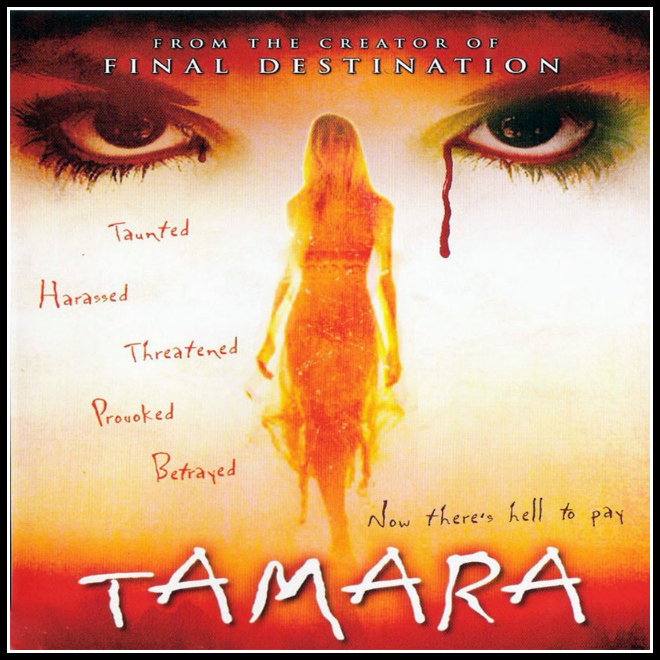
Tamara was a good entertaining horror/teenage angst movie in the same vein as De Palma’s Carrie and pretty much most of the teenage revenge/slasher flicks of the late 70’s and early 80’s. Such horror films involved the high school jocks and popular cliques getting their comeuppance by way of the nerdy student who has had enough. This time around the nerd in question is one Tamara whose shy, bookish and frumpy nature makes her an easy mark for every other kid in school.
Newcomer and extremely hot Jenna Dewan plays the title role and she does a very good job pulling off the dual personality role the film requires from her. The first half of the film has Dewan as very believable as the mousy and nerdy student whose low self-esteem adds to keeping her ostracized from the rest of the student population. It doesn’t help that she begins to misread one of her teacher’s (played by Matthew Marsden) attempts to help her as some sort of loving attention she so craves. There’s a small bit of a bright side to her daily existence in the form Chloe (played by Katie Stuart), she of the popular girl with a heart-of-gold role. Tamara’s life soon turns for the worst as her attempts to show her love for her helpful teacher gets rebuffed and her published article about drug-use in athletics puts her in the crosshairs of a couple of jocks with much to lose.
Typical of such teenage revenge horror films, the cruel jocks and popular kids concoct a plan to humiliate and embarrass Tamara, but just like those past films their plans backfire and the target of their plans gets killed during the the prank. The filmmaker really don’t add something new to this tried and tested formula. Instead of calling for the authorities to report the accidental death of their schoolmate, the kids decide, through the bullying by the alpha-male in the group, to bury Tamra instead and forget anything ever happened. This plan probably would’ve worked if Tamara wasn’t dabbling in witchcraft as ostracized teenagers are wont to do. Tamara’s spell prior to the prank to spellbind her teacher backfires as its activated by the spilling of her blood and to the surprise of the students who did her harm she returns alive, healthy and completely different the start of the new school week.
To say that Tamara returns utterly different in more ways than one would be an understatement. Ms. Dewan does a vampy, sometimes campy, job portraying the new and improved Tamara. Dewan goes from nerdy, plain-jane Tamara to ultra-sexy, barely there skirt wearing teen seductress whose touch does more than seduce those she has targeted for revenge. Jenna Dewan as the reborn Tamara steams up the screen with her overt sexuality and she practically saves the film from just being an ok, by-the-numbers horror film. Tamara was Ms. Dewan’s film from beginning to end and she does a very good job of keeping the story interesting even if it meant just being on the screen.
This film doesn’t break new ground in the realm of teen horror. In fact, it’s a mish-mash of alot of past teen horror flicks of the past that one could see the many influences in its story. Tamara was part Carrie, Black Christmas, The Craft and, more recently, Diablo Cody’s Jennifer’s Body. The direction was adequate at best and that’s really all one could hope for in a genre film like Tamara. What makes this film entertaining and worth watching was the joy of discovering the new scream queen talent in Jenna Dewan. Tamara might not be a great horror film, but Ms. Dewan sure more than tries to make it more than it’s B-movie pedigree.
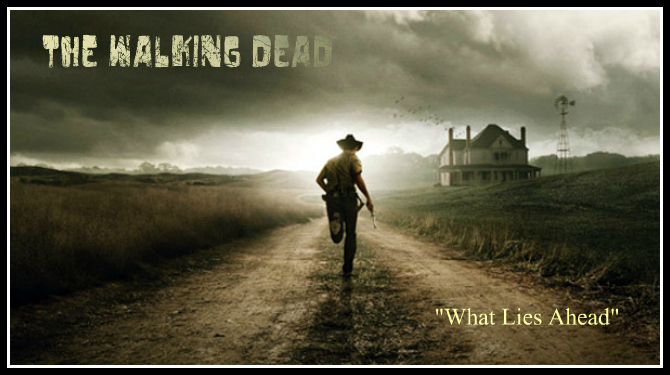
The first season of AMC’s The Walking Dead was a runaway hit for the network. Despite the inaugural season being a a truncated 6-episode long one the series gained a huge following that included long-time fans of the Robert Kirkman long-running zombie comic book series, but also new ones. The Walking Dead would have it’s showrunner and tv series creator Frank Darabont to thank for bringing it to a wider audience which is why this second season premiere brings with it a sense of bittersweet to the proceedings. This past summer saw Darabont fired from the very show he had helped create due to creative and financial differences with the show’s parent network in AMC.
Does this mean the show will suffer as it moves forward without it’s leader at the helm? If the premiere episode of season two is any clue then the show has hit the ground running and doesn’t seem to be in a hurry to stop to mourn the firing of it’s leader.
“What Lies Ahead” begins with the survivors soon after their narrow escape from the destruction of the CDC in Atlanta. The group’s number is now one less and any chances of a cure to what has caused the zombie apocalypse and a hopeful future seems slim at best and a hopeless exercise in futility at it’s worst. Rick (Andrew Lincoln) continues to be the group’s de facto leader which seems to wear on him now that he doesn’t just have his wife and son to think about but others as well. The episode does show that Rick’s acceptance of leadership in the group might be more out of necessity and less about him wanting to lead. No one, from his partner Shane (Jon Bernthal) to the wise, old Dale (Jeffrey DeMunn) seem to want the job and everyone seems willing to blame Rick for every instance of danger the group finds itself in.
Just like the pilot episode of the first season this new season doesn’t skimp on the tension. Frank Darabont wrote this first episode and his handling of the group’s first encounter with a moving “herd” of zombies show’s that he hasn’t lost the ability to create tension and just build it past the point of unbearable. This entire sequence with the group hiding beneath abandoned cars on the interstate with countless zombies walking past just inches away has to be one of the signature scenes of this season and more than a match for Rick’s solitary walk through the empty hospital in the pilot episode.
The bulk of the episode doesn’t come down too much from the tension and dread built up during this “herd” scene. It continues to keep the tension level at a fever pitch as the group must now search for one of their own who has gone missing during the “herd” march. The tension doesn’t just come from the situation Rick and the group find themselves in, but from the cracks and fractures that has begun to appear within the collective group. It’s these fractures which becomes the impetus for some character building that the first season rarely seem to have time for.
We still see repercussions from decisions made in the last season continue to make itself known. Whether it’s Shane wallowing in self-pity for losing what he thought was a ready-made family he had created for himself once Rick reappeared right up to Andrea’s bitterness towards Dale for having saved her from her choice to commit suicide in the last episode of the first season. It’s through the interaction between some of the factions being created through these particular characters that we begin to see the stress of this new world beginning to wear on them. Not to mention how they all seem to blame Rick for the situation they find themselves in. Which made it a suprising turn of events when was left to Lori to defend her husband and put everyone in their place. Her little speech near the end of the episode went a long way in establishing her character as one who sought redemption not in self-pity but in supporting the one person she understand to be the most qualified to see them through alive.
The episode wasn’t all positive. What hampered the first season was still quite evident in this season two premiere. While most of the writing was much improved from the first season there was still some parts in the episode when the dialogue seemed forced and not something which came about organically. It’s a testament to the performances by the whole cast that most people watching the show wouldn’t notice it much. Some stand out performances has to be the husband and wife team of Andrew Lincoln and Sarah Wayne Callies. Then there’s Norman Reedus as Daryl who continues to grow as a character beyond the typical redneck many thought him to be during the first season. With Reedus’s portrayal of Daryl one could see that he might not agree with some of Rick’s moral choices and decisions but he respects the man for actually making a decision instead of being wishy-washy. Daryl knows and understand, just as Lori does, that Rick is their best chance at surviving.
“What Lies Ahead” is a great start to a new season of The Walking Dead. While the firing of Darabont as showrunner from the show (replaced by a more than qualified Glen Mazzara) does hang like a dark cloud over the premiere that still shouldn’t detract from this episode’s quality. It’s an episode that really doesn’t dwell on allowing the rest of the world to catch it’s breath from start to finish while at the same time still allowing for characters to grow. This episode even ends in a cliffhanger that should be quite familiar for fans of the comic book, but should be quite a shock to the system for those who haven’t read a page of Kirkman’s comic.
Rick said in the beginning of the episode, after seeing the destruction of the CDC and getting the news that there’s really no more way to turn back the clock on this apocalypse, that it was all about “slim chances” now and from what this episode showed even slim might be too hopeful a word. These are people living on borrowed time and one can say that they’re already the walking dead. Time to see if Rick’s word’s will be rewarded with safety and salvation or just new levels of hell they must navigate through.
Notes
Chandler Riggs as Carl looks to be getting more and more comfortable in the role. His line delivery don’t seem as flat as they were in the first season.
Steven Yeun didn’t get as much time on the screen, but his gleeful reaction at being handed one of the bladed weapons was priceless. Like a kid in a candy store.
I noticed that while Frank Darabont wrote this episode the name shown during the beginning of the film was the name Ardeth Bay. For genre geek fans that name should sound familiar. It was a nice touch and better than just using the usual Alan Smithee.
We see more clues as to zombie behavior in this episode as Daryl once again proves that the stink of the dead bodies will hide living humans from zombies as he drapes corpses over himself and T-Dog during the “herd” march.
Love the line reading by Norman Reedus as his Daryl looks up at the large crucifix in the abandoned chapel and says “Hey J.C….taking requests”.
Gore content in this episode still continues the series trademark of being quite high for a network tv series. I’m still surprised at how much the show has gotten away with. Tonight’s signature gore scene has to be the impromptu zombie autopsy and trying to find out if their missing group member is in its stomach.
This episode deviated very much from the comic book, but when it mattered most it used one of the early shockers in the comic book series to end the episode on a huge note.
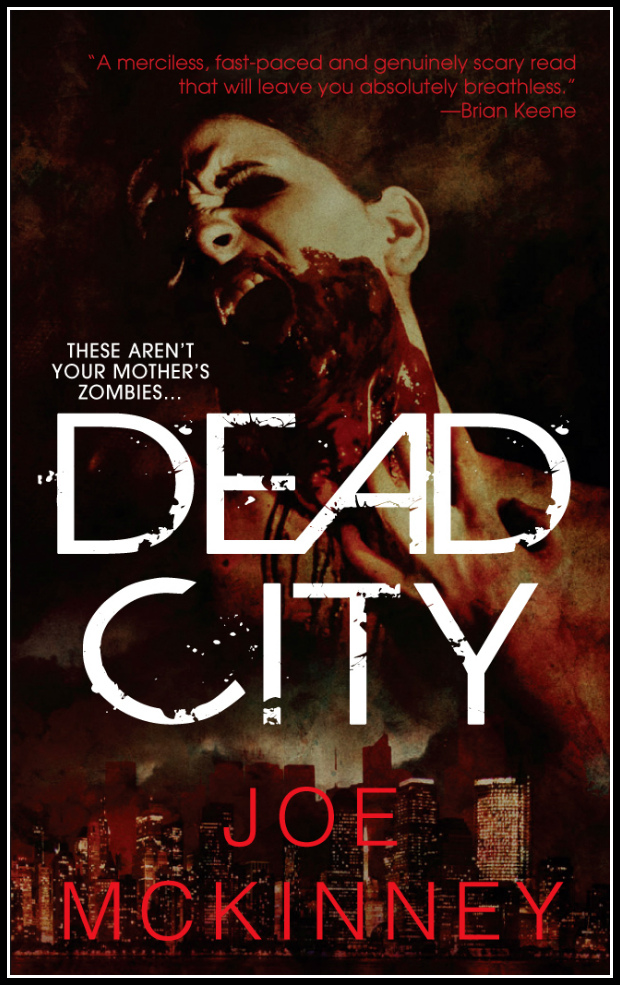
Joe McKinney’s debut novel, Dead City, is quite an impressive piece of writing for a first-timer. It’s doubly impressive for taking the zombie tale and just making it unfold as one long nightmare with little or no prelude or wasted exposition about what led up to it. McKinney’s novel is not overlong or full of filler chapters that does nothing but try to extend the telling of the tale far longer than necessary.
Dead City is not too different from many of the zombie novels and stories that continues to see a renaissance of sorts these past couple years. McKinney takes a more novel approach in his setting by using the hurricane disasters which plagued the Gulf from Katrina and onwards. It is during the aftermath of a series of non-stop super hurricanes hitting the Texas Gulf Coast where we meet the main protagonist of this novel. Eddie Hudson is a police officer in the San Antonio Police Department who we see balancing the problems he’s having with his wife with that of the devastation left by the passing of the major hurricanes over San Antonio. The action and horror begins pretty quickly as Hudson and his partner for the night head off to a disturbance call in one of San Antonio’s neighborhoods. What they encounter at the scene is one they’ve not been trained for. Confusion and lack of relevant knowledge to combat the newly zombified citizens of San Antonio leads to disaster for Hudson and the rest of his police and emergency services brothers.
McKinney does a great job of showing the confusion and disbelief Hudson goes through as a real-life horror film comes to life in front of his very eyes. There’s the disbelief in seeing their attackers continue to move towards him and his partner with a focused determination despite being pepper sprayed at point-blank range, then hit by shotgun beanbags then to lethal gunshots to the body. It is only when shot cleanly through the head and thus destroying the brain do their crazed assailants finally stop for good. This revelation comes way too late from most of Hudson’s fellow police officers and he’s left to his own dwindling supplies of ammunition and a vow to get to his own family before the nightmare he’s seen reaches them. Along the way Hudson meets up with other survivors from undocumented workers, a high school teacher and amateur zombie researcher, to other fellow officers who have managed to survive the first few hours of the zombie outbreak.
Throughout Hudson’s attempts to get to his wife and six month-old son, more of the extent of the zombie outbreak makes itself know to Ernie and those who tags along with him as they travel the streets of a devastated San Antonio. McKinney gets high marks from this fan of the zombie genre for not shying away from describing the sort of damage these zombies can do to a human body. The gore quotient in Dead City is quite high and I think one that would satisfy any fan like myself. In fact, I will very much like to see how this novel will look like adapted into a film. The story is pretty simple and a horror road trip through a devastated city with the simple goal of a man trying to find his family amongst all the horror he has seen and still to see.
Dead City is by no means a perfect novel and at times it shows. Characters sometimes have a certain cookie-cutout feel to them. From the gung-ho and adrenaline junkie cop whose wisecracking attitude is suppose to balance out the near-desperation and panic Hudson seems to be in all the time. Then there’s the angry black man whose mistrust of the police makes him blind to the need for cooperation. Some characters seem to be there looking to become a major role in the making then quickly gone thirty pages later under the assault and tearing hands and teeth of the zombies. I think the size and length of the novel may be one reason why characterization on some of the people on the periphery got a bit shortchanged. It doesn’t bring down the overall quality of the story but it does show that this is indeed a debut novel. But with the amount of quality storytelling McKinney was able to put together I am more than confident that this writing style will improve with each successive book.
In the end, Joe McKinney’s Dead City is one roller-coaster ride of a debut horror novel which doesn’t pull its punches. The story never lets up for a moment to give our main protagonist a moment of respite from the dangers around him. Like Officer Ernie Hudson, the reader becomes bombarded with horrific images after horrific images and only until the end to we find the respite and time to relax. I hope McKinney has more tales of the undead ahead of him and that he shares it with those likeminded people who displa the same kind of interest in the black sheep of the monster genre. I very much recommend Dead City to those who enjoy a very good zombie yarn.
“[I am] a new superstition entering the unassailable fortress of forever. I am legend.” – Robert Neville
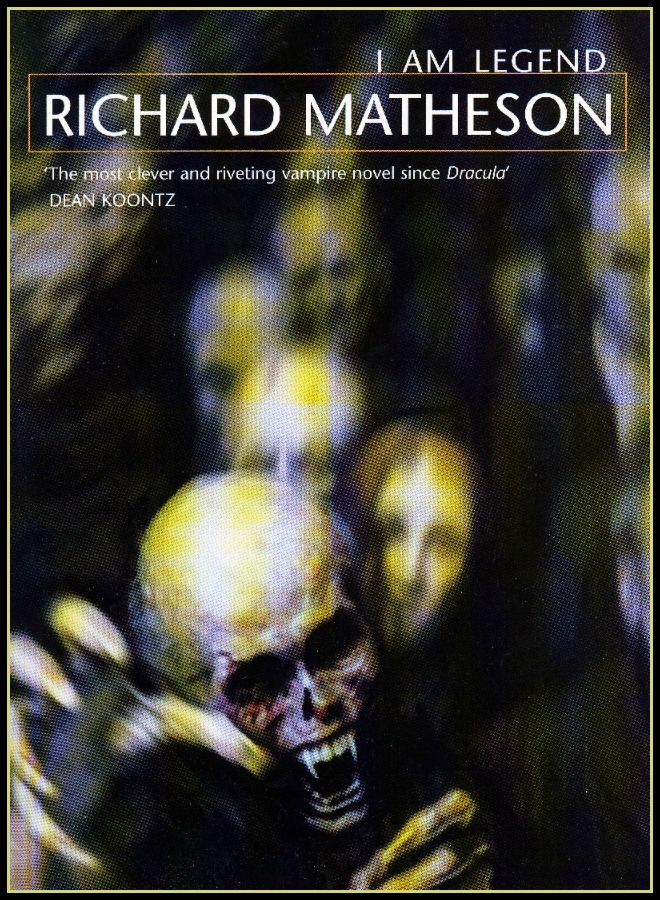
In 1954, Richard Matheson published a novel that would influence so many future generations of science-fiction and horror writers and film directors. Matheson’s body of work prior to 1954 could be summed up as good but nothing too exciting. His work thus far overlapped such pulp genres as horror, science-fiction and fantasy. This style would be the hallmark of his brand of story-telling. It would be in his novel I Am Legend that his unique style of combining different genres that Matheson would have his greatest and most epic work to date.
I Am Legend takes the vampire tale and brings it out of the shadows and darkness, so to speak. Set in the late 1970’s, I Am Legend begins its tale with humanity pretty much on the quick path to extinction due to a pandemic where the bacterium or virus involved caused symptoms very similar to what folklore had called vampirism. The protagonist of this tale was one Robert Neville. An unassuming man living in a Los Angeles suburban neighborhood who might just be the only living human being, or at least the only un-infected one, on the face of the planet. Neville’s been reduced to a day-to-day routine of defending his fortified home from the vampire-like infected humans who’ve tried attacking him and his home once night falls. This routine has become so ingrained in Neville that it starts him on a downward spiral to utter despair. He knows that he might just be the only human left and the prospect of such an idea almost becomes too much for his psyche. It’s this growing despair which gradually causes Neville to make little mistakes in his routine that puts him in greater levels of danger from those turned who see him as nothing but cattle.
His attempts to solve the mystery of why he’s the only one not affected by the disease becomes his way of keeping himself sane. Neville’s work in trying to find the answer leads him to take chances in keeping a vampire survivor alive and bound instead of just killing it outright. His experiments ranges from disproving the myths surrounding the vampire creature and acknowledging the scientific and/or psychological explanations to certain behavioral traits of these nocturnal creatures.
Neville’s studies on captured vampires tell him why certain things like garlic and sunlight causes such an extreme reaction on these creatures. Why do they have a certain invulnerability towards bullets but not a stake through the heart is one question he tries to answer through his research. He even surmises that the vampires aversion to crucifix was more psychological than anything supernatural. Neville arrives at this after observing a vampire’s reaction to a Star of David was similar to the reaction of another one towards the crucifix.
It’s events such as these which puts I Am Legend in a category all by itself. It still uses themes of horror which the vampires fulfill to great effect, but it also does a great job of taking the vampire tale out of the supernatural realm and into the scientific and logical. Neville’s attempts to keep himself sane, as his loneliness begin to weigh on his psyche and health, through these studies and experiments adds a level of the science-fiction to this tale. It’s the combination of these two genres which makes I Am Legend such an epic tale in scope yet it’s not that which gives the tale its heaviest impact. It’s Neville himself, more to the point, his desperate situation of being the last man on earth weighing on his mind. This tone gives this apocalyptic vampire tale such an intimate feel that the reader hopes and wishes for some sort of peaceful end to Neville; better yet, some hope that he might find clues that he might not be the last.
As the story moves forward, the line between who is human, who is monster and who is the true survivor become blurred as Neville’s forays into the city for supplies lead him to a community of others who have not succumbed to the monstrous effect of the pandemic. It’s this discovery that gives Neville a semblance of hope which momentarily lifts the heavy weight of inevitability from his mind. But not everything is at it seems at first glance. Neville finds this out as his encounters with this thriving community continue to give him more and more insight as to how they’ve survived. The climactic end to this tale has become such a classic ending that any other resolution wouldn’t have worked. The end worked as the best possible ending to Matheson’s tale. It also gives the books title a deeper and more profound meaning to it.
I Am Legend will continue to go down in literary history as one of the best examples of fantastic literature. It’s seemless blending of horror, science-fiction and the apocalyptic gives the tale both an epic and intimate feel and tone. It’s not wonder the very themes and premise of this story has influenced such horror writers and filmmakers as Stephen King (The Stand, Salem’s Lot) and George A. Romero (Night of the Living Dead, Dawn of the Dead, Day of the Dead). I Am Legend takes the vampire tale out of the shadows and darkness it usually in habits and brings it out to the light of science and logic with surprising results. A true classic piece of writing from Richard Matheson and one that still stands as the benchmark for apocalyptic tales.
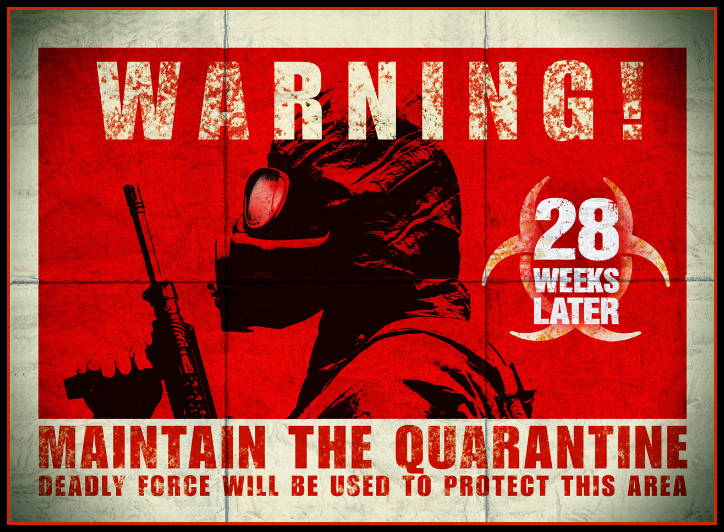
Danny Boyle and Alex Garland’s 28 Days Later was made in such a way that any sequel was almost destined to struggle in its shadow. Their film was not only one of the most influential horror films of the early 2000s, but also an exercise in experimental filmmaking and cinematic reinvention. It fused realism and terror through its digital photography, unconventional pacing, and minimalist score. Any follow-up would have to contend not just with its fresh twist on the zombie mythos (despite the infected not technically being zombies) but also its unique atmosphere, music, and stripped-down aesthetic. Against those odds, 28 Weeks Later manages to stand as an impressive and worthy successor—one that in some respects even surpasses the original.
Spanish director Juan Carlos Fresnadillo approaches the material with a clear reverence for Boyle and Garland’s vision while imprinting his own stylistic and emotional signature on the sequel. From the very first scene, Fresnadillo establishes a tone that blends despair and dread with human frailty. The film opens on a stunningly tense prologue in which Don (a gaunt and haunted Robert Carlyle) and Alice (Catherine McCormack) are living with several others in a rural cottage outside London during the first weeks of the Rage virus outbreak. In this sequence, Fresnadillo distills the central moral dilemma that runs through both films: whether to preserve one’s humanity through compassion or to surrender to pure survival instinct. When Don is forced to choose between rescuing his wife and saving himself, his decision—while horrifying to watch—feels horribly plausible. The following chase through open fields as he flees dozens of Rage-infected attackers captures the raw panic that made Boyle’s original so memorable, yet Fresnadillo shoots it with a sharper sense of chaos and movement. It sets the tone for a story that is both intimate in its human tragedy and apocalyptic in its reach.
Following this intense opening, the film transitions through an introductory credits montage that fills in the aftermath. Don’s escape was not the end of the story but the beginning of a grim reconstruction effort. The British Isles, we are told, were swiftly quarantined when it became clear the infection could not be contained. Twenty-eight weeks later, with the infected population presumed dead from starvation, a U.S.-led NATO force spearheads an ambitious effort to repopulate and rebuild. Led by General Stone (played with austere calm by Idris Elba), the military has converted London’s Isle of Dogs into a heavily fortified safe zone. This enclave represents both restoration and repression—a fragile bubble of civilization built atop the bones of horror.
Within this environment lives Don, now employed as a maintenance manager and struggling to suppress the guilt from his past. The arrival of his two children, Tammy (Imogen Poots) and Andy (Mackintosh Muggleton), who were abroad in Spain during the initial outbreak, reopens emotional wounds he had hoped were sealed. Their reunion, though heartfelt, carries an undercurrent of deception. Don’s explanation of their mother’s fate does not align with what the audience has already witnessed. This dishonesty propels the children into dangerous territory when they decide to sneak out of the Green Zone to retrieve personal belongings from their old cottage. While this act of recklessness fits with youthful impulses and emotional longing, it also feels like the film’s only contrived lapse in logic—an inevitable but frustrating horror trope that sets off the story’s next catastrophe.
What the children discover at the cottage reintroduces the virus in a shocking way. Without realizing it, they bring the Rage infection back into the supposedly secure refuge of London. As soon as containment is broken, the military response escalates with brutal efficiency. General Stone declares a “Code Red,” authorizing the use of extreme measures to eradicate the infected—including indiscriminate firebombing of civilian areas. These scenes echo not only classic apocalyptic tropes but also resonate as a grim reflection of post-9/11 militarism. Many viewers and critics interpreted this act of mass destruction as allegory for the United States’ War on Terror and the ethical corruption of occupation forces. Fresnadillo’s direction, while hinting at this reading, avoids heavy-handed political critique. His portrayal of military overreaction feels less ideological than tragic—a manifestation of fear, confusion, and the blunt-force nature of institutional power. The armed forces are not villains so much as desperate men trapped in an impossible moral quagmire. As in George A. Romero’s The Crazies, which 28 Weeks Later strongly recalls, the destructive consequences stem not from malice but from the futility of trying to maintain order amid chaos.
Where 28 Days Later focused on a small group of survivors and the intimate erosion of morality under crisis, 28 Weeks Later expands the scale dramatically. Fresnadillo transforms Boyle’s compact nightmare into a large-scale urban apocalypse. The sweeping aerial shots of a deserted London—bridges empty, streets silent—hammer home the desolation. When the city is engulfed in flames and gas clouds during the firebombing sequence, the imagery becomes both terrifying and grimly beautiful, a vision of civilization consuming itself. The sequel’s tone is darker and more nihilistic than Boyle’s film, which allowed a trace of optimism in its ending. Here, even innocence becomes a catalyst for doom: it is the children’s actions, driven by love and loss, that inadvertently reignite the infection and condemn the survivors to another wave of horror. This subversion of the “innocent child” trope underscores Fresnadillo’s bleak worldview—where sentiment and humanity, however noble, can still create destruction.
In several ways, 28 Weeks Later aligns more closely with Romero’s Living Dead films than with Boyle’s original. Though Boyle borrowed some of Romero’s thematic DNA, Fresnadillo fully embraces it. The infected may not be reanimated corpses, but the societal collapse, moral ambiguity, and recurring cycles of violence all trace back to Romero’s legacy. One of the sequel’s most striking qualities is its unflinching pessimism: even individuals acting out of love or duty become agents of devastation. The so-called survivors are reduced to primal instincts—running, hiding, killing—in a landscape where institutional power and human decency dissolve together. Fresnadillo makes the action kinetic without glamorizing it. His camera work, switching between chaotic handheld intensity and precise, panoramic destruction, keeps the viewer off balance, mirroring the unpredictability of the apocalypse itself.
The performances elevate the material beyond genre expectations. Robert Carlyle’s portrayal of Don is both gut-wrenching and terrifying. His character’s transformation—from remorseful father to infected embodiment of pure rage—serves as the film’s emotional and thematic anchor. Imogen Poots, in an early standout role, conveys resilience and vulnerability in equal measure, while Jeremy Renner delivers a strong supporting turn as Sergeant Doyle, the soldier torn between obedience and morality. Their performances, though sometimes confined within the film’s relentless pace, enrich its exploration of guilt, loyalty, and the futility of control.
Despite sacrificing some character depth for momentum, the film’s taut editing and grim atmosphere sustain tension throughout. Fresnadillo’s direction never loses sight of his central message: that humanity’s efforts to rebuild are perpetually haunted by its capacity for self-destruction. Even as the few surviving characters reach supposed safety, the final scenes undermine any hope of resolution. The closing image—infected sprinting through the streets of Paris—reminds viewers that, although the city itself appears intact and bustling in daylight, the Rage virus has now breached mainland Europe. This ending shifts the scale of threat from the quarantined British Isles to the broader continent, making containment and redemption feel like dangerous illusions.
As a sequel, 28 Weeks Later earns its place alongside 28 Days Later by honoring the original’s DNA while pushing its boundaries. It retains the visceral dread and societal commentary but broadens the lens to encompass collective failure rather than individual struggle. Fresnadillo’s approach feels colder and more apocalyptic, transforming the story into a study of fear’s infectious nature—social, political, and biological. While his film might not achieve the same creative purity as Boyle’s indie landmark, it succeeds in redefining the tone, expanding the mythology, and pushing the series toward a darker, more cinematic landscape.
In the end, 28 Weeks Later is both a continuation and an escalation—a relentless, despairing study of human fragility under crisis. Its pacing, performances, and imagery combine to create an experience that’s not only horrifying but profoundly unsettling in its realism. If 28 Days Later showed us the collapse of civilization, its sequel reveals the hopeless struggle to rebuild it. Few horror sequels accomplish that much, and fewer still end with such haunting inevitability.
Act of Valor is a film that I’ve been following for quite a bit now. For those who haven’t already heard about this film the premise is quite simple. It’s a film about a team of Navy SEALs who undergo a mission to stop a terrorist plot against the U.S. It’s a plot that has been done countless of time and not just with Navy SEALs as the protagonists. But with the Navy’s elite special-operations team having been involved in several well-documented events this past year (mainly the operation to find Osama bin Laden and his subsequent killing) they’ve become the go-to special-ops team Hollywood has latched onto.
What separates Act of Valor from other war action-thrillers of the past, present and future is the nature of it’s cast. While the film does have professional actors such as Roselyn Sanchez, Emilio Rivera and Nestor Serrano the ones who make up the SEAL team in the film are actual active duty members of the Navy SEALs. The film also uses actual SEAL team missions which the writer, Kurt Johnstad, had been given access to in order to create the screenplay for the film.
The trailer makes mention that the SEAL team members are real SEALs and they’re also using up-to-date tactics and equipment which every action filmmaker from Kathryn Bigelow to Michael Bay must be drooling to get their hands on. There is one question that will pop up as more and more people are exposed to this film leading up to it’s release.
Will the active duty SEALs be up to the task of actually emoting for the camera when not conducting the very operations in the film they’ve trained for years to perfect?
I guess we will have to wait until the film’s release date on February 17, 2012 to find the answer to that question.

 Through the Shattered Lens