Horror On The Lens: It Conquered The World (dir by Roger Corman)


“Man is a feeling creature, and because of it, the greatest in the universe….”

Hell yeah!  You tell ’em, Peter Graves!

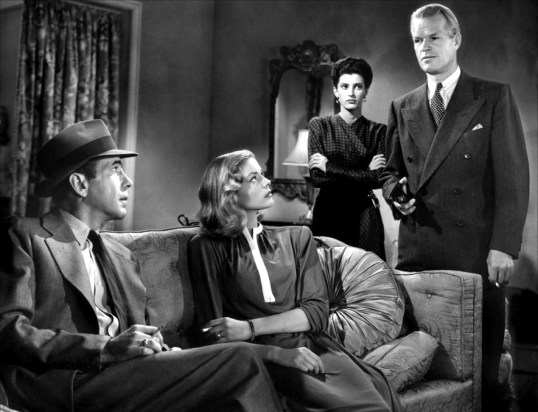
Today’s Horror on the Lens is 1956’s It Conquered The World.  Graves plays a scientist who watches in horror as his small town and all of the people who he loves and works with are taken over by an alien.  Rival scientist Lee Van Cleef thinks that the alien is going to make the world a better place but Graves understands that a world without individual freedom isn’t one that’s worth living in.

This is one of Corman’s most entertaining films, featuring not only Graves and Van Cleef but also the great Beverly Garland.  Like many horror and science fiction films of the 50s, it’s subtext is one of anti-collectivism.  Depending on your politics, you could view the film as either a criticism of communism or McCarthyism.  Watching the film today, with its scenes of the police and the other towns people hunting anyone who fails to conform or follow orders, it’s hard not to see the excesses of the COVID era.

Of course, there’s also a very persuasive argument to be made that maybe we shouldn’t worry too much about subtext and we should just enjoy the film as a 50s B-movie that was directed with the Corman touch.

Regardless of how interpret the film, I defy anyone not to smile at the sight of ultra-serious Peter Graves riding his bicycle from one location to another.

Here, for your viewing pleasure, is It Conquered The World!


October Positivity: The Moment After (dir by Wes Llewellyn)


1999’s The Moment After opens with the world in a panic.  Millions of people have suddenly vanished into thin air, leaving only their clothes and their loved ones behind.  On a news program, three expects are brought in to discuss what might have happened.  A New Age-y woman argues that “Mother Earth” is eliminating overpopulation.  A wild-eyed man argues that people have been abducted by UFOs.  And finally, a man with a neatly trimmed beard argues that it’s the rapture.  The bearded man is dismissed as being a crank.

Two FBI agents — Adam Riley (David A.R. White) and Charles Baker (Kevin Downes) — are assigned to investigate the disappearances.  Charles is himself shaken because he knew a few people who disappeared.  As they drive around the city and talk to people, they hear the same story.  People who went to church regularly and were Christian vanished while their less faithful loved ones watched.  Adam comes to suspect that there might be something to the Rapture Theory.  Charles, bitter because his wife recently suffered a miscarriage, has no time for it.

As often happens in a crisis, the government grows heavy-handed and sinister.  The President announced that he’s going to follow the lead of Europe and “suggest” that everyone get a chip implanted in their hand.  Charles gets the chip without hesitation.  Adam keeps finding excuses to put it off, even though he’s mandated to get one as a federal employee.  With the country turning into an authoritarian dystopia, Charles and Adam are assigned to track down a renegade preacher (Brad Heller), who is telling his followers not to get chipped.

Stories about the end time have always been popular when it comes to faith-based films.  A lot of that is because the Book of Revelations is written in such a way that there’s a lot of different ways that one can interpret it.  As a result, it’s always interesting to see how “the mark of the Beast,” will be represented in these films.  Sometimes, it’s a tattoo.  Sometimes, it’s an invisible mark that only demons can see.  In this one, it’s a chip that works as a credit card.  And while it’s easy to scoff at this film’s conspiracy theories and the shots of people staring at their palms, some of us still remember how, during the COVID lockdowns, there were more than a few people in positions of influence who argued that the citizenry shouldn’t be allowed in stores or restaurants or anywhere else unless they could show proof they had gotten the vaccine and kept up with the boosters.  There were even some who said that the National Guard should go door-to-door and force the shot on people.  (For the record, I did get the vaccine but, when I started hearing about monthly boosters and all that other stuff, I decided that one shot was more than enough for me.)  There is definitely an authoritarian impulse out there, one that comes out whenever there’s a crisis.  One reason why films like this one continue to find an audience is because real-life governments often behave like the dictatorship portrayed in The Moment After.  Of course, in the movie, everyone can at least say they were influenced by the Devil.  In real life, it just comes down to pettiness and a need to tell other people what to do.

As for The Moment After, it’s a low-budget but fairly well-done thriller, one that keeps the preaching to a minimum and doesn’t feature a lot of the problematic elements that one tends to find in movies like this.  White and Downes both give effective performances.  It avoids the histrionics that tend to define a lot of other apocalyptic films.  This is not a film that’s going to convert anyone but it does a good enough job creating an atmosphere of paranoia and growing dread that it works as a thriller.

Late Night Retro Television Review: 1st & Ten 2.1 “The Rookies”


Welcome to Late Night Retro Television Reviews, a feature where we review some of our favorite and least favorite shows of the past! On Wednesdays, I will be reviewing 1st and Ten, which aired in syndication from 1984 to 1991. The entire series is streaming on Tubi.

This week, the 2nd season begins!

Episode 2.1 “The Rookies”

(Dir by Bruce Seth Green, originally aired on August 25th, 1986)

It’s time for another season of Bulls football and …. hey, where did everyone go?

As soon as the opening credits for the first episode of the second season started, I noticed that there were quite a few people missing.  Delta Burke, Reid Shelton, Prince Hughes, and Cliff Frazier were all listed.  However, not listed were Geoffrey Scott, Sam Scarber, Clayton Landey, Ruta Lee, Marshall R. Teague, Michael V. Gazzo, and Robert Miranda.  That’s the majority of the cast!

Instead of Geoffrey Scott’s veteran quarterback Bob Dorsey, we now have Jason Beghe as rookie quarterback Tom Yinessa.  We now have Stan Kamber as assistant coach Fred Griner.  We now have Marcus Allen as rookie running back Rick Lambert.  And, as the veteran running back T.D. Parker, we have …. O.J. SIMPSON!

Oh yeah, this isn’t going to be awkward.

O.J, only appears for a few minutes in this episode.  As T.D. Parker, he talks to his wife about how much he loves playing football and how he feels that he has one more season left in him as the Bulls’s starting running back.  Uhmm …. I thought Carl Witherspoon was the Bulls’s running back.  All last season, Carl was the Bulls’s running back.  What the Hell is T.D. Parker talking about?  Is he delusional?  Maybe he’s a crazed fan who just thinks that he was the running back last year.  All of that said, T.D. does come across as being a very nice guy and definitely someone who you can trust to slash his way through all of the ego and hype surrounding professional football.

(Probably not coincidentally, the other Bulls assistant coach is played by A.C. Cowlings, who was a friend of O.J.’s.  Remember A.C?)

Anyway, this episode deals with rookie training camp.  While the veterans get a week off, rookies like Tom Yinessa try out for the Bulls.  Yinessa played football in the Army and the only reason he’s being given a tryout is because “Captain Pete” is a friend of Denardo’s.  Denardo is shocked to discover that Yinessa is a good quarterback but he’s already got two veteran quarterbacks and Diana has signed a deal to bring in a third.  Denardo is forced to cut Yinessa.  Yinessa smashes the mirror in Denardo’s office and says that he’s done Denardo a favor because now Denardo won’t have to face what’s he done.  Okay, weirdo….

Yinessa returns to his job at the auto yard and Bulls football continues!  While hotshot rookie Rick Lambert continues to ask for more money before he’ll even show up at training camp, Diana is informed that the players are threating to strike if the League institutes mandatory drug testing.  Diana says a strike will bankrupt the team.  Why are the Bulls always on the verge of going bankrupt?  Diana needs to hire better people to look after the books.

Here’s my prediction for the rest of the season!  Yinessa will be back because he’s in the opening credits.  And, whatever problems may come up, O.J. Simpson will always cut right to the heart of the matter.

As for this particular episode, it got the job done.  It re-introduced us to the team and, even more importantly, it seemed to signal that all of the nonsense from the first season — the Mafia, Diana’s ex-husband and all the rest of it — was over with.  The show is ready to move on so let’s give it more of a chance than Coach Denardo gave Tom Yinessa.

A Horror Blast From The Past: Suspense (dir by Lois Weber and Phillips Smalley)


Suspense is a ten-minute blast from the past that comes to us all the way from 1913.

In this film, the Woman (played by Lois Weber) and her baby are menaced by the Tramp (Sam Kaufman), a sinister figure who cuts her phone lines and breaks into her home.  While the Woman tries to protect herself, the Husband (Val Paul) rushes home to save his wife.

Suspense was one of the first thrillers and it introduced many elements that are still used to today, including the cut phone lines and the isolated location.  This was also one of the first films to use the split screen as a narrative technique.  There are many modern horror films that owe a debt to Suspense, whether the filmmakers realize it or not.

Suspense was written and directed by Lois Weber, who is widely acknowledged as being America’s first female filmmaker.

Horror on TV: Hammer House of Horror #13: The Mark of Satan (dir by Don Leaver)


Tonight, we have the final episode of Hammer House of Horror and it is a macabre one indeed!  A morgue attendant (Peter McEnery) becomes obsessed with both the number nine and a recently deceased neurosurgeon who died after trying to drill a hole in his own head in an attempt to let out all of his evil thoughts.  McEnery finds himself becoming consumed by disturbing thoughts as well.  Is he going mad or is he somehow seeing what no one else can see?  This episode is effectively creepy and not for the squeamish.

It originally aired on December 6th, 1980.


The TSL Horror Grindhouse: The Dunwich Horror (dir by Daniel Haller)


Look at me/I’m Sandra Dee….

First released in the groovy and psychedelic year of 1970, The Dunwich Horror stars Sandra Dee as Nancy, an somewhat innocent grad student at Massachusetts’s Miskatonic University.  When the mysterious Wilbur Wheatley (Dean Stockwell) comes to the university and asks to take a look at a very rare book called The Necronomicon, Nancy agrees.  She does so even though there’s only one edition of The Necronomicon in existence and it’s supposed to be protected at all costs.  Maybe it’s Wilbur’s hypnotic eyes that convince Nancy to allow him to see and manhandle the book.  Prof. Henry Armitage (Ed Begley) is not happy to see Wilbur reading the book and he warns Nancy that the Wheatleys are no good.

Nancy still agrees to give Wilbur a ride back to his hometown of Dunwich.  She finds herself enchanted by the mysterious Wilbur and she’s intrigued as to why so many people in the town seem to hate Wilbur and his father (Sam Jaffe).  Soon, she is staying at Wilbur’s mansion and has apparently forgotten about actually returning to Miskatonic.  She has fallen under Wilbur’s spell and it soon becomes clear that Wilbur has sinister plans of his own.  It’s time to start chanting about the Old Ones and the eldritch powers while naked cultists run along the beach and Nancy writhes on an altar.  We are in Lovecraft county!

Actually, it’s tempting to wonder just how exactly H.P. Lovecraft would have felt about this adaptation of his short story.  On the one hand, it captures the chilly New England atmosphere of Lovecraft’s work and it features references to such Lovecraft mainstays as Miskatonic University, the Necronomicon, and the Old Ones.  As was often the case with Lovecraft’s stories, the main characters are students and academics.  At the same time, this is very much a film of the late 60s/early 70s.  That means that there are random naked hippies, odd camera angles, and frequent use of the zoom lens.  The film makes frequent use of solarization and other psychedelic effects that were all the rage in 1970.  Lovecraft may have been an unconventional thinker but I’m still not sure he would have appreciated seeing his fearsome cult transformed into a bunch of body-painting hippies.

Really, the true pleasure of The Dunwich Horror is watching a very earnest Sandra Dee act opposite a very stoned Dean Stockwell.  Stockwell was a charter member of the Hollywood counterculture, a friend of Dennis Hopper’s who had gone from being a top Hollywood child actor to playing hippie gurus in numerous AIP films.  As for Sandra Dee, one gets the feeling that this film was an attempt to change her square image.  When Wilbur tells Nancy that her nightmares sound like they’re sexual in origin and then explores her feelings about sex, Nancy replies, “I like sex,” and it’s obviously meant to be a moment that will make the audience say, “Hey, she’s one of us!”  But Sandra Dee delivers the line so hesitantly that it actually has the opposite effect.  Stockwell rather smoothely slips into the role of the eccentric Wilbur.  Wilbur is meant to be an outsider and one gets the feeling that’s how Stockwell viewed himself in 1970.  Sandra Dee, meanwhile, seems to be trying really hard to convince the viewer that she’s not the same actress who played Gidget and starred in A Summer Place, even though she clearly is.  It creates an oddly fascinating chemistry between the two of them.  Evil Wilbur actually comes across as being more honest than virtuous Nancy.

Executive produced by Roger Corman, The Dunwich Horror is an undeniably campy film but, if you’re a fan of the early 70s grindhouse and drive-in scene, it’s just silly enough to be entertaining.  Even when the film itself descends into nonsense, Stockwell’s bizarre charisma keeps things watchable and there are a few memorable supporting performances.  (Talia Shire has a small but memorable roll as a nurse.)  It’s a film that stays true to the spirit of Lovecraft, despite all of the hippies.

October Hacks: The Unnamable (dir by Jean-Paul Ouellette)


1988’s The Unnamable takes place in the type of small, superstitious town that H.P. Lovecraft made famous in his stories.  (The Unnamable is loosely based on Lovecraft’s work.)

The students at Miskatonic University are fascinated by the stories that surround the old Winthrop place, a mansion where, 100 years ago, Joshua Winthrop’s wife supposedly gave birth to a hideous monster that proceeded to kill Joshua and all of his servants.  It is said that the mansion is still haunted, perhaps by the ghost of Joshua or maybe by the monster itself!  The students regularly dare each other to stay at the old Winthrop Place.  Joel (Mark Parra) accepts the dare and vanishes, worrying his friends Howard Damon (Charles Klausmeyer) and Randolph Carter (Mark Kinsey Stephenson).  While Howard is a skeptic about the supernatural, Carter is a dedicated student and he’s obsessed with what might be found within the Winthrop house.

Meanwhile, two frat boys (Eben Ham and Blane Wheatley) convince Wendy (Laura Albert) and Tanya (Alexandra Durrell) to come hang out with them for the night in the Winthrop House.  The frat boys claim that it’s an annual initiation that all new students go through.  For the most part, the frat boys just want to get laid.  One of them even drapes a sweater over his shoulders.  Since when has anyone wearing a sweater that way turned out to be a good guy?

Of course, it turns out that Winthrop House is haunted and soon, heads are rolling (literally) and blood is being spilled.  While the frat boys and the girls fight for their lives, Howard and Carter break into the mansion to see if they can find their missing friend Joel.  Of course, Carter is immediately distracted by the mansion’s collection of ancient texts and hidden tunnels.  Howard, on the other hand, just wants to save Wendy’s life and prove that he’s as good as any sweater-draping frat boy.

The Unnamable is fairly low-budget affair, one that mixes the slasher genre with Lovecraft’s chilly horror.  It works surprisingly well.  The house is a wonderfully atmospheric location.  The monster, when it finally makes its appearance, is frightening and very Lovecraftian.  In fact, the monster feels as if could have wandered over from Stuart Gordon’s Castle Freak.  (The Unnamable probably would never have been made if not for the success of Gordon’s Re-Animator.)  The gore is plentiful and, at times, disturbingly convincing.  The main thing that makes The Unnamable work as well as it does is that the cast is surprisingly game and they attack their stereotypical roles with a likable enthusiasm.  Nobody coasts on the fact that the film is just a “horror movie” or just as “slasher flick.”  The characters may not have much depth but the cast still does a good job of bringing them to life (and death).  I especially liked the performance of Mark Kinsey Stephenson as Randolph Carter.  Randolph Carter, of course, is a name that should be familiar to most Lovecraft readers and Stephenson is a delight as he ignore the chaos around him so that he can check out the mansion’s library.  While the film definitely takes some liberties with Lovecraft, Stephenson is still the ideal Carter.

The Unnamable was an enjoyably macabre surprise.

Retro Television Review: The Love Boat 6.22 “Abby’s Maiden Voyage/He Ain’t Heavy/I Like To Be In America”


Welcome to Retro Television Reviews, a feature where we review some of our favorite and least favorite shows of the past!  On Wednesdays, I will be reviewing the original Love Boat, which aired on ABC from 1977 to 1986!  The series can be streamed on Paramount Plus!

Love, life’s sweetest reward….

Episode 6.22 “Abby’s Maiden Voyage/He Ain’t Heavy/I Like To Be In America”

(Dir by Jerome Courtland, originally aired on February 26th, 1983)

When Abby (Mary Beth McDonough) boards the boat, her best friend (Constance Forslund) informs Julie that this cruise will be Abby’s “first time.”  She may be setting sail a virgin but she won’t be returning one.  Julie is too coked up to care.  Abby meets Neil (Brodie Greer), who is handsome and nice but, whenever they start to fool around, Abby starts laughing and the mood is killed.  At the end of the voyage, Abby is still a virgin but she and Neil are now a couple.

Spoiled high school grad Jimmy (Michael J. Fox) boards the boat with his adoptive parents (Don Porter and Barbara Billingsley) and almost immediately makes an enemy out of a waiter named Greg (Gregg Henry).  We’ve never actually seen Greg on the show before but Isaac acts as if Greg has been working on the boat forever.  Jimmy later realizes that Greg is his older brother, the one who he hasn’t seen since their parents died and Jimmy was adopted.  At first, Greg refuses to accept that Jimmy is his brother but, by the end of the cruise, they embrace.  Awww!  Actually, considering that Gregg Henry and Michael J. Fox look absolutely nothing alike, I can understand why Greg had his doubts.  That said, if he’s been on the boat for as long as this episode implies, Greg has surely seen another long-lost siblings just happen to find each during a cruise.  It happens at least once every season.

Speaking of once every season, it’s time for April Lopez (Charo) to take her annual voyage.  Though April is returning to Mexico, she wants to become an American citizen.  Good for her!  America rocks!  Unfortunately, she struggles with the oral exam.  Judge Kramer (Esther Rolle) realizes that April will be able to remember the answers if she sings them so she gives April the examination while April is performing in the Acapulco Lounge.  The audience loves it because who doesn’t love paying money for an expensive cruise just so you can spend the final night watching someone take a citizenship exam.

(For the record, in high school, I tutored one student who was about to take his exam because he was like really hot but he couldn’t remember how many years were in a Congressional term.  I taught him to think of it as 2-4-6.  Two for the House.  4 for the President.  6 for the Senate.  He became a citizen and sent me flowers and then he moved to Idaho.)

This week’s cruise was a bit bland but I’m glad April became a citizen of the greatest country in the world.

Horror Scenes That I Love: Vincent Price Plays With A Skeleton From The House On Haunted Hill


Today’s horror scene is a classic moment from today’s horror on the lens, 1959’s The House on Haunted Hill! 

One of the joys of this film is definitely watching Vincent Price having a lot of fun with that skeleton.

Horror Film Review: Dark Heritage (dir by David McCormick)


1989’s Dark Heritage deals with the aftermath of a violent thunderstorm in Louisiana.

After the thunder has rumbled and the lightning has flashed and all of the rain has fallen, several dead bodies are discovered in the wilderness near a mansion.  Why are the bodies out there?  How did they end up dead?  Are they connected to the reclusive Dansen clan, a once notorious family that may not even exist any more?  Bearded reporter Clint Harrison (Mark LaCour) is sent to find out!

Dark Heritage is an example of one of my favorite genres, the low-budget regional horror film.  Dark Heritage not only takes place in Louisiana but it was also filmed in Louisiana with a cast that spoke in genuine Louisiana accents.  It wouldn’t surprise me to learn that the majority of the crew was from the state as well.  This is not one of those films where the South is represented by the mountains of California.  That brings a certain amount of authenticity to the production and that authenticity can make up for a lot.  This film captures the true atmosphere of Louisiana at its most humid and gothic and there aren’t any yankees around to ruin everything.  That’s always nice.

At the same time, Dark Heritage also wears its low-budget on its sleeve.  Sometimes, it’s effective.  A sepia-clad vision of a ghostly member of the Dansen clan entering the mansion and motioning for the reporter to follow him is far more effective than it has any right to be.  The horror genre is one of the few genres that actually benefits from grainy cinematography and dark lighting.  There are other times when the amateurishness of the production is definitely a distraction.  A scene towards the end where a man threatens Clint with a gun is so overacted by everyone involved that it actually becomes rather humorous to watch.  If the most intense scene of your horror film inspires laughter instead of a racing heart, it’s definitely a problem.

The film itself is loosely based on H.P. Lovecraft’s The Lurking Fear.  Just as with the original story, we get an extended sequence of an underground chamber that is full of some genuinely creepy monsters.  That said, the film’s plot is often not that easy to follow, both because of the illogical actions of the characters and also some genuinely poor sound recording that makes it difficult to follow the conversations.  This is a film where Clint first goes to the mansion with two companions.  When those companions disappear, Clint is told that he is now a murder suspect.  Clint’s reaction is to go find someone else to return to the house with him.  Surely he knows that if that person also dies while visiting the house, he’ll look even more guilty.  I mean, that would only make sense, right?  Why not just stay away from the house?

Dark Heritage has a lot of atmosphere and it even manages to give us a few memorable and creepy visuals.  That said, it’s ultimately done in by its low-budget and its often incoherent plot.