Lisa Watches An Oscar Nominee: Auntie Mame (dir by Morton DaCosta)


Oh Lord, Auntie Mame.

There were two reasons why I watched the 1958 film Auntie Mame.

First off, as I’ve mentioned before, TCM has been doing their 31 Days of Oscar this month.  They’ve been showing a lot of films — both good and bad — that were nominated for best picture.  Since it’s long been my goal to see and review every single film that has ever nominated for best picture, I have made it a point to DVR and watch every best picture nominee that has shown up on TCM this month.  Auntie Mame was nominated for best picture of 1958 and was broadcast on TCM this month so I really had no choice but to watch it.

My other reason for wanting to see Auntie Mame was because, when I was 19, I was cast in a community theater production of Mame.  (Mame, of course, is the musical version of Auntie Mame.)  Though everyone who saw the auditions agreed that I should have played the role of Gloria Upson, I was cast in the ensemble.  (Gloria was played by the daughter of a friend of the director.  Typical community theater politics.)  As a member of the ensemble, I didn’t get any lines but I still had fun.  In the opening party scene, I dressed up like a flapper and I got to show off my legs.  And then in another scene, I was an artist’s model and I got show off my cleavage.  (If you don’t use being in the ensemble as an excuse to show off what you’ve got, you’re doing community theater wrong.)  Towards the end of the play, I appeared as one of Gloria’s friends and whenever she delivered her lines, I would make sure to have the most over-the-top reactions possible.  She may have stolen the part but I stole the scene.  It was a lot of fun.

But, even while I was having fun, I have to admit that I didn’t care much for Mame.  It was an extremely long and kind of annoying show and there’s only so many times you can listen to someone sing We Need A Little Christmas before you’re tempted to rip out the hair of the actress who stole the role of Gloria Upson from you.

So, when I recently sat down and watched Auntie Mame, I was genuinely curious to see if the story itself worked better without everyone breaking out into song.  After all, Auntie Mame was the number one box office hit of 1958, it was nominated for best picture, and it was apparently so beloved that it inspired a musical!  There had to be something good about it, right!?

Right.

Auntie Mame tells the story of Mame Dennis (Rosalind Russell, attempting to be manic and just coming across as hyper) who is rich and quirky and irrepressibly irresponsible.  When her brother dies, Mame suddenly finds herself entrusted with raising his son, Patrick (played, as a child, by the charmless Jan Hadzlik and, as an adult, by the stiff Roger Smith).  Mame is a wild nonconformist (which I suppose is easy to be when you’ve got as much money as she does) and she tries to teach Patrick to always think for himself.  However, once Patrick grows up and decides that he wants to marry snobby Gloria Upson, Mame decides maybe Patrick shouldn’t think for himself and goes out of her way to prevent the wedding.

Auntie Mame is an episodic film that follows Mame as she goes through a series of oppressively zany adventures.  When the Great Depression hits, she’s forced to work as an actress, a saleswoman, and a telephone operator and she’s not very good at any of them.  She does eventually meet and marry the wealthy Beauregard Jackson Pickett Burnside (Forrest Tucker).  As you can probably guess from the man’s name, he’s supposed to be from the south.  (And yet Tucker plays the role with a western accent…)  He loves Mame but then he ends up falling off a mountain.  So much for Beau.

(In the production of Mame that I appeared in, Beau was played by this 50 year-old guy who simply would not stop hitting on me and every other girl in the cast and who was always “accidentally” entering the dressing room while we were all changing.  Whenever Mame mentioned Beau’s death, all of us ensemble girls would cheer backstage.)

Anyway, as a film, Auntie Mame doesn’t hold up extremely well.  I can understand, to an extent, why it was so popular when it was first released.  It was an elaborate adaptation of a Broadway play and, in 1958, I’m sure that its theme of nonconformity probably seemed somewhat daring.  When you watch it today, though, the whole film seems almost oppressively heavy-handed and simplistic.  It’s easy to embrace Mame’s philosophy when everyone else in the film is essentially a sitcom creation.

As I mentioned previously, Auntie Mame was nominated for best picture.  However, it lost to the musical Gigi.

Lisa Reviews An Oscar Nominee: Imitation of Life (dir by John M. Stahl)


Louise Beavers and Fredi Washington in Imitation Of Life

Louise Beavers and Fredi Washington in Imitation Of Life

The 1934 film Imitation of Life opens with Delilah Johnson (Louise Beavers) standing on the back porch of a house owned by widowed mother Bea Pullman (Claudette Colbert).  Delilah says that she’s come for the housekeeping position.  Bea tells her that there is no housekeeping position and quickly figures out that Delilah has the wrong address.  As Delilah wonders how she’s going to get to the other side of town in time to interview for the job, Bea hears her toddler daughter falling into the bathtub upstairs.  After Bea rescues her daughter, she agrees to hire Delilah as a housekeeper.

The rest of the film tells the story of their friendship.  It turns out that, because she knows an old family recipe, Delilah can make the world’s greatest pancakes.  Bea decides to go into business, selling Delilah’s pancakes and using Delilah as the product’s mascot.  Soon Delilah’s smiling face is on billboards and she’s known as Aunt Delilah.  When it comes time to incorporate the business, Bea and her partner, Elmer (Ned Sparks), offer Delilah 20% of the profits.  They tell Delilah that they’re all going to be rich but Delilah protests that she doesn’t want to be rich.  She just wants to take care of Bea and help to raise Bea’s daughter.

Delilah, incidentally, is African-American while Bea is white.

Despite the fact that Imitation of Life is considered to be an important landmark as far as Hollywood’s depiction of race is concerned, I have to admit that I was really uncomfortable with that scene.  First off, considering that Delilah was the one who came up with recipe and her face was being used to sell it, it was hard not to feel that she deserved a lot more than just 20%.  Beyond that, her refusal felt like it was largely included to let white audiences off the hook.  “Yes,” the film says at this point, “Delilah may be a servant but that’s the way she wants it!”

It was a definite false note in a film that, up to that point and particularly when compared to other movies released in the 30s, felt almost progressive in its depiction of American race relations.  Up until that scene, Bea and Delilah had been portrayed as friends and equals but, when Delilah refused that money, it felt like the film had lost the courage of its convictions.

However, there’s a shot that occurs just a few scenes afterwards.  Several years have passed.  Bea is rich.  Delilah is still her housekeeper but now the house has gotten much larger.  After having a conversation about Delilah’s daughter, Bea and Delilah walk over to a staircase and say goodnight.  Bea walks upstairs to her luxurious bedroom while, at the same time, Delilah walks downstairs to her much smaller apartment.  It’s a striking image of these two women heading different directions on the same staircase.  But it also visualizes what we all know.  For all of Delilah’s hard work, Bea is the one who is sleeping on the top floor.  It’s a scene that says that, even if it couldn’t openly acknowledge it, the film understands that Delilah deserves more than she’s been given.  It’s also a scene that reminds us that even someone as well-intentioned and kind-hearted as Bea cannot really hope understand what life is truly like for Delilah.

The film itself tells two stories, one of which we care about and one of which we don’t.  The story we don’t care about deals with Bea and her spoiled child, Jessie (Rochelle Hudson).  Jessie develops a crush on her mom’s boyfriend, Steve (Warren William).  It’s really not that interesting.

The other story is the reason why Imitation of Life is a historically important film.  Delilah’s daughter, Peola (Fredi Washington), is of mixed-race ancestry and is so light-skinned that she can pass for white.  Throughout the film, Peola desperately denies being black and, at one point, stares at herself in a mirror and demands to know why she can’t be white.  When Peola goes to school, she tells her classmates she is white and is mortified when Delilah shows up at her classroom.  When Peola gets older, she attends an all-black college in the South but, eventually, she runs away.

When Delilah tracks her daughter down, Peola is working as a cashier in a restaurant.  When Delilah confronts her, she is almost immediately confronted by the restaurant’s owner, who angrily tells her that the restaurant is a “whites only” establishment.  Peola pretends not to know her mother.

Beyond the confrontation between Peola and Delilah, that scene in the restaurant is important for another reason.  It’s the only time that the film provides any direct evidence as to why Peola wants to pass for white.  Oh, don’t get me wrong.  We all know why Peola thinks that society will treat her differently if it believes that she’s white.  (And we also know that she’s right.)  But this scene is the first time that the film itself acknowledges the fact that, in America, a white girl is going to have more opportunities than a black girl.  Up until that point, white audiences in 1934 would have been able to dismiss Peola as just being selfish or unappreciative but, with this scene, the film reminds viewers that Peola has every reason to believe that life would be easier for her as a white girl than as an African-American.  It’s a scene that would hopefully make audiences consider that maybe they should be angrier with a society that allows a restaurant to serve only whites than they are with Peola.  It’s a scene that says to the audience, “Who are you to sit there and judge Peola when you probably wouldn’t even allow Delilah to enter the theater and watch the movie with you?”

Imitation of Life was nominated for best picture of the year and, though it lost to It Happened One Night,  Imitation of Life is still historically important as the first best picture nominee to attempt to deal with racism in America.  (Despite a strong pre-nomination campaign, Louise Beavers failed to receive a nomination.  It would be another 5 years before Hattie McDaniel would be the first African-American nominee and winner for her role as Mammy in Gone With The Wind.  Interestingly enough, McDaniel got the role after Beavers turned it down.)

Following the box office success of Imitation of Life, there were several films made about “passing.”  The majority of them starred white actresses as light-skinned African-American characters.  Imitation of Life was unique in that Fredi Washington, who played Peola, actually was African-American.  As will be obvious to anyone who watches Imitation of Life, Fredi Washington had both the talent and the beauty to be a major star.  However, she was considered to be too sophisticated to play a maid or to take on any of the comedy relief roles that were usually given to African-American performers.  (And, as an African-American, no major studio would cast her in a lead or romantic role.)  As such, her film career ended just three years after Imitation of Life and she spent the next 50 years as a stage performer and a civil rights activist.  (For an interesting look at the history of African-Americans in the film industry, I would suggest checking out Donald Bogle’s Bright Boulevards, Bold Dreams: The Story of Black Hollywood.)  

Like Peola, Washington herself could have passed for white.  She was often asked if she was ever tempted to do so.  I’m going to end this review with the answer that she gave to a reporter from The Chicago Defender:

“I have never tried to pass for white and never had any desire, I am proud of my race. In ‘Imitation of Life’, I was showing how a girl might feel under the circumstances but I am not showing how I felt.  I am an American citizen and by God, we all have inalienable rights and wherever those rights are tampered with, there is nothing left to do but fight…and I fight. How many people do you think there are in this country who do not have mixed blood, there’s very few if any, what makes us who we are, are our culture and experience. No matter how white I look, on the inside I feel black. There are many whites who are mixed blood, but still go by white, why such a big deal if I go as Negro, because people can’t believe that I am proud to be a Negro and not white. To prove I don’t buy white superiority I chose to be a Negro.”

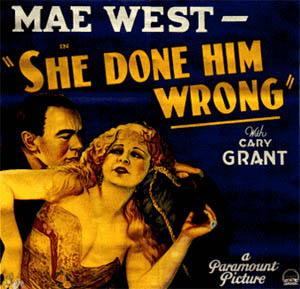
Lisa Reviews An Oscar Nominee: She Done Him Wrong (dir by Lowell Sherman)


She-done-him-wrong

When watching the 1933 film She Done Him Wrong, it helps to know a little something about American history.

It helps to know that the film was made at the tail end of the failed progressive experiment known as prohibition, an attempt to ban liquor in the U.S. which only served to make people idolize criminals and feel nostalgic for the time when you could just safely hang out in a saloon and get drunk with bunch of shady characters.

It helps to know that this film was made at a time when America was struggling through the Great Depression and, more than ever, movies were seen as an escape from reality.  The Depression also created a situation where, much like today, most Americans felt as if they were on the outside of the good life and, as a result, the most successful films of the time deal with outsiders getting something over on the smug and judgmental insiders.

It also helps to know that She Done Him Wrong was one of the last of the pre-Code films.  Though, by modern standards, the film may seem outwardly tame, the innuendo and subtext is anything but.  In fact, She Done Him Wrong was considered to be so racy that some people were actually scandalized when it became the biggest box office success of 1933.  (These were largely the same people who, 13 years before, celebrated the passage of prohibition.)  The infamous production code was largely instituted to make sure that a film like She Done Him Wrong could never be given another chance to corrupt filmgoers.

What exactly made She Done Him Wrong so controversial?

Well, it took place in a saloon in 1890s.  The saloon is owned by Gus (Noah Beery), who uses it as a front for prostitution and counterfeiting.  This is a film that features a lot of people drinking a lot of alcohol and it’s also a film that goes so far as to suggest that having a drink or two is not necessarily the worst thing in the world.  Captain Cummings (Cary Grant) runs a city mission that has opened up next to the bar and the film devotes a lot of time to poking fun at Cummings’s upright morality.  (Of course, Cummings has a secret of his own, one which suggests that his crusading attitude is just a convenient disguise.)  Though it would be repealed by the end of the year, Prohibition was still the law of the land when She Done Him Wrong was released and it’s fun to see how much the film has at the law’s expense.  That’s the type of fun that would basically be banned by the Production Code.

The Production Code would also require that all criminals be punished for their crimes by the end of a film.  In She Done Him Wrong, singer Lady Lou (Mae West) stabs to death the viscous Russian Rita (Rafaela Ottiano) and basically gets away with it.  It’s true that Lou was acting in self-defense but what makes She Done Him Wrong unique (for its time) is that Lou shows no remorse and that the killing is handled rather flippantly.  When the police, who have been searching the saloon for another criminal, burst into the room after Rita has been stabbed, Lou fools them by placing Rita’s corpse in a chair and combing her hair.  (“Haven’t you ever seen anyone comb someone’s hair before?”)  After the police leave, Lou has her bodyguard dispose of the body and Rita is never mentioned again.  Again, this is something that would never be allowed happen under the Production Code.

And then there’s the naked painting of Lou that hangs in the saloon.  Whenever it’s shown a screen, a man in a hat happens to be standing in just the right position to block the viewer from seeing the entire portrait.  Again, this would never have been allowed to happen under the Production Code.

And perhaps the biggest indication that this is a Pre-Code film is Mae West herself.  Reportedly, She Done Him Wrong was an extremely toned down version of West’s stage act but what was heard on-screen would certainly be enough to throw the guardians of decent society into a panic.  Nearly every line that she utters in this film is a double entendre but it’s not only what Mae West says.  It’s the way that she says it.  West may not have been a great actress but she had enough attitude that she didn’t need to be.  With every line, with every glance, with every movement, Mae West announces that she not only has sex but she enjoys it too.  In the Pre-Code days, that was unusual.  Once the Production Code went into effect, such a portrayal would be impossible.

As for the film itself — well, it’s pretty much just an excuse for Mae to be Mae.  There’s a plot, of course.  Lady Lou has many suitors and they all converge on the saloon at the same time.  However, Lou’s got her eye on the upstanding Captain Cummings.  (He’s a man in uniform, after all.)  It’s not a great film by any stretch of the imagination but, if you’re into film history or if you’re curious to see how American social mores have changed (and occasionally, not changed) over the years, She Done Him Wrong is a must see.

She Done Him Wrong is only 66 minutes long and it’s the shortest film to ever receive an Oscar nomination for best picture.  It received no other nominations and lost to Cavalcade.

Lisa Reviews An Oscar Nominee: A Farewell to Arms (dir by Frank Borzage)


220px-Poster_-_A_Farewell_to_Arms_(1932)_01

Reportedly, Ernest Hemingway hated the 1932 film adaptation of his great novel, A Farewell To Arms.  The novel, of course, tells the story of ambulance driver Frederic Henry (played in the film by Gary Cooper), his service in World War I, and his doomed love affair with an English nurse named Catherine (played by the very American Helen Hayes).  The novel was acclaimed for being tough and unsentimental.  The film is the exact opposite, revealing itself to be more typical of the work of director Frank Borzage than Ernest Hemingway.

How romantic was Borzage’s adaptation of A Farewell to Arms?  It was so romantic that it even changed the novel’s famous ending.  The novel ended with Catherine dying and Frederic Henry walking away, alone and in the rain.  The film, however, ended with Catherine miraculously recovering.  Never mind, of course, that having Catherine survive pretty much defeated the entire purpose of the story.  What was important was to give American audiences a happy ending!

However, European audiences got a more downbeat ending.  In the European version, Catherine does die.  After she dies, Frederic picks up her body and looks up into heaven, which is certainly far more dramatic (and, in its way, sentimentally spiritual) than anything to be found in Hemingway’s novel.  If, like me, you see A Farewell To Arms on TCM, you’ll see the European ending.

So, yes, I can understand why Hemingway would have hated this film.  But I have to admit that I rather enjoyed it.  The film adaptation makes for terrible Hemingway but it’s great Borzage.  Borzage specialized in making grand, lyrical, and sweeping romantic melodramas and that’s what his version of A Farewell To Arms truly is.  Helen Hayes may not be convincingly English and Gary Cooper may be a bit overly earnest for a Hemingway hero but they both look good together and they have great chemistry.  (Plus, Adolphe Menjou gives a good supporting performance as Frederic’s best friend.)  As a director, Borzage keeps the story moving at a steady pace and plays up the romance in every single scene.  There’s a great sequence that’s filmed entirely from the wounded Frederic’s point-of-view as he’s brought into a hospital and looked over by a series of officious nurses.  We see everything through Frederic’s eyes until Catherine finally enters the room and kisses him.  Only then do we see Frederic and Catherine together, leaving us with no doubt that these two belong together.  A Farewell To Arms may not be a great literary adaptation but it is a great cinematic romance.

A Farewell To Arms was nominated for best picture but it won to a largely forgotten film called Cavalcade.

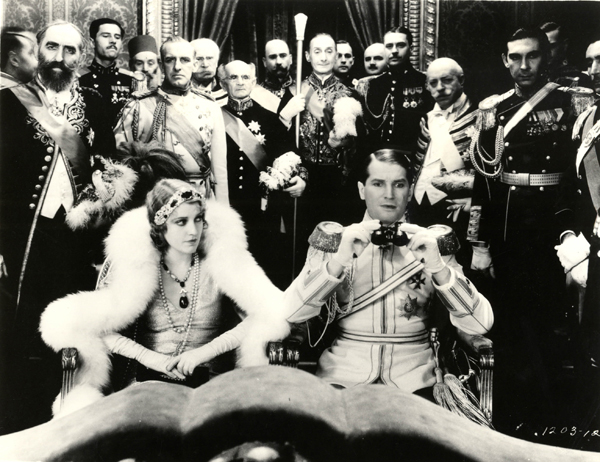
Lisa Reviews An Oscar Nominee: The Love Parade (dir by Ernst Lubitsch)


Love_Parade

Recently, as a part of TCM’s 31 Days of Oscar, I watched the 1929 musical The Love Parade.

Now, I have to admit that this was one of those movies that I started watching with a lot of pre-conceived notions.  While I happen to enjoy movies from all eras, I sometimes have a hard time adjusting to the style of the films that were made in the early days of the sound era.  Often times, it’s obvious that these films were made by directors and actors who were still struggling to make the transition from silent to sound cinema.  As a result, it’s not uncommon for films of this era to come across as being stiff and stagey.

But I needn’t have worried.  While The Love Parade does have its occasionally stagey moments, it actually holds up remarkably well.  For a film that was made 89 years ago, The Love Parade is still a lot of fun and surprisingly entertaining.  It helps, of course, that The Love Parade was made before the adoption of the infamous Production Code and, as such, it’s allowed to show off a racy sense of humor that keeps the film from feeling too dated.

As for the film itself, it deals with Queen Louise (Jeanette MacDonald), the young ruler of the European kingdom of Sylvania.  Despite the fact that Louise is a capable ruler, her subjects worry that she has yet to get married.  When her advisors inform her that she is running the risk of never marrying, Louise dismisses their concerns in a very Pre-Code way.  She lifts up her skirt, shows off her left leg, and says that there’s only one other leg as perfect as her left leg.  She then extends her right leg.  Since I basically do the same thing every single day, that was the moment when I realized that she might be the Queen and I might just be an outspoken redhead but I could still totally relate to Louise.

After showing off her legs, Louise deals with the issue of Count Alfred (Maurice Chevalier), a diplomat at Sylvania’s Paris embassy.  Apparently, Alfred ended up having an affair with every woman at the embassy (including the ambassador’s wife) and he has been recalled to Sylvania.  After reading the details of his sexual exploits, Louise decided that she has to meet Alfred for herself.

(And again, we’re reminded that this is a Pre-Code film.)

Alfred and Louise meet, fall in love, and marry.  However, Alfred has a hard time dealing with the fact that, as Queen, Louise has all the power in their marriage.  Even his attempts to draw up an economic plan are dismissed by the Queen’s advisors.  Feeling emasculated, Alfred sings a song called Nobody’s Using It Now.

Three guess what “it” is.

Can this marriage be saved?  Louise’s maid (Lillian Roth) and Alfred’s servant (Lupino Lane) are determined to make sure that it can be!

If the plot description and my review of The Love Parade sounds in any way similar to my review of The Smiling Lieutenant, that’s because both films were directed by Ernst Lubitsch.  In fact, The Love Parade was Lubitsch’s first sound film and, in many ways, his assured direction here played a huge role in helping Hollywood make the transition from the silents to the talkies.  Both Jeanette MacDonald and Maurice Chevalier give assured (and sexy) performances that hold up well today and the film’s opulent sets and costumes remain a visual delight.  The end result feels like a wonderfully entertaining fairy tale.

The Love Parade was nominated for best picture but it lost to the far more grim All Quiet On The Western Front.  But, regardless of what awards it won or did not win, The Love Parade is a delightful little film that works both as a historical document and a terrifically entertaining musical comedy.

Here’s The Love-Filled Trailer For Equals!


Just in time for Valentine’s Day, here’s the trailer for the upcoming film, Equals!

Kristen Stewart and Nicholas Hoult live in one of those dreary futures where both emotion and flattering clothing have been outlawed.  Despite the law, Kristen and Nicholas fall in love and good for them!  Seriously, the law was made to be broken…

Why should we be hopeful about Equals?  Well, it was directed by Drake Doremus, who did the underrated Like Crazy.

And Here’s The Trailer for The Huntsman: Winter’s War


I was not a huge fan of Snow White and The Huntsman but The Huntsman: Winter’s War — which is apparently a prequel — looks like it might feature a lot of good, over-the-top fun.  How can you not be at least a little bit excited about a film featuring three ass-kicking actresses — Charlize Theron, Emily Blunt, and Jessica Chastain — and Chris Hemsworth?

Check out the trailer below.  The film comes out on April 22nd!

Here’s The Final Trailer for Batman v Superman: Dawn of Justice!


I’ve been pretty open about the fact that I’m not enthusiastic about the upcoming Batman v. Superman: Dawn of Justice film.  Maybe it’s because of how much I absolutely loathed Man of Steel or maybe it’s just because I’m not really a fan of comic book movies in general (with the MCU films being an obvious exception) but it’s just hard for me to imagine Dawn of Justice actually turning out to be that good of a film.

And the first few trailers did little to change my mind.  The whole thing looked overdone and, to me, Ben Affleck looked more than a little silly in his Batman outfit.

But then the final Dawn of Justice trailer was released yesterday and you know what?  The final trailer actually works.  They should have released this trailer first.  In fact, maybe this should have been the only trailer they released.  Because, for the first time, Dawn of Justice actually looks like it could be a reasonably entertaining film.

Watch the trailer for yourself and see what you think!  Batman v Superman: Dawn of Justice will be released on March 25th.

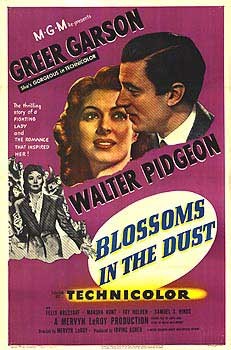
Lisa Reviews An Oscar Nominee: Blossoms In The Dust (dir by Mervyn LeRoy)


Blossoms_dust_movieposterDid you know that up until the year 1936, if a child was born to unwed parents, it was common practice to actually put the word “illegitimate” on that child’s birth certificate?  As you all know, I am perhaps the biggest history nerd in the world and, while I knew that there was once a huge stigma associated with being born outside of marriage, I did not know just how institutionalized that stigma was.

I’m also proud to say that my home state of Texas — the state that all the yankees love to bitch about — was the first state to ban the use of the word “illegitimate” on birth certificates.  This was largely due to the efforts of Edna Gladney, an early advocate for the rights of children.  Along with starting a home for orphans and abandoned children in Ft. Worth, Edna also started one of the country’s first day care centers for the children of working mothers.

That’s right — there was a time when day care was itself a revolutionary concept.

I have TCM to thank for my knowledge of Edna Gladney, largely because TCM broadcast a 1941 biopic called Blossoms in The Dust.  According to Wikipedia, the film was a highly fictionalized look at Edna’s life but, to be honest, I would have guessed that just from watching the movie.  While Blossoms In The Dust gets the important things right (and it deserves a lot of credit for sympathetically dealing with the cultural stigma of being born to unwed parents at a time when it was an even more controversial subject that it is today), it’s also full of scenes that are pure Hollywood.

In real life, Edna knew firsthand about the challenges faced by children of unwed parents because she was one herself.  Apparently, at the time, that was going too far for even a relatively progressive film like Blossoms In The Dust so, in Blossoms, Edna (played by Greer Garson) is given an adopted sister named Charlotte (Marsha Hunt).  When the parents of Charlotte’s fiancée discover that she was born outside of marriage, they refuse to allow Charlotte to marry their son.  In response, Charlotte commits suicide.

In real life, Edna was born in Wisconsin but, following the death of her stepfather, moved to Ft. Worth to stay with relatives.  Edna was 18 at the time and eventually met and married a local businessman named Sam Gladney.  In Blossoms in The Dust, Edna is already an adult when she first meets Sam (played by Walter Pidgeon, who played Greer Garson’s husband in a number of films) and they meet in Wisconsin.  It’s only after Charlotte dies that Edna marries Sam and it’s only after they’re married that Edna moves to Texas.  Whereas the real life Edna had relatives in Texas, the film’s Edna is literally a stranger in a strange land.

That said, the film is actually rather kind to my home state.  The film spend a lot of time contrasting the judgmental snobs up north with the more straight-forward people who Edna meets after she moves to Ft. Worth and it’s occasionally fun to watch.  (Of course, I would probably feel differently if I was from Wisconsin.)

Blossoms In The Dust was nominated for best picture but it lost to How Green Was My Valley.  Greer Garson was nominated for best actress but she lost to Joan Fontaine in Suspicion.  However, just one year later, Garson would win an Oscar for her performance in the 1942 best picture winner, Mrs. Miniver.  Incidentally, her husband in that film was played by none other than Walter Pidgeon.

Ultimately, Blossoms in the Dust is typical of the type of movies that you tend to come across while watching films that were nominated for best picture.  Some best picture nominees were great.  Some were terrible.  But the majority of them were like Blossoms in the Dust, well-made, respectable, and just a little bit bland.  Blossoms in the Dust is not bad but it’s also not particularly memorable.  If, like me,  you’re a student of history and social mores, Blossoms in the Dust has some historical interest but, when taken as a piece of cinema, it’s easy to understand why it’s one of the more forgotten best picture nominees.