4 Shots From 4 Films is just what it says it is, 4 shots from 4 of our favorite films. As opposed to the reviews and recaps that we usually post, 4 Shots From 4 Films lets the visuals do the talking!
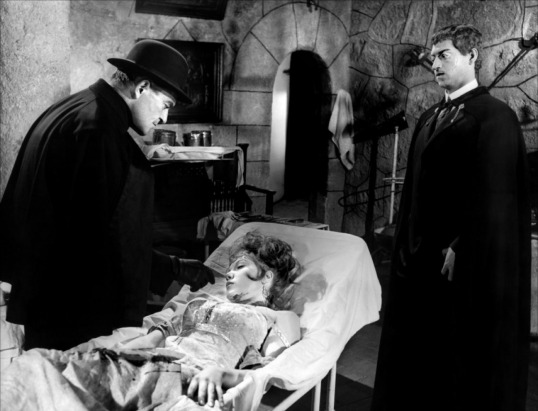
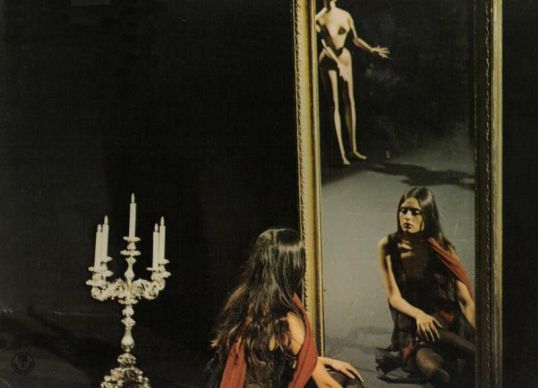
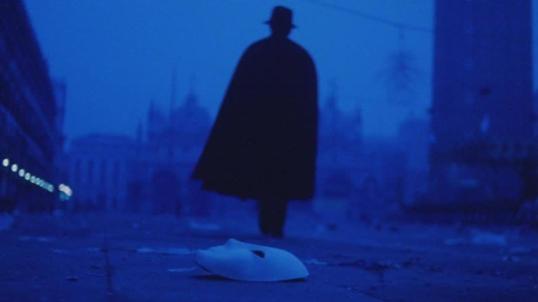
Today is the 90th anniversary of the birth of Jesus Franco! One of the most prolific filmmakers of all time, Franco made movies that …. well, they’re not easy to describe. Jess Franco was responsible for some of the most visually striking and narratively incoherent films ever made. He made films that you either loved or you hated but there was no mistaking his work for being the work of someone else.
I’ve always liked Garbage as a band. Only Happy When It Rains seems like a song that could have been written about me and, of course, Shirley Manson and I are both members of the 2% of the population who were blessed with red hair. Having red hair means that …. well, basically it means that we’re better than everyone else in the world and that’s just the way it goes.
Magnetized appears on Garbage’s 6th studio album, Strange Little Birds. I like this video because it’s creepy and dream-like and I’ve always wanted to have a mad scientist laboratory to hang out in. Not that I would actually want to do anything in the laboratory because that’s not really my thing. I’d just like to have it there as a conversation starter.
Well, here we are at the end of another week. Some parts of the country are still locked down and some are not. It’s a little bit hard to keep track of what’s open and what isn’t. Right now, everyone just seems to be making it up as they go along.
With a lack of new movies to watch and review, I spent most of this week binging The Sopranos. I’m currently on Season 5 and, as of right now, I’m totally caught up in the misadventures of the New Jersey mob. Once I’m done with The Sopranos, I’ll probably check in with the gangsters of Boardwalk Empire and the cowboys of Deadwood. I’m trying to binge as many of these shows as I can before they leave Prime for HBO MAX.
In other news, I finally saw the episode of The Love Boat that features Andy Warhol as a passenger on the cruise! Seriously, I first read about this episode like 13 years ago and, ever since, I’ve been checking the TV listings to see if it would ever show up on any of the retro stations! Today, it was broadcast on MeTV! I saw it and yes, I DVRed it.
Anyway, stay safe out there. Can you believe that, in just another month and a half, we will be halfway through 2020. With the lockdown and all the rest, it almost feels like this year really hasn’t even begun yet.
When I watch this video without the music, my immediate assumption is that it’s about someone who joined a cult and who has just discovered that the leader of the cult is either from outer space or from the future. The video just has that sort of threatening, science fiction feel to it. That said, the song is actually about someone looking back on a breakup that was apparently a long time coming but which she still might not have been emotionally prepared for.
This video reminds me that I need to get a haircut. It also reminds me that a lot of cults like to dress in all white. I’m not sure why but it really does seem to be the popular look for people who are communing with spirits or waiting for aliens.
4 Shots From 4 Films is just what it says it is, 4 shots from 4 of our favorite films. As opposed to the reviews and recaps that we usually post, 4 Shots From 4 Films lets the visuals do the talking!
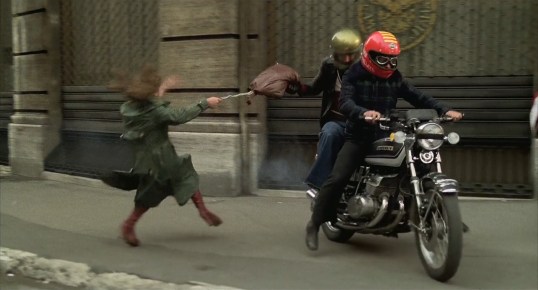
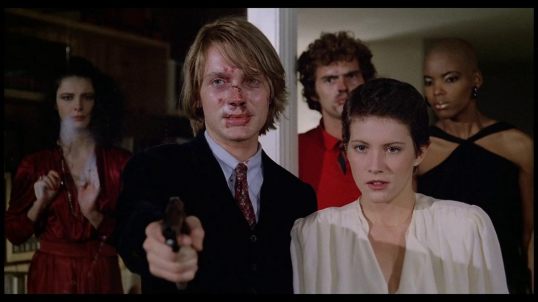
Today is the 81st birthday of the great Italian director, Ruggero Deodato! And that, of course, means that it’s time for….
4 Shots From 4 Films
Live Like A Cop, Die Like A Man (1976, dir by Ruggero Deodato)
The House on The Edge of The Park (1980, dir by Ruggero Deodato)
Raiders of Atlantis (1983, dir by Ruggero Deodato)
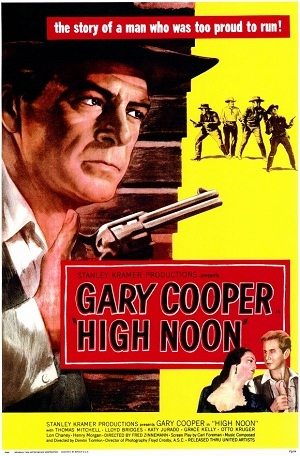
119 years ago today, Gary Cooper was born in Helena, Montana.
Cooper was an actor who, for many viewers, represented the American ideal. He played characters who were strong and modest and who refused to compromise their principles. Though Gary Cooper appeared in many films over the course of his career, he is probably destined to be forever associated with High Noon. In this classic western, Cooper plays Will Kane, the marshal who finds himself abandoned by almost everyone when a group of killers come to town looking to kill him. The film is often seen as being a commentary on the 1950s Red Scare. Cooper, who was a committed anti-Communist and about as conservative as anyone in Hollywood, stood up for the film’s screenwriter, the blacklisted Carl Foreman and threatened to walk off the picture when it appeared that Foreman’s writing credit might be removed. That was what a huge part of Cooper’s appeal. He did the right thing, even if it meant standing up for someone with whom he didn’t agree. There aren’t many Gary Coopers left today, are there?
Below, we have the final scene of High Noon, in which the cowardly townspeople finally come to support Marshal Kane. Kane, disgusted by their actions, can only throw away his star and leave town. Even without dialogue, Cooper lets you know exactly what is going through Kane’s mind. It’s a great scene from a great film featuring a great actor.
Since it’s Orson Welles’s birthday and everyone’s kind of nervous about going outside right now, why not experience the live radio broadcast that panicked America in 1938?
Actually, there’s some debate as to just how panicked America got when they heard the Mercury Theater On The Air’s adaptation of War of the Worlds. There was definitely some panic but there are differing reports on just how wide spread it was. For our purposes, let’s assume that the entire country was terrified at the same time and that everyone was loading up a shotgun and planning to go out and look for aliens. One thing is for sure. With his adaptation of War of the Worlds, Orson Welles managed to invent the whole found footage genre that would later come to dominate horror cinema in the late 90s and the aughts. Every Paranormal Activity film owes a debt to what Orson Welles accomplished with War of the Worlds. We won’t hold that against Orson.
H.G. Wells, the original author of War of the Worlds, and Orson Welles only met once. Interestingly enough, they were both in San Antonio, Texas in 1940. They were interviewed for a local radio station. H.G. Wells expressed some skepticism about the reports of Americans panicking while Welles compared the radio broadcast to someone dressing up like a ghost and shouting “Boo!” during Halloween. Both Wells and Welles then encouraged Americans to worry less about Martians and more about the growing threat of Hitler and the war in Europe.
I’ve shared this before but this just seems like the time to share it again. Here is the 1938 Mercury Theater On The Air production of The War of the Worlds!
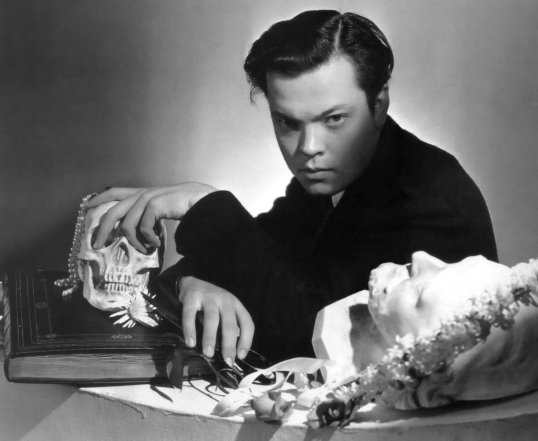
Today is the 105th anniversary of the birth of the great Orson Welles. As those of you who have been reading us for a while know, Orson Welles is a bit of patron saint around here. With this year being the 10th anniversary of the creation of Through the Shattered Lens (and wow, what a year to celebrate that moment, right?), there was no way that we couldn’t pay tribute to Orson Welles on his birthday.
The scene below comes form the 1965 film, Chimes at Midnight. Based on several of Shakespeare’s history plays (Henry IV, Part 1 and Henry IV, Part 2, and also Richard II, Henry V, and The Merry Wives of Windsor), Chimes at Midnight was one of Welles’s dream projects. Though it was initially dismissed by critics, it has since been rediscovered and is now regularly cited as one of the greatest Shakespearean films of all time.
Welles not only directed this film but he also played the key role of Falstaff, the knight who loves good food, good drink, and low company. Falstaff acts as a mentor to Price Hal and, when Hal is finally ready to make his move and assume the throne of England as Henry V, Falstaff supports him. Falstaff believes that Hal will remember his friends once he is king. Sadly, Falstaff turns out to have been far too trusting.
In the poignant scene below, Falstaff greets the newly crowned King Henry V (played by Keith Baxter), just to be coldly rebuffed by his former friend. Now that Henry is king, he no longer has time for the loyal Falstaff. In Shakespeare’s time, this scene was probably meant to reflect that, now that he was king, Henry V was prepared to set aside childish games and devote himself to ruling England. Seen, today, it just comes across as being a betrayal of a good man who deserved better.
It’s a heart-breaking scene. Critic Danny Peary has speculated that, in this scene, Prince Hal/Henry V is a stand-in for every director who Welles mentored in Hollywood who later refused to help Welles when the latter was struggling to get his projects off the ground. Peary may be right because Welles was betrayed by quite a few people during his lifetime. As Welles himself put it, “They’ll love me when I’m dead,” and indeed, it wasn’t until after Welles was dead that his post-Citizen Kane work was truly appreciated.