Great Moments In Comic Book History #36: Marvel Publishes Star Wars #1


As strange as it seems now, the Star Wars comic book series nearly didn’t happen.

In 1975, while Star Wars was still in pre-production, George Lucas approached DC Comics and offered them the chance to adapt his upcoming film into a comic book.  When DC turned Lucas down, Lucasfilm’s publicity supervisor, Charles Lippincott, Jr., took the project to Marvel Comics.

At first, Stan Lee turned down the project because he didn’t want to commit to a series before the film itself had been completed.  (Again, as strange as it sees now, Star Wars was not originally expected to become the commercial hit that it did.)  Lippincott, still trying to set up a series somewhere, then tried to recruit Roy Thomas to write it.  After he was allowed to look at a production sketch of the Cantina scene, Thomas realizes that Star Wars was tailor-made for a comic book adaptation.  Thomas arranged for Lippincott to get a second meeting with Stan Lee and, this time, the comic book adaptation was greenlit.

Allowed to look at an early draft of the script and also to visit the set during shooting, writer Roy Thomas and artist Howard Chaykin collaborated on a six-issue adaptation of the movie.  The series actually came out before the film.  The first issue was released on April 12th, a full month before the movie was released into theaters.  Along with Alan Dean Foster’s novelization, the comic book series play a huge role in publicizing a film that many were expecting to be dismissed as just being a B-movie for kids.

Because no one expected the film or the comic book series to be a huge success, Marvel was able to negotiate a very favorable contract with Lucasfilm, one that Marvel almost complete artistic control over the comic and which also allowed Marvel to use the Star Wars character with no royalty payments until the series sold 100,000 issues.  When the success of the film led to the comic book become the industry’s top seller from 1977 through 1979, the financial windfall saved Marvel from having to file for bankruptcy.

For many future Star Wars fans, their first exposure to characters like Luke Skywalker and Darth Vader came in April of 1977 when they looked at the magazine rack in their local store and saw the now-iconic cover of Star Wars #1.

After reading about how Luke came to own to droids with a secret, readers could then turn to the back cover and learn how to improve their jump shot.

Previous Great Moments In Comic Book History:

  1. Winchester Before Winchester: Swamp Thing Vol. 2 #45 “Ghost Dance” 
  2. The Avengers Appear on David Letterman
  3. Crisis on Campus
  4. “Even in Death”
  5. The Debut of Man-Wolf in Amazing Spider-Man
  6. Spider-Man Meets The Monster Maker
  7. Conan The Barbarian Visits Times Square
  8. Dracula Joins The Marvel Universe
  9. The Death of Dr. Druid
  10. To All A Good Night
  11. Zombie!
  12. The First Appearance of Ghost Rider
  13. The First Appearance of Werewolf By Night
  14. Captain America Punches Hitler
  15. Spider-Man No More!
  16. Alex Ross Captures Galactus
  17. Spider-Man And The Dallas Cowboys Battle The Circus of Crime
  18. Goliath Towers Over New York
  19. NFL SuperPro is Here!
  20. Kickers Inc. Comes To The World Outside Your Window
  21. Captain America For President
  22. Alex Ross Captures Spider-Man
  23. J. Jonah Jameson Is Elected Mayor of New York City
  24. Captain America Quits
  25. Spider-Man Meets The Fantastic Four
  26. Spider-Man Teams Up With Batman For The Last Time
  27. The Skrulls Are Here
  28. Iron Man Meets Thanos and Drax The Destroyer
  29. A Vampire Stalks The Night
  30. Swamp Thing Makes His First Cover Appearance
  31. Tomb of Dracula #43
  32. The Hulk Makes His Debut
  33. Iron Man #182
  34. Tawky Tawny Makes His First Appearance
  35. Tomb of Dracula #49

Music Video of the Day: Johnny B. Goode by Judas Priest (1988, directed by Wayne Isham)


In 1988, Judas Priest became one of the many bands that have covered this classic tune from Chuck Berry.  Their version reached number 64 on the UK Singles chart.

This video was directed by Wayne Isham, who worked with everyone who was anyone in the 80s and 90s.

Enjoy!

Sudden Death (1977, directed by Eddie Romero)


Ed Neilson (Ken Metcalf) is a business executive who just wants to spend the weekend grilling with his family but then a bunch of gunmen show up and, in a surprisingly violent sequence that even shows children being shot in slow motion, massacre his entire family.

Ed barely survives and begs his old friend, a former CIA agent named Duke Smith (Robert Conrad), to find out who murdered his family.  Duke would rather hang out on the beach with his wife (Aline Samson) and daughter (Nancy Conrad) and he refuses to help Ed.  But then Ed gets blown up in his car and Duke and his former partner (Felton Perry) come out of retirement to get justice.  Duke’s investigation leads to a corrupt businessman (Thayer David), a murderous government official (John Ashley, who also produced), and a ruthless hitman (Don Stroud).

Filmed in The Philippines and directed by Eddie Romero, Sudden Death is a violent and brutal thriller with a twisty the plot that is nearly impossible to follow.  It seems like a lot of killing for no particular reason.  The thing that sets Sudden Death apart from other action films is its willingness to violently kill off anyone, regardless of age, gender, or relative innocence.  The 70s was a decade known for downbeat endings but, even by the standards of that decade, Sudden Death‘s ending is shockingly abrupt and bleak.  In the lead role, Robert Conrad shows off the ruthless intensity that made him the most feared of all of the coaches on Battle of the Network Stars.

Originally, the sidekick role was offered to Jim Kelly.  When Kelly dropped out, the role was given to the far more laid back Felton Perry.  I think if Kelly had stayed with the film, it would probably be a cult classic today.  Instead, it’s an obscurity that reminds us of how bleak even exploitation films were in the 70s.

Music Video of the Day: Iron Man by Black Sabbath (2000, directed by ????)


30 years after the song was first released and helped to define heavy metal for a generation, a live version of Iron Man was released, as a single, in 2000 and it brought Black Sabbath its first Grammy nomination.  Appropriately, this video was made during the period of Osbourne’s first reunion with Black Sabbath.  It was filmed over the course of two performances at the Birmingham NEC.

Two years after this video and the band’s first Grammy nomination, The Osbournes would premiere on MTV and, unfortunately in my opinion, Ozzy would become better known as a reality television participant than as a singer.

Enjoy!

Paper Lion (1968, directed by Alex March)


Writer George Plimpton (Alan Alda) is a Park Avenue sophisticate who practices “participatory” journalism.  He has already written about pitching in an exhibition all-star game and getting knocked out by Sugar Ray Robinson.  He is having trouble coming up with his next stunt until he goes to Central Park and plays a touch football game with his girlfriend Kate (Lauren Hutton) and his editor, Oscar (David Doyle).  Oscar sees George throwing the ball and decides that George should write about going to a professional football team’s training camp as a player.

George, who fantasizes about throwing the game-winning touchdown, is enthusiastic.  Most of the teams that George approaches are less enthusiastic but finally, the Detroit Lions agree to sign him as a quarterback.  Once the other players realize that George is a writer and not a professional athlete, there’s a lot of resentment.  As Guard John Gordy (playing himself) puts it, he could easily get injured while protecting an inexperienced quarterback like George.  George can always go back to Park Avenue but, for the rest of the players, the game is their life and they don’t like the idea of some outsider coming in and treating it all like a joke.  At first, only the fearsome defender Alex Karras (also playing himself) is willing to support George but eventually, George’s refusal to give up wins over the rest of the team.  They even let him score a touchdown during practice.

When the preseason begins, George waits for his opportunity to take the field.  How many yards can he lose in three plays?

Paper Lion is based on a true story.  In 1963, George Plimpton did attending training camp and play a scrimmage for the Lions and he later wrote a book about the experience.  The movie changes the time period from ’63 to ’67 so that all of the then-members of the Lions could play themselves.  (Though Karras was a friend of Plimpton’s, he was actually suspended during the 1963 season and, unlike in the movie, never joined Plimpton on the practice field.)  The film plays Plimpton’s football career largely for laughs, celebrating every guy’s fantasy of being a sports star while also showing why it’s probably best to leave the actual game to the professionals.  Alan Alda doesn’t imitate Plimpton’s famous Mid-Atlantic accent but he does capture the excitement of a man getting to live out his fantasy.

Paper Lion was made with the full cooperation of the NFL and a good deal of the film’s final third is made up footage that was shot for an actual game.  Seen today, it’s interesting to see how positively Paper Lion portrays both the game and its players and to contrast it with how the game is usually portrayed today.  There’s no talk of steroids or fears of multiple concussions.  All of the players are clean-cut, friendly, witty, and helpful.  Even the training camp hazing is all done is good fun.  Paper Lion introduces us to the nicest people in the world and they’re all football players!

Music Vide of the Day: Angry Again by Megadeth (1993, directed by Wayne Isham)


Megadeth’s Angry Again was a part of The Last Action Hero soundtrack, which was as acclaimed as the film itself was criticized.  The song was a hit for Megadeth and the video, which featured scenes from the film mixed with the band performing, went into heavy rotation on MTV.

This video was directed by Wayne Isham, who directed several videos for Megadeth and just about every other band that was prominent during the 80s and the 90s.  If you were in a famous band, you probably worked with Wayne Isham at least once.

Enjoy!

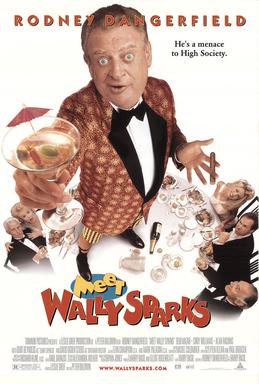
Meet Wally Sparks (1997, directed by Peter Baldwin)


Wally Sparks (Rodney Dangerfield) is a talk show host with a program that is so raunchy that even Jerry Springer says, “At least this isn’t The Wally Sparks Show!”

Despite being a huge hit amongst teens and college students, the show is on the verge of being canceled by the head of the network, Mr. Spencer (Burt Reynolds, wearing a fearsome toupee).  He is tired of Wally’s antics and he tells Wally and his producer, Sandy Gallo (Debi Mazar), that they have a week to make the show respectable.

Wally doesn’t know what to do.  Wally Sparks act respectable?  Wally’s a guy who don’t get no respect, no respect at all.  Then Sandy finds a letter inviting Wally to attend a party at the home of Georgia Governor Floyd Patterson (David Ogden Stiers), a noted critic of the show.  Hoping to get the interview that will save the show, Wally and Sandy head down south.

At the party, Wally acts like Wally and scandalizes all of the politicians and socialites.  He also shares a bottle of whiskey with a horse and then rides the horse through the mansion.  The party is a disaster but, after Wally claims that he can’t walk because of a spinal injury he suffered when he fell off the horse, the Governor allows him to recuperate in the mansion.  Wally causes more chaos while also teaching the Governor’s wife (Cindy Williams) how to play strip poker and eventually exposing a scheme to blackmail the Governor into building  a Confederate-themed amusement park.

Rodney Dangerfield playing a talk show host sounds like a great idea and there are a lot of talented people to be found in Meet Wally Sparks.  Debi Mazar is an actress who should have appeared in a lot more movies and she and Rodney Dangerfield make a good team.  The movie actually gets off to a funny start, with a montage of actual talk show hosts talking about how much they hate Wally Sparks and his show.  Gilbert Gottfried has a cameo as a manic guest and Wally repeats some of Rodney Dangerfield’s classic jokes.

Unfortunately, the movie starts to fall apart as soon as Burt Reynolds threatens to cancel the show for being too lowbrow.  No network executive has ever threatened to cancel a show that’s bringing in the ratings, regardless of how lowbrow it might be.  Things get even worse after Wally goes to Atlanta and ends up staying there.  The movie tries to recreate the Snobs vs. the Slobs dynamic of previous Dangerfield films but the Governor comes across as being such a decent man that there’s no joy to be found in watching his life get turned upside down.  The movie has a surprisingly large number of subplots, including one about Wally’s son (Michael Weatherly) falling for the Governor’s daughter (Lisa Thornhill), but most of them go nowhere and just distract from the man who should have been the film’s main attraction, Rodney Dangerfield.  By the end of the movie, even the usually irrepressible Dangerfield seems to have been neutered.

Rodney Dangerfield was a national treasure but Meet Wally Sparks was not the best showcase for his persona or his style of humor.  Fortunately, Caddyshack and Back To The School are available to watch anytime that we need a good laugh and we want to show Rodney Dangerfield a little respect.

Music Video of the Day: God Save The Queen, covered by Motorhead (2000, directed by Vanessa Warwick and Justin B. Murphy)


In this video, Motörhead covers the classic Sex Pistols song while touring London with the Queen, herself!  Actually, it’s just a lookalike but it’s still interesting how, in just a few years, God Save The Queen went from being a scandalous and dangerous song to being an unofficial anthem of the UK.

For the record, John Lyndon and Glen Matlock have both said that the song was not meant to be an attack on Elizabeth as much as on the idea of spending tax money to support the monarchy.  Sex Pistols guitarist Steve Jones was quoted as saying that the song was not really political but that it was just “a giggle.”

Enjoy!

Belly 2: Millionaire Boyz Club (2008, directed by Ivan Frank)


After being incarcerated for 8 years, G (The Game) is released from prison.  As a condition of his parole, he is told to get a job and not hang out with any of his old criminal associates.

G fails to get a job.

G decides to return to selling drugs with his old criminal associate, Tone (Michael K. Williams).

Soon, G is the third biggest drug dealer in the city.  Corrupt cop Coleman (Ed O’Ross) is working with the Mexican cartel and he wants to take G down.  DEA agent Alexis (Shari Headley) is sent undercover to get evidence on G.  After a montage of the two of them going on romantic walks, having sex, and playing dominoes, they fall in love for real.  Alexis has to decide if she is willing to betray G and G eventually has to decide if he can forgive her for being a cop.

The big problem with this entire scenario is that G is on probation so he could be arrested and sent back to jail at any time, either for not getting a job or for spending all of his time with Tone.  There’s no reason to go through all the trouble of sending in Alexis and having her risk her life to find proof of G’s wrongdoing.  G should have been busted and sent back to jail as soon as he said hello to Tone.  Even if there was some reason why the cops didn’t want to bust him for not getting a job, G is shooting people in the middle of the street.  G is not a master criminal.  He should not be that hard to bust.

The Game is a talented rapper and a terrible actor.  Whatever charisma he has on stage disappears as soon as he gets in front of a camera and tries to show emotion.  The late and much missed Michael K. Williams is better as Tone but he deserved better than supporting roles in straight-to-video shlock like this.  Williams’s Wire co-star, Felecia Pearson, has a pointless cameo.  Ed O’Ross bulges his eyes and gives the type of sweaty performance that feels more appropriate for a silent movie.

As you probably guessed, this film has nothing to do with the original Belly.  There’s a lot of slow motion gunfights and talk about respect and money.  It feels almost like a parody of a hood film, right down to the final act of violence.

Music Video of the Day: Alone Again by Dokken (1985, directed by Wayne Isham)


Bringing to life one of the best metal power ballads of the 80s, Alone Again alternates between scenes of Don Dokken performing before a crowd and sitting alone in his hotel room.  Even though Dokken can control the stage and stand in front of thousands of fans, he still feels alone afterwards.

This video was directed by Wayne Isham, who was one of those directors who worked with everyone who was anyone.

Enjoy!