RIP, Carl Reiner


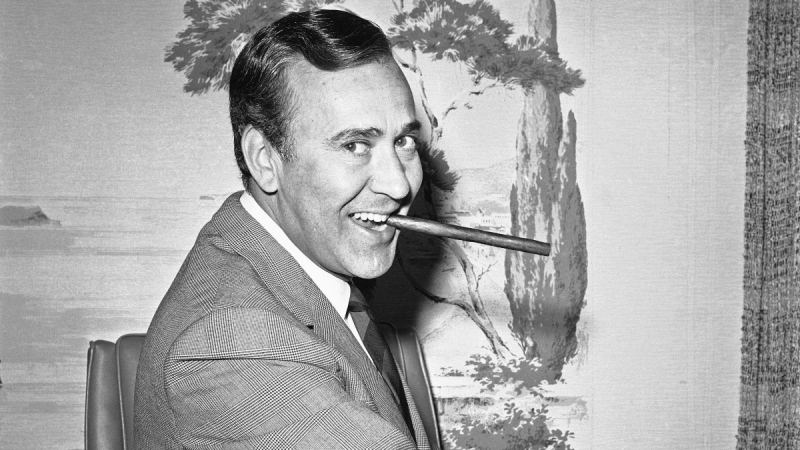
I just heard that Carl Reiner has died.  He was 98 years old and he was one of the funniest men who ever lived.

By creating The Dick Van Dyke Show, Reienr redefined the American sitcom and made writing comedy seem like the most wonderful and rewarding job that someone could hope to have.  Not only do you get to be funny 24 hours a day but you also get to marry Laura Petrie.  In many ways, Reiner was responsible for a generation of writers flocking to New York City with dreams of writing for Saturday Night Live and Norman Lear.

Reiner was also an actor, a film director, and an always-entertaining talk show guest.  For many, he will also be forever known as the man who interviewed the 2000 Year Old Man.  In these interviews, Reiner asked questions to a 2000 year old man, who was played by Mel Brooks and who would largely improvise his answers.  This was a skit that Reiner and Brooks developed (mostly as an inside joke) while they were both writing for Your Show Of Shows.  It went on to become a beloved comedy classic and it is often cited as being the ideal comedy sketch.  Though Reiner played the “straight man” in the 200 Year Old Man routine, his contribution was just as important as Brooks’s.  Brooks may have gotten the most laughs with his improvised answers but Reiner always instinctively knew the right questions to ask.

Here they are performing it in 1967:

Carl Reiner, R.I.P.

Music Video of the Day: We Are The Champions by Queen (1977, directed by Derek Burbridge)


“I was thinking about football when I wrote it. I wanted a participation song, something that the fans could latch on to. Of course, I’ve given it more theatrical subtlety than an ordinary football chant. I suppose it could also be construed as my version of ‘I Did It My Way.’ We have made it, and it certainly wasn’t easy. No bed of roses as the song says. And it’s still not easy.”

— Freddy Mercury on We Are The Champions

According to scientists, this is the most catchy song every written.

In 2011, a team of scientific researchers actually conducted a study to determine the catchiest song ever recorded and this is what they decided upon.  Don’t ask me how they actually made that determination.  Maybe they were all football fans.  If you’re fan of football — whether it’s American football or association football — you know this song by heart.  You also probably know what it’s like to hear the other team sing it after your team loses.  As great as it feels to be one of the champions, it really sucks to be one of the losers who they don’t have time for.

This video was filmed at the New London Theater.  The audience was made up entirely of members of Queen’s fan club.  The video was directed by Derek Burbridge, who also directed yesterday’s music video of the day.

Enjoy!


Faster (2010, directed by George Tilllman, Jr.)


A man known as the Driver (played by Dwayne Johnson) is released from prison, having served time for taking part in a bank robbery.  As soon as he gets his freedom, the Driver is jumping in a fast car, driving across Nevada and California, and killing everyone who he believes set him up and murdered his half-brother.  The Driver has even made out list of the people on whom he needs to get revenge.  Among those on the Driver’s list are a nightclub bouncer, a snuff film producer, an traveling evangelist, and one name that the Driver has not bothered to write down.

As the Driver conducts his killing spree, he is pursued by two other men who each have their own reason for wanting to find him.  The Cop (Billy Bob Thornton) is close to retirement and has a heroin addiction.  The Killer (Oliver Jackson-Cohen) is a hit man who views murder as a personal challenge and who plans to marry his girlfriend (Maggie Grace) as soon as he takes care of the Driver.

Today, we take Dwayne Johnson’s superstardom for granted so it’s interesting to go back and watch a movie like Faster, which was made when Johnson was still best known as a wrestler and there were still doubts about whether or not he had the screen presence to carry an entire film on his own.  Though Johnson’s character is the main character and it’s his single-minded quest for revenge that propels the plot, the film spends as much time with the Cop and the Killer as it does with the Driver.  The Driver doesn’t get much dialogue.  Instead, the majority of the Driver’s scenes emphasize Johnson’s physical presence, casting him as the unstoppable hand of fate.  Johnson doesn’t really get to show what he can do as an actor until nearly halfway through the film, when the Driver has an emotional meeting with his mother.  Johnson acquits himself well in the scene but it’s still obvious that the film was made before people realized that Dwayne Johnson really could act.

Seen today, Faster is a relentless and exciting B-movie.  It’s fast-paced and, even if it doesn’t give Johnson a chance to say much, it’s smart enough to surround him with memorable character actors like Billy Bob Thornton, Tom Berenger, Adewale Akinnuoye-Agbaje, and Carla Gugino.  Even without a lot of dialogue, Dwayne Johnson is such an imposing figure and has so much screen presence that he dominates the film in a way that it’s hard to believe that there were ever any doubts about whether or not he could be a film star.  Faster holds up well, as both an action movie and star-making vehicle for Dwayne Johnson.

Music Video Of The Day: For Those About To Rock (We Salute You) by AC/DC (1982, directed by Derek Burbridge)


AC/DC was always a no frills/no bullshit/hard-rocking band and the same is true of their music videos.  While other bands of the period were using elaborate videos to covers for their deficiencies as musicians, AC/DC used videos to show off what they could do on stage.  AC/DC always respected their fans enough to let the music speak for itself and that’s what they did in the video for For Those About To Rock (We Salute You).

Enjoy!

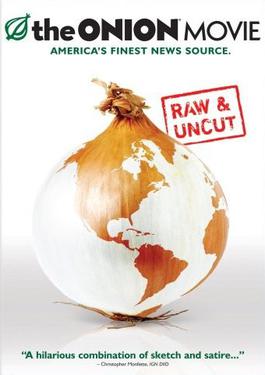
The Onion Movie (2008, directed by James Kleiner)


From some of the funniest people on Earth comes one of the least funny films ever made.

That was, at least, my initial reaction to watching The Onion Movie.  Written by two of the founders of the world’s premiere satirical news sight, The Onion Movie is a collection of skits that are almost all based on Onion headlines.  Some of the skits are amusing.  Most of them aren’t.  When it comes to the Onion, the headlines are often funnier than the details.  A headline about a murder mystery party switching over to a rape investigation party might be funny but having to sit through a lengthy skit about it is considerably less amusing.

Len Cariou plays an anchorman at the Onion News Network, who introduces each satirical story and who gets upset when his employers keep using his newscast to promote a new Stephen Seagal movie called Cock Puncher.  (Seagal, who appears as himself, punches people in the groin.  The joke would have been funnier if the fake movie had starred Dolph Lundgren.)  In between introducing absurd stories, Cariou yells at the network executives, who don’t care about the integrity of the news.  Len Cariou is the best thing in the film because he plays his role straight, never once smiling or winking at the camera.

The Onion Movie was written by two of the Onion’s founders and was originally filmed in 2003.  It sat on the shelf for five years before being released, without much fanfare, direct-to-video.  By the time it was released, The Onion itself had all but disowned the movie, announcing that they were no longer involved beyond the use of the site’s name.  (Something similar happened in the 80s when MAD Magazine briefly tried to branch out into films.)  Watching the film, it’s easy to see why The Onion distanced themselves from the final product.  It’s not just that, for the most part, it’s not very funny.  It’s also that the majority of the humor is shockingly racist and sexist.  (Halfway through the film, a black civil rights leader announces that he’s going to lead a walk-out to protest the way that blacks have been portrayed in the film.  It’s played as a joke but the man has a point.)  The Onion Movie wants credit for being politically incorrect but instead, most of the humor just feels lazy.  The Onion Movie is type of movie that, if it were released today, The A.V. Club would demand that it be banned.  Schadenfreude is nothing to brag about and I’m not proud that I felt some of that as I watched The Onion Movie.  If the people who created one of the funniest sites on Earth could create something this bad, I thought, that makes me feel better about every mistake I’ve ever made over the course of my entire life.

By the way, the film’s best joke is borrowed from Caddyshack but at least they got Rodney Dangerfield to come back and deliver it.  Dangerfield was always good, even in something like The Onion Movie.


Cinemax Friday: The Last Hour (1991, directed by William Sachs)


Because Eric (William Sachs) is a wealthy stockbroker who has just stolen five million dollars from the mafia, mob boss Lombardi (Bobby Di Cicco) sends a group of his enforcers to get both Eric and the moeny.  However, when they arrive at Eric’s home, they discover that he’s not there but his wife, Susan (Shannon Tweed), is!  After they kidnap Susan, they take her to an abandoned skyscraper and they wait for Eric to show up with the money.  However, Susan’s ex-husband, Jeff (Michael Pare), is a tough cop who is not going to let anyone get away with holding his ex-wife hostage.  After reluctantly teaming up with Eric, Jeff infiltrates the skyscraper and takes on the kidnappers, one-by-one.

What do we have with this movie?  We’ve got an abandoned skyscraper.  We’ve got a group of flamboyant hostage takers.  We’ve got a beautiful woman being held prisoner.  We’ve got a hero who is a tough cop and who loses his shirt early in the movie.  You probably think this is a Die Hard rip-off but consider this!  In Die Hard, the main bad guy was a European terrorist.  In The Last Hour, he’s an American mafioso.  Otherwise, this is totally a Die Hard rip-off.  It’s Die Hard with a much lower budget and with a wooden Michael Pare serving as an unconvincing stand-in for Bruce Willis.

However, The Last Hour does have two things that Die Hard could have used.  First off, it’s got Danny Trejo as one of the hostage takers.  Any movie with Danny Trejo is going to automatically be cooler than any movie without Danny Trejo.  Of course, this movie asks us to pretend that Michael Pare vs Danny Trejo would be a fair fight but we all know that, in the real world, Danny would totally win that battle.  The other thing that this movie has that Die Hard doesn’t is Shannon Tweed.  Shannon doesn’t get to do a lot.  If you want to see a Die Hard rip-off where Shannon really gets to show what she can do, watch No Contest.  Still, just as with Danny Trejo, any film with Shannon Tweed is automatically better than any film without her.

The Last Hour is no Die Hard, no matter how much it tries.  But if brings together Danny Trejo and Shannon Tweed and for that, late night Cinemax viewers everywhere give thanks.

Quiet Killer (1992, directed by Sheldon Larry)


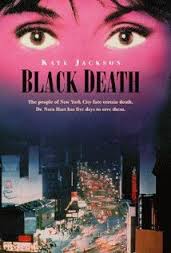
When wealthy teenager Sarah Dobbs (Kathleen Robertson) vomits up blood and then drops dead in the middle of New York City, the coroner’s office is baffled as to what killed her.  As far as anyone knows, Sarah has just been suffering from the flu, which she apparently contracted when she was recently overseas.  However, there is one doctor in New York who thinks that she knows what’s happening.  Dr. Nora Hart (Kate Jackson) takes one look at Sarah’s case and decides that the Black Death — the same plague that wiped out half of the world’s population in 54 AD — has come to New York!

Nora wants to shut down the city immediately but Mayor Carmichael (Al Waxman) says that would not only lead to mass panic but it would also an economic disaster.  Working with a team of other doctors (including Jerry Orbach, who is always a welcome presence in New York films), Dr. Hart tries to track down everyone who Sarah came into contact with and quarantine them before both a panic and a pandemic breaks out.  Unfortunately, one congressman (Howard Hesseman!) doesn’t want to go into quarantine because that would mean admitting that he was in Manhattan to visit his mistress.  Despite everyone’s best efforts, mass panic follows.

Quiet Killer (which is also known as Black Death) is a made-for-TV movie that used to show up on late night television throughout the 90s.  It’s a typically overwrought disaster film and it’s easy to laugh at some of the dialogue and some of the acting.  (Kate Jackson is particularly wooden in the lead role.)  The first time I saw it, I thought the most interesting thing about it was that it featured Howard Hesseman as a congressman.  For those who know Hesseman best for playing characters like Dr. Johnny Fever on WKRP, it’s strange to see him playing a member of the establishment.  Hesseman isn’t bad in the role but it never makes sense that he wouldn’t be able to think of a way to explain away his presence in Manhattan.  You would think a politician would be better at coming up with an alibi or that he could have pulled some strings to keep it from being revealed that he had been quarantined.  Instead, he decides to just run off and potentially infect the entire nation.  That’s not what I pay my tax dollars for.

Quiet Killer is a good example of how real-life events can shape how we view a film.  Up until just a few months ago, this would have seemed like just another cheesy disaster movie.  Watch it today and it feels prophetic.  Hopefully, by this time next year, it will be back to just being cheesy.

The Gumball Rally (1976, directed by Chuck Bail)


When he gets bored in a business meeting, Michael Bannon (Michael Sarrazin) calls his old friend, Prof. Samuel Graves (Nicholas Pryor) and says only one word: “Gumball.”  Inspired by that one word, dozens of racers assemble in New York, all planning on taking part in the Gumball Rally.

What is the Gumball Rally?  It’s a highly illegal race in which teams of two compete to see which team can drive from New York to the other side of the country in the least amount of time.  Bannon and Graves currently hold the record for completing the Gumball Rally in the quickest amount of time and all of the racers are determined to try to claim that record for their own.  Meanwhile, one cop named Roscoe (Norman Burton) is determined to break this race up.  Has there ever been a good cop named Roscoe?  Rosco P. Coltrane probably had more of a chance of stopping them Duke Boys than Roscoe does stopping the Gumball Rally.

If The Gumball Rally sounds familiar, it’s because it’s basically a less star-filled version of The Cannonball Run.  Instead of Burt Reynolds and Dom DeLuise, The Gumball Rally has Michael Sarrazin, Nicholas Pryor, Tim McIntire, and Norman Burton.  Instead of Jackie Chan making his American debut, The Gumball Rally has early performances from Raul Julia and Gary Busey.  Instead of Dean Martin and Sammy Davis, Jr., The Gumball Rally has Steven Keats and Wally Taylor.  You get the idea.  However, the lack of big stars in the cast works to The Gumball Rally‘s advantage.  Whereas you watch The Cannonball Run with the knowledge that there’s no way Burt Reynolds isn’t going to at least come in second, it seems like anyone of the eccentric teams in The Gumball Rally could win the race.

Make no mistake about it, The Gumball Rally is a car chase film, one that was released at the height of that underrated genre’s popularity.  The actors are all likable and almost all of the characters get at least one funny, personality-defining moment but the real stars of The Gumball Rally are the cars and the stunts. That’s not surprising as this film was directed by legendary stuntman Chuck Bail.  This film is full of spectacular crashes and near misses.  (The race’s lone motorcyclist is especially accident-prone.)  Again, the lack of stars in the cast (and the fact that the cast reportedly did most of their own driving) bring an added element of suspense to the stunts.  You watch The Cannonball Run and Smoky and the Bandit secure in the knowledge that Burt Reynolds is never going to crash his vehicle because he’s Burt Ryenolds.  You don’t have that same automatic security when the car is being driven by Michael Sarrazine or Tim McIntire.

It may not be as well known as some of the films that it inspired but, if you like a good car chase (or a good car crash) film, The Gumball Rally is for you.

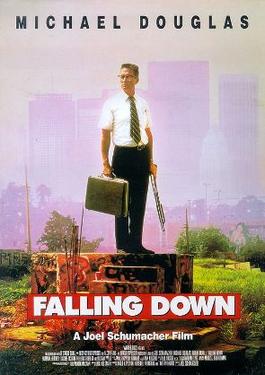
Falling Down (1993, directed by Joel Schumacher)


Earlier today, when I heard that Joel Schumacher had died, I immediately thought of Falling Down.

Falling Down stars Michael Douglas as William Foster, a man who is at the end of his rope.  He’s lost his job.  He’s just gotten a divorce and his wife has taken a restraining order out against him.  On the hottest day of the year, his car’s air conditioning has just broken down.  When he finds himself stuck in a traffic jam, he impulsively abandons his car and starts to walk across Los Angeles, collecting weapons, enemies, and admirers along the way.

Almost everyone who Foster meets annoys him in some way.  A convenience store clerk refuses to give him change so that he can make a phone call.  In the film’s most famous scene, a fast food restaurant refuses to allow him to order off of the breakfast menu, which leads to Foster pulling out a gun.  D-Fens, as he’s now known due to his personalized license plate, is making his way to his daughter’s birthday party, leaving behind  a wake of destruction behind him.  Trying to stop him is Detective Martin Prendergrast (Robert Duvall), who is, naturally, just a day away from retirement.

I think about Falling Down a lot.  It’s always been a controversial film, with critics debating whether we’re supposed to empathize with Foster or not.  The film itself often tries to have it both ways, asking us to condemn Foster’s violence while, at the same time, expecting us to cheer for him when he expresses his frustrations.  On the one hand, you can understand some of his anger.  Why can’t you order off the breakfast menu if you want to?  Who hasn’t gotten annoyed with unnecessary road work?  At the same time, it’s also hard to overlook that almost all of Foster’s victims are more obnoxious than he is.  If the store clerk has been polite when he refused to give him change, would we have still cheered when Foster destroyed the store?  Foster even has an encounter with a white supremacist that’s supposed to assure us that Foster might be an angry white man but he’s the right type of angry white man.

To understand why this film has always stuck with me, you have to understand that my Dad was an engineer.  He worked with a lot of people who basically were William Foster, except that they never got their hands on as much weaponry as Foster manages to do.  Whenever I see this movie and I see Michael Douglas with his nerdy glasses and short-sleeved white shirt and black tie, I’m reminded of visiting my father at work and listening to his co-workers complain about how much they hated the rap music that their kids were listening to.  From those experiences, I can tell you that Michael Douglas perfectly nails the role of William “D-Fens” Foster.  Though the film’s script may sometimes try to present Foster as simply being “a man who has finally had enough” (and that’s certainly the way that Foster would probably view himself), Douglas gives a much more complex performance in the role.  He plays Foster not as being a hero or even an anti-hero.  Instead, he’s a man who has realized that life is never going to be as good as he was told it would be and, watching the world change around him, he’s snapped.  He’s the villain, even if he and some of the film’s biggest fans don’t realize it.  “I’m the bad guy?” he asks and yes, he is.  The tragedy of the film is that he can’t understand how that came to be.  Neither Joel Schumacher as a director nor Michael Douglas as an actor ever suggests that Foster has become a stronger or happier person as a result of his actions.  He never becomes the societal avenger that some may want him to be.  Instead, he just wants to get to his daughter’s birthday party.

When Joel Schumacher’s death was announced today, most people talked about the Batman films that he directed.  However, Falling Down, with its brilliant lead performance from Michael Douglas, is the Joel Schumacher film that will always stick with me.
3000 Miles to Graceland (2001, directed by Demian Lichtenstein)


Five thieves show up in Vegas to rob a casino.  The casino is also hosting an Elvis convention so the criminals all dress up like Elvis before trying to pull off their heist.  Since one of the criminals is played by Kurt Russell and Russell famously played Elvis in a made-for-TV movie, it’s a meta joke.  The worst of the criminals is played by Kevin Costner because, in 2001, Costner’s career was dead in the water and he was trying to reinvent himself as some sort of badass character actor.

As a result of a shootout and series of personal betrayals, Russell and Costner are the only two thieves who survive the heist.  Kurt Russell ends up taking all of the money for himself and running off with single mother Courteney Cox.  (Yes, Cox’s then-husband, David Arquette, does have a small role in the movie.)  Costner pursues them, killing anyone who he comes in contact with until it all leads to one final shoot out.

3000 Miles to Graceland is a stupid, stupid movie that was made at the time when every director was still trying to remake Reservoir Dogs and The Usual Suspects.  If you need any proof of how bad this movie is, just consider that it is one of the few Kurt Russell films to never develop a cult following.  There are people who would jump into the mouth of a volcano if Kurt Russell told them to and even they won’t watch 3000 Miles to Graceland.  Even the worst 90s crime films have at least a few people willing to defend them but 3000 Miles to Graceland has been abandoned on the ash heap of crime film history.  Despite having a once-in-a-lifetime supporting cast — Christian Slater, Bookeem Woodbine, Kevin Pollack, Jon Lovitz, Howie Long, Ice-T, and even Paul Anka — 3000 Miles to Graceland has never even received a direct-to-video sequel.

Why is 3000 Miles to Graceland so forgettable?  The heist storyline has been done to death and this film doesn’t bring anything new to the genre.  The only new wrinkle that 3000 Miles to Graceland brings to its familiar story is that the thieves are all dressed like Elvis and that gets old pretty quick.  The other problem is that Kevin Costner is miscast as the psycho villain.  Michael Madsen could have handled the role.  So could Tom Sizemore or Woody Harrelson or just about other actor out there.  But Kevin Costner, who first found fame as a sort of modern-day Gary Cooper, never seems comfortable playing a cold-hearted sociopath.  He makes up for this discomfort by trying too hard.  Comparing his performance here to his more nuanced turn as another criminal in A Perfect World shows just how miscast he was in 3000 Miles To Graceland.

Fortunately, better things were ahead for almost everyone involved in this movie.  Kevin Costner has recently returned to playing the type of roles that made him a star to begin with and Kurt Russell has become an American idol.  Fortunately, 3000 Miles to Graceland is remembered, if at all, as just an unfortunate detour in their otherwise distinguished careers.