Late Night Retro Television Review: Pacific Blue 3.9 “Cop In A Box”


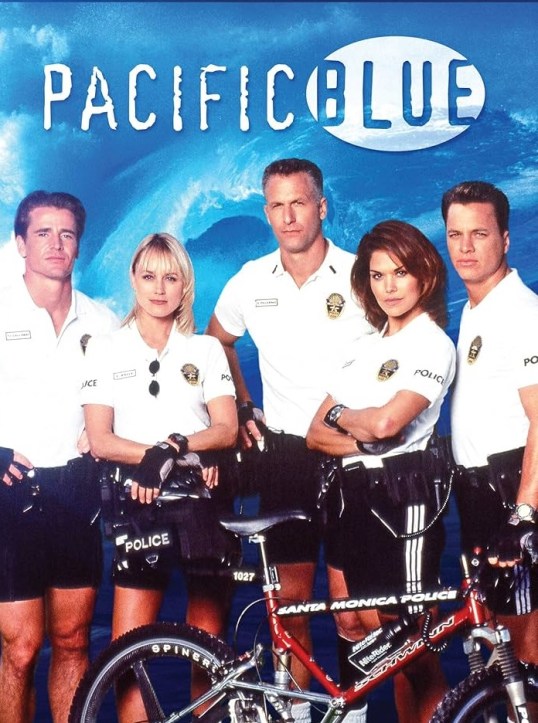
Welcome to Late Night Retro Television Reviews, a feature where we review some of our favorite and least favorite shows of the past! On Tuesdays, I will be reviewing Pacific Blue, a cop show that aired from 1996 to 2000 on the USA Network!  It’s currently streaming everywhere, though I’m watching it on Tubi.

Okay, we’re doing this again.

Episode 3.9 “Cop In A Box”

(Dir by Scott Lautanen, originally aired on November 2nd, 1997)

Oh, Pacific Blue.  How I have not missed you.

This episode features TC getting abducted by Harland Groves (Jeremy Roberts), a criminal who TC previously busted.  Harland traps TC in an underground beach bunker.  How Harland got his hands on an underground beach bunker is never explained.  Harland demands that TC’s rich family pay him 4 million dollars.  At the same time, he plans to use a chlorine gas bomb to kill TC.  Why he didn’t kill TC to begin with and then demand the money is never really explained.  It’s almost as if Harland secretly wanted his plan to fail.

I really didn’t have a problem with the idea of TC getting killed off.  Pacific Blue is one of the more boring of the shows that I review and killing TC would have livened things up.  At the very least, without TC around, I would no longer be forced to try to keep straight which member of Pacific Blue was TC and which member was Victor.  Unfortunately, TC manages to disarm the chlorine bomb.  When Harland attacks him in the bunker, it leads to a bunch of sand pouring in.  Harland is suffocated while TC escapes.

Oh well.

The cool thing about this episode is that Andy Buckley — who later played David Wallace on The Office — returned as TC’s brother.  The funny thing about this episode was the sight of grim-faced Palermo barking out orders while wearing his stupid bicycle shorts.  And the unfortunate thing is that TC survived so Pacific Blue will not be changing any time soon.

I Watched Perry Mason: The Case Of The Murdered Madam (1987, Dir. by Ron Satlof)


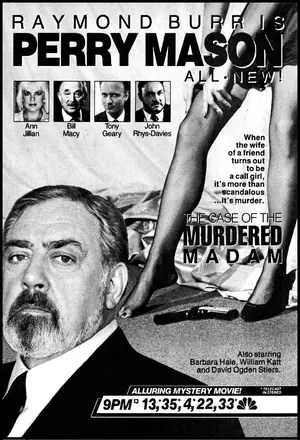
Former madam Suzanne Domenico (Ann Jillian) attempts to blackmail four rich men who are planning on embezzling money from a bank and is found dead by her husband, Tony, shortly afterwards.  Tony (Vincent Baggetta) is arrested and charged with murdering his wife.  Tony’s older brother used to run around with Della Street (Barbara Hale) and Della is able to get Perry Mason (Raymond Burr) to defend him in court.  Paul Drake, Jr. (William Katt) is brought in to do the investigative legwork.  Once again, Paul falls for a younger woman (Daphne Ashbrook) who will probably never be mentioned again in any of the other movies.

This movie was a little sad because it was obvious that Raymond Burr was not in good health.  He spends most of the movie sitting or moving with crutches.  In the movie, they say that Perry is using crutches because of a skiing accident but looking at Raymond Burr, there’s no way to imagine him skiing.  Burr is still as sharp as ever when asking questions in the courtroom but it’s still clear that he was in pain when he did this movie.  Perry being sidelined does mean that Barbara Hale and William Katt get to do more than usual.  After spending the last few movies constantly getting outrun and smacked around, Katt finally gets to beat someone up in the movie.

The mystery isn’t bad, even though I guessed who the murderer was long before the trial started.  The entire embezzlement scheme comes down to embezzling a few cents a day so that no one will notice.  That’s the same thing they tried to do in Office Space!  Luckily, no one got murdered that time.

Overall, this was a good entry in the Parry Mason movies, especially for those of us who like watching Paul Drake, Jr.  I’m starting to wonder if all of Perry and Della’s friends are going to end up getting accused of murder at some point.  My aunt and I always used to joke about how often Jessica Fletcher’s nephew was accused of murdering someone.  It might be just as dangerous to be a friend of Perry Mason’s!

Jury Duty (1990, directed by Michael Schultz)


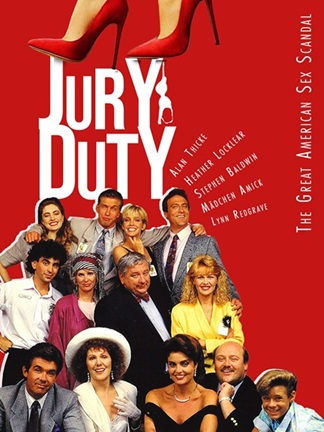
Meek-looking accountant Sanford Lagelfost (Bronson Pinchot) is on trial for embezzlement.  It’s supposed to be a simple, up-and-shut case but when the beautiful star witness (Tracy Scoggins) testifies that Sanford is an amazing lover, it becomes a tabloid sensation and the jurors are sequestered in a hotel, where they have to deal with their own restlessness and several distractions, the majority of whom are also played by Bronson Pinchot.  Pinchot plays a total of four characters but it’s not like he’s Peter Sellers or even Eddie Murphy.  He looks and sounds like Bronson Pinchot in every role.

The jurors are played by a bunch of a familiar television actors.  Alan Thicke plays a yuppie named Phil and Lynn Redgrave plays a hippie named Abby and they end up getting married.  Stephen Baldwin is the waiter who falls for Heather Locklear, an actress who is a former call girl who is being threatened by her pimp.  Madchen Amick is the spoiled rich girl.  Television mainstays Mark Blankfield, Ilene Graf, William G. Schilling, Danny Pintauro, and Bill Kirchenbauer are all present and accounted for.  Adding to the overall sitcom feel of the movie is the presence of Reginald VelJohnson as the judge.  No one in the cast tries very hard, though I do think a case can be made that Madchen Amick was the most beautiful woman on television in 1990.

With the film failing to achieve either a consistent tone or a single laugh, the best thing that I can say about Jury Duty is that it didn’t feature Pauly Shore.  Instead it featured Alan Thicke driving a BMW with a license plate that read, “BMW4Phil.”  It’s hard to believe that this film was directed by Michael Schultz, who was responsible for movies like Car Wash, Cooley High, and Greased Lightning in the 70s and Berry Gordy’s The Last Dragon in the 80s.

I wish I had watched The Last Dragon instead.

Gun Lords of Stirrup Basin (1937, directed by Sam Newfield)


On the frontier, crooked lawyer Gabe Bowdre (Karl Hackett) is trying to secure all of the local water rights for himself and that means running off both the homesteaders and the ranchers.  Bowdre and his men try to start a range war between the ranching Stocktown family and the homesteading Dawsons.  Meanwhile, Dan Stockton (Bob Steele) has fallen in love with Gail Dawson (Louise Stanley) and marries her mere minutes before someone shoots his father in the back.

Gun Lords of Stirrup Basin has all the common elements that usually come with a B-western.  I have lost track of how many times I have watched Karl Hackett play a crooked businessman who tries to start a range war to win either the water rights or the property deeds.  Bob Steele spent a good deal of his career beating up Karl Hackett on screen.

What sets Gun Lords of Stirrup Basin apart is the Romeo and Juliet angle.  While it’s predictable, the love story between Dan and Gail still adds more emotional depth than is usually found in these movies.  The scene where all of the ranchers glare daggers at Dan’s new wife is powerful.

Bob Steele’s as good a hero as usual and Karl Hackett is a dastardly villain.  Gun Lords of Stirrup Basin runs a little less than an hour, making it a good western for an afternoon break.

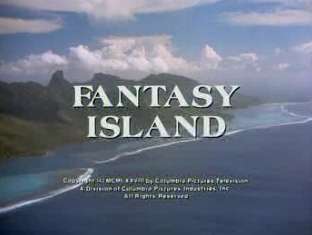
Retro Television Review: Fantasy Island 7.21 “Bojangles and the Dancer/Deuces Wild”


Welcome to Retro Television Reviews, a feature where we review some of our favorite and least favorite shows of the past!  On Tuesdays, I will be reviewing the original Fantasy Island, which ran on ABC from 1977 to 1984.  The show is once again on Tubi!

It’s time for our second-to-last trip to the Island.

Episode 7.21 “Bojangles And The Dancer/Deuces Wild”

(Dir by Bob Sweeney, originally aired on May 12th, 1984)

Sisters Audrey and Judy Jennings (played, of course, by Audrey and Judy Landers) come to the Island because they’re sick of men only appreciating their bodies as opposed to their other talents.  They end up meeting a hotelier named Rex Reinhardt (Stuart Whitman) who, after some poorly-defined drama involving his duplicitous chief of security (John Ericson), ends up opening a resort with the two of them.  Fans of the James Bond franchise will be happy to see Walter Gotell, who played the head of the KGB opposite Roger Moore in several films, cast as a writer who romances one of the sisters.

It’s kind of a sad fantasy when you consider that this is the second-to-last episode of the original Fantasy Island and the best they could do for this story were the Landers sisters and Stuart Whitman.  Not only were the guest stars not particularly inspiring but the fantasy itself didn’t really make much sense.

As for the other fantasy, it does feature a big-name guest star.  Sammy Davis, Jr. plays the legendary dancer, Bojangles!  Now, admittedly, Sammy doesn’t look particularly healthy in this particular episode.  Reportedly, by the time the 80s rolled around, all of the smoking, drinking, and drug-taking had finally started to catch up with him.  But, even while obviously ill, Sammy Davis Jr. still had the undeniable charisma of a natural-born star.  The fantasy is nothing special.  Joe Wilson (Glynn Turman) goes into the past so that he can dance with Bojangles.  However, Sammy Davis Jr. lights up the story.  He shares a wonderfully-acted scene with Ricardo Montalban, two old showbiz pros sharing what may have been a final moment together.

So, this trip to the Island was a mixed bag. Neither fantasy was particularly compelling and Tattoo’s absence was very much felt.  (Lawrence, I’ve noticed, tends to be rather judgmental of the guests which is something Tattoo never was.)  But at least Sammy Davis Jr. was there to add some life to the proceedings.

Only one more episode to go.

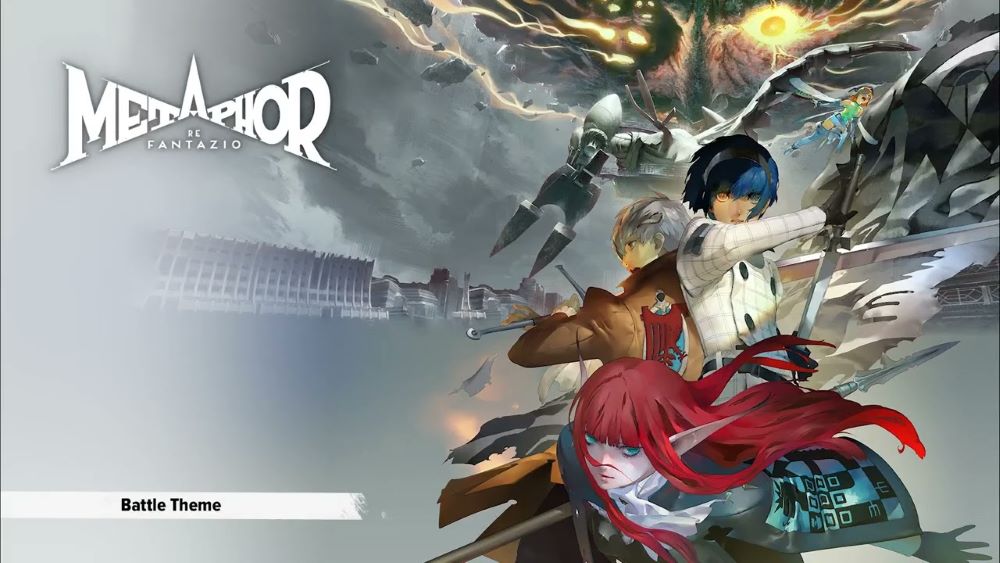
Song of the Day: “Battle Theme” from Metaphor: ReFantazio (by Shoji Meguro)


Metaphor: ReFantazio‘s “Battle Theme” erupts with thunderous brass and pounding drums, turning routine turn-based scraps into pulse-racing spectacles that pull you right into the fray. Shoji Meguro amps the drama by weaving in rhythmic chanting from Myōhō–ji temple’s chief priest, Keisuke Honryo, sung in the international language of Esperanto for that timeless, cross-cultural resonance which makes every Archetype clash feel profoundly ritualistic.

The rhythmic Esperanto vocals loop hypnotically over surging strings and synth pulses, cresting with victorious horns that time perfectly to weakness chains and squad synthesis attacks, mirroring the combat’s strategic highs. This primal chant roots the fantasy battles in spiritual depth, evolving Atlus’s sound beyond synth-pop into something hauntingly primal that lingers post-fight.

It anchors the award-lauded OST’s standout moments, those monk-delivered Esperanto lines lending legendary weight to even basic encounters—though their fervor can overshadow subtler scenes.

Happy Birthday to Actress Jan Gan Boyd, the “This Week in Charles Bronson” Podcast, and a Lifelong Obsession with Charles Bronson!


Happy Birthday to one of my favorite people in the world, Jan Gan Boyd, Charles Bronson’s co-star in ASSASSINATION (1987)!

We’ll be back to that in a bit, but first a little about me. My parents purchased a VCR for our family sometime around 1985 or so. I was about 12 years old at that time, and it’s fair to say that I’ve been obsessed with movies ever since. It’s actually fair to say that I have somewhat of an obsessive personality, so when I latch onto something, I really, really latch on. At the very top of that list is my lifelong fascination with the actor Charles Bronson. To be completely honest with you, it’s a passion that not many people really understand or appreciate. Beginning around 1986 with my discovery of DEATH WISH 3, I would talk about his movies to my friends constantly. Now keep in mind that I was a young teenager and Bronson was around 65, with his best movie-making years well behind him. Charles Bronson was not high on the list of topics my friends wanted to discuss. I’m in my 50’s now, and my old high school friends still tease me about Charles Bronson. I don’t care, because I still think he’s awesome!

As a matter of fact, my obsession with Charles Bronson has only gotten stronger over the last five years or so. Back in November of 2021, I met a guy from Pennsylvania named Eric Todd who had started the “This Week in Charles Bronson” Podcast and Facebook page. After joining the page, we became fast friends. For the first time, through the Facebook page, I had a whole group of friends who love Charles Bronson as much, or at least close to as much, as I do. In the summer of 2022, when my wife and I drove 17 hours from my home in Arkansas to the Mahoning Drive-In in Lehighton, PA, to watch a triple feature of classic Bronson films, Eric asked me to join him on the podcast and while on-site at the drive-in, I recorded my first episode. I thought this would just be some fun social media or podcast activity where us “Bronson weirdos,” as we call ourselves, would discuss our hero and his movies. I never thought it would lead me to getting to meet some of the actors and actresses who actually worked with Bronson in the movies. Boy, was I wrong!

Through my participation with the “This Week in Charles Bronson” podcast and Facebook page, I have met Paul Talbot (author of the “Bronson’s Loose” and “Bronson’s Loose Again” books), Jordan Rhodes (co-star of MR. MAJESTYK and THE INDIAN RUNNER), Henry Brooks (writer of “Charles Bronson, More than a Vigilante, The Musical” ), Robert F. Lyons (co-star of DEATH WISH II, TEN TO MIDNIGHT and MURPHY’S LAW), and Lindsay Ireland (Charles Bronson and Jill Ireland’s niece and author of the book “Why Not Me?”). I have met fellow Bronson fans from all over the country and world. Not only have I met these people, but I’ve also developed some true friendships along the way. Eric and I now plan family vacations together, and if I ever find myself in a city where one of my “Buchinsky Boys” reside, I will definitely find the time to break bread with them. It’s one of the nicest communities I’ve ever been a part of, and I’m thankful for it.

To bring this full circle, one of my favorite people in the world, who I now consider a friend, just so happened to co-star with Charles Bronson and Jill Ireland in the 1987 action film, ASSASSINATION. Back in January of 2023, Eric and I were able to interview actress Jan Gan Boyd. It was such an honor to be able spend some time with her as she talked about working with Bronson, Michael Douglas, Richard Attenborough, Martin Kove, Ted Danson, and even Richard Roundtree. She remained close friends with Charles Bronson up until his death in 2003. If any of you would like to watch that podcast episode, I’ve linked to it below.

Happy Birthday, Jan! You’re absolutely the best!

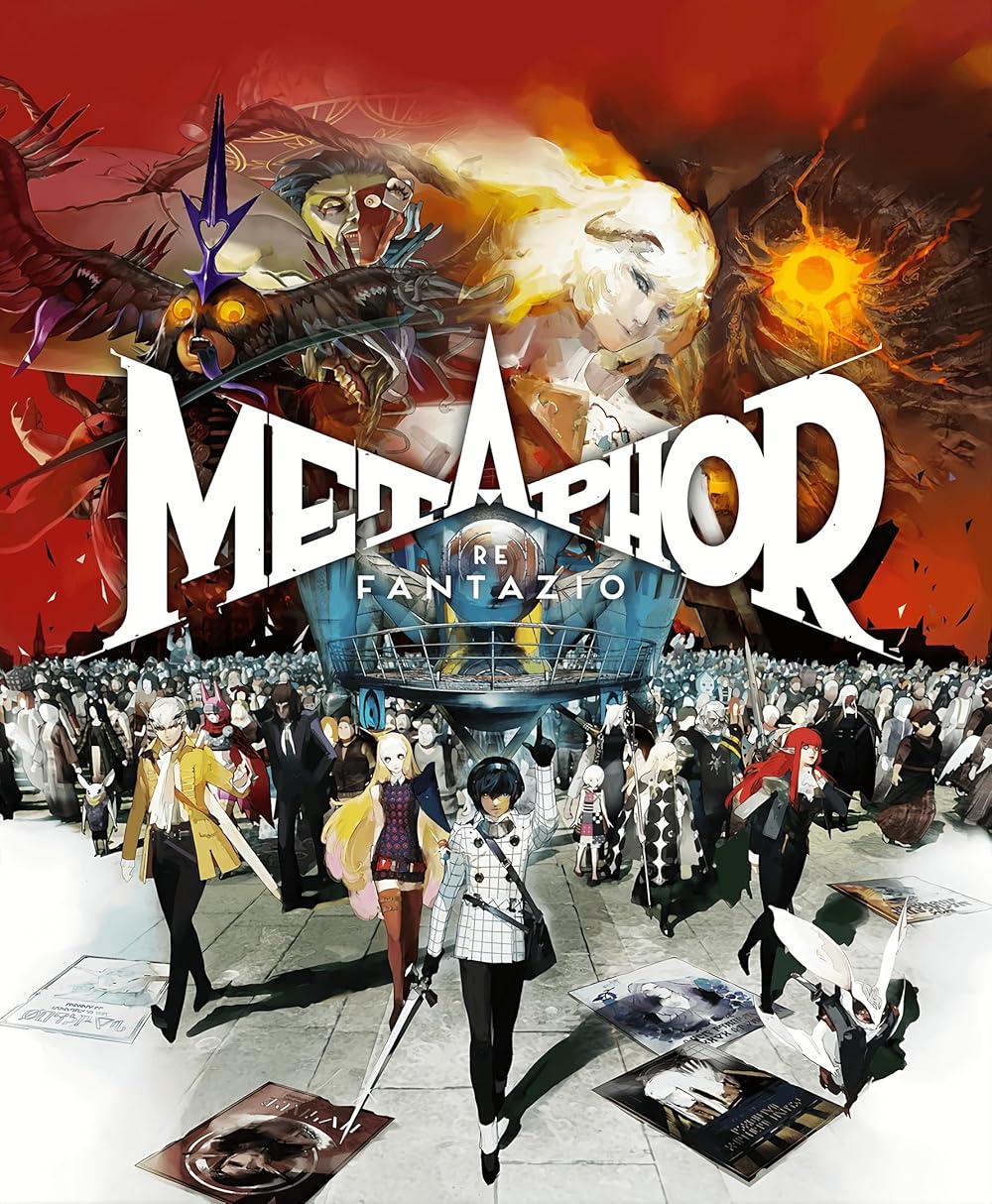
Metaphor: ReFantazio Review


“Knowledge without action is but a hollow echo.” — Heismay

Metaphor: ReFantazio delivers a fresh fantasy spin on Atlus’s signature JRPG formula, blending turn-based combat with real-time field encounters that keep battles dynamic and strategic, all in service of a narrative that probes deep into societal divides. The game’s Archetype system lets you mix and match job classes across your party, offering deep customization through skill inheritance and squad synthesis for creative builds that shine in tough boss fights, mirroring the story’s emphasis on unity through diversity. While the overarching tale of tribal tensions and royal intrigue captivates from the start, it occasionally leans into familiar Atlus tropes like social bonding and time-sensitive quests that can feel repetitive over its lengthy runtime, though these mechanics cleverly reinforce the plot’s ticking-clock urgency.

Traversal feels epic on your flying sword mount, zipping through vibrant medieval-inspired hubs packed with side requests, from monster hunts to delivery gigs that boost your follower ranks and unlock new abilities, often tying back to the narrative’s exploration of prejudice and alliance-building. Visually, the stylized UI, animated portraits, and lush world design pop with that classic Atlus flair, making every menu and cutscene a treat, with the game making especially striking use of character artist Shigenori Soejima’s artwork to give both the interface and the cast a distinctive, cohesive look. Soejima, known for his work on the Persona series, brings his signature style here—sharp lines, expressive faces, and vibrant color palettes that make every character portrait feel alive and every UI element intuitive yet stylish, visually underscoring the diverse tribes and their clashing ideologies. The character designs stand out particularly in combat, where Archetype shifts trigger flashy animations that highlight Soejima’s attention to detail, from flowing capes on knights to ethereal glows on mages, ensuring the visuals never feel generic despite the fantasy setting that grounds heavy themes.

The soundtrack nails epic orchestral swells during climaxes, paired with solid voice work that brings the diverse cast to life, even if not every dialogue line gets full voicing, amplifying the emotional weight of key story revelations. Composed by the talented team including Shoji Meguro’s influences, the music shifts seamlessly from tense dungeon crawls with pulsing synths to triumphant fanfares during story beats, enhancing the world’s medieval-fantasy vibe without overpowering the action, and perfectly suiting monologues on fear and ignorance. Voice acting, mostly in Japanese with English subtitles as an option, adds authenticity, though the selective dubbing in key scenes keeps things efficient without sacrificing impact during pivotal tribe confrontations.

Diving deeper into the narrative, Metaphor: ReFantazio crafts a world called Euchronia, where the protagonist—a member of the persecuted Elda Tribe—embarks on a quest to save the cursed prince and compete in a grand tournament to claim the throne, all amid rising prejudice fueled by mysterious monsters born from collective human anxieties like doubt and rage. The central theme of ignorance as the root of fear resonates thoughtfully throughout, explored through bonds with followers from various tribes—each with backstories rooted in discrimination, from the scholarly yet shunned eugief tribe to the ethereal Nidia—tying personal growth to larger societal critiques on tribalism and unity. These relationships aren’t just filler; they directly influence your combat prowess by unlocking new Archetypes and synthesis options, making social links feel mechanically integrated rather than tacked-on, while reinforcing the plot’s message that strength emerges from understanding others. Yet, the script sometimes prioritizes exposition over subtlety, with dialogue that explains themes a tad too on-the-nose, especially in early acts before the plot’s twists—like betrayals in the royal election—ramp up the stakes and deliver more nuanced emotional layers. The narrative culminates in a tournament arc where your speeches sway public opinion, blending political intrigue with fantasy in a way that feels timely, critiquing how fear-mongers exploit divisions without ever feeling preachy.

The game’s themes extend far beyond surface-level fantasy politics, weaving in profound ideas about human cognition and societal ills, best encapsulated by the line “O worthy heart, who tempers anxiety into strength”—a recurring invocation when awakening Archetypes that perfectly distills how the story transforms personal and collective fears into heroic potential. Ignorance isn’t just a buzzword; it’s literalized through the mechanics of human cognition, where unchecked emotions manifest as those Bosch-inspired monsters—grotesque hybrids symbolizing sloth, lust, or despair—challenging players to confront not external evils, but the shadows within collective psyches. This ties into broader explorations of tribalism, where each playable tribe represents marginalized groups: the immortal Elda as eternal wanderers mistrusted for their longevity, the brutish Nidia dismissed as savages, paralleling real-world racism and xenophobia. The royal election mechanic forces you to campaign like a politician, balancing Follower ranks (public support) with bond-building, highlighting how leaders must combat misinformation and rally diverse factions—echoing modern populism without direct allegory, as echoed in More’s constant reminder: “Time marches on, and the age of a new king draws nearer.” Ideas of inherited trauma surface too, as the protagonist grapples with his tribe’s cursed history, questioning if prejudice is a cycle broken only by empathy and action, reinforced by optional lore dumps from informants that unpack Euchronia’s lore of ancient calamities born from unchecked fears.

Later arcs delve into justice versus vengeance, as revelations about the prince and antagonists reveal layers of manipulated ignorance, asking whether punishing the fearful perpetuates division or if education through example prevails. Themes of escapism critique fantasy itself: characters cling to idealized “Royal” saviors, mirroring how societies project hopes onto myths, only for the story to dismantle that by humanizing leaders as flawed products of their biases. Multiple endings—ranging from unified reigns to fractured chaos—hinge on your thematic investments, like prioritizing certain bonds over others, ensuring the ideas stick through mechanical consequence. It’s a mature evolution from Persona‘s teen angst, grounding abstract concepts in tangible choices that provoke reflection on complicity in systemic hate, with Strohl’s encouragement “I really do believe you have the power to change fate itself” underscoring the faith in individual agency amid societal rot.

Combat evolves the Press Turn system from Shin Megami Tensei, where exploiting enemy weaknesses grants extra turns, but now with Archetype swaps mid-battle for on-the-fly adaptation—summoning a tank to soak hits or a healer to recover without ending your chain—echoing the story’s adaptive heroism. Squad battles add a layer of real-time command over AI allies during field scraps, bridging the gap between exploration and turn-based depth seamlessly, much like how narrative bonds bridge tribal gaps. Dungeons vary from linear boss rushes to sprawling labyrinths with environmental puzzles, like using wind magic to clear miasma or mounting those monsters for platforming sections, keeping pacing fresh across 80-100 hours and often themed around the anxieties they represent—many of which evoke the nightmarish, hybrid figures from Hieronymus Bosch’s Garden of Earthly Delights, with their grotesque amalgamations of human limbs, animal parts, and surreal machinery perfectly capturing the game’s theme of manifested inner turmoil. Post-game content expands this further with New Game+ carrying over levels and a challenging high-level superboss gauntlet that tests your most optimized builds, inviting replays to uncover alternate endings tied to bond choices.​​

On the flip side, character arcs stay mostly heroic without much grit or internal conflict, which softens the emotional punch compared to edgier Atlus entries like Persona 5‘s rebellious heists, potentially muting the themes’ bite for some players, and the “days till” deadlines force constant planning that might frustrate casual explorers. Time management becomes a core loop: follow the critical path for story progress, but stray for bonds and requests at the risk of missing deadlines, creating tension that’s smart but stressful for completionists, directly mirroring the narrative’s pressure to confront ignorance swiftly. Some side activities, like the casino minigame or follower requests, offer great rewards but grindy repetition, and while the map system improves navigation with waypoints, backtracking in identical dungeon rooms can sap momentum during marathon sessions delving into lore-heavy side stories.

Accessibility options abound, from adjustable battle speed to auto-battle for farming, making it welcoming for series newcomers wary of steep JRPG curves while they absorb the dense thematic content. Compared to Persona 3 ReloadMetaphor sheds the school-life sim for pure high fantasy, trading calendar dating for royal election drama centered on prejudice, yet retains that addictive “just one more day” hook through its polished systems and unfolding revelations.

Exploration shines in hubs like Grand Trad, a bustling port city alive with merchants, street performers, and cryptic informant conversations that reveal lore tidbits on Euchronia’s fractured history. The monster system lets you befriend (or hunt) foes for your compendium, inheriting skills like in SMT, but with a bond mechanic that speeds recruitment via gifts or dialogue choices—perfect for building that ultimate party and paralleling human alliances, especially when those Bosch-like beasts start feeling less monstrous through repeated encounters. Synthesis combines Archetypes for hybrid classes, like a ninja-healer churning out status cures while stealth-attacking, rewarding experimentation without locking you into dead ends, much like the story’s flexible path to overcoming bias.

Thematically, Metaphor: ReFantazio tackles prejudice head-on through its tribal dynamics and election mechanics, where swaying public opinion via speeches and deeds mirrors real-world politics in a fantastical lens, with each tribe embodying facets of societal “others”—the immortal Elda as eternal outsiders, the brutish as feared brutes—challenging players to dismantle stereotypes. It’s bolder than Persona’s high school metaphors, grounding fantasy in social commentary without preaching, as the protagonist’s journey from outcast to candidate forces reflection on inherited fears passed down generations. Multiple endings based on follower bonds and tournament outcomes add replay value, rewarding deep investment in the themes, while bosses escalate brilliantly, from multi-phase behemoths requiring Archetype juggling to “Clemar” trials testing pure strategy, often with unique gimmicks like reversing Press Turns that symbolize narrative reversals.

For Atlus fans, this feels like the studio firing on all cylinders post-Persona 5 Royal, refining mechanics while daring a new IP unburdened by franchise baggage, with a narrative that stands as one of their most cohesive thematic statements. Newcomers get a guided onboarding with tutorials that don’t overstay, easing into complexity naturally alongside the story’s gradual world-building. Drawbacks like sparse enemy variety in late-game fields and occasional UI clutter during synthesis menus hold it back from perfection, but they’re minor amid the highs of its thoughtful storytelling.

Ultimately, Metaphor: ReFantazio stands tall as an accessible gateway for JRPG newcomers and a loving evolution for fans, balancing highs in gameplay depth with minor stumbles in narrative subtlety, all elevated by its poignant exploration of ignorance and unity. Clocking over 110 hours on a full clear, it earns its GOTY buzz through sheer ambition and polish, proving Atlus can reinvent without losing its soul. If you’re craving a meaty RPG with style, strategy, and a story that lingers on real-world echoes, this one’s a no-brainer—just pace yourself through those deadlines.

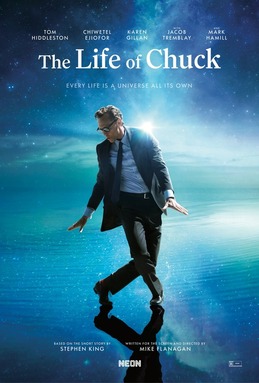
Catching Up With The Films of 2025: The Life of Chuck (dir by Mike Flanagan)


The Life of Chuck is a story told in reverse.

The world is ending and teacher Marty Anderson (Chiwetel Ejiofor) wonders why he keeps seeing signs that announce, “Charles Krantz: 39 Great Years! Thanks, Chuck!”  Marty’s ex-wife (Karen Gillan) calls him and tells him that, at the hospital where she works, she and her co-workers have taken to calling themselves “the suicide squad.”  It would be an effective moment if not for the fact that the film’s narration (somewhat predictably voiced by Nick Offerman) had already informed us of that fact.  Everyone wonders why the world is falling apart.  Why has the internet gone off-line?  Why has California finally sunk into the ocean?  Why are people rioting?  Several characters say that it’s the end times before then adding that it’s not the same end time that the “religious fanatics” and “right-wing nuts” always talk about.  Thanks for clarifying that!  It’s nice to know that, at the end of the world, people will still talk like an aging Maine boomer.

Nine months earlier, a straight-laced banked named Chuck Krantz (Tom Hiddleston) comes across a busker playing her drums on a street corner and feels inspired to start dancing.

Years earlier, a young boy named Chuck Krantz is raised by his grandmother (Mia Sara) and his grandfather (Mark Hamill).  Young Chuck (Jacob Tremblay) inherits a love of dance from his grandmother but, after she dies in a supermarket, his grandfather turns to drinking.  His grandfather keeps one room in their house locked.  (There’s even an absurdly huge lock on the door because The Life of Chuck is not a subtle one.)  Eventually, Chuck discovers what is hidden away in the room and it shapes the rest of his life.

Occasionally, solid genre craftsmen will fill the need to prove that they’re actually deeper than people give them credit for.  In 2020, Stephen King published a novella called The Life of Chuck.  In October of 2023, director Mike Flanagan announced that he had begun filming on his adaptation of The Life of Chuck.  Both King and Flanagan are better-known for their contributions to the horror gerne, though, around 2017, King apparently decided that he was also meant to be a political pundit.  (No writer, with the possible exception of Joyce Carol Oates, has done more damage to their reputation by joining twitter than Stephen King.)  There are elements of horror to be found in The Life of Chuck.  There’s the world ending during Act One.  There’s the locked rom in Act Three.  There’s the terrible acting of the woman playing the drummer in Act Two.  But this definitely is not a horror film.  Instead, it’s King and Flanagan at their most sentimental, heartfelt, and ultimately simplistic.

It’s ultimately a bit too self-consciously quirky for its own good.  Flanagan seems to be really concerned that we’ll miss the point of the film so he directs with a heavy-hand and, at times, he overexplains.  Sometimes, you have to have some faith in your audience and their ability to figure out things on their own.  The scenes of Chuck’s childhood are so shot through a haze of nostalgia that they feel as overly stylized as the scenes that don’t necessarily take place in our reality.  For the most part, the narration could have been ditched without weakening the film.  That said, the film is hardly a disaster.  There are moments that work, like the joyous scene of Tom Hiddleston dancing.  The film tries a bit too hard to be profound but there’s joy to be found in the performances of Hiddleston and Jacob Tremblay.  Chucks seems like a nice guy.

Thanks, Chuck!

4 Shots From 4 Films: Special John Singleton Edition


4 Shots From 4 Films is just what it says it is, 4 shots from 4 of our favorite films. As opposed to the reviews and recaps that we usually post, 4 Shots From 4 Films lets the visuals do the talking.

Today would have been the 58th birthday of John Singleton, the first black filmmaker to ever receive an Oscar nomination for Best Director.  It’s time for….

4 Shots From 4 John Singleton Films

Boyz N The Hood (1991, dir by John Singleton, DP: Chuck Mills)

Poetic Justice (1993, dir by John Singleton, DP: Peter Lyons Collister)

Higher Learning (1995, dir by John Singleon, DP: Peter Lyons Collister)

2 Fast 2 Furious (2003, dir by John Singleton, DP: Matthew Leonetti)