In 1948, one of the richest men in Georgia committed a murder.
John Wallace was a landowner, back when that title actually meant something. He was known as the boss of Meriweather County. Everyone in the county seemed to work for Wallace in one way or another. He controlled the county officials. The sheriff enforced the law only as far as John Wallace would allow him. The bootleggers had to pay Wallace for protection. When one bootlegger, a sharecropper named Wilson Turner, failed to do so, he was fired and kicked off of Wallace’s land.
Turner retaliated by stealing two of Wallace’s cows.
Wallace responded by murdering Turner.
Because Turner attempted to flee and Wallace chased after him, Wallace committed the murder not in Meriweather County but in neighboring Coweta County. What Wallace didn’t realize was that this meant the investigation didn’t fall under the jurisdiction of his hand-picked sheriff. Instead, Sheriff Lamar Potts of Coweta County headed up the investigation. John Wallace was eventually arrested by Sheriff Potts and he was eventually convicted of murdering Wilson Turner. At the time, the case drew a lot of attention both because of Wallace’s wealth but also because two of the main witnesses for the prosecution were the two black men who Wallace forced to help him dispose of Wallace’s body.
It’s an interesting story, largely because the history of America is full of men like John Wallace, people who set up their own little dictatorships. It’s often portrayed as being a Southern phenomena but John Wallace really wasn’t that much different from the crude political bosses who, for decades, dominated politics in city like New York and Chicago, the type who held onto power through a combination of intimidation and patronage. In my home state of Texas, George Berham Parr inherited the political machine that controlled Duval and Jim Wells County. Parr committed numerous crimes during his time as the “Duke of Duval” but he had important friends. He was the one who “found” the votes necessary for Lyndon Johnson to win a senate seat in 1948. (In return, Johnson got Harry Truman to pardon Parr for failing to pay his taxes.) Parr is also suspected of having been involved in at least one murder but it wasn’t until LBJ himself retired from politics that anyone truly investigated Parr’s activities. In 1974, he was again convicted of failing to pay his taxes and Parr was later found dead at his ranch. Suicide was the official police ruling.
As for the story of John Wallace, it was turned into a made-for-TV movie in 1983. Murder in Coweta County stars Andy Griffith as John Wallace and Johnny Cash as Sheriff Potts. Griffith, playing a soulless villain, is chilling as John Wallace. Wallace is all-smiles and good ol’ boy charisma whenever there’s a crowd around but, once it’s just him and his cronies, a different side comes out. Wallace thinks that he can get away with murder because he’s been able to get away with everything else. Sheriff Potts is determined to see that justice is done. Murder in Coweta County is an atmospheric Southern crime story, one that is so full of atmosphere that you can feel the humidity. While Johnny Cash was definitely a better singer than an actor, Andy Griffith’s villainous turn makes the film worth watching.
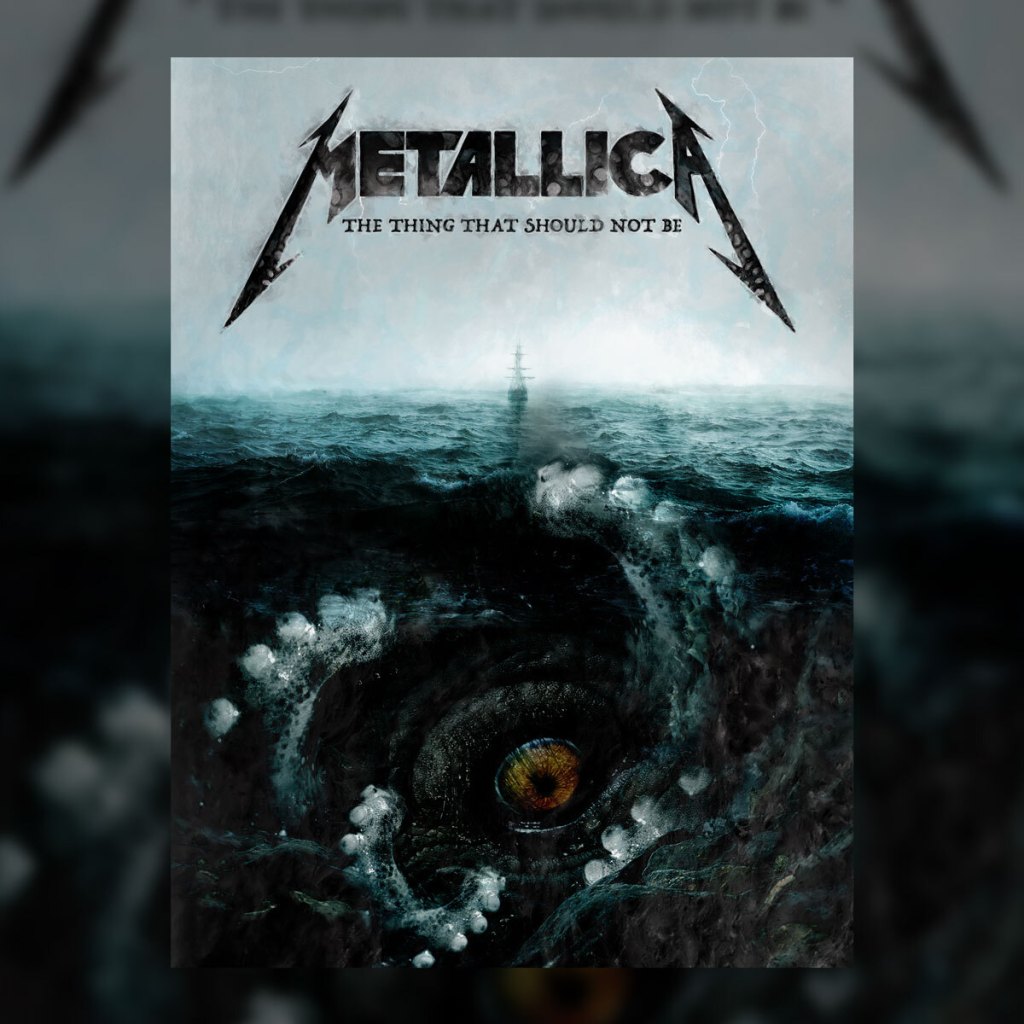
If you’re into heavy music with a dark, spooky vibe, Metallica’s “The Thing That Should Not Be” is a must-listen. The song draws heavy inspiration from H.P. Lovecraft’s stories about ancient sea monsters and forbidden gods — you can feel that eerie cosmic horror flowing through the lyrics and music. Unlike their faster, thrashy songs, this one’s slower and heavier, building this oppressive, almost underwater atmosphere that really pulls you into a different world. The sounds perfectly suit a cosmic horror soundtrack, like you’re hearing something ancient waking up beneath the surface.
Every member of Metallica brings something special here. James Hetfield’s vocals nail that storytelling vibe, like he’s warning you about unspeakable horrors. Kirk Hammett’s guitar solo adds a weird, haunting layer with its echoing bends and wild tone, totally fitting the Lovecraftian theme. Cliff Burton’s bass work gives the song a thick, gnarly depth that makes everything feel huge and otherworldly, while Lars Ulrich’s steady drumming drives the mood without rushing it. Together, they craft this dense, crushing atmosphere that feels like it could be the soundtrack to a cosmic nightmare.
If you want to hear the song take on an epic new dimension, check out the S&M version with the San Francisco Symphony. The orchestra adds massive, cinematic power, turning the track into a full-on cosmic horror soundtrack. The strings and brass layer in this grand, haunting sound that makes the whole thing feel even more apocalyptic and intense. It’s like Metallica took their already heavy and spooky song and gave it the kind of scale and depth that only a symphony can provide. Definitely worth a listen if you want to experience cosmic horror in both metal and orchestral form.
The Thing That Should Not Be
Messenger of fear in sight Dark deception kills the light Hybrid children watch the sea Pray for father, roaming free
Fearless wretch Insanity He watches Lurking beneath the sea
Great old one Forbidden site He searches Hunter of the shadows is rising
Immortal In madness you dwell
Crawling chaos, underground Cult has summoned, twisted sound Out from ruins once possessed Fallen city, living death
Fearless wretch Insanity He watches Lurking beneath the sea
Timeless sleep Has been upset He awakens Hunter of the shadows is rising
Immortal In madness you dwell
[Guitar solo]
Not dead which eternal lie Stranger eons death may die Drain you of your sanity Face the thing that should not be
Fearless wretch Insanity He watches Lurking beneath the sea
Great old one Forbidden site He searches Hunter of the shadows is rising
This October, I’m going to be doing something a little bit different with my contribution to 4 Shots From 4 Films. I’m going to be taking a little chronological tour of the history of horror cinema, moving from decade to decade.
Today, we reach the end of the 50s and the rise of British horror.
4 Shots From 4 Horror Films
Night of the Demon (1957, dir by Jacques Tourneur)
The Curse of Frankenstein (1957, dir by Terence Fisher)
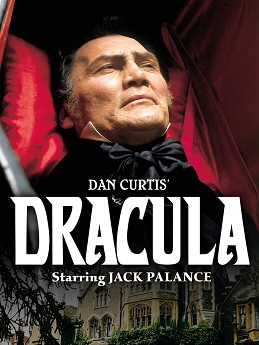
1974’s Bram Stoker’s Dracula opens with a familiar sight.
British solicitor Jonathan Harker (Murray Brown) is in Transylvania, where he has an appointment with a mysterious man named Dracula. The local villagers are superstitious and seem to be frightened of Dracula’s very name. When Harker reaches Dracula’s castle, he discovers that Dracula (Jack Palance) is a courtly but enigmatic man. When Dracula sees a photograph of Jonathan’s fiancée, Mina, and her best friend, Lucy, something about it seems to capture his attention. Later, that night, Jonathan is attacked by several female vampires. After Dracula saves Jonathan’s life, he forced Jonathan to write a letter home, saying that he will be staying in Transylvania for month. Jonathan attempts to escape but is instead dragged off to the crypt, where Dracula’s brides await….
Soon, Dracula is in England. Lucy (Fiona Lewis), who looks exactly like Dracula’s long-dead wife, is taken mysteriously ill and dies. Dr. Abraham Van Helsing (Nigel Davenport), called in when Lucy was showed signs of being sick, suspects that there is a vampire at work. Lucky’s fiancé, Arthur Holmwood (Simon Ward), doesn’t believe it until he sees, with his own eyes, Lucy raised from the dead and calling for him to come and join her….
Not to be confused with the Francis Ford Coppola film, 1974’s Bram Stoker’s Dracula was directed by horror impresario Dan Curtis. It’s a rather loose adaptation of Bram Stoker’s novel. For one thing, Jonathan Harker does not return to England. Dracula is, from the start, more interested in Lucy than in Mina. Lucy’s other suitors — Quincy Morris, John Seward — are not present. And Dracula himself does not get younger as the result of drinking blood. In fact, it’s such a loose adaptation that it’s actually difficult to justify calling it Bram Stoker’sDracula. (In fact, the film is also known as Dan Curtis’s Dracula, which is a far more appropriate title.)
That said, it’s still an entertaining vampire movie. Jack Palance, who previously worked with Dan Curtis in The Strange Case of Dr. Jekyll and Mr. Hyde, gives a properly intense performance as Dracula. He doesn’t try to adopt any sort of Eastern European accent or anything like that. Instead, he delivers his lines through clenched teeth (or, perhaps, fangs) and he fixes his victims with a powerful stare that hints at the animalistic urges behind his controlled demeanor. Palance plays Dracula as being arrogant and convinced that no mere mortal can defeat him. At the same time, there’s a vulnerability to Palance’s Dracula. Watch how his face briefly lights up when he sees Lucy’s picture and is reminded of his long-dead wife. Watch his fury when he discovers that Van Helsing and Arthur have gotten to Lucy before him. His love for his wife is the one shred of humanity that Dracula still has within him. When he loses her a second time (in the form of Lucy), he’s prepared to go to war.
Bram Stoker’s Dracula was originally meant to air in October of 1973 but the showing was pre-empted by the announcement that Vice President Spiro Agnew had resigned. As a result, this film — so clearly meant for Halloween — did not air until February of 1974. That doesn’t seem fair. Poor Dracula.
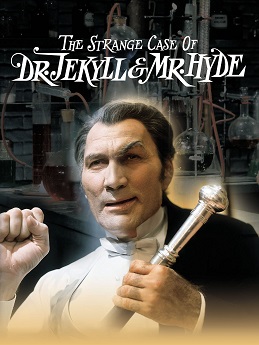
First released in 1968, The Strange Case of Dr. Jekyll and Mr. Hyde is a somewhat loose adaptation of the famous novella by Robert Louis Stevenson.
Jack Palance stars as Dr. Henry Jekyll, a mild-mannered and respected doctor who lives in Victorian-era London and who is convinced that there is a good and dark side lurking in every single person. The dark side is what forces people to break the law and fight with each other. Jekyll feels that his experiments will allow people to get closer to their dark side and, in doing so, defeat it. When Dr. Jekyll explains his theories to a medical association, he is violently jeered and booed. Jekyll returns to his home, enters his laboratory, and takes a drink of the serum that he’s been developing.
The next morning, Dr. Jekyll wakes up with a hangover and no memory of how he spent the previous night. Trying to retrace his steps, Jekyll finds himself in a dance hall where everyone is talking about a well-dressed but ugly man named Edward Hyde. Hyde showed up the previous night, spent a lot of money on a woman named Gwyn (Billie Whitelaw), and then got into a fight with two men. Hyde broke a window to make his escape. Jekyll, sensing what must have happened, pays for the window on behalf of his “friend,” Edward Hyde.
Jekyll continues to drink the serum and he continues to indulge in all of the forbidden vices as Edward Hyde. Eventually, we get to see Palance as Hyde. Unlike a lot of other actors who have played the role, Palance uses a minimum of makeup to suggest his transformation. Instead, he hunches over, scrunches up his face, and he has a unibrow. One of the stranger things about this production is that we are continually told that Hyde looks nothing like Jekyll but we know that’s not true. Instead, Hyde looks exactly like Jekyll making a funny face.
Palance gives one of his more eccentric performances as Jekyll and Hyde. Somewhat surprisingly, he’s far more convincing as the kindly and troubled Dr. Jekyll than as the villainous Mr. Hyde. (As Hyde, Palance is often trying to so hard to maintain his facial paralysis that it’s hard to understand exactly what it is that he’s saying.) With each drink of the serum, Jekyll becomes a bit more confident in himself. However, he also finds himself losing the ability to control the transformations. One morning, he wakes up in his bed and is shocked to discover that he is still Hyde. That same morning, he learns that Hyde is suspected of committing a senseless and brutal murder. Jekyll has no memory of it but he knows that Hyde is guilty. And if Hyde is guilty, so is Jekyll. (Those who make the argument that Dr. Jekyll and Mr. Hyde is ultimately about drug addiction will find plenty to back up that argument in this production,) Jekyll’s anguish as he realizes what he has become is rather poignant to watch.
Produced by horror impresario Dan Curtis, The Strange Case of Dr. Jekyll and Mr. Hyde can seem a bit creaky today. It was apparently highly acclaimed when it first aired but, seen today, it can feel rather stagey and talky. That said, the film has a strong supporting cast, with Denholm Elliott especially giving a good performance as Jekyll’s best friend. Jack Palance’s performance is so bizarre that it transcends the usual standards used to determine good and bad. It’s definitely a film worth watching.
Once again, I have been thwarted from putting a title card from IMDB in my post. In this case, I think they are kind of shy. I was not even able to provide a link. It’s called The Killer and it was created by OTP_tv.
The premise is what if a killer really needs to go to the bathroom after the murder? Funny things happen – that’s what! I would almost describe this short as pure comedy, until the end. I was the first person to watch the short because it dropped today and I coincidentally was around at the time. The short is simple and does not try to be too many things, but it does achieve humor and that’s a good thing.
The short begins with a couple bantering about wine and poo….as you do. Then, it appears the wife is bothered by the joke. The husband is stabbed in the bathroom and hilarity ensues. This is a fun short and does not take itself too seriously. If you have 3 or 4 minutes to spare, let it be The Killer.
I reached out to the creators on YouTube and if they get back to me, I will update the review with additional details.
“When the dead walk, señores, we must stop the killing… or lose the war.”
In 1968, horror cinema was irrevocably changed by the emergence of George A. Romero’s vision, signaling the beginning of a transformative era for the genre. Romero, who had spent much of his early career making industrial and educational films, shifted gears dramatically by crafting Night of the Living Dead, an independent film that did more than just scare audiences—it shattered the conventions of horror. This was a film that rejected the glossy, Gothic monsters of studios like Universal and Hammer, replacing them with raw, unvarnished depictions of human decay and social collapse. The fear Romero invoked was no longer supernatural; it was born from human frailty and social upheaval.
Night of the Living Dead introduced audiences to an entirely new kind of monster: the zombie, not as a mystical or alien infection, but as the reanimated corpse of an ordinary person. This change was more than cosmetic. It shifted the source of horror from “the other” to a reflection of ourselves. Death itself had become weaponized, turning friend into foe in the most visceral way imaginable. The infection was no longer a far-off fantasy but an internal threat. Although the word “zombie” was scarcely spoken in Romero’s first three Dead films, the concept solidified into the cultural lexicon, haunting audiences with the idea that anyone—even the people closest to us—could become the enemy.
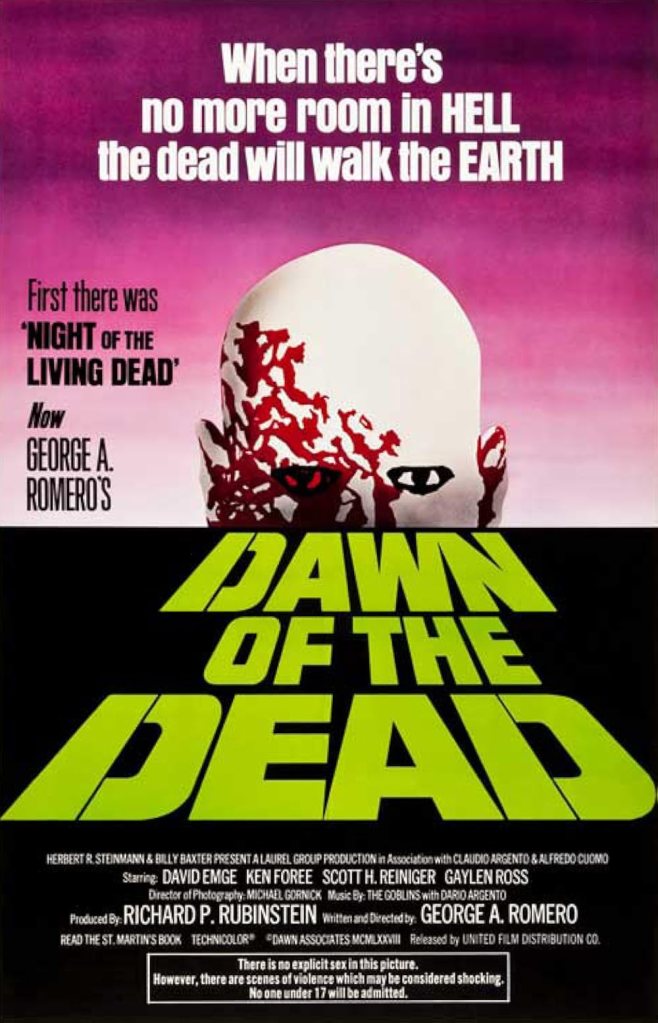
Despite the landmark impact of Night of the Living Dead, it would take a decade before Romero was able to produce its sequel. The first film’s shocking violence and disturbing social commentary made Hollywood studios wary of financing a continuation. However, a breakthrough came when Italian horror maestro Dario Argento learned of Romero’s plans and offered to co-finance Dawn of the Dead under the condition that he would receive European distribution rights and be allowed to edit a version for his audience. This international collaboration proved pivotal, allowing Romero to create what many consider not just a sequel but a towering masterpiece of horror cinema.
Released in 1978, Dawn of the Dead solidified Romero’s reputation as a visionary filmmaker willing to confront uncomfortable truths. The Motion Picture Association of America refused the film an R-rating due to its graphic content, and Romero opted to release it unrated to avoid association with the X-rating, which was then primarily linked to pornography. While this restricted the number of theaters willing to show the film, it did not hinder its success. The movie drew large audiences hungry for a horror story that dared to depict society’s unraveling with brutal honesty.
From its opening, Dawn of the Dead confronts viewers with the chaos midst societal collapse rather than building toward it. Traditional authority figures—news anchors, government officials, police—are portrayed as overwhelmed, often ineffective, and sometimes themselves sources of danger. The film’s opening sequence, set inside a frenzied television newsroom, captures this chaos vividly; reporters and producers struggle to maintain composure while the world outside falls apart. This scene encapsulates one of Romero’s central themes: the erosion of trust in institutions during extreme crisis. As media credibility falters, survivors are left in an informational vacuum, further imperiling their ability to cooperate or find sanctuary. This mistrust resonates strongly today, echoing recent real-world crises where institutional failure has worsened public panic and political division.
A critical early sequence—the tenement raid—brilliantly illustrates the film’s social complexity. The conflict here stems not only from the undead but from a clash of cultures: the low-income inhabitants hold tightly to their traditions, especially the respect and mourning of their dead, while the government, scientists, and law enforcement—detached “outsiders”—seek to destroy the infected bodies coldly as threats. This refusal to recognize the residents’ humanity and cultural practices sparks a brutal firefight, symbolizing the broader breakdown of social cohesion. Romero uses this conflict to show that the apocalypse is fueled as much by misunderstandings and institutional coldness as by the undead threat itself.
Within this crumbling world, the film centers on four survivors who become our guides through Romero’s apocalyptic landscape: Roger (Scott Reiniger) and Peter (Ken Foree), two disillusioned Philadelphia SWAT officers who desert after that violent raid; Stephen (David Emge), a helicopter pilot; and Fran (Gaylen Ross), a television producer. These characters represent the fractured remnants of a society that once clung to institutions but is now adrift. Their escape from Philadelphia aboard a stolen news helicopter is less a triumphant flight than a retreat into uncertainty.
Their destination is a suburban shopping mall near Monroeville, Pennsylvania. The mall, abandoned but intact, quickly becomes their fortress. Clearing out the zombies inside and barricading the doors seems like a triumph—an oasis amid apocalypse. The survivors revel in a surreal form of luxury that stands in stark contrast to the danger outside. For a time, they indulge in consumer comforts previously unattainable: fine clothes, gourmet food, and even jewelry. This phase is both a coping mechanism and a critique. Romero uses the mall setting as a dark mirror to American consumer culture. The shoppers turned zombies wander these halls as if drawn by habit, herding toward the very symbols of consumption that once defined the pre-apocalyptic world.
Romero’s critique extends beyond consumerism run amok; he exposes consumerism itself as a new religion for America. In the 1970s, as economic and social uncertainties shook the nation, megamalls emerged as the new temples of worship where consumer habits became ritualistic acts of devotion. The film’s setting drives home this analogy—the mall is not simply a marketplace but a sacred space where the rituals of buying and consuming provide meaning and identity. The zombies’ relentless, automatic wandering through the mall’s stores reflects a zombified devotion to these rituals, implying that consumerism has replaced spiritual and community values, offering hollow salvation in its place.
This portrayal is not accidental but deliberately satirical. The mall is a gilded cage, symbolizing consumerism’s dominance over American identity. Even in the apocalypse, the survivors replicate the rituals of capitalism, clinging to items of superficial value and meaning. The zombies’ mindless shuffling through stores like Woolworth’s and the food court underscores this grotesque cycle. Romero’s message is sharp: consumerism is a kind of death, a trance that distracts from and perhaps accelerates societal decay. The film implies that in America, the line between life and death blurs within the walls of the shopping mall because it is there that life’s priorities have long been warped.
While consumerism forms a visible backdrop, Dawn of the Dead probes deeper, exposing a darker undercurrent: humanity’s inherent violent nature as the real engine of destruction. The undead are monstrous and fearful, but they lack the complexity and self-destructiveness of the living. Throughout the film, Romero presents violence not as a rare failing but as a baseline condition of human behavior. The survivors themselves struggle to suppress impulses of aggression, paranoia, and selfishness that grow more toxic over time.
Roger’s reckless bravado during their clearing of the mall leads to a fatal bite from a zombie, making his death a metaphor for the cost of unchecked aggression. The living kill as readily as the dead, but with purpose and calculation that is often more destructive. The raiding biker gang that ultimately invades the mall appears as a harsh symbol of this self-inflicted violence. Unlike the zombies, whose threat is instinctive, the bikers wield cruelty consciously, plundering and destroying the survivors’ fragile sanctuary. Their incursion shatters any illusion of security and exposes the futility of individualistic survival strategies when cooperation is absent.
The unraveling of the survivors’ cohesion over the course of the film underscores one of Romero’s most bleak insights: humanity’s greatest enemy is itself. Even small groups that depend on trust and unity quickly fragment amid fear and scarcity. Despite the severity of their predicament, the four protagonists are often consumed by petty grievances, distrust, and self-preservation. Romero suggests that unless cooperation becomes a collective imperative, survival is impossible. The dead multiply endlessly, but it is the living who ensure society’s demise by turning against each other first.
Romero’s Dawn of the Dead also marks the cinematic arrival of Tom Savini, whose pioneering make-up effects would forever transform horror filmmaking. Savini and members of his team not only crafted many of the film’s grisly effects but also played some of the biker gang antagonists, blending artistry and performance. While the gore in Dawn can appear somewhat garish or cartoony on film, largely due to lighting effects and the practical limits of makeup technology at the time, Savini’s work set the standard for modern horror effects. His techniques and vision became the bedrock of the gore genre, influencing decades of horror cinema thereafter. His legacy continued as he later directed the 1990 remake of Night of the Living Dead, bringing Romero’s seminal vision to a new generation with his signature effects sensibility.
Ken Foree’s portrayal of Peter anchors the film emotionally; his performance balances toughness with vulnerability, capturing a man grappling with the collapse of law and societal norms while striving to retain his humanity. Scott Reiniger’s Roger provides a volatile contrast—impulsive, reckless, and ultimately tragic—as his aggression leads directly to his downfall. David Emge’s Stephen and Gaylen Ross’ Fran round out the core survivors, expressing pragmatism, grief, and the desperate need for connection as their world crumbles. Their dynamic interactions highlight Romero’s warning: human connection in times of extremity is fragile and fraught, undermined by fear and mistrust.
Romero’s expert use of sound and music further elevates the film. The eerie muzak playing through the mall’s PA system contrasts sharply with the groans of the undead and sudden bursts of violence, creating a haunting dissonance between normalcy and chaos. This effective sound design emphasizes the thematic conflict between consumerist detachment and encroaching apocalypse.
Beyond its horror, Dawn of the Dead serves as a time capsule of late-1970s American socio-political anxieties. America was reeling from the disillusionment of Vietnam, shaken by the Watergate scandal, and grappling with urban decay and economic malaise. The film vividly captures this zeitgeist: a society where institutions are distrusted, violence is normalized, and consumerism both numbs and destroys. Romero’s criticism extends to Cold War paranoia, reflected in his depiction of apocalypse not as a sudden cataclysmic event but a slow, grinding decline fueled by human self-destruction.
Romero’s directing style—unpolished at times but unflinching—adds authenticity to the film’s grim message. His use of long takes, handheld camera work, and naturalistic performances grounds the supernatural in the everyday, making the horror tangible. The bleak humor sprinkled throughout, such as the zombies’ fascination with the mall’s siren and muzak, darkens the tragedy with satirical bite.
Dawn of the Dead does not offer easy hope. Its ending—marked by betrayal, destruction, and resignation—echoes Romero’s worldview: humanity’s baser instincts, left unchecked, will always undermine salvation. Yet, in this stark vision lies an ironic beauty: survival is not only about killing or hiding but the recognition of our shared flaws and the possibility, however slim, of striving beyond them.
In conclusion, Dawn of the Dead remains a masterpiece of horror, combining groundbreaking practical effects, compelling performances, and incisive social commentary to create a film that is as relevant today as it was nearly fifty years ago. Romero’s work challenges viewers to confront the monsters within us all and questions whether human nature’s violent and consumerist impulses might prove more lethal than any undead army. Its enduring legacy lies not just in its scares but in its profound understanding of societal collapse and the fragile bonds that sustain civilization.
For today’s horror on the lens, how about a little werwolf action?
In the 1974 made-for-TV movie, Scream of the Wolf, Peter Graves is a writer who is asked to help solve a series of mysterious murders. The fact that both human footprints and wolf tracks have been found at each murder scene has led some people to assume that the killer must be a werewolf! Will Graves be able to prove them wrong or will it turn out that they are right? Graves calls in a famous hunter (Clint Walker) to help track down the killer but it turns out that the hunter has secrets of his own.
Scream of the Wolf features a screenplay from Richard Matheson and it was directed by television horror specialist, Dan Curtis. It feels like it was probably meant to be a pilot in which Peter Graves would deal with a supernatural mystery on a weekly basis. Even if the movie didn’t lead to a series, it’s still enjoyably atmospheric.
Back in the day, this music video was banned by MTV for what the channel considered to be “senseless and excessive violence.” Lemmy driving and giving everyone the finger really upset them.
Director Ron Swenson was best-known for being the manager of the Plasmatics.





 Through the Shattered Lens