Webb appeared in a handful of films but he’s probably best remembered for developing, directing, and starring in America’s first cop show, Dragnet. As Sgt. Joe Friday, Webb dealt with crimes both big and small. In the late 60s, he dealt with hippies and other anti-American forces. A few years ago, I binged the 60s version of Dragnet and I have to admit I got totally addicted to it. It was somehow both effective and totally camp at the same time. That takes skill!
Webb is the narrator of today’s Blast From The Past. 1961’s A Force In Readiness is a 30-minute short film about the Marines. Seen today, it seems like a lengthy commercial but, when it was first released, the director was awarded a special Oscar “for his outstanding patriotic service in the conception, writing and production of the Marine Corps film, A Force in Readiness, which has brought honor to the Academy and the motion picture industry.”
Webb provides the narration in his trademark style. If the Greatest Generation could all speak in one voice, that voice would probably sound a lot like Jack Webb’s.
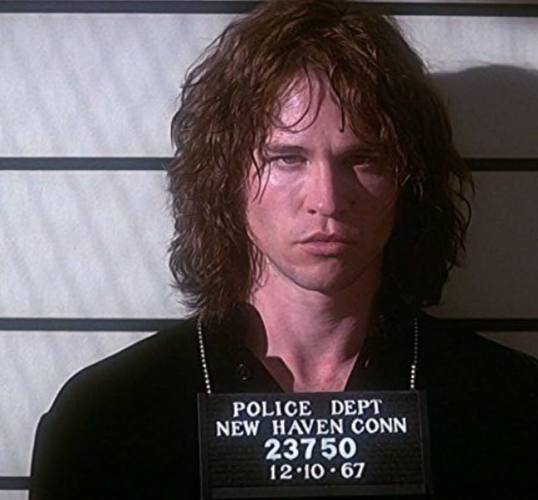
That can be a dangerous thing to admit, about both the band and Oliver Stone’s 1991 film. Yes, both the band and the film could be a bit pretentious. They both tended to go on for a bit longer than necessary. They were both centered around a guy who wrote the type of poetry that I used to love back in my emo days. It’s all true.
But, with The Doors as a band, I find that I can’t stop listening to them once I start. Even if I might roll my eyes at some of the lyrics or if I might privately question whether any blues song really needs an organ solo, I can’t help but love the band. They had a sound that was uniquely their own, a psychedelic carnival that brought to mind images of people dancing joyfully while the world burned around them. And say what you will about Jim Morrison as a poet or even a thinker, he had a good voice. He had the perfect voice for The Doors and their rather portentous style. From the clips that I’ve seen of him performing, Morrison definitely had a stage presence. Morrison died young. He was only 27 and, in the popular imagination, he will always look like he’s 27. Unlike his contemporaries who managed to survive the 60s, Morrison will always eternally be long-haired and full of life.
As for The Doors as a movie, it’s definitely an Oliver Stone film. It’s big. It’s colorful. It’s deliberately messy. Moments of genuinely clever filmmaking and breath-taking visuals are mixed with scenes that are so heavy-handed that you’ll be inspired to roll your eyes as dramatically as you’ve ever rolled them. Stone loved the music and that love comes through in every performance scene. Stone also loves using Native Americans as symbols and that can feel a bit cringey at times. Why would Jim Morrison, whose was of Scottish and Irish ancestry, even have a Native American spirit guide? At its best The Doors captures the chaos of a world that it’s the middle of being rebuilt. The 60s were a turbulent time and The Doors is a turbulent movie. I’ve read many reviews that criticized The Doors for the scene in which Morrison gets involved in a black magic ceremony with a journalist played by Kathleen Quinlan. I have no idea whether or not that scene happened in real life but the movie is so full of energy and wild imagery that the scene feels like it belongs, regardless of whether it’s true or not. Stone turns Jim Morrison into the warrior-artist-priest that Morrison apparently believed himself to be and the fact that the film actually succeeds has far more to do with Oliver Stone’s enthusiastic, no-holds-barred direction and Val Kilmer’s charismatic lead performance than it does with Jim Morrison himself.
The Doors spent several years in development and there were several actors who, at one time or another, wanted to play Morrison. Everyone from Tom Cruise to John Travolta to Richard Gere to Bono was considered for the role. (Bono as Jim Morrison, what fresh Hell would that have been?) Ultimately, Oliver Stone went with Val Kilmer for the role and Kilmer gives a larger-than-life performance as Morrison, capturing the charisma of a rock star but also the troubled and self-destructive soul of someone convinced that he was destined to die young. Kilmer has so much charisma that you’re willing to put up with all the talk about opening the doors of perception and achieving a higher consciousness. Kilmer was also smart enough to find the little moments to let the viewer know that Morrison, for all of his flamboyance, was ultimately a human being. When Kilmer-as-Morrison winks while singing one particularly portentous lyric, it’s a moment of self-awareness that the film very much needs.
(When the news of Kilmer’s death was announced last night, many people online immediately started talking about Tombstone, Top Gun, and Top Secret. For his part, Kilmer often said he was proudest of his performance as Jim Morrison.)
In the end, The Doors is less about the reality of the 60s and Jim Morrison and more about the way that we like to imagine the 60s and Jim Morrison as being. It’s a nonstop carnival, full of familiar faces like Kyle MacLachlan, Michael Madsen, Crispin Glover (as Andy Warhol), Frank Whaley, Kevin Dillon, and a seriously miscast Meg Ryan. It’s a big and sprawling film, one that is sometimes a bit too big for its own good but which is held together by both Stone’s shameless visuals and Val Kilmer’s charisma. If you didn’t like the band before you watched this movie, you probably still won’t like them. But, much like the band itself, The Doors is hard to ignore.
Though the Academy of Motion Picture Arts and Sciences claim that the Oscars honor the best of the year, we all know that there are always worthy films and performances that end up getting overlooked. Sometimes, it’s because the competition too fierce. Sometimes, it’s because the film itself was too controversial. Often, it’s just a case of a film’s quality not being fully recognized until years after its initial released. This series of reviews takes a look at the films and performances that should have been nominated but were, for whatever reason, overlooked. These are the Unnominated.
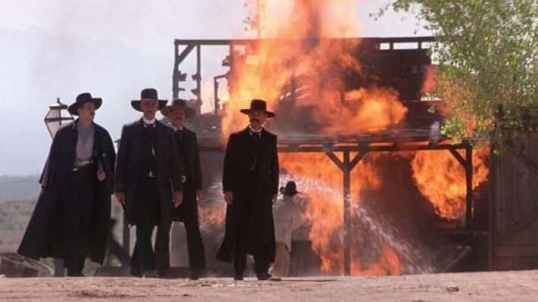
I have come around on Tombstone.
The first time I watched this 1993 film, I was a bit confused as to why so many of my friends (especially my male friends) worshipped the film. To me, it was a bit too messy for its own good, an overlong film that told a familiar story and which featured so many characters that it was difficult for me to keep track of them all. Perhaps because everyone I knew loved the film so much, I felt the need to play contrarian and pick out every flaw I could find.
And I still think those flaws are there. The film had a troubled production, with original director Kevin Jarre falling behind in shooting and getting replaced by George Pan Cosmatos, a director who didn’t have any real interest in the material and whose all-business approach rubbed many members of the cast the wrong way. Kurt Russell took over production of the film, directing the actors and reportedly paring down the sprawling script to emphasize the relationship between Russell’s Wyatt Earp and Val Kilmer’s Doc Holliday. On the one hand, this led to a lot of characters who really didn’t seem to have much to do in the finished film. Jason Priestley’s bookish deputy comes to mind. On the other hand, Russell was right.
The film’s heart really is found in the friendship between Wyatt and Doc. It doesn’t matter that, in real life, Wyatt Earp was hardly as upstanding as portrayed by Kurt Russell. It also doesn’t matter that the real-life Doc Holliday was perhaps not as poetic as portrayed by Val Kilmer. Today, if you ask someone to picture Wyatt Earp, they’re probably going to picture Kurt Russell with a mustache, a cowboy hat, and a rifle. And if you ask them to picture Doc Holliday, they’re going to picture Val Kilmer, sweating due to tuberculosis but still managing to enjoy life. Did Doc Holliday every say, “I’ll be your huckleberry,” before gunning someone down? He might as well have. That’s how he’s remembered in the popular imagination. And it’s due to the performances of Russell and Kilmer that I’ve come around to eventually liking this big and flawed western. With each subsequent viewing, I’ve come to appreciate how Russell and Kilmer managed to create fully realized characters while still remaining true to the Western genre. If Wyatt Earp initially fought for the law, Doc Holliday fought for friendship. Kilmer is not only believable as a confident gunslinger who has no fear of walking into a dangerous situation. He’s also believable as someone who puts his personal loyalty above all else. He’s the type of friend that everyone would want to have.
That said, I do have to mention that there are a lot of talented people in the cast, many of whom are no longer with us but who will live forever as a result their appearance here. When Powers Boothe delivered the line, “Well …. bye,” he had no way of knowing that he would eventually become a meme. Boothe is no longer with us, I’m sad to say. But he’ll live forever as long as people need a pithy way to respond to someone announcing that they’re leaving social media forever. Charlton Heston appears briefly as a rancher and he links this 90s western with the westerns of the past. Robert Mitchum provides the narration and it just feels right. The large ensemble cast can be difficult to keep track of and even a little distracting but there’s no way I can’t appreciate a film that manages to bring together not just Russell, Kilmer, Boothe, Heston, and Mitchum but also Sam Elliott, Bill Paxton, Michael Biehn, Michael Rooker, Billy Bob Thornton, Frank Stallone, Terry O’Quinn, and even Billy Zane! The female roles are a bit underwritten. Dana Delaney is miscast but Joanna Pacula feels exactly right as Doc Holliday’s lover.
But ultimately, this film really does belong to Val Kilmer. When I heard the sad news that he had passed away last night, I thought of two films. I thought of Top Gun and then I thought of Tombstone. Iceman probably wouldn’t have had much use for Doc Holliday. And Doc Holliday would have resented Iceman’s attitude. But Val Kilmer — that brilliant actor who was so underappreciated until he fell ill — brought both of them to brilliant life. In the documentary Val, Kilmer attends a showing of Tombstone and you can say he much he loves the sound of audience cheering whenever Doc Holliday showed up onscreen.
Tombstone was a flawed film and 1993 was a strong year. But it’s a shame that Val Kilmer was never once nominated for an Oscar. Tombstone may not have been a Best Picture contender but, in a year when Tommy Lee Jones won the Oscar for Best Supporting Actor for his role in the similarly flawed The Fugitive, it seems a shame that Kilmer’s Doc Holliday was overlooked.
Tombstone (1993, dir by George Pan Cosmatos (and Kurt Russell), DP: William Fraker)
Jedadiah Leland wrote and very good review on the 1986 crime drama At Close Range (dir. by James Foley) that brought up some nostalgic memories growing up as a teenager during the 1980’s. Pretty much every teenage boy had a crush on Madonna when she first debut and the years following. I wasn’t immune to such a crush.
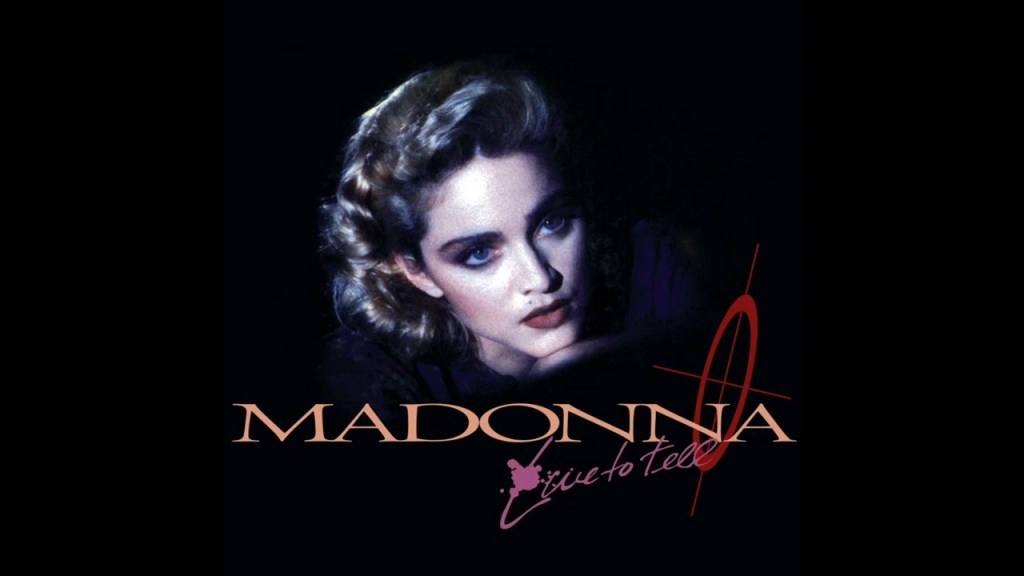
The latest “Song of the Day” is Live to Tell”, a song that Madonna co-wrote and co-produced with songwriter and film composer Patrick Leonard for At Close Range who also happened to star her-then husband Sean Penn. “Live to Tell” was a major departure for the pop-centric Madonna in that it was a bluesy, torch ballad that evoked feelings of regret and the scars of childhood tragedy.
Even Madonna’s look in the accompanying video shows her in a much more toned-down and mature image that brought to mind singers and actresses of the 1940’s and 50’s. Ironically, while the song itself was one of Madonna’s least controversial releases during her early years, her performance of the song during 2006’s Confessions Tour was seen as controversial by the Roman Catholic Church due to her hanging from a cross on stage.
Live to Tell
I have a tale to tell Sometimes it gets so hard to hide it well I was not ready for the fall Too blind to see the writing on the wall
A man can tell a thousand lies I’ve learned my lesson well Hope I live to tell the secret I have learned till then it will burn inside of me
I know where beauty lives I’ve seen it once I know the warmth she gives The light that you could never see It shines inside you can’t take that from me…
A man can tell a thousand lies I’ve learned my lesson well Hope I live to tell the secret I have learned till then it will burn inside of me…
The truth is never far behind You’ve kept it hidden well If I live to tell the secret I knew then Will I ever have the chance again?
If I ran away I’d never have the strength to go very far How would they hear the beating of my heart…? Will it grow cold? (will it grow cold?) The secret that I hide Will I grow old? How will they hear? When will they learn? How will they know…?
A man can tell a thousand lies I’ve learned my lesson well Hope I live to tell the secret I have learned till then it will burn inside of me…
The truth is never far behind You’ve kept it hidden well If I live to tell the secret I knew then Will I ever have the chance again…? A man can tell a thousand lies I’ve learned my lesson well Hope I live to tell the secret I have learned till then it will burn inside of me…
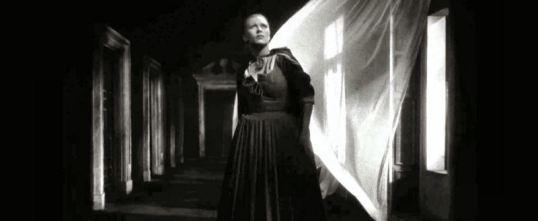
4 Shots From 4 Films is just what it says it is, 4 shots from 4 of our favorite films. As opposed to the reviews and recaps that we usually post, 4 Shots From 4 Films lets the visuals do the talking!
Today, we pay tribute to the year 1946. It’s time for….
4 Shots From 4 1946 Films
Beauty and the Beast (1946, dir by Jean Cocteau, DP: Henri Arinal)
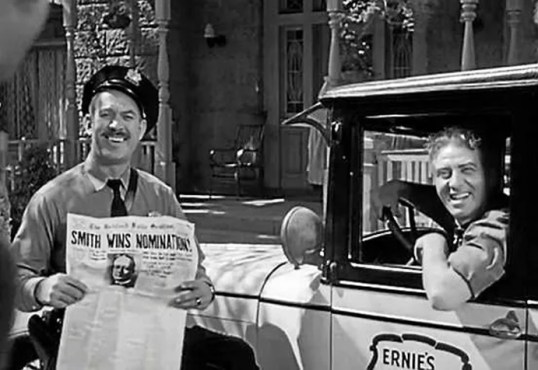
It’s A Wonderful Life (1946, dir by Frank Capra, DP: Joseph Walker and Joseph Biroc)
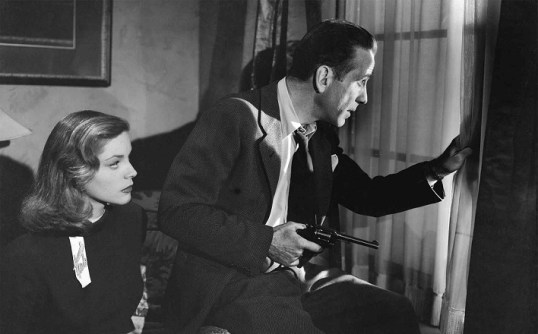
The Big Sleep (1946, dir by Howard Hawks, DP: Sidney Hickox)
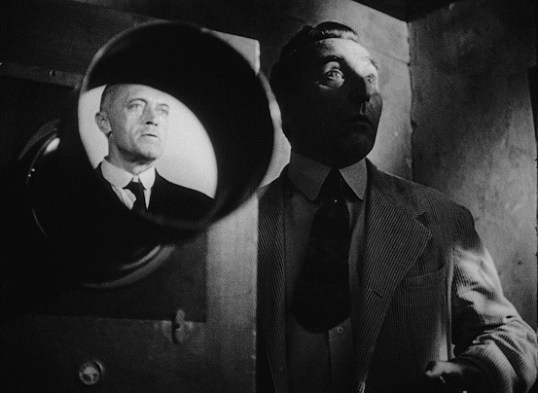
The Stranger (1946, dir by Orson Welles, DP: Russell Metty)
I hope that’s not a case where you are today. If it is, calm down. Take a walk. Take a few deep breaths. Count backwards from 100. Listen to this song. You’re going to be okay!
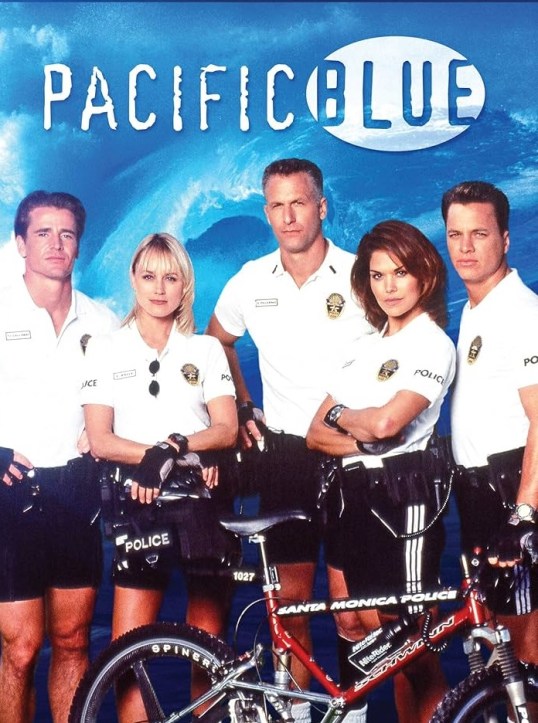
Welcome to Late Night Retro Television Reviews, a feature where we review some of our favorite and least favorite shows of the past! On Tuesdays, I will be reviewing Pacific Blue, a cop show that aired from 1996 to 2000 on the USA Network! It’s currently streaming everywhere, though I’m watching it on Tubi.
A serial arsonist is setting Malibu on fire so, of course, the bike patrol is called in.
Episode 1.11 “The Phoenix”
(Dir by Charles Siebert, originally aired on May 11th, 1996)
Fires are breaking out all over Malibu. Whoever the arsonist is, he seems to be targeting a shady businessman named Curtis Bilson (Michael Cavanaugh). TC and Chris decide to start investigating the arsons themselves, even though neither one of them is in the arson division. “Bike patrol?” the arson detective asks, when he first meets them. However, because everyone respects Lt. Palermo, TC and Chris are allowed to investigate. Chris, being a former jet pilot, is naturally an expert on accelerants. “Smells like jet fuel.” Wow, really?
(Basically, this is the equivalent of allowing a school crossing guard to head up the search for a serial killer.)
A surfer named Suicide (Sam Hennings) insists that he saw the fire being set by The Phoenix, a legendary arsonist who the police consider to be dead. His real name was Willoughby (Tim DeZarn) and the official story is that he got caught in one of his own fires and his body was reduced to ash and that’s why he disappeared without leaving a trace behind. That seems awfully convenient and really doesn’t make much sense when you think about it but, then again, Malibu has their bike patrol investigating a serial arsonist. We’re through the looking glass here.
(Myself, I’m concerned by the fact that no one seems to find it weird that their source is nicknamed “Suicide.” I’m going to guess that’s a surfer thing but still, I cringed every time TC said, “My friend, Suicide….”)
TC and Chris’s investigation leads them to Dr. Anton (Dennis Christopher), an arsonist who is currently in a mental hospital. They try to do a Lecter/Clarice thing between Anton and Chris. Dennis Christopher is a good actor and it appears that he was having fun playing a thoroughly demented character. Jim Davidson and Darlene Vogel were very bad actors and it seems almost unfair to force them to share a scene like Dennis Christopher. It’s like giving me a chance to play tennis on national television and then telling me, right when the cameras start rolling, that I’m going to be playing against the Williams sisters. It’s just adding insult to injury.
Anyway, it turns out Willoughby is still alive and he’s targeting the businessman and he also kidnaps Lt. Palermo for some reason. Chris and TC are able to save Palermo and the crooked guy from the inferno and Willoughby once again vanishes. Because, of course, he does….
Meanwhile, Cory tries to catch a man who keeps bringing a snake to the boardwalk. At one point, she accidentally gets doused in a wet t-shirt contest. She’s win the trophy and then come back to the station without bothering to change shirts, which kind of goes against everything we’ve seen about Cory’s personality up until this point. For some reason, Palermo also puts Cory in charge of catch a mouse that’s running around the station. The snake, once captured, eats the mouse but then gets lost in the station. That made me laugh just because I like it whenever its acknowledged that the bike patrol is totally incompetent.
Next week …. Chris has a new boyfriend! Dr. Anton, maybe? We’ll find out!
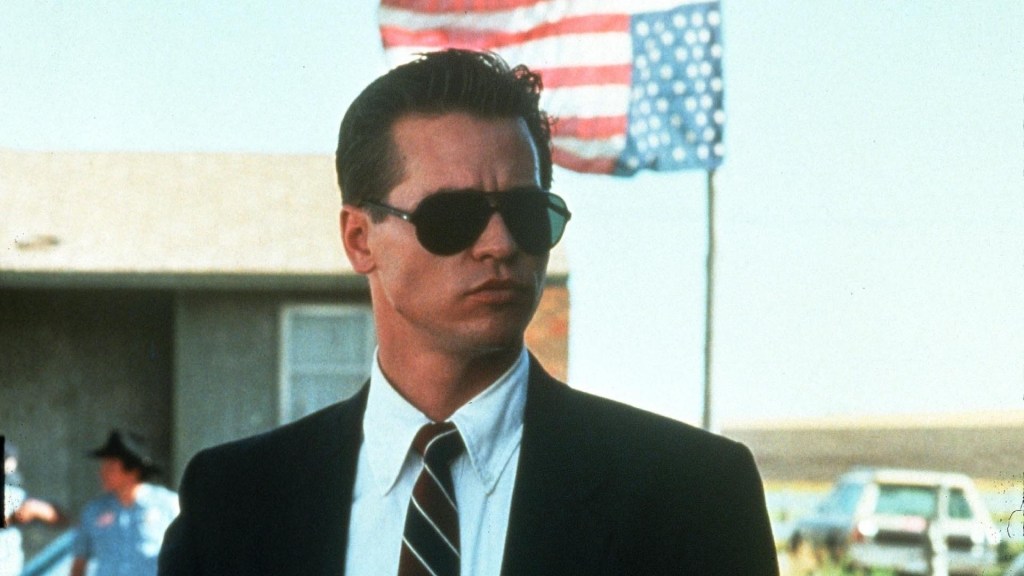
My personal favorite Val Kilmer film is THUNDERHEART (1992), but he was the kind of actor I always enjoyed seeing. Thanks for the memories, Val. I will be enjoying your movies for the rest of my life.
First released (after being delayed by the COVID lockdowns) in 2021, The God Committee tells the story of a group of doctors faced with a difficult decision.
They’re the so-called God Committee, the ones who have been tasked with deciding which one of their patients will be receiving a new heart. When the original “next name on this list” suddenly dies while being prepped for surgery, it comes down to three other possibilities. One is a cranky old woman who has said that she doesn’t even want a new heart. Another is a middle-aged, obese Black family man who suffers from bipolar disorder and who, years earlier, attempted to commit suicide. And finally, there’s a young white guy who is famous for his addictions and his wild lifestyle. He’s just arrived at the hospital, in critical condition. Normally, his history of cocaine addiction would rule him out as a possible recipient but his father (Dan Hedaya) is rich and the hospital is in desperate need of money.
“I’m not going to let a good heart go to waste,” the brilliant Dr. Andre Boxer (Kelsey Grammer) says and he has a point. Most candidates for a heart transplant die before a suitable heart is found. This heart, taken from a teenage boy was hit by a car while returning home from a date, is a good one but it won’t stay viable forever. Boxer, who is scheduled to leave the hospital in another month to set up his own private practice, is torn between the candidates. Dr. Valerie Gilroy (Janeane Garofalo) and Father Dunbar — a disbarred lawyer-turned-priest — both feel the heart should go to the patient whose father can afford to fund the hospital. Even if the decision is made just for the money, it’ll still do some good. Dr. Jordan Taylor (Julie Stiles), who is Dr. Boxer’s former lover, is not so sure. Psychiatrist Dr. Allen Lau (Peter Kim) recuses himself from voting for personal reasons and Nurse Wilkes (Patricia R. Floyd) eventually casts a vote that takes everyone by surprise.
While the God Committee debates who should get the heart, the film occasionally flashes forward. Dr. Boxer, who is now dying and in need of a heart transplant himself, is working on a project that, if successful, will revolutionize the organ transplant business. But will he survive long enough to see it completed? Dr. Taylor, now in charge of the God Committee, tracks him down and asks him if he’s ready to see his son. Though it takes a while for us to understand why and how, the decision that Doctors Boxer and Taylor made in the past will continue to have repercussions in the present.
The God Committee is based on a play. Even if I didn’t already know that, I would have guessed as much from watching the film. The God Committee is type of melodrama that tends to work better on stage than on film. The artificiality of the stage allows for a story to be a bit overbaked and heavy handed. On the other hand, as a film, The God Committee‘s arguments are stacked so heavily to one side that it weighs down the plot. It’s not enough for the rich candidate to be a former drug addict. He also has to beat his pregnant girlfriend and leave her with a roadmap of cuts crisscrossing across her face. It’s not for the good candidate to simply be a nice guy with a family. Instead, he’s presented as being almost saintly. There’s nothing subtle about it.
Fortunately, the talented cast steps up and keeps the story from going off the rails, with Julia Stiles, Colman Domingo, and Kelsey Grammer especially bringing some much-needed shading and nuance to their roles. Grammer especially does well as the genius who can save lives and change the world but who struggles to connect with anyone on an emotional level. In the end, The God Committee works due to the strength of its performers, all of whom bring their characters to multi-layered life and who remind us that it’s never easy to play God.
 Through the Shattered Lens