Disaster on the Coastliner (1980, directed by Richard C. Sarafian)


A completely computerized passenger train is traveling across the country, with the Vice President’s wife as one of the passengers.  When Jim Waterman (Paul L. Smith), a man who blames the railroad for the death of his family, manages to hijack the train he plans to ram into a locomotive until his demands a met.  He wants railroad president Estes Hill (Raymond Burr) to take responsibility for the crash that killed his wife and children.  With Waterman determined to crash the two trains, it falls to dispatchers Al Mitchell (Lloyd Bridges) and Roy Snyder (E.G. Marshall) to try to figure out a way to stop the collision.  Helping them out on the train is a con artist named Stuart Peters (William Shatner!) who may be wanted by the police but who is still willing to do whatever it takes to save his fellow passengers.

Disaster on the Coastliner is an above-average made-for-TV disaster movie.  Even though it was obviously made for a low-budget and that the majority of the money was probably spent on securing the B-list cast, there are enough shots of the train careening on the tracks to bring happiness to the hearts of most disaster movie fans.  The cast is full of the type of people who you would typically expect to find in a movie like this, people like Raymond Burr, Lloyd Bridges, and William Shatner.  Bridges, interestingly enough, gives the same performance here that he gave in Airplane! and when he starts ranting about how everything’s computerized, he sounds like he could be reciting dialogue from that film.  The only difference is that Airplane! was a comedy while Disaster On The Coastliner is meant to be a drama.  Raymond Burr also does a good job hamming it up as the president of the railroad.  He spends most of the movie sitting behind his desk and looking annoyed, which was pretty typical of Burr in the years after Perry Mason and Ironside. 

For a lot of people, the main appeal of this film will be seeing what William Shatner was doing in between Star Trek movies.  This is a typical early 80s Shatner performance, when he was still trying too hard to win that first Emmy but also when he had just starting to develop the self-awareness necessary to poke fun at his own image.  Shatner really digs into the role of a conman with a heart of gold.  He delivers his lines in his trademark overdramatic style but, in scenes like the one where he sheepishly discovers that a door that he’s been pounding on was unlocked all the time, Shatner actually seems to be in on the joke.  Shatner also did his own stunts in this film, including one where he had stand on top of a speeding train.  In his autobiography, Shatner wrote that he wasn’t even wearing a safety harness in the scene so give it up for Bill Shatner.  That took guts!

Fast-paced and agreeably unpretentious, Disaster On The Coastliner is an enjoyable runaway train movie.

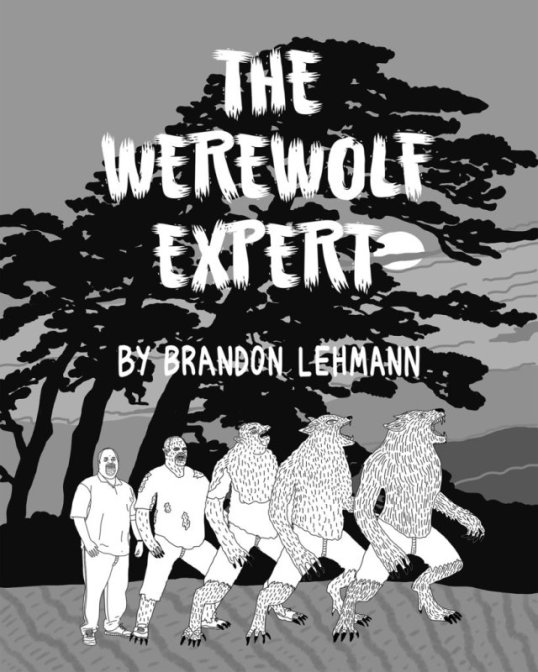
 

Howling At The Moon With Brandon Lehmann’s “The Werewolf Expert”


Ryan C. (fourcolorapocalypse)'s avatarRyan C.'s Four Color Apocalypse

I trust I’m not going out on a limb when I assert that we’re living in absurd times — the evidence is, quite literally, both constant and everywhere. What’s easy to forget in the midst of it all, though, is that absurdity needn’t necessarily have tragic consequences, as is the case all too often now — in fact, absurdity can be downright funny. And while this has probably never seemed further from the truth, the good news is that you don’t need to take my word for it. You can ask Seattle-based cartoonist Brandon Lehmann instead.

Come to think of it, you probably should, because unlike me, he can write and draw a comic that proves it — hell, he already has many times over, and his latest mini, The Werewolf Expert (released under the auspices of his own Bad Publisher Books imprint), is perhaps the most succinct…

View original post 543 more words

Song of the Day: The Main Theme From The Good, The Bad, and the Ugly by Ennio Morricone


You knew this one was coming, right?  Seriously, no tribute to Ennio Morricone is complete without the main theme from The Good, The Bad, and the Ugly

Morricone’s score is as much of a character in this film as the ones played by Clint Eastwood, Eli Wallach, and Lee Van Cleef.  It perfectly sets the moods, telling us that we’re about to see something that is truly epic.  The opening notes, which have so often been parodied but which have never lost their power, truly capture the feel of Sergio Leone’s mythical vision of the old west.

So, without further rambling from me, here it is:

Previous Entries In Our Tribute To Morricone:

  1. Deborah’s Theme (Once Upon A Time In America)
  2. Violaznioe Violenza (Hitch-Hike)
  3. Come Un Madrigale (Four Flies on Grey Velvet)
  4. Il Grande Silenzio (The Great Silence)
  5. The Strength of the Righteous (The Untouchables)
  6. So Alone (What Have You Done To Solange?)
  7. The Main Theme From The Mission (The Mission)
  8. The Return (Days of Heaven)
  9. Man With A Harmonic (Once Upon A Time In The West)
  10. The Ecstasy of Gold (The Good, The Bad, and the Ugly)

The Gladiator (1986, directed by Abel Ferrara)


A serial killer known as The Skull is prowling the dark streets of Los Angeles.  Driving a customized death car, he chases down other motorists and forces them into fatal accidents.  Though the police aren’t convinced that the Skull’s real, Rick Benton (Ken Wahl) knows that he’s out there.  Rick was teaching his younger brother (Brian Robbins) how to drive when the Skull chased them down and ran them off the road.  His brother was killed.  Rick spent several days in a coma.  Even after the police try to convince him that he was the victim of a drunk driver, Rick suspects that he and his brother were deliberately targeted.

Rick is a car guy, himself.  After attending a support group for people who have lost loved ones to drunk drivers, Rick decides to take the law into his own hands.  He modifies his pickup truck and then takes to the streets, tracking down drunk drivers and ramming them off of the road.  He then calls the police, letting them know where they can pick up the drunks.  Rick is careful to never actually hurt anyone but Lt. Frank Mason (Robert Culp) still isn’t happy that there’s a vigilante out there, taking the law into his own hands.

With all of Los Angeles wondering about the identity of the vigilante that the media has dubbed “The Gladaitor,” Rick prepares to track down the Skull.

The Gladiator was directed by Abel Ferrara, who brings his trademark style to the film.  Rick is not just a vigilante with a super truck.  He’s also a man who is clearly still in mourning and who deals with his own feelings of guilt by tracking down unsafe drivers.  When he realizes that someone is deliberately killing other drivers, he becomes grimly obsessed with tracking down the Skull and, in typical Ferrara fashion, it often seems as if his quest for vengeance might leave him as unhinged as the man he’s trying to stop.  Though Rick is clearly the fim’s hero and all of the drunks that he stops are obnoxious and deserving of what they get, Ferrara doesn’t blindly celebrate Rick’s actions.  Some of the people who treat the Gladiator as a folk hero are just as dangerous as the ones that Rick is taking off the streets.

It helps the film that both the Skull’s death car and Rick’s vigilante pickup are pretty cool.  Who wouldn’t want to own a truck that can fire projectiles at bad drivers?  In typical Ferrara fashion, almost all of the action takes place at night and the chase scenes are excitingly filmed.  Though the cars and the stunts may be the main reason to watch the film, Ken Wahl still does a good job with the title role and fans of Brian DePalma and RoboCop will enjoy the presence of Nancy Allen, cast here as a radio talk show host who is also Rick’s girlfriend.

The Gladiator is an effective car chase thriller.  Watch it and drive safely.

Song of the Day: The Ecstasy of Gold by Ennio Morricone


Today’s song of the day comes to us from the classic score that Ennio Morricone wrote for Sergio Leone’s The Good, The Bad, and the Ugly!  When we started our tribute to Morricone, there was no doubt that we would eventually include at least a few songs from this film’s soundtrack.  Today, we share The Ecstasy of Gold, which plays in the background of one of the greatest scenes in the history of cinema.  It’s hard to listen to this without thinking about Eli Wallach (as Tuco) joyfully running through that cemetery.

Here is The Ecstasy of Gold:

Previous Entries In Our Tribute To Morricone:

  1. Deborah’s Theme (Once Upon A Time In America)
  2. Violaznioe Violenza (Hitch-Hike)
  3. Come Un Madrigale (Four Flies on Grey Velvet)
  4. Il Grande Silenzio (The Great Silence)
  5. The Strength of the Righteous (The Untouchables)
  6. So Alone (What Have You Done To Solange?)
  7. The Main Theme From The Mission (The Mission)
  8. The Return (Days of Heaven)
  9. Man With A Harmonic (Once Upon A Time In The West)


Artist Profile: Everett Raymond Kinstler (1928–2019)


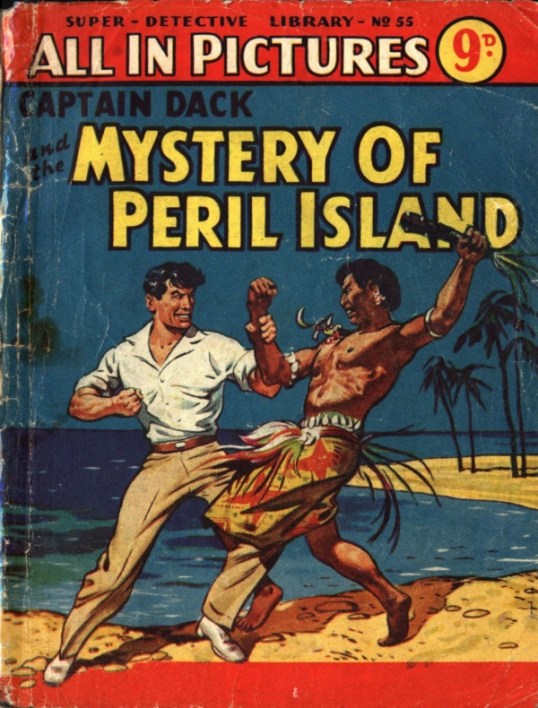
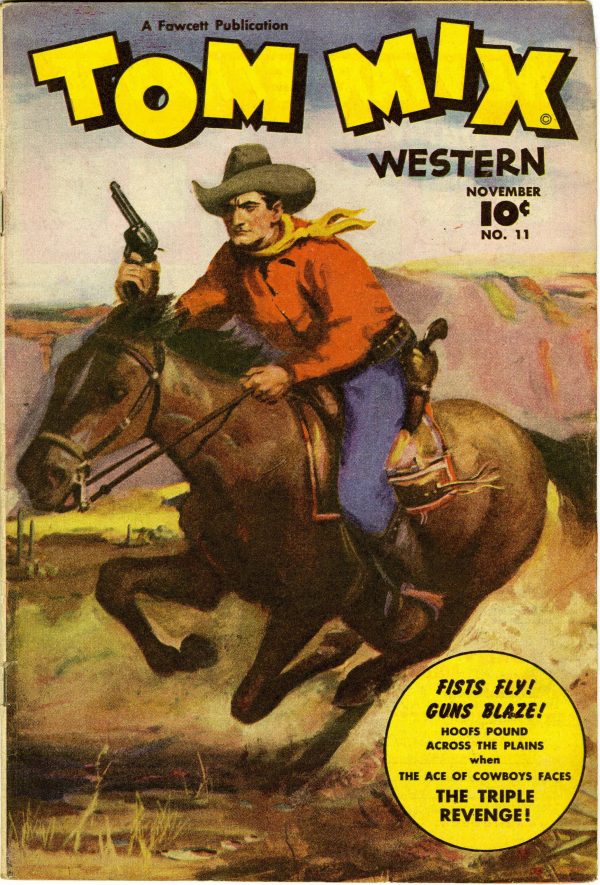
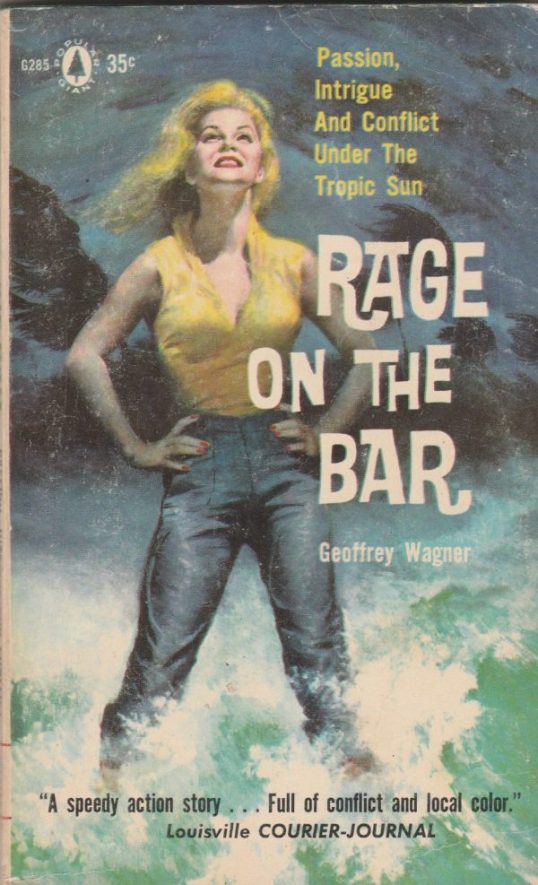
Born in New York City, Everett Raymond Kintsler started drawing when he was 16 years old and studied at both the Art Students League of New York and the National Academy of Design.  (He would later return to teach at the Art Students League.)  Kintsler began his career as an illustrator, working in comic books and in the paperback book publishing throughout the 40s and 50s.

However, Kintsler was best known as a portrait painter.  Staring in the 1950s and continuing until his death, Kintsler painted over 1200 portrait of the powerful and famous.  Kintsler’s portrait work was so acclaimed that Kintsler was eventually awarded a Portraits, Inc. Lifetime Achievement award and even had a scholarship named after him.

Below is some of his work, from both the pulp era and his time as a portrait artist: