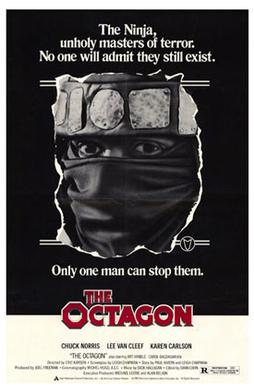
The Octagon (1980, directed by Eric Karson)


A ninja named Seikura (Tadashi Yamashita) is running a training camp where he shows mercenaries and terrorists how they can use martial arts to assassinate their enemies and disrupt the political system.  Someone has to stop him.

This looks like a job for CHUCK NORRIS!

In this one, Chuck plays Scott James, a retired karate champion who, though a massive series of apparently unrelated coincidences, is drawn into the fight against Seikura’s terrorists.  (Speaking of coincidences, Seikura just happens to be Scott’s half-brother.)  One of the fun things about The Octagon is that there’s no real rhyme-or-reason as to how Scott gets involved.  He just keeps running into people who want him to fight terrorists.  His former mentor (played by Lee Van Cleef) tries to recruit him.  Immediately after turning him down, Scott just happens to run into a woman (Karen Carlson) who is having car trouble and the woman tries to recruit him.  Scott’s old friend, A.J. (Art Hindle) tries to recruit him.  Even a dancer (Kim Lankford) who goes out on a date with Scott is more interested in talking about the terrorists than anything else.  Even when the terrorists decide to go after Scott, it’s mostly just because he keeps talking to their enemies.

Scott does eventually get involved.  He goes undercover, which means that he gives everyone a fake last name while asking them if they know where he can sign up for the terrorist training camp.  (But he doesn’t shave his mustache or anything else so he’s still obviously Chuck Norris.)  Eventually, Aura (Carol Bagdasarian) defects from the terrorists over to Scott’s side and the two of them launch an assault on the terrorist camp.  While this is all going on, Scott has doubts about whether or not he can really defeat his half-brother and we hear them in voice over.  It’s an interesting attempt to show what’s going on in an action hero’s head but, because Chuck was such an inexpressive actor early in his career, the contrast between his worries and his stone face creates a strange effect.

It doesn’t matter, though, that Chuck wasn’t an expressive actor or that the film’s plot is needlessly convoluted.  The fight scenes are frequent and they all rock and that’s what really matters.  Chuck throws a lot of punches and kicks in this film and, as opposed to some of his other early films, the director of The Octagon made sure that we could see every single one of them.  Whether he’s fighting in a small hotel room and fighting off a dozen enemies in the terrorist camp, Chuck’s exciting to watch.  Also exciting to watch is Carol Bagdasarian, who makes her role more than the typical action movie love interest.  At times, she seems like she might even be a deadlier opponent than Chuck himself!

Finally, Lee Van Cleef!  In this one, he drives a truck with a “Have You Hugged Your Gun Today?” bumper sticker.  No film featuring Lee Van Cleef can be that bad.  In fact, most, like The Octagon, are pretty damn entertaining.
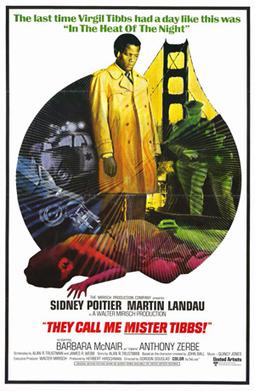
18 Days of Paranoia #13: They Call Me Mister Tibbs! (dir by Gordon Douglas)


The 1970 police procedural, They Call Me Mister Tibbs!, opens with a murder in San Francisco.

A prostitute has been found dead in a sleazy apartment building and, according to witnesses, she was visited, shortly before her death, by the Reverend Logan Sharpe (Martin Landau).  Rev. Sharpe is a prominent civic leader, an outspoken liberal who is a friend of the civil rights movement.  Sharpe is currently at the forefront of a campaign to pass a city referendum that will add a “mini city hall” to every neighborhood and will help to fight against the gentrification of San Francisco.  If Sharpe’s guilty, it will mean the death of the referendum.

Despite the fact that there’s a ton of evidence piling up against him and he kind of comes across as being a little bit creepy (he is, after all, played by Martin Landau), Rev. Sharpe insists that he’s innocent.  Yes, he’s been visiting prostitutes but he’s not a client.  No, of course not!  Instead, Sharpe explains that he’s simply counseling them and praying for their souls.  In fact, as far as Sharpe is concerned, this whole thing is just an attempt by the establishment to discredit his efforts to help the poor and underprivileged.

Heading up the investigation is a friend and supporter of Sharpe’s, Detective Virgil Tibbs (Sidney Poitier).  That may seem like a good thing for Sharpe, except for the fact that Tibbs is an honest cop and he’s not the type to let friendship stand in the way of doing a thorough investigation.  Tibbs admits that he supports Sharpe’s campaign and he wants the reverend to be innocent.  But Tibbs is all about justice.  Whether it’s teaching his son an important lesson about smoking or tracking down a potential serial killer, Virgil Tibbs is always going to do the right thing.

There are other suspects, all of whom are played by suitably sinister character actors.  Anthony Zerbe plays a criminal who lived near the prostitute.  Ed Asner plays her landlord, who may have also been her pimp.  Is Sharpe being set up by the powers that be or is Tibbs going to have to arrest a man whom he admires?

They Call Me Mister Tibbs! was the second film in which Sidney Poitier played Virgil Tibbs.  The first time he played the role was in 1967, when he co-starred with Rod Steiger in the Oscar-winning In The Heat of the Night.  In that film, Poitier was a Philadelphia cop in the deep south who had to work with a redneck sheriff.  In They Call Me Mister Tibbs!, Virgil is now working in San Francisco and he has to work the case on his own.

They Call Me Mister Tibbs! is a far more conventional film than In The Heat of the Night.  Whereas In The Heat of the Night had a wonderful sense of place and atmosphere, They Call Me Mister Tibbs! could just as easily have taken place in Los Angeles, Phoenix, or even Philadelphia.  With the exception of some slight profanity, They Call Me Mister Tibbs! feels more like a pilot for a TV show than an actual feature film.  Perhaps the biggest problem with the film is that there’s no real surprises to be found within the film.  You’ll guess who the murderer is within the first 10 minutes of the film and you’ll probably even guess how the movie will eventually end.

On the plus side, just as he did in In The Heat of the Night, Sidney Poitier brings a lot of natural authority to the role of Virgil Tibbs.  He’s actually allowed to show a sense of humor in this film, which is something that the character (understandably) couldn’t do while he was surrounded by bigots and rednecks during his previous adventure.  Virgil gets a few family scenes, where we watch him interact with his wife and his children.  The scenes feel out of place but, at the same time, Poitier plays them well.

With Sharpe attempting to get his referendum passed and the possibility that riots could break out if Sharpe is indeed guilty of murder, there’s a slight political subtext to They Call Me Mister Tibbs!  Sharpe’s argument that he was being set up by the establishment undoubtedly carried a lot of weight in 1970.  Still, this is ultimately a shallow (if adequately entertaining) film that, for the most part, is only made memorable by Poitier’s commanding performance.

Other Entries In The 18 Days Of Paranoia:

  1. The Flight That Disappeared
  2. The Humanity Bureau
  3. The Private Files of J. Edgar Hoover
  4. The Falcon and the Snowman
  5. New World Order
  6. Scandal Sheet
  7. Cuban Rebel Girls
  8. The French Connection II
  9. Blunt: The Fourth Man 
  10. The Quiller Memorandum
  11. Betrayed
  12. Best Seller

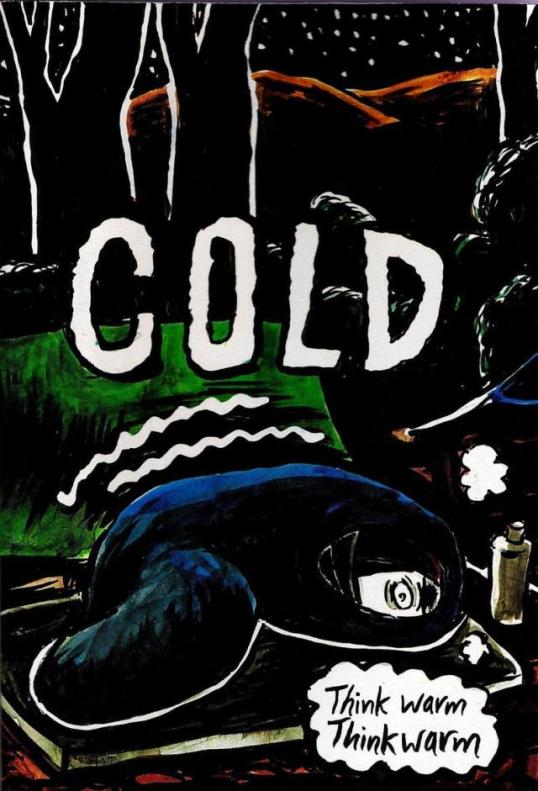
A Mandy Ord Two-Fer : “Cold”


Ryan C. (fourcolorapocalypse)'s avatarRyan C.'s Four Color Apocalypse

With COVID-19 lockdowns affecting so many of us, and with any number of related financial uncertainties coming part and parcel with them, it seems to me that what a lot of folks could use right now are some good new comics that can be had at a reasonable price and enjoyed over and over again. If you agree with that sentiment, then meet your new best friend — Australian cartoonist Mandy Ord.

Hers is a name new to me, I admit, but apparently she’s been at it (and by “it,” I mean both cartooning and self-publishing) for quite some time, even if much of her “back catalogue” has only recently been made available for purchase online — either via her own Etsy shop or, especially convenient for North American readers, John Porcellino’s Spit And A Half distro outfit. I got two of her early-2010s minis from John a couple weeks…

View original post 509 more words

Cobra (1986, directed by George Pan Cosmatos)


“You’re the disease.  I’m the cure.”

When a madman pulls out a gun in the middle of a supermarket, he starts out by firing at the produce department.  He doesn’t shoot at anyone who works in the produce department.  Instead, in slow motion, he blows away cabbages and apples.  Then he shoots a shopping cart.  He finally gets around to shooting one innocent bystander after telling him to walk down an aisle.

Outside the supermarket, a 1950 Mercury Monterey Coupe pulls up.  The personalized license plate reads Awsum 50.  The car’s driver (Sylvester Stallone) steps out of the car.  His name is Lt. Cobretti but everyone calls him Cobra.  Detective Monte (Andy Robinson, who played the killer in Dirty Harry) tells Cobra to stay out of it.  Cobra ignores him and goes into the store.

The guman raves that he’s a part of the “new world.”

“You wasted a kid for nothing,” Cobra says.  “Now, I think it’s time to waste you.”

And then Cobra does just that.

After getting yelled at by his superiors, Cobra drives back to his apartment, throws away his mail, and uses a pair of scissors as an eating utensil.  Just another day in the life of Cobra.

If you hadn’t already guessed, Cobra is the ultimate Sylvester Stallone-in-the-80s Cannon film.  In 1985, Stallone could do any film that he wanted to and, even if he wasn’t the director, the job was usually given to someone who wouldn’t stand in the way of letting Sly achieve his vision.  (That vision usually involved Stallone getting all of the good shots while everyone else dove for cover.)  Stallone is credited as the writer of Cobra and whatever else you can say about the man and his films, Stallone the screenwriter knew exactly what Stallone the actor was good at.  There’s not much meaningful dialogue in Cobra and most of it is made up of either Stallone threatening to shoot people or characters like the Night Slasher (Brian Thompson) bragging about how Cobra can’t touch him because of the constitution.  There is more intentional humor in Cobra than I think most people realize and there are a few scenes that only make sense if you accept that Stallone was poking fun of his own monosyllabic image.  For the most part, though, Cobra is nonstop violence from beginning to end.

Amazingly, Cobra started out as Beverly Hills Cops.  Before Eddie Murphy was cast as Axel Foley, Beverly Hills Cop was briefly meant to be a Sylvester Stalllone film.  Stallone, however, rewrote the script and took out most of the humor.  After the film’s producers reminded Stallone that they were trying to make a comedy, Stallone left the project and most of his ideas ended up in the script for Cobra.  The film features a murderous cult, led by the knife-wielding Night Slasher, that is determined to destroy anyone who they think is standing in the way of the “new world.”  Only Cobra can both stop them and also protect the life of their latest target, a model named Ingrid Knudsen (Brigitte Nielsen).  It’s hard to imagine Eddie Murphy dealing with any of this but it’s perfect for Stallone.

Cobra is a live-action cartoon and Cobra’s battle with the Night Slasher should be taken as seriously as He-Man’s battles with Skeletor.  The Night Slasher has no motivation beyond just being evil, Cobra never runs out of bullets or takes even a piece of shrapnel despite having hundreds of cultists shooting at him, and there’s an extended sequence where Ingrid poses with life-size robots.  Cobra chews on a toothpick and wears dark glasses and that’s all the personality he needs.  After all, crime is the disease and he’s the cure.


Artist Profile: R.A. Osborne (1923 — 1973)


The British artist R.A. Osborne is one of those very prolific illustrators about whom there doesn’t seem to be much biographical information.  He began his career as an illustrator in 1950 and worked for Corgi Books from 1952 to 1958.  After 1958, he was hired at Digit Books and spent the rest of his career working as their art director and doing the covers for most of their books.  This post at Bear Alley goes into a bit more details about Osborne’s life but otherwise, there’s a surprisingly small amount of information available about such a prolific artist.

In this case, the work will have to be speak for the artist.  Fortunately, Osborne’s covers are more than capable of proving his talent.  Here’s a small sampling of Osborne’s work:

A Question of Adultery by Gordon Wellesley, Digit Books R189, 1958; novelisation of the movie, based on the screenplay by Anne Edwards, starring Anthony Steel and Julie London

Codeword Nemesis by Bryan Haven, Digit Books R627, 1962

18 Days of Paranoia #12: Best Seller (dir by John Flynn)


The 1987 film, Best Seller, tells the story of two men, both equally capable of violence but with two very different moral codes.

Dennis Meechum (Brian Dennehy) is a cop who also writes true crime.  In the early 70s, he was the one of several cops who were attacked by a group of gunmen who were all wearing Richard Nixon masks.  Though he was shot, Meechum survived and he even managed to stab one his assailants.  15 years later, Meechum is still haunted by the incident.  Meechum is a brawler who doesn’t have much time for nonsense but he also has a strong moral code (or so he thinks).

Cleve (James Woods) talks fast and always seems like he’s a little bit nervous.  He has a quick smile and a joke for almost every occasion.  He’s also a professional assassin, a sociopath who is very interested in Dennis.  Cleve has spent the majority of his life working for a powerful businessman named David Madlock (Paul Shenar) but he’s recently been laid off.  Cleve wants revenge and he thinks that Dennis can help him get it.

Together …. THEY FIGHT CRIME!

Well, actually, they kind of do.  Madlock’s done a lot of illegal stuff and Cleve and Dennis are exposing him, his crooked corporation, and all of his powerful connections.  However, what Cleve really wants is for Dennis to write a best seller about his life.  Cleve wants Dennis to write his story and most importantly, he wants Dennis to make him the hero.  Dennis is still a cop and says that once all this is over, he’s going to have to arrest Cleve.  Of course, eventually, he discovers that Cleve was the man who shot him 15 years earlier.  At that point, Dennis says that he’s going to have to kill Cleve once all of this is over.

As a crime thriller, Best Seller hits all of the expected beats.  As soon as we find out that Dennis is a widower and that he has a teenage daughter, we know that she’s eventually going to be taken prisoner by the bad guys.  For that matter, we can also guess that there will be a few scenes where Cleve insists that Dennis is just like him.  When Cleve starts telling people that Dennis is his brother, it’s a fun scene because it’s well-acted by both Woods and Dennehy but it’s not exactly surprising.

But no matter!  Though the the overall plot may be predictable, there’s enough clever little twists and details that the film holds your interest.  For instance, there’s an extended sequence where Dennis insists that Cleve introduce him to his family.  For the next few minutes, the film stops being an action thriller and instead becomes a bit of a domestic comedy as Dennis meets Cleve’s friendly family, none of whom are aware that Cleve is a ruthless killer.  The stuff with Cleve’s family doesn’t move the plot forward but your happy it’s there because 1) James Woods gives a great performance in those scenes and 2) it suggests that the film (which was written by Larry Cohen and directed by John Flynn, who was previously responsible for the brilliant Rolling Thunder) has more on its mind than just shooting people.

The main reason why Best Seller works so well is because the two leads are perfectly cast.  Brian Dennehy was born to play tough cops while James Woods gives one of his best performances as the unstable but likable Cleve.  I’ve actually had people get made at me for saying that James Woods is a good actor, simply because they disagree with his politics.  But, when it comes to art and talent, I don’t care about anyone’s politics.  (I mean, if I only watched movies starring people whose politics where approved by Film Twitter, I would end up spending the entire pandemic watching romantic comedies starring Alec Baldwin and Rosie O’Donnell and why should I suffer like that?)  James Woods is a good actor and he’s great in Best Seller.

Other Entries In The 18 Days Of Paranoia:

  1. The Flight That Disappeared
  2. The Humanity Bureau
  3. The Private Files of J. Edgar Hoover
  4. The Falcon and the Snowman
  5. New World Order
  6. Scandal Sheet
  7. Cuban Rebel Girls
  8. The French Connection II
  9. Blunt: The Fourth Man 
  10. The Quiller Memorandum
  11. Betrayed

6 Shots From 6 Films: RIP, Stuart Gordon


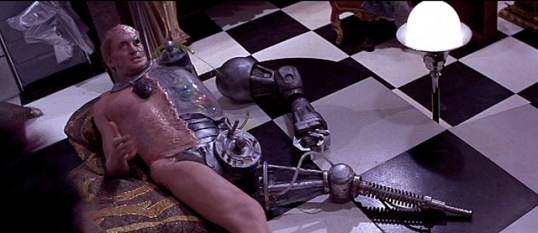
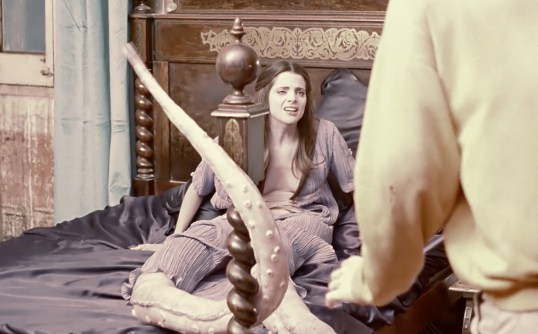
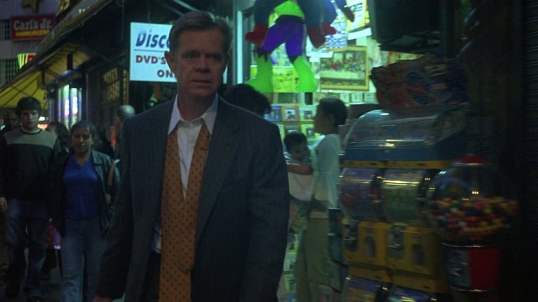
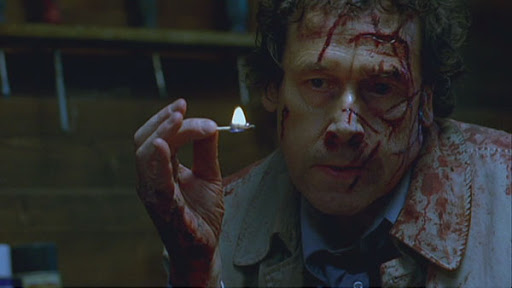
6 Shots From 6 Films is just what it says it is, 6 shots from 6 of our favorite films. As opposed to the reviews and recaps that we usually post, 6 Shots From 6 Films lets the visuals do the talking!

Rest in peace, Stuart Gordon.

6 Shots From 6 Films

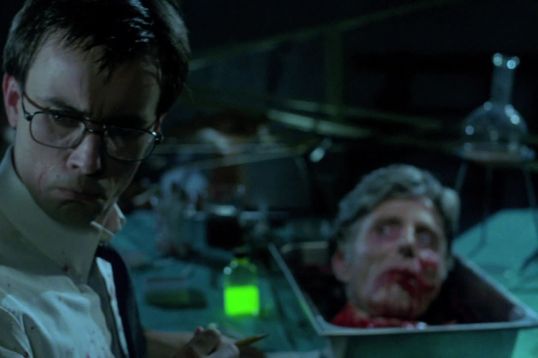
Re-Animator (1985, dir by Stuart Gordon)

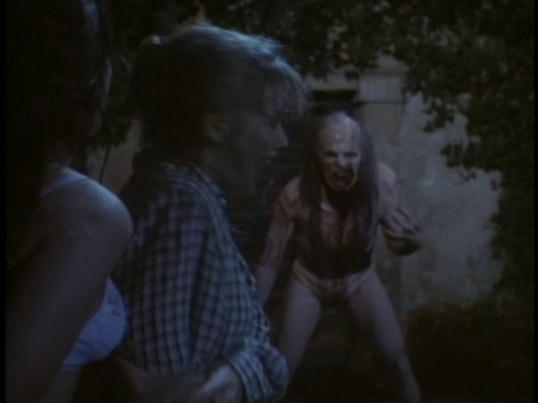
Castle Freak (1995, dir by Stuart Gordon)

Space Truckers (1996, dir by Stuart Gordon)

Dagon (2001, dir by Stuart Gordon)

Edmond (2005, dir by Stuart Gordon)

Stuck (2007, dir by Stuart Gordon)