Faster Than A “Cannonball”


Ryan C. (fourcolorapocalypse)'s avatarRyan C.'s Four Color Apocalypse

Yup, we’ve seen it before : the college/art school, or the post-college/post-art school, memoir has been a ubiquitous fixture of the “alternative” comics scene for three decades or so — more than enough time, in fact, for people who grew up reading these sorts of things to have kids of their own who now, in turn, have their own “twentysomething” stories to tell.

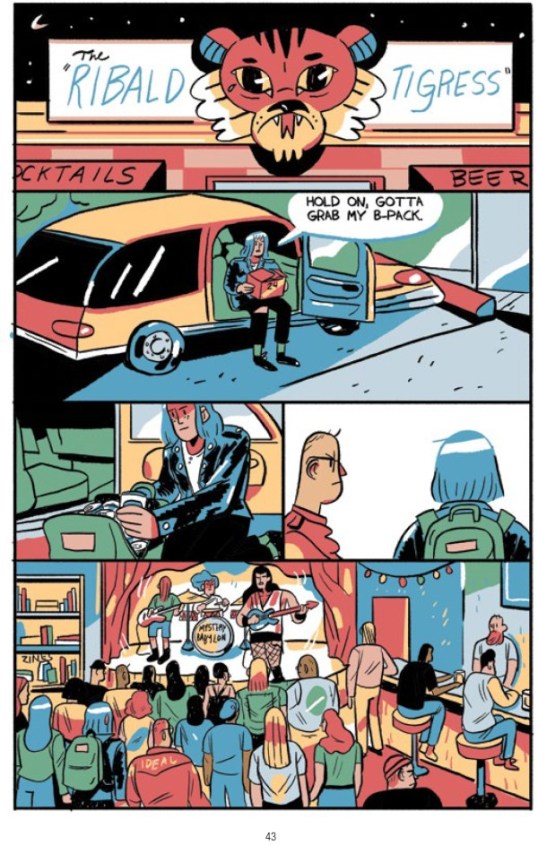
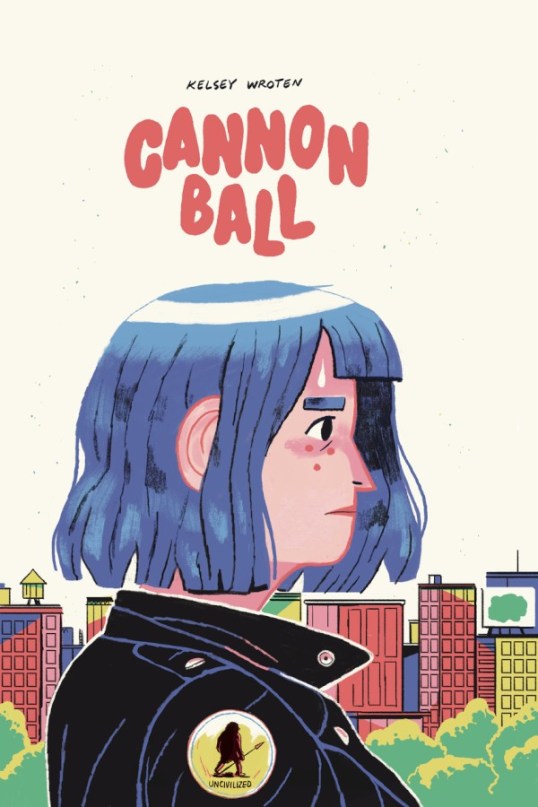
So, sure, Kelsey Wroten’s new hardcover graphic novel from Uncivilized Books, Cannonball, makes me feel ancient. And the publishers’ promo blurb describing it “Art School Confidential for the Tumblr generation” makes me feel even older than that. But is this really another memoir about an aimless young adult?

I truly don’t know. Wroten — who illustrates the proceedings in an agreeably modern updating of “classic cartooning” style and employs a very pleasing dulled-pastels color scheme throughout — more than likely places a lot of herself…

View original post 583 more words

The First Police Story: Slow Boy (1973, directed by William A. Graham)


Long before The Wire, Homicide, Chicago PD, NYPD Blue, or even Hill Street Blues, there was Police Story.

Co-created by cop-turned-writer Joseph Wambaugh, Police Story aired on NBC from 1973 to 1978.  It was an anthology series, with each episode following a different member of the LAPD as they deal with crime and social issues in Los Angeles.  For its time, it was ground-breaking in its realistic approach to the life and work of the police.  Interestingly, the show wasn’t always blindly pro-cop.  Often the cops featured were deeply flawed and the war on crime was frequently portrayed to be unwinnable.  Over the course of its run, Police Story was a regular Emmy nominee and won the award for Best Drama Series in 1976.

Police Story started, in 1973, with a two-hour TV movie.  At the time it aired, the pilot was called Stakeout but it has since aired in syndication under the title Slow Boy.  Vic Morrow stars as Sgt. Joe LaFrieda, a plainclothes detective who can’t keep his marriage together but who can take criminals off the street.  LaFrieda is the second-in-command of a special squad of detectives who specialize in watching and taking down high-profile criminals.  Their methods frequently come close to entrapment but they usually work.  Their current target is Slow Boy (Chuck Conners), the son of a mafia chieftain, who enjoys robbing stores.  When LaFrieda’s first attempt to put Slow Boy in jail is thwarted by a liberal judge and departmental bureaucracy, he and the squad come up with a second, less-than-legal plan to take Slow Boy down.

Considering the involvement of Joseph Wambaugh, it’s no surprise that plot is secondary to exploring the day-to-day lives of the blue-collar cops trying to take Slow Boy down.  The heart of the movie is in the scenes of the cops shooting the breeze and trying to keep each other amused during length shakeouts.  Their humor is often grim and the fascinating dialogue is cynical, dark, and, even by today’s standards, surprisingly raw.  One of the detectives (played by Harry Guardino, who specialized in loud-mouth city cops) is an unapologetic racist.  Though he gets a comeuppance of sorts, the way the film and the rest of his squad handle his racism will undoubtedly make modern audiences uncomfortable, even if it is authentic to the era in which Slow Boy was made.

The underrated Vic Morrow gives one of his best performances as the tough but sympathetic LaFrieda, who is bad at everything but his job.  He is ably supported by a host of familiar character actors.  Ed Asner plays LaFrieda’s reactionary lieutenant while Sandy Baron is great in the role of an informant.  Diane Baker was also perfectly cast as LaFrieda’s potential girlfriend.  (She first meets the detective while Slow Boy is holding a gun to her head.)  Finally, Chuck Conner is as intimidating as always as the sadistic Slow Boy.

Slow Boy is a tough and uncompromising police procedural and it provided a great start for Police Story.  Reruns of Police Story currently air on H&I on Sunday morning.

It’s “No Vacancy” For Squares In The “Motel Universe”


Ryan C. (fourcolorapocalypse)'s avatarRyan C.'s Four Color Apocalypse

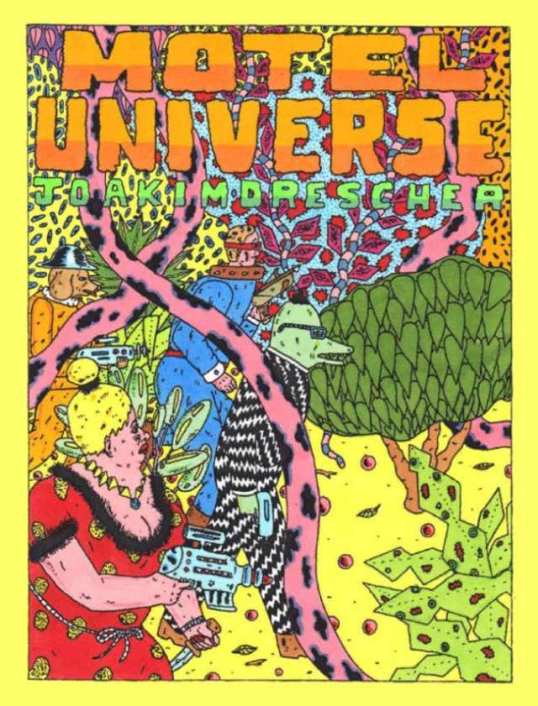
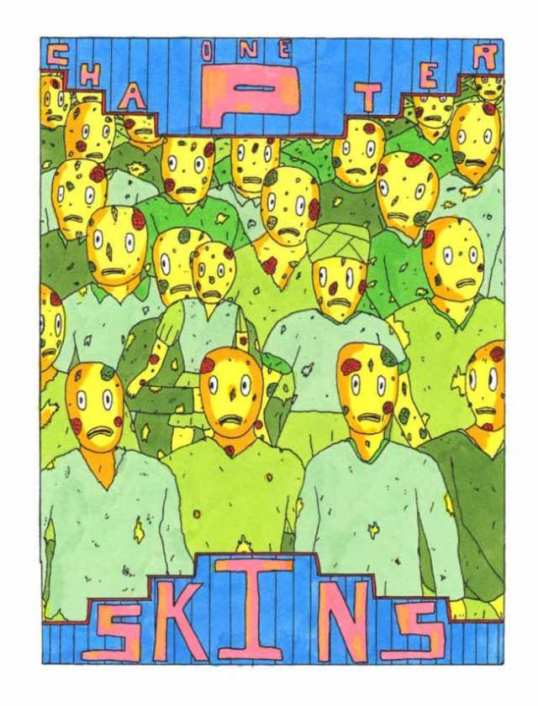
I tweeted something after reading Joakim Drescher’s Motel Universe that sums up my feelings about the book (just released as a full-color hardcover by Secret Acres after an earlier, riso-printed edition from Terry Bleu sold out) well within that site’s character limit : “Like Mark Beyer on four hits of bad acid with his non-drawing hand stuck in a blender.”

I stand by that statement fully but, never being a master of brevity, felt the work deserved more detailed, focused comment than my glib-but-glowing “review” provided. And so here we are. And I’m about to tell you why your life is well and truly empty without this comic on your shelf.

Simply put, this shit’s unhinged. Drescher is one of those cartoonists whose stream of consciousness runs in such interesting directions at such breakneck speed that it’s literally impossible to keep up with him — even as everything he…

View original post 525 more words

A Herman Wouk Double Feature: The Winds of War (1983, directed by Dan Curtis) and War and Remembrance (1988, directed by Dan Curtis)


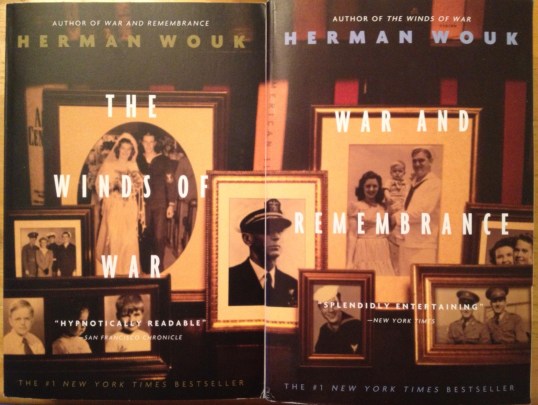
When the great American novelist Herman Wouk passed away earlier this month at the age of 103, he left behind a rich and varied literary legacy.  From 1947, the year that his first novel was published to 2016, the year that he published his memoirs, Wouk wrote about religion, history, science, and even the movies.  However, Wouk will probably always be best remembered for the three novels that he wrote about World War II.

Based on his own Naval service during World War II, The Caine Mutiny was published in 1951 and was later adapted into both a successful stage play and an Oscar-nominated film.  It also won Wouk a Pulitzer Prize and established him as a major American writer.  Nearly 20 years later, Wouk would return to the history of the Second World War with two of his greatest literary works, The Winds of War and War and Remembrance.  (Originally, Wouk was only planning on writing one book about the entire war but when it took him nearly a thousand pages to reach Pearl Harbor, he decided to split the story in two.)  Beginning in 1939 and proceeding all the way through to the end of the war, the two books followed two families, the Henrys and the Jastrows, as they watched the world descend into war. Along the way, the book’s fictional characters rub shoulders with historical characters like Hitler, Churchill, FDR, and even Stalin.  Carefully researched and meticulously detailed, the books were both critically acclaimed and popular with readers and, despite some soapy elements, they both hold up well today.

Given their success, it’s not a surprise that both The Winds of War and War and Remembrance were adapted for television.  Today, HBO would probably give the books the Game of Thrones treatment, with 8 seasons of war, tragedy, romance, and Emmys.  However, this was the 1980s.  This was the age of of the big-budget, all-star cast network miniseries.  Wouk’s epic history of World War II was coming to prime time.
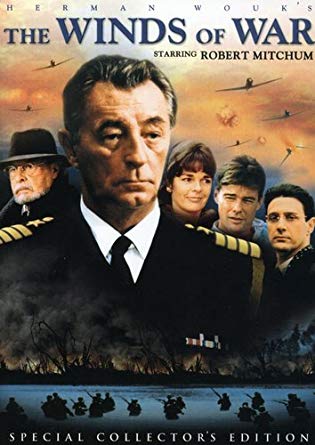
With a total running times of 15 hours, The Winds of War originally aired over seven evenings in 1983.  Produced and directed for ABC by Dan Curtis, The Winds of War had a 962-page script, a 200-day shooting schedule, 285 speaking parts, and a then-record budget of $35,000,000.  It also had Robert Mitchum, starring as Victor “Pug” Henry, an ambitious naval officer who somehow always managed to be in the right place to witness almost all of the events leading up to America’s entry into World War II.  Jan-Michael Vincent played Pug’s son, Byron, while John Houseman took on the pivotal role Aaron Jastrow, a Jewish scholar though whose eyes the home audience would witness the rise of fascism in Europe.  Terribly miscast as Natalie, Aaron’s niece and Byron’s lover, was 44 year-old Ali MacGraw.  Among those playing historical figures were Ralph Bellamy as FDR, Howard Lang as Churchill, and Gunter Meisner as Hitler.

I recently watched The Winds of War on DVD and, despite some glaring flaws that I’ll get to later, it holds up well as both a history of World War II and a tribute to those who battled Hitler’s evil.  Like Wouk’s novels, the miniseries does a good job of breaking down not only how Hitler came to power but also why the rest of the world was often in denial about what was happening.  Watching the entire miniseries in one setting can be overwhelming.  It’s a big production and it is also unmistakably a product of a time when the major networks didn’t have to worry about competition from cable.  It takes its time but, in the end, you’re glad that it did.  All of the little details can get exhausting but they’re important to understanding just how Hitler was able to catch the world off-guard.
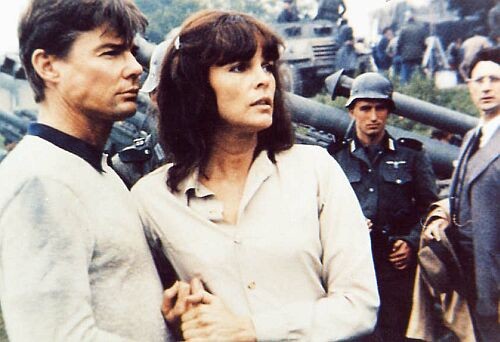
Jan-Michael Vincent and Ali MacGraw in The Winds of War

The miniseries does suffer due to the miscasting of some key roles.  Both Jan-Michael Vincent and Ali MacGraw were far too old for their roles.  Vincent was 38 and MacGraw was 44 when they were cast as naive and idealistic lovers trying to find themselves in Europe.  It’s perhaps less of a problem for Vincent, who had yet to lose his looks to alcoholism and who looked enough like Robert Mitchum that he could pass as Mitchum’s son.  But MacGraw is simply terrible in her role, flatly delivering her lines and looking more like Vincent’s mother than his lover.  It’s particularly jarring when she mockingly calls diplomat Leslie Sloat “Old Sloat,” because Sloat was played by David Dukes, who was six years younger than MacGraw.
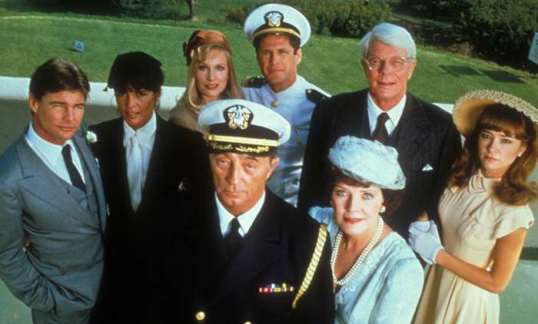
67 year-old Robert Mitchum was also much too old to play an ambitious junior officer, one whose main goal in life is still to ultimately become an admiral.  When he ends up having an affair with a younger British journalist played by 30ish Victoria Tennant, the difference in their ages is even more pronounced than in Wouk’s novel.  (Pug was in his 40s in The Winds of War.)  However, Mitchum overcomes his miscasting by virtue of his natural gravitas.  With his weary presence and authoritative voice, Mitchum simply is Pug.
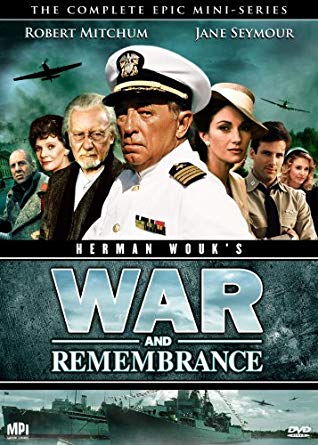
A ratings hit and a multiple Emmy nominee, The Winds of War was followed up five years later by War and Remembrance.  Like its predecessor, War and Remembrance set records.  The script ran 1,492 pages and featured 356 speaking parts.  The production employed 44,000 extras and filming took nearly two years, from January of 1986 to September of 1987.  With a budget of $104 million, it was the most expensive television production to date.  The final miniseries had a 30-hour running time, which was divided over 12 nights.  War and Remembrance not only made history because of its cost and length but also as the first major production to be allowed to film on location at the Auschwitz concentration camp.  For many members of the generation born after the end of World War II, War and Remembrance would serve as their first introduction to the horrors of the Holocaust.

Director Dan Curtis returned and with him came Robert Mitchum, now in his 70s and still playing a junior naval officer.  David Dukes once again played the hapless diplomat, Leslie Sloat.  Ralph Bellamy also returned as FDR as did Victoria Tennant as Mitchum’s lover, Polly Bergen as Mitchum’s wife, and Peter Graves as Bergen’s lover.  However, they were the exception.  The majority of the original cast was replaced for the sequel, in most cases for the better.  With John Houseman too ill to reprise his role, John Gielgud took over the role of Aaron Jastrow while Hart Bochner replaced the famously troubled Jan-Michael Vincent.  Robert Hardy took over the role of Churchill while Hitler was recast with Steven Berkoff.  Best of all, Jane Seymour replaced Ali MacGraw in the role of Natalie and gave the best performance of her career.  Other characters were played by a mix of up-and-comers to tv veterans, with the cast eventually including everyone from Barry Bostwick and Sharon Stone to E.G. Marshall and Ian McShane.
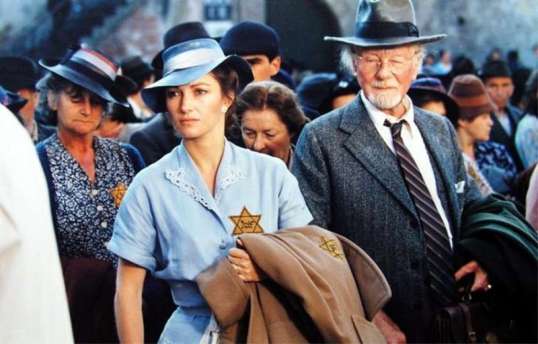
Jane Seymour and John Gielgud

With a stronger cast and (ironically, considering the running length) a more focused storyline, War and Remembrance is superior to The Winds of War in every way.  That doesn’t mean that it’s perfect, of course.  The scenes featuring Barry Bostwick as a submarine commander feel as if they go on forever and Robert Mitchum still seems like he should be preparing for retirement instead of angling for a promotion.  But none of that matters when the miniseries focuses on Aaron and Natalie Jastrow and their struggle to survive life in the Theresienstadt Ghetto and eventually Auschwitz.  At the time that War and Remembrance was initially broadcast, the concentration camp scenes were considered to be highly controversial and many viewers complained that they were so disturbing that they should not have been aired during prime time.  (This was four years before Schindler’s List.)  Seen today, those scenes are the most important part of the film.  Not only do they show why the war had to be fought but they also demand that the world never allow such a thing to happen again.

Though it was considered by a rating disappointment when compared to its predecessor, War and Remembrance was still a multiple-Emmy nominee.  Controversially, it defeated Lonesome Dove for Best Miniseries.  Both Winds of War and War and Remembrance have been released on DVD and, like the books that inspired them, they both hold up well.  They pay tribute to not only those who fought the Nazis but also to the humanistic vision of Herman Wouk.
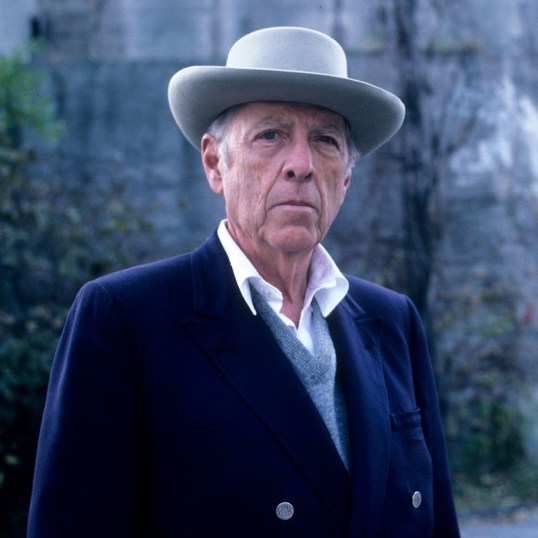
Herman Wouk (1915-2019)

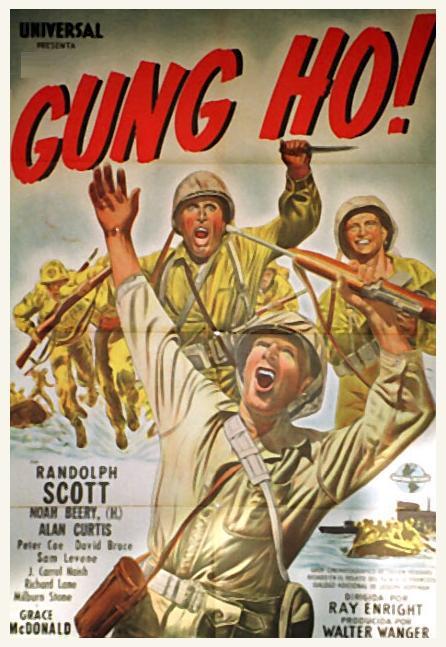
Special Memorial Day Edition: Randolph Scott in GUNG HO! (Universal 1943)


gary loggins's avatarcracked rear viewer

Duke Wayne wasn’t the only movie cowboy who fought WWII in Hollywood. Randolph Scott battled fascism in quite a few war dramas, and one of his best is 1943’s GUNG HO! (currently streaming on The Film Detective ). The rock-solid Mr. Scott plays tough-as-nails Col. Thorwald, an expert in guerilla warfare thanks to his experience with the Chinese army, who whips a diverse crew of Marines into fighting shape to launch the first American ground offensive against the Japanese on Makin Island.

Scott and his second-in-command, the versatile character actor J. Carrol Naish (playing a Marine of Greek descent this time around), gather up a motley crew of misfits and reprobates ala THE DIRTY DOZEN:  there’s battling stepbrothers Noah Beery Jr. and David Bruce (who’re also rivals for the affections of pretty Grace McDonald in a subplot), hillbilly farmboy Rod Cameron, murderous minister Alan Curtis , “no good kid” Harold…

View original post 369 more words

Lisa’s Week In Review: 5/20/19 — 5/26/19


Let’s see.  Last week started with my DVR exploding and me slightly burning my thumb while unplugging it.  I lost a total of 267 recorded programs.  That was bad.

However, I got a new DVR on Wednesday and the little burn mark on my thumb that had me so concerned has nearly faded away.  Even more importantly, I no longer have the obligation of watching those 267 recorded programs hanging over my head.  Sometimes, losing something is the only way that you can move forward.  So, that’s good.

This week is ending with me shadowbanned on twitter, which means that my tweets are currently not showing up in twitter searches.  Needless to say, this is very frustrating, especially since Twitter refuses to tell me what I did to upset their precious algorithm.  That’s bad.

However, shadowbans are only temporary and I have enough followers who are generous with their likes and retweets that not showing up in a twitter search isn’t going to massively effect the number of people who come across my reviews.  And, even more importantly, all of the drama over the twitter algorithm has reminded me of just what a first world problem social media truly is.  (I mean, seriously — go tell someone living in a war zone about how getting temporarily shadowbanned is the worst thing that ever happened to you.)  If nothing else, this has helped me to gain some sort of perspective and that’s a good thing.

Finally, I spent today and I’ll be spending most of tomorrow at Lake Texoma with the people who I love.  And you know what?  That’s the most important thing of all.  Above all else, there is love.

Have a good week, everyone.

Films I Watched:

  1. Bend it Like Beckham (2002)
  2. eXistenZ (1999)
  3. Fuzz (1972)
  4. The Great Northfield Minnesota Raid (1972)
  5. Happy Gilmore (1996)
  6. Hope and Glory (1987)
  7. Maria (2019)
  8. Morons From Outer Space (1985)
  9. Paris Blues (1961)
  10. Sins and Seduction (2019)
  11. Tombstone (1993)
  12. Yojimbo (1961)

Television Shows I Watched:

  1. The Amazing Race 31
  2. American Idol
  3. The Bachelorette
  4. Chernobyl
  5. Chilling Adventures of Sabrina
  6. Degrassi
  7. A Discovery of Witches
  8. Dynasty
  9. Fosse/Verdon
  10. It’s Always Sunny In Philadelphia
  11. iZombie
  12. King of the Hill
  13. Marvel’s Agents of SHIELD
  14. Paradise Hotel
  15. South Park
  16. The Voice
  17. What We Do In The Shadows

Books I Read:

  1.  The Lady from the Black Lagoon: Hollywood Monsters and the Lost Legacy of Milicent Patrick (2019) by Mallory O’Meara

Music To Which I Listened

  1. Afrojack
  2. Basement Jaxx
  3. Big Data
  4. Britney Spears
  5. The Chemical Brothers
  6. Dillon Francis
  7. DJ Judaa
  8. Fais
  9. Fitz and the Tantrums
  10. Gwen Stefani
  11. Icona Pop
  12. Jakalope
  13. No Doubt
  14. R.E.M.
  15. Saint Motel
  16. She & Him
  17. Steve Aoki
  18. Swedish House Mafia
  19. Taylor Swift
  20. UPSAHL

Links From Last Week

  1. Over on Horror Critic, I reviewed The Haunting of Helen Walker.
  2. On my music site, I shared music from Fais, Gwen Stefani, Taylor Swift, Fitz and the Tantrums, Big Data, Saint Motel, and She & Him.
  3. On her photography site, Erin shared: Clouds in Black-and-White, Crooked Path, City in Black-and-White, Yard, Alleyway, Flags, and American Flags.
  4. I reviewed the latest two episodes of The Amazing Race.
  5. David Milch’s Third Act
  6. Cancellation Watch Season Roundup: Syfy Appears to Be Fading as a Network, Will It Become a Peak TV Casualty?
  7. A Quiet Place 2 Gets New March 2020 Release Date, Moving Up Two Months

Links From The Site

  1. I shared music videos from Big Data, Big Data, She & Him, and Big Data again.  I shared the trailers for Stranger Things and Once Upon A Time In Hollywood.  I reviewed episodes 7 and 8 of Chilling Adventures of Sabrina and I also reviewed the new Netflix film, Maria.  Finally, I told you who won at Cannes and I wrote about being shadowbanned on twitter.
  2. Case reviewed the 2nd season finale of the Chilling Adventures of Sabrina!
  3. Ryan shared an interview with Tana Oshima, reviewed Doom Patrol, and shared his weekly reading round-up!
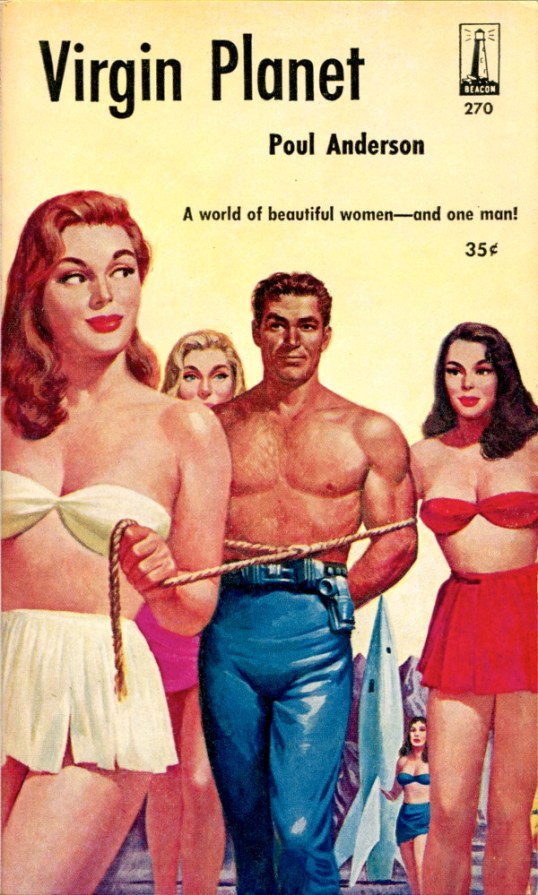
  4. Erin shared the following artwork: Painted Lips, Planet Stories, The Seven Deadly Sisters, Danger Trail, Fantastic Adventures, The Eager Beavers, and Inside Detective!
  5. Gary reviewed Count Yorga, Three Hours To Kill, and She Done Him Wrong!

Want to see what I did last week?  Click here!