Some thoughts on James Gunn, the Twitter Lynch Mob, and the New Cultural Revolution


When I checked into twitter today, the first thing that I saw was that James Gunn had been fired as director of Guardians of the Galaxy Volume 3.

Specifically, he was fired because of tweets.  That seems to be the reason that everyone is fired nowadays.  It just takes one bad tweet to basically end your career.  One offensive tweet and suddenly, you’re a nonperson.  One tweet that strays from what’s been judged acceptable that week and suddenly, people who have praised and worked with you in the past will suddenly declare that they never really liked you.  They always knew something was off.

It’s become a contests of sorts.  People of differing ideologies compete to see who from the opposing side they can take down.  Usually, the Left seems to have more success when it comes to destroying people online but Gunn was targeted by the Right.  (Apparently, Mike Cernovich was one of the instigators of the outrage that led not only to Gunn getting fired from not just GoTG3 but also kicked out of the MCU.)

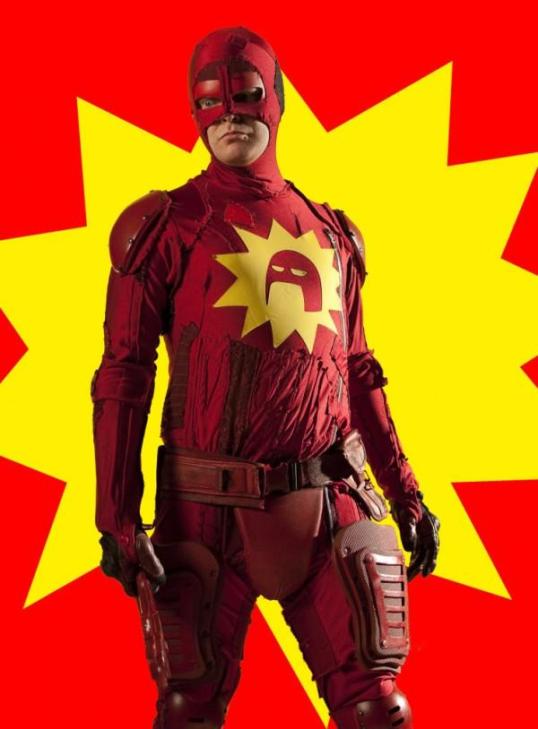
Gunn was fired for tweets that weren’t even recent.  Ten years ago, before Gunn had even joined the MCU, he was best known as the most talented filmmaker to ever graduate from Troma’s House of Horrors.  I followed Gunn on twitter long before he found mainsteam popularity as a part of the MCU.  And yes, in those days, James Gunn’s humor often was dark and twisted and, when taken out of context, often deliberately offensive.  So what?  That was Gunn’s way of pointing out that we live in a world that is often dark and twisted and deliberately offensive.  If you watch Gunn’s early films — like Super, for instance — you’ll find an artist who, in the style of Wes Craven, John Waters, and Paul Morrissey, was determined to shock audiences out of their complacency.  When Gunn made a joke about something terrible, the jokes wasn’t meant to be celebratory.  Instead, it was an expression of anger that we live in a world where such things exist in the first place.

(There’s an old expression about laughing so you don’t cry.  Apparently, in our new irony-free world, that’s no longer an option.)
What’s particularly fucked up is that Gunn apologized for those tweets when the first Guardians of the Galaxy came out.  At the time, Disney accepted the apology and Gunn’s explanation that he was a different person than he was today.  Is this the way the world’s going to work now?  Is it now acceptable for us to accept someone’s apology until we change our mind?

There’s a lot of celebration on twitter right now over Gunn being fired.  The Breitbart crowed is happy to have taken down a famous critic of Donald Trump’s.  The Woke crowd is happy because they feel they’ve claimed another scalp.  The twitter lynch mob is out in full force and it’s a bit sickening to watch.  Even those who are defending Gunn feel the need to say, “I found his tweets to be offensive…”

Here’s my thing:

I don’t give a fuck whether his tweets were offensive.  The tweets don’t matter.  They’re not the issue.  What is an issue is that the spirit of Mao Zedong’s Cultural Revolution — in which centuries of Chinese history and culture were destroyed and erased while millions were murdered by a bunch of activists determined to prove how ideologically pure they were — is alive and well on twitter.

For the sake of argument, let’s say that you do find Gunn’s 10 year-old tweets to be offensive.  Are we saying that people can’t change?  If people are only willing to support artists who were “woke” from the minute they were born, it’s going to be a sad and boring world.

Eventually, there’s going to be a backlash against all of this stuff that’s going on right now. That’s just the way history works.  And the more smug and fanatical people are in the present, the bigger the backlash is going to be in the future.  Many of the people who are currently celebrating the downfall of James Gunn will probably be among the next ones to fall.

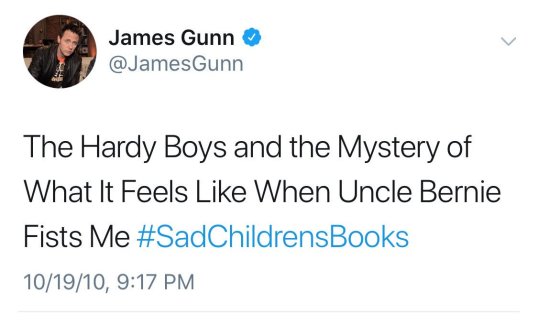
UPDATE: In the comments, Chuck Lantz points out that I didn’t include any of Gunn’s “controversial” tweets.  As I told him, I didn’t necessarily feel that I needed to because my entire argument is that Gunn’s six year-old tweets didn’t matter.  Perhaps if Gunn had tweeted some of this stuff yesterday or even a year ago, I would feel differently but Gunn has already apologized for these tweets and, as I argued above, most of them are being taken out of context.  All of them were obviously meant to be sarcastic.  Whether anyone finds them funny or not is beyond the point and not particularly important.

But, I also see Chuck’s point.  So, here are three of the tweets that have been specifically highlighted on twitter by many of the people demanding that James Gunn be fired:

One Hit Wonders #18: “Lies” by The Knickerbockers (Challenge Records 1965)


gary loggins's avatarcracked rear viewer

“Hey, did you hear the new Beatles song?”, screamed virtually every teenybopper in 1965, only it wasn’t The Beatles , but New Jersey’s own The Knickerbockers singing the Top Twenty smash “Lies”:

http://www.youtube.com/watch?v=1n03a7cLf0M

The Knickerbockers consisted of brothers Beau (vocals, guitars) and John Charles (vocals, bass), Jimmy Walker (vocals, drums), and ex-Royal Teen Bobby Randell (vocals, sax), who scored a hit in 1958 with “Short Shorts” (also featuring future Four Season Bob Gaudio and future Blues Project/Blood, Sweat, & Tears/solo artist Al Kooper):

The tight-knit harmonies and John Lennon-sounding lead vocals had many people fooled into thinking The Beatles had recorded “Lies” under an alias, but the world soon found out it was just a bunch of Jersey kids doing an incredible facsimile. The Knickerbockers became featured regulars on Dick Clark’s five-days-a-week ABC-TV teen dance show WHERE THE ACTION IS (1965-67), along with Paul Revere & The Raiders, Keith Allison…

View original post 183 more words

Music Video of the Day: Go! by Public Service Broadcasting (2015, dir by ????)


Seeing as how today is Moon Day, this seems like the perfect time to pick this video for music video of the day!

This is from Public Service Broadcasting’s 2015 album, The Race For Space.  As you can probably guess from the title, every song deals with the American/Soviet space race of the 50s, 60s, and 70s.  Go!, the eighth track from the album, deals with the first moon landing.

Enjoy!

Film Review: Red Sparrow (dir by Francis Lawrence)


God, this film was a mess.

Red Sparrow is a spy thriller that features a lot of spies but not many thrills.  Jennifer Lawrence plays Dominika Ergova, a Russian ballerina whose career with the Bolshoi is ended when another dancer drops her on stage.  Fortunately, Dominka’s sleazy uncle Ivan (Matthias Schoenaerts) has a new career in mind!  Maybe Dominka could be a sparrow, a spy who seduces the enemy!  Just in case Dominka doesn’t want to spend the rest of her life seducing westerners, Ivan arranges for her to witness a murder and then informs her that she’ll be eliminated as a witness unless she does what he tells her.  This, of course, leads to Dominkia attending State School 4, where she is schooled in the arts of seduction by Matron (Charlotte Rampling).  Upon graduation, Dominka is sent to Budapest, where she falls in love with a CIA agent named Nash (Joel Edgerton) and a lot of predictable spy stuff happens.  Despite all of the sex and violence, it’s just not much fun.

Red Sparrow has all the ingredients to be an enjoyably trashy 90-minute spy flick but instead, it’s a slowly paced, 140-minute slog that just seems to go on forever.  Throughout the film, director Francis Lawrence (no relation to the film’s star) struggles to maintain a steady pace.  Too much time is spent on Dominka’s life before she suffers the injury that should have opened the film.  Meanwhile, the only interesting part of the film — Dominka’s education at State School 4 — goes by far too quickly and, despite the fact that she was giving one of the few interesting performances in Red Sparrow, Charlotte Rampling vanishes from the film early on.  Once Dominkia gets to Budapest, the film really slow down to a crawl.  Joel Edgerton’s a good actor and an even better director but he gives an overly grim and serious performance in Red Sparrow and he and Jennifer Lawrence have next to no romantic chemistry.

(That lack of romantic chemistry petty much dooms the final forty minutes of the film.  It’s easy to imagine a much better version of Red Sparrow in which Bradley Cooper played the role of Nash.  True, that would have been like the 100th time that Cooper and Jennifer Lawrence starred opposite each other but why not?  It worked for William Powell and Myrna Loy.)

As for Jennifer Lawrence, her performance is okay.  It’s not one of her best and there’s a few moments where it seems as if she’s more concerned with maintaining her Russian accent than with what’s actually going on in the scene but, for the most part, it’s a good enough performance.  That said, you do have to wonder how long she can go without having another hit film.  Despite being heavily hyped, Passengers, Mother!, and Red Sparrow all underperformed at the box office.  (In defense of Mother!, it was never going to be a box office hit, regardless of who starred in it.)  As talented as she is, it’s sometimes hard not to feel that, as an actress, Jennifer Lawrence has lost some of the natural spark that took viewers by surprise in Winter’s Bone, launched a whole new genre of dystopian YA adaptations with The Hunger Games, and which previously elevated unlikely films like The House At The End Of The Street.  She was a far more interesting actress before she became J Law.

Here’s hoping that she finally gets another role worthy of her talent!

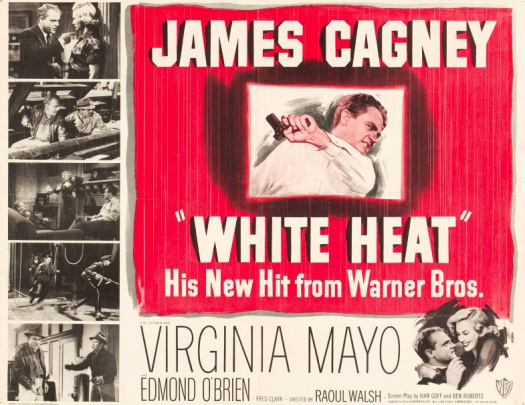
The Last Gangster: James Cagney in WHITE HEAT (Warner Brothers 1949)


gary loggins's avatarcracked rear viewer


When James Cagney burst onto the screen in THE PUBLIC ENEMY, a star was born. Cagney’s machine gun delivery of dialog, commanding screen presence, and take-no-shit attitude made him wildly popular among the Depression Era masses, if not with studio boss Jack Warner, with whom Cagney frequently battled over salary and scripts that weren’t up to par. Films like LADY KILLER , THE MAYOR OF HELL , and ANGELS WITH DIRTY FACES made Cagney the quintessential movie gangster, but after 1939’s THE ROARING TWENTIES he hung up his spats and concentrated on changing his image. Ten years later, Cagney returned to the gangster film in WHITE HEAT, turning in one of his most memorable performances as the psychotic Cody Jarrett.

Cagney is older and meaner than ever as Jarrett, a remorseless mad-dog killer with a severe mother complex and more than a touch of insanity. Jarrett has frequent debilitating headaches…

View original post 497 more words

Music Video of the Day: Mojo by Peeping Tom, featuring Rahzel, Dan The Automator (2006, dir by Matt McDermitt)


http://www.youtube.com/watch?v=9pcvBFFflEc

This video was released 12 years ago.  Watching it today, it’s interesting that television hasn’t changed much.  The cop show, the infomercial, the porn film, the horror film, the evangelist, every single one of them is currently playing somewhere.

Yes, that is Danny DeVito sitting on the couch at the end of the video.  I like to think that he’s meant to be Frank Reynolds.

Enjoy!

Lisa Reviews An Oscar Nominee: Cat On A Hot Tin Roof (dir by Richard Brooks)


The 1958 best picture nominee, Cat On A Hot Tin Roof, opens with a 30-something Paul Newman doing something stupid.

It’s a testament to just how incredibly handsome Paul Newman was in the 1950s that he can still be sexy even while he’s stumbling around in a drunken haze and attempting to jump over hurdles on a high school football field.  Newman is playing Brick Pollitt, youngest son of the wealthy cotton farmer Big Daddy Pollitt (Burl Ives).  Brick was a star athlete in high school but now, he’s a drunk with an unhappy marriage and a lot of bitter feelings.  When Brick attempts to jump over the hurdles, he breaks his ankle.  The only thing that keeps Brick from being as big a loser as Biff Loman is the fact that he looks like Paul Newman.

Brick is married to Maggie (Elizabeth Taylor), a beautiful woman who may have grown up on the wrong side of the tracks but who has married into money.  The only problem is that it doesn’t seem like Brick is ever going to get that money.  With Big Daddy getting older, everyone in Mississippi is wondering which Pollitt son will inherit his fortune.  Will it be drunken, self-pitying Brick or will it be Goober (Jack Carson) and his wife (Madeleine Sherwood)?  One point in Goober’s favor is that he and his wife already have five rambunctious children while Brick and Maggie have none.  In fact, gossip has it that Brick and Maggie aren’t even sleeping in the same bed!  (While Maggie begs Brick to make love to her, Brick defiantly sleeps on the couch.)  The other problem is that, for whatever reason, Brick harbors unending resentment towards … well, everything.  Perhaps it has something to do with the mysterious death of Brick’s best friend and former teammate, Skipper…

Brick, Maggie, Goober, and the whole clan are in Mississippi to celebrate Big Daddy’s 65th birthday.  Big Daddy is happy because he’s just been told that, despite a recent scare, he does not have cancer.  What Big Daddy doesn’t know is that his doctor (Larry Gates) lied to him.  Big Daddy does have cancer.  In fact, Big Daddy only has a year to live.

Whenever I watch Cat On A Hot Tin Roof, I find it’s helpful to try to imagine what it would have been like to watch the movie in the 1950s.  Imagine how audiences, at a time when married couples were still regularly portrayed as sleeping in separate beds and when men were naturally assumed to be the kings of their household, reacted to seeing a film where Elizabeth Taylor was literally reduced to begging Paul Newman to make love to her while Newman hopped around on a crutch and continually found himself getting stuck in embarrassing situations.  Though it may seem tame by today’s standards, the film was undeniably daring for 1958 and watching it is like stepping into a time machine and discovering that, yes, there was a time when Elizabeth Taylor wearing a modest slip was considered to be the height of raciness.

Of course, the film itself is quite toned down from the Tennessee Williams’s play on which it was based.  Williams reportedly hated the changes that were made in the screenplay.  In the play, Skipper committed suicide after confessing that he had romantic feelings for Brick, feelings that Brick claims he did not reciprocate.  That was glossed voter in the film, as was the story of Skipper’s unsuccessful attempt to prove his heterosexuality by having sex with Maggie.  By removing any direct reference to the romantic undercurrent of Brick and Skipper’s relationship, the film also removes most of Brick’s motivation.  (It’s still there in the subtext, of course, but it’s probable that the hints that Newman and Taylor provided in their performances went straight over the heads of most audience members.)  In the play, Brick is tortured by self-doubt and questions about his own sexuality.  In the film, he just comes across as being rather petulant.

And again, it’s fortunate that, in the film, Brick was played by Paul Newman.  It doesn’t matter how bitter Brick becomes or how much he whines about not wanting to be around his family.  One look at Newman’s blue eyes and you understand why Maggie is willing to put up with him.  In the role of Maggie, Elizabeth Taylor gives a performance that manages to be both ferocious and delicate at the same time.  Maggie knows how to play the genteel games of the upper class South but she’s definitely not going to let anyone push her around.  It’s easy to see why Big Daddy prefers the company of Maggie to his own blood relations.  It’s not just that Maggie’s beautiful, though the implication that Big Daddy is attracted to her is certainly present in the film.  It’s also the she’s the only person around who is as strong and determined as him.

Indeed, seen today, Cat On A Hot Tin Roof‘s main strength is that it’s a masterclass in good acting.  Williams’s dialogue is so stylized and his plot is so melodramatic that one bad performance would have caused the entire film to implode.  Fortunately, Newman and Taylor make even the archest of lines sound totally natural while Burl Ives and Judith Anderson are both the epitome of flamboyant charisma as Big Daddy and Big Mama.  It takes a lot of personality to earn a nickname like Big Daddy but Ives pulls it off.

Along with being a huge box office success, Cat On A Hot Tin Roof was nominated for best picture of 1958.  However, it lost to Gigi.