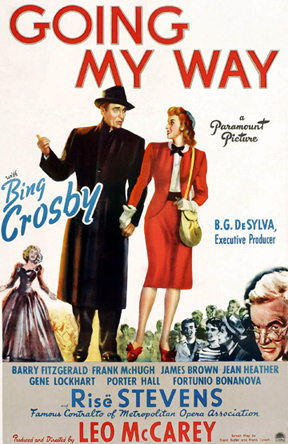
Last night, continuing my effort to watch 38 movies in 10 days (and, for the record, I have 7 days left as of today), I watched the 1944 musical-comedy-drama Going My Way.
Going My Way tells the episodic story of Father Chuck O’Malley (Bing Crosby), a priest from St. Louis who is assigned to take charge of a struggling parish in New York City. O’Malley is meant to replace Father Fitzgibbon (Barry Fitzgerald), a stubbornly old-fashioned priest who is struggling to keep up with a changing world. Though O’Malley is to take charge of the parish’s affairs, Fitzgibbon is to remain the pastor. However, the compassionate O’Malley doesn’t tell Fitzgibbon about the arrangement and allows Fitzgibbon to believe that O’Malley is only meant to be his assistant.
It’s obvious from the start that Fitzgibbon and O’Malley have differing approaches. Fitzgibbon is a traditionalist. O’Malley, on the other hand, is a priest who sings. He’s a priest who understands that the best way to prevent the local teens from forming a street gang is to convince them to start a choir instead. When it appears that 18 year-old Carol (Jean Heather) is “living in sin,” it is the nonjudgmental O’Malley who convinces her to marry her boyfriend.
And, slowly but surely, Fitzgibbon and O’Malley start to appreciate each other. O’Malley is even able to convince Fitzgibbon to play a round of golf with him, while Fitzgibbon tells O’Malley about his love for his mother in Ireland.
What’s interesting is that we learn very little about O’Malley’s past. In many ways, he’s like a 1940s super hero or maybe a less violent and far more ethical version of one of Clint Eastwood’s western heroes. He shows up suddenly, he fixes things, and then he moves on. Instead of a cape or a poncho, he wears a collar.
(And, of course, he doesn’t kill anyone. Actually, that’s probably a lousy analogy but I decided I’d give it a try anyway…)
At one point, O’Malley does run into an opera singer named Genevieve Linden (Rise Stevens). He and Genevieve (whose real name is Jenny) talk briefly about their past and it becomes obvious that they once had a romantic relationship. We don’t learn the exact details but it does bring some unexpected melancholy to an otherwise cheerful film. It reminds us of what O’Malley gave up to become a priest.
Fortunately, Genevieve is more than happy to help out with O’Malley’s choir, even arranging for them to meet with a record executive (William Frawley). The executive doesn’t have much interest in religious music but then he hears Bing O’Malley sing Swinging On A Star.
It’s a bit strange to watch Going My Way today because it is a film that has not a hint of cynicism. There’s no way that a contemporary, mainstream film would ever portray a priest as positively as Father O’Malley is portrayed in this film. Indeed, it says something about the world that we live in that I instinctively cringed a little whenever O’Malley was working with the choir, largely because films like Doubt and Spotlight have encouraged me to view any film scene featuring a priest and an pre-teen boy with suspicion. O’Malley is the ideal priest, the type of priest that those of us who were raised Catholic wish that we could have known when we were young and impressionable. Bing Crosby does a pretty good job of playing him, too. Watching Going My Way felt like stepping into a time machine and going to a simpler and more innocent time.
In the end, Going My Way is a slight but watchable film. It doesn’t add up too much but, at the same time, it’s always likable. Though the film may be about a priest, the emphasis is less on religion and more on kindness, charity, and community. Going My Way was a huge success at the box office and even won the Oscar for best picture.
Personally, I would have given the Oscar to Double Indemnity but Going My Way is still a likable movie.
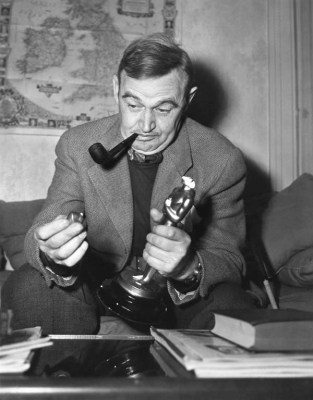
Speaking of likable, the Academy was so impressed with Barry Fitzgerald’s performance that they actually nominated it twice! He got so many votes in both categories that Fitzgerald ended up nominated for both Best Actor and Best Supporting Actor. Subsequently, the Academy changed the rules and decreed that a performance could only be nominated in one category. As for Fitzgerald, he won the Oscar for best supporting actor. He later broke the Oscar while practicing his golf swing.
Barry and Oscar
(Don’t worry. The Academy sent him a replacement.)
We are just two weeks away from the release of Batman v. Superman: Dawn of Justice and just a week from the premiere of Netflix’s Daredevil Season 2. What better way to remind people that there is another hero vs hero film coming out to start off the summer than with the final full trailer for Captain America: Civil War.
One things which distinguishes this latest and final trailer happens right at the very end. One could almost say that this was the trailer’s post-credit sequence.
Captain America: Civil War swings into action on May 6, 2016.
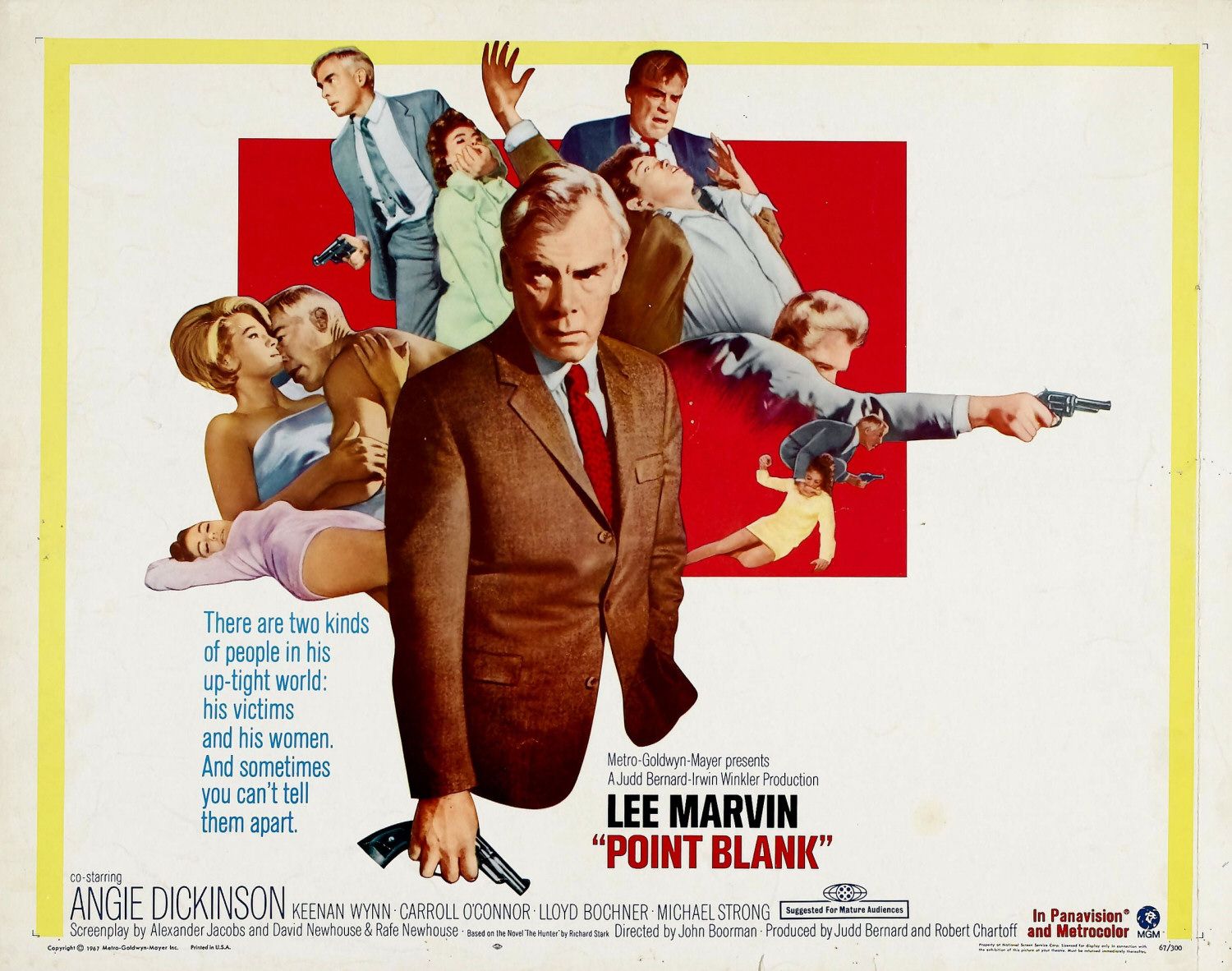
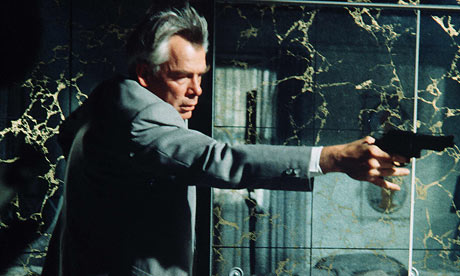
Lee Marvin was one tough son of a bitch both onscreen and off, awarded the Purple Heart after being wounded by a machine gun blast in WWII. The ex-Marine stumbled into acting post-war, and Hollywood beckoned in the 1950’s. His imposing presence typecast him as a villain in films like HANGMAN’S KNOT, THE BIG HEAT , and BAD DAY AT BLACK ROCK. A three season stint in TV’s M SQUAD brought Marvin more acclaim, and he solidified that with his Oscar-winning role in CAT BALLOU, parodying his own tough-guy image. Marvin was now a star that could call his own shots, and used that clout in POINT BLANK, throwing out the script and collaborating with a young director he had faith in, John Boorman.
POINT BLANK is a highly stylized revenge drama centering on Marvin’s character of Walker. The nightmarish opening sequence shows how Walker was left for dead on deserted Alcatraz Island by…
After I finished Abduction: The Jocelyn Shaker Story, I decided to watch a film that was shown on TCM as a part of the 31 Days Of Oscars. When I started the 1946 film, The Yearling, I thought it was going to be a sweet and heartwarming little movie about a country boy raising a deer. Instead, it turned out to be a rather dark movie about how much it sucks to grow up in the country. I can only imagine how many childen, back in 1946, were scarred for life by this movie.
The movie is actually about two yearlings. The main one is Jody (Claude Jarman, Jr.), who lives in the bayous of 1878 Florida. His family is a farming and hunting family. They live in a small shack and struggle to make ends meet. His father, Penny Baxter (Gregory Peck) is … well, he’s Gregory Peck. He’s stern but warm and speaks with that deep voice that lets you know that you better pay attention to everything he says. While Penny is generally laid back and enjoys a good laugh, his wife, Ora (Jane Wyman), is far more serious and severe. Ora has lost three children and, as a result, she is both overprotective and emotionally distant from Jody.
Jody desperately wants a pet but Ora says that they can’t afford to feed any animals. However, one day, Penny is bitten by a snake. Apparently, the organs of a deer can be used to draw out snake venom. (Seriously, until I watched The Yearling, I had no idea this was the case. I once nearly stepped on a rattlesnake in New Mexico and it totally freaked me out. It’s good to know that if I ever do get attacked by a snake, all I have to do is kill a deer.) Penny shoots a doe and has Jody cut out its heart and liver. After doing so, Jody notices that the doe had a fawn. He begs to be allowed to adopt it and, overruling Ora, Penny says that he can.
After getting his deer, Jody goes to visit his best friend, Fodderwing (Donn Gift) and ask him what he thinks a good name would be. However, Fodderwing’s father informs Jody that his friend has just died. And really, that scene pretty much epitomizes what The Yearling is about. Because it’s told almost entirely from Jody’s point of view, the film may occasionally look like an old school Disney film. But death and hardship are very real in the world of The Yearling. People die, even children. Having a pet may make the reality easier to take but it doesn’t change the reality.
Jody names the deer Flag. As the film progresses, both Jody and Flag grow up. Unfortunately, as Flag gets older and bigger, he causes more and more trouble for both his family and the neighbors. He eats crops and he destroys fences. After Penny is injured, Jody is the one who ends up replanting the corn and fixing all the damage. But, even after all of Jody’s hard work, Flag still knocks down another fence. That’s when Jody is told that he must shoot his beloved pet…
And that’s why I went, “Agck! What type of movie is this!?”
Well, it’s a coming-of-age movie and, unfortunately, Jody is living at a time when growing up means giving up childish things. (That’s always been my least favorite verse in the Bible, by the way.) The Yearling itself is a pretty good film, though I do have one major problem with it. The film looks great and both Jane Wyman and Gregory Peck are expertly cast. If you keep an eye out, you’ll even spot Henry Travers — Clarence the Angel from It’s A Wonderful Life — in a small role.
That said, my main objection to The Yearling — the thing that keeps it from being quite as good as it could be — is the performance of Claude Jarman, Jr. In the role of Jody, Jarman goes so totally over-the-top with his line readings and his facial expressions that it immediately takes the viewer out of the film’s reality. Whenever anything happens — whether its Penny getting attack by a snake or his mother throwing a plate at his deer or Flag knocking over a fence — Jarman responds by standing there with his eyes and mouth wide open. His lines are delivered with a rushed enthusiasm that can’t hide the complete lack of authentic emotion in his performance. Claude Jarman tries really hard but it’s not surprising to discover that, after The Yearling, he only appeared in a few more films before joining the Navy and then subsequently moving behind the camera as a producer.
Then again, the Academy thought highly enough of Jarman’s performance to give him an honorary Oscar. The Yearling itself was nominated for best picture but it lost to another sad film about giving up childish things, The Best Years of Our Lives.
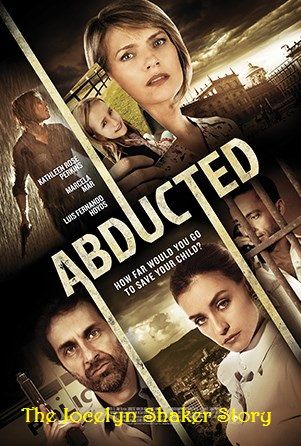
Last night, as a part of my continuing effort to watch 38 movies in 10 days, I watched Abducted: The Jocylen Shaker Story. Abducted originally aired February 14th on Lifetime. That’s right — this movie premiered on Valentine’s Day! I was in San Antonio when it aired, enjoying a romantic night down on the Riverwalk, so I missed the original showing. Fortunately, the DVR saves all.
And really, Abducted is a strange movie to show on Valentine’s Day. It’s not a romantic film at all. Instead, it’s a missing child thriller. Caitlin Shaker (Kathleen Rose Perkins) is an American who has married a wealthy Colombian businessman, Javier (Kamar de los Reyes). While Caitlin and Javier are visiting a resort in the rain forest, their daughter, Jocelyn, vanishes.
Suddenly, Caitlyn and Javier find themselves suspected of having done something to Jocelyn. Though one Colombian detective, Susanna (Eileen Roca Torralva), believes that Caitlin is innocent, she is ignored by her sexist superiors. The head of the investigation, Captain Rojas (Luis Fernando Hoyos), declares that Javier must be guilty and has him arrested for murder.
Caitlin knows that her husband is innocent but she can’t convince anyone to help her look for her child. The Colombian authorities want to close the case as quickly as possible. The American media declares that, even if they are innocent, Caitlin and Javier are still to be blamed for taking Jocelyn to a foreign country in the first place.
Eventually, only Susanna is willing to help Caitlin investigate Jocelyn’s disappearance…
The best thing about Abducted is that it gives Kathleen Rose Perkins a starring role. If you’ve ever seen the Showtime series Episodes, you will immediately recognize Perkins from her role as the wonderfully neurotic and often stoned network executive, Carol Rance. Episodes is a fairly terrible show but Perkins has always been one of the few bright spots. In Abducted, she really throws herself into the role of Caitlin, delivering her lines with an emotional intensity that always feels authentic and real. She is totally sympathetic in the role and elevates the entire film.
As for the film itself, it starts out as your standard Lifetime abduction film but the final 15 minutes, after the real villain has been revealed and Caitlin and Susanna are trying to rescue Jocelyn while rain pours around them, are exciting and well-executed. It helps that Perkins gives such a great performance that she makes even the most melodramatic and heavy-handed dialogue sound totally and completely credible. You won’t necessarily be surprised when you discover who the real villains is but you’ll still be happy to see them get their comeuppance.
(Comeuppance … that’s a strange word, no?)
Finally, Abducted was shot on location in Colombia. Reportedly, the Colombian government has been trying to attract filmmakers, with the hope of changing the country’s international image. Colombia is a beautiful country and Abducted takes full advantage of all that breathtaking scenery.
This time around I actually have a couple of movies I can recommend. One of them I can recommend strongly. We also have the return of the ridiculously misleading Amazon Prime posters for foreign films.
Dolls and Angels (2008, dir. Nora Hamdi) – Ah, ha! The return of the poster to make you think it’s a lesbian movie. They went further this time than that poster for 9 1/2 Dates. First off, only one of those girls on that poster is a main character. The other one is just her friend. Her friend played by none other than Léa Seydoux. She also gets top billing on that poster while the actual two main characters are listed after her. You may know Léa Seydoux from Spectre (2015) or The Grand Budapest Hotel (2014). I know her from somewhere else. I wonder what they were trying to confuse people into thinking this movie was like?
Yep, only one of the most well known and lauded lesbian/bi-sexual/fluid sexuality love stories of the past few years. I’m telling you, one of the most fun things about watching these movies is to see these posters. Makes me think of when they retitled the Sylvester Stallone porno The Party at Kitty and Stud’s (1970) to The Italian Stallion after Rocky came out. They even made this incredible bullshit trailer.
Here is a realistic poster for Dolls and Angels.
That trailer is even misleading. Not because it doesn’t lay out the actual characters and give you an idea of what is going on, but that it’s way better made than the movie itself. This is one of the worst directed, edited, written, and shot movies I’ve sat through in a while. The closest is David A.R. White’s film Redeemed (2014), which is a mess. I think this movie even beats it.
Oh, and as for that talking that is played over things actually happening in the trailer. Yeah, that is in the movie, but all we see is the tomboy-ish girl frantically writing or walking around a roof while an incessant and annoying voice over plays with a little musical accompaniment. Ugh! The director also wrote the book and the screenplay. I get the feeling she didn’t know how to adapt some of her internal monologues that are common in books to the screen where they rarely belong or if they do, sparingly and kept short. A good example of this type of thing done right is The Hunger Games (2012). The book has a bunch of Katniss’ thoughts, but when they adapted it for a film, they transferred it to the visual medium instead of having us hear all those thoughts via a voice over. This feels like Nora Hamdi thought if Godard did it all the time, then surely it will work here. It doesn’t. If the editing and other things weren’t worse, then this would be the thing that made me the angriest while watching this film.
This movie even made a mistake that is so simple that I rarely see it done. It’s when you don’t make it clear a character has left the movie or will come back. Yet, they are gone long enough that the viewer is left wondering if they missed something. You are wondering if the character will come back, or if they are really gone now. Not because you should be, but because the movie is confusing and thus, unintentionally frustrating for the viewer. Then sometimes they suddenly reappear to say, “Hi! Yeah, I’m still in the movie,” only to possibly disappear again.
It wouldn’t be as much of an issue if the film had a single protagonist, but this one doesn’t. When you have only one person, then the world of the film is created around that character. Where they go, we follow. To modify a very tired cliche: If the character isn’t in the forest to see the tree fall, then the tree doesn’t make a sound. If the character hasn’t been to the forest at all, then the forest itself doesn’t exist.
However, when you have multiple protagonists that you switch between, then you no longer have a world being created by a single character as they travel through it. Now you have a living world in which your multiple protagonists exist. When you do that, then you can’t be unclear about things such as whether a character is no longer part of the world of the film. This is also true in TV Shows. That’s why they usually make it quite clear whether a character has truly left the world of the show or not. You actually can have a character disappear for a long period of time, but there needs to be a reason, and/or a payoff. Not just a, “Oh, they are still here. I almost forgot they were part of this movie.”
I guess I need to talk a little bit about the plot now.
The movie is about two sisters named Lya (Leïla Bekhti) and Chirine (Karina Testa). They are ethnically Persian and live in the projects of France. It was funny to actually see a character named Chirine in a movie. I knew a girl in college named Shirine who was also ethnically Persian. But enough of me reminiscing about someone that is both way more beautiful and smart than this movie.
The trailer tries to play up that the father, mother, and the youngest daughter are part of the story, but it’s not really true. What you have are two sisters that take opposite directions after being given a Barbie doll as kids. Lya became introspective, tough, and kind of a tomboy. I say “kind of” because I knew an actual tomboy in elementary school. Lya is just a girl that doesn’t doll herself up all the time. She leaves that to her sister Chirine who went in the opposite direction and tried to become that doll.
Chirine tries to get into modeling, but she really just gets stuck with a guy who claims to be an agent, but is rather shady. While that is going on, Lya is doing her own thing. The next movie was so good that it kind of obliterated my memory of this one. Lya just mainly battles with her identity in various ways. Sometimes it’s the annoying voice overs, and other times it’s actually trying to do what her sister does, but quickly finding out it doesn’t work for her.
No recommendation here at all. Next!
Girlfriends/Les autres filles (2000, dir. Caroline Vignal) – This is not to be confused with the TV Show that started the same year. In fact, if you are going to look this movie up on IMDb, then you are better off typing in the French title. If you type in Girlfriends, then it won’t show up in the results. If you click on “More title matches”, then it still isn’t in the list. Only when you click on “Exact title matches” does it suddenly show up.
I love that poster! First off, I’m quite sure neither of those girls are characters from the film. Secondly, notice there are no actor’s names listed. That’s probably because Julie Leclercq who plays the main character Solange, and the supporting character of Gary played by Benoîte Sapim never went on to do anything else. Lucky for them, it’s a very good movie. In fact at this point, out of the 167 films I’ve seen this year, it’s the best so far that I’ve watched. I don’t tear up easily, but I did. It takes a fair amount to get me to tingle, but this movie did it. Here’s the realistic poster for the movie.
Despite what that horrible poster makes you think, this is not a movie about two fun loving girlfriends who like to party. Although, the line “How was your first time?” does have something to do with movie. It’s about a teenage girl named Solange that is learning how to be a hairdresser. Think of those dental school type things where you can get the work done free or cheap because you are helping the students to learn. It’s like that where Solange and other girls are learning by working on actual people under the supervision of a teacher. The film is Solange coming of age in numerous facets.
Let me explain this in a couple of parts. First is what is in the title. Solange thinks that at her age she should have already had sex. She calls a radio show similar to Loveline in order to ask about losing your virginity. She even nearly loses it to a random guy who backs off as soon as he realizes just how young she is, and that she is a virgin. Even he has standards, and that means he can’t bring himself to make this girl’s first time be a random fuck in the grass no matter whether she wants it or not. She does eventually lose it, but at that point she has also undergone a drastic transformation in several ways. So much so that her losing it really isn’t that important at that point. It’s more of a capstone on her actual coming of age.
The second part of this is that the movie sends a bunch of hints at you to make you think she might be a lesbian, bi-sexual, or even transgender. Honestly, I think she’s probably bi-sexual and transgender, but the film will never actually confirm it. She starts off even more of a tomboy then the girl in Dolls and Angels. By the end of the film, she dresses more masculine and has cut her hair very short. She also carries herself in a more masculine manner. That is partially tied to her greatly increased confidence, but I believe there’s more going on there. Especially because the guy she ends up having sex with is shown wanting to cuddle while she just gets up, gets dressed, and leaves like that dumbass guy in a movie who goes off, then wants to get out of there as soon as possible.
The last part is hard to put my finger on. It’s just done so well throughout the movie in every respect. I would be lying if I said it was flawless. I’m not one of those people who buys all the crazy hype around Mad Max: Fury Road (2015), which is the same hype that once surrounded The Dark Knight (2008). Both of those movies have flaws, and so does this one. However, just like those movies, this is still very good. I actually enjoyed it more than Mad Max: Fury Road to be honest. That’s probably because I went into this movie not expecting anything. Going into Mad Max: Fury Road, I expected the moon based on what people were saying. As a result, I kept seeing the flaws. I need to see it again so I can just enjoy it for what it actually is rather than what people say it is. The big flaw I would say is that the shift in her character near the end felt a little sudden. Enough that I mention it, but not nearly jarring enough to be an issue.
Two special mentions here. The acting is excellent. In particular, the performance from Leclercq. The second thing is the scene that got me tingling. There is a scene when she cuts a guy’s hair. It was one of the most erotic things I’ve seen a long time, and it was just Solange cutting his hair. It sent a warm feeling through my body like I haven’t felt in a long time.
I can’t recommend this movie enough right now. Maybe I’ll end up seeing something better this year, but right now, it’s easily the best. If you are doing that 52 films directed by women thing that’s going on this year and want to go off the beaten path, then check this one out.
Just Sex and Nothing Else (2005, dir. Krisztina Goda) – Wow! “Young, Single, Ready to Mingle”. I wonder where that film is because if by young, they mean people in their early to mid 30’s playing like they are closer to their late 30’s/early 40’s, then sure. They are single. That’s true. As for being ready to mingle, that’s pretty misleading.
Even this poster is misleading. That poster says love triangle between the good girl, the bad girl, and a guy who seems like he wants to be with the good girl, but wouldn’t mind a little bad girl once in awhile. That’s not the movie. Oh, and yes. This is another Hungarian film. So is the next one. For some reason that’s a thing now for these posts. Every four of them, there is now at least one movie from Hungary. Over the course of this experiment so far, I’ve seen five Hungarian movies. Jeez!
Here’s is the trailer. Although, it’s dubbed into German you still sort of get an idea of the kind of movie you are in for. Even if it does leave out a pivotal character altogether.
Not Ali (Antal Czapkó), the nice Turkish baker who turns out to also like doing exotic dancing. He’s prominently featured in the trailer as he should be. He’s pretty great in this movie. No, the character that is very important in the movie, but totally missing from the trailer is Péter played by Zoltán Seress. Or as I like to call him: The Hungarian Patrick Norton.
Zoltán Seress
Patrick Norton
If you are a techie and maybe from the Bay Area, then he needs no introduction, but for everyone else. Patrick Norton is a prominent tech journalist and tech show host. The two most well known being The Screen Savers, from when TechTV was a thing, and Tekzilla on Revision3. Although, he’s all over the place.
Back to the movie. You can think of this movie as one part Hallmark romantic comedy. It’s got the girl looking for love. There’s a right guy and a wrong guy. The difference is that this movie makes them both good guys, and never delivers a brick to your head to tell you who she should be with. The other part is Samantha from Sex and the City if she were completely all over the place about what she wants.
The movie has four main characters. Dóra played by Judit Schell is the never knowing what she wants Samantha type character. Zsófi played by Kata Dobó has a lot of sex, but only appears to be happy. She’s part advisor to Dóra and part female counterpart to Tamás played by Sándor Csányi. He also has a fair amount of sex, but the unhappiness part never really completely overtakes him, and only starts to catch up with him when Dóra comes into his life.
The way Dóra comes into his life is rather humorous. We see her walk past four road workers who definitely take notice of her, and she seems to like it. However, she goes right to the obviously married guy who she doesn’t know is married. When his wife shows up he quickly puts her out on the balcony of his office with only her panties on. Tamás lives in the same building, notices her, and tells her she’s better off coming across to get out through his place. If nothing else, as he puts it, because if she doesn’t, then the four workers will never be done fixing the road.
Don’t ask me how this part comes together, but here it is in two parts. First, Dóra and Tamás are putting together a production of a Dangerous Liaisons type play. Yeah, I know. Two Hungarian movies in a row with ties to that novel. Weird. The second part is Dóra trying to figure out what she really wants. Does she want stability with the real good guy Péter? Does she just want sex like Zsófi and Tamás seem to enjoy having a lot of? Does she just want to get pregnant? She really bounces around quite a bit here. Actually, that’s the main flaw with this movie. She bounces around so much that it starts to stop being funny, and starts to feel like a chore following her around. It never ruins the film, but it started to get to me.
In the process, we get the usual speed dating scene that is always in these kind of movies. The only thing noteworthy about it is that one of the guys is a trans man. He’s actually the sanest appearing one of the lot, but at that point she wants to get pregnant so that rules him out. Also, it was probably not the best idea for him to open with a line about how after he has bottom surgery it will work just like the real thing.
We also get the fun, nice, but quirky guy we know she won’t end up with, but we like having around. That’s Ali in this movie. He’s a Turkish baker who is really nice. She actually goes to him at one point, but he has to go back to Turkey for a couple of weeks. That’s until he figures out a way to make it work anyways and shows up at her door. He then drops his pants to reveal leopard print briefs and starts doing a little dance. I love the old lady across the hall who sees it, and Ali tells her to stop looking cause it’s not a peepshow. Of course, he does end up coming back only to fail once more with Dóra, but not with the old lady. After Dóra closes her door, she puts her hand out with some money to pay Ali to dance for her. He accepts it. You can tell, I really enjoyed Ali in this.
Overall, I’d say this is a reasonably fun romantic comedy. It looks like it might be getting a remake in the United States. If you type in the title on IMDb, there’s another film with that same title listed as being “in development”. It wouldn’t surprise me. I mean My Sassy Girl went from being a South Korean film to a Japanese mini-series, and was remade in the US the same year, which was 7 years after the original film. It could happen.
Also of note, the ending made me think of the Boombox Serenade scene from Say Anything… (1989) except she does it with her own voice instead of Peter Gabriel’s.
What Ever Happened to Timi/The Good, The Bad, and The Pretty (2014, dir. Attila Herczeg) – Yes, yet another Hungarian comedy. This one really can’t make up it’s mind poster wise. That’s the poster that is on Amazon Prime. Here is another one.
And here is yet another one.
I have to be honest here. I had almost no idea what was going here. Thank goodness there is a short plot summary available on Amazon Prime: “When a soon-to-be-married good guy has a one night stand with a beautiful former high school classmate, they think it’ll just be a quick fling. But the class bad boy has other plans.” There’s also a trailer.
Basically, what you have here is a Hungarian sex comedy that I really can’t recommend. But I probably should elaborate a little. The movie starts off with a high school prom dance. The narrator was there and slightly bumped his crotch against his dream girl’s butt. Very slightly, but it was enough that he went to the bathroom and jerked off. That tells you something about this guy right away.
Now we cut to the high school reunion where we think the two guys and a couple of girls are our only main characters, but none of the voices match the narrator. The narrator is actually a supporting jackass character. Sex happens here, and our scumbag narrator films it, then uses it to blackmail the other guys into getting him laid by the girl he had a crush on as a kid. That’s it really.
I didn’t like it. I didn’t like the characters. I really did find it confusing. I didn’t like story. I didn’t like the resolution. Oddly, I could have gone for a movie that just followed the douchebag around. He’s reasonably funny, interesting, and isn’t just a stock character like the others came across to me as being. I could have gone for something that actually did put him at the center rather than this film that actually teases you about that and says that the film is never about a guy like him. Why not? I might have actually enjoyed that movie.
Definitely check out Girlfriends and for some laughs Just Sex and Nothing Else. Avoid the other two.
————-
For those of you who waded through all of that. Here is the Joker from a 1991 Batman movie from the Philippines.
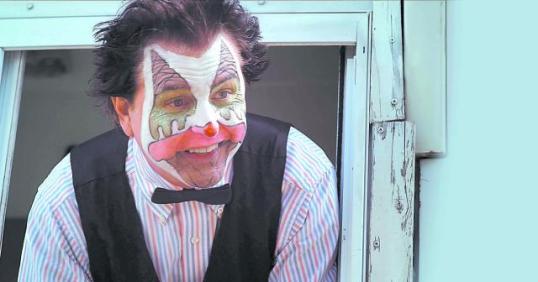
Last night, after I finished The More The Merrier and watched the latest episodes of Dance Moms and The People vs. OJ Simpson, I returned to the DVR and watched one more movie that I had recorded off of Lifetime. Kruel (which was broadcast with the slightly altered name of Cruel) is a dark little horror thriller. It is memorable for featuring the world’s creepiest ice cream man. (That’s him in the picture above.)
Now, when I say that Kruel was a dark film, I don’t just mean that it was thematically disturbing, though it certainly was. Instead, what I mean is that, at times, the film was literally dark! A good deal of the film took place either at night or in unlit rooms and there were more than a few scenes that took place in complete darkness. During those scenes, the screen was totally black and the only way you knew that there was still a film going on was because you could hear the characters running around and screaming. It was an interesting technique, one that was occasionally effective and occasionally annoying.
As for the film itself, it tells the story of Jo (Kierney Nelson), a teenage girl who, after he confesses to cheating on her, breaks up with her dumbass boyfriend, Ben (Dakota Morrissey). In order to deal with her depression, Jo devotes almost all of her time to babysitting. However, it would probably be a lot easier for Jo to do her job if not for the fact that, every few seconds, an ice cream truck comes rolling down the road. The ice cream truck is being driven by Willie (J.T. Chinn) and wow, is Willie ever creepy! It’s not just the makeup though, seriously, that would have terrified me when I was little. (It would still make me go, “Agck!” today.) It’s also the fact that Willie and his truck always seem to be nearby. Almost as if he’s stalking Jo…
When one of the kids that Jo babysits disappears, she knows that Willie kidnapped him. When the police ignore her, Jo decides to track down Willie herself. Volunteering to help is none other than dumbass Ben. Can Ben help to rescue the child while also repairing his relationship with Jo? Will Jo ever be able to forgive him for cheating on her? And will Willie ever take off his makeup…
Well, actually, I can go ahead and answer one of those questions without spoiling the movie. Willie does take off his makeup when he’s home and, in fact, he spends the majority of the movie not wearing any makeup at all. And, though I’m sure some horror fans would disagree with me on this, I think that’s the right decision for the story that Kruel is trying to tell. It’s definitely more realistic to have Willie look normal (well, normalish) when he’s just hanging out around his house. And, when it comes to a film like this, it’s good to try to keep things a little bit realistic. When Kruel is effective, it’s because it makes you wonder what you would do if you ever found yourself in the same situation. When the film is realistic, it makes you wonder if you could survive. If Willie never took off the makeup, he would be too cartoonish to be a real threat.
Despite being a low-budget film and featuring a few noticeably amateurish performances, Kruel has a nightmare-like intensity that serves it well. (The film features a throat slashing that, even though darky lit, is one of the most graphic things that I’ve ever seen on Lifetime.) J.T. Chinn is properly creepy as Willie and Kierney Nelson totally commits to the role of Jo, turning her into a sympathetic and compelling heroine.
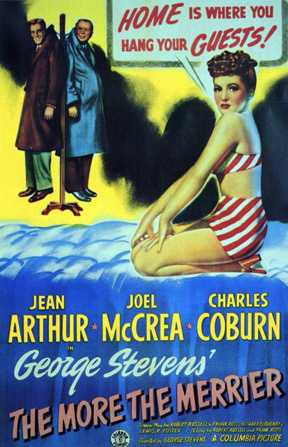
After I finished with Watch On The Rhine, I decided to watch another film from 1943. Like Watch On The Rhine, The More The Merrier is a film about life during wartime and it takes place in Washington, D.C. However, that’s all that they have in common. Whereas Watch On The Rhine was a serious and somber affair, The More The Merrier is thoroughly delightful little comedy.
The More The Merrier opens with a retired millionaire named Benjamin Dingle (Charles Coburn) arriving in Washington D.C. He’s been asked to serve as an adviser for a commission that has been tasked with solving America’s housing shortage. (This was apparently a very real concern during World War II.) However, as soon as Dingle arrives, he finds directly effected by the problem that he’s supposed to be solving. His hotel room won’t be available for two days and he has no where to stay. After a quick look through the newspaper, Ben finds an ad for a roommate.
When he arrives at the apartment, he discovers a long line of men waiting outside. They’re all in the same situation as him and are hoping that Connie Milligan (Jean Arthur) will select him for her roommate. However, Connie picks Ben, largely because he’s old and rich and she won’t have to worry about him hitting on her on like most guys nor does she have to worry about him borrowing her clothes or getting jealous of her, like she would have to with a female roommate. Connie is engaged to a boring but well-paid bureaucrat named Charles Pendergrast (Richard Gaines). She doesn’t really love Pendergrast (and he has an annoying habit of shushing her) but, after growing up poor because her mother married for love, Connie is determined to not to make the same mistake.
Ben and Connie struggle, at first, to adjust to each other’s habits. Connie keeps to an exact schedule and claims to not have any use for frivolity. Ben is the exact opposite. The early scenes of them trying (and, of course, failing) to stay out of each other’s way are hilarious, with both Coburn and Arthur giving brilliant comedic performances. (I’m jealous of how wonderfully Jean Arthur could express exasperation.) Connie’s apartment is already small and it gets even smaller once she sublets half of it to Benjamin Dingle.
However, things are about to get even more crowded. One day, while out exploring Washington, Ben runs into Joe Carter (Joel McCrea), a sergeant who has a few days before he’s scheduled to be shipped overseas and who has no place to stay. Generously, Ben agrees to sublet half of his half of the apartment to Joe. Of course, Ben does this without telling Connie.
When, after another hilarious and artfully done sequence of the three new roommates wandering around the apartment and just barely missing each other, Connie discovers what Ben has done, she orders both Ben and Joe to leave the apartment. Ben agrees to do so, if she gives him back his security deposit. Unfortunately, Connie already spent that money on a hat…
So, they’re stuck together. Connie is attracted to Joe and Joe to Connie but Connie is also determined to marry Pendergrast. (When Joe scornfully says that he bets Pendergrast combs his hair “every hour on the hour,” Connie snaps back, “Mr. Pendergrast has no hair!”) Fortunately, Ben — being older and wiser — can see that Joe and Connie are perfect for each other and he starts doing everything he can to bring the two together.
As Ben says more than once, “Damn the torpedoes! Full speed ahead!”
Jean Arthur is one of my favorite actresses of Hollywood’s Golden Age. She had this perfect “no bullshit” attitude, mixed with an unexpected vulnerability. In The More The Merrier, she’s just as credible when she’s ordering Ben and Joe to leave as when she’s breaking into tears after she catches Ben reading her diary. In the role of Ben, Charles Coburn is warm, kind, and wonderfully eccentric. (When Joe asks him what does for a living, Ben cheerfully replies, “I’m a well-to-do retired millionaire. How ’bout you?”) And then you have Joel McCrea, in the role of the “cute but dumb” Joe Carter. He’s not really that dumb but he certainly is cute. Wisely, McCrea never tries to be funny. Instead, he gets most of his laughs just by reacting to all of the craziness going on around him.
Briskly directed by George Stevens, The More The Merrier features a snappy script from Frank Ross, who was married to Jean Arthur. It’s full of hilarious lines but, at the same time, there’s an undercurrent of melancholy to it as well. Hanging, like a shadow over all of the comedy and the romance, is the fact that Joe is soon going to be shipped overseas. Even while you laugh, you’re very aware that there’s a chance he might not be coming back. That reality brings an unexpected depth to the film’s otherwise cheerful love story.
The More The Merrier was nominated for best picture but it lost to Casablanca. However, Charles Coburn did win the Oscar for best supporting actor.
















 Through the Shattered Lens