Artist Profile: Jeff Wall (1946– )


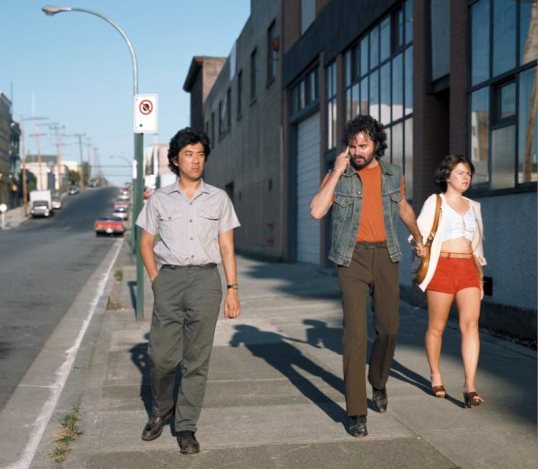
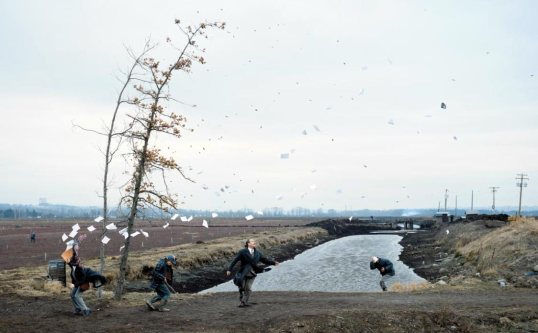
Jeff Wall -- A Sudden Gust Of Wind

“It’s a pitfall to have a definition of photography.” — Jeff Wall

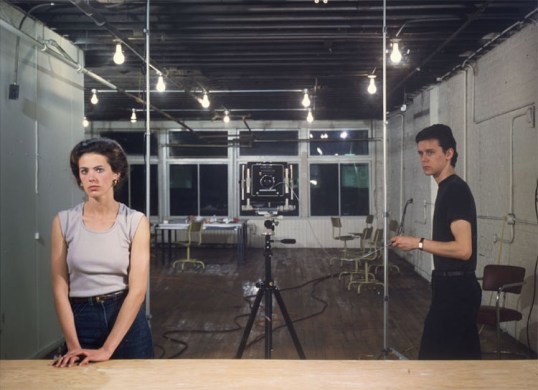
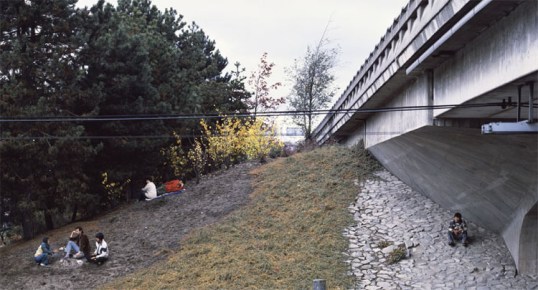
Born in Vancouver, Canada, Jeff Wall received his Masters of the Arts from the University of British Columbia in 1970 and  gone on to become one of the most influential and important photographic artists of all time. Like Gregory Crewdson, Wall is best known for large, elaborately staged cinematographic pictures.  Wall is often credited with being one of the first artists to prove that photography could be a true art form.

Jeff Wall -- A View From An ApartmentJeff Wall -- Insomnia13_After 'Invisible Man' by Ralph Ellison, the Prologue_1999-2000Jeff Wall -- MilkJeff Wall -- MimicJeff Wall -- Picture For WomenJeff Wall -- The Crooked PathJeff Wall -- The Destroyed RoomJeff Wall -- The Flooded GraveJeff Wall -- The StorytellerJeff Wall -- The Volunteer

The Oscar Nominations: The Complete List


Films listed in bold also appeared on my list of my personal picks for what I felt should have been nominated.

BEST PICTURE
“Amour”
“Argo”
“Beasts of the Southern Wild”
“Django Unchained”
“Les Miserables”
“Life of Pi”
“Lincoln”
“Silver Linings Playbook”
“Zero Dark Thirty”

BEST DIRECTOR
Michael Haneke, “Amour”
Ang Lee, “Life of Pi”
Steven Spielberg, “Lincoln”
David. O. Russell, “Silver Linings Playbook”
Benh Zeitlin, “Beasts of the Southern Wild”

BEST ACTOR
Bradley Cooper, “Silver Linings Playbook”
Daniel Day-Lewis, “Lincoln”
Hugh Jackman, “Les Miserables”
Joaquin Phoenix, “The Master” 
Denzel Washington, “Flight”

BEST ACTRESS
Jessica Chastain, “Zero Dark Thirty”
Jennifer Lawrence, “Silver Linings Playbook”
Emmanuelle Riva, “Amour”
Quvenzhane Wallis, “Beasts of the Southern Wild”
Naomi Watts, “The Impossible”


BEST SUPPORTING ACTOR
Alan Arkin, “Argo”
Robert De Niro, “Silver Linings Playbook”
Philip Seymour Hoffman, “The Master”
Tommy Lee Jones, “Lincoln”
Christoph Waltz, “Django Unchained”

BEST SUPPORTING ACTRESS
Amy Adams, “The Master”
Sally Field, “Lincoln”
Anne Hathaway, “Les Miserables”
Helen Hunt, “The Sessions”
Jacki Weaver, “Silver Linings Playbook”

BEST ADAPTED SCREENPLAY
“Argo”
“Beasts of the Southern Wild”
“Life of Pi”
“Lincoln”
“Silver Linings Playbook”

BEST ORIGINAL SCREENPLAY
“Amour”
“Django Unchained”
“Flight”
“Moonrise Kingdom”
“Zero Dark Thirty”

BEST FOREIGN LANGUAGE FILM
“Amour”
“Kon-Tiki”
“No”
“A Royal Affair”
“War Witch”

BEST ANIMATED FEATURE
“Brave”
“Frankenweenie”
“Paranorman”
“The Pirates”
“Wreck-It Ralph”

BEST DOCUMENTARY FEATURE
“5 Broken Cameras”
“The Gatekeepers”
“How to Survive a Plague”
“The Invisible War”
“Searching for Sugar Man”

BEST PRODUCTION DESIGN
“Anna Karenina”
“The Hobbit: An Unexpected Journey”
“Les Miserables”
“Life of Pi”
“Lincoln”

BEST CINEMATOGRAPHY
“Anna Karenina”
“Django Unchained”
Life of Pi”
“Lincoln”
“Skyfall”

BEST COSTUME DESIGN
“Anna Karenina”
“Les Miserables”
“Lincoln”
“Mirror Mirror”
“Snow White and the Huntsman”

BEST EDITING
“Argo”
“Life of Pi”
“Lincoln”
“Silver Linings Playbook”
“Zero Dark Thirty”

BEST MAKEUP
“Hitchcock”
“The Hobbit: An Unexpected Journey”
“Les Miserables”

BEST SCORE
“Anna Karenina”
“Argo”
“Life of Pi”
“Lincoln”
“Skyfall”

BEST SONG
“Before My Time” (“Chasing Ice”)
“Suddenly” (“Les Miserables”)
“Pi’s Lullaby” (“Life of Pi”
“Skyfall” (“Skyfall”)
“Everybody Needs a Best Friend” (“Ted”)

BEST SOUND EDITING
“Argo”
“Django Unchained”
“Life of Pi”
“Skyfall”
“Zero Dark Thirty”

BEST SOUND MIXING
“Argo”
“Les Miserables”
“Life of Pi”
“Lincoln”
“Skyfall”

BEST VISUAL EFFECTS
“The Avengers”
“The Hobbit: An Unexpected Journey”
“Life of Pi”
“Prometheus”
“Snow White and the Huntsman”

BEST ANIMATED SHORT
“Adam and Dog”
“Fresh Guacamole”
“Head Over Heels”
“Maggie Simpson in The Longest Daycare”
“Paperman”

BEST DOCUMENTARY SHORT
“Inocente”
“Kings Point”
“Mondays at Racine”
“Open Heart”
“Redemption”

BEST LIVE ACTION SHORT
“Asad”
“Buzkasi Boys”
“Curfew”
“Death of a Shadow”
“Henry”
The Daily Grindhouse: Toe Tags (dir by Darla Enlow)


Bad things are happening at the Valley Creek Apartments.  The residents are getting naked and getting murdered by a stranger with a knife.  Could the murderer by the creepy landlady?  Or could it be … someone else?  Two detectives (played by director Darla Enlow and Marc Page) are determined to solve the crimes and it quickly turns out that both of them have a connection to every single person who has been murdered.  The very angry coroner (Scott Killman) is upset because someone keeps breaking into the morgue and stealing all of the toe tags.  An even angrier police captain (Larry Scott) shows up at random moments to yell at the two detectives.  Finally, there’s a crime scene photographer (Andrew Lombardo) who seems to enjoy his job way too much.  Needless to say, it all concludes with a surprise ending that actually works a lot better than you might expect.

Toe Tagswhich was released in 2003, is probably the one of the least known, most obscure films that I’ve ever reviewed for the Shattered Lens.  I came across the film as a part of Decrepit Pit Of Nightmares box set, which I bought as the result of reading a review of Las Vegas Bloodbath that was written by our very own Ryan C., the Trashfilm Guru.  So, when you get right down to it, its’ pretty much Ryan’s fault that I watched Toe Tags.

Well, that’s okay because I actually enjoyed the nonstop silliness of Toe Tags.  Clocking in at 68 minutes and shot-on-video, Toe Tags is one of those zero budget exploitation films that you have to admire just because it actually managed to get made and released.  The whole film has this random, improvised feel to it.  The story is quite bold about its refusal to make any sense and, while none of the actors give good performances, they’re all trying so hard that it’s impossible not to like them.  My favorite performers were Scott Killman and Larry Scott.  You could seriously tell that both of them were having a lot of fun going over-the-top with even the simplest line of dialogue.

The end of the film features about 10 minutes of clips of the actors blowing their lines or cracking up into laughter and, to my surprise, I actually enjoyed this obvious padding.  It was nice to see that everyone had fun even while they were having to play dead and it reminded me of the fun that I use to have doing plays in high school.  The end credits feature credits like, “Thank you Craig Lamb for the endless supply of blood” and “Production assistant…anyone on the set!,” and, again, they just add to likable drama club feel of the whole production.

(Warning: There’s some nudity in the trailer below and a lot of fake blood.)

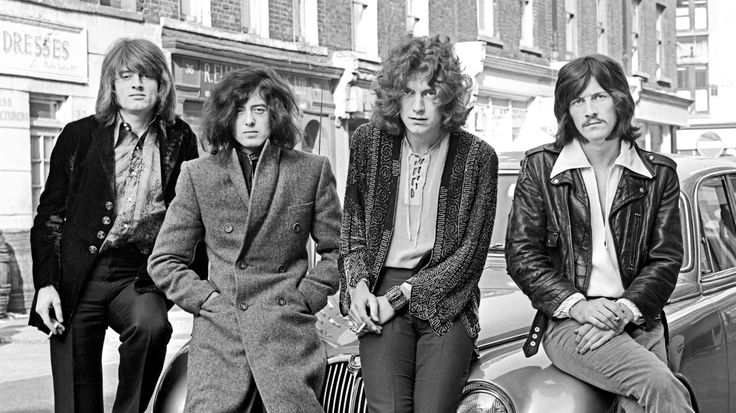
Song of the Day: When the Levee Breaks (by Led Zeppelin)


c16f548f4fbcd77437f8aaa3fb70dfc2Who would’ve thought that Ben Affleck, the same guy who was in one of the most ridiculous romantic scenes ever put on film (hint: animal crackers), would be turning out to be one of the brightest directors these last few years. He hasn’t missed yet with two directing gigs with Gone, Baby Gone and The Town. With Argo he makes it three solid hits in a row.

One thing that really struck me about the film Argo was Affleck’s use of licensed music to cue up particularly important scenes throughout the film. One such musical cue used one of my favorite rock and blues song ever. It’s Led Zeppelin’s cover of the Memphis Minnie and Kansas Joe McCoy song of the same name. Most young people seem to know this song from it’s constant use to score scenes and sequences about the Katrina disaster, especially scenes of a flooded New Orleans when the levees broke during the hurricane. It was nice to hear the song used in a scene not dealing with the aftermath of Katrina but to highlight the mental situation of the characters in Argo. I won’t say which scene exactly, but for those who have seen the film will know what I mean and the lyrics to the song should become even more weighty once they put two and two together.

I really love this song. From the use of harmonicas by John Paul Jones (and probably another sessions player) to Robert Plant’s emotional wailing right up to one of the best drum work by the great John Bonham. You can almost literally feel those drum sticks drop heavy on those drums. One would almost think Bonham was using tree trunks to play this song.

When the Levee Breaks

If it keeps on rainin’ levee’s goin’ to break
When The Levee Breaks I’ll have no place to stay.

Mean old levee taught me to weep and moan
Lord, mean old levee taught me to weep and moan
Got what it takes to make a mountain man leave his home
Oh well oh well oh well.

Don’t it make you feel bad
When you’re tryin’ to find your way home
You don’t know which way to go?
If you’re goin’ down South
They go no work to do
If you don’t know about Chicago.

Cryin’ won’t help you prayin’ won’t do you no good
Now cryin’ won’t help you prayin won’t do you no good
When the levee breaks mama you got to move.

All last night sat on the levee and moaned
Thinkin bout me baby and my happy home.
Going go n to Chicago
Go n to Chicago
Sorry but I can’t take you.
Going down going down now going down.

Film Review: Camelot (dir by Joshua Logan)


Back when I was 18 years old, I auditioned for a community theater production of Camelot.  For as long as I can remember, I’ve always been intrigued with the spectacle and romance of the Arthurian legends and I just knew that I would make the perfect Guinevere.  And so, for two nights, I auditioned.  I performed “Baby One More Time” as my audition song, I showed off my dance moves, and I did countless cold readings with countless potential Arthurs and Lancelots.  At the end of the two days, the director told me that he would be in touch and I left with stars in my mismatched eyes, convinced that I had won the role of Guinevere.

Two days later, I got a call not from the director but from the assistant director.  She informed me that while my dancing was impressive, I wasn’t right for the role of Guinevere because:

1) I was too young.

2) I couldn’t sing.

3) My voice carried too much of a rural twang for me to be a believable Queen of England.

However, she did tell me that I had been selected to be a part of the “chorus.”  Well, I may have only been 18 but I still had my pride so I told her that, if I couldn’t I play Guinevere, I had no interest in being in their little production of Camelot.  I was later told that this caused a lot of people to assume that I was a diva but no matter, I stand by my decision.

When I later saw the theater’s production of Camelot, I felt thoroughly vindicated.  It wasn’t just the fact that the actress they cast as Guinevere had no stage presence, no boobs, and a horsey face.  It’s the fact that Camelot itself isn’t a very good show.  As good as the songs are, Camelot is something of a talky mess and Pellinore is one of the most annoying characters ever.

It was only after I saw that mediocre production that I discovered that there was a film version of Camelot. Released in 1967, the Warner Bros. production was one of the many big budget musicals released in the late 60s.  It has a terrible reputation (and was a box office bomb) but I recently decided to watch it for two reasons.

First off, Camelot was nominated for five Academy Awards (though not best picture) and won three (Best Art-Set Decoration, Best Costume Design, and Best Music — Scoring of Music, Adaptation or Treatment).  That means that Camelot won two more Oscars than The Graduate and one more than Bonnie and Clyde.

Secondly, this film version of Camelot features Franco Nero (who, in 1967, was literally the most handsome man in the world) in the role of Lancelot.

And so, I recently set aside 3 hours and I watched the film version of Camelot.

Camelot tells a familiar story.  Arthur (played here by Richard Harris) becomes king of England and he marries Guinevere (Vanessa Redgrave).  At the magnificent castle of Camelot, the most noble knights of England gather at a round table and Arthur preaches equality and chivalry.  Eventually, the righteous French knight Lancelot (Franco Nero) travels to Camelot and becomes Arthur’s  greatest knight.  However, Lancelot and Guinevere fall in love and, as a result of the schemes of Arthur’s illegitimate son Mordred (David Hemmings), Lancelot and Arthur are soon at war with each other.

Despite my dislike of the stage production, I actually started watching the film version with high hopes.  I have a soft place in my heart for the overproduced musical spectacles of the late 60s and I figured that what was slow on stage might be more tolerable when seen on film.  Unfortunately, I was incorrect.  Camelot is a painfully old-fashioned film and, clocking in at 179 minutes, it’s also one of the most boring movies ever made.  Richard Harris was reportedly miserable while making the film and it shows in his performance.  You get the feeling that King Arthur would rather be anywhere other than Camelot.

The only time that the film comes alive is when Franco Nero is allowed to command the screen.  While the very Italian Nero is somewhat miscast as the very French Lancelot, that doesn’t change the fact that Nero plays the role with a passion that’s missing from the rest of the film.  Franco Nero’s blue eyes did more to make me believe in Camelot than any of the songs sung by Richard Harris.  One need only watch the scenes that Franco shares with Vanessa Redgrave to understand why they’ve been a couple for over 40 years.

Ultimately, Camelot is interesting mostly as an example of how the old Hollywood studio establishment attempted to deal with competition from television and European films.  Instead of attempting to adapt to the new culture of the 60s, the old studio bosses just continued to make the same movies they had always made, with the exception being that they now spent even more money than before to do so.  While it’s easy to mock them, you have to wonder if the Camelot of 1967 is all that different from the John Carter of today.

My new toy


I made a peculiar purchase today. I am not typically one to dive in for impulse buying, but I have had a bug in me ever since I played Bethesda’s Elder Scrolls V: Skyrim about a year ago. I must admit that by the end of the first decade of this dark century of ours I had completely lost faith in video games. In Blizzard I trust, but the dynamics of an MMORPG are enormously time-consuming as a rule, and in the realm of the single-player there simply weren’t many good options for a long, long time. Suikoden V in 2006 was a breath of fresh air, but as Konami put the nix to the series shortly thereafter I abandoned gaming beyond the Blizzard monolith entirely. It took six years for another game to catch my eye. What I realized while playing Skyrim, aside from the fact that really awesome RPG/adventure games with compelling plots and memorable soundtracks do still exist, is that I am entirely out of touch with gaming in general as it exists today.

I really don’t know what is popular now. I am completely clueless. But I have a sneaking suspicion that what I purchased today is not among your common, mass-marketed fair.

I bought RPG Maker VX Ace. I didn’t plan to. I just stumbled upon it, was shocked that it still exists, and clicked buy. I had last used RPG Maker software at some point back in the 90s, when ASCII was still making it and the best you could do was a fan-translated hack. (Enterbrain makes it now, and I rather doubt companies would still view freely distributed fan hacks as innocent endeavors.) The Dragon Quest JRPG-inspired format of VX Ace, just released in March 2012, might be considered retro at this point, but I have to wonder whether there might not be a serious market demand for that. Wouldn’t it be nice to see some games which, necessarily limited in graphics and sound, had to rely on a compelling plot to the degree of a Final Fantasy VI or a Chrono Trigger? I certainly think so. Not that I possess the capacity to make any myself, but I am beginning to see a vision for my 2013 hobby unfolding: Last year I investigated the history of video game music up until about 1994. If VX Ace holds my interest at least long enough for me to get my $70 worth out of it, I might spend this year looking into the world of indie gaming. If nothing else, I’ll at least make a post or two in the near future showing off my new toy.

Here are the DGA Nominations!


The Director’s Guild of America announced their five nominees for director of the year today.  The DGA is traditionally the last of the precursors to make their opinion known before the actual Oscar nominations are announced.

Traditionally, it seems that four of the DGA nominees are honored with an Oscar nomination while one is usually snubbed.  For instance, last year, all of the self-proclaimed “experts” were all excited when David Fincher was nominated for his shot-for-shot remake of The Girl With The Dragon Tattoo but then had their little hearts broken when the Academy declined to nominate either Fincher or his remake.

Who, if anyone, will be snubbed this year?  I’m not even going to venture a guess because, honestly, this year has the potential to be one of the more unpredictable Oscar years.  (Of course, I say that every year and every year, I’m disappointed by how predictable everything eventually turns out to be.)

For now, here are the five directors nominated by the DGA:

Ben Affleck for Argo

Kathryn Bigelow for Zero Dark Thirty

Tom Hooper for Les Miserables

Ang Lee for Life of Pi

Steven Spielberg for Lincoln

Unlike some people, I’m not surprised to see that Quentin Tarantino was snubbed.  Django Unchained might be a difficult sell to the Academy, especially considering that gun control is currently Hollywood’s favorite political cause.  I’m a bit more shocked to see that David O. Russell’s work on Silver Linings Playbook was not nominated.

The Oscar nominations will be announced on Thursday morning.


The Daily Drive-In: The Creature From The Black Lagoon (dir. by Jack Arnold)


As anyone who knows me can tell you, Lisa Marie doesn’t do water.

Seriously, I have a very intense fear of drowning and, while I might enjoy laying out by the pool during the summer, you’re never going to catch me actually going anywhere near the deep end.  I’m the epitome of the girl who loves the beach but hates the ocean.  As a result, I have a hard time with movies the feature swimmers thrashing about in the water or ancient monsters coming up to the surface in search of swimsuit-clad victims.

For lack of a better term, these films freak me out.

Sometimes, however, it’s fun to be freaked out.  Perhaps that’s why I so love the 1954 monster classic, The Creature From The Black Lagoon.

Like all good B-movies from the 1950s, The Creature From The Black Lagoon starts off with a lot of stock footage and a stuffy narrator telling us about how the Earth was created and how mankind originally evolved from a creature that crawled out of the sea.  The narrator manages to cover all the bases by including a few Biblical quotes with his explanation of how evolution works.

From the beginning of mankind, we fast forward to the 1950s.  A fossilized claw has been discovered in the Amazon and a group of scientists think that it could be evidence of the missing link in human evolution.  Mark (Richard Denning), who is kind of a jerk, funds an expedition to the Amazon to search for more evidence.  Accompanying Mark is hunky young scientist David (Richard Carlson) and David’s girlfriend, Kay (Julie Adams).  Traveling on a boat captained by the rather gruff Lucas (Nestor Paiva), they go to the camp where the fossil was originally discovered.  However, once they arrive, they discover that everyone in the camp has been killed.  Lucas suggests that the camp was attacked by a jaguar.

Lucas, needless to say, is totally incorrect.  The film isn’t called The Jaguar From The Black Lagoon.  It’s called The Creature From The Black Lagoon and the creature, also known as the Gill-Man (played by Ben Chapman when on land and by Ricou Browning whenever he’s underwater), is none too happy about these strangers invading his home.  Soon, the Gill-Man is stalking the expedition as they move up and down the Amazon River.

The Creature From The Black Lagoon is probably best known for the dream-like sequence in which Kay, wearing a white bathing suit that is simply to die for, swims in the Amazon River without realizing that the Creature is following just a few feet below her.  This scene (which does little to help with my aquaphobia) is one of the most iconic in the history of monster cinema.  Expertly framed by director Jack Arnold, this scene is distinguished by the graceful movement of both Julie Adams and Ricou Browning.  It’s as close as a monster movie has ever gotten to duplicating ballet.

Ultimately, like all good monster films, the Creature from the Black Lagoon is on the side of the monster.  The members of the expedition are, for the most part, interchangeable and, when the Gill-Man attacks, he’s acting more out of self-defense than out of hostility.  The expedition, after all, has invaded his home.  Like many 50s B-movies, the theme for The Creature From The Black Lagoon is not that people should be careful while investigating mysteries but that most mysteries are best left unsolved.

When you combine one of the genre’s most iconic monsters with Jack Arnold’s atmospheric direction, the end result is one of the best B-movies ever made.

What Lisa and Erin Watched Last Night #63: Bring It On (dir. by Peyton Reed)


Last night, my sister Erin Nicole (a.k.a. Dazzling Erin) and I watched the classic 2000 cheerleading movie Bring It On on AMC.

Why Were We Watching It?

Seriously, how can you not watch Bring It On?

Back in high school, while I was doing my goth ballerina thing, Erin Nicole was a cheerleader and, though she denies it, she pretty much was Kirsten Dunst back then.  Anyway, Erin usually refuses to watch Bring It On because she says she had already had to sit through it a few hundred times by the time she turned 17.  For this reason, I always make it a point to let Erin know when Bring It On is on TV and to try to trick her into watching it with me.

But last night, to my surprise, she was the one who saw the movie listed in the guide and started watching it because, according to her, there was nothing else on.  (Personally, I think Erin was feeling nostalgic but she denies it.)  I joined her shortly after the movie started and, according to Erin, I spent the next two hours jumping around and acting all hyper.  That’s not quite the way I remember it but Erin’s the cheerleader so I’ll take her word for it.

What’s It About?

Torrance (played by Kirsten Dunst) is the new captain of her high school’s cheerleading squad and is determined to lead them to yet another national title.  However, Missy (Eliza Dushku), a new member of the squad, reveals that the squad only won those titles by stealing routines from an inner city cheerleader squad.  Torrance now has to create an original routine while dealing with her cheating boyfriend (Richard Hillman) and flirting with Missy’s brother (Jesse Bradford), who looks a lot like Paul Rudd and is skeptical about whether cheerleading’s really all that important in the grand scheme of things.

What Worked?

Let’s just come right out and say it: Bring It On is one of the greatest high school movies ever made.  It’s fun, it’s funny, and best of all, it’s real.  The film’s director, Peyton Reed, the film’s writers, Jessica Bendinger and Stephen White, and the film’s cast all perfectly capture just how important the little dramas are when you’re a teenager.  The film even manages to say something very important about issues like race and economic inequality.

Plus, as Erin and I both agreed last night, Jesse Bradford is HOT!

According to Erin, she has flashbacks and starts laughing uncontrollably  whenever she hears the line “These are spirit fingers!”

What Didn’t Work?

It all worked.  Seriously, if you can be critical of a film like Bring It On then you’re probably taking life too seriously.

“OH MY GOD!  Just like Erin!” Moments

Last night, I finally got Erin to admit that she liked Bring It On because it reminded her of her cheerleading days but Erin added, “But I wasn’t as bouncy as Kirsten Dunst is in this movie.”  To that, I can only smile and say, “Whatever,” because, as everyone knows, the Bowman Girls are always bouncy.  That’s a part of our charm.

Lessons Learned

If you’re going do it, then bring it!

Trailer: Pacific Rim (Official CES)…and Jaeger Designs


559069_380847688648201_1432983854_n

I think Guillermo Del Toro’s upcoming giant robots vs giant monsters summer film will either fail to live up to the hype it’s been gathering since the very first teasers and images were released or the film will blow people’s minds away. This looks to be a film that will not brook any middle-of-the-road reaction. Some will either love it and some will absolutely hate it. Already there’s people who have been dismissing it as nothing but a jumped-up-Michael Bay rip (like that’s even possible) or dismissing it just because it’s a summer blockbuster, special-effects heavy film and not a barely-funded, arthouse, indie foreign film about the meaning of life, existence and the ennui that befalls all.

I, for one, am hyping this film up to beyond what’s safe to hype a film up for (yeah that doesn’t make sense but still deal with it). I’ve been a fan of Del Toro since I first caught his imaginative and inventive take on the vampire myth with Cronos. While he’s earned geek cred for his genre projects he is also once of the few filmmakers who have also gained the respect of the arthouse indie crowd with such films as The Devil’s Backbone and Pan’s Labyrinth.

Enough gushing over the man. It’s all about the new trailer which premiered at this year’s CES over in Las Vegas. One wouldn’t think of CES as a place to premiere new footage about a summe rblockbuster, but as one can spy in this newest trailer it looks like Qualcomm paid some cash to get itself named in the film even if it’s just in the background. Also, just to show just how awesome this film will be there are also the design blueprints of five of the giant Jaegers that we’ve caught glimpses of in the trailer.

          U.S. Jaeger Gipsy Danger          Australian Jaeger Striker Eureka                 Russian Jaeger Cherno Alpha          Chinese Jaeger Crimson Typhoon

Japanese Jaeger Coyote Tango