A Quickie With Lisa Marie: The Ides of March (dir. by George Clooney)


George Clooney’s new political film The Ides of March opened last Friday and so far it appears to have mostly gotten positive reviews that are more respectful than enthusiastic.  Well, I saw The Ides of March on Tuesday evening and all I can say is “Don’t believe everything you hear.”  That should be a given but it’s always worth repeating.  The Ides of March is a slow, ponderous, and at times completely annoying movie, a minor work dealing with major themes.

The film is based on the play Farragut North and it’s about Stephen (Ryan Gosling), a political consultant who is working on the presidential campaign of Gov. Mike Morris (George Clooney).  Morris is a typical Hollywood Democratic politician in that he gives a lot of speeches attacking America’s dependence on foreign oil and he’s not ashamed to admit that he’s an atheist.  Anyway, despite the fact that Morris comes across as being smug and something of a sexist, he’s the front runner for the Democratic Presidential nomination but only if he can win the Ohio primary.  For all of his attempts to be as cynical as his mentor (Philip Seymour Hoffman, giving a typical Philip Seymour Hoffman performance), Stephen truly believes in Mike Morris.  However, Stephen comes across some information that could potentially destroy Morris’ campaign and he soon finds himself a pawn in a game between Morris, the press (represented by Marisa Tomei, who looks terrible in this film), and the opposing campaign (managed by Paul Giamatti).

Yes, The Ides of March has a lot to say but it’s absolutely nothing you haven’t heard before and, quite frankly, it’s kind of annoying how the film seems to think that this is the first time that anyone’s ever suggested that maybe politics is a dirty business.  The film’s not a total waste because there’s way too many talented people involved here for the film not to have the occasional good moment.  Gosling and Clooney both give strong performances and play off each other well.  They have a scene where they confront each other in a deserted kitchen and for a few brief seconds, the film actually gets interesting.  Playing an emotionally unstable intern, Evan Rachel Wood shows once again that she’s one of the best actresses working today and it’s just a shame that the film treats her more like a plot device than an actual human being.  At the same time, I have to say that this is the first time I’ve ever seen Paul Giamatti actually give a performance that can only be called bad.  Seriously, how could the same actor who was so brilliant in Win Win be so terrible in this movie?

Ultimately though, the film fails because — once you get past all the glamour on-screen — what you have is a very predictable political film that, especially in these days of Tea Parties and Occupy Movements, feels rather quaint and forced.  This is yet another one of those films where, apparently, the only way that the main character can learn a lesson is for a supporting character to commit suicide.  There’s a lot of would-be cynical dialogue and Clooney manages to include references to Rush Limbaugh and the Drudge Report but ultimately, the whole film feels as false as the romantic short stories I used to write in the 8th grade.

The film’s name is obviously meant to carry hints of Shakespeare but perhaps a more honest title would have been Much Ado About Nothing.

Horror Review: The Serpent and The Rainbow (dir. by Wes Craven)


The word zombies conjures up the flesh-eating variety popularized by George Romero’s horror films and the legion of films from others soon after. Prior to 1968’s Night of the Living Dead the word zombies was synonymous more with the gothic-like horror films which took the Haitian voodoo folklore about the recently dead being brought back to life by voodoo priests to act as mindless slaves. It’s this version of the word zombie which Wes Craven decided to explore with his 1988 film adaptation of the Wade Davis non-fiction book The Serpent and The Rainbow. Wes Craven’s film fictionalizes the ideas and treatises put forward in Davis’ book and creates a film which tries to put to light the true horror which lay behind the voodoo folklore regarding zombies.

The film introduces us to the ethnobotanist character of Dennis Alan (played by Bill Pullman) who’s approached by a major pharma-corporation about researching the scientific origins and cause of the voodoo “zombie”. He heads off to Haiti at a time when it’s going through a political upheaval that would lead to the subsequent revolution that topples the dictatorship of that country’s leader, Francois “Baby Doc” Duvalier. During his time in Haiti he investigates story of a patient named Christophe who was reported dead 8 years past but seen recently walking about in a dazed manner. It’s while trying to get a handle on how Christophe was declared dead by authorities but then “resurrected” years later which brings Alan in contact with the local witch doctors who question Alan’s motives but also ridicule him for his narrow viewpoint regarding things which science cannot answer. But through persistence he finally gets one local to assist him in procuring the so-called “zombie powder” used to bring the dead back to life.

The Serpent and The Rainbow shows the real horror about zombification when Alan’s investigations and persistence to acquire the “zombie powder” brings the attention of the country’s secret police (the Tonton Macoutes) and one of it’s leaders and reported voodoo priest in Captain Dargent Peytraud (played by Zakes Mokae in a chilling performance) who warns him repeatedly not to continue. Repeated verbal warning and threats soon become more direct and physical as Alan finds out first-hand why no one in the country dares to speak of “zombies” to an outsider and why Captain Peytraud and his Tonton Macoutes were feared as if they were agents of the evil spirits of their voodoo faith.

Craven does a very good job in taking Wade Davis’ non-fiction book and creating a thrilling and suspenseful piece of horror which suggests that the lead character of Dennis Alan has stepped into a world that was steeped not just in the realm of science but also in the supernatural. The film includes some great scenes which shows Alan experiencing some very horrific nightmares which seems indistinguishable from his waking moments and vice versa. Unlike Craven’s previous work in horror which were imbued with some dark humor but always brutal in it’s depiction of everyday horror, this film rarely goes the gory route though the scenes of torture should make even the most hardened and jaded horror aficionado to squirm in their seat.

The true horror revealed by Craven’s film is the very human figure of Captain Peytraud and his Tonton Macoutes who use the local populace’s fear of “zombification” and how Peytraud has taken advantage of these people’s voodoo beliefs to control the public and keep themselves in power. It’s horror that many recognize and understand yet heightened even more with the addition of a local religious practice that’s relatively unknown and misunderstood by outsiders (especially by those in the West). The film never truly answers the question raised in the beginning of the film of whether the practice of “zombification” is wholly scientific and pharmacological in origins and cause or does religion and the supernatural has a hand in making the process occur. Even after the climactic encounter between Alan and Captain Peytraud in the end of the film only brings more questions which Craven seems to relish in not letting his film answer on either side of the discussion.

The Serpent and The Rainbow is one of those films during the 1980’s which never really got a fair shake from critics and the audience but has since gained quite a following in the years since it’s release. It’s actually one of Craven’s more subtle works during that period of time where violence in the film was the exception instead of the rule as in his past films. It’s a film which continues to gain fans as more and more younger film fans discover the film. Sometimes the word zombies doesn’t conjure up the typical flesh-eating variety but instead one even more horrific since it’s one based on real-life. Sometimes reality can be scarier than what we can conjure up in our minds. The Serpent and The Rainbow is one film which does a great job in supporting that.

Quick News: The Avengers Trailer Released


Marvel has just released the trailer for The Avengers, which is viewable on Apple’s Quicktime Site. The trailer showcases what looks like a big battle within a major city. It also seems like some of the focus in the film is the team having to deal with each other’s issues to work together as a unit. So far, it’s looking pretty good, but I’m noticing they’re really keeping The Hulk under wraps. There’s also a nice use of Nine Inch Nails “We’re in this Together” off The Fragile album.

Very interesting work there!

EDIT: Below is the HD trailer on YouTube if people can’t get the Apple QT site to work.

A Quickie With Lisa Marie: Brighton Rock (dir. by Rowan Joffe)


Brighton Rock is a British film noir that’s currently both playing in limited release and which is also available via video-on-demand.  Based on a novel by Graham Greene, Brighton Rock is the story of Pinkie (Sam Riley), a sociopathic gangster who murders a gambler.  The chase leading up to the murder is witnessed by a mousey waitress named Rose (Andrea Riseborough) who doesn’t realize what she’s actually seen.  In order to keep her quiet, Pinkie marries Rose.  Rose, however, works for Ida (Helen Mirren) and Ida just happens to have been friends with the murdered gangster.  Realizing that Rose is in danger, Ida takes it upon herself to expose Pinkie for the murderer he is.

Brighton Rock is a visually striking film and it has a handful of good performances but it never quite comes together.  Before making his feature film directing debut here, Rowan Joffe wrote the script for last year’s The American and, much like The American, Brighton Rock has an abundance of style and is full of references to the classic crime films of the 60s and 70s.  Also, much like The American, the style — too often — seems to exist separately from any larger vision.  As a result, the film ultimately feels like several disconnected — if pretty scenes — strung together by convenience.  The film has an intriguing-enough plot but the narrative lacks any sort of forward momentum.  Interestingly enough, Greene used the story of Pinkie, Rose, and Ida to examine larger theological issues within the Catholic church.  With the exception of a scene where Pinkie prays, an over-the-top sequence featuring a judgmental nun, and a few inserts of crucifixes artfully hanging on grimy walls, Joffe pretty much jettisons the story’s religious angle but without it, Pinkie and Rose’s actions make a lot less sense. 

Joffe’s decision to cast Sam Riley, whom I’ve had a crush on ever since I first saw Control, in the lead role of Pinkie is problematic.  It’s not that Riley gives a bad performance because he doesn’t.  He makes a convincing psychopath and if he’s never quite charming enough to be a true anti-hero, he’s still makes Pinkie into a compelling figure.  Unfortunately, Riley is still totally miscast in the film.  In Graham Greene’s original novel, Pinkie was only 17 years old.  Sam Riley is 31 and looks even older.  Unfortunately, all of the other characters in the film continually refer to him as “the kid.”  John Hurt, at one point, gives a monologue in which he wonders how someone so young could be so evil.  But Riley isn’t young and as a result, I found myself wondering just how old someone had to be before they were considered to be an adult in 1960s England.

Still, if nothing else, Joffe gets some good performances from his supporting cast.  Andrea Riseborough manages to be both poignant and annoying as Rose while Andy Serkis appears to be having a lot of fun playing a slightly ludicrous gangster.  Not surprisingly, Helen Mirren commands every scene she appears in and she and John Hurt have got a great chemistry.  Regardless of how you might feel about the film as whole, it’s impossible not to enjoy their scenes together.  They’re final scene together made me squeal with delight and, in the end, that has to count for something.

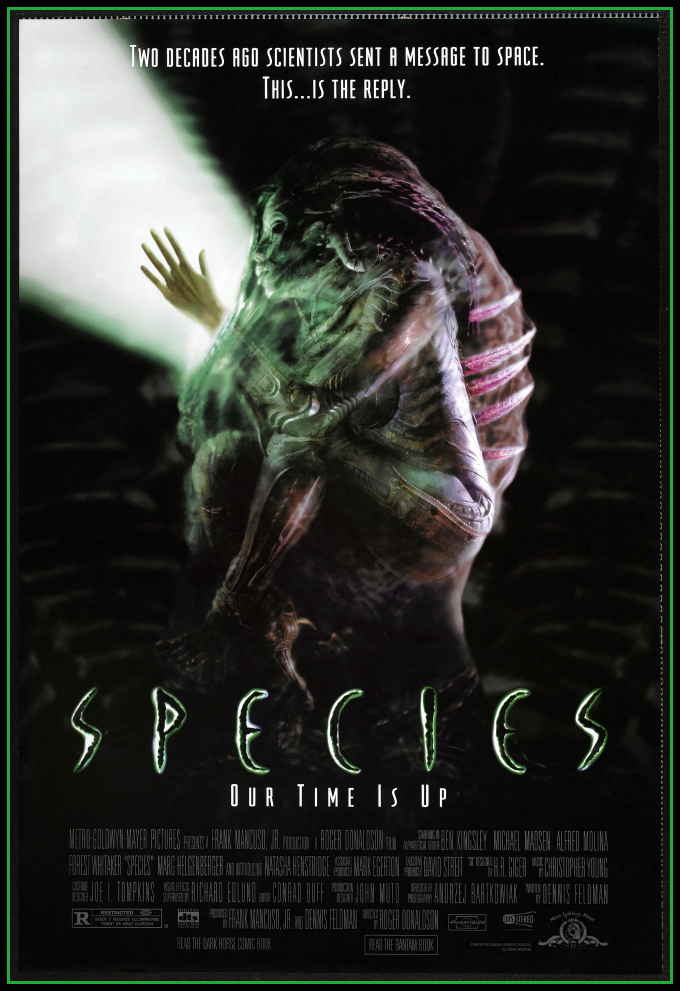
Quickie Horror Review: Species (dir. by Roger Donaldson)


1995’s Species was a studio’s attempt to replicate the start of a new sci-fi/horror franchise like the one begun by Ridley Scott’s Alien. Roger Donaldson was tapped to direct this attempt with a cast that included Sir Ben Kingsley, Michael Madsen, Marge Helgenberger, Forrest Whitaker and Alfred Molina. The lucky gal who gets to play the role of Sil — the half-alien, half-human hybrid — fell on the stunning and gorgeous shoulders of Natasha Henstridge.

Species pulls from so many different sci-fi/horror films and shows from the past that it’s hard to find anything original in the story. There’s stuff from Alien, The Hidden, and even some episodes of The X-Files. The one original twist in this derivate film was the plot of an alien race sending over the genetic markers of its race and instructions on how to recombine it with human DNA to create a form of hybrid. Why the scientists decided to go through with such a seemingly dangerous task is known only to the writer who put pen to paper to create the screenplay. The bulk of the film’s story comes from one the creation of one such human-alien hybrid named Sil (the young version played by Michelle Williams in one of her very first roles) and how her creators and handlers begin to realize that she has an almost desperate need to procreate.

The acting by the select group of experts (Madsen, Helgenberger, Molina, Kingsley and Whitaker) were good enough and no one embarrassed themselves in the end. Henstridge does a fine job of being sexy and hot. It helped that she pretty much was naked through most of the film, or at least put herself in situations to be naked. In fact, Henstridge goes beyond just being the naked eye candy in the film, but does a great job playing the naive adult Sil who escapes her lab-prison as her instincts propel her to find the perfect mate. It’s during this search that much of the film’s gore make their appearance and there’s a bit of it.

The art design of Sil as the evolved alien hybrid came courtesy of the great Swiss surrealist, H.R. Giger who also did the design for the alien creature in Alien. Giger’s biomechanical designs have always been disturbing and beautiful at the same time and he didn’t disappoint with his design of Sil. If there was a quibble on Sil’s final design it was that it still resembled a bit too much of the alien design in Ridley Scott’s Alien. But it was still great to see H.R. Giger still creating such wonderful artwork and designs for people to see. His popularity has always been mostly composed of the elite circles of the artworld and those small, loyal art groups with a penchant for the surreal, weird and disturbing.

In the end, Species was a good sci-fi/horror that didn’t bore too much and for those who enjoy their gore this film had its equal share of the red stuff. Gratuitious nudity and sex from Natasha Henstridge as Sil the alien hybrid and the excellent designs from H.R. Giger gives this film enough good things to look at. It doesn’t bring anything new and pretty much reuses alot of other things from other movies, but Species was good enough albeit derivative of better past films and shows.

Review: Arckanum – Helvítismyrkr


I am not overly familiar with Arckanum. I associate the one-man act more with Johan “Shamaatae” Lahger’s peculiarity than with his music. From releasing a music video frequently featured among metal’s cheesiest to releasing an album absurdly titled ÞÞÞÞÞÞÞÞÞÞÞ, his minor exploits will perhaps always incline me to regard Arckanum with an eye towards the ridiculous. ÞÞÞÞÞÞÞÞÞÞÞ did, however, receive some pretty gushing reviews (I never got around to listening to it enough to judge one way or the other), and when I saw that he’d released a new one I thought it due time to give him a shot.


Helvitt

Arckanum has a somewhat odd history musically as well. After releasing three full-length albums between 1995 and 1998, he took a decade long hiatus, not reappearing until 2008 and releasing a full length album every year since. (Sviga Læ, which was never brought to my attention, came out between ÞÞÞÞÞÞÞÞÞÞÞ and Helvítismyrkr.)

In the meantime, Shamaatae has been an active writer on the subjects of “Chaos-Gnosticism” and “Anti-Cosmic Satanism”. A scholar in his field I’m sure. Whatever all that means, it apparently falls into a similar boat as the rituals practiced by fellow Swedes Dissection and Watain. Jon Nödtveidt took his own life in proclaimed accord with such teachings, and though I can never resist a tasteless joke that he had listened to the final studio cut of Reinkaos for the first time moments before his death, suffice to say these guys take themselves seriously.

One might expect that sort of intensity and personal conviction to be reflected in the music.


Nifldreki

Throughout Helvítismyrkr though, I’m not really hearing it. The album is in no sense bad, but it rarely surpasses the generic. Neither the song writing nor the atmosphere in which it is presented conjure for me much beyond a decent musician’s create outlet. He fails to take me beyond himself.

The album does have some catchy feature riffs however, Nifldreki being a prime example, and, the slow grind In Svarta aside, Shamaatae maintains a breakneck pace throughout the majority of each track, giving Helvítismyrkr a particular coherence and consequent appeal. Again, there is absolutely nothing bad about this work, I just had higher hopes.


Svartr ok Þursligr

Helvítismyrkr’s high point almost beyond debate is Svartr ok Þursligr. The breaks in the opening riff come in hard rock fasion that really drive the song, if in a peculiarly fun sort of way. Given the background, I was expecting the best tracks to be more on the esoteric side, but Shamaatae seems to be in his prime on Helvítismyrkr when he’s rocking out.

What propels the song from being merely more fun than the rest to being something really outstanding follows the transition about 3 minutes in. He incorporates a woeful, weeping violin that, aside from completely catching me off my guard, pairs up with the tremolo guitar with astounding success. It’s something I’ve never heard before in black metal, and the effect is a sort of tragedy in the positive sense–maybe not the vibe he intended to deliver, but one that certainly appeals. I can’t imagine it being sustained throughout an album without sounding over the top, so I wouldn’t encourage him to push for more of it in the future, but as a single instance it works exceptionally well.

I am not sufficiently well-versed in Arckanum’s catalog to personally recommend better efforts, but if the sparks of talent you’ve heard in these sample tracks entice you, ÞÞÞÞÞÞÞÞÞÞÞ seems to be popularly regarded as his best work. As for Helvítismyrkr, it is a decent effort but nothing to brag about.

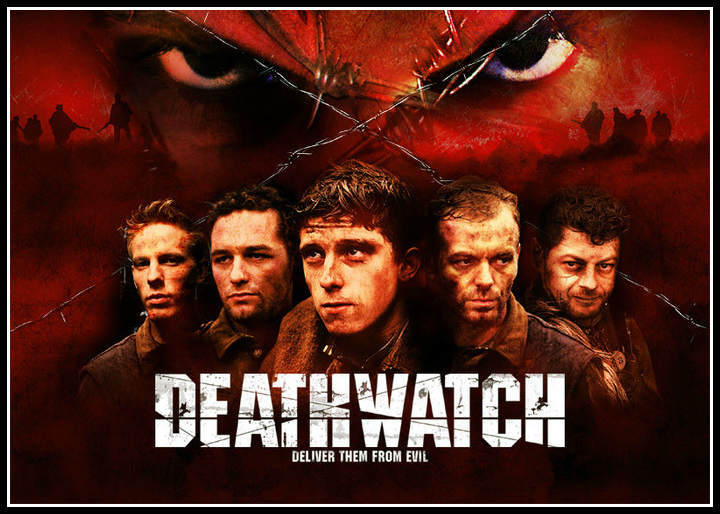
Quickie Horror Review: Deathwatch (Michael J. Bassett)


A horror film from Great Britain came out in 2002 starring Jamie Bell (from Billy Elliott) and Andy Serkis. This was a film which went under the radar of most people, but not horror fans who tend to pick up on little gems such as Michael J. Bassett’s Deathwatch.

Set during the height of the trench warfare in the Western Front during the First World War, the surviving remnants of a British Infantry company stumble upon a nearly deserted set of German trenches as they exit a fog-shrouded battlefield. Except for a couple of terrified German soldiers, the near-deserted trench only has dead German soldiers. As they spend their first night, it’s more than German soldiers they have to worry about, somewhere within the trenches something that’s hunting them down one by one.

Deathwatch does a good job in mixing in themes of horror and paranoia as the British soldiers and their lone German prisoner must try to figure out just who or what has been hunting them in the trenches since their arrival. Signs of this unknown enemy could be seen in the dead German soldiers piled on to of each other and wrapped in barbed wire. Blood flows freely from within the muddy walls of the trench system though no bodies could be seen within these walls. The film does a great job of creating such a claustrophobic atmosphere for the characters that it’s natural to see their progression from being battle-weary but alert to being paranoid to the point that they begin to hallucinate and, at times, turn on each other.

From the sound of it this film shares some similarity to Carpenter’s The Thing. As more and more of the survivors die, paranoia and suspicion grows amongst the rest as to who or what might be hunting them. The performances by the cast is good though nothing to write home about, but enough to convey the dread and paranoia sweeping through the trench. Jamie Belle as the teen British soldier with a conscience gives a understated performance while on the polar opposite is Andy Serkis scene-chewing his way through the bulk of the film as a soldier with sociopathic tendencies.

Deathwatch was a very good horror-suspense film that made great use of it’s World War I setting and borrowing themes and ideas from similar films. Michael J. Bassett’s direction kept the film moving and the film doesn’t skimp on the gore when it needed it to balance out the scenes of suspense throughout the film. It’s not a great film by any means, but it’s one of those little-known gems that one hears about and won’t be disappointed once they give it a try.

AMV of the Day: My First Kiss


The latest “AMV of the Day” is quite appropriate for this month of October. I will say that this particular AMV is more on the comedic side despite using an anime which has horror themes to it.

“My First Kiss” is an anime music video combining the fantasy horror anime series Dance of the Vampire Bund with the cheerful and double entendre-laden song “My First Kiss” by the group 3OH!3. CodeHeaven, the video’s creator, does a great job of picking the right scenes from the series to fit particular lyrics in the song. The series is fantasy horror, but it is also one of the more risque ones to make it’s jump from Japan to the US with most of it’s scenes intact. The video just hints at some of this and the song just adds to it to great effect.

Dance of the Vampire Bund is definitely not hentai, but it does have heavy ecchi moments which when paired with a song like “My First Kiss” makes for one fun anime music video.

Anime: Dance in the Vampire Bund

Song: “My First Kiss” (feat. Ke$ha) – 3OH!3

Creator: CodeHeaven


David Hess, R.I.P.


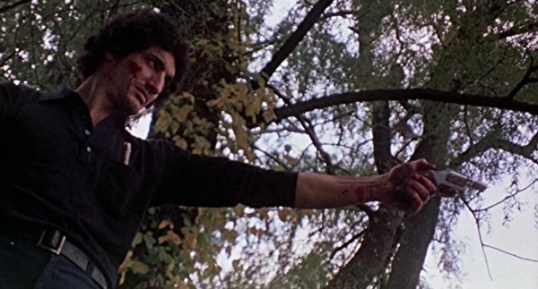
The Last House On The Left (1972, dir by Wes Craven, DP: Victor Hurwitz)

The grindhouse mourns today for actor David Hess, who passed away on Saturday at the age of 69.

Where to start with David Hess?  He would probably start with the fact that, before he become an actor, he was a succesful songwriter whose songs were performed by Elvis Presley and Pat Boone.  He was also a singer himself and can be heard performing his brand of dark folk in several of the films that he later appeared in.  He won a Grammy for co-writing a rock opera called “The Naked Carmen.”  He was also good friends with the writer, actor and political activist, Malachy McCourt (brother of Angela’s Ashes author Frank McCourt) and recorded an album with him.  Hess never stopped making music and he even recorded a few tracks for Eli Roth’s Cabin Fever.

However, David Hess is probably best known for playing assorted rapists, killers, and other unpleasant people in over 30 films.  Starting with his iconic performance as Krug in Wes Craven’s original Last House On The Left, Hess quickly established himself as one of the most believable (and scary) villains in the grindhouse world.  Whether he was holding Franco Nero hostage in Hitch-Hike, terrorizing guests while wearing a canary yellow suit in The House On The Edge of the Park, or playing a rare good guy in Camping Del Terrore (a film which co-starred another recently deceased grindhouse favorite, Charles Napier), Hess was always both bigger-than-life and a surprisingly underrated actor.  Hess may have made a career out of playing killers but every killer was unique and special in his own twisted way.

Like many movie psychos, David Hess was a funny, sensitive, and, at time, erratic interview subject.  Interviews with him can be found on the DVD releases of Hitch-Hike, The House on the Edge of The Park, and Last House On The Left and all three of them are worth owning for that reason alone.

While I doubt those toadsuckers in the Academy will see fit to honor David Hess during next year’s Oscar ceremony, he will forever be remembered by film fans (i.e., the people who actually matter).

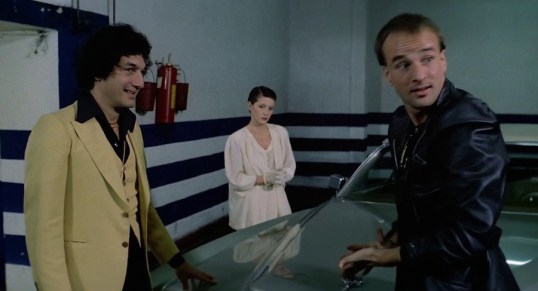
The House On The Edge of the Park (1980, dir by Ruggero Deodato, DP: Sergio D’Offizi)


David not only starred in Last House On The Left but he also composed the music.  Below is his song, Wait For The Rain.

And even though he didn’t compose the soundtrack for The House On The Edge of the Park, here’s a clip of David Hess watching Giovanni Lombardo Radice dance in that film.  Yes, I’ve shown this clip before but I just happen to love it.  This clip proves, once again, that even in a canary yellow suit, David Hess could still dominate a scene.*

David Alexander Hess, R.I.P.