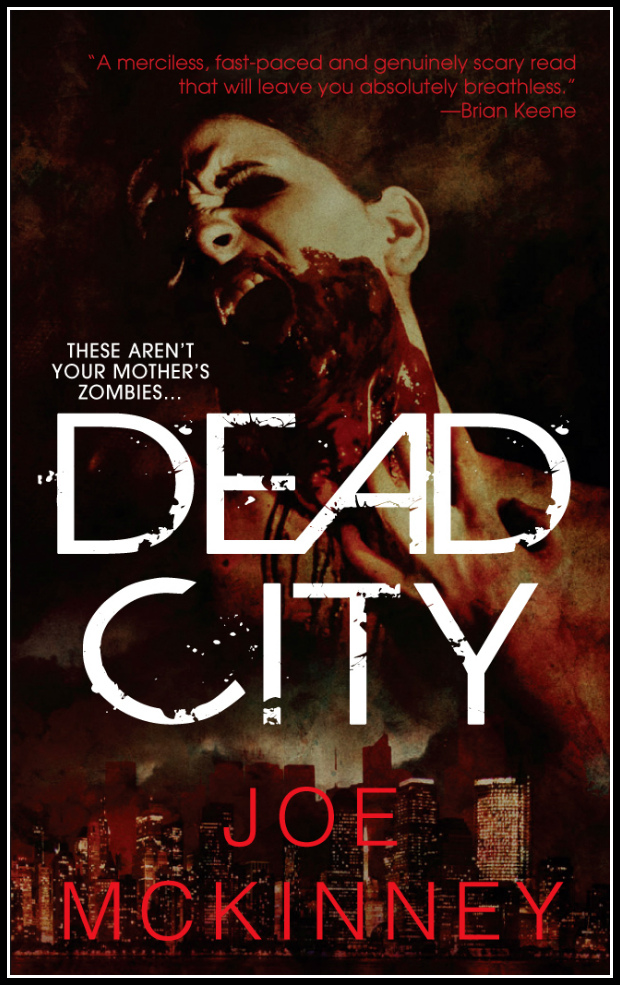
Horror Review: Dead City (by Joe McKinney)


Joe McKinney’s debut novel, Dead City, is quite an impressive piece of writing for a first-timer. It’s doubly impressive for taking the zombie tale and just making it unfold as one long nightmare with little or no prelude or wasted exposition about what led up to it. McKinney’s novel is not overlong or full of filler chapters that does nothing but try to extend the telling of the tale far longer than necessary.

Dead City is not too different from many of the zombie novels and stories that continues to see a renaissance of sorts these past couple years. McKinney takes a more novel approach in his setting by using the hurricane disasters which plagued the Gulf from Katrina and onwards. It is during the aftermath of a series of non-stop super hurricanes hitting the Texas Gulf Coast where we meet the main protagonist of this novel. Eddie Hudson is a police officer in the San Antonio Police Department who we see balancing the problems he’s having with his wife with that of the devastation left by the passing of the major hurricanes over San Antonio. The action and horror begins pretty quickly as Hudson and his partner for the night head off to a disturbance call in one of San Antonio’s neighborhoods. What they encounter at the scene is one they’ve not been trained for. Confusion and lack of relevant knowledge to combat the newly zombified citizens of San Antonio leads to disaster for Hudson and the rest of his police and emergency services brothers.

McKinney does a great job of showing the confusion and disbelief Hudson goes through as a real-life horror film comes to life in front of his very eyes. There’s the disbelief in seeing their attackers continue to move towards him and his partner with a focused determination despite being pepper sprayed at point-blank range, then hit by shotgun beanbags then to lethal gunshots to the body. It is only when shot cleanly through the head and thus destroying the brain do their crazed assailants finally stop for good. This revelation comes way too late from most of Hudson’s fellow police officers and he’s left to his own dwindling supplies of ammunition and a vow to get to his own family before the nightmare he’s seen reaches them. Along the way Hudson meets up with other survivors from undocumented workers, a high school teacher and amateur zombie researcher, to other fellow officers who have managed to survive the first few hours of the zombie outbreak.

Throughout Hudson’s attempts to get to his wife and six month-old son, more of the extent of the zombie outbreak makes itself know to Ernie and those who tags along with him as they travel the streets of a devastated San Antonio. McKinney gets high marks from this fan of the zombie genre for not shying away from describing the sort of damage these zombies can do to a human body. The gore quotient in Dead City is quite high and I think one that would satisfy any fan like myself. In fact, I will very much like to see how this novel will look like adapted into a film. The story is pretty simple and a horror road trip through a devastated city with the simple goal of a man trying to find his family amongst all the horror he has seen and still to see.

Dead City is by no means a perfect novel and at times it shows. Characters sometimes have a certain cookie-cutout feel to them. From the gung-ho and adrenaline junkie cop whose wisecracking attitude is suppose to balance out the near-desperation and panic Hudson seems to be in all the time. Then there’s the angry black man whose mistrust of the police makes him blind to the need for cooperation. Some characters seem to be there looking to become a major role in the making then quickly gone thirty pages later under the assault and tearing hands and teeth of the zombies. I think the size and length of the novel may be one reason why characterization on some of the people on the periphery got a bit shortchanged. It doesn’t bring down the overall quality of the story but it does show that this is indeed a debut novel. But with the amount of quality storytelling McKinney was able to put together I am more than confident that this writing style will improve with each successive book.

In the end, Joe McKinney’s Dead City is one roller-coaster ride of a debut horror novel which doesn’t pull its punches. The story never lets up for a moment to give our main protagonist a moment of respite from the dangers around him. Like Officer Ernie Hudson, the reader becomes bombarded with horrific images after horrific images and only until the end to we find the respite and time to relax. I hope McKinney has more tales of the undead ahead of him and that he shares it with those likeminded people who displa the same kind of interest in the black sheep of the monster genre. I very much recommend Dead City to those who enjoy a very good zombie yarn.
The Horror, The Horror — 6 More Trailers


It’s time for the latest installment of Lisa Marie’s Favorite Grindhouse and Exploitation trailers and, continuing with October’s theme, they are once again all horror trailers.  This week, I set out to prove that Argento’s a master and everything’s scarier in German.  Let’s begin:

1) Friday the 13th (1980)

There’s no way I could possibly get through October without including at least one Friday the 13th trailer.  I went with this one in order to specifically prove that everything’s scarier in German.

2) Paganini Horror (1989)

The trailer for this Italian horror film is in German as well and I have to be honest that, despite being a fourth German, I speak the language like not at all.  Then again, considering that this is one of Luigi Cozzi’s films, it’s probably for the best that I can’t understand the trailer.  All I know is that the killer’s mask is creepy and who doesn’t love Venice?  Seriously, I went there the summer after I graduated high school and there’s no other place I’d more want to be stalked by Klaus Kinski.  One more piece of trivia (and don’t quote me on this), I think that Cozzi may have attempted to sell this film as a part of Dario Argento’s Three Mothers trilogy.

3) Suspiria (1977)

Speaking of Dario Argento’s Three Mothers trilogy, here’s the U.S. trailer for the film that started it all, Suspiria.  While you can probably guess that Suspiria is one of my favorite horror films, it’s also one of my favorite ballet movies as well.  In fact, the ballet aspect of Suspiria is largely responsible for me discovering my love of Italian horror because, if not for the fact that it took place at a cursed dance academy, I doubt I would have paid as much attention to the movie the first time I saw it.

4) Inferno (1980)

While Suspiria is definitely more fun, I still think that the second part of the trilogy — Inferno — is a better horror film.  Seriously, the underwater sequence at the start of this film still freaks me out.

5) Mother of Tears (2007)

Twenty-seven years after Inferno, Argento finally concluded the trilogy with Mother of Tears.  A lot of horror fans practically foam at the mouth going on and on about how much they hated this film.  I happened to have enjoyed it.  So there.

6) Dawn of The Dead (1978)

Continuing on the Argento theme, here’s a classic trailer for a classic film.  George Romero may have directed the American version of Dawn of the Dead but the European version (known as Zombi) was put together by Argento and guess which one is superior?  Anyway, this trailer is for the Romero version:

Horror Film Review: Nosferatu (dir. by F.W. Murnau)


Since I previously “presented” our readers with The Cabinet of Dr. Caligari, it’s only appropriate to now present another early horror film — F.W. Murnau’s classic silent vampire film, Nosferatu.  Much like Dr. Caligari, Nosferatu requires a bit of patience from modern audiences that take intrusive sound and CGI as a given.  And much like Dr. Caligari, Nosferatu rewards the patience.  Everything from Murnau’s moody use of shadow to Max Schreck’s performance as Orlock adds up to create one of the most influential and iconic films of all time.  And while the film itself might not feature the “jump out your seat scares” that modern audiences expect (and demand) from horror films, the image of Schreck’s creeping shadow remains effectively creepy and nightmarish.  Like all great horror, this is a film full of images that stick with you after you view it.

I am also very aware of both Werner Herzog’s excellent 1980 remake and the Oscar-nominated Shadow of the Vampire.  However, I’m kinda typing all this up at work so those two films will have to wait for a later date.  For now, if you have 84 minutes to kill and seriously, who doesn’t?, please enjoy F.W. Murnau’s classic Nosferatu

Horror Film Review: The Dead Pit (dir. by Brett Leonard)


Let me set up the scene for you:

It’s late at night.  A woman wakes up from a terrible nightmare and finds herself in a shadowy, white-walled hospital room.  She gets out of bed and walks over to the window.  Standing outside, staring up at her, is a lone figure in blood-stained surgical scrubs.  The figure’s eyes glow red as he says, “Around here, I’m the head surgeon.”

And then he tosses some poor orderly’s decapitated head up at the window.

If you enjoy the type of silly but effective creepiness that is epitomized by this scene, than 1989’s The Dead Pit might just be the film for you.

In The Dead Pit, Cheryl Lawson plays Jane Doe.  As you might guess from her name, Jane isn’t quite sure who she really is or how she came to lose her memory.  All she knows for sure is that she’s been checked into a disturbingly sterile hospital.  At night, she’s haunted by nightmares in which she’s stalked by a menacing figure wearing a doctor’s mask and during the day, she has to deal with the occasional earthquake and the fact that she occasionally starts to speak in a vaguely possessed voice that freaks out the head psychiatrist (Jeremy Slate).  Could it have anything to do with the fact that one of her fellow patients is an ex-nun who is obsessed with sprinkling holy water over everything?  Or could it possibly be related to the fact that many years ago, her psychiatrist murdered Dr. Ramzi (Danny Gochnauer) when he discovered that Ramzi was actually a serial killer who murdered countless patients?  Then again, it could just be related to the fact that there’s apparently a hundred freaking zombies just wandering around the hospital…

If The Dead Pit sounds like it’s kinda silly and a little bit campy … well, it is.  However, it’s also a lot of fun, the type of unapologetically trashy horror film that makes for perfect Halloween viewing.  Director Brett Leonard makes good use of what appears to be a very small budget.  The film was apparently shot on the grounds of an actual mental hospital and, through the use of inventive lighting and a constantly tracking camera, Leonard makes good use of the locale’s inherent creepiness.  This is yet another film that works far better than you might expect, simply because the director understood just how scary it can be to feel isolated.

Just from doing a quick google search, I can also say that apparently, this film — and, specifically, Cheryl Lawson’s lead performance in this film — has a lot of fans on the Internet.  I can understand that because Lawson’s likable, she’s believable when she’s both scared and possessed, and she screams with panache.  She makes this film effective because she takes the material seriously and has enough respect for the audience to actually give a good performance and that makes it impossible not to 1) identify with her and 2) hope that she makes it through the film in one piece.  Even when Lawson is having to scream for her life, she never allows Jane Doe to come across as weak.   Speaking as a girl who loves horror films but hates to always see women having to act like simple-minded victims, I found Lawson’s performance to be almost empowering and I’m sure that’s why so many of The Dead Pit’s fans love this movie.

Of course, Cheryl Lawson also spends almost the entire movie running around in her panties and a t-shirt.  I guess that also could possibly have something to do with the film’s popularity…  

Okay, I guess that is a more likely explanation.  However, in all honesty, if I was in a horror movie, I would totally want to be the girl who spends the whole movie running around in her underwear.  I mean, yes, I know that it’s the good girls who always survive until the end but seriously who wants to be a good girl in a horror movie?  The good girls are boring and usually end up forgotten by the time the sequel comes out.  The bad girls are the ones that everyone remembers.

But, regardless of the main reason why you personally might enjoy it, the Dead Pit is a fun movie that’s a great pick if you’re like me and you often find yourself simply looking for something to watch at 2 in the morning.


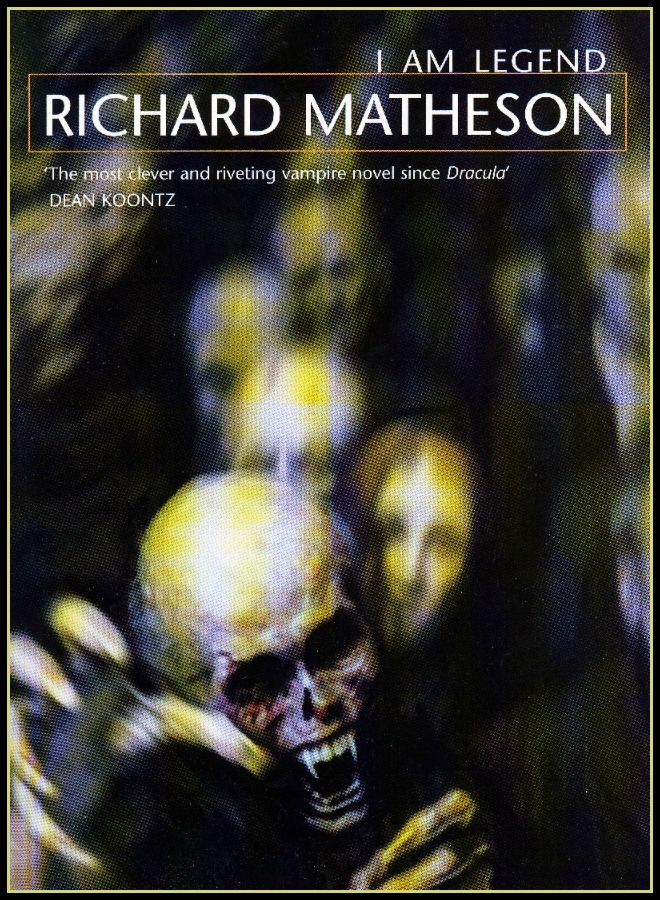
Horror Review: I Am Legend (by Richard Matheson)


“[I am] a new superstition entering the unassailable fortress of forever. I am legend.”Robert Neville

In 1954, Richard Matheson published a novel that would influence so many future generations of science-fiction and horror writers and film directors. Matheson’s body of work prior to 1954 could be summed up as good but nothing too exciting. His work thus far overlapped such pulp genres as horror, science-fiction and fantasy. This style would be the hallmark of his brand of story-telling. It would be in his novel I Am Legend that his unique style of combining different genres that Matheson would have his greatest and most epic work to date.

I Am Legend takes the vampire tale and brings it out of the shadows and darkness, so to speak. Set in the late 1970’s, I Am Legend begins its tale with humanity pretty much on the quick path to extinction due to a pandemic where the bacterium or virus involved caused symptoms very similar to what folklore had called vampirism. The protagonist of this tale was one Robert Neville. An unassuming man living in a Los Angeles suburban neighborhood who might just be the only living human being, or at least the only un-infected one, on the face of the planet. Neville’s been reduced to a day-to-day routine of defending his fortified home from the vampire-like infected humans who’ve tried attacking him and his home once night falls. This routine has become so ingrained in Neville that it starts him on a downward spiral to utter despair. He knows that he might just be the only human left and the prospect of such an idea almost becomes too much for his psyche. It’s this growing despair which gradually causes Neville to make little mistakes in his routine that puts him in greater levels of danger from those turned who see him as nothing but cattle.

His attempts to solve the mystery of why he’s the only one not affected by the disease becomes his way of keeping himself sane. Neville’s work in trying to find the answer leads him to take chances in keeping a vampire survivor alive and bound instead of just killing it outright. His experiments ranges from disproving the myths surrounding the vampire creature and acknowledging the scientific and/or psychological explanations to certain behavioral traits of these nocturnal creatures.

Neville’s studies on captured vampires tell him why certain things like garlic and sunlight causes such an extreme reaction on these creatures. Why do they have a certain invulnerability towards bullets but not a stake through the heart is one question he tries to answer through his research. He even surmises that the vampires aversion to crucifix was more psychological than anything supernatural. Neville arrives at this after observing a vampire’s reaction to a Star of David was similar to the reaction of another one towards the crucifix.

It’s events such as these which puts I Am Legend in a category all by itself. It still uses themes of horror which the vampires fulfill to great effect, but it also does a great job of taking the vampire tale out of the supernatural realm and into the scientific and logical. Neville’s attempts to keep himself sane, as his loneliness begin to weigh on his psyche and health, through these studies and experiments adds a level of the science-fiction to this tale. It’s the combination of these two genres which makes I Am Legend such an epic tale in scope yet it’s not that which gives the tale its heaviest impact. It’s Neville himself, more to the point, his desperate situation of being the last man on earth weighing on his mind. This tone gives this apocalyptic vampire tale such an intimate feel that the reader hopes and wishes for some sort of peaceful end to Neville; better yet, some hope that he might find clues that he might not be the last.

As the story moves forward, the line between who is human, who is monster and who is the true survivor become blurred as Neville’s forays into the city for supplies lead him to a community of others who have not succumbed to the monstrous effect of the pandemic. It’s this discovery that gives Neville a semblance of hope which momentarily lifts the heavy weight of inevitability from his mind. But not everything is at it seems at first glance. Neville finds this out as his encounters with this thriving community continue to give him more and more insight as to how they’ve survived. The climactic end to this tale has become such a classic ending that any other resolution wouldn’t have worked. The end worked as the best possible ending to Matheson’s tale. It also gives the books title a deeper and more profound meaning to it.

I Am Legend will continue to go down in literary history as one of the best examples of fantastic literature. It’s seemless blending of horror, science-fiction and the apocalyptic gives the tale both an epic and intimate feel and tone. It’s not wonder the very themes and premise of this story has influenced such horror writers and filmmakers as Stephen King (The Stand, Salem’s Lot) and George A. Romero (Night of the Living Dead, Dawn of the Dead, Day of the Dead). I Am Legend takes the vampire tale out of the shadows and darkness it usually in habits and brings it out to the light of science and logic with surprising results. A true classic piece of writing from Richard Matheson and one that still stands as the benchmark for apocalyptic tales.

Horror Film Review: The Cabinet of Dr. Caligari (dir. by Robert Wiene)


I’m currently working on several reviews for horror month here at the Shattered Lens but tonight, rather than just review a film, I want to share one with you.  Released in 1920, the German film The Cabinet of Dr. Caligari is one of those films that we’ve all heard about but far too few of us have actually seen.  Like most silent films, it requires some patience and a willingess to adapt to the narrative convictions of an earlier time.  However, for those of us who love horror cinema, The Cabinet of Dr. Caligari remains required viewing.  Not only did it introduce the concept of the twist ending (M. Night Shyamalan owes his career to this film) but it also helped to introduce German expressionism to the cinematic world.  

My initial reaction to The Cabinet of Dr. Caligari was that it simply wasn’t that scary.  It was certainly interesting to watch and I was happy that I was finally experiencing this film that I had previously only read about.  However, the film itself was obviously primitive and it was difficult for my mind (which takes CGI for granted) to adjust to watching a silent film.  I didn’t regret watching the film but I’d be lying (much like a first-year film student) if I said that I truly appreciated it after my first viewing.

But you know what?  Despite my dismissive initial reaction, the film stayed with me.  Whereas most modern films fade from the memory about 30 minutes after the end credits, The Cabinet of Dr. Caligari has stuck with me and the night after I watched it, I even had a nightmare in which Dr. Caligari was trying to break into my apartment.  Yes, Dr. Caligari looked a little bit silly staring through my bedroom window but it still caused me to wake up with my heart about to explode out of my chest.

In short, The Cabinet of Dr. Caligari passes the most important test that a horror film can pass.  It sticks with you even after it’s over.

For the curious who have 50 minutes to spare and an open mind to watch with, here is Robert Wiene’s The Cabinet of Dr. Caligari…

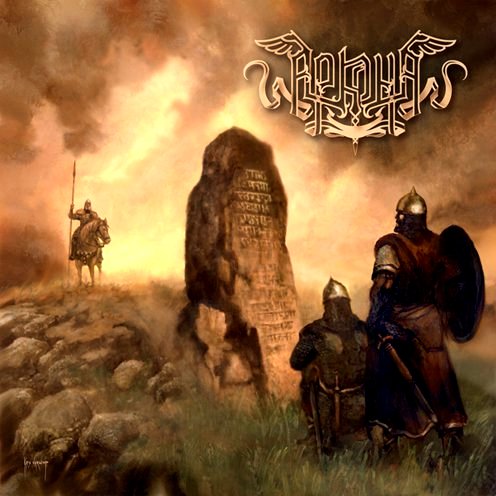
Review: Аркона – Слово (Arkona – Slovo)


I would like to believe that Аркона, or Arkona for you non-purists, is a band requiring little introduction. They did not create the Slavic brand of folk metal, nor are they necessarily the best of their kind, but I would argue that they are the most accessible. Eschewing the common pagan metal dependence on raw production, Arkona deliver directly, presenting a full sound pervaded with folk and ferocious intensity.

At least, that is how I think of them. My ability to relate to the band is a bit narrow. I have somehow only ever listened to Возрождение (Vozrozhdeniye) and От Сердца к Небу (Ot Serdtsa K Nebu), but I’ve listened to both countless times. I am in no position to describe what precisely has changed here since Гой, Роде, Гой! (Goi, Rode, Goi!), but 2007 isn’t that far removed.


Азъ/Аркаим (Az’/Arkaim)

Following their best introduction track to date, Slovo kicks off in standard Arkona form, exploding briefly and then opening up to Masha’s breathtaking vocals. The instrumentation employed differs little from the past–bagpipe and woodwinds driving over epic synths and intense pagan aggression, with slow, tense interludes setting each stage. In the details though, much has changed.

The first difference that caught my eye was the introduction of a violin to accentuate the tension. This application (not its use in general), as it turns out, is more a feature of the opening track than the album as a whole, but the mood it aims for is a recurring theme: expect softer, subtler means to distinguish Slovo’s dynamics shifts.

The other thing I immediately noticed was a diminishing in the intensity of Masha’s metal vocals, and this, unfortunately, is consistent throughout the album. Oh, she can still belt them out better than just about any female metal vocalist out there, but that Slavic shrillness behind the gutturals seems to be gone, degrading into something a bit deeper and a bit more typical to metal in general.


Никогда (Nikogda)

When I returned to a few Ot Serdtsa K Nebu tracks to confirm this latter observation, a lot of other disappointments surfaced. Masha’s mellowing out from a violent she-wolf to a standard death metal growler is only the tip of the iceberg, though her clean singing might be as good as ever. The entire album is really a step down in ferocity. Primitive folk transitions have been replaced by a more consistent reliance on synth and whispered interludes to create a sound that is perhaps fuller but not nearly as inspiring. The track at hand is a bit of a counterexample, but consider it among the heaviest Slovo has to offer, not par for the course.

Don’t get me wrong though. I consider Ot Serdtsa K Nebu one of the best albums of all time, and that’s a pretty high standard to maintain. On Slovo, Arkona continue to produce absolutely solid pagan/folk metal, they’re just complacently maintaining the genres rather than redefining them. The specifically Slavic sounds of pagan metal are here sharing the stage with a more universal approach to the genre.

The album still brings a lot of uniqueness to the table. The guitar on Nikogda manages to maintain a constant tension that never bores in spite of (or even perhaps specifically because of) its simplicity, and it pairs up with the vocals perfectly. The song Леший (Leshiy) delightfully converts a border-line cheesy, carnival accordion into convincing metal. And though no hammer dulcimer is mentioned in the album’s credits, a sound I can describe as nothing else (perhaps very convincing keyboards?) peppers many tracks like falling snow, giving them a decidedly wintery vibe. (I can’t resist pointing out, to the complete apathy of anyone potentially reading this, a peculiar reminiscence I perceive in this last feature to Midwinter Land, the Sindar Ruins theme of Suikoden III, by Michiru Yamane, Keiko Fukami, and Masahiko Kimura.)


Слово (Slovo)

As for my gripes about intensity, the title track does manage to rise to the level I’d come to expect from Ot Serdtsa K Nebu, and might bring to light the stylistic change I had in mind. What springs to life here around 3:30, THAT is what I was looking for on this album. If brief, it demonstrates the intensity hedging on insanity that Slavic folk can offer to metal. That the sort of impact I got from Ot Serdtsa K Nebu in its entirety can only be compared to a passing phrase in Slovo speaks against the album, but in all fairness, that’s a pretty high measuring stick. Slovo is a really enjoyable album throughout, and it’s taken no effort on my part to keep it on perpetual repeat these last few nights. It’s more mellow than what I’d come to expect, in its folk features even more so than in the metal, and the overuse of whispered/spoken introductions and filler tracks is a mild annoyance, but it’s still a cut above much of the competition. If you’re new to the band and these sample tracks left you unimpressed though, do acquire a copy of Ot Serdtsa K Nebu before you write them off altogether.

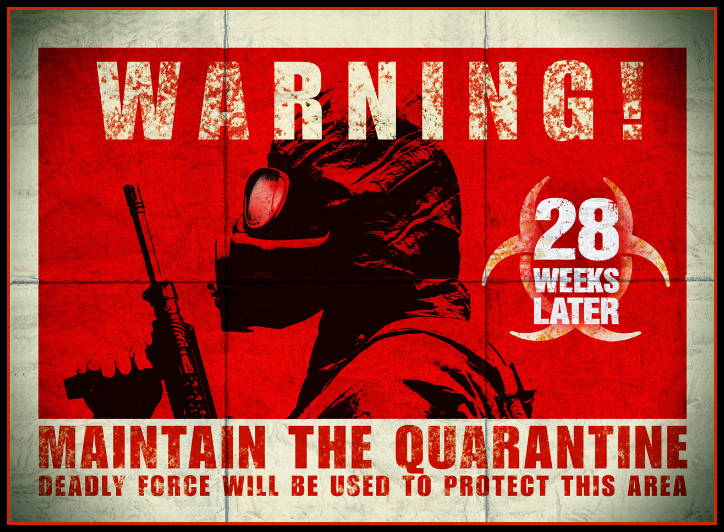
Horror Review: 28 Weeks Later (dir. by Juan Carlos Fresnadillo)


Danny Boyle and Alex Garland’s 28 Days Later was made in such a way that any sequel was almost destined to struggle in its shadow. Their film was not only one of the most influential horror films of the early 2000s, but also an exercise in experimental filmmaking and cinematic reinvention. It fused realism and terror through its digital photography, unconventional pacing, and minimalist score. Any follow-up would have to contend not just with its fresh twist on the zombie mythos (despite the infected not technically being zombies) but also its unique atmosphere, music, and stripped-down aesthetic. Against those odds, 28 Weeks Later manages to stand as an impressive and worthy successor—one that in some respects even surpasses the original.

Spanish director Juan Carlos Fresnadillo approaches the material with a clear reverence for Boyle and Garland’s vision while imprinting his own stylistic and emotional signature on the sequel. From the very first scene, Fresnadillo establishes a tone that blends despair and dread with human frailty. The film opens on a stunningly tense prologue in which Don (a gaunt and haunted Robert Carlyle) and Alice (Catherine McCormack) are living with several others in a rural cottage outside London during the first weeks of the Rage virus outbreak. In this sequence, Fresnadillo distills the central moral dilemma that runs through both films: whether to preserve one’s humanity through compassion or to surrender to pure survival instinct. When Don is forced to choose between rescuing his wife and saving himself, his decision—while horrifying to watch—feels horribly plausible. The following chase through open fields as he flees dozens of Rage-infected attackers captures the raw panic that made Boyle’s original so memorable, yet Fresnadillo shoots it with a sharper sense of chaos and movement. It sets the tone for a story that is both intimate in its human tragedy and apocalyptic in its reach.

Following this intense opening, the film transitions through an introductory credits montage that fills in the aftermath. Don’s escape was not the end of the story but the beginning of a grim reconstruction effort. The British Isles, we are told, were swiftly quarantined when it became clear the infection could not be contained. Twenty-eight weeks later, with the infected population presumed dead from starvation, a U.S.-led NATO force spearheads an ambitious effort to repopulate and rebuild. Led by General Stone (played with austere calm by Idris Elba), the military has converted London’s Isle of Dogs into a heavily fortified safe zone. This enclave represents both restoration and repression—a fragile bubble of civilization built atop the bones of horror.

Within this environment lives Don, now employed as a maintenance manager and struggling to suppress the guilt from his past. The arrival of his two children, Tammy (Imogen Poots) and Andy (Mackintosh Muggleton), who were abroad in Spain during the initial outbreak, reopens emotional wounds he had hoped were sealed. Their reunion, though heartfelt, carries an undercurrent of deception. Don’s explanation of their mother’s fate does not align with what the audience has already witnessed. This dishonesty propels the children into dangerous territory when they decide to sneak out of the Green Zone to retrieve personal belongings from their old cottage. While this act of recklessness fits with youthful impulses and emotional longing, it also feels like the film’s only contrived lapse in logic—an inevitable but frustrating horror trope that sets off the story’s next catastrophe.

What the children discover at the cottage reintroduces the virus in a shocking way. Without realizing it, they bring the Rage infection back into the supposedly secure refuge of London. As soon as containment is broken, the military response escalates with brutal efficiency. General Stone declares a “Code Red,” authorizing the use of extreme measures to eradicate the infected—including indiscriminate firebombing of civilian areas. These scenes echo not only classic apocalyptic tropes but also resonate as a grim reflection of post-9/11 militarism. Many viewers and critics interpreted this act of mass destruction as allegory for the United States’ War on Terror and the ethical corruption of occupation forces. Fresnadillo’s direction, while hinting at this reading, avoids heavy-handed political critique. His portrayal of military overreaction feels less ideological than tragic—a manifestation of fear, confusion, and the blunt-force nature of institutional power. The armed forces are not villains so much as desperate men trapped in an impossible moral quagmire. As in George A. Romero’s The Crazies, which 28 Weeks Later strongly recalls, the destructive consequences stem not from malice but from the futility of trying to maintain order amid chaos.

Where 28 Days Later focused on a small group of survivors and the intimate erosion of morality under crisis, 28 Weeks Later expands the scale dramatically. Fresnadillo transforms Boyle’s compact nightmare into a large-scale urban apocalypse. The sweeping aerial shots of a deserted London—bridges empty, streets silent—hammer home the desolation. When the city is engulfed in flames and gas clouds during the firebombing sequence, the imagery becomes both terrifying and grimly beautiful, a vision of civilization consuming itself. The sequel’s tone is darker and more nihilistic than Boyle’s film, which allowed a trace of optimism in its ending. Here, even innocence becomes a catalyst for doom: it is the children’s actions, driven by love and loss, that inadvertently reignite the infection and condemn the survivors to another wave of horror. This subversion of the “innocent child” trope underscores Fresnadillo’s bleak worldview—where sentiment and humanity, however noble, can still create destruction.

In several ways, 28 Weeks Later aligns more closely with Romero’s Living Dead films than with Boyle’s original. Though Boyle borrowed some of Romero’s thematic DNA, Fresnadillo fully embraces it. The infected may not be reanimated corpses, but the societal collapse, moral ambiguity, and recurring cycles of violence all trace back to Romero’s legacy. One of the sequel’s most striking qualities is its unflinching pessimism: even individuals acting out of love or duty become agents of devastation. The so-called survivors are reduced to primal instincts—running, hiding, killing—in a landscape where institutional power and human decency dissolve together. Fresnadillo makes the action kinetic without glamorizing it. His camera work, switching between chaotic handheld intensity and precise, panoramic destruction, keeps the viewer off balance, mirroring the unpredictability of the apocalypse itself.

The performances elevate the material beyond genre expectations. Robert Carlyle’s portrayal of Don is both gut-wrenching and terrifying. His character’s transformation—from remorseful father to infected embodiment of pure rage—serves as the film’s emotional and thematic anchor. Imogen Poots, in an early standout role, conveys resilience and vulnerability in equal measure, while Jeremy Renner delivers a strong supporting turn as Sergeant Doyle, the soldier torn between obedience and morality. Their performances, though sometimes confined within the film’s relentless pace, enrich its exploration of guilt, loyalty, and the futility of control.

Despite sacrificing some character depth for momentum, the film’s taut editing and grim atmosphere sustain tension throughout. Fresnadillo’s direction never loses sight of his central message: that humanity’s efforts to rebuild are perpetually haunted by its capacity for self-destruction. Even as the few surviving characters reach supposed safety, the final scenes undermine any hope of resolution. The closing image—infected sprinting through the streets of Paris—reminds viewers that, although the city itself appears intact and bustling in daylight, the Rage virus has now breached mainland Europe. This ending shifts the scale of threat from the quarantined British Isles to the broader continent, making containment and redemption feel like dangerous illusions.

As a sequel, 28 Weeks Later earns its place alongside 28 Days Later by honoring the original’s DNA while pushing its boundaries. It retains the visceral dread and societal commentary but broadens the lens to encompass collective failure rather than individual struggle. Fresnadillo’s approach feels colder and more apocalyptic, transforming the story into a study of fear’s infectious nature—social, political, and biological. While his film might not achieve the same creative purity as Boyle’s indie landmark, it succeeds in redefining the tone, expanding the mythology, and pushing the series toward a darker, more cinematic landscape.

In the end, 28 Weeks Later is both a continuation and an escalation—a relentless, despairing study of human fragility under crisis. Its pacing, performances, and imagery combine to create an experience that’s not only horrifying but profoundly unsettling in its realism. If 28 Days Later showed us the collapse of civilization, its sequel reveals the hopeless struggle to rebuild it. Few horror sequels accomplish that much, and fewer still end with such haunting inevitability.

Trailer: Act of Valor


Act of Valor is a film that I’ve been following for quite a bit now. For those who haven’t already heard about this film the premise is quite simple. It’s a film about a team of Navy SEALs who undergo a mission to stop a terrorist plot against the U.S. It’s a plot that has been done countless of time and not just with Navy SEALs as the protagonists. But with the Navy’s elite special-operations team having been involved in several well-documented events this past year (mainly the operation to find Osama bin Laden and his subsequent killing) they’ve become the go-to special-ops team Hollywood has latched onto.

What separates Act of Valor from other war action-thrillers of the past, present and future is the nature of it’s cast. While the film does have professional actors such as Roselyn Sanchez, Emilio Rivera and Nestor Serrano the ones who make up the SEAL team in the film are actual active duty members of the Navy SEALs. The film also uses actual SEAL team missions which the writer, Kurt Johnstad, had been given access to in order to create the screenplay for the film.

The trailer makes mention that the SEAL team members are real SEALs and they’re also using up-to-date tactics and equipment which every action filmmaker from Kathryn Bigelow to Michael Bay must be drooling to get their hands on. There is one question that will pop up as more and more people are exposed to this film leading up to it’s release.

Will the active duty SEALs be up to the task of actually emoting for the camera when not conducting the very operations in the film they’ve trained for years to perfect?

I guess we will have to wait until the film’s release date on February 17, 2012 to find the answer to that question.