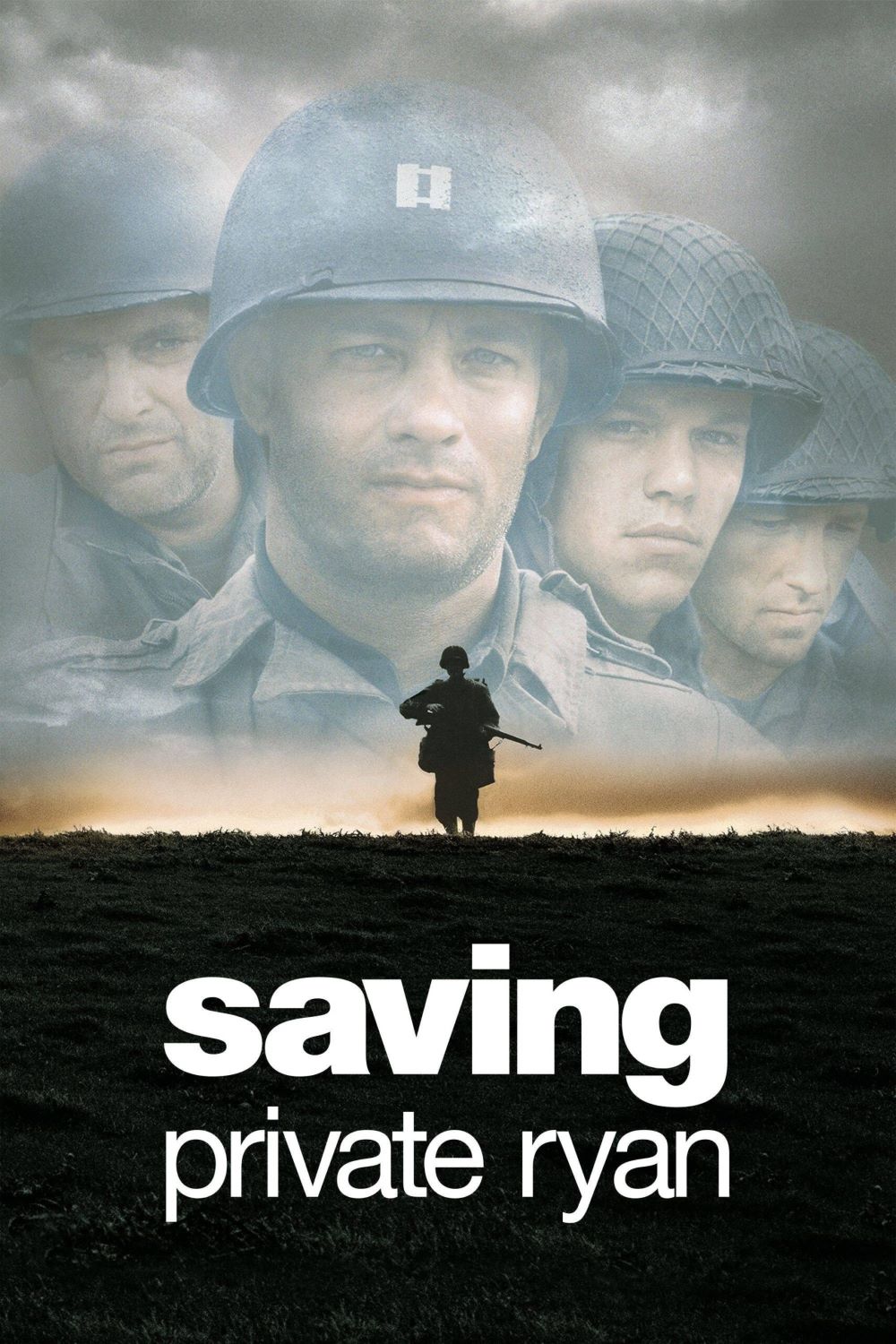
Review: Saving Private Ryan (dir. by Steven Spielberg)


“Someday we might look back on this and decide that Saving Private Ryan was the one decent thing we were able to pull out of this whole godawful, shitty mess.” — Sergeant Horvath

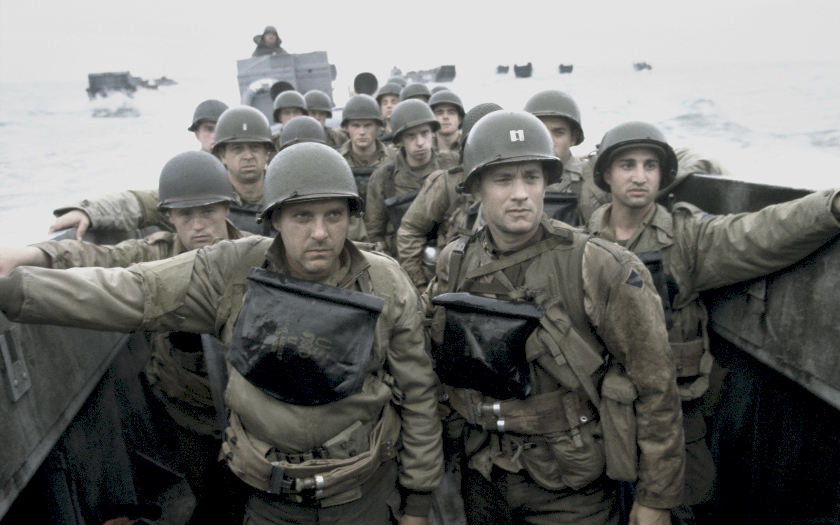
Saving Private Ryan stands as a landmark achievement in war cinema, intricately weaving immersive battle scenes, rich character dynamics, and profound moral themes into a nearly three-hour exploration of World War II’s human cost. One of its most remarkable features is the opening Omaha Beach landing sequence, a meticulously crafted, over 24-minute depiction of warfare’s brutal reality. Spielberg deploys a cinema verité style with handheld cameras capturing disorientation and chaos through the soldiers’ eyes. The sound design envelops the viewer in a sensory onslaught—gunfire, shouting, explosions—creating a visceral experience that immerses audiences directly in the terror and confusion of D-Day.

The filming process drew heavily on historical accuracy, with the production shot on the coast of County Wexford, Ireland, employing amputee actors and practical effects over computer graphics to simulate violent injuries and battlefield horrors. Muted tones evoke wartime photographs, and rapid, shaky editing conveys the disorganized, frantic environment soldiers endured. Consulting WWII veterans and historians, Spielberg created a sequence that reshaped cinematic portrayals of war, influencing how future films would approach the genre’s raw immediacy and emotional weight.

The film’s narrative follows a squad led by Captain Miller on a mission to locate and bring home Private James Ryan, whose three brothers have been killed in combat. The mission is steeped in the real-life tragedy of the five Sullivan brothers who died together aboard the USS Juneau in the Pacific, prompting military policies to prevent similar familial devastation. This historical context frames the story’s ethical heart: risking several men’s lives to save one, raising enduring questions about the value of individual sacrifice within the broader war.

In Saving Private Ryan, sacrifice is portrayed ambiguously—not as the sacrifice of a single hero but as the collective cost borne by the men tasked with rescuing one individual under perilous conditions. As the squad journeys through the war-torn French countryside, the deaths, injuries, and tensions they face underscore war’s randomness and the difficulty of weighing one life against many. The narrative refuses to romanticize or simplify, instead confronting the audience with the tragic truth that countless soldiers lose their lives without recognition or purpose, while some survive against staggering odds.

Duty and camaraderie thread throughout the film, portrayed through the soldiers’ evolving relationships and personal struggles. Each grapples with loyalty not only to their mission but to their fellow men and their own moral codes.

Integral to the film’s power is Tom Hanks’s layered performance as Captain John Miller. Hanks breathes life and emotional depth into Miller, portraying him as a man shaped by civilian life—revealed poignantly when he discloses his pre-war profession as a schoolteacher—now transformed by the relentless demands of war. He embodies an officer who is both composed and vulnerable, carrying the heavy burden of leadership with quiet dignity. Hanks’s portrayal reveals the internal struggles beneath Miller’s stoic exterior: moments of doubt, moral conflict, and fatigue subtly expressed through a trembling hand or a weary gaze. This humanity makes Miller relatable, as a man trying to maintain order and purpose amid chaos.

Hanks skillfully balances Miller’s authoritative presence with warmth and empathy, particularly evident in his paternal interactions with younger soldiers, reinforcing Miller’s role as both a leader and protector. His nuanced acting delivers the complexity of a man constantly negotiating duty and compassion. In scenes of high tension or moral quandaries, Hanks conveys the weight of command while allowing glimpses into Miller’s psychological strain, deepening the film’s emotional resonance.

Following Hanks’s Miller, a standout amongst the supporting cast is Tom Sizemore’s portrayal of Technical Sergeant Mike Horvath, Miller’s steady second-in-command. Sizemore embodies the pragmatic, battle-hardened soldier whose loyalty and experience provide emotional grounding for the squad. Sizemore portrays Horvath’s weariness and quiet commitment, adding layers of realism that deepen the exploration of how war reshapes individuals. The chemistry and shared history between Miller and Horvath are palpable, illustrating the bonds that sustain soldiers through hardship and lending emotional weight to the narrative.

The film wrestles with intense moral ambiguity throughout. The mission’s premise—to risk many lives to save one—compels both characters and viewers to confront complex questions about justice, value, and the cost of war. Scenes presenting difficult choices, such as the decision to spare or execute prisoners, dramatize these ethical dilemmas and highlight the emotional burdens borne by soldiers.

Technically, the film excels, with Janusz Kaminski’s dynamic cinematography capturing both the chaos of battle and intimate moments with evocative clarity. The immersive sound design reinforces the brutal reality, stripping warfare of glamor and confronting audiences with its daunting human costs.

Despite the overwhelming destruction and loss, Saving Private Ryan offers moments of humanity and hope. The rescue mission serves as a fragile symbol of compassion in the midst of devastation, while the film’s closing reflections on memory and legacy emphasize the lasting significance of sacrifice and survival.

Saving Private Ryan stands as a monumental achievement in the war genre, combining visceral combat realism, compelling characters, and moral complexity. Through Hanks’s deeply human Captain Miller and the nuanced supporting performances, especially Sizemore’s grounded Horvath, the film explores themes of sacrifice, duty, and brotherhood with unflinching honesty. Its enduring legacy lies in its unvarnished yet empathetic portrayal of war’s cost and the profound sacrifices made by those who lived it.

This 4th Of July, Make The World Safe For Democracy With These Patriotic Super Heroes!


This 4th of July, while celebrating America’s birthday, don’t forget that there was a time when superheroes not only starred in movies but also made the world safe for democracy!  From World War II, here is a gallery of patriotic super heroes fighting for the freedoms that we enjoy today!

Not even the most powerful of heroes could do it alone.  For that reason, when they weren’t beating the enemy in their own backyard, they were encouraging their readers to support the armed forces by buying war bonds.

Over the course of World War II, 85 million Americans purchased war bonds totaling an estimated $185 billion.

Finally, what other way to end this patriotic post than with a musical tribute to the Star-Spangled Man With A Plan?

And to all the real, flesh-and-blood heroes who made the ultimate sacrifice to save the world from tyranny, thank you.

The D-Day Photographs of Robert Capa


Seventy-three years ago today, when the first wave of American troops stormed Omaha Beach during the Allied invasion of Normandy, photo journalist Robert Capa was with them.  Capa took 106 pictures on D-Day but, because of an accident at a London photo lab, all but eleven of them were destroyed.

The eleven that survived, nicknamed the Magnificent Eleven, are a portrait of bravery and a tribute to the men who, on that morning, risked (and, in many cases, sacrificed) their lives to help defeat Hitler’s war machine.  By the end of D-Day, 4,014 Allied troops were confirmed to have been killed in action.

Robert Capa survived D-Day.  Though he initially swore that he would never cover another war, Capa accepted an assignment in 1954 to travel to Southeast Asia and cover the First Indochina War.  It was there that Capa was killed when he stepped on a land mine.  He was 40 years old.

Christopher Nolan’s “Dunkirk” – Full Trailer


The full trailer for Christopher Nolan’s latest film, Dunkirk, was recently released.

Focusing on the events surrounding the battle of Dunkirk, the movie looks to be pretty epic from at least a cinematography standpoint. Hoyt Van Hoytema (Spectre, Interstellar, Her) is back for this, which could be fantastic for the 70mm and IMAX Presentations.

Dunkirk – Starring Tom Hardy, Mark Rylance, Cillian Murphy and Kenneth Branaugh, is due to open in theatres next July.

Scenes I Love: Saving Private Ryan


SavingPrivateRyan

Today marks the 71st Anniversary of the Normandy Landings on D-Day. As the day winds down I thought it best to share one of my favorite scenes from a film that tried to capture the chaos and death of the fateful day on June 6, 1944. The film in question is Steven Spielberg’s Saving Private Ryan. This is the film which won him his second Best Director Oscar (I still think the film should’ve won Best Picture over Shakespeare In Love) and the film which helped redefine not just how war films were shot from 1998 on, but also de-glorify World War II on film.

This scene showed the opening moments of the D-Day Landings on Omaha Beach in Normandy, France. It’s a scene that’s over 22-minutes in length and shows the utter chaos and destruction heaped on American troops as they attempted to land on the beach to take their objectives. While there have been war film before Saving Private Ryan that depicted war as the hell it truly is they were mostly about the Vietnam War. Rarely did we ever get a World War II-based war film which showed war in realistic fashion. Spielberg broke that taboo by making the battle scenes in his film — especially this extended opening sequence — done as realistic as possible without actually having people killed for real on-screen.

When this film first came out in the summer of 1998 no one knew what to make of it. This opening sequence became the talk of everyone who went to see the film. To say that they were shocked by what they saw was an understatement. Even now with over a decade since the film was released and people having seen this scene over and over again it still retain it’s impact. It’s not even the grand scale of the production required to film this action sequence which made this scene so memorable. It were the little things. Like a mortally wounded American GI crying out to his mother while trying to keep his blown out insides from spilling out. Then there’s the scene of another young soldier praying furiously with his rosary beads as men around him die by the score.

This scene also showed what most World War II films of the past failed to do. It showed both sides behaving barbarically. In the past, only the Germans were shown in a bad light. In Saving Private Ryan, we see that American soldiers were also prone at shooting surrendering troops and/or not mercy-killing enemy soldiers being burned alive (actions that have been well-documented by historians). This scene also showed just how courageous the young men of this generation which Tom Brokaw has called “The Greatest Generation”. Men who went off to war not for material gains, but for an idea that they had to stop evil (Nazi and Hitler) from taking all of Europe and, maybe, the world itself.

There’s a reason why Saving Private Ryan is in my list for greatest films of all-time and why this scene remains one of my all-time favorites.

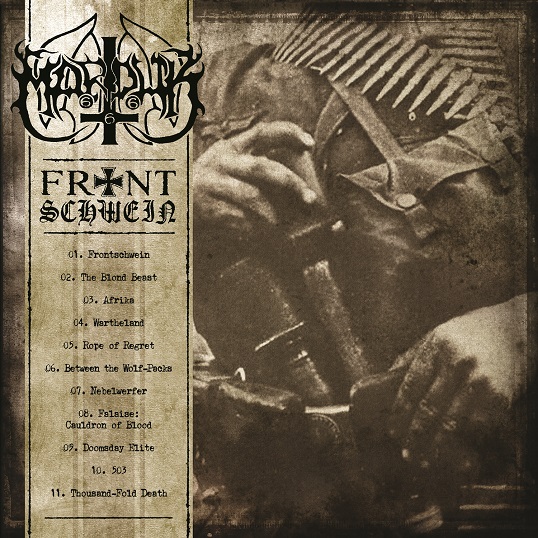
Review: Marduk – Frontschwein


A part of me feels totally out of my comfort zone reviewing Marduk, but I keep coming back to the band over the years in spite of it. The classic Swedish style of black metal, as popularized by bands like Dark Funeral, Naglfar, and of course Marduk, never managed to appeal to me much. It was all about this relentless brutality–an aesthetic not far removed from death metal–when I was turning to black metal for its occult appeal. It was Satan as a cold-hearted masochist, but I wanted to legitimize Catholic blood libel. Live dissection vs goat sodomy. That’s pretty clear, no?

But, aside from the fact that they were just better at it than everyone else, Marduk initially stood out to me for their song titles and lyrics. “Christraping Black Metal”, “Fistfucking God’s Planet”, “Jesus Christ… Sodomized”, this stuff was priceless. I think when I viewed it as a comedy I could get into the over-the-top, machine gun-paced blast beats as something delightfully ridiculous.

That sort of entertainment value can’t hold out forever, and it was ultimately Marduk’s shift towards martial themes that kept me attentive. They did it on Panzer Division Marduk in 1999, and they’ve turned to it again with the Iron Dawn EP in 2011 and now Frontschwein. If there is any one thing that this style of music captures effectively, it is 20th century warfare.

song: Frontschwein

Marduk capture the violent chaos of war on a level I have only heard rivaled by Germany’s Endstille, and while modern themes do not permeate all of their albums, they stand at the center on Frontschwein. The album recounts events in World War II from the perspective of Germany as a bloodthirsty machine reveling in cold destruction behind its thin veil of justifications. The connection is not merely lyrical, though Mortuus’ vocals are surprisingly discernible, allowing bits and pieces of war imagery to seep into your head unaided by a lyrics sheet; you can hear to conflict in the music: sliding guitars as falling bombs, blast beats as bullets. It’s methodical, rhythmic, and relentless, in contrast to the more eclectic approach the band has taken on Satanic-themed albums like Serpent Sermon. It is Marduk as I like them best.

That being said, it does feel repetitive at times. This style always does, to me at least, and I feel like Marduk relegated their less interesting songs to the middle, bookending the best of them. “Frontschwein” is followed by the incredibly catchy headbanging march of “The Blond Beast”, and Mortuus’ constant screaming of “Afrika” in the song of the same name forces your mind to picture a bloody desert battle between Rommel and Patton’s grunts. “Wartheland”‘s slow pummel with distinct lyrics like “succumb to domination” feels like an endless wave of Nazi forces marching in to conquest and occupation. The track titles in general go a long way towards steering the music towards its intended imagery. (I absolutely love the album title. I don’t know if it’s a common word or one of the band’s own crafting, but it certainly projects the overarching subject matter: humans as bloody fodder in an unstoppable military machine.)

But by “Rope of Regret”, my ears grow a bit numb to the pummeling. I enjoy the song when I listen to it in isolation, but I rarely can remain attentive long enough to reach it if I’m listening to the album as a whole. The next four tracks, all fairly typical in style, fade together for me whatever their individual worth. “503” is ultimately the song that draws me back in. A song of conquest, it drastically slows down the pace, listing in a dominant voice the conquests of the 503rd Heavy Panzer Battalion. It makes me snap back from my zoned-out state and again picture the album as a vision of German brutality in World War II rather than a jumble of noise. The song is well-placed, because it leads the way into “Thousand-Fold Death”.

https://www.youtube.com/watch?v=ttXC9Z0UJQQ

song: Thousand-Fold Death

And “Thousand-Fold Death”… holy shit, this song alone is worth buying Frontschwein for. It’s got the best guitar licks on the album, but this song is all about Mortuus. He does things with his voice on this track that will give you motion sickness. It’s not just the sheer quantity of words per second he manages to belt out–his clarity while doing it is unbelievable. If I ever doubted that Mortuus was an incredible vocalist before this song, I certainly don’t now. The album ends with “Warschau III Necropolis”, an eerie, ambient mix of samples from militant speeches and battles, brass, and bizarrely distorted spoken words that manages to capture the grim nature of the album through a totally different means.

There is a reason why I have listened to Marduk more than any other band that plays that brutality-driven Swedish varient of black metal, and Frontschwein captures what I like about them best. I am a bit hesitant to say that I like it more than Endstille’s Infektion 1813, but those two albums definitely stand leagues above anything else I have heard in a genre of metal that, I’ll admit, I seldom find to be very creative or inspiring.

Check out Frontschwein by Marduk on Century Media.