In celebration of William Devane’s 86th birthday, I’m sharing a scene from one of my favorite revenge films, ROLLING THUNDER (1977). In my opinion, this is the high water mark in Devane’s 60 year career. And we all need a friend like Tommy Lee Jones’ character here… someone who’s always ready to go at the drop of a hat. Things are about to get violent right after they leave, but the calmness of the two men as they get ready to unleash violent hell on a group of murderous bastards makes this scene a standout.
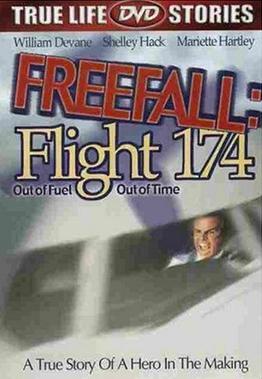
During a routine flight from Montreal to Edmonton, the two pilots (played by William Devane and Scott Hylands) discover that they do not have enough fuel to make it to their destination. Their aircraft was one of the first in the fleet to use the metric system but a conversion era led to the ground crew measuring the plane’s fuel in pounds instead of kilograms. With the help of an air traffic controller (Nicholas Turturro), the pilots try to land their plane before it falls out of the sky.
Based on a true story, Freefall is one of the many airflight disaster films that were made for television in the 80s and 90s. (Not surprisingly, the genre became less popular after 9-11.) The emphasis is on the pilots and ground control remaining calm and professional in the face of seemingly insurmountable odds. While Devane and Hylands look for a place to land, flight attendant Shelley Hack keeps the passengers from panicking. In typical disaster movie style, the passengers have their own dramas that are wrapped up as they wait for the plane to either land or crash. It’s a low-budget movie but the cast does a good job. William Devane is one of those actors who just looks credible flying an airplane.
The movie’s main lesson? Don’t use the Metric System unless you absolutely have to,
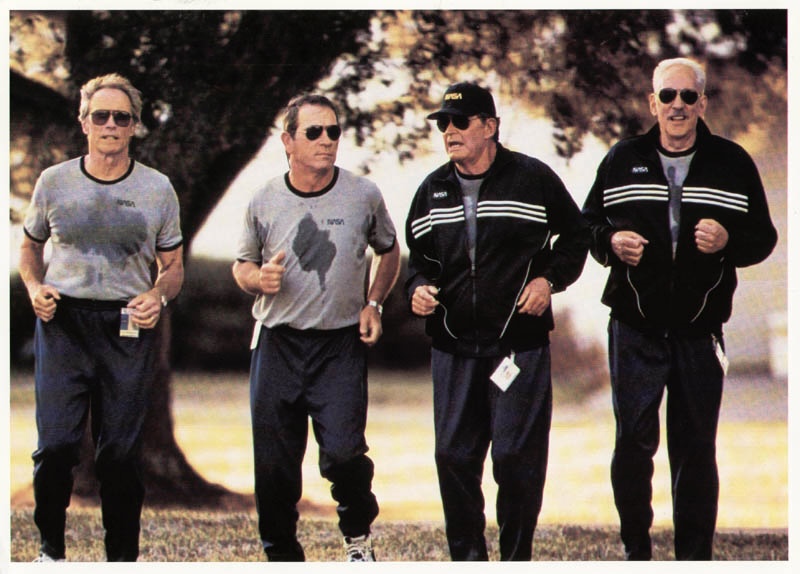
Here at The Shattered Lens, we’re definitely celebrating Clint Eastwood’s May 31st birthday. As part of that celebration, I decided to revisit his 2000 film, SPACE COWBOYS.
SPACE COWBOYS opens in 1958 on the day that Air Force Test Pilot Frank Corvin (Clint Eastwood) and his team of Hawk Hawkins (Tommy Lee Jones), Jerry O’Neill (Donald Sutherland), and Tank Sullivan (James Garner) find out that their test program is being shutdown due to the formation of NASA. Their dreams of someday making it to space are crushed, and to make it worse, they were stabbed in the back by their leader Bob Gerson (James Cromwell) and not invited to be part of NASA’s new testing program. Fast forward to the present time, where a Soviet communications satellite seems to be unresponsive and NASA is working with Russian General Vostov (Rade Serbedzija) to figure out how to keep it from crashing back to Earth. The satellite is a relic of the Cold War that somehow ended up with a guidance system on board that’s so old that it was designed by Frank, and the young folks don’t know how to work with it. And to complicate things even further, the guidance system can only be fixed on site, which means in space. So it seems that NASA finally needs Frank after all this time, and he’ll only agree to help if he’s able to bring his old team on board. Their old nemesis Bob, the project’s manager at NASA, reluctantly agrees. We see that he’s still the same bastard he’s always been as he and General Vostov are holding back critical information about the cargo of the satellite. So let the training and preparation for the mission begin!
The premise of SPACE COWBOYS may not be very realistic, but I think it’s one hell of a fun movie, especially during its first half. I really enjoy watching this amazing cast of veteran actors do their thing. Of course they get the cool walk into NASA headquarters wearing sunglasses and leather jackets, while N’ Sync’s “Space Cowboy” plays over the soundtrack. Clint Eastwood plays the character he has perfected over his career, that of the tough, grizzled leader with a dry sense of humor. Tommy Lee Jones is the fearless hotshot who has never been good at following orders, but has the kind of talent that everyone wishes they had. Jones is actually by far the youngest of the primary cast, a full 16 years younger than Eastwood. Donald Sutherland gets some of the best laughs as the ladies man of the team. The scene where he answers Jay Leno’s question about his reputation as a lothario made me laugh out loud! James Garner’s character became a Baptist minister after his days with the Air Force and prays often for the group. He’s good here, but his character is the least memorable. With their mission labeled “The Ripe Stuff” by the media, watching these great older actors go through their training, and deal with their much younger counterparts and the NASA brass, is a joy. I also want to shout out William Devane as the NASA flight director for the mission. He has a couple of really strong scenes.
The legendary cast of this film can’t help but give a seasoned moviegoer like me a warm sense of nostalgia based on their amazing body of work. I remember introducing KELLY’S HEROES to my son when he was a boy. He watched my DVD over and over again. Seeing Eastwood and Sutherland together here brought those memories back. One of my very favorite revenge films is ROLLING THUNDER with William Devane and Tommy Lee Jones. Seeing them together here helps me remember just how great they are in that badass classic. Heck, Garner’s character name of “Tank” Sullivan takes me back to one of the very first movies our family rented when we got our VCR in the mid-80’s! Do y’all remember Garner’s film TANK from 1984? I certainly do!
I will admit that once the crew takes off and begins the actual mission, which comprises about the last 45 minutes of the film, the entertainment level goes down a couple of notches for me. The technical aspects of completing the mission are not as interesting to me as the character interplay in the earlier portions of the film. With that said, there are still some exciting moments to be had, including the nailbiter of a landing at the end.
I enjoyed revisiting SPACE COWBOYS after quite a few years. This movie is ultimately a crowd pleaser, and for me, it does its job well. Enjoy the trailer below:
First released in 1971, McCabe & Mrs. Miller takes place in the town of Presbyterian Church at the turn of the 19th Century.
Presbyterian Church is a mining town in Washington State. When we first see the town, there’s not much to it. The town is actually named after its only substantial building and the residents refer to the various parts of the town as either being on the right side or the left side of the church. The rest of the town is half-constructed and appears to be covered in a permanent layer of grime. This is perhaps the least romantic town to ever appear in a western and it is populated largely by lazy and bored men who pass the time gambling and waiting for something better to come along.
When a gambler who says that he is named McCabe (Warren Beatty) rides into town, it causes a flurry of excitement. The man is well-dressed and well-spoken and it’s assumed that he must be someone important. Soon a rumor spreads that McCabe is an infamous gunfighter named Pudgy McCabe. Pudgy McCabe is famous for having used a derringer to shoot a man named Atwater. No one is really sure who Atwater was or why he was shot but everyone agrees that it was impressive.
McCabe proves himself to be an entrepreneur. He settles down in Presbyterian Church and establishes himself as the town’s pimp. Soon, he is joined by a cockney madam names Mrs. Miller (Julie Christie). The two of them go into business together and soon, Presbyterian Church has its own very popular bordello. Sex sells and Presbyterian Church becomes a boomtown. It attracts enough attention that two agents of a robber baron approach McCabe and offer to buy him out. McCabe refuses, thinking that he’ll get more money if he holds out. Mrs. Miller informs him that the men that he’s dealing with don’t offer to pay more money. Instead, they just kill anyone who refuses their initial offer.
Three gunmen do eventually show up at Presbyterian Church and we do eventually get an answer to the question of whether or not McCabe killed Atwater or if he’s just someone who has borrowed someone else’s legend. The final gunfight occurs as snow falls on the town and the townspeople desperately try to put out a fire at the church. No one really notices the fact that McCabe is fighting for his life at the time and, as befits a revisionist western, there’s nothing romantic or dignified about the film’s violence. McCabe is not above shooting a man in the back. The killers are not above tricking an innocent cowboy (poor Keith Carradine) into reaching for his gun so that they’ll have an excuse so gun him down. McCabe may be responsible for making Presbyterian Church into a boomtown but no one is willing to come to his aid. The lawyer (William Devane) that McCabe approaches is more interested in promoting his political career than actually getting personally involved in the situation. Mrs. Miller, a businesswoman first, smokes in an opium den with an air of detachment while the snow falls outside.
It’s a dark story with moments of sardonic humor. It’s also one of director Robert Altman’s best. The story of McCabe and Mrs. Miller and the three gunmen is far less important than the film’s portrayal of community growing and changing. Featuring an ensemble cast and Altman’s trademark overlapping dialogue, McCabe & Mrs. Miller puts the viewer right in the heart of Presbyterian Church. There are usually several stories playing out at once and it’s often up to the viewer to decide which one that they want to follow. Yes, the film is about Warren Beatty’s slick but somewhat befuddled McCabe and Julie Christie’s cynical Mrs. Miller. But it’s just as much about Keith Carradine’s Cowboy and Rene Auberjonois’s innkeeper. Corey Fischer, Michael Murphy, John Schuck, Shelley Duvall, Bert Remsen, and a host of other Altman mainstays all have roles as the people who briefly come into the orbit of either McCabe or Mrs. Miller. Every character has a life and a story of their own. McCabe & Mrs. Miller is a film that feels as if it is truly alive.
As with many of Altman’s films, McCabe & Mrs. Miller was not fully appreciated when initially released. The intentionally muddy look and the overlapping dialogue left some critics confused and the film’s status as a western that refused to play by the rules of the genre presented a challenge to audience members who may have just wanted to see Warren Beatty fall in love with Julie Christie and save the town. But the film has endured and is now recognized as one of the best of the 70s.
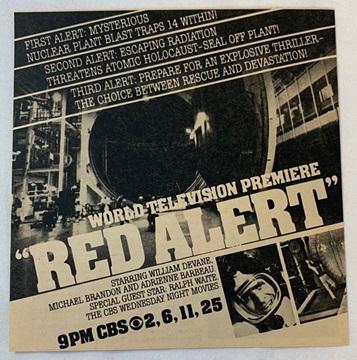
The 1977 made-for-television movie, Red Alert, opens with a man walking through a cemetery on a rainy day. As we watch Howard Ives (Jim Siedow) move amongst the tombstones, we hear his thoughts. He’s a sad and bitter man, wondering why he’s wasted so many years of his life at work. He thinks about someone close to him who has died. He’s obviously very troubled.
(Of course, any horror fans in the audience will immediately recognize Jim Siedow from his role as the Drayton Sawyer in the the original Texas Chainsaw Massacre. He was troubled in that film as well!)
Howard works at the local nuclear power plant. Ominously, when the film cuts to the plant, the first thing we see is a leak of very hot water. I don’t know much about nuclear power plants but I imagine any type of leak is not a good thing. The water leak causes the computer that runs the plant assuming that a nuclear disaster is minutes away from happening. The compound is automatically sealed off, trapping fourteen men (including Howard), inside the reactor. As Commander Stone (Ralph Waite) tries to keep a possible nuclear disaster from occurring, two investigators (played by William Devane and Michael Brandon) try to determined whether the accident was the result of a malfunction or of deliberate sabotage. When the local sheriff (M. Emmet Walsh) informs them that Howard Ives’s wife has committed suicide, the investigators look into the troubled man’s history. Eventually, the two investigators realize that the only way to prevent a nuclear disaster is by risking their lives by entering the sealed-off power plant. The two investigators attempt to do their work under the cover of night and without causing a panic. Needless to say, it doesn’t work. One of them calls his wife (Adrienne Barbeau) and tells her that she needs to leave the area. She tells her mother, who then tells her neighbor and soon the airport is crowded with people looking to get out of town.
Red Alert contrasts the intuitive approach of the two inspector with Commander Stone’s insistence that every bit of a data be fed to his computer before any decisions are made. Stone’s hands are so tied by protocol and red tape that he stands by while the fourteen men who are trapped in the nuclear power plant die. Wisely, though, the film doesn’t turn Stone into a cardboard villain. He’s very much aware of what will happen if the plant suffers a core meltdown. When one of his assistants mentions that he hasn’t been given any instructions on how to evacuate the town in case the plant does explode, Stone tells him that no plans have ever been drawn up because the plans would be useless. There would be no way to evacuate everyone in time.
In the end, Red Alert is scary not because it deals with nuclear power but because it presents us with a world where no one — not even Devane and Brandon’s heroic investigators — seems to know what to do. Everyone is slowed down by a combination of red tape and their own personal angst. Devane is a strong investigator because, as a widower whose only son died in Vietnam, he has no family to worry about. Unlike everyone else in Red Alert, he has nothing left to lose. In the end, the film suggests that the only way to save the world is to cut yourself off from it.
Red Alert is a compelling and intelligent thriller, one that is well-acted by the entire cast and which builds up to strong conclusion. The film’s anti-nuclear message is a bit heavy-handed but I imagine it was an accurate reflection of the fears that people were feeling at the time. Today, the film works best as a warning about bureaucracy and depending too much on AI to make important, life-or-death decisions. In the end, it’s human ingenuity that saves the day and that message is timeless.
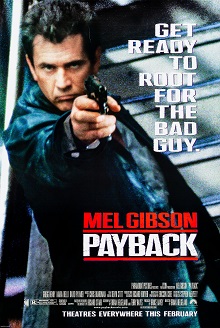
The 1999 film, Payback, opens with Porter (Mel Gibson) lying on a kitchen table while a grubby-looking doctor digs two bullets out of his back. The scene takes place in almost nauseating close-up, with the emphasis being put on the amount of pain that Porter endures to get rid of those bullets. Immediately, we know that Porter is not someone who can safely go to a regular hospital. Porter is someone who exists in the shadows of mainstream society.
He’s also someone who spends a lot of time getting beaten up. Even back when he was still a big star, Mel Gibson always seemed to spend a good deal of his films getting beaten up and tortured in various ways and that’s certainly the case with Payback. Porter gets punched. Porter gets shot. Porter has a encounter with an over-the-top dominatrix (played by Lucy Liu). At one point, Porter allows two of his toes to be smashed by a hammer, just so he can trick the his enemies into doing something dumb. As played by Gibson, Porter stumbles through the film and often looks like he’s coming down from a week-long bender. It’s interesting to think that Payback is a remake of 1967’s Point Blank, which starred Lee Marvin as Walker, an unflappable career criminal who never showed a hint of emotion or weakness. Porter, on the other hand, is visibly unstable and spends the entire film on the verge of a complete mental collapse. A lot of people try to kill Porter and Porter kills almost all of them without a moment’s hesitation.
(Of course, both Porter and Point Blank‘s Walker are versions of Parker, a career criminal who was at the center of several crime novels written by Donald “Richard Stark” Westlake.)
After helping to pull off a $140,000 heist from a Chinese triad, Porter was betrayed and left for dead by his former friend Val Resnick (Gregg Henry) and his wife, Lynn (Deborah Kara Unger). Porter, who just wants the $70,000 cut that he was promised, starts his quest for the money by tracking down Val and Lynn, and then continues it by going after the three bosses (played by William Devane, James Coburn, and Kris Kristofferson) of “The Outfit,” a shadowy organization that Val had gotten involved with. Along the way, Porter deals with a motely crew of corrupt cops, violent criminals, and sleazy middlemen. (David Paymer has a memorable bit as a low-level functionary with atrocious taste in suits.) Porter also hooks up with a prostitute named Rosie (Maria Bello), who might be the only person that he can actually trust.
I have mixed feelings about Payback. (So did director Brian Hegeland, who was reportedly fired towards the end of shooting and later released a far different director’s cut.) Though the film does a good job of capturing the visual style of a good neo-noir, the story itself is so violent and grim that it actually gets a little bit boring. The film’s advertising encouraged audiences to “Get ready to root for the bad guy,” but there’s really no reason to root for Porter. He’s an inarticulate and ruthless killer with no sense of humor. If anything, the people that he kills seem to be far more reasonable and likable than he does. In Point Blank, Lee Marvin may have been a bastard but he was good at what he did and you at least got the feeling that he wouldn’t go after any innocent bystanders. In Payback, Porter is such a mess that his continued survival is largely due to dumb luck. It’s hard to root for an idiot.
That said, the film does do a good job of capturing the feeling of people living on the fringes of society. The Outfit is not a typical Mafia family but instead, a collection of businessmen who work out of nice offices and, in the case of William Devane’s Carter, come across as being more of a senior executive than a crime boss. (James Coburn and Kris Kristofferson, meanwhile, come across as being two former hippies who made it rich on Wall Street. They’re elderly versions of Abbie Hoffman and Jerry Rubin.) The film does a good job of creating a world where no one trusts anyone and everyone is being watched by someone. In one memorable scene, the three men sent to watch for Porter discover that he’s been watching them the entire time. Never forget to look over your shoulder to see who might be following.
Flaws and all, this 1999 film does a good job of capturing the atmosphere of paranoia that, for many, would come to define the early part of the 21st Century.
The 1989 film, The Preppie Murder, tells the story of the murder of Jennifer Levin (played by Lara Flynn Boyle), an 18 year-old teenager from an affluent family, who was found dead in Central Park on August 26,1986.
The man who was accused of murdering her was Robert Chambers (played by William Baldwin). Tall, handsome, and popular, Robert Chambers was a former prep school student who had spent one semester at Boston University before being asked to leave because of a series of petty crimes. Though Chambers and Levin were both a part of the same social circle, Chambers did not come from a wealthy family. Instead, his background was working class. (That said, his mother did once serve as a private nurse to John F. Kennedy, Jr. and Robert Chambers even met the presidential scion once.) Chambers supported himself through stealing his girlfriend’s jewelry and selling drugs. At the time that he started dating Jennifer Levin, he had just gotten out of rehab. As shown in the early part of the film, Jennifer’s friends warned her that Chambers had a bad reputation but Jennifer felt that he was just someone who had made mistakes and who was trying to take advantage of his second chance. To be honest, it’s a sentiment to which I could relate. I think every woman has had at least one Robert Chambers in their life, the bad boy who could melt hearts with calculated moments of vulnerability but who, in the end, turned out to be an empty shell of a human being.
In the film, the murder occurs off-screen. We watch as Robert and Jennifer leave a bar together and then we cut to the next morning, with Robert watching from a distance as a homicide detective (Danny Aiello, bringing his trademark, no-nonsense New York style to the role) investigates the scene of Jennifer’s murder. When the police learn that Robert was the last person to see Jennifer alive, Robert is brought in for questioning. The cocky Robert attempts to explain away the scratches on his face and body by saying that his cat scratched him. (“Do you own a tiger?” Aiello’s detective asks him.) When Robert finally confesses to having killed Jennifer, he claims that he Jennifer was assaulting him and that he only struck her in self-defense. It’s a ridiculous and offensive story but it’s one that the press loves. Robert may be the one charged with a crime but it soon becomes clear that, despite not being able to defend herself, Jennifer is the one being put on trial.
It’s an infuriating film, all the more so because it was based on a true story and stuck close to the facts of both the case and the trial. William Baldwin is well-cast as Robert Chambers, playing him as a handsome and superficially charming man who secretly knows that he’s empty on the inside. William Devane plays Chambers’s high-priced attorney, who puts Jennifer on trial and only briefly allows himself any feelings of guilt about his actions. Lara Flynn Boyle wins the viewer’s sympathy in her limited screen time and Danny Aiello is, of course, the perfect New York cop.
What was particularly disturbing about the film was its portrayal of Jennifer and Robert’s friends, many of whom chose to support Robert even though they knew he had murdered Jennifer. The film ends with clips of Robert at a party that was thrown by his friends after he got out on bail. While Robert pretends to twist off a doll’s heads, his friends laugh in the background, either unaware or unconcerned that Robert is recreating his murder of Jennifer while they watch.
The real-life Robert Chambers eventually pled guilty to manslaughter and spent 15 years in prison. He was released in 2003 and promptly returned to his old life of petty crime and drug dealing. He was sent back in prison, convicted of selling $2800 worth of heroin to an undercover cop. He was released in July of this year.
Welcome to Retro Television Reviews, a feature where we review some of our favorite and least favorite shows of the past! On Sundays, I will be reviewing the made-for-television movies that used to be a primetime mainstay. Today’s film is 1973’s The Bait! It can be viewed on YouTube!
Tracey Fleming (Donna Mills) is the widow of a cop and an undercover detective herself. Unfortunately, her superior, Captain Maryk (Michael Constantine), is not convinced that Tracey has what it takes to be in a dangerous situation and, as a result, Tracey spends most of her time riding the bus and busting perverts and low-level drug dealers. When four woman are raped and murdered by the same serial killer, Tracey writes up a report on what she thinks is motivating the killer. Captain Maryk is, at first, skeptical about Tracey’s claim that the killer is fueled by a puritanical rage but, when it turns out that the killer has been wiping off his victims’s lipstick (just as Tracey speculated that he was), Maryk starts to think that Tracey might have something to offer the investigation.
Tracey becomes the bait in an operation to lure out the killer. Leaving behind her son and her mother, Tracey moves into an apartment in the neighborhood that is believed to be the center of the killer’s activities. Tracey is given a job as a survey taker and soon, she’s walking around the neighborhood and asking random men for their opinions on current events and women’s liberation. A local waitress (Arlene Golonka) recognizes Tracey as a detective but Tracey lies and say that she’s no longer with the force. When the killer makes the waitress his next victim, Tracey becomes even more determined to capture him but will she able to get Marsyk and the rest of the force to give her the room to investigate the murders?
This may sound like an intriguing whodunit but, for some reason, The Bait reveals early on that the murderer is a bus driver named Earl Stokely (played, in a very early performance, by William Devane). There’s really nothing to be gained by revealing the killer’s identity as early as the film does. Perhaps if the film was split between scenes of Tracey investigating the neighborhood and Earl stalking Tracey, that would have generated some sort of suspense but, with the exception of one bus ride, Tracey and Earl barely even interact before he comes after her at the film’s end. Devane does give a good performance as a homicidal lunatic but, when viewed today, it’s impossible to watch him in this film without spending most of the time thinking, “Hey, that’s the usually Kennedyesque William Devane, playing a killer bus driver!”
I was not surprised to learn that The Bait was intended to be a pilot for a weekly television series that would have followed the future investigations of Tracey Fleming. Donna Mills was likable in the lead role and she had a good chemistry with the other actors playing her colleagues so it’s easy to imagine a series in which Tracey solved a new case every week while Marsyk continually underestimated her. Ultimately, though, that series never happened and The Bait would be the sole televised adventure of Detective Tracey Fleming.
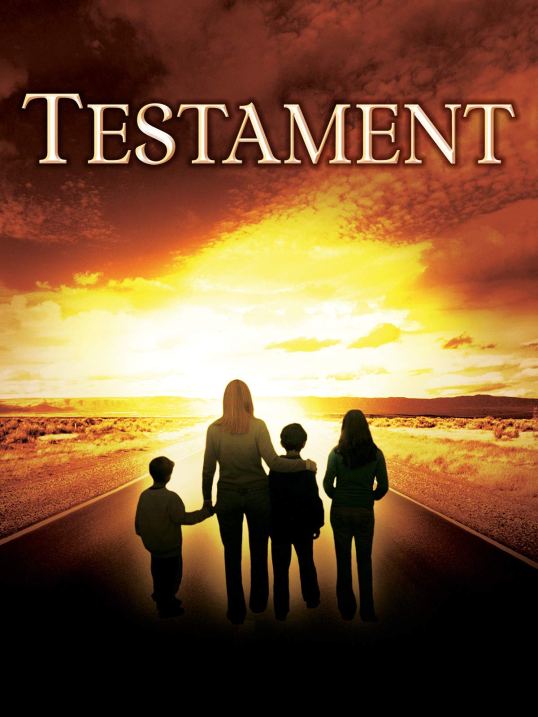
The 1983 film, Testament, is about death. It’s about the death of a family, the death of a town, the death of a way of life, and the death of hope.
And you may be saying, “Well, gee, Lisa — that sounds like a really happy movie.”
Well, it’s not meant to be a happy movie. Testament is a painfully grim movie about the end of the world.
The movie takes place in the town of Hamelin, California, which we’re told is 90 minutes away from San Francisco. It’s a nice town, the type of place where everyone knows each other. Mike (Mako) runs the local gas station and cares for his disabled son, Hiroshi (Gerry Murillo). Elderly Henry Abhart (Leon Ames) spends his time on his radio, talking to strangers across the world. Fania (Lilia Skala) offers up piano lessons. Father Hollis (Philip Anglim) looks over the spiritual needs of the parish. It’s a normal town.
The town is home to the Weatherlys. Carol (Jane Alexander) is a stay-at-home mom who does volunteer work and who is directing the school play. Tom (William Devane) is a common sight riding his bicycle through town every morning before heading off to work in San Francisco. They have three children. Mary Liz (Roxanna Zal) is a teenager who is taking piano lessons. Brad (Ross Harris) is always trying to impress his father and is looking forward to his 14th birthday. Scottie (Lukas Haas, in his first film) is the youngest and never goes anywhere without his teddy bear. They’re a normal family living a normal life in a normal town.
And then, one day, everything changes. Scottie is watching Sesame Street when the program is suddenly interrupted by a clearly terrified anchorman who announces that New York has been bombed. The president is about to speak but, before he can, there’s a bright flash of light, an distant explosion, and the entire town loses power.
At first, the people of Hamelin try to remain hopeful. Though Tom works in San Francisco and San Francisco is among the many cities that have apparently been bombed (by who, we never learn), he also left a message on the family’s answer machine, telling them that he was on his way home. Even with Tom missing, Carol continues to insist the he’ll be coming home at any minute.
Tom doesn’t come home.
The rest of the film follows the slow death of the town. Even though the town was not damaged by the blast, the fallout soon hits. Cathy (Rebecca De Mornay) and Phil (Kevin Costner) bury their newborn baby after it falls ill from radiation poisoning. Mike, Henry, and Fania all start to grow physically ill and, in some cases, dementia sets in. Father Hollis goes from being hopeful to being tired and withdrawn as he tries to attend to each and every death. Larry (Mico Olmos), a young boy whose parents have disappeared, briefly moves in with the Wetherly family. He disappears about halfway through the movie and we never learn if he left or if he died. All we know is that no one mentions him or seems to notice that he’s gone.
Over the course of the film, Carol buries two of her children. By the end of the film, her remaining child is starting to show signs of being sick, as is she. Testament, which opened with bright scenes of a happy town, ends in darkness, with only a handful of people left among the living. Even those who are alive are clearly dying and can only speak of the importance of remembering all of it, what they had and what they lost.
Sounds like a really happy film, right? Well, it’s meant to be depressing. It was made at a time when nuclear war was viewed as being not just probable but also inevitable. Testament is a film that portrayed what a lot of people at the time were expecting to see in the future and, as a result, it’s not meant to be a particularly hopeful movie. It’s a film that accomplishes what it set out to do, thanks to a great (and Oscar-nominated) performance from Jane Alexander and Lynne Littman’s low-key direction. Unlike a lot of atomic war films, Testament does not feature any scenes of burning buildings or excessive gore. That actually what makes it even more disturbing. Even after the war, Hamelin still looks like it did beforehand, with the exception that many of the houses are now empty and that all of the residents are slowly dying.
(Would I have reacted as strongly to the film if I hadn’t watched it at a time when many people are afraid to go outside? Perhaps not. But this pandemic has brought extra power to a lot of films that may not have had as much of an impact in 2018.)
Testament is a powerful film, though not necessarily one that I ever want to watch again.
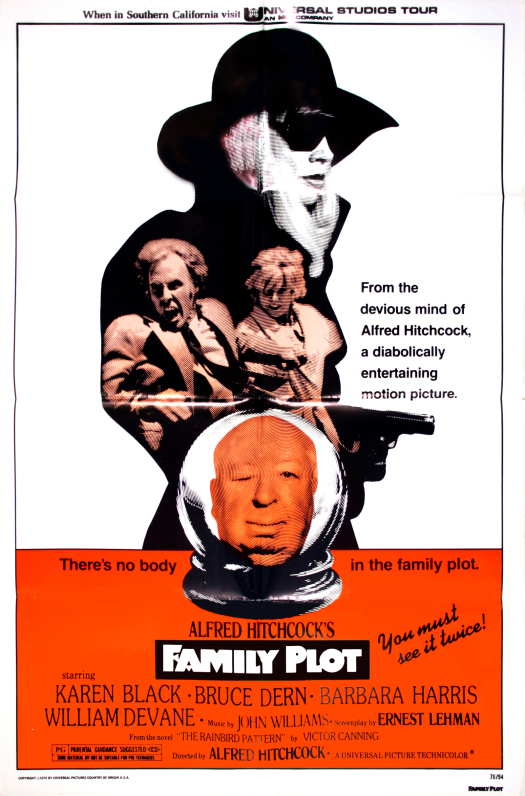
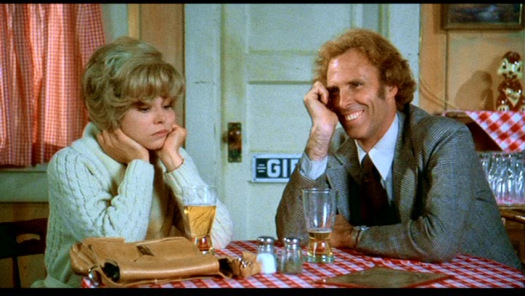
Critics in 1976 were divided over Alfred Hitchcock’s FAMILY PLOT, which turned out to be his final film. Some gave it faint praise, in an “it’s okay” kinda way; others decried it as too old-fashioned, saying the Master of Suspense had lost his touch – and was out of touch far as contemporary filmmaking goes. Having recently viewed the film for the first time, I’m blessed with the gift of hindsight, and can tell you it’s more than “okay”. FAMILY PLOT is a return to form, and while it may not be Top Shelf Hitchcock, it certainly holds up better than efforts made that same year by Hitch’s contemporaries George Cukor (THE BLUE BIRD), Elia Kazan (THE LAST TYCOON), and Vincente Minnelli (A MATTER OF TIME).
Hitchcock reunited with screenwriter Ernest Lehman (NORTH BY NORTHWEST) to concoct a devilishly clever black comedy about phony psychic Blanche Tyler who, along with…


 Through the Shattered Lens