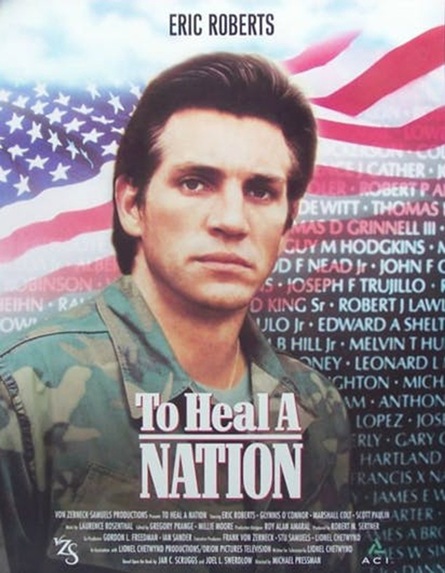
The Eric Roberts Collection: To Heal A Nation (dir by Michael Pressman)


In 1988’s To Heal A Nation, Eric Roberts stars as Jan Scruggs.

When we first meet Scruggs, the year is 1971 and he’s taking his seat on a commercial airliner.  When the blonde woman sitting beside him starts to flirt with him, Scruggs mentions that he’s happy because he’s finished up his tour of duty in Vietnam.  Upon hearing that Scruggs is a Vietnam vet, the woman immediately requests to be moved to a different seat.

Eight years later, things haven’t gotten much better.  Scruggs works for the Department of Labor in Washington D.C.  He’s married to Becky (Glynnis O’Connor) but he’s struggling to deal with the past.  He drinks too much.  He has trouble sleeping.  He doesn’t feel like he can open up about the things that he saw in Vietnam because nobody wants to talk about it.  He was one of the thousands of people who served in Vietnam who now feel as if they’ve been abandoned by their country.  However, after attending a showing of The Deer Hunter, Scruggs has a vision of  a monument that that features the name of every American who was killed in the Vietnam Conflict.

Scruggs devotes the next several years of his life to getting the monument built, appealing to both the government and private citizens for funding.  At first, everyone treats Scruggs and his efforts like a joke.  Even some fellow veterans feel that Scruggs is pushing too hard and that he’s just going to end up embarrassing himself.  But Scruggs refuses to give up and finally, with the support of a senator (Laurence Luckinbill) and a Texas millionaire named H. Ross Perot (Conrad Bachmann), Scruggs is able to make his dream a reality.

Based on the true story of the struggle to build the Vietnam Veterans Memorial in Washington, D.C., To Heal A Nation features a young Eric Roberts giving a nervy but likable performance as Jan Scruggs, a man who becomes so obsessed with building a monument to those who lost their lives in Vietnam that he occasionally seems like he’s close to going over the edge himself.  It’s a good film for Memorial Day and one that still feels relevant today.  The way that Scruggs was treated after returning from Vietnam is the way a lot of our veterans were treated and continue to be treated after returning from Iraq and Afghanistan.  We love our soldiers when they fight in popular wars that result in a definite victory.  When they serve in an unpopular war, they’re often deserted by people who don’t want to be reminded of recent history.  One can certainly see that in the attempts by the national media to gloss over what happened during our final days in Afghanistan.  This film is a reminder that no one should be forgotten.

Previous Eric Roberts Films That We Have Reviewed:

  1. Star 80 (1983)
  2. Runaway Train (1985)
  3. Best of the Best (1989)
  4. Blood Red (1989)
  5. The Ambulance (1990)
  6. The Lost Capone (1990)
  7. Best of the Best II (1993)
  8. Love, Cheat, & Steal (1993)
  9. Voyage (1993)
  10. Love Is A Gun (1994)
  11. Sensation (1994)
  12. Dark Angel (1996)
  13. Doctor Who (1996)
  14. Most Wanted (1997)
  15. Mercy Streets (2000)
  16. Raptor (2001)
  17. Rough Air: Danger on Flight 534 (2001)
  18. Strange Frequency (2001)
  19. Wolves of Wall Street (2002)
  20. Border Blues (2004)
  21. Mr. Brightside (2004)
  22. Six: The Mark Unleased (2004)
  23. We Belong Together (2005)
  24. Hey You (2006)
  25. Depth Charge (2008)
  26. Amazing Racer (2009)
  27. The Chaos Experiment (2009)
  28. In The Blink of an Eye (2009)
  29. Bed & Breakfast (2010)
  30. Enemies Among Us (2010)
  31. The Expendables (2010) 
  32. Sharktopus (2010)
  33. Beyond The Trophy (2012)
  34. The Dead Want Women (2012)
  35. Deadline (2012)
  36. The Mark (2012)
  37. Miss Atomic Bomb (2012)
  38. Assault on Wall Street (2013)
  39. Bonnie And Clyde: Justified (2013)
  40. Lovelace (2013)
  41. The Mark: Redemption (2013)
  42. The Perfect Summer (2013)
  43. Self-Storage (2013)
  44. Sink Hole (2013)
  45. A Talking Cat!?! (2013)
  46. This Is Our Time (2013)
  47. Bigfoot vs DB Cooper (2014)
  48. Doc Holliday’s Revenge (2014)
  49. Inherent Vice (2014)
  50. Road to the Open (2014)
  51. Rumors of War (2014)
  52. Amityville Death House (2015)
  53. Deadly Sanctuary (2015)
  54. A Fatal Obsession (2015)
  55. Las Vegas Story (2015)
  56. Stalked By My Doctor (2015)
  57. Enemy Within (2016)
  58. Hunting Season (2016)
  59. Joker’s Poltergeist (2016)
  60. Prayer Never Fails (2016)
  61. Stalked By My Doctor: The Return (2016)
  62. The Wrong Roommate (2016)
  63. Dark Image (2017)
  64. The Demonic Dead (2017)
  65. Black Wake (2018)
  66. Frank and Ava (2018)
  67. Stalked By My Doctor: Patient’s Revenge (2018)
  68. Clinton Island (2019)
  69. Monster Island (2019)
  70. The Reliant (2019)
  71. The Savant (2019)
  72. Seven Deadly Sins (2019)
  73. Stalked By My Doctor: A Sleepwalker’s Nightmare (2019)
  74. The Wrong Mommy (2019)
  75. Exodus of a Prodigal Son (2020)
  76. Free Lunch Express (2020)
  77. Her Deadly Groom (2020)
  78. Top Gunner (2020)
  79. Deadly Nightshade (2021)
  80. The Elevator (2021)
  81. Just What The Doctor Ordered (2021)
  82. Killer Advice (2021)
  83. Megaboa (2021)
  84. Night Night (2021)
  85. The Poltergeist Diaries (2021)
  86. The Rebels of PT-218 (2021)
  87. Red Prophecies (2021)
  88. A Town Called Parable (2021)
  89. Bleach (2022)
  90. Dawn (2022)
  91. My Dinner With Eric (2022)
  92. 69 Parts (2022)
  93. The Rideshare Killer (2022)
  94. D.C. Down (2023)
  95. Aftermath (2024)
  96. Bad Substitute (2024)
  97. Devil’s Knight (2024)
  98. The Wrong Life Coach (2024)
  99. When It Rains In L.A. (2025

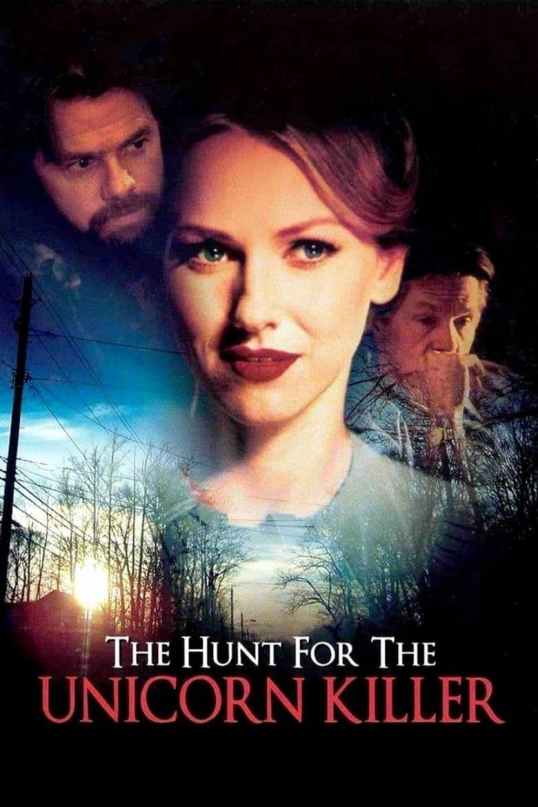
March True Crime: The Hunt For The Unicorn Killer (dir by William A. Graham)


Who started Earth Day?

There are a lot of names that get mentioned.  Some people give all the credit to U.S. Senator Gaylord Nelson of Wisconsin, who was  an environmentalist before it was trendy and who proposed a day-long “teach-in” in 1970.  (According to Norman Mailer, Hunter Thompson, and Gary Hart, Gaylord Nelson was also George McGovern’s personal pick for his running mate in 1972 but ultimately, Nelson didn’t get the spot because it was felt people would make fun of his first name.  Considering how things went with Thomas Eagleton, one imagines that McGovern probably ended up wishing he had the courage to go with his first instinct.)  A peace activist named John McConnell also proposed the idea of an Earth Day in 1969 but there’s some debate whether his proposed Earth Day became the actual Earth Day.  Like all things, many people have taken credit for the idea behind Earth Day.

Ira Einhorn was one of those people.  A prominent member of Pennsylvania’s counter-culture, Einhorn was a self-styled New Age environmentalist and he did speak at the first Earth Day event in Philadelphia.  Einhorn went on to become a prominent guru, providing his services to several corporations that were looking to shake off their stodgy image.  He led protests against nuclear energy.  He wrote articles about CIA duplicity.  He was, for a while, a popular figure and, due to his last name, he was nicknamed “The Unicorn.”  He always claimed that he was instrumental in starting Earth Day but the organizers behind the event have always been quick to say that he had little do with it.

It’s understandable that the people behind Earth Day would rather not be associated with Ira Einhorn.  Einhorn presented himself as being a quirky, fun-loving hippie but, in private, he was known for having both a violent temper and a misogynistic streak.  In 1977, Einhorn’s ex-girlfriend, Texas-born Holly Maddux, disappeared.  In 1979, her mummified remains were found in a box that Einhorn kept in his closet.  Arrested for her murder and defended in court by future U.S. Sen. Arlen Specter, Einhorn claimed that he was innocent and that he had no idea how Holly Maddux ended up in his closet.  (He suggested the CIA might be responsible.)  With the help of his wealthy friends, Einhorn fled the United States and ended up in Europe.  He lived in Europe for nearly 20 years until he was finally arrested in France.  Einhorn’s claim that he was being framed for his anti-nuclear advocacy found a sympathetic audience amongst certain members of the French intellectual community.  Eventually, though, Ira Einhorn was extradited to Pennsylvania.  He spent the rest of his life in prison, eventually dying in 2020.  To the end, he had his supporters despite the fact that he was clearly guilty.

Made for television in 1999, The Hunt For The Unicorn Killer tells the story of Ira (Kevin Anderson), Holly (a pre-Mulholland Drive Naomi Watts), and Holly’s father, Fred (Tom Skerritt).  It does a good job of telling the disturbing story of Ira Einhorn and it features good performances from its main stars.  Tom Skerritt especially does a good job as a father determined to get justice for his daughter.  The film shows how so many of Ira’s friends rationalized his actions, not wanting to admit that their nostalgia for the 60s and the counterculture was blinding them to the monster in their midst. It’s a portrait of how one evil man was able to take advantage of the idealism of others.

The Hunt For The Unicorn Killer‘s original running time was 163 minutes and it was aired over two nights.  It was later edited down to 90 minutes for syndication.  The uncut version is available on YouTube and that’s definitely the one to see.

Retro Television Review: Thief (dir by William A. Graham)


Welcome to Retro Television Reviews, a feature where we review some of our favorite and least favorite shows of the past!  On Sundays, I will be reviewing the made-for-television movies that used to be a primetime mainstay.  Today’s film is 1971’s Thief!  It  can be viewed on Tubi and YouTube.

Neal Wilkinson (Richard Crenna) would appear to be living a great life.  He has a nice house in the suburbs.  He has a beautiful girlfriend named Jean Melville (Angie Dickinson).  As he heads into middle-age, he is still fit and handsome and charming.  He dresses well, or at least well by the standards of the early 70s.  (By the standards of today, a few of his ties are a bit too wide.)  Everyone believes that Neal has a nice and comfortable job as an insurance agent.

Of course, the truth is far different.

Neal is a veteran con man and a thief.  He’s just recently been released from prison and his deceptively friendly parole officer (played by the great character actor, Michael Lerner) is convinced that Neal will screw up again eventually.  And, of course, Neal has screwed up.  A gambling addict, he is $30,000 in debt.  Can Neal steal enough jewelry from enough suburban homes to pay off his debt?  Can a man like Neal change his ways?

This is a surprisingly somber made-for-TV movie.  Just from the plot description and the film’s first few minutes, you might expect Thief to be a light-hearted caper film in which Neal and Jean work together to pull off one last heist so that Neal can retire.  Instead, Neal spends almost the entire film lying to Jean and there’s hardly a light moment to be found.  Neal says that he wants to retire from his life of crime but, as the film makes clear, that’s a lie that he’s telling himself.  Neal cannot stop stealing and gambling because he’s as much of an addict as the wild-haired junkie (Michael C. Gwynne) who briefly confronts Neal at the parole office.  At one point, Jean tells Neal, “The more I know you, the less I know you,” but the truth of the matter is that Neal is so deep in denial about the futility of his life that he doesn’t even know himself.

It’s not a particularly happy film.  Richard Crenna is ideally cast as Neal, playing him with enough charm that the viewer can buy that he could talk his way out of being caught in a stranger’s backyard but with also with vulnerability that the viewer can see his fate, even if he can’t.  Thief also provides a rare opportunity to see Cameron Mitchell playing a sympathetic role.  Mitchell is cast as Neal’s attorney, who continually tries to get Neal to stop messing up but who ultimately knows that his attempts to reform Neal are just as futile as Neal’s attempts to go straight.

The movie ends on a surprisingly fatalistic note, one that suggests that there’s only one way to truly escape from a life of crime.  I can only imagine how viewers responded in 1971, when they turned on their television and found themselves watching not a light-hearted caper film but instead a bleak examination of criminal ennui.  It’s not a happy film but it is more than worth watching for Richard Crenna’s lead performance.

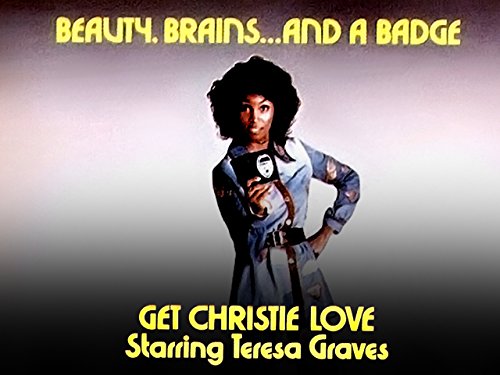
Get Christie Love! (1974, directed by William A. Graham)


When Captain Reardon (Harry Guardino) discovers that there’s a ledger that contains information that could bring down Los Angeles drug lord Enzo Cortino (Paul Stevens), he decides that the best way to get the ledger is through the drug lord’s mistress, Helena Varga (Louise Sorel).  To get Helena to betray Cortino, he’s going to have to discover what makes her tick.  He’s going to have to send someone undercover to find out all there is to know about Helena.  It’s time to get Christie Love!

Teresa Graves plays Christie Love, a tough and beautiful woman who is also the best undercover cop in Los Angeles.  She goes from busting a serial killer (played by Ron Rifkin) and investigating Helena’s life.  Along the way, she deals with by-the-book superiors, incompetent assassins, and hapless bureaucrats.  She throws one killer bellboy off of a hotel balcony and she lets a crook know that, “You’re under arrest, sugar!”

Get Christie Love! was an attempt to a do a made-for-TV version of a Blaxploitation film and the results are mixed.  While the movie features the expected car chases and a handful of fights, it’s still limited by what was considered to be acceptable for prime time in 1974.  Pam Grier may have blown someone’s head off in close-up in Coffy but, in Get Christie Love!, the camera always cuts away as soon as Christie throws her final punch.  Teresa Graves is likable as Christie Love but, unlike the best Blaxploitation heroes, she’s working inside the system and she never has any mixed feelings about being a cop.  The fight scenes are particularly disappointing because they’re edited in such a way that it’s obvious that most of the work was being done by the stunt crew.  The best scenes are not the action scenes but the ones that emphasize Christie’s intelligence and that feature her doing old-fashioned detective work, investigating Helena’s life and putting the clues together.

Get Christie Love! was enough of a rating success that it led to a short-lived television series.  It’s historically significant because it was the first hour-long drama to feature an African-American female in the lead role.  (It was the second series to do so overall, after Julia, which starred Diahann Carroll.)  The show only lasted a season but it achieved pop cultural immortality when, years later, Quentin Tarantino used it as a reference in Reservoir Dogs.


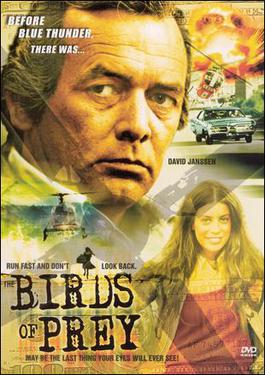
Birds of Prey (1973, directed by William A. Graham)


When three disgruntled Vietnam vets rob Zion’s Bank in downtown Salt Lake City and take a bank teller (Elayne Heilveil) hostage, they’re spotted by traffic reporter Harry Walker (David Janssen).  A World War II vet who is going through a mid-life crisis and who feels unappreciated by the country that he risked his life to defend, Harry chases after the robbers in his helicopter.  With Harry’s help, the police corner the robbers on the roof of a parking garage.

That’s when they discover that the robbers have a helicopter of their own!  After abandoning their car, the robbers and their hostage take off in their helicopter, heading into the Oquirrh Mountains.  Though he’s running low on fuel and has been ordered to back off by Police Captain Jim McAndrew (Ralph Meeker), Harry continues to pursue the other helicopter into the wilderness.

A made-for-TV movie from 1973, Birds of Prey is a chase movie, with the usual cars replaced by helicopters.  What makes this movie so exciting is that it was directed in the days before CGI so, when you watch the two helicopters dangerously pursuing each other over Salt Lake City and taking daredevil risk over the mountains of Utah, you’re watching the real thing.  David Janssen was a trained pilot who actually was flying the helicopter and doing his own stunts for the majority of the film.  When the two helicopters nearly collide, you’re aware that you’re seeing a real near-miss, one that could have gone tragically wrong if not for the talents of the men piloting those helicopters.

Despite all of the action in the air, the film does occasionally touch ground.  Harry and McAndrew talk about why some vets can move on and others can’t.  Harry briefly lands on the freeway and gets some help from a passing motorist.  Finally, Harry gets to know the kidnapped teller, who has never been outside of Salt Lake City and who shares Harry’s love of old movies.  David Janssen was the go-to guy for gruff and grizzled heroes in 1970s made-for-TV movies and he’s pretty good as Harry.  But the real stars of the film are the helicopters and the still-impressive aerial footage of them chasing each other above Utah.

Unfortunately, I have never seen a good print of Birds of Prey.  Even the version on Amazon Prime is grainy, scratchy, and sometimes washed-out.  (It also features a promo for a television station in Phoenix, suggesting that it was transferred straight from a VHS tape.)  I hope that, at some point in the near future, someone will restore this minor chase classic.

The First Police Story: Slow Boy (1973, directed by William A. Graham)


Long before The Wire, Homicide, Chicago PD, NYPD Blue, or even Hill Street Blues, there was Police Story.

Co-created by cop-turned-writer Joseph Wambaugh, Police Story aired on NBC from 1973 to 1978.  It was an anthology series, with each episode following a different member of the LAPD as they deal with crime and social issues in Los Angeles.  For its time, it was ground-breaking in its realistic approach to the life and work of the police.  Interestingly, the show wasn’t always blindly pro-cop.  Often the cops featured were deeply flawed and the war on crime was frequently portrayed to be unwinnable.  Over the course of its run, Police Story was a regular Emmy nominee and won the award for Best Drama Series in 1976.

Police Story started, in 1973, with a two-hour TV movie.  At the time it aired, the pilot was called Stakeout but it has since aired in syndication under the title Slow Boy.  Vic Morrow stars as Sgt. Joe LaFrieda, a plainclothes detective who can’t keep his marriage together but who can take criminals off the street.  LaFrieda is the second-in-command of a special squad of detectives who specialize in watching and taking down high-profile criminals.  Their methods frequently come close to entrapment but they usually work.  Their current target is Slow Boy (Chuck Conners), the son of a mafia chieftain, who enjoys robbing stores.  When LaFrieda’s first attempt to put Slow Boy in jail is thwarted by a liberal judge and departmental bureaucracy, he and the squad come up with a second, less-than-legal plan to take Slow Boy down.

Considering the involvement of Joseph Wambaugh, it’s no surprise that plot is secondary to exploring the day-to-day lives of the blue-collar cops trying to take Slow Boy down.  The heart of the movie is in the scenes of the cops shooting the breeze and trying to keep each other amused during length shakeouts.  Their humor is often grim and the fascinating dialogue is cynical, dark, and, even by today’s standards, surprisingly raw.  One of the detectives (played by Harry Guardino, who specialized in loud-mouth city cops) is an unapologetic racist.  Though he gets a comeuppance of sorts, the way the film and the rest of his squad handle his racism will undoubtedly make modern audiences uncomfortable, even if it is authentic to the era in which Slow Boy was made.

The underrated Vic Morrow gives one of his best performances as the tough but sympathetic LaFrieda, who is bad at everything but his job.  He is ably supported by a host of familiar character actors.  Ed Asner plays LaFrieda’s reactionary lieutenant while Sandy Baron is great in the role of an informant.  Diane Baker was also perfectly cast as LaFrieda’s potential girlfriend.  (She first meets the detective while Slow Boy is holding a gun to her head.)  Finally, Chuck Conner is as intimidating as always as the sadistic Slow Boy.

Slow Boy is a tough and uncompromising police procedural and it provided a great start for Police Story.  Reruns of Police Story currently air on H&I on Sunday morning.

Cleaning Out The DVR: Women of San Quentin (dir by William A. Graham)


(Lisa is currently in the process of cleaning out her DVR!  She’s got over 170 films to watch before the end of 2017!  Will she make it?  Who knows?  She recorded 1983’s Women of San Quentin off of Retroplex on January 25th.)

For some reason, back in January, I felt the need to record several prison movies off of cable.  I’m not sure where my mind was at that I would see a title like Women of San Quentin listed in the guide and think to myself, “That’s something I definitely need to record.”  Maybe I was thinking of pursuing a career as a prison guard.  That seems to be the easiest way to get a show on A&E nowadays.

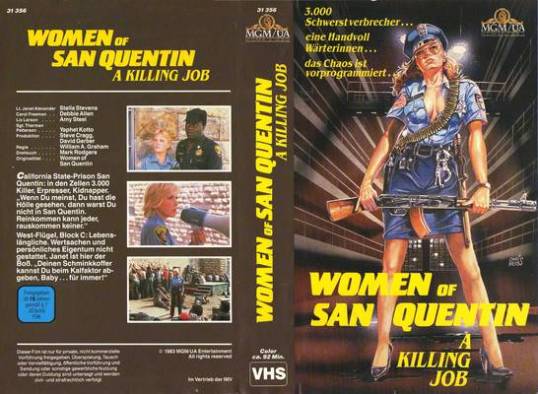
Anyway, I imagine that anyone reading this review is looking that title and considering the VHS cover art and they’re probably assuming that Women of San Quentin is some sort of Cirio Santiago-directed women in prison film.  And then consider the film’s cast: Amy Steel is best known for Friday the 13th Part II and April Fool’s Day.  Stella Stevens is an exploitation film vet.  One of the prisoners is played by Rockne Tarkington, who starred in a handful of blaxploitation films.  William Sanderson, star of the infamous Fight For Your Life, has a small role.  Yaphet Kotto plays a prison guard here but he’s best known for playing the villain in Live and Let Die.  Gregg Henry plays a sociopath.  Hector Elizondo and Debbie Allen play sympathetic guards.  Even Ernie Hudson, a now-respectable actor with several less-than-savory films on his resume, shows up.  Finally, consider this: Women of San Quentin was written by Larry Cohen, the man who directed both Black Caesar and It’s Alive.

However, despite all of that, Women of San Quentin is not an exploitation film.  Instead, it’s a made-for-TV movie.  (Director William A. Graham has over a hundred TV shows and made-for-TV movies to his credit.)  It follows several storylines.  Lt. Janet Alexander (Stella Stevens) is the tough-but-fair captain who is in charge of one of San Quentin’s most intimidating cell blocks.  She’s great at her job and she has a vaguely romantic relationship with Hector Elizondo but she’s also tempted to find a new career.  Charles Wilson (Ernie Hudson) steps up to lead the prison’s black inmates after another activist is assassinated.  Meanwhile, the leader of the Mexican Mafia plots a prison riot and Yaphet Kotto and Debbie Allen use any means necessary to discover what’s going to happen.

And then there’s Liz Larson (Amy Steel), the newest prison guard who struggles to prove that she belongs in San Quentin.  Sexist colleagues play cruel pranks on her.  The prisoners shout at her whenever she walks past their cells.  When she has to use a gun to break up a fight, she hesitates just a second too long.  Will she be able to step up when real trouble breaks out?  Among horror fans, Amy Steel is remembered for “surviving” several slasher films.  (Her performance as Ginny in Friday the 13th Part 2 largely set the standard for which all final girls are judged.)  Steel does a pretty good job as Liz but, actually, the entire movie is well-acted.  The script is frequently rudimentary but the cast is full of unique talent and it’s always fun to watch so many good actors playing opposite each other.

I assume that the Women of San Quentin was meant to be a pilot for a TV show or something.  It just has that feel to it.  If just for the cast alone, I would recommend watching Women of San Quentin if you get a chance.  I’m as surprised as anyone but, after all, where else are going to get a chance to watch Hector Elizondo, Yaphet Kotto, Stella Stevens, and Amy Steel all hanging out in a bar together?  There are certain opportunities that you just don’t miss.

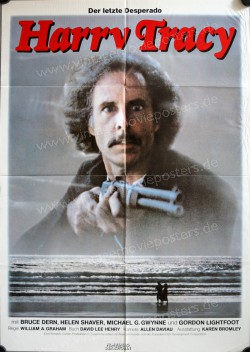
A Movie A Day #76: Harry Tracy, Desperado (1982, directed by William A. Graham)


The year is 1902.  The old west is coming to an end.  Almost all of the famous outlaws are either dead or imprisoned.  Only a few, like Harry Tracy (Bruce Dern), continue to make a living by robbing banks and trains.  Though he is often captured and even sentenced to death a few times, Harry is always able to escape.  His latest escape, from a prison in Washington, has led to the largest manhunt in American history.  Harry is being pursued by a trigger-happy army, led by U.S. Marshal Morrie Nathan (played by singer Gordon Lightfoot).  Harry has been in this situation before but this time, things are different.  Harry is traveling with Catherine Tuttle (Helen Shaver), the daughter of a local judge.  Harry and Catherine are in love but that does not matter to the men with the guns.
Harry Tracy is a sadly overlooked and elegiac western from Canada.  It is based on a true story.  Outlaw Harry Tracy really did escape from several prisons and he eventually was the target of the largest manhunt in U.S. history.  (His relationship with Catherine was apparently created for the film.)  In real life, Harry was reportedly considered to be more ruthless than Jesse James and he killed not only members of law enforcement but also members of his own gang.  The movie’s Harry is a much more gentle character.  In the film, Harry only kills in self-defense and he robs banks not because he’s greedy but because it’s the only life that he has ever known.  Harry is a relic of a time that it coming to a close.  In one scene, he is shocked to come across a man driving a car.  For an outlaw who usually makes his escape on horseback, the new century does not hold much promise.

In the tradition of Butch Cassidy and the Sundance Kid, Harry Tracy mixes comedy with tragedy.  The film’s defining image is Harry fleeing from his latest robbery and dropping most of the money in the process.  Harry often seems to be bewildered by all the fuss that people are making over him.  Bruce Dern and Helen Shaver are great as Harry and Catherine.  Even the casting of Gordon Lightfoot works.  (Lightfoot also wrote the movie’s theme song.)

Harry Tracy is an overlooked classic about the end of the old west and the beginning of the modern era.

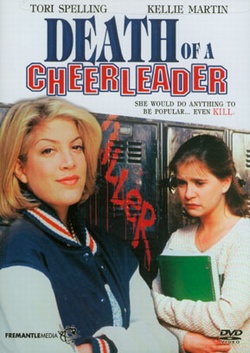
Back to School Part II #29: A Friend To Die For a.k.a. Death of a Cheerleader (dir by William A. Graham)


death_of_a_cheerleader

Over the past couple of year, I’ve had so much fun making fun of Tori Spelling’s performance in the original Mother, May I Sleep With Danger? that I almost feel like I have an obligation to review a movie in which she gave a halfway decent performance.

That film would be another 1994 made-for-TV-movie.  It was apparently originally broadcast as A Friend To Die For but most of us know it better as Death of a Cheerleader.  That’s the title that’s used whenever it shows up on Lifetime.  There actually was a time when Death of a Cheerleader used to show up on almost a monthly basis but that was a while ago.  Lifetime has since moved on to other movies about dead cheerleaders.

Technically, as my sister immediately pointed out when I made her watch the movie, the title isn’t quite correct.  Though Stacy Lockwood (Tori Spelling) does try out for and is named to her school’s cheerleading squad, she never actually gets to cheer.  Instead, shortly after the school assembly in which her selection is announced, Stacy is found stabbed to death.  But really, Death of A Future Cheerleader doesn’t quite have the same ring to it.

As for who killed Stacy … well, it’s no secret.  This is one of those true crime films where the murderer is not only portrayed sympathetically but is the main character as well.  Angela Delvecchio (Kellie Martin) was a high school sophomore who was obsessed with trying to become popular.  She looked up to Stacey and desperately wanted to be her best friend.  (Why she didn’t just offer to bribe Stacey, I don’t know.  Maybe she hadn’t seen Can’t Buy Me Love….)  When Stacey got a job working in the school office, so did Angela.  Of course, the school’s somewhat sleazy principal (Terry O’Quinn, coming across like John Locke’s worst nightmare) only made it a point to talk to Stacey and pretty much ignored Angela.  When Stacey applied to work on the yearbook, so did Angela.  When Stacey tried out for cheerleading, so did Angela.

In fact, the only time that Angela stood up to Stacey was when Angela was taunting the school’s token goth (played by Kathryn Morris).  That turned out to be a mistake because Stacey never forgave her.  When Angela invited Stacey to a party, Stacey was reluctant to go.  When Stacey did finally accept the invitation, Angela stabbed her to death.

A Friend to Die For/Death of a Cheerleader is based on a true story and the film tries to lay the blame for Angela’s crime on the affluent neighborhood she was raised in.  Just in case we missed the message, the film actually features a Priest (played by Eugene Roche) who says that the community put too much pressure on Angela to succeed.

Uhmmm….okay, if you say so.

Seriously, this is a pretty good little true crime film and both Tori Spelling and Kellie Martin give really good performances but this whole “It’s society’s fault” argument is typical, mushy, made-for-TV, bourgeois liberal BS.  Angela picked up the knife, Angela committed the crime, end of story.  That said, A Friend To Die For is pretty good as far as these movies go.  I already mentioned the performances of Spelling and Martin but also keep an eye out for Marley Shelton, who gets a really good scene in which she explains that she never liked Stacey that much while she was alive.

You can watch A Friend To Die For/Death of a Cheerleader below!