4 Shots From 4 Films is just what it says it is, 4 shots from 4 of our favorite films. As opposed to the reviews and recaps that we usually post, 4 Shots From 4 Films lets the visuals do the talking.
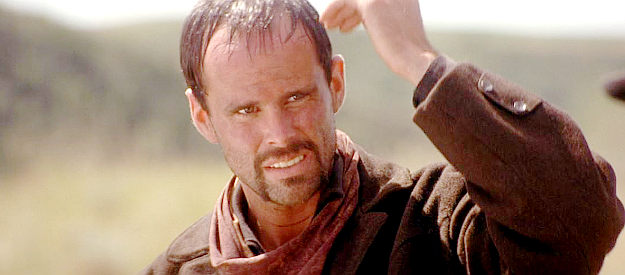
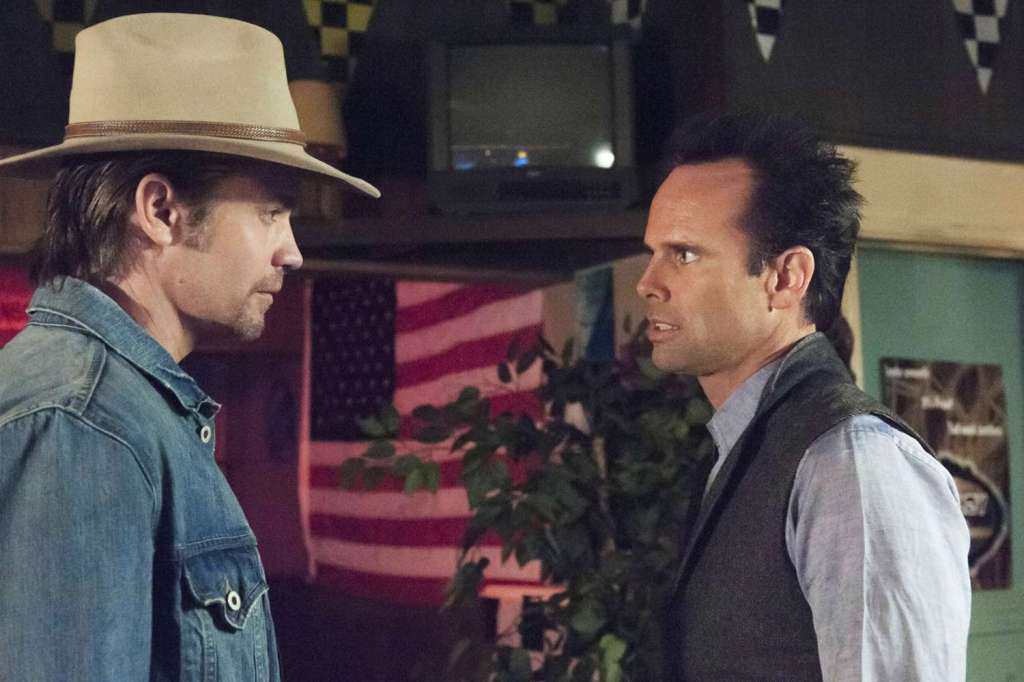
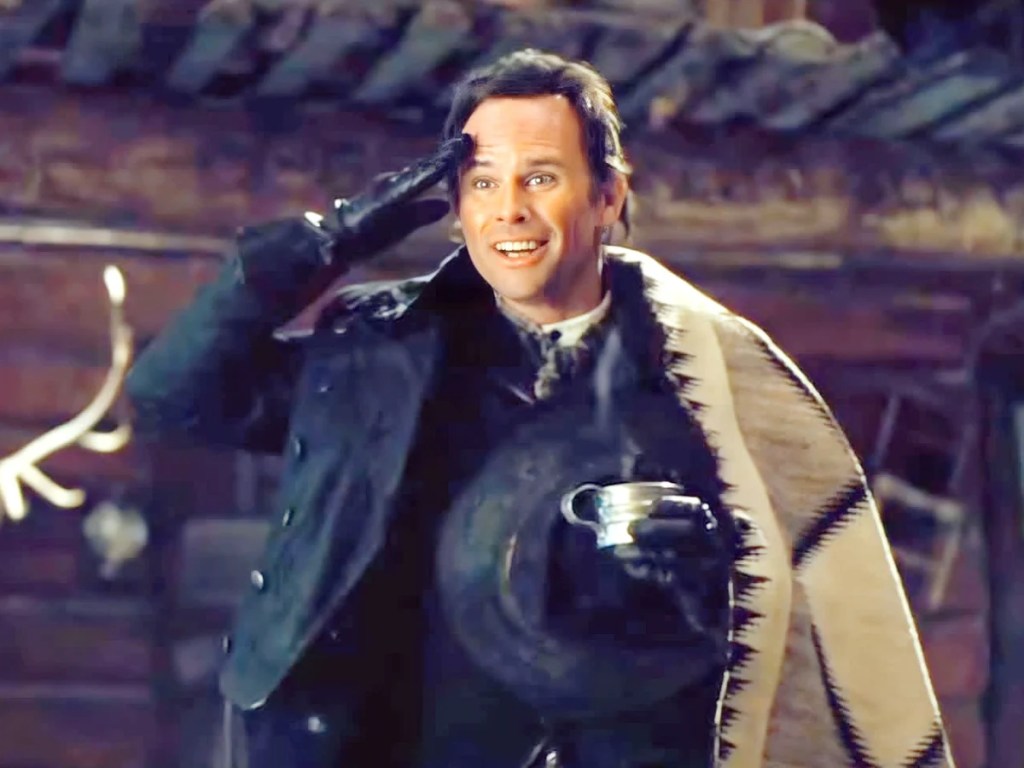
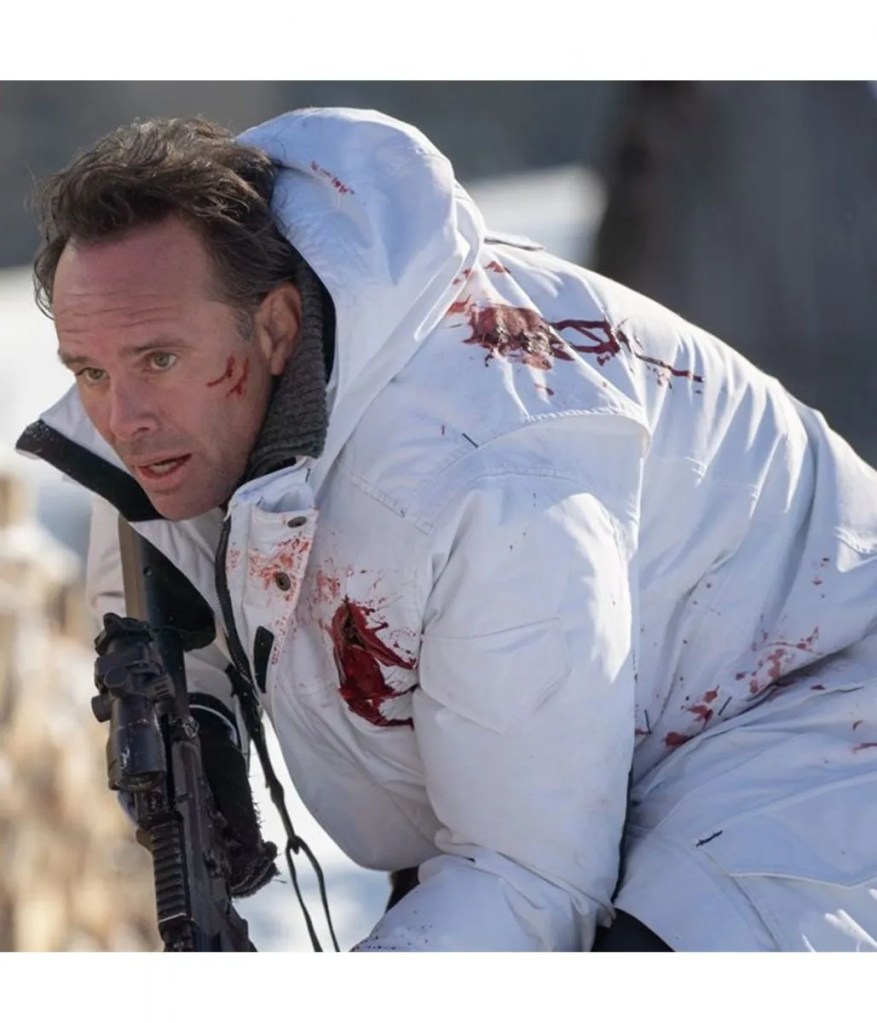
I’ve been watching THE WHITE LOTUS series on Max, and today I started Season 3 co-starring a favorite actor in my household, Walton Goggins. Here are some movies I like him in (and one TV show)!
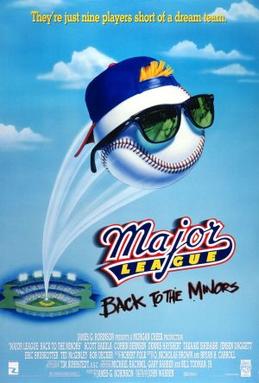
Roger Dorn (Corbin Bernsen), the former third baseman for the Cleveland Indians, is the new owner of the Minnesota Twins. There’s a hotshot hitter playing for the Buzz, the Twins’s Minor League affiliate. Downtown Anderson (Walton Goggin) can hit the ball over the fences but he still needs to learn about teamwork before he’ll be ready to move up to the majors. Roger recruits an old friend, an aging pitcher named Gus Cantrell (Scott Bakula), to manage the Buzz and mentor Downtown. Under Gus’s leadership, the Buzz starts winning games. Even some former Indians, like Pedro Cerrano (Dennis Haysbert) and Taka Tanaka (Takaaki Ishibashi), are recruited to play for the Buzz. When the manager of the Twins, Leonard Huff (Ted McGinley), insults Gus and the Buzz over dinner, Gus challenges the Twins to an exhibition game, the minors against the majors. Huff accepts the challenge.
I had always heard that Major League: Back To The Minors was the worst of three Major League films but I liked it. It wasn’t as good as the first one but it wasn’t as boring as the second one. A lot of it has to do with the cast, who give it their all. Walton Goggins is great as the cocky Downtown Anderson but really, all of the actors playing entire team did a good job. They’re all misfits, of course. I especially liked Doc (Peter Mackenzie), a medical student-turned-pitcher who has the slowest fastball in the game. This movie had a little of the warmth and insider humor that made the first Major League film so special. It’s an underdog story, with the minor league players proving that they’re just as good as the spoiled players in the big leagues.
I didn’t find the idea of an exhibition game between the Twins and the Buzz to be believable. In the movie, they actually play two games against each other and they both take place during the regular season. When did they find the time to play each other? I guess they gave up one of their travel days but it still doesn’t seem like something that would happen.
I enjoyed this movie more than I thought I would. It helped that I love baseball. And I love the minor leagues, even if they don’t get the same respect as the majors. Some of the best baseball I’ve ever seen has been in minor league games. They may not have the huge contracts but they’ve got the talent, they’ve got something to prove, and they’ve got the love of the game.
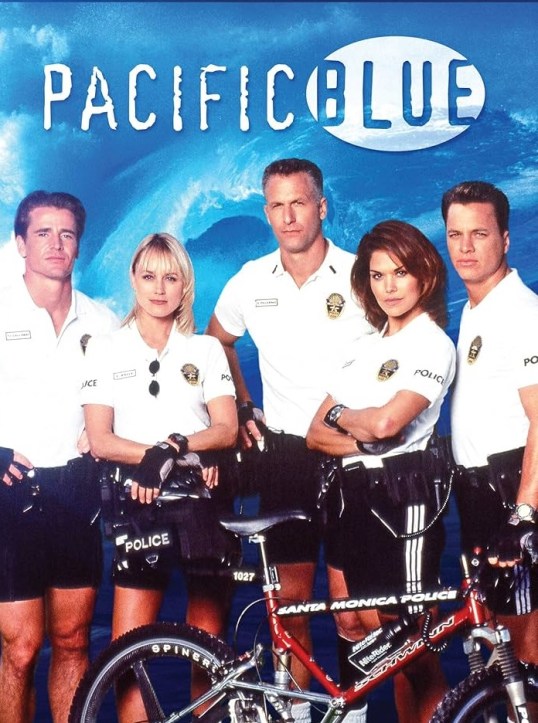
Welcome to Late Night Retro Television Reviews, a feature where we review some of our favorite and least favorite shows of the past! On Tuesdays, I will be reviewing Pacific Blue, a cop show that aired from 1996 to 2000 on the USA Network! It’s currently streaming everywhere, though I’m watching it on Tubi.
I’m a little bit late with this review but so what? I mean, what’s Pacific Blue going to do? Chase me on their bicycles?
Episode 1.10 “Captive Audience”
(Dir by Terrence O’Hara, originally aired on May 4th, 1996)
The local bank is being robbed! The three robbers — desperate and murderous criminals all — have taken hostages, including TC and Cory. TC just wanted to check out his safe deposit box. Cory just wanted to withdraw some money so she could buy a motorcycle. (If she had been withdrawing the money to buy another bicycle, I would have thrown a shoe at my television.) TC is in uniform. The robbers know he’s a cop. Cory is not in uniform and she and TC are pretending not to know each other. There’s also a pregnant woman in the bank who goes into labor, which means that Cory is going to have to get over her loathing of babies to help deliver one!
*Sigh*
I think I’ve said before that I hate cop shows that feature people being held hostage. It’s always the same thing. The robbers threaten a lot of people. The hostages get beaten and abused. Outside the bank, the negotiator says, “You have to give me more time!” On Pacific Blue, the negotiator is Captain Palermo and there’s something just silly about him, in his shorts and crisp polo shirt, directing a bunch of rough-and-ready SWAT team members who are in protective gear. Hostage situations are serious and potentially deadly but Palermo chasing the robbers are on his bicycle just made me laugh and laugh. I also laughed when the SWAT team first arrived at the bank and spotted Cory and TC’s bicycles sitting outside the building. “There might be cops in there,” someone says. Apparently, they’re unsure about whether or not bike cops should be considered real police or not. I’m glad I’m not the only one.
It falls to Del Toro and Chris to track down Doc Mueller (Charley Lang), a paranoid electronics expert who lives in a tent on the beach. He agreed to help disable the bank’s alarm so that the SWAT team can sneak inside. He also taps into the head robber’s “cellular phone” so that the cops can see who he is working with on the outside. Shows from the 90s are always amusing because everyone’s always like, “He’s got a cellular phone!” In 1996, those were still unusual and only used by desperate bank robbers.
(On a positive note, one of the robbers is played by a handsome young actor named Walton Goggins. What ever happened to him? Seriously, there’s not much about his performance here that indicates the type of actor he would become but still …. WALTON GOGGINS!)
Everything works out, of course. The main bank robber tries to escape in a helicopter but Palermo chases him — on his bike! — and manages to jump into the helicopter. It would have been really impressive if not for the bicycle and the fact that the Pacific Blue uniforms — those shorts and those blindingly white shirts — make all of the characters look really silly. It’s hard to take a cop seriously when he’s dressed like an aging track coach. The important thing, though, is that Cory gets over her hatred of babies and Palermo shows that bike cops deserve as much respect as real cops.
I love movies. And when I say that I love movies, I don’t mean that I just enjoy watching them. When I say I love movies, what I’m really saying is that my love of cinema is part and parcel of who I am. And I truly enjoy sharing that love with any person who will listen to me, or in this case, read what I have to say. For most of my life, I experienced the wonder of movies either at my local cinema or on VHS, DVD or Blu-ray at my house. It was a really big deal for me to travel about 45 miles to the big city of Little Rock and watch a movie at the Cinema 150, which was the coolest theater in Arkansas prior to the stadium seating multiplexes that we have now. Unfortunately, it had to close its doors way back in 2003, but I still have fond memories of the place. Watching movies at the Cinema 150 was reserved for the big, special effects movies like TRUE LIES and TWISTER where the Cinema 150 could give you that added value! Those days that included dinner at Casa Bonita and a movie at the Cinema 150 were great days. In 2015, I started taking my love of movies on the road, and these have been some wonderful experiences for a movie lover like me. Over the next week, I’m going to share a few of those experiences here. I hope you enjoy them!
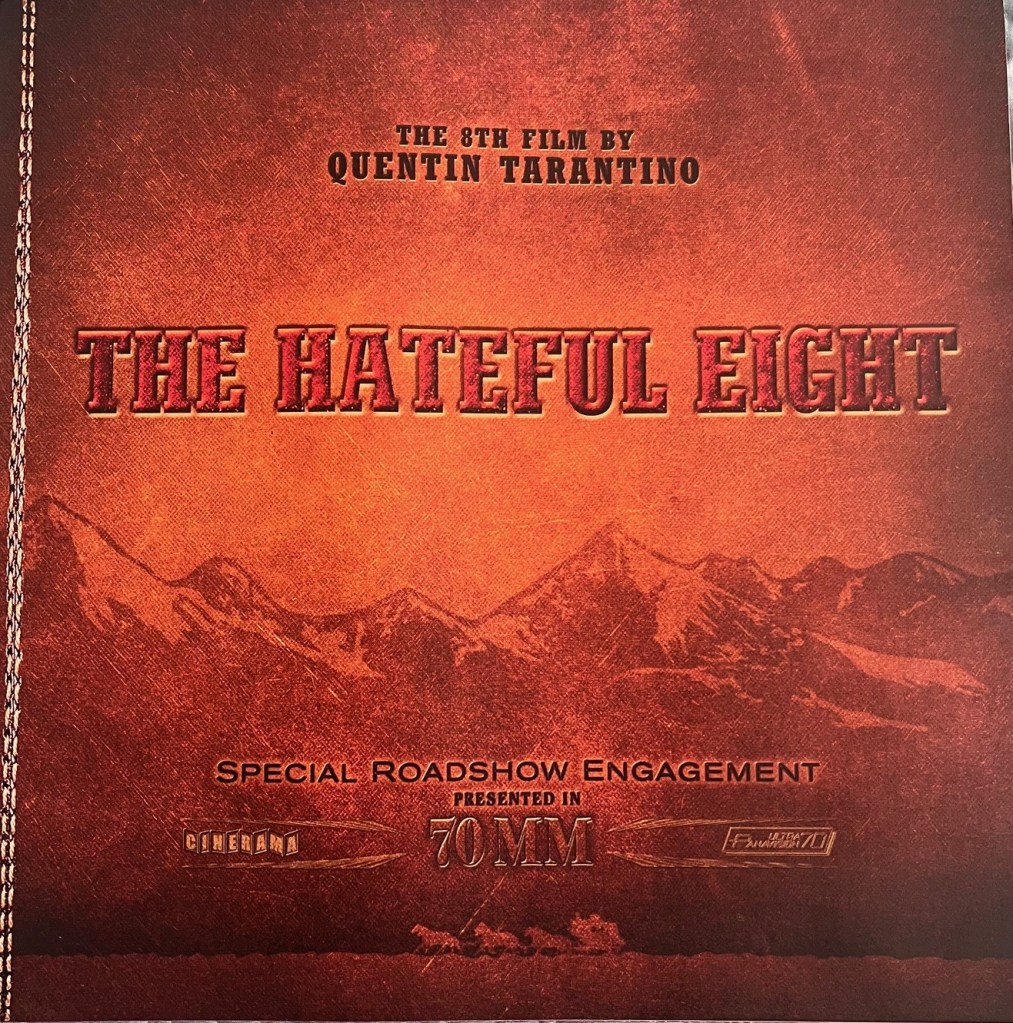
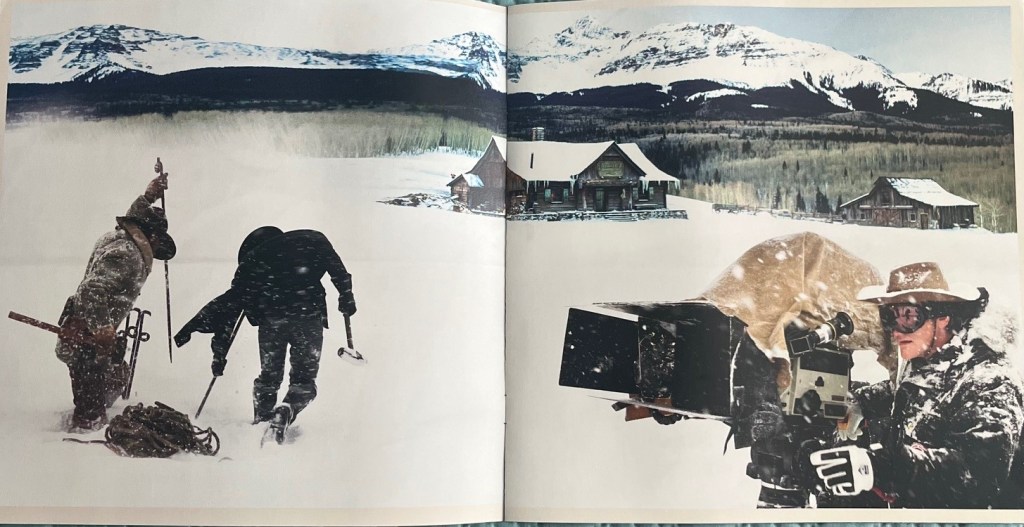
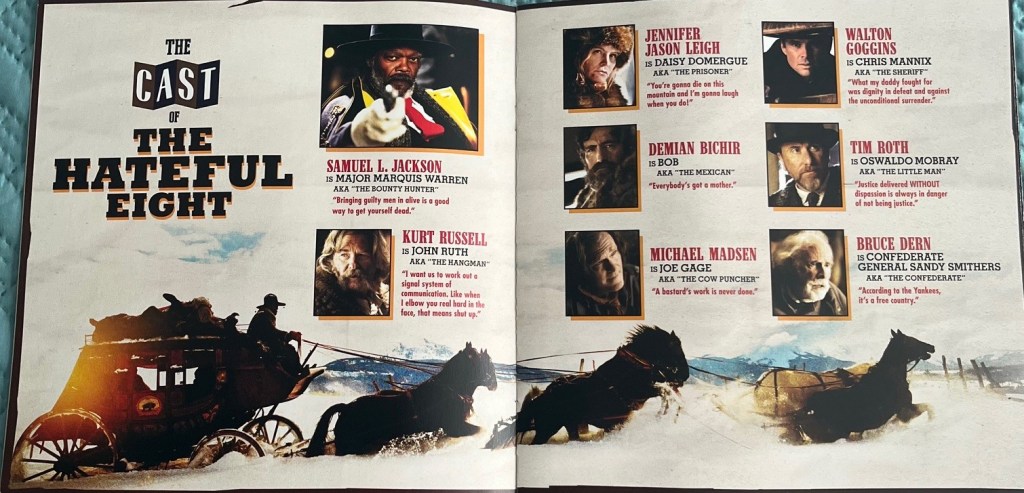
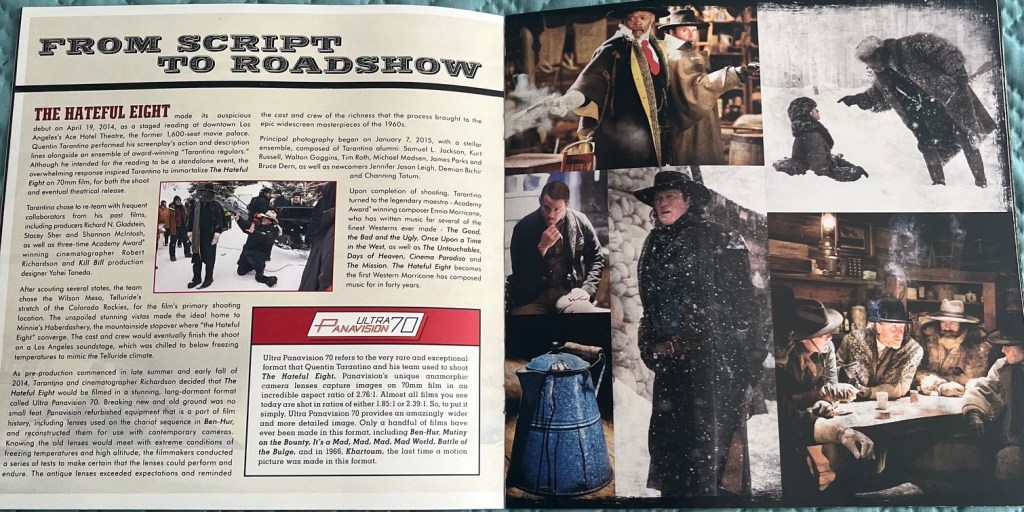
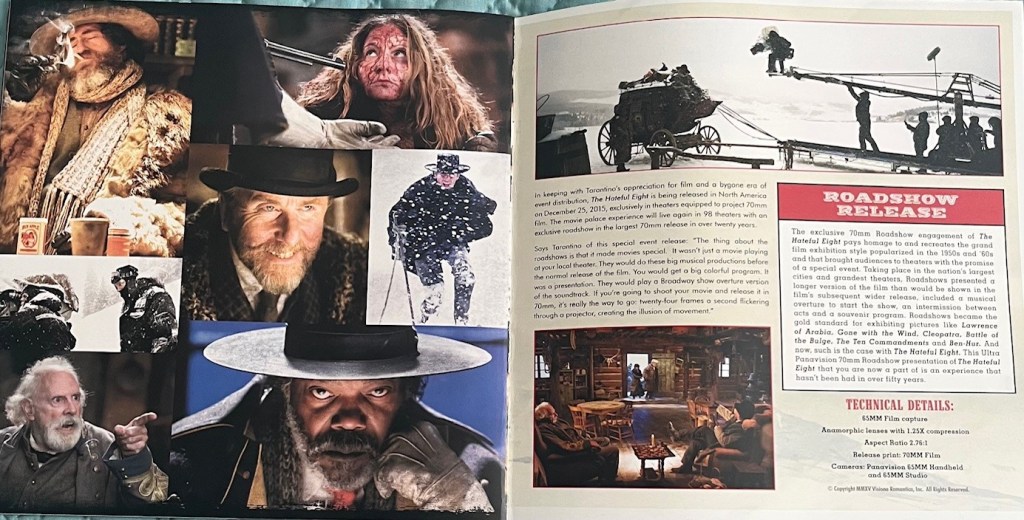
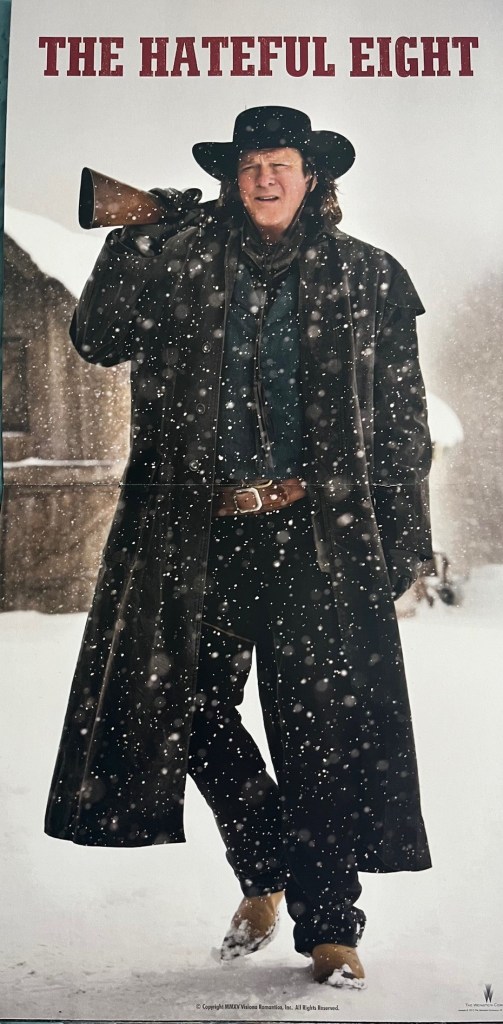
The first time I ever left the state of Arkansas specifically to watch a movie was the week after Christmas in 2015. My son Hank and I made the trip to Dallas, TX, actually Arlington, which was about a 4-hour drive, to attend the unique “Roadshow” presentation of THE HATEFUL EIGHT. Hank was 15 and I had introduced him to Tarantino’s films by this point. As an avid gamer, with a specific interest in first person shooter “War” games, he really liked INGLORIUS BASTERDS. He was a fun partner to have on this trip! I was excited to see Tarantino take on the western genre, one of my favorites. I thought Kurt Russell was perfect for the part of “the hangman” John Ruth, and we all know what Samuel L. Jackson is capable of when acting out Tarantino’s words. It was also a terrific showcase role for Jennifer Jason Leigh. But I have to admit the performance I enjoy the most of all is that of Walton Goggins as Sheriff Chris Mannix. As a big fan of the JUSTIFIED TV series, I couldn’t wait to see how he would perform in the company of those amazing film actors, and I was so glad to see him knock it out of the ballpark! The roadshow version of The Hateful Eight included a 70 MM projector, a 4-minute overture, 12-minute intermission, Cinerama logos, and a cool booklet. I still have the booklet from the show we attended. We both loved the movie. Hank and I were recently talking about Tarantino, and I asked him what his favorite Tarantino film was. Without hesitating, he said THE HATEFUL EIGHT. I love it as well. This “roadshow” movie experience is a very special memory that I have with my son. I’ve shared a few of the pictures from the booklet below. Enjoy!
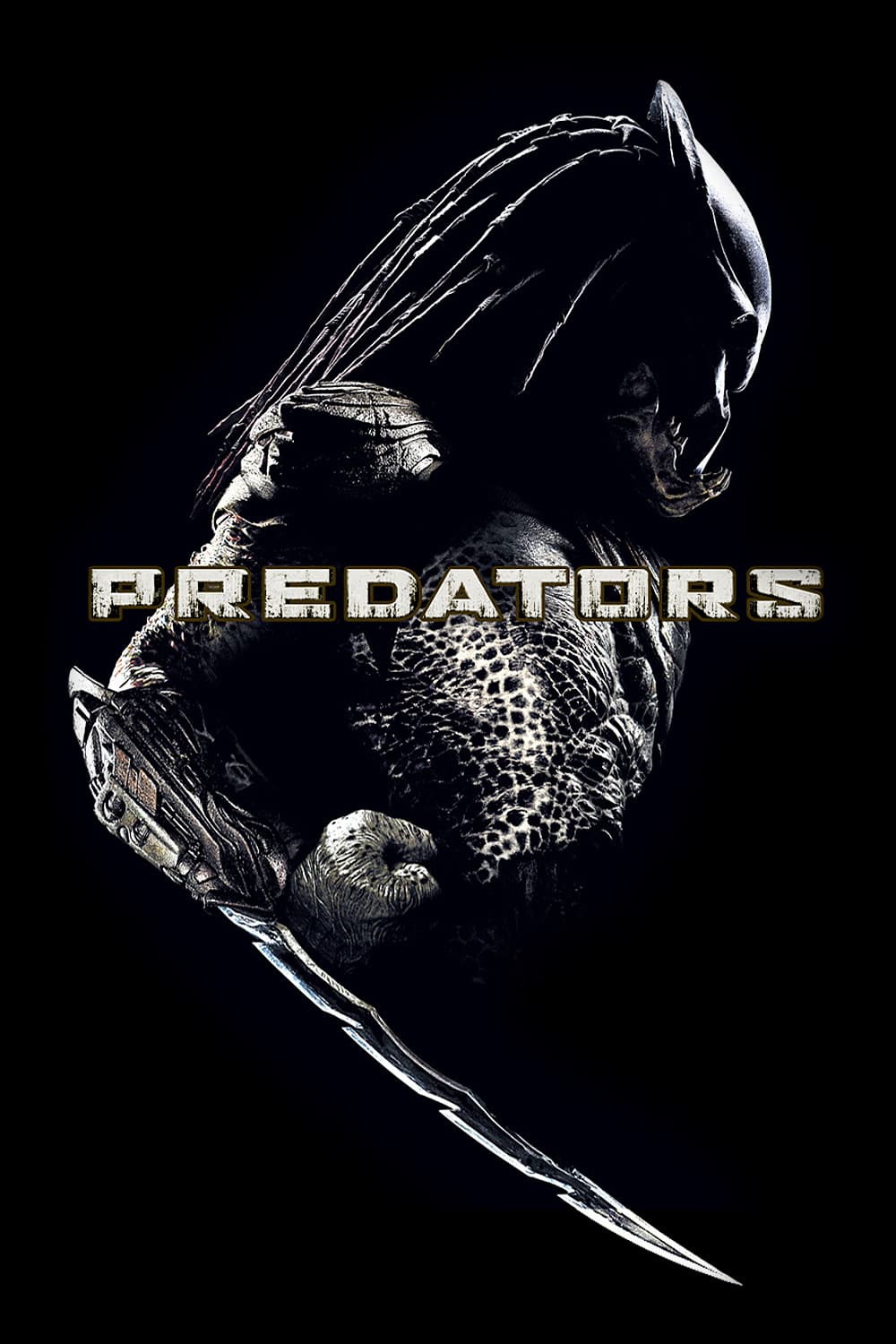
It would be twenty years before those space-faring hunters, the Predators, would return to the big screen. Sure, they appeared in the two Aliens vs. Predator films of the early 2000s, but I don’t count those as part of the Predator franchise—mostly because they weren’t the headliners. Plus, those two mash-up films were all kinds of awful.
2010’s Predators, directed by Nimród Antal and produced by Robert Rodriguez, set out to breathe new life into the sci-fi action franchise that the two AvP entries had drained of excitement. From the early 1990s until this film’s release, the Predator mythology had steadily expanded through novels, comics, and games, creating a world as rich as any in science fiction. Longtime fans came to understand the Predators’ culture, mindset, and technology.
For some, that world-building stripped away the mystery that made the Predator such an iconic monster. Others felt it helped establish consistent rules, allowing future stories to build on a solid foundation instead of endlessly one-upping what came before.
Predators embraced this expanded lore while adding a new wrinkle: the introduction of the so-called “Super Predators,” bigger, faster, and meaner than the classic hunters we’d seen over the decades. Another new element placed the story on an unnamed planet serving as an extraterrestrial game preserve, where Predators could hunt their chosen prey on familiar ground.
This setup lent a new dimension to the narrative. The humans being hunted had nowhere to run, and whatever advantage they might have enjoyed on Earth vanished instantly. They were now being hunted on Predator turf—a cruel inversion of game hunting, like a safari where the prey has no chance against its well-equipped pursuers.
Despite these new additions to the lore, the film mostly works as an action-thriller. We get the requisite band of misfits, murderers, and killers—the worst humanity has to offer, but the best at what they do. They range from black-ops mercenaries and elite snipers to cartel enforcers and even a serial killer.
Leading this reluctant ensemble is the enigmatic Royce, played by Oscar-winner Adrien Brody, who surprisingly pulls off the wiry, cold-hearted black-ops soldier. The film hinges on his performance. He’s not a team player, nor is he likable—he fits the antihero mold perfectly, willing to sacrifice anyone if it means surviving another hour. Yet he understands that his best chance lies in keeping others alive, if only as tools for his own survival. He’s the audience surrogate, the one who rolls his eyes as everyone else makes one bad decision after another.
Antal’s action direction recalls the McTiernan era. He favors long, sweeping takes that clearly define the geography of each battle—a quality too rare in modern action cinema, where quick cuts and shaky edits often stand in for real dynamism. Where the film falters is in its reliance on exposition-heavy dialogue. After nearly every action set piece, the momentum stalls as characters explain what’s happening. Laurence Fishburne even appears in a role that exists purely to deliver exposition.
Now, about those Super Predators: they’re an intriguing trio who expand the series’ creature variety, though at the cost of making the classic Predator seem almost obsolete. There’s the Tracker, who uses alien hunting dogs to flush out prey; the Falconer, who employs a cybernetic drone that feels straight out of the Marvel Cinematic Universe; and the Berserker, the biggest and most brutal of the three, relying on raw power rather than skill or strategy.
They look fantastic but slightly diminish the menace of the original Predator design. Against this new breed, the traditional hunters seem almost helpless.
Still, Predators stands several notches above what audiences got from the two AvP movies. Despite an exposition-heavy script and a bold but polarizing decision to downplay the classic Predator’s threat, Antal’s entry injects enough adrenaline and fresh lore to reenergize the series. It’s unfortunate that the AvP films’ lingering stench colored its reception, but over time, more fans have come to appreciate Predators for what it is: a fun, muscular, and engaging slice of sci-fi action.
It seems somewhat appropriate that the new Lara Croft is played by an actress best known for starring in a (very good) movie about artificial intelligence because the latest Tomb Raider film is so generic that it feels as if it could have been written by a robot.
Now, before I get too critical,I should acknowledge that the first 30 minutes of the film is actually a lot of fun. When we first meet Lara Croft (Alicia Vikander), she’s making her living a bike courier in London. She delivers food to the hungry, except for when she’s boxing or engaging in bicycle races. Despite the fact that she comes from a fabulously wealthy family, Lara refuses to accept her inheritance because accepting it would mean acknowledging that her missing father, explorer Richard Croft (Dominic West), is dead. For those 30 minutes, the film has a fun, kinetic feel to it. As I watched those scenes, I realized that I’d actually be more than happy to watch a full-length film just about people racing around London on bicycles.
(Of course, there’d have to be some dancing, too. There always has to be dancing.)
But then Kristin Scott-Thomas shows up and informs Lara that, unless she claims her inheritance, Andrew’s estate will be sold off. At this point, the whole film starts to go downhill. Naturally, before signing the papers that would declare Andrew to be deceased, Lara stumbles across one final message from her father. In the message, he asks her to destroy all of his research. Instead, Lara decides to go to Hong Kong so that she can investigate her father’s disappearance.
(Before she can leave, she has to get money from a pawnbroker who is played, in a rather lengthy cameo, by Nick Frost. Frost mostly seems to be there so that the audience can go, “Hey, it’s Nick Frost!”)
You can probably already guess everything that happens once Lara arrives in Hong Kong. It’s hardly a spoiler to inform you that Richard’s not dead and that he’s spent the last few years on an isolated island, trying to prevent the bad guys from tracking down an ancient tomb, one that Richard believes will destroy the world if it’s discovered. It’s also not a spoiler to tell you that Lara spends a lot of time running through the jungle and trying to escape from collapsing caves. That’s pretty much what you would expect from a movie called Tomb Raider but, even though the film is presumably giving the audience what they want, it just falls flat.
The problem is that, with the exception of those opening scenes in London, this version of Tomb Raider just isn’t much fun. As good an actress as she is, Alicia Vikander never really seems comfortable in the role of being an action girl. Vikander’s great when she’s racing around London and refusing her inheritance but, once she finds herself in the jungle, she just seems lost. In fact, the only person who seems to be more lost than Alicia Vikander is Walton Goggins, who goes through the motion’s as the film’s villain but who never seems to be that invested in the character one way or the other. Among the main cast, only Dominic West appears to be enjoying himself. There’s nothing subtle about West’s performance but that’s exactly what a film like this needs. Director Roar Uthaug is obviously comfortable with directing action scenes but there’s little of the wit or attention to detail necessary for this film to truly make an impression.
It’s not a terrible movie, don’t get me wrong. Though it seems like it takes forever for Lara to actually reach it, the tomb is nicely realized and the film features a great score from Junkie XL. But, ultimately, the most memorable thing about this new Tomb Raider is how forgettable it is.
Here are a few good things about Maze Runner: The Death Cure.
First off, and most importantly, Dylan O’Brien is still alive. When The Death Cure first went into production way back in 2016, O’Brien was seriously injured on the set. While it’s never really been disclosed just how serious the injuries were, they were bad enough that it took O’Brien several months to recover. There was even some speculation that his career might be over. Fortunately, that wasn’t the case. Last year, O’Brien returned to the screen and gave a superior performance as the lead in American Assassin. In The Death Cure, O’Brien returns as Thomas and even if the character is still a bit of cipher, O’Brien does a good job playing him.
Secondly, Gally lives! In the first Maze Runner, Gally was a villain but, because he was played by Will Poulter, he was also strangely likable. Maze Runner was the first film in which I ever noticed Will Poulter and I have to admit that I’ve always felt that both the actor and the character deserved better than to be casually killed off at the end of the first movie. Since Maze Runner, Poulter has given great performances in both The Revenant and Detroit. (He was also briefly cast as Pennywise in It, though the role was ultimately played by Bill Skarsgard.) In The Death Cure, it is not only revealed that Gally is still alive but he also finally gets to be one of the good guys.
Third, the Death Cure confirms what I felt when I first saw The Maze Runner. Wes Ball is a talented director. Despite whatever narrative flaws that the Maze Runner films may have, they’re always watchable. Death Cure opens with a genuinely exciting action sequence and there are more than a few visually striking shots.
Fourth, Death Cure actually ends the Maze Runner saga. That may sound like a strange or back-handed compliment but it’s not. Death Cure resists the temptation to try to milk more money out of the franchise by unnecessarily splitting the finale in two. I’ve always felt that The Hunger Games made a huge mistake with its two-part finale. (The first part was good but the second part dragged.) Divergent appears to be destined to be forever unfinished because the first part of it’s two-part finale bombed at the box office. Death Cure refuses to indulge in any of that nonsense. Unfortunately, this also means that Death Cure ends up lasting an unwieldy 142 minutes but still, that’s better than forcing the film into two parts. With the current YA dysptopia cycle winding down, now is the right time to end things.
Finally, I appreciated the fact that the bad guys in Death Cure were named WCKD. There’s nothing subtle about that but this isn’t a movie the demands subtlety. As opposed to many other films based on dystopian YA fiction, The Maze Runner films have always been aware of just how ludicrous they often are. Unlike the Divergent films or The Fifth Wave, the Maze Runner films have always been smart enough not to take themselves too seriously.
Anyway, as for Death Cure itself, it’s big and noisy and your enjoyment will largely depend on how much you remember about the first two films. It’s been nearly three years since The Scorch Trials came out, which is an eternity when it comes to a franchise like Maze Runner. Death Cure pretty much jumps right into the action and if you don’t remember all of the details from the first two films … well, good luck getting caught up! (Unfortunately, it doesn’t help that, while the first movie was fun, Scorch Trials was a lot easier to forget.) It’s pretty much a typical tale of YA dystopia, complete with tragic deaths, shocking betrayal, and a chosen one. If you’re a fan of the previous two films or the books, you’ll probably enjoy Death Cure. For the rest of us, it’s a bit of a confusing ride but at least there’s a lot of up-and-coming talent on display.
Remember how I said that it was intimidating to admit that The Big Short didn’t do much for me as a viewer? Well, it’s even more intimidating for me to admit that I felt much the same way about The Hateful Eight as well.
Nearly everyone I know loves The Hateful Eight and, going into it, I really wanted to love it as well. After all, this is — as the opening credits remind us — Quentin Tarantino’s 8th film! Tarantino is one of my favorite directors. I thought his last film, Django Unchained, was a masterpiece and one of the most important films ever made about slavery. Like many of you, I’ve followed all the details of the making of The Hateful Eight, from the initial script leak to the controversy over Tarantino’s comments on the police. I was excited because the cast looked great and was full of veteran actors — like Kurt Russell, Jennifer Jason Leigh, and Bruce Dern — who all seemed likely to benefit from the Tarantino touch. (Say what you will about Quentin Tarantino, it cannot be denied that he’s given good roles to talented actors who are rarely given the opportunities that they deserve.) When I heard that Ennio Morricone was going to be providing the score, I got even more excited. Morricone and Tarantino; it seemed like the perfect combination for greatness.
Well, Morricone’s score is spectacular. There’s talk that Morricone might finally win an Oscar for his work on The Hateful Eight and I certainly don’t have a problem with that. (Hopefully, Morricone will have learned a lesson from the Golden Globes and, if he is nominated, he will either come to the ceremony himself or arrange for someone other than Tarantino to accept for him.) And Jennifer Jason Leigh takes full advantage of her role, giving a truly ferocious performance.
But otherwise, The Hateful Eight just didn’t do much for me. It’s not that I disliked the film. There was a lot that worked but, for whatever reason, The Hateful Eight never enthralled me the way that past Tarantino films have. The Hateful Eight left me saying, “Is that it?”
A lot of my reaction to The Hateful Eight has to do with the film’s length. Taking place, for the most part, in only one location and structured more like a play than a film, The Hateful Eight would be a great 90 minute murder mystery. Instead, it lasts nearly 3 hours and, at times, the film drags interminably. As usual, Tarantino plays with time and, at one point, stops the action so that we can see what happened earlier in the day. Unfortunately, as opposed to other Tarantino films, we don’t really learn anything new from this flashback and you get the feeling that it was included most because flaskbacks are a Tarantino trademark and because he wanted to find a way to work a somewhat pointless Zoe Bell cameo into the film.
As for Tarantino’s widely acclaimed script, I have to admit that I got kind of bored with this talky film. Yes, the actors were all good and it’s always fun to listen to Samuel L. Jackson be a badass but the dialogue itself was largely repetitive and occasionally, the film itself threatened to turn into Tarantino-on-autopilot.
(Interestingly enough, Tarantino’s script features several creative euphemisms for oral sex and the characters come up with a handful of different ways to point out that Jackson is black but, when it comes to Jennifer Jason Leigh’s character, nobody can come up with anything more imaginative than repeatedly calling her a bitch. While, unlike some critics, I don’t think The Hateful Eight is a misogynistic movie, I do have to admit that I was rolling my eyes around the fifth time that Leigh’s character was called a bitch and kept rolling them for the entire movie. For a writer well-known for his ability to come up with colorful and memorable insults, Tarantino’s refusal to come up with anything more imaginative than “bitch” just felt lazy.)
What can I say? The Hateful Eight just didn’t do much for me. However, I do think that the film looked great and I certainly hope that Morricone and Leigh are at least nominated for their excellent work. I look forward to Tarantino’s next film but I doubt I’ll be revisiting The Hateful Eight any time soon.
(By the way, with this review, I am now officially caught up on reviewing the films of 2015!)
Just one month ago, The Hateful Eight was a film that everyone was eagerly anticipating but which no one was expecting to be as controversial or as incendiary as Quentin Tarantino’s previous film, Django Unchained. I think a lot of us were expecting The Hateful Eight to be a bit like Kill Bill — i.e., a delirious homage to Tarantino’s favorite films and one that took place in a parallel universe. We were expecting The Hateful Eight to be an example of pure cinema, with little connection to the outside world.
But that was a month ago. Things have changed. As I sit here typing this, The Hateful Eight has suddenly become one of the most controversial films of 2015. Suddenly, deciding whether or not to see it has been transformed into a political decision. Following Tarantino’s public criticism of the police and his refusal to back down from his statements, there are suddenly calls to boycott Tarantino’s latest film.
Myself, I’m not a huge fan of boycotting anything. I may choose not to see something for whatever reason but that’s my choice and it certainly does not make me politically or morally superior to anyone who may choose differently. Ultimately, those who want to boycott Tarantino’s film because of his liberal politics need to realize that they’ll also be boycotting a film that stars Libertarian Kurt Russell and features Republican Bruce Dern. If you can’t stand Tarantino’s politics, don’t vote for him when he runs for President. Don’t vote for any candidate that he endorses. But leave his movies, and those of us who want to watch them, alone.
Add to that, The Hateful Eight looks really good! Check out the trailer below!
The Hateful Eight was never to be seen due to the unfortunate leak of the early draft of Tarantino’s screenplay for the film. It wasn’t meant to be seen outside of those he had trusted to become part of the film. Yet, the script still managed to leak and fanboys worldwide rushed to download and take a gander at what Tarantino had planned for his eight film.
After weeks and a couple months of cooling down from the betrayal of having his work leaked before it was time, Tarantino finally backed off from his promise that The Hateful Eight will never be filmed. With sighs of relief, fans, admirers and critics were glad to see Tarantino change his mind and put the script into production.
Months have gone by since that decision and the start of principal photography. Mini teasers were released and publicity shots were disseminated to the public, but a proper teaser trailer still hadn’t been released.
Now, the waiting has ended as The Weinstein Company has released the first official teaser trailer for Quentin Tarantino’s eight film, The Hateful Eight.
The Hateful Eight will be seen in limited release this Christmas 2015 and everywhere else on January 8, 2016.


 Through the Shattered Lens