Retro Television Review: Homicide: Life On The Street 3.15 “End Game”


Welcome to Retro Television Reviews, a feature where we review some of our favorite and least favorite shows of the past!  On Sundays, I will be reviewing Homicide: Life On The Street, which aired from 1993 to 1999, on NBC!  It  can be viewed on Peacock.
This week, the Homicide detective finally arrest the shooter but can they get a confession?

Episode 3.15 “End Game”

(Dir by Lee Bonner, originally aired on February 10th, 1995)

Finally, the Homicide detectives have figured out who actually shot Bolander, Howard, and Felton.  Gordon Pratt (Steve Buscemi), who lived at the apartment that the detectives were accidentally sent to, is a gun-obsessed pseudo-intellectual whose apartment is full of books that he’s probably never read and a picture of himself posing like Lee Harvey Oswald with the rifle he used to kill JFK.  Pratt also has an outstanding warrant for his arrest, explaining why he panicked when the cops accidentally knocked on his door.

Here’s my question.  Why exactly did it not occur to anyone to see who lived in Apartment 201 when the shootings first happened?  I understand that they were focused on a different suspect but it still seems strange that, with all the detectives assigned to the case, no one bothered to check out the guy who lived in Apartment 201.

Anyway, Bayliss and Mitch Drummond drop in on Pratt’s parents, who own a farmhouse and insist that Gordon would never shoot anyone.  Meanwhile, Pratt’s co-workers all talk about how much they hate his guts with one guy mentioning that Pratt went out of his way to antagonize people.  Pratt is finally tracked down at a massage parlor.

The majority of this episode centers around Pembleton and Bayliss interrogating Pratt.  It’s an obvious attempt to recapture the intensity of the first season’s Three Men and Adena and it actually succeeds, thanks to some smart writing and the performances of Andre Braugher, Kyle Secor, and especially Steve Buscemi.  Buscemi plays Pratt as being the ultimate uneducated know-it-all, someone who has picked bits and pieces of philosophy and who has learned that, if you deliver your mundane thoughts with a sneering contempt, some people will assume that you’re smarter than you actually are.  Pembleton and Bayliss have fun picking apart Pratt’s arrogance but — and this is what sets Homicide apart from so many other cop shows — Pembleton ultimately goes too far.  When he takes a look at Pratt’s copy of Plato’s The Republic and realizes that it’s written in Greek, Pembleton can’t help but taunt Pratt and point out that, unlike Pratt, he can actually read ancient Greek because he was educated by “the Jesuits,” while Pratt didn’t even mange to graduate high school.

“I want a lawyer!” Pratt shouts.

At this point, I realized that I had gotten so wrapped up in the interrogation scene that I had totally forgotten about the fact that all of the evidence linking Pratt to the shooting was circumstantial.  Without a gun or a confession, there’s not enough evidence to hold Pratt.  He pleads out to his outstanding assault warrant and he’s free within a few hours.

“You got too cute, Frank,” Munch says, leading to Pembleton physically attacking Munch and then storming out of the station.  Munch goes to the hospital to see Bolander (who has woken up from his coma but who has no memory of who Much actually is) and Bayliss is the only person left to take the call when Gordon Pratt turns up dead in the lobby of his apartment building, shot in the head.

Who murdered Gordon Pratt and was it a cop?  That’s what Bayliss — who sarcastically declares “I love my job!” before heading to the crime scene — will have to figure out.

Great episode!  Not only was it wonderfully performed but, just when you thought to yourself, “There’s no way Pembleton could get away with this in real life,” it turns out that Pembleton couldn’t get away with it on Homicide either.  That’s what makes Frank Pembleton such a fascinating character.  He’s a brilliant detective but, in this episode, he let his desire to embarrass Pratt get in the way of doing his job.  “He who loses control loses,” Pembleton says and, in this episode, he lost control.  Pembleton’s reaction is to storm out of the station in a huff, leaving Bayliss the task of figuring out who killed Gordon Pratt.

My money’s on Munch, just because of how upset he was when Pratt walked and also that it would make sense for Munch to avenge Bolander’s head wound by shooting Pratt in the head.  We’ll see if I’m correct next week!
Retro Television Review: Homicide: Life On The Street 3.14 “Dead End”


Welcome to Retro Television Reviews, a feature where we review some of our favorite and least favorite shows of the past!  On Sundays, I will be reviewing Homicide: Life On The Street, which aired from 1993 to 1999, on NBC!  It  can be viewed on Peacock.

This week, the elusive Glenn Holton is captured but is really the shooter?  Read on and find out!

Episode 3.13 “Dead End”

(Dir by Whitney Ransick, originally aired on February 3rd, 1995)

There’s a truly remarkable moment in this week’s episode of Homicide.

Glenn Holton (Steve Hofvendahl) has finally been arrested and is sitting in the Box.  Holton is the pedophile who is suspected of murdering a child.  Last week, Felton, Bolander, and Howard were all shot while trying to serve a warrant for his arrest.  Bayliss and Pembleton are interviewing him, attempting to get him to confess to shooting the detectives.

At first, Holton is adamant that he did not shoot anyone.  But as Pembleton and Bayliss shout at him and tell him about all the things that are going to happen to him as a sex offender in prison, Holton’s demeanor starts to change.  He becomes desperate and confused and suddenly, he confesses to shooting the detectives.  The only problem is that the story Holton comes up with doesn’t match the facts of the case.  He claims that he shot the detectives on the roof of his apartment building.  He claims they were coming at him.  When asked what type of gun he used, Holton says it was just some gun that he bought on the street.  The more Holton talks, the more obvious it becomes that, while he did murder the child, he didn’t shoot the detectives.

It’s an interesting scene because it shows just how easy it could be to get a false confession out of a suspect.  It’s left ambiguous as to whether or not Holton was lying because he preferred to be sent to prison for shooting a cop instead of killing a kid or if maybe Holton actually had deluded himself into thinking he was the shooter.  If Bayliss and Pembleton hadn’t asked him follow-up questions about the shooting, Holton probably would have been charged with the shooting.  He did, after all, confess.

Holton’s going to jail for murder but the shooter is still out there.  Who fired the gun?  I suspect I know, just because next week’s episode features a special guest star.  But we’ll talk about that next week!

The interrogation scene was the highlight of this week’s episode.  Still, I enjoyed the scenes of Munch working with Bolander’s ex-partner Mitch and struggling to hide his jealousy.  (Bolander is always complaining that Mitch was a far better partner than Munch.)  I was a bit less interested in this week’s Russert plot.  Megan was told to investigate whether or not Giardello was at fault for the detectives going to the wrong apartment.  She discovered Giardello did approve and initial the warrant without double-checking the address.  Giardello  was prepared to take the blame but Russet instead lied and claimed that, because of budget cuts, she and Giardello were both often rushed into signing things without getting a chance to fully examine them.  I’m not sure that’s a particularly good excuse but it worked.

At the hospital, Howard woke up from her coma.  Bolander is still in his coma and was not present during this episode.  (From what I’ve read, Ned Beatty was apparently not happy with the whole shooting storyling, feeling that it went against the realism that was supposed to be Homicide’s calling card.)  Lewis and Felton had a heart-to-heart about what it’s like to lose one’s partner.  It was an effective scene, even if Felton has become a bit of a one-note character.

This was a good episode and a marked improvement on last week.  I look forward to seeing how things conclude (or if they even do conclude) in the next episode.

Retro Television Review: Homicide: Life On The Street 3.13 “The City That Bleeds”


Welcome to Retro Television Reviews, a feature where we review some of our favorite and least favorite shows of the past!  On Sundays, I will be reviewing Homicide: Life On The Street, which aired from 1993 to 1999, on NBC!  It  can be viewed on Peacock.

This week, it’s another red ball on Homicide!

Episode 3.12 “The City That Bleeds”

(Dir by Tim Hunter, originally aired on January 27th, 1995)

This week’s episode opens with Bolander, Munch, Howard, and Felton having a morning meeting outside of an apartment building.  They put on bullet-proof vets because they (and several uniformed officers) are about to arrest Glenn Holton, a sex offender who is believed to have murdered a child.  Unfortunately, because of a transcription error on the warrant, the detective go to Apartment 201 instead of 210.  As they knock on the door to 201, someone on the stairwell opens fire on them.  Bolander, Howard, and Felton are hit.  Munch somehow avoids being shot.

It’s red ball time!  We’re only 12 episodes into season 3 and this is our third “all hands on deck” red ball of the season.  NBC reportedly wanted showrunner Tom Fontana to give them more drama in return for renewing the low-rated Homicide and Fontana delivered.

And that’s not necessarily a bad thing.  This was a compelling episode, featuring Pembleton tracking Glenn Holton across the city while Bayliss tried to deal with his guilt over being relieved that he wasn’t shot.  After visiting the hospital, Giardello had an emotional breakdown while Lewis was driving him back to the station.  Felton’s wife returned from Philadelphia to visit him in the hospital.  Gloria Reuben and Tony Lo Bianco guest-starred as detectives who came in to help with the case and, for both of them, this episode felt like an audition to join the cast.  Things ended with a cliffhanger.  Holton is still at large.  Felton is awake but hospitalized.  Bolander and Kay are still in critical condition.  It was an exciting episode.

And yet, one can understand why Ned Beatty later said, in an interview, that this was one of the episodes that eventually led to him leaving the show.  First off, why the detectives would be serving the arrest warrant as opposed to the uniformed cops or, considering Holton’s crimes, even the SWAT team, I’m not sure.  Munch makes a comment about how the four of them had served hundreds of arrest warrants in the past but it’s not something that we’ve ever seen them do on the show before.  That the nonstop emotional drama was compelling was due to the strength of the cast and not the strength of the script, which was occasionally so overwrought that it felt almost like a parody of a cop show.  This episode worked but, after it ended, I found myself thinking about how different it felt from the deliberately-paced and moody episodes the aired during the first and second seasons.

And finally, it’s hard not to get annoyed that, with everything going on, we still had to deal with all of Felton’s stupid domestic nonsense.  I’m tried of hearing about Felton’s wife and kids and how he can’t make his marriage work.  I’m even more tired of Megan Russert, a character who could be a total badass, being solely defined by her relationship with Felton.

This episode, the first of a three-parter, held my attention while I was watching it and it was only afterwards that I realized I kind of had mixed feelings about it overall.  Homicide is changing.  We’ll see where it goes.

Film Review: City Heat (dir by Richard Benjamin)


In 1984’s City Heat, Clint Eastwood plays Lt. Speer, a tough and taciturn policeman who carries a big gun, throws a mean punch, and only speaks when he absolutely has to.

Burt Reynolds plays Mike Murphy, a private investigator who has a mustache, a wealthy girlfriend (Madeleine Kahn), and a habit of turning everything into a joke.

Together, they solve crimes!

I’m not being sarcastic here.  The two of them actually do team up to solve a crime, despite having a not quite friendly relationship.  (Speer has never forgiven Murphy for quitting the force and Murphy has never forgiven Speer for being better at everything than Murphy is.)  That said, I would be hard-pressed to give you the exact details of the crime.  City Heat has a plot that can be difficult to follow, not because it’s complicated but because the film itself is so poorly paced and edited that the viewer’s mind tends to wander.  The main impression that I came away with is that Speer and Murphy like to beat people up.  In theory, there’s nothing wrong with that.  Eastwood is legendary tough guy.  Most people who watch an Eastwood film do so because they’re looking forward to him putting the bad guys in their place, whether it’s with a gun, his fists, or a devastating one-liner.  Reynolds also played a lot of tough characters, though they tended to be more verbose than Eastwood’s.

That said, the violence in City Heat really does get repetitive.  There’s only so many times you can watch Clint punching Burt while various extras get gunned down in the background before it starts to feel a little bit boring.  The fact that the film tries to sell itself as a comedy while gleefully mowing down the majority of the supporting cast doesn’t help.  Eastwood snarls like a pro and Reynolds flashes his devil-may-care smile but, meanwhile, Richard Roundtree is getting tossed out a window, Irene Cara is getting hit by a car, and both Kahn and Jane Alexander are being taken hostage.  Tonally, the film is all over the place.  Director Richard Benjamin was a last-minute replacement for Blake Edwards and he directs without any sort of clear vision of just what exactly this film is supposed to be.

On the plus side, City Heat takes place in Kansas City in 1933 and the production design and the majority of the costumes are gorgeous.  (Unfortunately, the film itself is often so underlit that you may have to strain your eyes to really appreciate it.)  And the film also features two fine character actors, Rip Torn and Tony Lo Bianco, are the main villains.  For that matter, Robert Davi shows up as a low-level gangster and he brings an actual sense of menace to his character.  There are some good things about City Heat but overall, the film is just too messy and the script is a bit too glib for its own good.

Burt Reynolds and Clint Eastwood had apparently been friends since the early days of their careers.  This was the only film that they made together.  Interestingly enough, Reynolds gets the majority of the screentime.  Eastwood may be top-billed but his role really is a supporting one.  Unfortunately, Reynolds seems to be kind of bored with the whole thing.  As for Clint, he snarls with the best of them but the film really doesn’t give him much to do.

A disappointing film, City Heat.  Watching a film like this, it’s easy to see why Eastwood ended up directing himself in the majority of his films.

The Eric Roberts Collection: 69 Parts (dir by Ari Taub)


I’m going to guess that there’s quite a backstory to the production of the film …. well, I’m really not even sure what to call the film.

The version that I just watched on Tubi was called 69 parts and it clocked in at a little over 90 minutes.  It’s the story of gangsters, cops, and one hapless law student in 1979 New York.  Jack (Ryan O’Callaghan) needs money to go to law school.  His best friend, gambling addict Gino (Johnny Solo), arranges for Jack to get a loan from his uncle, Dennis (Aidan Redmond).  However, Gino swears that he can double the loan if Jack goes with him to the tracks.  Unfortunately, Gino’s hot tip turns out to be a bust so now Jack is broke and can’t pay back the money.  So, Dennis forced Jack to marry Dennis’s mistress so that she can get her green card but then Dennis gets jealous and decides to kill Jack but then he discovers that Jack is the son of an imprisoned criminal associate (Eric Roberts).  It’s all a bit too complicated for its own good and the use of multiple narrators, many of whom sound exactly alike, doesn’t make the film any easier to follow.

Tubi claims that 69 Parts was released in 2022.  However, on the IMDb, there’s a film called 79 Parts, which is listed as being a few minutes shorter than 69 Parts but it has the exact same cast and the exact same plot.  This version was released in 2016, six years before 69 Parts.  And then there’s 79 Parts: The Directors Cut, which clocks in at over two hours and which was released in 2019.  In short, there appears to be multiple versions of this film and really, I have to be a little bit impressed by the determination necessary to keep re-editing, re-titling, and re-releasing the film.

As for the film itself, the version I saw was a bit too busy and difficult to follow but I appreciated the work that went into recreating the 70s.  That obviously take some effort.  Aidan Redmond was properly avuncular and menacing as Dennis but Jack was such a wimpy character that it was difficult to really care about him.  As for Eric Roberts, he appears for about five minutes and is even less impressed with Jack than I was.  Maybe Eric gets to do more in the director’s cut.

Previous Eric Roberts Films That We Have Reviewed:

  1. Star 80 (1983)
  2. Runaway Train (1985)
  3. Blood Red (1989)
  4. The Ambulance (1990)
  5. The Lost Capone (1990)
  6. Love, Cheat, & Steal (1993)
  7. Voyage (1993)
  8. Love Is A Gun (1994)
  9. Sensation (1994)
  10. Dark Angel (1996)
  11. Doctor Who (1996)
  12. Most Wanted (1997)
  13. Mercy Streets (2000)
  14. Raptor (2001)
  15. Rough Air: Danger on Flight 534 (2001)
  16. Wolves of Wall Street (2002)
  17. Mr. Brightside (2004)
  18. Six: The Mark Unleased (2004)
  19. We Belong Together (2005)
  20. Hey You (2006)
  21. Amazing Racer (2009)
  22. In The Blink of an Eye (2009)
  23. Bed & Breakfast (2010)
  24. Enemies Among Us (2010)
  25. The Expendables (2010) 
  26. Sharktopus (2010)
  27. Beyond The Trophy (2012)
  28. The Dead Want Women (2012)
  29. Deadline (2012)
  30. The Mark (2012)
  31. Miss Atomic Bomb (2012)
  32. Assault on Wall Street (2013)
  33. Bonnie And Clyde: Justified (2013)
  34. Lovelace (2013)
  35. The Mark: Redemption (2013)
  36. The Perfect Summer (2013)
  37. Self-Storage (2013)
  38. A Talking Cat!?! (2013)
  39. This Is Our Time (2013)
  40. Inherent Vice (2014)
  41. Road to the Open (2014)
  42. Rumors of War (2014)
  43. Amityville Death House (2015)
  44. Deadly Sanctuary (2015)
  45. A Fatal Obsession (2015)
  46. Las Vegas Story (2015)
  47. Stalked By My Doctor (2015)
  48. Enemy Within (2016)
  49. Joker’s Poltergeist (2016)
  50. Prayer Never Fails (2016)
  51. Stalked By My Doctor: The Return (2016)
  52. The Wrong Roommate (2016)
  53. Dark Image (2017)
  54. Black Wake (2018)
  55. Frank and Ava (2018)
  56. Stalked By My Doctor: Patient’s Revenge (2018)
  57. Clinton Island (2019)
  58. Monster Island (2019)
  59. The Reliant (2019)
  60. The Savant (2019)
  61. Seven Deadly Sins (2019)
  62. Stalked By My Doctor: A Sleepwalker’s Nightmare (2019)
  63. The Wrong Mommy (2019)
  64. Exodus of a Prodigal Son (2020)
  65. Free Lunch Express (2020)
  66. Her Deadly Groom (2020)
  67. Top Gunner (2020)
  68. Deadly Nightshade (2021)
  69. The Elevator (2021)
  70. Just What The Doctor Ordered (2021)
  71. Killer Advice (2021)
  72. Night Night (2021)
  73. The Poltergeist Diaries (2021)
  74. The Rebels of PT-218 (2021)
  75. A Town Called Parable (2021)
  76. Bleach (2022)
  77. My Dinner With Eric (2022)
  78. D.C. Down (2023)
  79. Aftermath (2024)
  80. Bad Substitute (2024)
  81. Devil’s Knight (2024)
  82. The Wrong Life Coach (2024)
  83. When It Rains In L.A. (2025

#MondayMuggers presents THE SEVEN-UPS (1973) starring Roy Scheider!


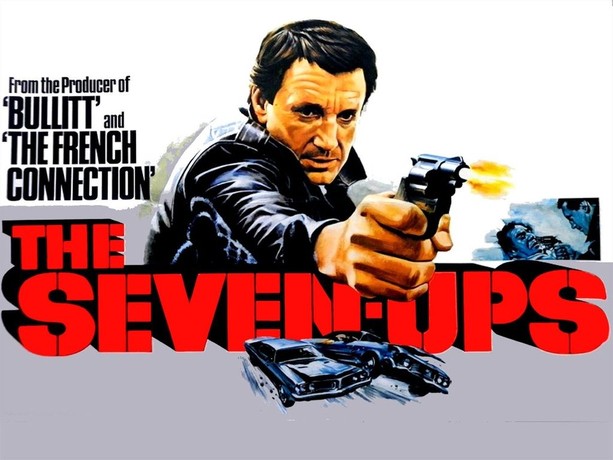
Every Monday night at 9:00 Central Time, my wife Sierra and I host a “Live Movie Tweet” event on X using the hashtag #MondayMuggers. We rotate movie picks each week, and our tastes are quite different. Tonight, Monday February 24th, we’re watching THE SEVEN-UPS starring Roy Scheider, Tony Lo Bianco, Ken Kercheval, Richard Lynch, and Bill Hickman.

THE SEVEN-UPS is about an elite New York City police unit, led by detective Buddy Manucci (Roy Scheider). The unit is nicknamed the “seven-ups” based on their ability to secure convictions and jail sentences of 7 years and up. While working a job, one of his fellow seven-ups is killed, and Buddy will do anything to find the men who did it.

I wrote a full review of THE SEVEN-UPS just last week because it’s truly a great movie and features one of the best car chase sequences ever put on film. Rather than repeat a lot of those same facts, I’m including a link to my review below, which also includes the trailer for the film:

So, join us tonight for #MondayMuggers and watch THE SEVEN-UPS! It’s on Amazon Prime.

THE SEVEN-UPS (1973) – Roy Scheider in a gritty 70’s cop thriller!


I’m guessing it started with JAWS (1975) and JAWS 2 (1978) since they played often on Fox-16 out of Little Rock when I was a kid, but I’ve been a fan of actor Roy Scheider for as long as I can remember. He’s one of those actors who has his own section in my massive collection of physical movie media. I’ve read about every film he’s ever made, and I’ve watched most of them. Surprisingly, THE SEVEN-UPS is the first Roy Scheider film I’ve written about on The Shattered Lens. 

NYPD detective Buddy Manucci (Roy Scheider) leads a team of elite cops, known as the “seven-ups.” They’ve acquired this nickname because most of the criminals they arrest receive sentences that are 7 years and longer, which makes their superiors on the force very happy. Granted, the team does use a variety of unorthodox methods to find and arrest the criminals, which can also rub their superiors and some of their fellow cops the wrong way. Buddy’s childhood friend Vito Lucia (Tony Lo Bianco), an undertaker by trade who has his finger on the pulse of the criminal activities in his community, serves as an important snitch for the team, with his information often leading to major busts. Unbeknownst to Buddy, prominent members of various organized crime families and other white-collar criminals start getting kidnapped and held for ransom in the community. Buddy’s unaware of the full extent of the kidnappings, but he asks his old friend / snitch Vito about this when he actually witnesses the abduction of a crooked bail bondsman he’s following named Festa. We know that Vito is the mastermind behind all of the kidnappings, and his two main henchmen, Moon (Richard Lynch) and Bo (Bill Hickman), are impersonating cops just long enough to confuse and abduct the various criminals. When the Seven-Ups stake out a funeral meeting of various mobsters in the area, squad member Ansel (Ken Kercheval) is killed as part of a screwed-up abduction attempt. Buddy spots Moon and Bo trying to flee the area and tries to chase them down in an incredible car chase that ends when Buddy is almost decapitated in a violent collision with a parked 18-wheeler. With one of their own dead and with the wild chases through the streets, the members of the team are placed on suspension and even investigated as suspects for the kidnappings. Not content to just lay low during their suspensions, the seven-ups continue to try to figure out what’s going on, doing whatever it takes to get the information they need. When Buddy and his group start applying incredible pressure to some of the local mobsters about who shot Ansel, he gets information that ties the killing and the kidnappings to his friend Vito. This time when he meets with Vito, Buddy feeds him false information, thus setting a trap to bring the whole operation down.

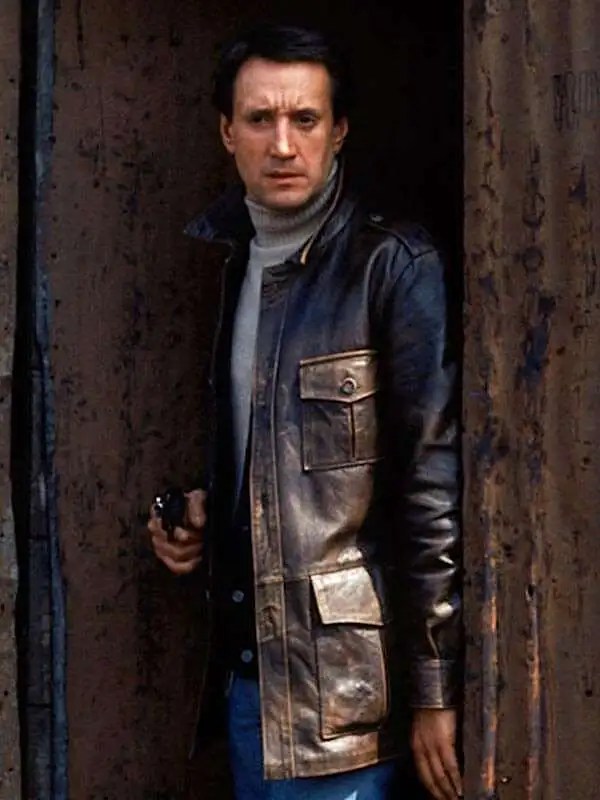
After viewing THE SEVEN-UPS again for the first time in a while, it continues to be my opinion that this movie is severely underrated. It’s a great cop film from the early 70’s, anchored by an excellent lead performance from Roy Scheider, who’s wearing one of the coolest leather jackets in the history of cinema. Coming in hot off the heels of THE FRENCH CONNECTION (1971), and with many connections to the Oscar winner, it seems that somehow this great film has fallen through the cracks over the years. I mean, how often do you hear people talk about this movie? THE SEVEN-UPS is directed by Philip D’Antoni, his only directorial credit, although he did serve as the Producer for both BULLITT (1968) and THE FRENCH CONNECTION. D’Antoni clearly values a good car chase sequence. THE SEVEN-UPS contains a thrilling car chase, which really isn’t that big of a surprise when you learn that stunt coordinator Bill Hickman, who plays the bad guy Bo in this film, coordinated the car chase sequences in BULLITT and THE FRENCH CONNECTION. This film features my personal favorite car chase sequence from any film that I’ve seen to date. Don Ellis composed the memorable musical score, a service that he also provided in THE FRENCH CONNECTION. I point out all of these ties to THE FRENCH CONNECTION because, in my humble opinion, the talent behind that film created another classic in THE SEVEN-UPS. 

Complimenting Roy Scheider’s lead performance, THE SEVEN-UPS has a strong supporting cast. Tony Lo Bianco, Ken Kercheval (of DALLAS fame), Bill Hickman, and Richard Lynch are all quite memorable in their respective roles. I also like the 1973 New York City setting for the film. In movies like this and the following year’s DEATH WISH, we get to see a New York that no longer exists. To me, this only adds to the gritty realism of the film. 

Overall, THE SEVEN-UPS is a movie I recommend without any reservations. If you’re a fan of 70’s cop thrillers, you simply can’t go wrong with this one. 

I share the trailer for THE SEVEN-UPS below:

October True Crime: The Honeymoon Killers (dir by Leonard Kastle)


The 1970 film, The Honeymoon Killers, takes place in the late 40s.  Martha Beck (Shirley Stoler) is an overweight nurse who lives in Alabama with her senile mother (Dortha Duckworth) and her best friend, Bunny (Doris Roberts).  Knowing that Martha is lonely, Bunny signs Martha up for a “lonely hearts club,” which was basically the Tinder and Craig’s List of the pre-Internet age.  Though Martha is initially reluctant, she soon starts to receive letters from a conman named Ray Fernandez (Tony Lo Bianco).  Ray specializes in swindling the women who respond to his letters.  After Ray travels to Alabama and tricks Martha into giving him a “loan,” Ray sends her a letter telling him that he can no longer correspond with her.  Martha responds by getting Bunny to call Ray and tell him that she attempted suicide.

Recognizing Martha as a fellow con artist, Ray invites Martha to his home in New York.  He shows her the pictures that he’s received from other women and reveals how he makes his money.  Martha soon becomes Ray’s partner in crime, traveling across the country with Ray and meeting the women, most of whom are elderly, that Ray has corresponded with.  Ray claims that his name is Charles Martin and that Martha is his sister.  He also swears to Martha that he won’t sleep with any of the women while he’s swindling them.  Even though Martha knows that Ray is a pathological liar, she chooses to believe him whenever he swears that he’s actually in love with her.

The first murder occurs when Martha realizes that one of Ray’s victims is determined to sleep with him.  Martha gives her an overdose of sleeping pills and then Martha and Ray dump her on a bus, where she subsequently dies.  More murders occur, usually due Martha and Ray making sloppy mistakes that reveal their actual plans to their victims.  At first, Ray claims that he’s disgusted with killing and he says that Martha is the one who has to do it because she’s a nurse.  But eventually, Ray shows his true colors.

When talking about The Honeymoon Killers, one has to start by mentioning that this film was nearly Martin Scorsese’s second feature film.  (Fresh out of film school, Scorsese had previously turned a student film, Who’s That Knocking At My Door?, into his feature debut.)  Scorsese was fired from the film because the film’s producers felt that he was taking too long to set up the shots and, according to Scorsese himself, he was only shooting master shots.  That said, there are a few Scorsese-directed scenes to be found in The Honeymoon Killers and they’re pretty easy to spot.  The film opens with a tracking shot of Shirley Stoler walking through her hospital and reprimanding two interns.  I was not surprised to learn that was one of the Scorsese scenes.  After Scorsese left the project, he was replaced by Leonard Kastle, who wrote the script.  The Honeymoon Killers was both Kastle’s directorial debut and his swan song.

The film’s harsh and grainy black-and-white cinematography gives the film a documentary-style feel and while there are moments of dark humor, The Honeymoon Killers is overall a grim movie.  It plays out like a creeping nightmare, one where the viewer knows that there’s something terrible waiting right around the corner.  The bickering between Martha and Ray may occasionally inspire a chuckle, but there’s nothing funny about the murders and the film, to its credit, it totally on the side of Martha and Ray’s victims.  Martha and Ray may look down upon them but the film itself portrays them as being lonely people who are struggling to adjust to a changing world. (In the role of the couple’s second victim, Mary Jane Highby is just heartbreaking.) Ray is a bit of ludicrous figure, with his swagger and his exagerated accent but he’s been able to get away with his crimes because people want him to be the charming gentleman that he claim to be.  Even after Martha discovers who he really is, she still finds herself under the spell of Ray’s con.

Shirley Stoler and Tony Lo Bianco both give excellent performances as Martha and Ray, with Stoler especially doing a good job in the role of Martha.  At first, it’s easy to feel sorry for Martha.  At the start of the movie, she’s just as lonely as any of Ray’s victims.  At the film progresses, Martha’s true self is revealed and yet, as soulless as she can be, her love for Ray is strangely sincere.  As Ray, Tony Lo Bianco is all swagger and charm until he loses control of the situation and he reveals just how spineless he actually is.

The film presents Martha Beck and Ray Fernandez as a couple who became murderers after they found each other.  In reality, it’s suspected that Ray Fernandez murdered at least one woman before he met Martha and it’s also been suggested that Martha killed a few patients while she was working as a nurse.  Ray and Martha were both executed on the same day, going to electric chair on March 8th, 1951.

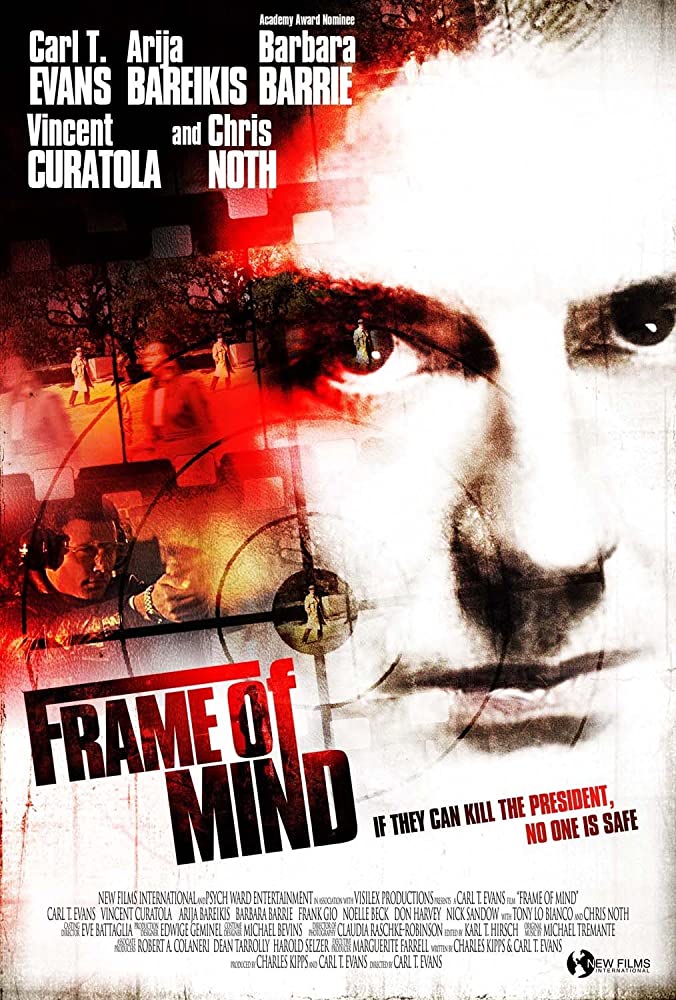
Frame of Mind (2009, directed by Carl T. Evans)


David Secca (Carl T. Evans, who also directed) is a New York cop who has just transferred to a town in New Jersey.  His wife, Jennifer (Arija Bareikis) has a new job as a teacher.  One day, while they’re out antiquing, they purchase a box that contains a roll of film.  Looking at the film reveals pictures of a dangerous looking man who has a gun and who appears to be standing on the infamous grassy knoll in Dallas, Texas.

Convinced that he’s uncovered new evidence in the assassination of John F. Kennedy, Secca carries out his own investigation of the film.  He tracks down the woman (Barbara Barrie) who actually shot the film and discovers that she is now 85 and confined to a nursing home.  He talks to a skeptical conspiracy theorist (Chris Noth).  As Secca investigates, his progress is monitored by people who, after all these years, still don’t want the truth about the Kennedy assassination to get out.  As Secca discovers, these people are still willing to kill to protect the conspiracy.

Frame of Mind is an attempt to make a conspiracy thriller that, unfortunately, is done in by its own low budget.  It’s difficult to make a conspiracy seem convincing when you don’t really have the money to hire more than a few extras.  Probably the most interesting thing about the film is that, despite the low budget, there are a few established actors in the cast.  Along with Barrie and Noth, Tony Lo Bianco, Don Harvey, Vincent Curatola, and even KISS’s Peter Criss all have small roles.  The strangest cameo of all goes to former New York Mayor David Dinkins, who plays a senator.  Being mayor of New York may be a dead end politically (just ask John Lindsay, Rudy Guiliani, Michael Bloomberg, and Bill De Blasio) but it can still serve as a launching pad for a career in the entertainment industry.

Frame of Mind might hold some interest for JFK assassination hobbyists, though it doesn’t really bring anything new to the able.  It’s mostly interesting just to see who shows up in the cast.


Cinemax Friday: Sworn to Justice (1997, directed by Paul Maslak)


Janna (Cynthia Rothrock) is a psychologist who is also a martial arts expert.  One night, she comes home to discover that her sister and her nephew have been murdered and that the killers are still in the house!  Though Janna manages to fight off the attackers, she also gets a nasty bump to the head.  Weeks later, after she’s gotten out of the hospital and she’s ready to get back to work, she discovers that she now has ESP!

All Janna has to do is touch someone or hold something in her hand and she has visions of the past and sometimes the present.  (She has those special ESP powers that do whatever needs to be done at the moment.)  When she finds her sister’s brooch, she flashes back to the night of the attack and sees the faces of the men who attacked her sister.  Using her newfound power, Janna sets out to get revenge.

But even as she tracks down the thugs who killed her sister, Janna still does not know the identity of the person who ordered the hit.  She just knows that he’s known as “The Man.”  Could he have something to do with the arrogant cop killer (Brad Dourif!) for whom Janna is serving as an expert defense witness?  Or could The Man by the publisher (Kurt McKinny) with whom Janna is having a steamy affair?  (This was a late night Cinemax film, after all.)  Or could it be the detective (Tony Lo Bianco) who is supposed to be investigating her sister’s death?

As far as Cynthia Rothrock martial arts films are concerned, Sworn to Justice is pretty good.  Rothrock was not only a force to be reckoned with in fight scenes but, as this film shows, she was a likable actress, too.  For the most part, she’s able to hold her own even when acting opposite seasoned scene stealers like Brad Dourif, Tony Lo Bianco, Mako, and even Walter Koenig, who plays Janna’s mentor with an outrageous German accent.  While the film’s fight scenes are just as good as you would expect from a Cynthia Rothrock fick, the ESP twist adds just the right amount of weirdness to keep Sworn to Justice from coming across as just another low-budget martial arts film.  The film doesn’t take itself too seriously.  Even while she’s getting revenge for their deaths, Janna never seems to be that broken up over the deaths of her sister and her nephew.  At worse, she’s seems to be annoyed by the inconvenience of it all.  It’s just something else that she has to find the time to deal with.

There are a few scenes that are so darkly lit that it’s almost impossible to see what’s happening but then there are other scenes, like the one where Janna shows off her favorite martial arts moves to her new boyfriend, that work surprisingly well.  This is a 90s production all the way, which means a saxophone-scored sex scenes and synthesizer-scored action scenes.  Sworn to Justice is a good Cynthia Rothrock film, even if most audiences will end up figuring out the identity of The Man long before she does.