4 Shots From 4 Films is just what it says it is, 4 shots from 4 of our favorite films. As opposed to the reviews and recaps that we usually post, 4 Shots From 4 Films lets the visuals do the talking!
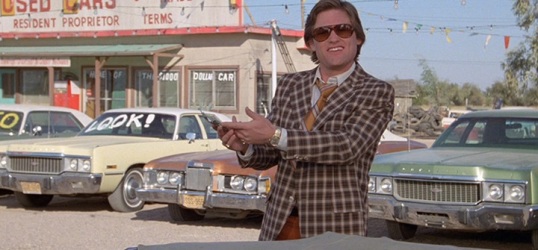
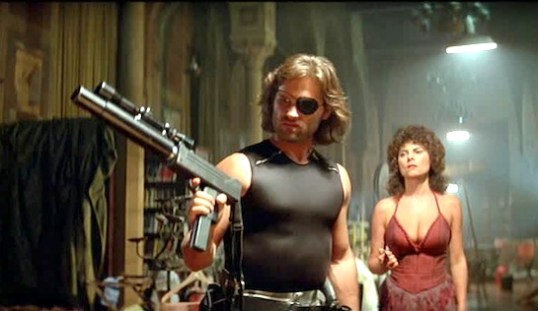
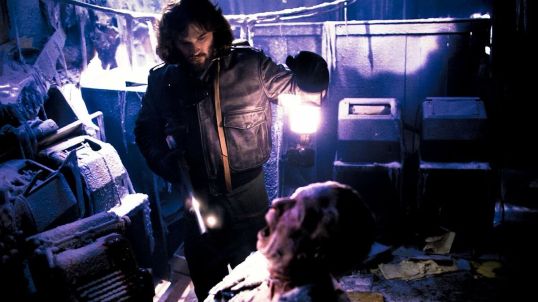
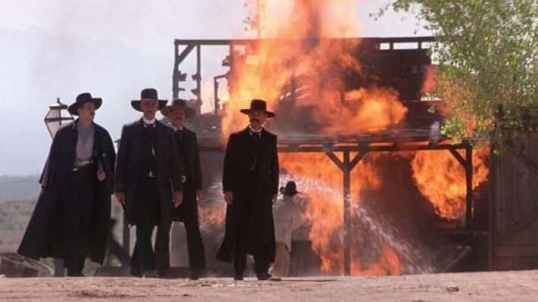
Today, we wish a happy birthday to the great Kurt Russell! Last year, we pretty much reviewed every Kurt Russell films that we could find. It was a great day. This year, we cannot let the day pass without offering up….
4 Shots From 4 Kurt Russell Films
Used Cars (1980, dir by Robert Zemeckis, DP: Donald M. Morgan)
Escape From New York (1981, dir by John Carpenter, DP: Dean Cundey)
The Thing (1982, dir by John Carpenter, DP: Dean Cundey)
Tombstone (1993, dir by George Pan Cosmatos (and Kurt Russell), DP: William Fraker)
Though the Academy of Motion Picture Arts and Sciences claim that the Oscars honor the best of the year, we all know that there are always worthy films and performances that end up getting overlooked. Sometimes, it’s because the competition too fierce. Sometimes, it’s because the film itself was too controversial. Often, it’s just a case of a film’s quality not being fully recognized until years after its initial released. This series of reviews takes a look at the films and performances that should have been nominated but were, for whatever reason, overlooked. These are the Unnominated.
I have come around on Tombstone.
The first time I watched this 1993 film, I was a bit confused as to why so many of my friends (especially my male friends) worshipped the film. To me, it was a bit too messy for its own good, an overlong film that told a familiar story and which featured so many characters that it was difficult for me to keep track of them all. Perhaps because everyone I knew loved the film so much, I felt the need to play contrarian and pick out every flaw I could find.
And I still think those flaws are there. The film had a troubled production, with original director Kevin Jarre falling behind in shooting and getting replaced by George Pan Cosmatos, a director who didn’t have any real interest in the material and whose all-business approach rubbed many members of the cast the wrong way. Kurt Russell took over production of the film, directing the actors and reportedly paring down the sprawling script to emphasize the relationship between Russell’s Wyatt Earp and Val Kilmer’s Doc Holliday. On the one hand, this led to a lot of characters who really didn’t seem to have much to do in the finished film. Jason Priestley’s bookish deputy comes to mind. On the other hand, Russell was right.
The film’s heart really is found in the friendship between Wyatt and Doc. It doesn’t matter that, in real life, Wyatt Earp was hardly as upstanding as portrayed by Kurt Russell. It also doesn’t matter that the real-life Doc Holliday was perhaps not as poetic as portrayed by Val Kilmer. Today, if you ask someone to picture Wyatt Earp, they’re probably going to picture Kurt Russell with a mustache, a cowboy hat, and a rifle. And if you ask them to picture Doc Holliday, they’re going to picture Val Kilmer, sweating due to tuberculosis but still managing to enjoy life. Did Doc Holliday every say, “I’ll be your huckleberry,” before gunning someone down? He might as well have. That’s how he’s remembered in the popular imagination. And it’s due to the performances of Russell and Kilmer that I’ve come around to eventually liking this big and flawed western. With each subsequent viewing, I’ve come to appreciate how Russell and Kilmer managed to create fully realized characters while still remaining true to the Western genre. If Wyatt Earp initially fought for the law, Doc Holliday fought for friendship. Kilmer is not only believable as a confident gunslinger who has no fear of walking into a dangerous situation. He’s also believable as someone who puts his personal loyalty above all else. He’s the type of friend that everyone would want to have.
That said, I do have to mention that there are a lot of talented people in the cast, many of whom are no longer with us but who will live forever as a result their appearance here. When Powers Boothe delivered the line, “Well …. bye,” he had no way of knowing that he would eventually become a meme. Boothe is no longer with us, I’m sad to say. But he’ll live forever as long as people need a pithy way to respond to someone announcing that they’re leaving social media forever. Charlton Heston appears briefly as a rancher and he links this 90s western with the westerns of the past. Robert Mitchum provides the narration and it just feels right. The large ensemble cast can be difficult to keep track of and even a little distracting but there’s no way I can’t appreciate a film that manages to bring together not just Russell, Kilmer, Boothe, Heston, and Mitchum but also Sam Elliott, Bill Paxton, Michael Biehn, Michael Rooker, Billy Bob Thornton, Frank Stallone, Terry O’Quinn, and even Billy Zane! The female roles are a bit underwritten. Dana Delaney is miscast but Joanna Pacula feels exactly right as Doc Holliday’s lover.
But ultimately, this film really does belong to Val Kilmer. When I heard the sad news that he had passed away last night, I thought of two films. I thought of Top Gun and then I thought of Tombstone. Iceman probably wouldn’t have had much use for Doc Holliday. And Doc Holliday would have resented Iceman’s attitude. But Val Kilmer — that brilliant actor who was so underappreciated until he fell ill — brought both of them to brilliant life. In the documentary Val, Kilmer attends a showing of Tombstone and you can say he much he loves the sound of audience cheering whenever Doc Holliday showed up onscreen.
Tombstone was a flawed film and 1993 was a strong year. But it’s a shame that Val Kilmer was never once nominated for an Oscar. Tombstone may not have been a Best Picture contender but, in a year when Tommy Lee Jones won the Oscar for Best Supporting Actor for his role in the similarly flawed The Fugitive, it seems a shame that Kilmer’s Doc Holliday was overlooked.
Tombstone (1993, dir by George Pan Cosmatos (and Kurt Russell), DP: William Fraker)
4 Or More Shots From 4 Or More Films is just what it says it is, 4 shots from 4 of our favorite films. As opposed to the reviews and recaps that we usually post, 4 Shots From 4 Films lets the visuals do the talking!
Today, we celebrate the birth of director George Pan Cosmatos! It’s time for….
4 Shots From 4 George Pan Cosmatos Films
Rambo: First Blood Part II (1985, dir by George Pan Cosmatos, DP: Jack Cardiff)
Cobra (1986, dir by George Pan Cosmatos, DP: Ric Waite)
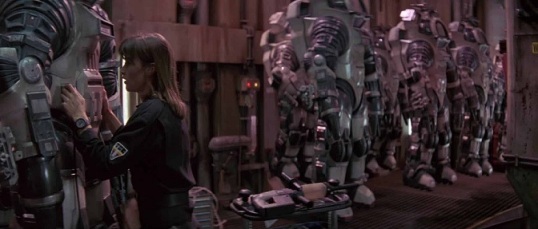
Leviathan (1989, dir by George Pan Cosmatos, DP: Alex Thomson)
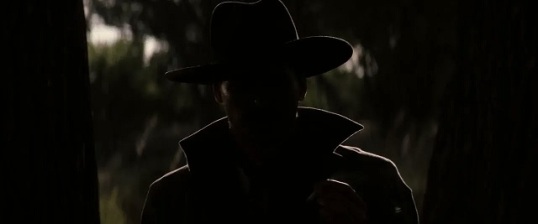
Tombstone (1993, dir by George Pan Cosmatos (and Kurt Russell), DP: William Fraker)
4 Or More Shots From 4 Or More Films is just what it says it is, 4 shots from 4 of our favorite films. As opposed to the reviews and recaps that we usually post, 4 Shots From 4 Films lets the visuals do the talking!
Today, we celebrate the birth of director George Pan Cosmatos! It’s time for….
4 Shots From 4 George Pan Cosmatos Films
Rambo: First Blood Part II (1985, dir by George Pan Cosmatos, DP: Jack Cardiff)
Cobra (1986, dir by George Pan Cosmatos, DP: Ric Waite)
Leviathan (1989, dir by George Pan Cosmatos, DP: Alex Thomson)
Tombstone (1993, dir by George Pan Cosmatos, DP: William Fraker)
Weekend was busy, but still found time to catch a few favorite flicks on TV. One of these happened to be the classic early 90’s western Tombstone starring Kurt Russell and Val Kilmer. I already profiled my favorite scene from this film awhile back, but as I watched the film again I realized there was another sequence that totally made the film for me.
So, the latest “Scenes I Love’ once again comes from Tombstone and it does a great job in showing the darker and vengeful side of Wyatt Earp as played by Kurt Russell. The first scene I loved about this film was more about the cool, calm and badass Wyatt Earp who can spot a bullshitter, blowhard, coward from a miles away. This scene shows Earp in his scary, God’s Wrath mode as he begins his vendetta ride against the Clantons and the Cowboys.
Just love the look of fire and brimstone from Russell’s eyes as he confronts a cowed Ike Clanton and lets him know what he has planned for his clan and group. Better yet, in addition to Kilmer’s Doc Holliday, we also see a younger Michael Rooker aka Merle Dixon. He plays one of the members in Earp’s posse.
Occasionally, I like to do a little thing that I call “Let’s second guess the Academy.” This is when we look at the films that have won Academy Awards in the past and we ask ourselves, “Should that film have won?”
For this latest edition of Let’s Second Guess the Academy, let’s take a look at 1993. The 1993 Academy Awards were dominated by Schindler’s List. Steven Spielberg’s powerful Holocaust drama won both best picture and best director. It remains the film by which all other Holocaust dramas are judged.
But did Schindler’s List deserve to win? Or would you have preferred to see one of the other four nominees win the title of Best Picture of 1993? Let us know by voting below!
Now, here comes the fun part. Let’s say that Spielberg never got around to directing Schindler’s List. And maybe The Piano never played in the states and The Fugitive bombed at the box office. Let’s say that none of the five best picture nominees had been eligible to be nominated in 1993. Which five films would you have nominated in their place?
Below, you can vote for up to five alternative nominees.
Kurt Russell I consider one of the biggest badasses of Hollywood and his work in 1993’s Tombstone showed just how much a badass he was and still is.
This scene from that film was one of the best scenes in the entire film. It shows Russell channeling his inner-Wyatt Earp and bitchslapping Billy Bob Thornton (who probably deserves it both in and out of this film). I just love how his demeanor was so confident and how well he judged Thornton’s character as nothing but a blowhard and a bully. This scene even has some killer lines from Russell. How often have we wished we could do what he did in this scene to our own douchebag bosses at work. I know I have imagined it many times.
One cool thing about this scene is how it doesn’t end in the saloon, but continues outside with Val Kilmer just killing it as Doc Holliday. Love how Doc and the Earp’s just ignore Thornton’s Johnny Tyler and how he just stands there looking like the idiot he is. Good thing he said thank you in the end or he may have just gotten another bitchslap session from Wyatt.
Some people love this film. Some people don’t like this film, but I’d be hardpressed to find anyone who didn’t think this scene was the epitome of cool and badassery.
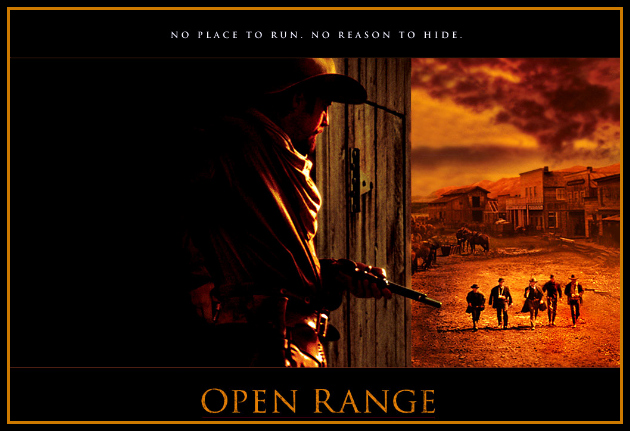
2003 marked a sort of a small comeback for Kevin Costner both as a director and as an actor. The work in question was the very well-done Western, Open Range. Open Range was a moderately budgeted film which has more in common with Costner’s first directorial work, Dances with Wolves than his last big-budget flop, The Postman.
The film was an adaptation of the Lauran Paine novel, The Open Range Men, and it captures much of the themes found in the novel. This was probably due to the fact that screenwriter Craig Storper didn’t deviate from the novel’s basic story. There were no superfluous action sequences and gunfights to ratchet up the action. Everything about Open Range was about the gradual and inevitable final confrontation between the “free-grazers” and the “barbed-wire” men. The free-grazers were played by Kevin Costner and Robert Duvall as Charles Waite and Boss Spearman, respectively. On the other side of the conflict was Michael Gambon playing Denton Baxter, the ruthless land-baron whose attempt to keep the free-grazers from grazing on his land also hides another agenda. Caught in-between these two strong-willed groups were the people in the town Baxter pretty much controls through his “town marshal” (played with fake bravado by James Russo) and the herd helpers under Boss Spearman’s employ.
The theme of freedom to roam the open country versus the rights of a landowner echoes throughout the film. Set in the latter end of the 19th-century, Open Range shows the clash of the more natural ways of the Old West slowly eroding to be replaced by the more industrial, monopolistic practices that became prevalent during the 1880’s, also known in US History as the Gilded Age. Even the personalities of the conflicting characters mirror this theme as the free-grazers only want to use the land as it has been used for years upon years and thats sharing between all men of the West. The land-baron has other ideas in mind and everything boils down to him owning everything around him, even if it means using ruthless tactics to gather even more property.
Open Range also has a bit of modernism in its subplot of Charley Waite’s growing attraction to the sister of the town doctor and the same sister’s well-rounded characterization. It’s not often that a traditional Western shows women in a very positive light instead of the usual submissive and stay-at-home characters of Western’s past. This could also be attributed to the wonderful, underrated performance by Annette Bening who plays Sue Barlow, the doctor’s sister and Charley Waite’s love interest. Bening doesn’t play Sue as the traditional Western female. She also doesn’t go overboard and turn Sue into a 20th-century feminist. She instead plays the character as someone who knows her place in the world, but also one who is strong-willed and willing to stand for what is right.
Open Range was a wonderful throwback to what made such modern Westerns like Unforgiven and Tombstone such a success both for traditionalists and new fans. Kevin Costner’s direction was very low-key. Allowing the story to tell itself at its own pace until the final confrontation. The final gunfight in the end gets a lot of well-earned attention from critics and fans. The entire sequence takes at least 10-15 minutes from start to finish. The fight itself was done in a realistic fashion. There was no sharpshooter dead-eyes in this film, but individuals who had skill but still missed. It was a fight where it wasn’t who was the fastest, but who was the calmest under fire. There’s also a suddenness to the brutality in the final gunfight that demystifies the old-style Western shootouts of past. Some complained that the film was very slow and took too long to get to the “good stuff”, but I actually thought the gradual pacing of most of the film’s length gave the final confrontation even more impact. Costner seem to have learned the lesson all good directors know: less means more.
Open Range won’t go down as a great piece of film making. It surely won’t go down as one of the best in history. What Open Range did accomplish was putting the Western back to its epic and majestic roots, but at the same time keeping the intimacy of a character-driven story. In time, Open Range would probably go down as one of the underrated gems of the last decade and find a place next to its closest comparison, Unforgiven, as one of the best Westerns of the new era.



 Through the Shattered Lens