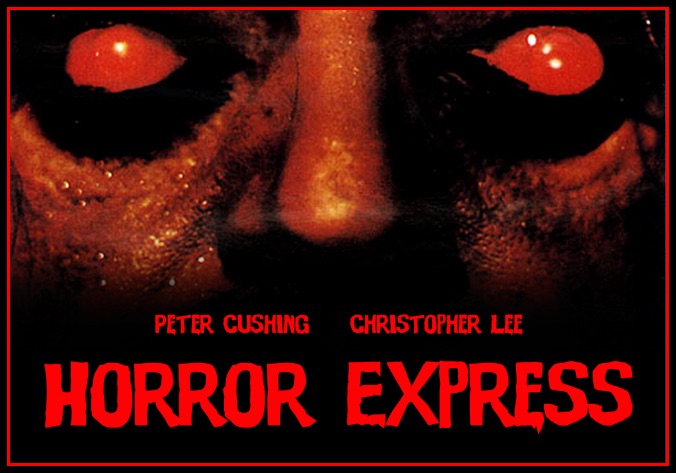
Horror Review: Horror Express (dir. Eugenio Martin)


There was one film I saw when I was very young that absolutely terrified me, and even now, decades later, it still has the power to unsettle me and rob me of sleep. That film is Horror Express, a 1972 Spanish-British horror/science fiction hybrid directed by Eugenio Martín. It brought together two titans of gothic horror cinema, Christopher Lee and Peter Cushing—icons of the Hammer Films era—while also featuring Telly Savalas in a sadistic, scene-stealing turn as a volatile Cossack captain.

When Horror Express was released, the horror genre was at a fascinating crossroads. The gothic traditions popularized by Hammer Studios throughout the 1960s were beginning to fade, overtaken by the grittier, bloodier styles of filmmakers like Herschell Gordon Lewis and George A. Romero. By 1968, Romero’s Night of the Living Dead had already shifted the genre toward a darker, more nihilistic tone, paving the way for the grislier excesses that would dominate the 1970s. Martín’s film stood out precisely because it clung to the elegance and atmosphere of Hammer’s gothic aesthetic while incorporating moments of shocking violence and morbid detail. It occupied an unusual in-between space: refined in look and tone yet unnerving in its thematic brutality. Its blend of period atmosphere, science fiction paranoia, and restrained gore made it a fascinating transitional work in horror history.

The premise is simple but chilling. Aboard the Trans-Siberian Express, a British anthropologist (Christopher Lee’s Professor Saxton) transports a recently unearthed specimen—an ape-like, fossilized creature. His colleague, Peter Cushing’s Dr. Wells, becomes reluctantly entangled in the unfolding mystery. Predictably, the specimen is not what it seems; it revives and begins unleashing a series of violent attacks on the passengers. Soon it is revealed to harbor a far more terrifying, alien intelligence capable of killing and inhabiting its victims. This leads to one of the film’s most haunting sequences: the white-eyed, zombie-like corpses, drained of memories and humanity, shambling through the train corridors under the entity’s control. At eight years old, these images struck me as some of the most horrifying I had ever seen, and even today their uncanny blend of gothic atmosphere and science fiction body horror still lingers.

Viewed in retrospect, Horror Express bears a striking resemblance to John W. Campbell’s novella Who Goes There?—the basis for Howard Hawks’ The Thing from Another World and John Carpenter’s The Thing in 1982. Like those stories, it is steeped in paranoia, playing with the idea of an alien intelligence that can absorb knowledge and animate the dead. While it never attains the precision of Carpenter’s later masterpiece, it foreshadows that same blend of claustrophobia, distrust, and escalating dread.

What makes Horror Express unforgettable is its restraint. Rather than leaning on gore, it generates fear through suggestion, atmosphere, and disturbing imagery. The snowy isolation of the Trans-Siberian route reinforces the cold sterility of its alien invader, while the confined train cars become a claustrophobic prison of escalating terror. Over time, the film has slipped into the public domain, making it widely available on streaming platforms and budget DVDs. Though often overlooked in surveys of 1970s horror, it deserves recognition as one of the last great gothic horror films before the torch passed to Craven, Carpenter, and Hooper.

For me, Horror Express remains not just a childhood scare but a cinematic touchstone: a rare piece of science fiction horror bridging two eras, one that manages to terrify without relying on excess gore. It disturbed me at age eight, and even now, watching the blank-eyed corpses lurch through the dim train cars still triggers that same visceral shiver.

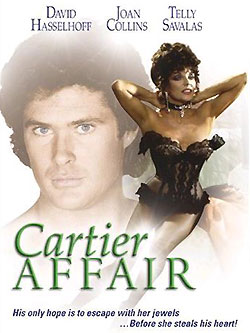
Made-For-TV Movie Review: The Cartier Affair (dir by Rod Holcomb)


In 1984’s The Cartier Affair, David Hasselhoff plays Curt Taylor.  He has spent the last few years in prison, having been convicted of selling deeds to fake oil wells.  He has passed the time by watching a soap opera that stars actress Cartier Rand (Joan Collins).  He has also managed to get in debt to the local prison mob boss, Phil Drexler (Telly Savalas).

When Curt learns that he’s being released from prison, Drexler informs him that he’s still expected to find a way to pay off his debt.  On the outside, Curt discovers that even his parole officer (Ed Lauter) works for Drexler!  Curt is assigned to become the private secretary of Cartier Rand and to steal her jewelry.  In order to get the job, Curt has to pretend to be gay.  That’s the only way that Cartier’s boyfriend (Charles Napier) would be willing to accept the idea of a male private secretary.

(Wouldn’t it just be simpler for Curt to rob a bank or something?)

Once he’s a part of the household staff, Curt discovers that Cartier is more than just the star of his favorite soap opera.  She’s someone who is tired of reciting melodramatic dialogue and kissing her co-stars.  She has serious ambitions.  Curt is immediately attracted to her and soon, Cartier is attracted to Curt.  But, of course, Curt is pretending to be gay and, to his horror, Cartier sets Curt up with one of her gay friends.

Meanwhile, the bad guys want their money….

The first half of the film is taken up by scenes of people mistaking Curt for being gay and there are more than a few moments and jokes that a film wouldn’t be allowed to get away with today.  A scene where Curt finds himself in a gay bar is cringey because, rather than asking us to laugh at Curt for panicking about finding himself in the rather innocuous location, the film asks us to instead laugh at the sight of men slow-dancing with other men.  Early on in the film, there’s a few scene where Hasselhoff overplays his attempts to come across as being gay.  Fortunately, Hasselhoff soon stops doing that and his performance improves as the film goes on.

The film gets slightly better during the second half, when Cartier learns the truth about Curt and the two of them somewhat implausibly go on the run from the bad guys.  They end up getting chased out to the desert, trading one-liners all the way, and I do have to admit that Collins and Hasselhoff displayed a surprising amount of chemistry during those scenes.

The film is tonal mishmash that doesn’t really work.  It tries to parody the type of soap operas that made Cartier Rand a star and it also tries to be a relatively exciting chase film but it keeps getting bogged down in plot points that ultimately feel rather superfluous.  My main issue that, if Drexler really wanted to get him money from Curt, it seems like he would have come up with a less complicated scheme, like robbing a bank or fencing stolen goods or something like that.  Instead, Curt is supposed to go undercover, pretend to be gay, and rob one of the most famous women on the planet.  I mean, Hell, he could have just broken into a jewelry store and gotten it all done in one night.  That said, Hasselhoff and Collins have a bit of charm to them.  It’s a shame they didn’t co-star in a better film.

Film Review: Kelly’s Heroes (dir by Brian G. Hutton)


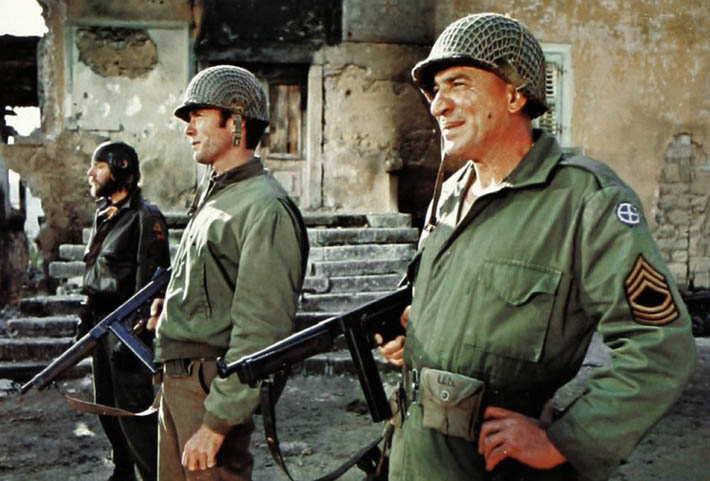
1970’s Kelly’s Heroes takes place in France during the Second World War.  The American army is moving through the country, liberating it town-by-town.  Private Kelly (Clint Eastwood) is a former lieutenant who was busted down in rank after leading a disastrous raid on the wrong hill.  (It was the fault of the generals but Lt. Kelly was set up as a scapegoat.)  When Kelly learns that the Germans are hiding a huge amount of gold in an occupied town, he gathers together a team of weary soldiers, misfits all, and plans to go AWOL to steal the gold for themselves.

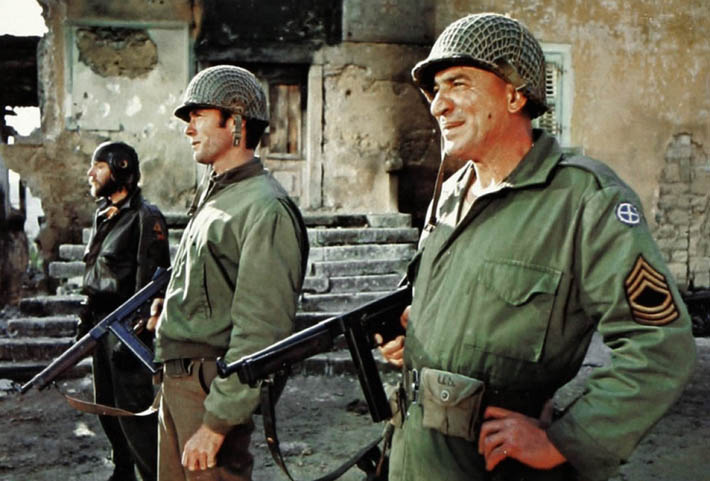
Kelly’s Heroes was one of the big budget studio films that Eastwood made after finding stardom in Europe with Sergio Leone’s Spaghetti westerns.  This is very much an ensemble film, in the vein of The Dirty Dozen.  Indeed, Eastwood’s co-star, Telly Savalas, was in The Dirty Dozen.  Here, Savalas plays Big Joe, the sergeant who isn’t sure that he wants to put his men in danger for gold that may or may not exist.  Don Rickles plays Crapshoot who is …. well, imagine Don Rickles in the middle of World War II and you have a pretty good idea of who Crapshoot is.  Stuart Margolin, Harry Dean Stanton, Perry Lopez, Gavin MacLeod shows up as soldiers.  Carroll O’Connor plays the bombastic general who mistakes Kelly’s attempts to go AWOL for a brilliant tactical maneuver,  Like all of the senior officers in this film, O’Connor’s general is a buffoon.  Kelly’s Heroes was made during the Vietnam War and, much like Patton (released the same year), it attempts to appeal to both the establishment and the counterculture by making the heroes soldiers but their bosses jerks.

And that brings us to Donald Sutherland, who plays a tank commander named Oddball.  You may not have know this but apparently, there were hippies in the 40s!  Actually, I don’t think that’s true but there’s really no other way to describe Oddball than as a Hollywood hippie.  He’s a blissed-out, spacey guy who thinks nothing of accidnetally driving his tank through a building.  The films ask us to believe that the long-haired and bearded Oddball is a World War II tank commander and Sutherland is such a likable presence that it’s temping to just go with it.  Oddball was obviously included to bring in “the kids” but he does generate some needed laughs.  This is a very long movie and the comedic moments are appreciated.

Kelly’s Heroes is two-and-a-half hours long and it definitely could have been shorter.  Director Brian Hutton allows some scenes to drag on for a bit too long and he sometimes struggles to balance the moments of comedy with the moments of violent drama (quite a few character dies) but he does get good performances from his ensemble.  Eastwood’s taciturn acting style is nicely matched with Savalas’s more expressive style and it’s hard not smile at Don Rickles, insulting everyone as if they were guests at Joe Gallo’s birthday party.  The film, at times, doesn’t seem to know if it wants to be a satire or a straight heist film but the cast keep things watchable.  Eastwood even gets to show a few hints of the dry sense of humor that always hid behind the perpetually bad mood that often seemed to hang over him in his early films.  Whatever flaws the film may have, it was a box office success.  One year after this release of Kelly’s Heroes, Eastwood would make history as Dirty Harry.

VIOLENT CITY (1970) – starring Charles Bronson, Telly Savalas & Jill Ireland!


VIOLENT CITY opens with Jeff Heston (Charles Bronson) and Vanessa Shelton (Jill Ireland) living it up on a tropical island. They boat, they make love, and then spend some time enjoying the local island culture. Unfortunately, this is all a mirage and Jeff can’t escape the effects of his day job, that of a professional assassin. Soon a group of men are after him in a high speed chase on the narrow streets of paradise. Just when he thinks he’s gotten away, he’s double crossed and shot by his former associate, Jerry. Even worse, Vanessa gets in the car with Jerry and the two speed off. Waking up in jail, Jeff is visited by Steve (Umberto Orsini), the lawyer of his former boss Weber (Telly Savalas). Steve and Weber want him to come back and work for their organization. Jeff is more interested in finding Jerry and Vanessa, so when he finally gets out of jail, he turns their job offer down and continues on his odyssey into New Orleans. Jerry’s not too hard to find because he’s a professional race car driver. Jeff goes to his next race and shoots his tire out from long distance with a high powered rifle and watches as his car explodes in flames of death! Vanessa’s not so easy, not because he can’t find her, but because he loves her. He’d much rather make love to her than kill her, so that’s exactly what he does a couple of more times when he locates her. Even when he finds out she’s actually married to Weber, she’s able to convince Jeff that she only married him so she could be safe and that she despises him. She convinces Jeff that for them to be happy together that he should kill Weber. Does she really love him, or is she just using his badassery again? 

In honor of Jill Ireland’s birthday (April 24, 1936), I thought I’d review a Charles Bronson film that features a strong performance from his beautiful wife. And speaking of beautiful, she has never been any more beautiful than she is in VIOLENT CITY. I mentioned earlier that the film opens in a tropical paradise. Let’s just say that Bronson and Ireland are in peak physical condition and absolutely striking as they walk the island streets. With his chiseled features and mustache, Bronson is the perfect image of masculinity. With her blonde hair, curvaceous figure and perfect tan, she’s a vision of feminine beauty. Bronson’s Jeff Heston is as tough as it gets, and we soon find out that no man can get the better of him. It’s a tribute to Ireland’s performance that we don’t necessarily blame him for continuing to give her second and third chances, even to his own peril. And she saves her best work for the end, when we all find out that she has more going for her than just beauty. 

VIOLENT CITY was directed by the Italian filmmaker Sergio Sollima, whose other credits include the excellent spaghetti western, THE BIG GUNDOWN with Lee Van Cleef, and the solid “Polizziotteschi” crime film REVOLVER, with Oliver Reed. He gets more sensual performances from the stars than we’d get in future years, as they do lots and lots of loving on each other throughout the course of the film. The musical score is from the master composer himself, Ennio Morricone. It’s not quite ONCE UPON A TIME IN THE WEST level, but it’s really good stuff and quite memorable. If I had one complaint it would be that I wish Telly Savalas had more screen time as Weber. His character added life to the film whenever he appeared. He could be a real asshole, but he seemed to have a lot of fun, and he makes one hell of a cocktail (the moonlight passion)!

My final word on VIOLENT CITY is that it’s a solid Italian crime film, with a lean, mean Bronson, good action sequences, and a more than adequate Jill Ireland as a beautiful femme fatale. I certainly recommend it. Happy Birthday, Jill! 

VIOLENT CITY was initially released in America under the name THE FAMILY in hopes of drafting off the THE GODFATHER. See the trailer below.

Happy Birthday in heaven, Telly Savalas! Who loves ya, baby??


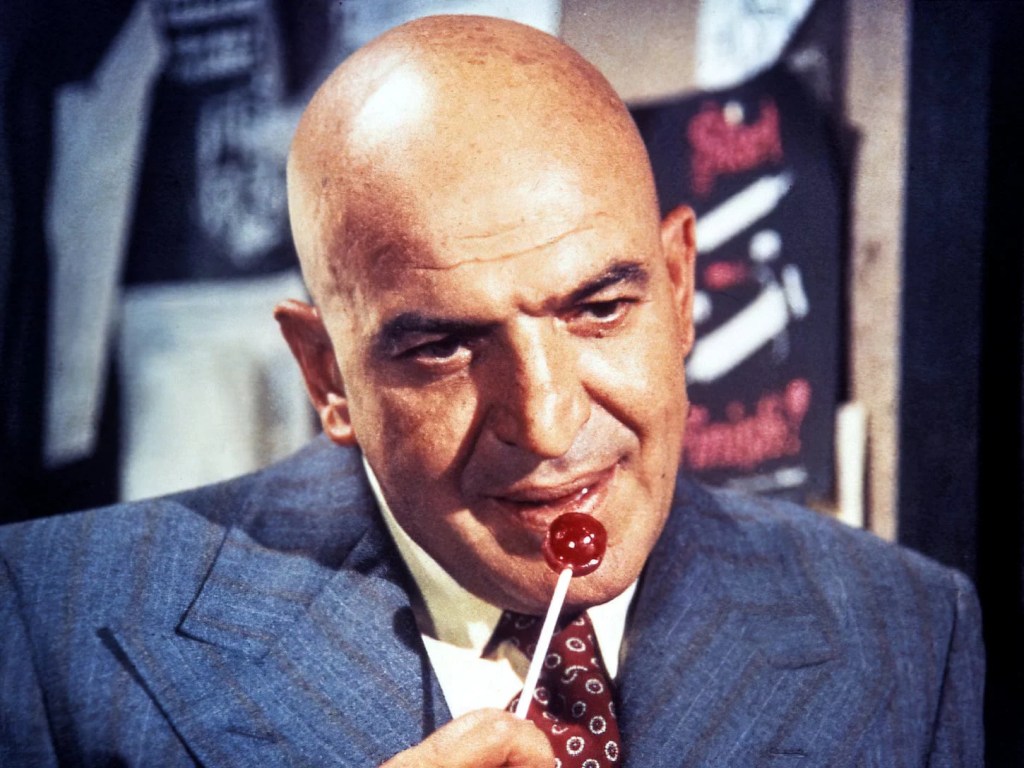
Telly Savalas was born on January 21, 1922 and he died on January 22, 1994. When I think of Savalas, I first think of his most famous character, KOJAK (1973-1978).

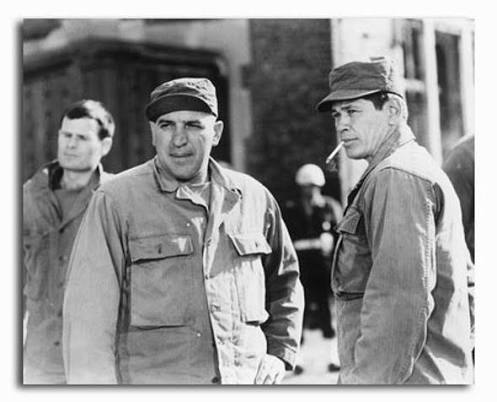
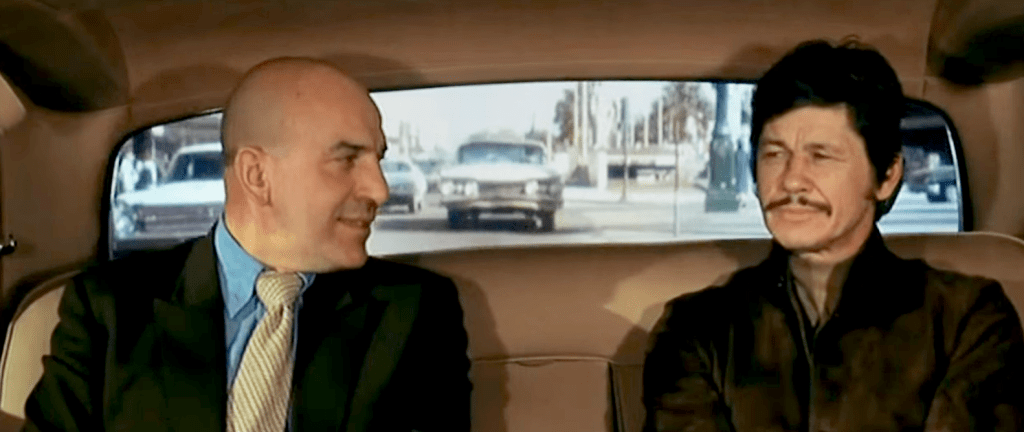
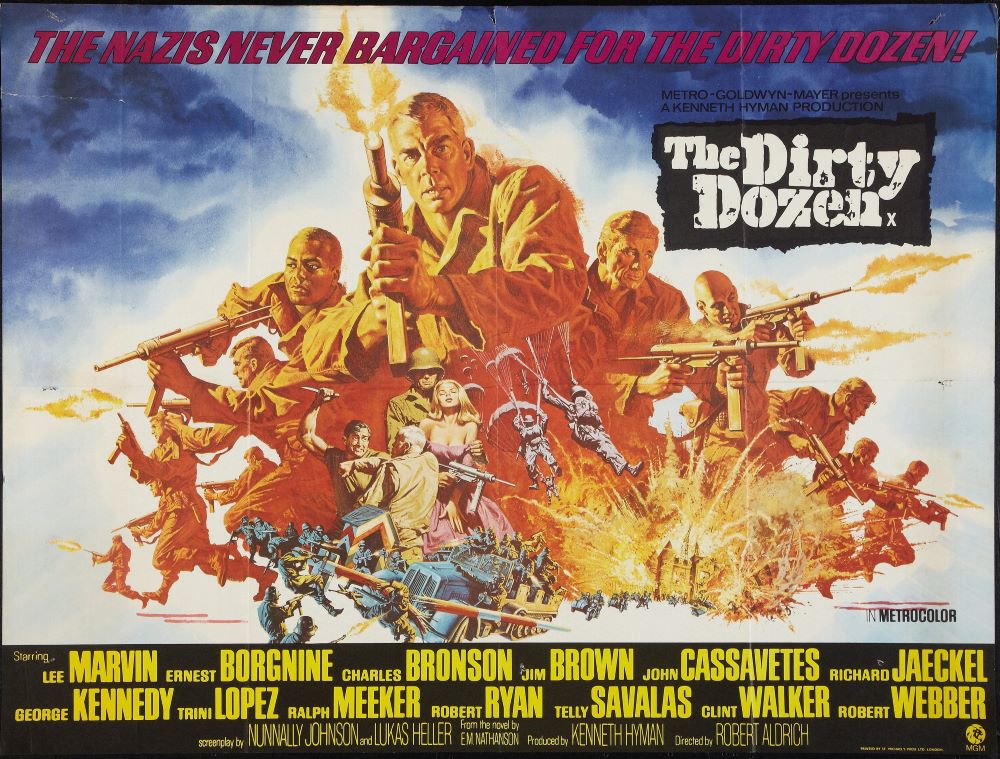
After that I think of his work with my movie hero, Charles Bronson. They worked together on THE DIRTY DOZEN (1967) and VIOLENT CITY (1970). They were also in the BATTLE OF THE BULGE (1965), but they didn’t share any scenes together. I’ll always remember Savalas in the movie KELLY’S HEROES (1970). This was one of my son’s favorite movies when he was growing up. He watched it constantly.

Based on this work, Telly Savalas will always be one of my favorite actors! Happy birthday, sir, and thanks for countless hours of entertainment in my life!

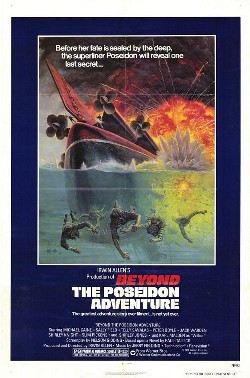
Lisa Marie’s First Review of 2025: Beyond the Poseidon Adventure (dir by Irwin Allen)


On New Year’s Eve in 1972, a tragedy struck in the Aegean Sea.  Just as the clock hit midnight and its passengers wished each other a happy new year, the cruise ship Poseidon was capsized by a tidal wave.  The majority of the ship’s crew and passengers were killed in the disaster but a small group managed to climb up through the wreckage and make their way to the ship’s hull, where they were rescued.  Gene Hackman sacrificed his life so that Ernest Borgnine, Red Buttons, Jack Albertson, Carol Lynley, and Pamela Sue Martin could all survive.

We all know the story of The Poseidon Adventure and some of us have even been goaded by our sisters into singing There’s Got To Be A Morning After for karaoke night at Grandpa Tony’s.  (Grandpa Tony’s has since shut down but, for a while, it was the best place in Dallas for nachos and karaoke.)  But do you know the story of what happened after that initial group of survivors was rescued from the ship?  Have you gone Beyond The Poseidon Adventure?

First released in 1979, Beyond The Poseidon Adventure picks up directly from where the first film ended.  Mere minutes after the rescue helicopter flies off, a tugboat pulls up alongside the still capsized wreck of the Poseidon.  Needing money to pay off his debts, Captain Mike Turner (Michael Caine) has decided to declare salvage rights and claim all of the cash and jewelry that he can find in the wreckage.  Accompanying him is his mentor Dead Meat (Karl Malden) and his protegee, Annoying and Cutesy (Sally Field).  Actually, Dead Meat is named Wilbur but, as soon as Karl Malden starts to dramatically grab at his chest, viewers will know that he’s destined to heroically sacrifice himself.  Annoying and Cutesy’s real name is Celeste.  Sally Field gives perhaps the worst performance of her career as the almost always perky Celeste.  This movie came out the same year that Sally Field appeared in the film for which she won her first Oscar, Norma Rae.  I have to imagine that Field was happy to win that Oscar because it meant she would never have to do another film like Beyond The Poseidon Adventure.

Before the tugboat crew can begin to explore the Poseidon, another boat shows up.  This boat is captained by Stefan Svevo (Telly Savalas), who claims to be a doctor who is responding to an S.O.S. from the capsized ship.  Svevo and his crew insist on accompanying the tugboat crew into the Poseidon.  It’s obvious from the start that Svevo is not actually a benevolent doctor.  For one thing, the men accompanying him are armed.  For another thing, he’s played by veteran screen villain Telly Savalas.

The two crews finally enter the ship and …. hey, there’s even more people on the boat!  At the end of The Poseidon Adventure, we were told that only six people had survived the disaster but apparently, that was just a damn lie.  The ship is literally crawling with people who still haven’t gotten out.  (Why didn’t the people who rescued the first batch of survivors check to make sure that they had gotten everyone?)  There’s Tex (Slim Pickens), who says he’s from “Big D” and talks about how he owns an oil well (as we all do in Big D).  There’s Frank Mazzetti (Peter Boyle, basically playing the same loudmouth that Ernest Borgnine played in the first film) and his daughter Theresa (Angela Cartwright) and Theresa’s new boyfriend, Larry (Mark Harmon).  There’s a nurse (Shirley Jones) and a blind man (Jack Warden) and his wife (Shirley Knight).  There’s Susanne (Veronica Hamel), the cool femme fatale who has a connection to Svevo.

While Svevo searches for a crate of plutonium (what the Hell was that doing on the Poseidon?), Mike tries to get the survivors to safety.  That means once again climbing up to the hull while the ship shakes and the engines continue to explode.  Both the first film and the sequel feature the exact same footage of the engines exploding.  At this rate, I guess the Poseidon might finally sink sometime this year.

Directed by Irwin Allen (who produced the first film), Beyond The Poseidon Adventure is about as bad as a film could be.  The first film had plenty of silly moments but it also had the entertaining spectacle of Gene Hackman and Ernest Borgnine competing to see who could yell the loudest.  Beyond the Poseidon Adventure has Michael Caine and Telly Savalas both looking bored while Peter Boyle complains, “That was the worst New Year’s Party I’ve ever been to!” and Sally Field says stuff like, “I’ve been to Anzio!  It’s the pits!”  At one point, Slim Pickens says that he’s as phony as a three dollar bill.  The same could be said of this film.  Beyond The Poseidon Adventure looks and feels cheap and generates none of the suspense of the first film.

As Beyond The Poseidon Adventure ended, I found myself worrying that there might be other passengers still stuck on the ship.  I mean, apparently, it’s very easy to not only survive on a capsized cruise ship but also to be overlooked by professional rescue crews.  Unfortunately, there was not another sequel so those folks were just out of luck.

International Horror Film Review: Lisa and the Devil (dir by Mario Bava)


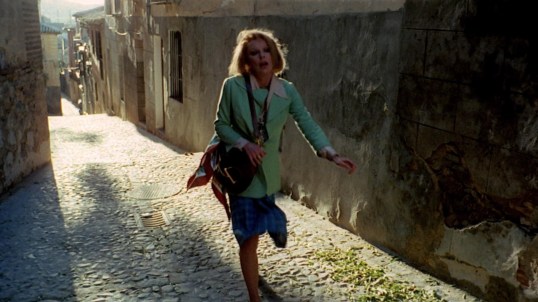
Originally filmed in 1972 and tragically not seen the way it was intended to be seen until years after Mario Bava’s death, Lisa and the Devil tells the story of Lisa (Elke Sommer), a tourist who is visiting the city of Toledo, Spain with a friend.  From the first minute we see Lisa walking through the streets of the city, something seems to be off.  The city seems strangely deserted.  The streets themselves seem menacing, in much the same way that streets of Vienna did in The Third Man.

Lisa leaves her tour group and goes in a store.  A menacing, bald man (Telly Savalas) gives Lisa a strange look as he buys a dummy.  The man resembles a portrait of the devil that Lisa saw earlier.  Running from the shop, Lisa runs into another man (Espartaco Santoni) who appears to be following her.  The man appears to fall to hi death but, despite that, the man will return later.  People have a way of returning in Lisa and the Devil.

Lisa’s tour group appears to have vanished.  She eventually runs into a seemingly friendly couple (Sylvia Koscina and Eduardo Fajardo) who, along with their driver (Gabriee Tinti), agree to take Lisa back to her hotel.  But instead, they somehow end up outside of a dilapidated, mannequin-filled mansion.  When the car breaks down, the group is invited to spend the night by the Countess (Alida Valli, who also appeared in The Third Man), who lives in the mansion with her strange but handsome son, Maximilian (Alessio Oriano).  Maximilian is still mourning his ex-girlfriend, Elena.  Elena, we’re told, bore a striking resemblance to Lisa.

However, it turns out that the Countess and Maximilian are not alone in the mansion.  Also living in the house is the Countess’s second husband, Carlos, who just happens to be the same man that was following Lisa in the city!  And finally, there’s the butler, Leandro, who is the same man who Lisa earlier saw in the shop!

Lisa and the Devil is one of my favorite Italian horror films.  Yes, some of that is because I shared the same name as the movie’s main character and I love it when people say my name a lot.  But I would love this film even if Elke Sommer was playing someone named Annalise or Tiffany.  Mario Bava said that this film, or at least his version of the film, was one of his most personal works and the entire movie does feel like a puzzle that only one person could possibly solve.  In the movie, only Leandro seems to full understand what’s happening in both the city and the house.  In real life, it’s likely that only Mario Bava understood everything that happened in the film.  The film mixes a giallo mystery (because people do soon start to die the mansion) with a surreal exploration of memory, regret, sin, and guilt.  The movie plays out like a waking dream, leaving us to wonder just who exactly Lisa truly is and who the Devil of the title might be.  It’s easy to spot the Devil.  It’s less easy to spot which parts of the film are meant to be reality and which parts might simply be happening in Lisa’s mind.

Unfortunately, the film’s producer had no idea what to do with Bava’s surreal masterpiece.  The few people who saw the film were baffled.  The Italian censors demanded massive cut for both sex and violence and, as a result, Lisa and the Devil was one of the few Bava films not to get a theatrical release in his native country.  It apparently did play in South Korea and Spain, though the Spanish version did not feature Bava’s original, mind-twister of an ending.

Even worse, for the film’s American release, the film’s producer requested that Bava add some exorcism scenes so that the film could take advantage of the popularity of The Exorcist.  By now realizing that his preferred version of the film would probably never be seen, Bava agreed.  With the help of his son, Lamberto, Mario Bava shot several scenes featuring Elke Sommer acting possessed while a priest played by Robert Alda tried to exorcise the demon.  The original Lisa and the Devil footage was presented as being scenes from the dimension Lisa’s soul had been sent to while the demon controlled her body.  The film was retitled House of Exorcism in Amercia.  And here’s the thing — House of Exorcism is hardly a bad movie.  Bava is Bava, afterall.  Sommer does a convincing job acting possessed and the mix of new and old footage is edited together fairly well.  But it’s still not the film that Bava set out to make.

Sadly, Bava’s original version of Lisa and the Devil would not get a proper video release until decades after his death.  It’s not always an easy film to follow.  I’ve seen it several times and there are still things about it that I still don’t fully understand.  It’s a surreal masterpiece, one that is perhaps not meant to be fully understood and the type of dream-film that shows why Bava is one of the few directors that David Lynch has regularly cited as being an influence on his own work.  Lisa and the Devil is a trip through a world dominated by dark and disturbing things and it’s one of the best Italian horror films to come out of the 70s.  Thankfully, it can now be seen the way that Bava intended.


Cannonball Run II (1984, directed by Hal Needham)


In 1981, director Hal Needham and star Burt Reynolds had a surprise hit with The Cannonball Run.  Critics hated the film about a race from one end of America to the other but audiences flocked to watch Burt and a group of familiar faces ham it up while cars crashed all around them.  The original Cannonball Run is a goofy and gloriously stupid movie and it can still be fun to watch.  The sequel, on the other hand…

When the sequel begins, the Cannonball Run has been discontinued.  The film never explains why the race is no longer being run but then again, there’s a lot that the sequel doesn’t explain.  King Abdul ben Falafel (Ricardo Montalban, following up The Wrath of Khan with this) wants his son, The Sheik (Jamie Farr, returning from the first film) to win the Cannonball so he puts up a million dollars and announces that the race is back on.  Problem solved.

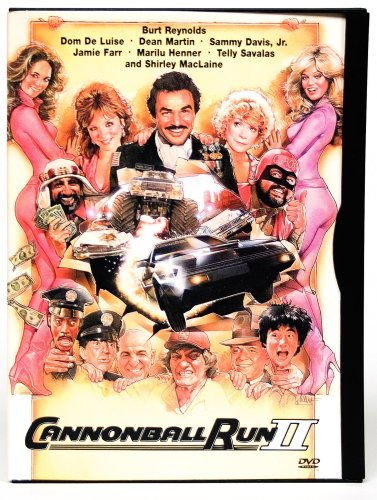
With the notable exceptions of Farrah Fawcett, Roger Moore, and Adrienne Barbeau, almost everyone from the first film returns to take another shot at the race.  Burt Reynolds and Dom DeLuise are back.  Jack Elam returns as the crazy doctor, though he’s riding with the Sheik this time.  Jackie Chan returns, riding with Richard “Jaws” Kiel.  Dean Martin and Sammy Davis, Jr. return, playing barely disguised versions of themselves.  They’re joined by the surviving members of the Rat Pack.  Yes, Frank Sinatra is in this thing.  He plays himself and, from the way his scenes are shot, it’s obvious they were all filmed in a day and all the shots of people reacting to his presence were shot on another day.  Shirley MacClaine also shows up, fresh from having won an Oscar.  She plays a fake nun who rides with Burt and Dom.  Burt, of course, had a previous chance to co-star with Shirley but he turned down Terms of Endearment so he could star in Stroker AceCannonball Run II finally gave the two a chance to act opposite each other, though no one would be winning any Oscars for appearing in this film.

Say what you will about Hal Needham as a director, he was obviously someone who cultivated a lot of friendships in Hollywood because this film is jam-packed with people who I guess didn’t have anything better to do that weekend.  Telly Savalas, Michael V. Gazzo, Henry Silva, Abe Vigoda, and Henry Silva all play gangsters.  Jim Nabors plays Homer Lyle, a country-fried soldier who is still only a private despite being in his 50s.  Catherine Bach and Susan Anton replace Adrienne Barbeau and Tara Buckman as the two racers who break traffic laws and hearts with impunity.  Tim Conway, Don Knotts, Foster Brooks, Sid Caesar, Arte Johnson, Mel Tillis, Doug McClure, George “Goober” Lindsey, and more; Needham found room for all of them in this movie.  He even found roles for Tony Danza and an orangutan.  (Marilu Henner is also in the movie so I guess Needham was watching both Taxi and Every Which Way But Loose while casting the film.)  Needham also came up with a role for Charles Nelson Reilly, who is cast as a mafia don in Cannonball Run II.  His name is also Don so everyone refers to him as being “Don Don.”  That’s just a typical example of the humor that runs throughout Cannonball Run II.  If you thought the humor of It’s A Mad, Mad, Mad, Mad World was too subtle and cerebral, Cannonball Run II might be right up your alley.

The main problem with Cannonball Run II is that there’s not much time spent on the race, which is strange because that’s the main reason why anyone would want to watch this movie.  The race itself doesn’t start until 45 minutes into this 108 minute film and all the racers are quickly distracted by a subplot about the Mafia trying to kidnap the Sheik.  Everyone stops racing so that Dean Martin and Sammy Davis, Jr. can disguise themselves as belly dancers to help rescue the Sheik.  By the time that’s all been taken care of, there’s only 10 minutes left for everyone to race across the country.  After a montage of driving scenes and a cartoon of an arrow stretching across the nation (the cartoon was animated by Ralph Bakshi!), we discover who won the Cannonball and then it’s time for a montage of Burt and Dom blowing their lines and giggling.  Needham always ended his films with a montage of everyone screwing up a take and it’s probably one of his most lasting cinematic contributions.  Every blooper reel that’s ever been included as a DVD or Blu-ray extra owes a debt of gratitude to Hal Needham.  Watching people blow their lines can be fun if you’ve just watched a fun movie but watching Burt and Dom amuse themselves after sitting through Cannonball Run II is just adding insult to injury.  It feels less like they’re laughing at themselves and more like they’re laughing at you for being stupid enough to sit through a movie featuring Tony Danza and an orangutan.

The dumb charm of the first Cannonball Run is nowhere to be found in this sequel and, though the film made a profit, the box office numbers were still considered to be a disappointment when compared to the other films that Reynolds and Needham collaborated on.  Along with Stroker Ace, this is considered to be one of the films that ended Reynolds’s reign as a top box office attraction.  Cannonball Run II was also the final feature film to feature Dean Martin and Frank Sinatra.  This could be considered the final Rat Pack film, though I wouldn’t say that too loudly.

Cannonball Run II is a disappointment on so many levels.  It’s hard to believe that the same director who did Smokey and the Bandit and Hooper could be responsible for the anemic stunts and chases found in this movie.  The cast may have had a good time but the audience is left bored.  Stick with the first Cannonball Run.


A Town Called Bastard (1971, directed by Robert Parrish)


A Town Called Bastard is a British-produced Western that was shot in Spain and which was obviously designed to capitalize on the popularity of the Spaghetti westerns of the two Sergios, Leone and Corbucci.  When the movie was released in the United States, the title was changed to A Town Called Hell because it was felt that Americans would find the word “bastard” to be too offensive.  I’m not sure how naming your town Hell is somehow an improvement on naming a town Bastard but apparently, that was the thinking.  Actually, the town is called Bastardo is both versions of the film so the American title makes less and less sense the more you think about it.

Of course, how you can expect a film to make sense when the opening scenes feature Martin Landau and the very British Robert Shaw as two Mexican revolutionaries who, in the year 1895, ride into the town town of Bastardo and murder almost everyone that they see.  Ten years later, Robert Shaw is still living in the town but he’s now a priest and he’s renounced his formerly evil ways.  The town itself is ruled by a ruthless outlaw played by Telly Savalas, who doesn’t bother to hide his New York accent despite playing a Mexican outlaw.

One day, a black carriage arrives in town.  Inside the carriage is a glass coffin and inside the coffin in Stella Stevens, who is very much alive.  Stevens’s husband was among those killed by Shaw and Landau back in the day and she offers gold to anyone who can avenge his death.  Savalas is interested in the gold but then his character literally disappears from the film.  Instead, Martin Landau rides back into town.  He’s now a colonel in the Mexican army and is searching for a fugitive.

A Town Called Bastard has potential but it’s done in by poor casting and Robert Parrish’s inconsistent direction.  The story is told so messily and the editing is so sloppy that it often feels like major scenes were left on the cutting room floor.  (Just try to figure out what’s going on with Telly Savalas’s character, for example.)  Stella Stevens has one or two good moments as the vengeful widow and her entrance into the town is one of the few interesting moments in the movie but both Savalas and Shaw overact in an attempt to hide just how miscast they are while Martin Landau’s main concern seems to be to get his paycheck and move on to the next movie.

In the end, A Town Called Bastard goes straight to Hell.

Mongo’s Back In Town (1971, directed by Marvin J. Chomsky)


During the Christmas season, Mongo (Joe Don Baker) returns home.  However, Mongo hasn’t just come back for the holidays.  Mongo is professional killer, one of the best in the business.  His older brother, mob boss Mike Nash (Charles Cioffi), has a job for him.  He wants Mongo to wipe out a rival gangster.  Mongo’s willing to do it but he expects to be properly compensated for his trouble.  Family is family but Mongo’s a professional and a professional has to get paid.  Lt. Pete Tolsted (Telly Savalas) and his partner, Gordon (Martin Sheen), are the two cops who know that Mongo is bad news and who are determined to discover why Mongo is back in town.  Meanwhile, Mongo is falling in love with the naive Vicki (a very young Sally Field), a young woman who has fled West Virginia and is looking to restart her life in the big city.

This made-for-TV movie may not contain any huge surprises but it’s worth tracking down just for the cast.  Joe Don Baker, Telly Savalas, Martin Sheen, and Sally Field, all in the same movie and all at the top of their considerable game?  That’s more than worth the effort.  Joe Don Baker, in particular, is good.  Unfortunately, Baker doesn’t always get the respect that he deserves an actor.  It’s true that he’s appeared in his share of bad films and his range is limited.  But whenever he was cast in the right role — like in this movie or the first Walking Tall — he was a force of nature.  What’s most interesting about Mongo is that he doesn’t really like his work and he resents that it’s something that he’s been trapped into doing but, at the same time, he’s so good at it that it’s hard not to wonder what other career he could have possibly found as much success in.

Mongo’s Back In Town was released theatrically overseas under the title Steel Wreath.  (Maybe someone realized that Mongo’s Back In Town makes the movie sound like a screwball comedy.)  It can be viewed, under its original title, on YouTube.