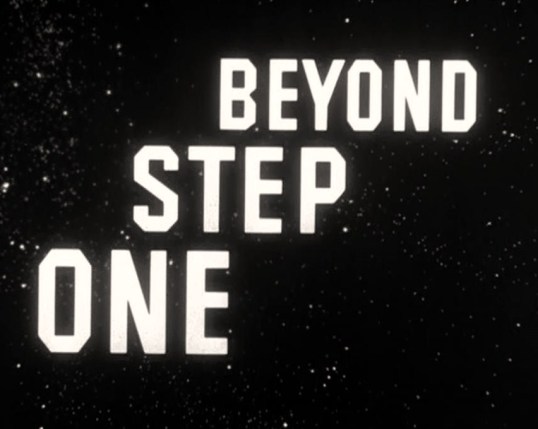
Horror On TV: One Step Beyond 1.19 “The Captain’s Guests” (dir by John Newland)


On tonight’s episode of One Step Beyond, a couple moves into a house on the coast.  Everyone tells them that the house is haunted but the couple refuses to believe them.  After all, everyone knows how superstitious people are in New England.  Everyone’s heard the story of the haunted mudroom, right?

However, after moving into the house, the couple starts to realize that they are not alone….

According to the show’s host, John Newland, this is based on a true story (maybe)!

This episode originally aired on May 26th, 1959.  The husband is played by Robert Webber, who also played Juror #12 in Sidney Lumet’s 12 Angry Men.

Enjoy!

Retro Television Review: Fantasy Island 5.12 “The Magic Camera/Mata Hari/Valerie”


Welcome to Retro Television Reviews, a feature where we review some of our favorite and least favorite shows of the past!  On Tuesdays, I will be reviewing the original Fantasy Island, which ran on ABC from 1977 to 1984.  Unfortunately, the show has been removed from most streaming sites.  Fortunately, I’ve got nearly every episode on my DVR.

This week’s episode presents your erstwhile reviewer with a bit of an ethical quandary.

Episode 5.12 “The Magic Camera/Mata Hari/Valerie”

(Dir by Don Chaffey and Don Weis, originally aired on January 16th, 1982)

I don’t feel completely comfortable about reviewing this episode of Fantasy Island and I’ll tell you why.

Occasionally, Fantasy Island would broadcast an extra-long episode.  These episodes would typically feature three fantasies as opposed to the usual two.  Unfortunately, when these long episodes were syndicated, one of the fantasies would be edited out so the episode would fit into an hour-long slot.  Usually, the editing was not particularly smooth, either.  The end result would usually be an episode that seemed oddly paced and the performances of Ricardo Montalban and Herve Villechaize would often seem uneven as well.  As such, it’s neither easy nor particularly fair to review those edited episodes.  When it comes to reviewing, I always want to see the complete episode.

And yet, now that the original Fantasy Island is no longer streaming anywhere (seriously, what the Hell, Tubi?), I’m stuck using the episodes that I have on my DVR.  And that means reviewing the edited, syndicated versions of these episodes.

As you can probably guess, this is one of those edited episodes.  The Valerie fantasy was removed for syndication.  That’s a shame because Valerie featured the final televised performance of actor Christopher George, a charismatic B-movie veteran who is pretty popular around the Shattered Lens offices.  It also featured Michelle Phillips, though apparently she did not return as the mermaid who she played earlier on the show.  I’d love to review Valerie but I can’t.  And that sucks,

As for the other two fantasies, one is basically a remake of the Lillian Russell fantasy, except this time Martha Harris (Phyllis Davis) goes into the past and finds herself transformed into her great-grandmother, Mata Hari.  She gets to dance.  She gets to spy.  She gets thrown in prison and sentenced to death but, fortunately, her life is spared when the firing squad’s rifles are filled with blanks and she’s given a drug by one of the men who is in love with that makes her appear to be dead.  This was a enjoyable fantasy, mostly because of the costumes and the melodrama.

The other fantasy features Bob Denver, coming to the Island for the second week in a row.  This time, he’s a photographer who wants to take the type of pictures that the world’s greatest photographers couldn’t.  Because of the awkward way the fantasy was stated, the photographer ends up with a camera that takes pictures of the future.  At first, the photographer is really happy and uses his camera to commit a little insider trading.  But then he takes a picture of a newspaper and sees a headline announcing his death in a fiery auto accident.  Uh-oh!

Again, neither of the two fantasies is bad (though the second one does require a certain tolerance for Bob Denver that some people may not have) but it was hard for me to enjoy them knowing that I was missing out on a third fantasy.  For that reason, I assigning this episode a grade of incomplete.  If I ever get a chance to watch the complete episode, uncut, I’ll revisit this review but until then, I really can’t give an overall grade to this episode.

Finally, for those keeping track, both Julie and Tattoo join Roarke when it’s time to greet the guests.  That’s only second time that’s happened this season.

Late Night Retro Television Review: CHiPs 2.15 “MAIT Team”


Welcome to Late Night Retro Television Reviews, a feature where we review some of our favorite and least favorite shows of the past!  On Mondays, I will be reviewing CHiPs, which ran on NBC from 1977 to 1983.  The entire show is currently streaming on Freevee!

This episode was a tough one.

Episode 2.5 “MAIT Team”

(Dir by John Florea, originally aired on January 13th, 1979)

On a desolate stretch of highway, several cars sit totaled.  At least two are in flames.  A truck sits stalled in the middle of the road, the bloody body of the driver still behind the steering wheels.  A woman screams that her father is having a heart attack.  Sitting off the road, in a ditch, is an overturned police car.  Officer Sindy Cahill is unconscious in the wreckage.

This hardly a typical episode of CHiPs.  This show has featured many spectacular crashes but this episode is the first to feature fatalities.  And its not just one person who dies in the crash.  Eleven people die, including the driver of the truck and the man having a heart attack.  The sight of Ponch looking at the dead bodies is jarring because it’s not what we expect from a show like CHiPs.

And, I have to admit, it was jarring for me on a personal level.  In May, my Dad was in a serious car accident, one that ultimately involved four vehicles.  He broke his shoulder and, afterwards, had to learn how to walk again.  He spent a week in a hospital.  (That was the week that we didn’t have any power due to the storms so I couldn’t even call to get an update on his condition.)  He spent a month in a rehab facility, staying there until his insurance company kicked him out.  Severely weakened by the stress and Parkinson’s, he came home and died a month later.  I still find myself thinking about how, if he just hadn’t gone to the store that Sunday, he never would have been in that accident and he would still be alive today.  Did I say that I merely think about it?  It’s actually something that I’ve been obsessing on, even since the hospital first called me to tell me what had happened.  I had a hard time watching this episode of CHiPs and I’m having a hard time writing about it right now.

It’s a good episode, even if it is very different from the episodes that came before it.  Ponch, Jon, and a group of experts (known as the MAIT Team) attempt to determine what caused the accident.  With a lefty state senator (played by Victor Newman himself, Eric Braeden) and an insurance investigator (Michael Bell) both eager to put the blame on Cahill, it falls to the MAIT Team to figure out what caused the accident and to assign blame.  In the end, just as with my Dad’s accident, they discover that no one was truly at fault.  The setting sun reflected off a distant mirror and temporarily blinded the driver.  Cahill ended up in a ditch after she swerved to avoid him.  The other drivers were just in the wrong place at the wrong time.  Life is like that sometimes.

The emphasis here was on everyone working together to get to the truth.  Even the state senator and the insurance investigator played an important role in discovering what happened.  By being skeptical, they forced the MAIT Team to question everything and truly uncover the facts of the accident.  As this episode made clear, the MAIT Team wasn’t formed just to exonerate Cahill.  Instead, the MAIT Team was all about getting to truth, no matter what that truth might be.

Though this episode was not an easy one for me to watch, it was a good one.

Horror On TV: One Step Beyond 1. 16 “The Burning Girl” (dir by John Newland)


The 16th episode of One Step Beyond was called The Burning Girl and it dealt with a teenage girl (Luana Anders, who would later star in Dementia 13 and appear as a hippie in Easy Rider) who, whenever she got upset, could apparently cause fires to spontaneously erupt.  It was written by Catherine Turney and directed by host John Newland himself.

It was originally broadcast on May 5th, 1959 — presumably long before Stephen King even had the idea to write about a girl named Carrie.

Can you prove this didn’t happen!?

Retro Television Review: Miami Vice 3.2 “Stone’s War”


Welcome to Retro Television Reviews, a feature where we review some of our favorite and least favorite shows of the past!  On Mondays, I will be reviewing Miami Vice, which ran on NBC from 1984 to 1989.  The entire show can be purchased on Prime!

This week, another friend of Sonny’s gets killed.

Episode 3.2 “Stone’s War”

(Dir by David Jackson, originally aired on October 3rd, 1986)

Sonny Crockett’s old friend, journalist Ira Stone (Bob Balaban), returns to Miami and he’s in trouble once again.

The last time we saw Stone, he appeared to be dying as the result of being severely wounded by Col. William Maynard (G. Gordon Liddy).  I guess Stone survived because this episode opens with him and a cameraman in Nicaragua, filming anti-Communist rebels opening fire on a village.  They even gun down a priest!  However, it turns out that the rebels have got some help from some men who appear to be American.  Stone’s cameraman is shot.  Apparently leaving him to die, Stone grabs the tape of the attack and then flees to Miami.

In Miami, Stone tracks down Sonny, who is reluctant to get involved with Stone.  However, when it becomes obvious that some agents of the government are not only following Stone but also trying to assassinate him, Crockett changes his mind.  It turns out that the men in Nicaragua do indeed work for Col. Maynard.  Maynard makes a return appearance, showing off a necklace of ears that have been chopped off of communists in an attempt to get businessmen to invest in his army.  This episode drops some very obvious hints that Maynard is now working for the U.S. government.

In their efforts to help Stone get his tape to the public, Crockett and Tubbs get a few people killed.  Local reporter Alica Mena (Lonette McKee) is murdered after Maynard’s men break into her office to search for the tape.  In the end, Stone himself is once again wounded by Maynard’s man and this time, he actually dies on-camera.  As for Maynard, he once again boards a private plane and escapes.  The episode ends on a properly cynical note, with Crockett listening to reports blaming the death of the priest on the Nicaraguan government.

Actually, this whole episode feels a bit cynical.  On the one hand, this episode criticizes the American government for being so anti-communist that it tries to overthrow the governments of other counties.  On the other hand, a good deal of the episode’s running time is devoted to showing off Sonny’s new car, a 1986 Ferrari Testarossa.  There’s even an extended chase scene that seems to exist largely so the show can work in as many close-ups of Sonny changing gears as possible.  It’s a cool car but just try to get one in Nicaragua, Venezuela, or Cuba.  (Or, I should say, try to get one without being related to someone who is in power.)

Ira Stone was a bit more compelling in his previous appearance on the show.  In this episode, Balaban’s performance is almost too low-key.  It lacks the manic instability of his first appearance, in which Stone was portrayed as being almost as mad as Maynard.  This time out, he’s just another independent journalist who is convinced the government is out to get him.  Fortunately, G. Gordon Liddy returns to Maynard and takes so much obvious joy in the role that he’s fun to watch.  As I mentioned when Liddy last appeared on this episode, my father had a “G. Gordon Liddy for President” bumper sticker.  As far as Watergate felons are concerned, Liddy was certainly less annoyingly self-righteous and more honest about his amorality than John Dean has turned out to be.

As a whole, this wasn’t a bad episode.  Like last week’s episode, it was serviceable but it still seemed to be lacking the spark that distinguished the show’s first two seasons.  For the second week in a row, Miami Vice puts more emphasis on its guest stars than the main cast and, perhaps as a result, the main cast seems to largely be going through the motions.  (Zito and Gina don’t even appear in this episode.  Castillo is barely present, which is interesting considering that the character is supposed to have connections in U.S. intelligence that would have perhaps been a bit helpful this time around.)  Still, it was good to see both Stone and Maynard return to the show and remind the viewers that the vice in Miami is often the result of conflicts happening elsewhere.

Late Night Retro Television Review: Degrassi Junior High 3.11 “Taking Off: Part One”


Welcome to Late Night Retro Television Reviews, a feature where we review some of our favorite and least favorite shows of the past!  On Sunday, I will be reviewing the Canadian series, Degrassi Junior High, which aired on CBC and PBS from 1987 to 1989!  The series can be streamed on YouTube!

This week, Degrassi goes there!

Episode 3.11 “Taking Off: Part One”

(Dir by Kit Hood, originally aired on February 13th, 1989)

Gourmet Scum has come to Toronto and everyone is excited to hear the Scum sound.  At the concert, Shane and Luke (Andy Chambers) purchase LSD from the local Scum dug dealer.  Shane drops acid before the concert begins.  Surely, this won’t lead to any trouble, right?

Meanwhile, Wheels is still skipping school.  While his teachers send notes to his grandmother to let her know that Wheels is falling behind, Wheels is spending all of his time playing a boxing video game at the local arcade.  When Joey asks Wheels how can afford to spend all day playing one game over and over again, Wheels says that he sold his bass.

“What about the Zit Remedy?!” Joey says.

Sorry, Joey, Wheels doesn’t care about school or your stupid band anymore.  In fact, Wheels is planning on running away from home.  When he gets a birthday postcard from his biological father, Wheels discovers his father’s band has a two-week gig at Port Hope.  Wheels decides to join his father, despite not being sure where New Hope is.  In fact, it’s not even Wheels’s birthday.  His birth father missed the date by about a month but Wheels doesn’t care.  Wheels just wants to get away from everything.

How is Wheels going to get to New Hope?  He decides to hitchhike!  Uhmm …. not a good idea, Wheels.  Actually, everyone who picks up Wheels seems to be pretty nice.  That is until this guy pulls up….

“Don’t do it!” I shouted as Wheels got in the car.  Unfortunately, as this all happened 35 years ago and I was just watching it play out on YouTube, Wheels couldn’t hear me.

As they drive towards what Wheels assumes is Port Hope, the driver (chillingly played by James Knapp) asks Wheels if he has a lot of girlfriends.  He asks Wheels if he works out.  He asks a lot of questions that immediately raise red flags.  Not that Wheels notices….

Suddenly, the driver pulls off the road, turns to Wheels, and grabs Wheels’s thigh.  AGCK!  Wheels manages to get the door open and scrambles out of the car.  The driver throws Wheels’s backpack out of the car and then drives off, leaving Wheels in the middle of nowhere.

Meanwhile, back in Toronto, Joey’s mother tells Joey that Shane’s mother has been calling because Shane didn’t come home after the concert.  Soon, the police are talking to all of Shane’s friends and trying to figure out where he could be.  Luke is asked whether Shane did any drugs.  Luke lies and says, “No.”

This was a classic Degrassi episode and probably one of the most effective anti-hitchhiking PSAs ever filmed.  When the driver attacked Wheels, it was a truly frightening moment and it was impossible not to remember all of the times, over the course of this season, that Wheels has bragged about his ability to take care of himself.  Now, Wheels is stuck in the middle of nowhere and Shane, who didn’t pay child support specifically so he could go to the concert, is missing.

Never has “To be continued….” felt more ominous.

Horror on TV: One Step Beyond 1.8 “Premonition” (dir by John Newland)


In this episode of One Step Beyond, which takes place over the course of several years, Lisa Garrick lives in fear of a chandelier in her family’s  home.  For her entire life, she has had a premonition that she is going to die when the chandelier comes crashing down.  She refuses to stop into the room but eventually, both her father and her fiancé, insist that she conquer her fear and enter the room.

Seriously, if she doesn’t want to enter the room …. don’t make her enter the room!  I love chandeliers but they do make me nervous.  They always look like there about to come crashing down to me.

I like this episode because the main character is named Lisa.

This episode originally aired on March 10th, 1959.

Retro Television Review: Homicide: Life on the Street 1.1 “Gone For Goode”


Welcome to Retro Television Reviews, a feature where we review some of our favorite and least favorite shows of the past!  On Sundays, I will be reviewing Homicide: Life On The Street, which aired from 1993 to 1999, on NBC!  It  can be viewed on Peacock.

Today, I take a look at the pilot for a show that has been called one of the best of all time.

Episode 1.1 “Gone For Goode”

(Directed by Barry Levinson, originally aired on January 31st, 1993)

The opening credits for the first episode of Homicide: Life on the Street immediately announce that the show is not going to be a typical network cop show.  The music starts out as moody and low-key before eventually being dominated by a pulsating beat.  The images of dirty streets and crumbling rowhouses and of a dog running around behind a fence are all in black-and-white.  The faces of the cast appear, the majority of them in harsh close-up.  When viewed today, most of the faces are familiar.  Daniel Baldwin, Ned Beatty, Andre Braugher, Clark Johnson, Yaphet Kotto, Melissa Leo, Jon Polito, and Kyle Secor all flash by and the thing that the viewer will immediately notice is that it’s almost as if they’ve been filmed to remove any hint of glamour or attractiveness.  (Out of that impressive cast, only Baldwin, Johnson, Leo, and Secor are still with us.)

Gone for Goode tells several stories, introducing the detectives as they investigate various murders in Baltimore.  Meldrick Lewis (Clark Johnson) and Steve Crosetti (Jon Polito) are first seen searching for a bullet in a dark alleyway and arguing in only the way that two people who have worked with each other for a long time can argue.  Lewis continually refers to Crosetti as a “salami-head,” and Crosetti, who claims that he’s being kept up at night by his doubts about whether or not John Wilkes Booth was actually Lincoln’s assassin, repeatedly says that Lewis will regret that.  Later, Crosetti writes a complaint about the ethnic insults that he’s been forced to listen to but apparently, he never actually sends it.

When not arguing with each other, Crosetti and Lewis investigate “Aunt Calpurnia,” who has buried five husbands and whose niece has nearly been murdered three times.  Aunt Calpurnia has life insurance policies out on everyone.  While digging up Calpurnia’s former husband, Lewis comments that the body in the grave doesn’t look as large as the man in the picture that he’s been given.  The cemetery’s caretaker replies, “Nobody stays fat down there.”  Technically, that’s true but it also turns out that the wrong man was buried in the grave and the caretaker has no idea where anyone is actually buried.

Detective Felton (Daniel Baldwin) and Detective Howard (Melissa Leo) investigate the murder of a man who was found decaying in a basement.  Howard is the primary detective on the case because Felton, being a screw-up, has too many unsolved cases under his name on the dry-erase board that dominates the squad room.  Howard currently has a streak of solved homicides and that continues for her when the murderer just happens to call the crime scene and then agrees to come in for a talk.

Detective Stanley Bolander (Ned Beatty) guilts Detective John Munch (Richard Belzer, who would play the same character years later on Law & Order: SVU) into investigating a hit-and-run that happened months ago.  Munch, who earlier tells a suspect that he is not Montel Williams (“So don’t like to me like I’m Montel Williams”) and leaves both Bolander and the suspect confused as to who Montel Williams is, eventually discovers that the murder was committed by a brain-dread idiot who can only repeat, “I was drinking,” when he’s confronted with his guilt.

Finally, Lt. Al Giardello (Yaphet Kotto) assigns Felton to work with Frank Pembleton (Andre Braugher), a brilliant but arrogant detective who insists on working alone.  Pembleton and Felton’s partnership begins with Pembleton spending an hour in the station’s garage, searching for his squad car because Pembleton forgot to write down the parking space on the back of his keys.  (Of course the garage is full of identical white cars.)  When Felton says suggests just going upstairs and getting a new set of keys, Pembleton shouts that the next car he tries to unlock could be the right car.

Needless to say, the Pembleton/Felton partnership does not last and Pembleton instead ends up working with an eager newcomer to the squad, Tim Bayliss (Kyle Secor).  They two of them work surprisingly well together until Bayliss objects to Pembleton “fooling” a suspect into waving his right to an attorney.

As the episode comes to a close, Bayliss answers his first call in the squad room.  At the crime scene, in the middle of a torrential storm, he discovers the body of a small girl.

I have to say that the idea of trying to review Homicide: Life on The Street is a bit intimidating, just because the show has got an almost legendary reputation.  It’s often described as being the best cop show of the 90s, as well as being held up as a perfect example of a show that was too good to last.  It was never a hit in the ratings and came close to being canceled several times.  Because it was filmed in Baltimore, it was viewed as being an outsider amongst the New York and Hollywood-produced shows that dominated the airwaves.  Executive produced by Barry Levinson (who also directed Gone for Goode) and based on a non-fiction book by David Simon, Homicide is the show that is often cited as the precursor for The Wire, another show that was loved by the critics but not by its network or the Emmy voters.

The pilot is intriguing, largely because it seems determined to scare off its audience.  Unlike other television  detectives, who are inevitably portrayed as being crusaders who are obsessed with justice, the detectives in Homicide are a blue collar bunch who, for the most part, are just doing their job.  Sure, someone like Frank Pembleton might be brilliant.  And Stanley Bolander might truly mean it when he tells Munch that “we speak for the dead.”  And Bayliss does seem to be very enthusiastic about being a “thinking” policeman.  But the show suggests that most detectives are like Felton, Lewis, and Much.  They’re not particularly brilliant and their approach to the job can sometimes seem callous.  But occasionally, they get lucky and a murder is solved.  Indeed, if there is any real message to the pilot, it’s that criminals are stupid.  They get caught not because of brilliant police work but because they do stupid things, like calling the crime scene or failing to ditch the car that they sole.

That said, the pilot also does what a pilot is supposed to do.  It introduces the characters and gives them just enough space to make an impression, along with also leaving enough room for them to grow.  The characters may not all be instantly likeable but, fortunately, the strong cast holds your interest.  The pilot is very much a product of the 90s, with Munch ranting about Montel Williams and Crosetti mentioning Madonna at one point.  But, at the same time, it still feels relevant today.  Pop culture might change but murder remains the same.

Late Night Retro Television Review: Check It Out! 2.14 “Let’s Get Metaphysical”


Welcome to Late Night Retro Television Reviews, a feature where we review some of our favorite and least favorite shows of the past!  On Saturdays, I will be reviewing the Canadian sitcom, Check it Out, which ran in syndication from 1985 to 1988.  The entire show is currently streaming on Tubi!

This week, Howard goes on a mission to save Marlene.

Episode 2.14 “Let’s Get Metaphysical”

(Dir by Alan Erlich, originally aired on January 25th, 1987)

Marlene’s been showing up late for work!

Christian thinks that it’s a big deal that Marlene isn’t showing up for work.  I’ve never had a retail job or a job where I had a boss who required me to do things but I do have to say that I think Christian has a point.  Since it appears that Cobb’s only has seven employees and it appears to be a rather large store with several different departments, I imagine it is a bit difficult when one of them doesn’t show up.

(Actually, two of them.  For some reason, Edna is not in this episode.)

Howard, however, says it’s no big deal because Marlene is only late because she’s in love with a new guy and this guy apparently likes to stay up all night and discuss philosophy.  (Bleh!  Sounds like she’s dating a real bore.)  But when Marlene starts lecturing at her register about how unfair it is to charge people for food, Christian feels that he has no choice but to fire her.  Marlene thanks Christian for setting her free and then leaves the store for her new home at the local commune.

Uh-oh …. MARLENE HAS JOINED A CULT!

Wanting to free her from the Order of Eternal Light, Howard decides to go down to the commune.  Accompanying him is Viker and I was happy about that because, as played by Gordon Clapp, Viker was a character who made any scene funnier by his very presence.  The head of the cult is a bearded man who calls himself Solar (Sam Moses).  Solar preaches a life of simplicity while living in a mansion and driving a Ferrari.

Howard decides that the best way to free Marlene is to go undercover and pretend to join the cult.  Over the next few days, Howard doesn’t show up at work but Marlene does.  Marlene explain that she left the cult after talking to a strange man with a beard.  She also says that she never saw Howard at the cult.

Suddenly, Howard shows up, wearing love beads and speaking in an Indian accent.  Marlene throws water on his face, which magically sets Howard free from Solar’s brainwashing.  Marlene tells Howard that she left on her own after talking to the bearded man.  Howard reveals that he was that bearded man….

Wow, it sounds like a lot of interesting stuff happened off-camera!  In fact, that’s the main problem with this episode.  Almost all of the interesting stuff — Marlene getting brainwashed, Howard going undercover, the police raiding the commune and arresting Solar — happens off-screen.  What we’re left with is okay but never quite as funny as it potentially could be.

Still, at least Marlene’s back!  Someone has to keep the sharp insults flying in that store and no one’s better at it than Marlene.

Lisa Marie’s Week In Television: 9/29/24 — 10/5/24


As you can probably guess, I spent most of this week watching horror movies.  I didn’t watch many television shows but here’s a few thoughts on what I did watch.  (For those keeping track, I still need to watch the first episodes of the new season of Survivor and I guess the first few episodes of Doctor Odyssey.  Maybe I’ll find the time next week.)

American Sports Story: Aaron Hernandez (Wednesday Night, FX)

This week, Aaron finally made it to the NFL.  This episode was well-done and made a point about how sports is big business and how players are expected to have the right image but it was really hard not to feel that, as with so many Ryan Murphy productions, this episode basically spent 50 minutes telling a 15 minute story.  Did we have to see every details of Aaron at the combine?  Probably not.  Did we have to once again hit on all the stuff about Aaron’s family?  I mean, most of what was revealed in this episode was already revealed in the previous three episodes.  The danger with these shows is that they always drag out the story to such an extent that it’s easy to get bored.

Hell’s Kitchen (Thursday Night, FOX)

Despite all of the talent assembled for the season, the first dinner service was a disaster!  Isn’t that always the way?  “GET OUT!” Ramsay shouted.  If I went to Hell’s Kitchen and my food wasn’t screwed up and if Chef Ramsay wasn’t yelling at people the entire time, I would feel extremely disappointed.

Law & Order (Thursday Night, NBC)

Law & Order is back.  The season premiere was bland, disappointing, and heavy-handed but that always seems to be the case when it comes to the premiere of each season of Law & Order.  For whatever reason, the season premiere is almost always the weakest episode of this series and the show usually steadily improves afterwards.  That said, this is an election year and the partisan atmosphere is exactly the type of thing that tends to inflame this show’s worst tendencies.  McCoy is still missed.  Why is Maroun even on the show?

One Step Beyond (YouTube)

I watched a few episodes this week and I shared them here on the site as a part of Horrorthon!  Be sure to check them out when you get a chance because they’re all pretty entertaining.  I like the fact that the show pretended to be based on fact.  It was like the Beyond Belief of its day.

Rescue: Hi-Surf (Fox, Monday)

On Sunday morning, I watched the first three episodes of this new Fox show about lifeguards in Hawaii.  There was nothing particularly original about this show.  It was basically just a remake of Baywatch but without that show’s self-awareness.  But the scenery was lovely and some of the rescues were exciting to watch.  This is a show that could definitely become a 9-1-1-style guilty pleasure, assuming it survives its debut season.

Square Pegs (YouTube)

With my friend Pat, I watched a Halloween episode of this old 80s sitcom on Friday night.  It was amusing enough.  A very young Sarah Jessica Parker was apart of the cast and far more likable than she’s ever been on Sex and the City.